
Reviewed · WALKING TOURS
Munich: Private Walking Tour of the Historical City Center
Munich’s story is written in its streets. This private three-hour walk links Marienplatz, old churches, Nazi-era sites, royal landmarks, and beer culture with a local guide, giving you a useful first look at the Bavarian capital. I especially like the private format, which lets your group ask questions and set the pace, and the unusual stories about Georg Elser, Eva Braun, and the meaning of Munich’s landmarks. The main drawback is that the tour can feel fairly general if your guide speaks too quietly or does not add much color.
I also like the choice to include the Residenz Museum, though entrance costs are not included. The tour works best as an orientation walk rather than a full museum or historical study, and the three-hour route covers a lot of ground. One guest found the guide accommodating but difficult to hear, while another praised Tom as a natural storyteller, so the guide’s delivery can shape the experience.
In This Review
- Key points to know before booking
- Starting at Marienplatz and the fish fountain
- St. Peter and Munich’s monastic beginnings
- The Frauenkirche and the devil’s footprint
- Munich, WWII, and Georg Elser’s warning
- Odeonsplatz and the Beer Hall Putsch
- Hofbräuhaus and nearly 450 years of beer culture
- The optional Residenz Museum
- Finishing at Viktualienmarkt
- What $288 means for value
- Timing, language, and walking comfort
- Who should book this Munich walk?
- Should you book this private tour?
- FAQ
- Where does the tour meet?
- How long does the tour last?
- Is this a private tour?
- What languages are available?
- Is the Residenz Museum included?
- Are food and drinks included?
- Is the tour suitable for wheelchair users?
- What is the cancellation policy?
Key points to know before booking
- Marienplatz is the natural starting point: Meet at the fish fountain in front of the Town Hall, right in Munich’s central square.
- The route connects several eras: You move from medieval monks and royal power to Nazi history, wartime resistance, and modern food culture.
- Georg Elser’s story adds a powerful human angle: The Munich carpenter planned an early attempt to kill Hitler and stop the war before it began.
- The Residenz is optional: You can choose an itinerary that includes the royal palace museum, but admission is extra.
- The private group price can work well for a small party: The cost is $288 for up to 15 people, so the per-person value improves sharply with a larger group.
- Expect city-center walking, not a museum-heavy tour: Wear comfortable shoes and keep your expectations focused on stories, landmarks, and orientation.
Starting at Marienplatz and the fish fountain
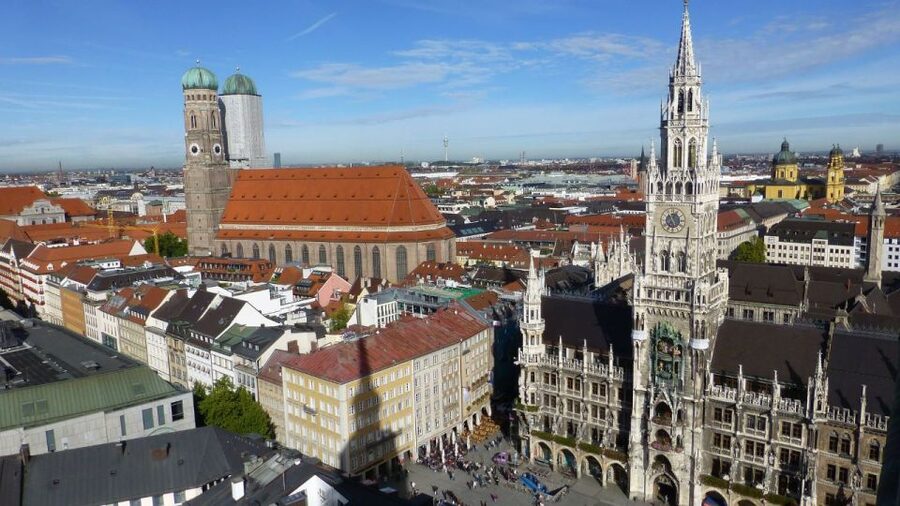
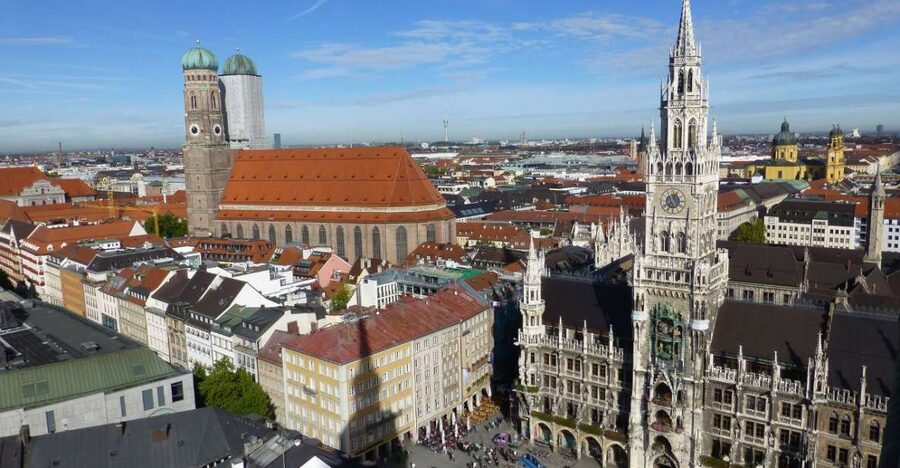
The tour begins at the fish fountain in front of the Town Hall at Marienplatz 8. This is a practical meeting point because Marienplatz is Munich’s central hub and the square is easy to recognize once you arrive.
Your guide introduces Munich through the square’s major buildings. You see the Old Town Hall and New Town Hall, then learn why Mary’s Column gave the square its name. That detail helps you read the city rather than simply photograph it. Munich’s central landmarks are close together, so the opening section gives you a quick sense of how the old city developed around religious, civic, and royal power.
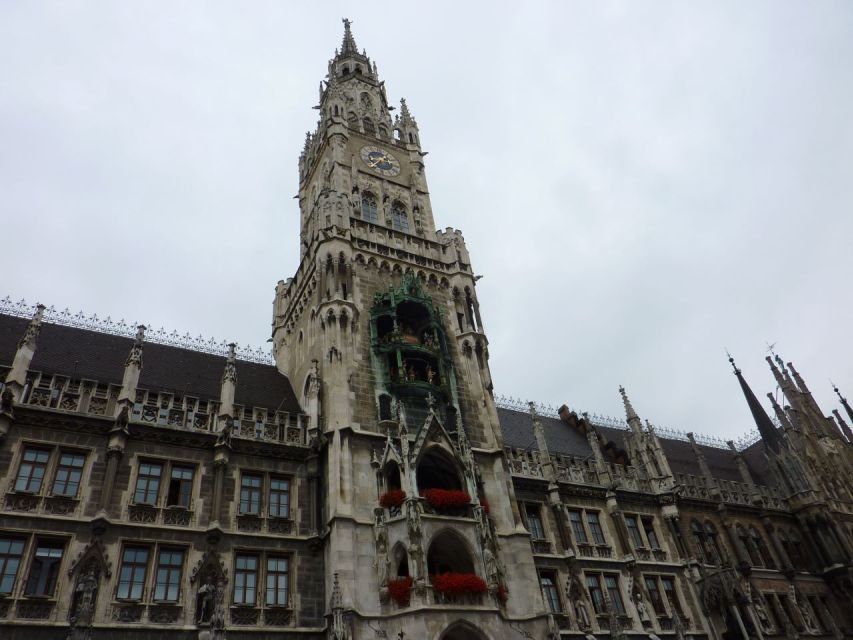
The New Town Hall’s clock tower is one of the main attractions here. Its Rathaus-Glockenspiel is not just a decorative clock. Your guide explains the meaning behind the figures and scenes, giving the famous façade some context. If you have seen the clock in photographs, this explanation makes the stop more worthwhile than a quick glance upward.
This opening section is also useful for orientation. You can identify the main square, the Town Hall, and the nearby streets you may use again during your Munich stay. I would pay close attention to the route here, since Marienplatz is a good base for later independent exploring.
More City Tours in Munich
- Munich: Old Town & Viktualienmarkt City Walk in German
★ 4.7 · 2,304 reviews - Munich: City Bus Tour & FC Bayern Munich Allianz Arena Tour
★ 4.5 · 2,071 reviews - Munich City Hop-on Hop-off Tour
★ 3.5 · 1,233 reviews
St. Peter and Munich’s monastic beginnings
The walk continues to St. Peter, described as Munich’s oldest Catholic church. The key story here is how monks helped give rise to the city. That connection offers a simple explanation for Munich’s early growth and shows that the city was not built only by dukes, merchants, and breweries.
St. Peter gives the tour a quieter historical pause after the busy central square. Your guide can connect the church to Munich’s early religious foundations, then point out how the city expanded around those beginnings.
You should not treat this stop as a full church visit with an extended interior tour. The advertised experience is a walking tour, and entrance fees are not included. Still, the church matters because it anchors Munich’s early story. I like this kind of stop: short, central, and useful for understanding why the city looks the way it does.
The Frauenkirche and the devil’s footprint
The Frauenkirche is one of Munich’s most recognizable sights, with its two large towers shaping the city skyline. Your guide explains that it is Munich’s largest church and shares the legend of the devil’s footprint inside.
The story is a classic example of how Munich mixes formal religious history with local folklore. You get the building itself, its scale, and a tale that helps you remember the visit. The legend does not replace the church’s historical importance, but it makes the stop more engaging than a standard architectural description.
The church is also a useful visual reference point. Its twin towers appear from several parts of the center, and learning their place in the city makes it easier to navigate later. Since the tour does not promise a long interior visit, you should allow extra time on your own if seeing more of the Frauenkirche is important to you.
Munich, WWII, and Georg Elser’s warning
The strongest part of the tour for many history-minded visitors is the discussion of Munich’s role in the Nazi period. The city was central to the Nazi movement, and the walk covers the Beer Hall Putsch, an early attempt by Adolf Hitler and about 2,000 followers to seize power in Munich.
At Odeonsplatz, the guide explains how the march moved toward the city center. This is a valuable stop because it connects a familiar public square with a turning point in German history. You are not just hearing that Munich had a connection to the Nazi movement. You are standing in the area where an important early act of political violence unfolded.
The tour also tells the story of Georg Elser, a Munich carpenter who planned an assassination attempt intended to stop Hitler and prevent the outbreak of WWII. His effort was daring and nearly changed the course of history, but it failed.
I appreciate the inclusion of Elser because it keeps the wartime story from becoming a simple account of Nazi leaders and major events. It brings attention to an individual who acted alone, took enormous risks, and tried to stop disaster before it spread. This is one of the tour’s most distinctive details, and it gives the historical discussion real human weight.
The tour also touches on Eva Braun, who grew up in Munich and later became Hitler’s wife. This is a lesser-known personal connection, though it may appeal more to some people than to others. If you want a detailed study of WWII sites, memorials, or postwar Germany, three hours will not be enough. But as an introduction to Munich’s role in the period, the discussion is useful.
More Historical Tours in Munich
- Munich: Guided Tour of the historic Town Hall on Marienplatz
★ 4.8 · 63 reviews - Munich Craft Beer & Cultural Tour With Snack
★ 5.0 · 46 reviews - Munich History Tour: Private & Personalized with a Local Guide
★ 4.5 · 33 reviews - Munich and Nazi History Combination Day Tour Small Group
★ 5.0 · 31 reviews
Odeonsplatz and the Beer Hall Putsch
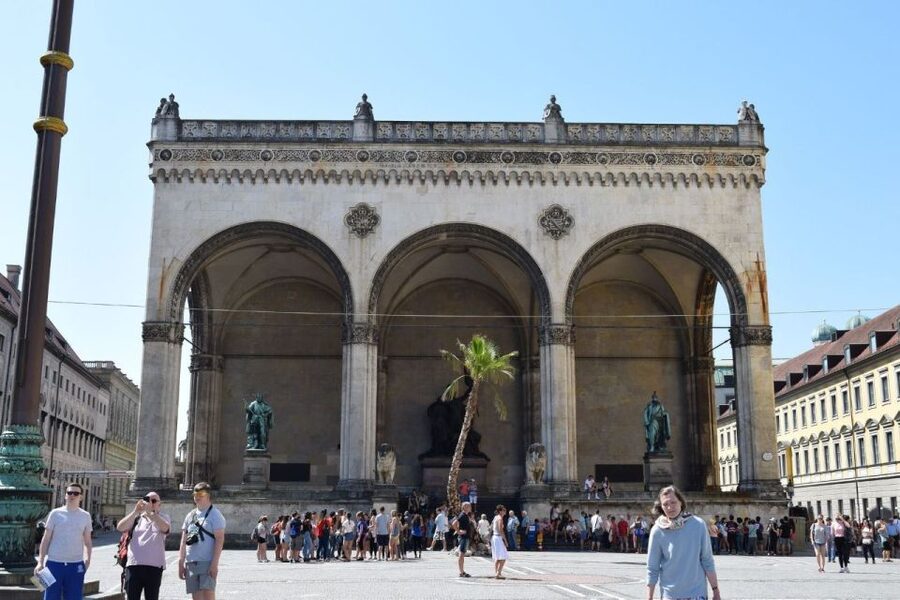
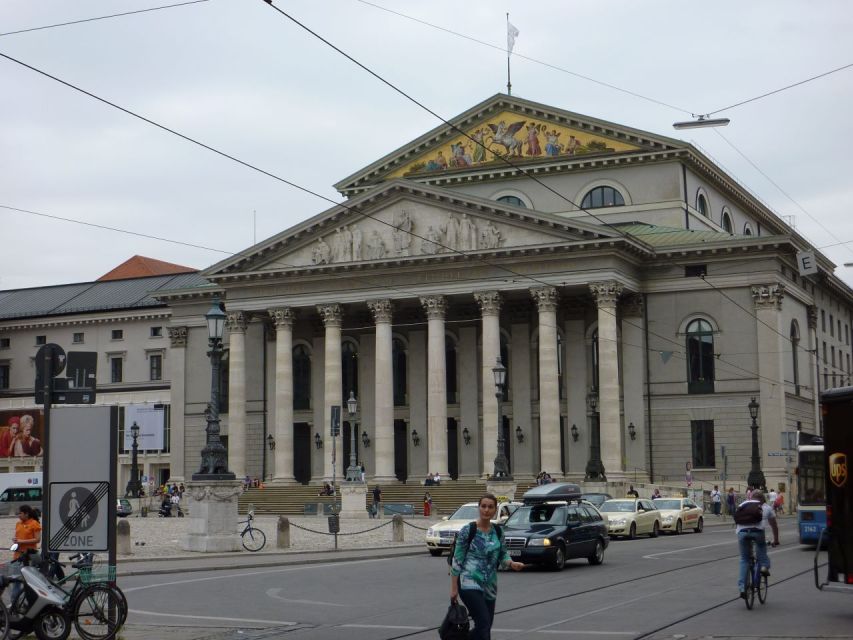
Odeonsplatz brings together grand architecture, royal history, and political conflict. Here, the guide discusses the Beer Hall Putsch and the Nazi attempt to seize control of Munich.
The setting matters. A large, formal square can seem removed from the events that took place there, so hearing what happened on the same streets adds a sharper sense of place. This is one reason a walking guide can add value over a guidebook. You can connect the name, location, and event while standing in the actual city center.
The political material may feel heavy beside Munich’s lighter beer image, but the contrast is important. Munich is not only palaces, church towers, pretzels, and beer halls. The city also played a major role in some of the darkest chapters of modern European history. A good guide needs to handle that shift with care, and the itinerary gives the subject enough room to matter.
Hofbräuhaus and nearly 450 years of beer culture
The tour turns toward Munich’s beer tradition and the royal brewery known as Hofbräuhaus. It was established in 1589, making it one of the city’s best-known historic institutions.
You hear about Munich’s beer culture and the long tradition behind its famous beer gardens. The tour notes that some of these gardens were established nearly 450 years ago. That time span helps explain why beer is so closely tied to Munich’s public life. It is not simply a modern tourist theme. It is part of the city’s civic and social identity.
Hofbräuhaus can be crowded and highly popular, so do not expect a quiet, intimate brewery visit from this walking tour. The guide discusses the place and its role in Munich rather than including food or drinks. You pay for refreshments separately, and no meal or tasting is included.
Still, this stop is handy for planning the rest of your visit. If you want to return for a beer, a meal, or the atmosphere, you will already know why the building matters. I would treat the stop as historical context, not as a reserved dining experience.
The optional Residenz Museum
You can choose an option that includes a guided visit to the Residenz Museum, the former royal residence. This adds a different side of Munich to the route: court life, dynastic power, and the possessions of Bavaria’s rulers.
The museum option makes sense if you want more than outdoor sightseeing. After hearing about Munich’s religious and political past, the Residenz shows how the ruling family lived and presented its power. It can also provide a useful break from walking, depending on how the visit is arranged.
Entrance fees are not included, so check the final cost before choosing this version. The base price is already $288 per private group of up to 15, and museum admission adds another expense. I would choose the Residenz option if royal interiors are high on your list. If you mainly want street history, beer culture, and WWII context, the basic walking route may offer better value.
The available details do not specify how much time is spent inside the museum, so ask about the exact plan when booking. A three-hour tour has limits, especially when it combines an outdoor route with a major museum.
Finishing at Viktualienmarkt
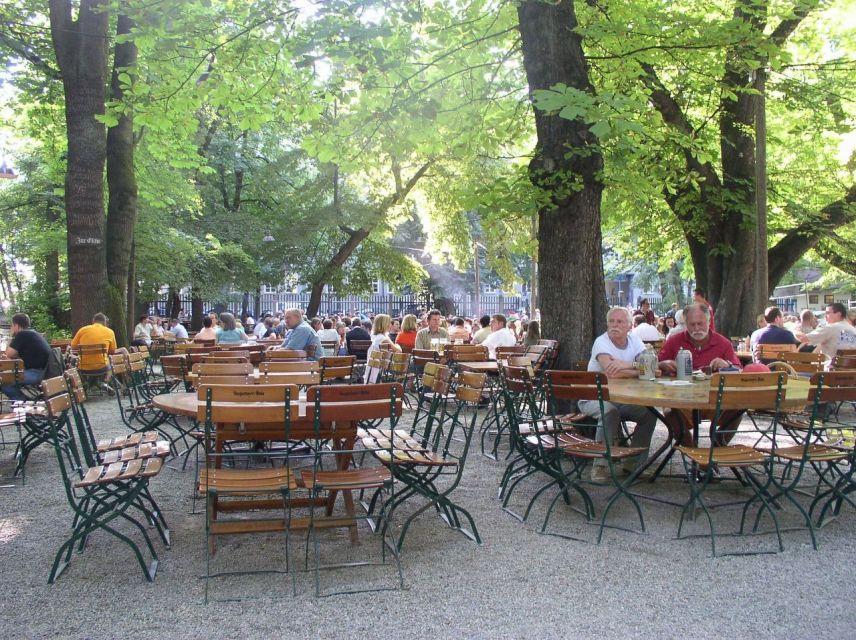
The walk concludes by passing Viktualienmarkt, Munich’s central public food market. It offers local delicacies and fresh produce, along with one of the city’s most central beer gardens.
This is a smart ending. You finish with a place that feels connected to everyday Munich rather than only to grand monuments. The market gives you ideas for lunch, snacks, and further wandering, though food and drinks are not included in the tour.
I would save room in your schedule after the walk. Viktualienmarkt is a natural place to continue on your own, and the guide’s comments can help you decide what to sample. Since the tour ends in the central area, you remain close to other sights and public gathering places.
What $288 means for value
The price is $288 per private group of up to 15 people. For two people, that is a serious expense for a three-hour walk. For a family or group of 10 to 15, the cost becomes much more reasonable, especially if you value having your own guide rather than joining a larger public group.
The private format is the main reason to pay more. You can request an earlier meeting time, as one couple did, and the guide accommodated that request. The details do not promise that every time change will be possible, but the example shows some flexibility may be available.
The guide’s quality is crucial. Tom was praised as a natural storyteller with plenty to share about Munich. Another guest found the guide hard to understand, too quiet, and not very engaging, even though she was accommodating. If your group is small, ask the guide to speak clearly and loudly enough for everyone to follow. With up to 15 people, this matters even more.
The overall score is 4.8 from seven ratings, which suggests strong satisfaction but is still a small sample. I would consider the score encouraging, while keeping the guide-dependent nature of a private walking tour in mind.
Timing, language, and walking comfort
The tour lasts three hours, with starting times based on availability. Guides lead tours in English or German. That makes it suitable for visitors who want a live explanation rather than an audio guide or self-guided route.
You should expect steady walking through Munich’s historic center. The experience is not suitable for wheelchair users, and no food, drinks, or entrance fees are included. Wear comfortable shoes, bring water if needed, and keep your schedule flexible enough that the tour does not collide with a fixed museum booking.
Because several stops are outdoors, the experience will be shaped by the weather. The supplied details do not describe indoor alternatives, so plan accordingly. The private setting may make it easier to adjust the pace, but it does not turn the route into a fully accessible experience.
Free cancellation is available up to 24 hours before the start, and you can reserve now and pay later. Those terms are useful if your Munich plans are still moving around, but the practical value is greatest when you confirm the starting time and the Residenz option before booking.
Who should book this Munich walk?
I would recommend it to first-time Munich visitors who want a clear introduction in a short period. It suits families, couples, and private groups that want to ask questions without sharing the guide with strangers.
History-minded visitors will value the sections on the Beer Hall Putsch and Georg Elser. Architecture fans will enjoy the Town Hall, Frauenkirche, St. Peter, and Residenz. Food and beer lovers will appreciate the route toward Hofbräuhaus and Viktualienmarkt, though neither food nor drinks are part of the price.
I would be more cautious if you want a highly specialized WWII tour, a long museum visit, or a low-cost introduction for only one or two people. The tour covers many subjects, so it gives you breadth rather than a detailed study of any single one. If your guide is quiet or less engaging, the value drops quickly.
Should you book this private tour?
Book it if you are traveling with a group and want Munich’s central sights tied together by local stories. The best features are the private format, the strong route through Marienplatz and Odeonsplatz, the unusual Georg Elser story, and the option to add the Residenz Museum.
For a couple, compare the $288 price with a small-group tour before deciding. For a larger party, the cost can be fair, especially when you split it among several people. I would also contact the provider ahead of time to confirm the guide’s language, speaking style, meeting time, and whether the Residenz admission is part of your chosen option.
This is a solid orientation walk, not an all-purpose Munich history course. If you want a practical first look at the city and a guide who tells stories well, it can start your visit on the right foot.
FAQ
Where does the tour meet?
The meeting point is the fish fountain in front of the Town Hall at Marienplatz 8, 80331 München.
How long does the tour last?
The walking tour lasts three hours.
Is this a private tour?
Yes. It is offered for a private group of up to 15 people.
What languages are available?
The live guide is available in English or German.
Is the Residenz Museum included?
The Residenz Museum is included only if you choose that tour option. Entrance fees are not included in the tour price.
Are food and drinks included?
No. Food and drinks are not included.
Is the tour suitable for wheelchair users?
No. The experience is listed as unsuitable for wheelchair users.
What is the cancellation policy?
You can cancel up to 24 hours in advance for a full refund. You can also reserve now and pay later.
More Walking Tours in Munich
- Munich: Third Reich & WWII Walking Tour
★ 4.6 · 6,181 reviews - Third Reich Walking Tour Munich
★ 4.5 · 4,291 reviews - Munich: Night Watchman Walking Tour
★ 4.7 · 2,092 reviews - Munich Ghosts and Spirits Evening Walking Tour
★ 5.0 · 1,900 reviews
Just added around Munich
- Munich WWII and Dachau Concentration Camp Private Tour with Licensed Guide★ 5.0 · 3 reviews
- Munich Photoshoot: A Must-Have Holiday Experience!★ 5.0 · 3 reviews
- München: Braukurs mit Führung und Verkostung★ 4.2 · 4 reviews
- Mozart and German Composers Private Tour in Munich★ 4.8 · 4 reviews
- CITY QUEST Munich: reveal the secrets of this city!★ 4.0 · 4 reviews
- Private audio book city rally in Munich city centre★ 4.0 · 4 reviews
- Culinary Haidhausen – The Food Tour★ 4.3 · 4 reviews
- Private Munich History and Beer Culture Walking Tour★ 5.0 · 4 reviews
Walking Tours, compared.





Berlin’s Best: 2 Hour Walking Tour Third Reich and the Cold War
Read our review →


Third Reich Berlin: Hitler and WWII Walking Tour
Read our review →Browse the lists this tour appears in