
Reviewed · MEMORIAL & CONCENTRATION CAMP TOURS
Munich WWII and Dachau Concentration Camp Private Tour with Licensed Guide
Munich’s Nazi past is best read on foot. This private tour links Munich’s key Nazi-era sites with the Dachau Concentration Camp Memorial, and I like that a licensed guide handles both parts rather than leaving you to piece together difficult events on your own. I also like the private chauffeur-driven minivan, which saves time between the scattered sites. The main drawback is the price: at $804.18 per person, this is a serious splurge, especially for a solo visitor.
The day is long, serious, and sometimes painful. I especially value the attention given to the White Rose resistance group and the chance to see Munich beyond its beer halls and palaces. Still, Dachau is not suitable for everyone, and the memorial itself advises against visits for children under 12.
In This Review
- Key points at a glance
- Why this private Munich tour is different
- Marienplatz, Frauenkirche, and St. Michael
- Hitler’s putsch and Munich’s memorials
- The White Rose at Ludwig Maximilian University
- Schwabing, the Hofbräuhaus, and Nazi-era buildings
- Bogenhausen, Prinzregentenstraße, and Ramersdorf
- Königsplatz and Hitler’s Munich
- The two-hour visit to Dachau Memorial
- What the $804.18 price really buys
- Who should book this experience?
- FAQ
- How long does the tour last?
- Is hotel pickup available in Munich?
- Is the tour private?
- What type of vehicle is used?
- Is the tour offered in English?
- Is lunch included?
- How long do you spend at Dachau Memorial?
- Is Dachau suitable for children?
- Are entrance tickets included?
- Should you book it?
Key points at a glance
- A private nine-and-a-half-hour day: Only your group takes part, with hotel or address pickup in Munich.
- A licensed guide for both Munich and Dachau: You receive historical explanation at the city sites and inside the memorial.
- A chauffeur-driven vehicle saves time: A luxury VW or Mercedes minivan connects far-flung locations, with a small coach used for groups larger than seven.
- The White Rose receives real attention: The tour visits the memorial at Ludwig Maximilian University and the site connected with the group’s executions.
- Many sites are viewed from outside: Hitler’s former apartment, Eva Braun’s former home, the Luftgaukommando building, and several Nazi-era structures are exterior stops.
- Dachau needs sturdy shoes and emotional preparation: The memorial visit lasts about 1.5 to 2.5 hours, and some paths are covered with coarse pebbles.
Why this private Munich tour is different
Munich is not simply a backdrop to the Nazi period. It was the city where the Nazi Party grew, where Hitler made his political name, and where major government and military buildings were placed. That gives the city tour a clear purpose: you are not just looking at old buildings, but tracing how political power occupied the city.
The itinerary begins with about an hour in the old town, then spreads into areas such as Maxvorstadt, Schwabing, Bogenhausen, Ramersdorf, and Stadelheim before continuing to Dachau. Public transport could connect some of these places, but not all of them quickly or comfortably in one day.
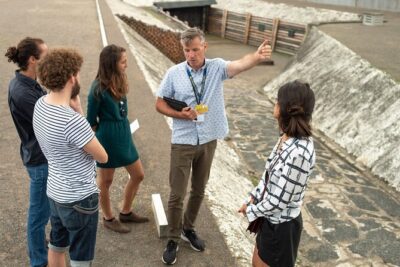
A private guide also gives you a better chance to ask questions. The tour is offered in English, and the guide is licensed to lead at both Munich sites and the Dachau memorial. Guide Max receives specific praise for making sure the group saw everything it came to see and more, which fits the tour’s strength: it is built around close attention rather than a fixed group script.
More Third Reich & WWII Tours in Munich
- Munich: Third Reich & WWII Walking Tour
★ 4.6 · 6,181 reviews - Third Reich Walking Tour Munich
★ 4.5 · 4,291 reviews - Munich: Birthplace of the Third Reich Guided Walking Tour
★ 4.6 · 771 reviews
Marienplatz, Frauenkirche, and St. Michael
Your guide picks you up from your Munich hotel or another address, with the stated standard pickup times of 8:00, 9:00, or 9:30 a.m. Other times can be requested. The exact schedule matters because the day runs for about nine and a half hours, and a later start leaves less flexibility.
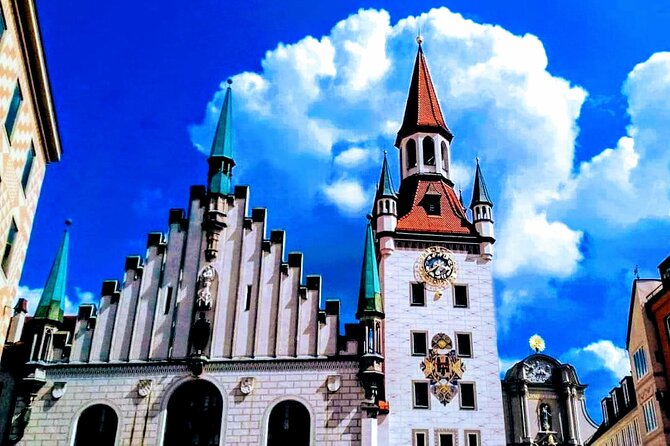
Marienplatz is the natural opening point. It has been Munich’s civic center since the city’s foundation in the 12th century and was once called Schrannenplatz. During the Nazi era, the New Town Hall displayed swastika flags. The Old Town Hall, built in the 15th century, also received a wide passage to handle growing traffic.
The guide then uses two churches to explain wartime destruction. The Frauenkirche, built in the late Gothic style in only 20 years at the end of the 15th century, suffered heavy damage from Allied bombing. St. Michael’s Church, built roughly a century later in the Mannerist style, also shows the effect of bombing and reconstruction.
Historical photographs help you compare the buildings before and after the war. These stops are short, about 15 minutes each, so you should think of them as focused explanations rather than full church tours.
Hitler’s putsch and Munich’s memorials
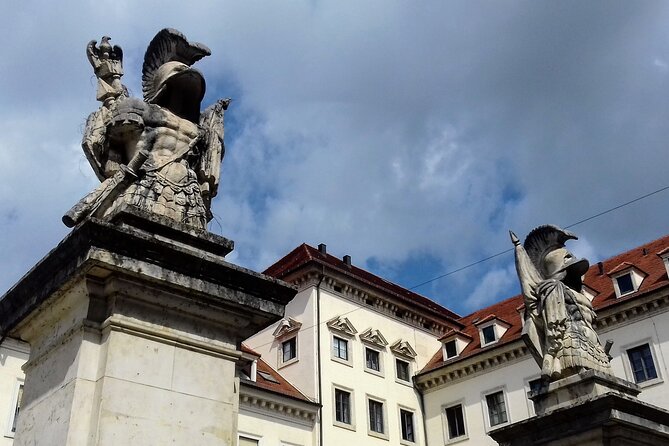
At the Residenz, you see one of Europe’s largest urban palace complexes from the outside. It has seven large courtyards and several architectural styles. Your guide explains its connection with SS Brigade Leader Christian Weber, who established his residence there in 1933.
The nearby Viscardigasse is a tiny stop with a sharp political story. Its nickname, Drückebergergäßchen, refers to people who used the lane to avoid giving the Nazi salute at the Feldherrnhalle. The passage takes only a couple of minutes, but it shows how ordinary people could signal opposition in small, risky ways.
At the Feldherrnhalle, the 1923 Hitler putsch ended in bloodshed. This southern viewpoint on Ludwigstrasse also marks the former location of Munich’s Schwabinger Tor. The chauffeur waits here while the group continues by vehicle to the outlying stops.
The Platz der Opfer des Nationalsozialismus offers a different tone. An eternal flame burns inside a symbolic dungeon, a memorial to those who suffered under National Socialism. The stop lasts only about five minutes, but its quiet design works well after the political drama of the Feldherrnhalle.
The White Rose at Ludwig Maximilian University
For me, the White Rose sites are among the most valuable parts of the day. At Ludwig Maximilian University, the guide explains how Hans and Sophie Scholl, Christoph Probst, Alexander Schmorell, Willi Graf, and Professor Kurt Huber formed the resistance group.
The university memorial is visited with the guide and receives about 25 minutes. That is enough time to understand the group’s place in Munich’s wartime story without turning the stop into a rushed photo break.
The itinerary later returns to the White Rose at Stadelheimer Straße. In 1943, the same members, along with Professor Huber, were guillotined at the Stadelheim prison. Their graves are in the nearby cemetery in the Perlacher Forest.
This repeated focus gives the resistance story more weight. You first learn about the group at the university where its ideas took shape, then see the place linked to its final punishment. It is a useful balance to the many stops connected with Hitler and the Nazi government.
More memorial visits:
- Dachau Concentration Camp Memorial Site Tour from Munich by Train
★ 4.5 · 5,637 reviews - From Munich: Dachau Memorial Site Day Tour
★ 4.8 · 2,723 reviews - From Munich: Dachau Memorial Site Half-Day Trip
★ 4.7 · 2,526 reviews - From Munich: Dachau Memorial Site Full-Day Tour
★ 4.9 · 1,406 reviews
Schwabing, the Hofbräuhaus, and Nazi-era buildings
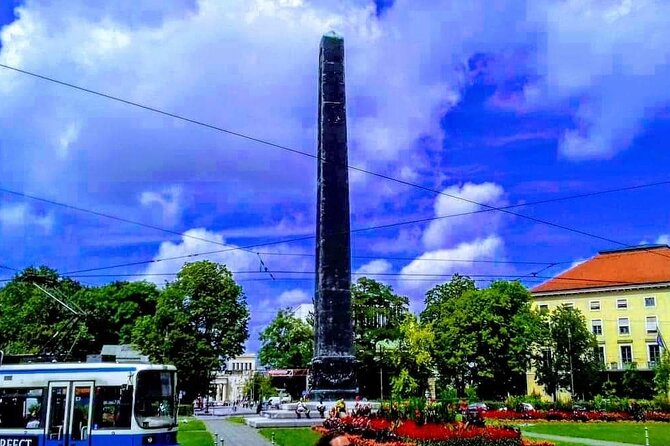
Schwabing shows how the Nazi story touched a neighborhood known today for its arts and cafés. Hitler visited the Osteria Italiana, which still exists, while the Völkischer Beobachter newspaper office and Heinrich Hoffmann’s National Socialist picture publishing company were also located in the area.
The tour points out the later Photohaus Hoffmann, where Hitler met Eva Braun in 1929. The stop lasts about 20 minutes. You should expect historical explanation from the outside rather than a museum visit.
At the Hofbräuhaus, the guide identifies a first-floor niche where Hitler and his associates liked to meet. You have about an hour here, and lunch is recommended but not included. The ground-floor Schwemme and the inner courtyard offer places to eat, depending on the weather.
This is one of the few points where you can pause for food during a very full day. Plan carefully, since lunch comes out of the touring time. The Hofbräuhaus is famous, but the reason it matters here is political as much as culinary.
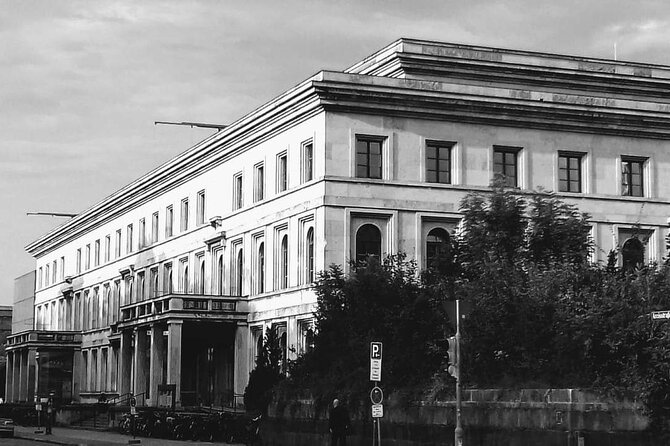
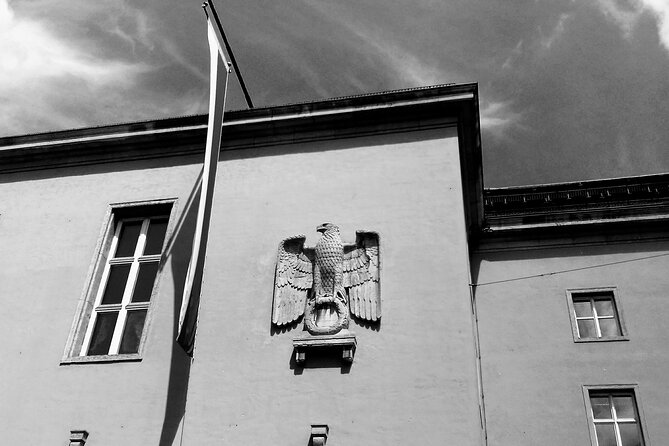
The former Reich Aviation Ministry building in Altstadt-Lehel is another exterior stop. Built in 1937 for Hermann Göring’s Reich Aviation Ministry, it has a 225-meter front and intentionally monumental design. Window grilles with swastikas and steel helmet motifs still make its original purpose clear.
At the Haus der Kunst, the guide explains its role as the first major representative Nazi building in Munich. In Hitler’s period it was called the House of German Art and displayed work approved by the regime. Its long granite colonnade earned it the mocking nickname Weißwurst-Allee.
The nearby Eisbachwelle offers a brief change of pace. Surfers ride the artificial standing wave beside the English Garden, giving you ten minutes to watch a modern Munich scene before the tour returns to more difficult material.
Bogenhausen, Prinzregentenstraße, and Ramersdorf
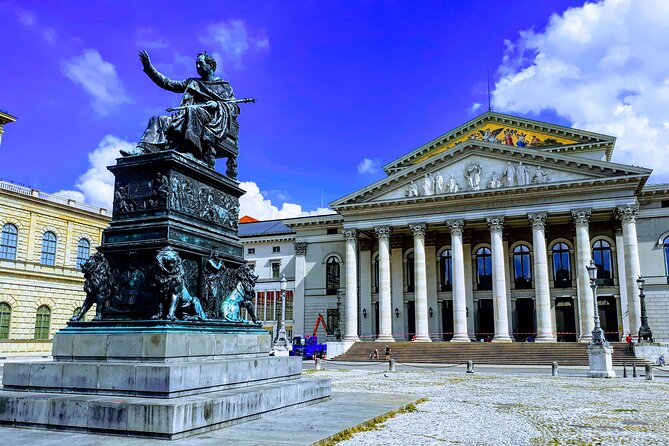
The vehicle becomes particularly useful in the eastern and southern parts of Munich. In Bogenhausen, you see the police station that now occupies Hitler’s former home. He moved into a large nine-room, 317-square-meter apartment there in 1929.
You also see the property where Eva Braun lived in a villa from 1936. The house was demolished several years ago, so this is a location stop rather than a preserved building. That distinction matters: much of the Munich portion is about connecting present-day streets with vanished or repurposed places.
On Prinzregentenstraße, the guide points out an apartment building designed for the National Socialist upper class. It has air-raid shelters flanking the main building and was meant to serve as a model for similar housing. Because of the war, it remained the only completed example of its type.
Ramersdorf brings the Nazi idea of a model settlement into view. In 1934, nearly 200 houses with individual gardens were built for people described by the regime as German national comrades. The neighborhood is now protected as a listed site, making it one of the more tangible examples of Nazi-era social planning.
Königsplatz and Hitler’s Munich
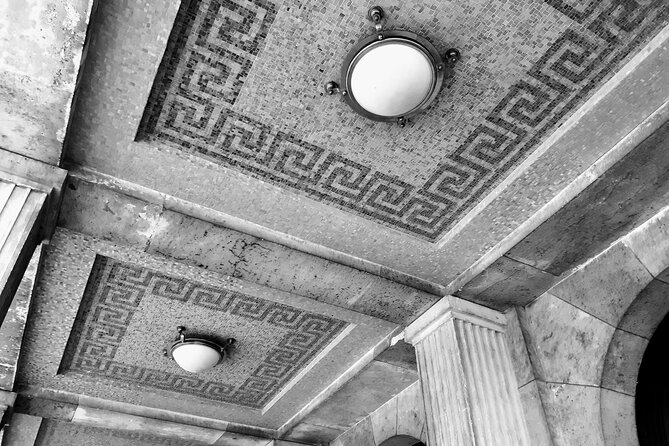
Königsplatz and Karolinenplatz formed the political center of the Nazi Party. The area held party offices, administrative buildings, and the Führerbau. Many of these buildings survived bombing with relatively little damage, which makes the district especially important for understanding how much of the physical setting remains.
The NS Documentation Center opened in 2015 on the site of the destroyed Brown House. The tour does not list an indoor visit, so you should not expect time for a full museum examination. Instead, the guide uses the district to explain how Munich became the Nazi Party’s administrative center.
At Karolinenplatz, the obelisk ordered by King Ludwig I provides an older landmark beside the later party buildings. The contrast is useful. Munich’s Nazi architecture did not replace the whole city, but inserted itself into established royal and civic spaces.
In Maxvorstadt, you see the renovated apartment building where Hitler shared a shabby room with Rudolf Häusler after moving from Vienna to Munich in 1913. The guide also identifies the proposed location of a mausoleum and Hall of the Party that Hitler planned after being inspired by Napoleon’s tomb at Les Invalides in Paris.
These are short stops, generally five to ten minutes. They work best if you listen closely, since the sites are mainly viewed from the street.
The two-hour visit to Dachau Memorial
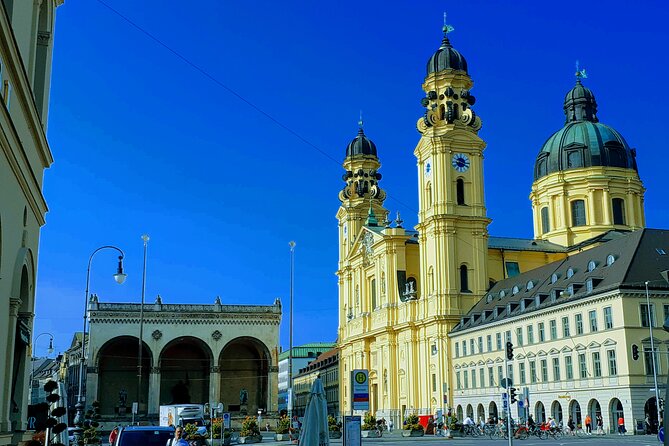
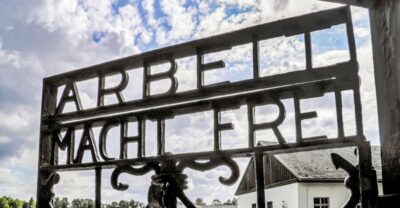
The final major stop is Dachau Concentration Camp Memorial Site. Dachau opened six weeks after Hitler became Chancellor and operated for 12 years. More than 200,000 people were imprisoned there, and 41,500 were murdered.
Those figures are difficult to process, which is why a licensed guide can help. The tour places the memorial visit at the end of a day spent tracing the political machinery that led to the camp. Before entering the memorial area, the guide points out some of the luxurious villas on the former SS grounds, a stark reminder of the gap between the camp system and the people who administered it.
The average visit lasts 1.5 to 2.5 hours. That is enough time for a serious introduction, but not so much that the day becomes impossible after the long Munich circuit. You should wear firm, comfortable shoes because some paths have coarse pebbles.
The memorial is not presented as entertainment, and it should not be. Expect a sober visit with painful material. The provider specifically does not recommend it for children under 12. Adults should also consider how much Nazi-era material they want to face in a single day.
What the $804.18 price really buys
At $804.18 per person, the tour costs far more than a standard city walk or a shared Dachau excursion. The value comes from the structure: your group receives hotel pickup, a dedicated chauffeur, a licensed guide, mineral water, and transport to sites spread across Munich and Dachau.
For a larger party, the price may make more sense because group discounts are offered and the vehicle cost is shared. Groups of more than seven use a small coach with a driver. For two people, the total cost is harder to justify unless private service, detailed guidance, and a very full itinerary are top priorities.
There are no stated hidden costs, but lunch is not included and tips are separate. Admission is listed as free at the stops, including the memorial, so the main expense is the private transport and guide service rather than entrance tickets.
The tour is also often booked far ahead, with an average booking lead time of 249 days. That suggests you should not leave this particular private experience until the last minute, especially if you need a specific morning pickup.
Who should book this experience?
I would choose this tour if you want a single, organized day that explains Munich’s Nazi past from several angles. It suits visitors who value a private guide, dislike changing trains and buses, or want to cover sites outside the historic center.
It is also a strong fit for families with older teenagers, history-focused visitors, and small groups who can share the cost. The White Rose stops make it more than a Hitler biography, while Dachau provides the essential connection between political power and mass imprisonment.
I would not choose it if you prefer a relaxed Munich day. The itinerary includes more than 20 stops, many lasting only five or ten minutes, followed by a serious memorial visit. You may find the pace tiring, and the price is high if you mainly want Dachau or a short city introduction.
Pickup and return outside Munich, including Munich Airport, can be arranged on request, though extra charges may apply. Free cancellation is available until 24 hours before the start time. That gives you some protection, but changes or cancellations inside that window are not accepted.
FAQ
How long does the tour last?
The experience lasts approximately 9 hours and 30 minutes.
Is hotel pickup available in Munich?
Yes. Pickup is available from any hotel or address in Munich. Standard pickup times are listed as 8:00 a.m., 9:00 a.m., or 9:30 a.m., and another time may be requested.
Is the tour private?
Yes. Only your group takes part in the activity.
What type of vehicle is used?
Groups travel in a new, air-conditioned VW or Mercedes minivan with a chauffeur. Groups larger than seven use a small coach with a driver.
Is the tour offered in English?
Yes. The experience is offered in English.
Is lunch included?
No. Lunch is not included. The tour allows about an hour at the Hofbräuhaus, where you can eat in the Schwemme or inner courtyard when conditions allow.
How long do you spend at Dachau Memorial?
The average stay at the Dachau Concentration Camp Memorial Site is about 1.5 to 2.5 hours.
Is Dachau suitable for children?
The memorial visit is not recommended for people under 12 years of age.
Are entrance tickets included?
The listed stops show free admission, and the tour includes visits to the Munich sites and Dachau Memorial with the licensed guide. Lunch and tips are not included.
Should you book it?
Book this tour if you want a private, highly structured day and are willing to pay for door-to-door transport and a guide across a wide area. Its best features are the licensed guidance, the repeated attention to the White Rose, and the link between Munich’s political sites and Dachau.
Skip it if the $804.18 price is difficult to absorb, if you want plenty of free time, or if your main goal is only a short Dachau visit. For the right small group, though, this is an efficient and serious way to confront Munich’s most important 20th-century story.
Just added around Munich
- Munich Photoshoot: A Must-Have Holiday Experience!★ 5.0 · 3 reviews
- München: Braukurs mit Führung und Verkostung★ 4.2 · 4 reviews
- Mozart and German Composers Private Tour in Munich★ 4.8 · 4 reviews
- CITY QUEST Munich: reveal the secrets of this city!★ 4.0 · 4 reviews
- Private audio book city rally in Munich city centre★ 4.0 · 4 reviews
- Culinary Haidhausen – The Food Tour★ 4.3 · 4 reviews
- Private Munich History and Beer Culture Walking Tour★ 5.0 · 4 reviews
- Munich: Dachau Concentration Camp Memorial Site Tour by Car★ 3.0 · 4 reviews
Memorial & Concentration Camp Tours, compared.
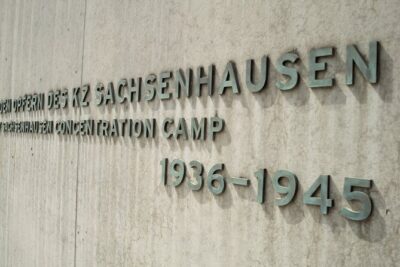
Sachsenhausen Concentration Camp Tour in English
Read our review →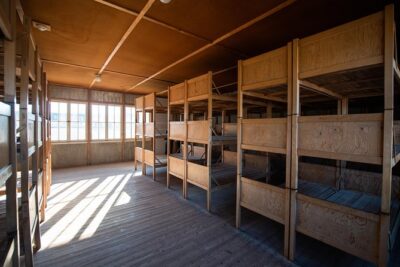
Dachau Concentration Camp Memorial Site Tour from Munich by Train
Read our review →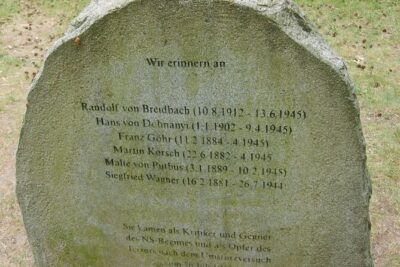
Sachsenhausen Concentration Camp Memorial Tour
Read our review →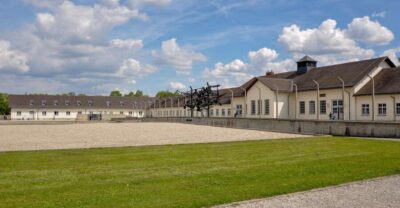
Sachsenhausen Concentration Camp Bus Tour in English from Berlin
Read our review →Sachsenhausen Concentration Camp Tour in English
Read our review →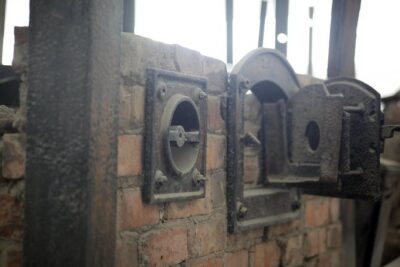
Sachsenhausen Concentration Camp Memorial Tour (Max. 15 Guests)
Read our review →Browse the lists this tour appears in