
Reviewed · WALKING TOURS
Lubeck Private Walking Tour With A Professional Guide
Lübeck packs centuries into a short walk. I like the private format, which lets your guide shape the pace and answer your questions, and I like the route’s strong mix of landmarks, port history, churches, and local stories. The main drawback is time: two hours gives you a smart introduction, not enough time to explore Lübeck fully.
This is a practical choice for a first visit, especially if you want an English-speaking local guide rather than a large group. Guides including Karin, Brigitte, and Christel have earned special praise for personal stories, small courtyards, and details you could easily miss on your own.
In This Review
- Key points at a glance
- Starting at Lübeck’s famous Holstentor
- Salt storehouses and the old port
- Lübeck Town Hall and the market square
- St. Mary’s Church and the little devil
- Buddenbrook House and Lübeck’s literary side
- What the private guide adds
- Is $303.73 good value?
- Timing, walking, and practical details
- Who will get the most from this walk?
- Should you book the Lübeck private walking tour?
- FAQ
- Where does the Lübeck walking tour start?
- Where does the tour end?
- How long does the walking tour last?
- How much does the private tour cost?
- Is the tour offered in English?
- Is this a private tour?
- Are admission tickets included?
- Can I cancel for a full refund?
Key points at a glance
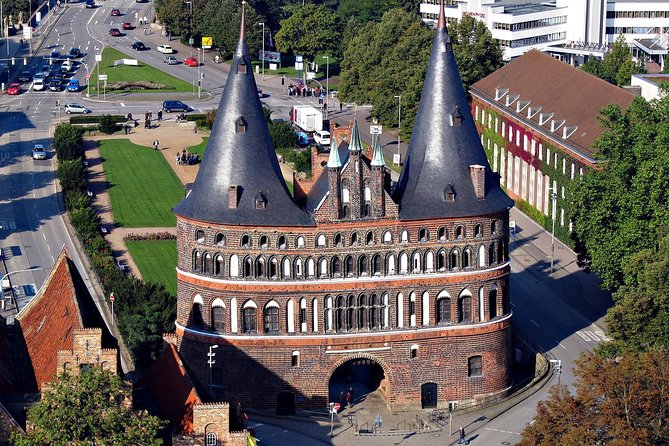
- Holstentor begins the story: Start beside Lübeck’s famous brick gate, once pictured on the German 50-mark note.
- A private group of up to 15: You get a guide devoted only to your party, with no strangers joining your walk.
- Strong range of sights: The route covers the salt storehouses, port area, Town Hall, St. Mary’s Church, the devil statue, and Buddenbrook House.
- Local guides add character: Karin, Brigitte, and Christel have been praised for personal knowledge and access to quieter courtyards.
- Good value for a group: At $303.73 per group, the cost can make sense when divided among several people.
- Plan for a short introduction: Admission fees are not included, and the two-hour route only begins to show you Lübeck.
Starting at Lübeck’s famous Holstentor
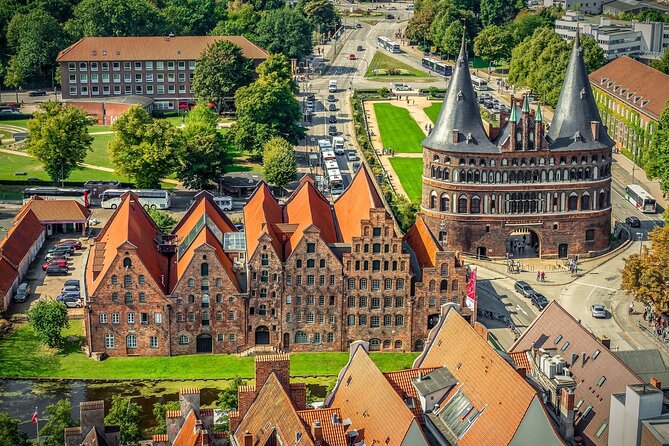
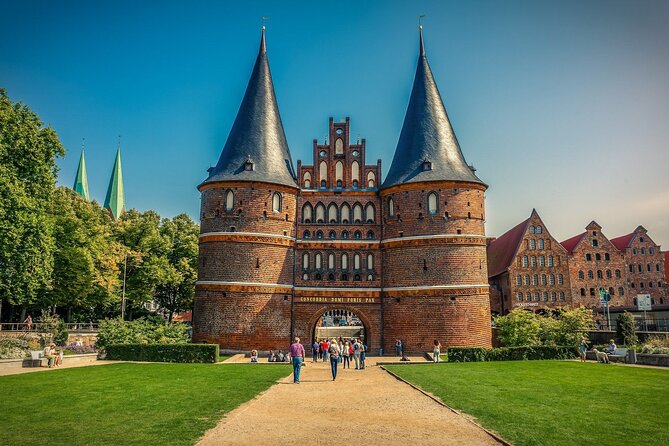
The walk begins at Museum Holstentor on Holstentorplatz, beside Lübeck’s best-known landmark. The Holsten Gate is more than a photogenic entrance to the old town. It is a symbol of Lübeck’s power during the Hanseatic period, when the city was a major trading center in northern Europe.
The guide uses the gate to set the tone. Its dark brick towers and slightly tilted appearance make it instantly recognizable, while its former place on the German 50-mark banknote gives it a surprising bit of modern history. The note was redesigned after German reunification in 1990, but the image helped make this medieval gate familiar far beyond Lübeck.
I like beginning here because you get a clear visual marker and an easy introduction to the city. You are not simply told that Lübeck was important. You begin with the very structure that once announced its strength to merchants and visitors.
The stop is called Museum Holstentor, but the information provided does not include admission to the museum. If you want to go inside, ask your guide about the timing and any extra cost. The walking tour itself continues through the city without transportation.
More Walking Tours in Germany:
- Discover Berlin Half-Day Walking Tour
★ 5.0 · 9,624 reviews - Berlin: Third Reich and Cold War 2 Hour Walking Tour
★ 4.9 · 6,830 reviews - Munich: Third Reich & WWII Walking Tour
★ 4.6 · 6,181 reviews
Salt storehouses and the old port
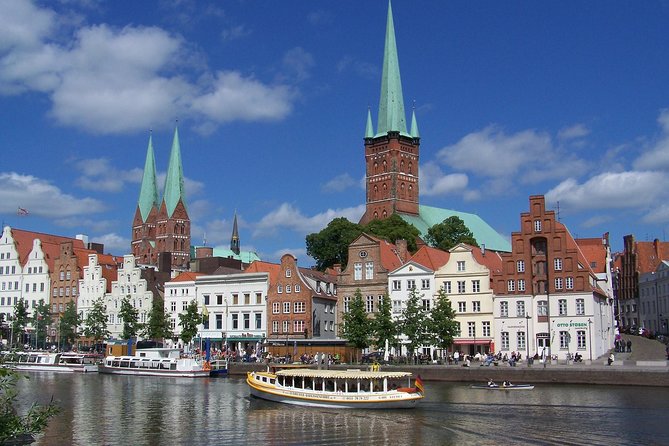
From Holstentor, the route continues toward Lübeck’s historic salt storehouses. These six brick buildings date from the 16th through the 18th centuries and help explain how trade shaped the city’s appearance and fortunes.
Salt was valuable cargo, used to preserve food and support long-distance commerce. The storehouses also point toward Lübeck’s former industrial center, the port. This is where the tour moves beyond pretty façades and shows you how the city worked.
The port matters because Lübeck was not wealthy by accident. Its position connected Baltic trade with the wider Hanseatic network. A guide can make that connection easier to understand than a quick walk past warehouses ever could.
This section may appeal most to you if you enjoy the practical side of history. You see where goods were stored and moved, rather than hearing only about rulers, churches, and grand buildings. The route also gives the old town some useful context before you reach the central market square.
Lübeck Town Hall and the market square
The next major stop is Lübeck’s Town Hall, built in the 13th century on the market square. Its dark brick construction contrasts with the red brick used on many nearby buildings, so it is easy to pick out as you approach.
The Town Hall is a good place to consider Lübeck’s civic power. This was a city run by merchants and officials who needed a strong public center for trade, law, and administration. The building’s long history also shows how the medieval city continued to function and change over many centuries.
I appreciate that this stop breaks up the route with a civic building rather than focusing only on churches. It gives you another way to read Lübeck, as a working Hanseatic city with business interests and political influence.
The market square can also be a busy place, depending on the time of day. Since this is a private walk, you can ask your guide to pause for photos or explain details that catch your eye. Still, two hours is not enough for a long stop at every building, so expect an overview rather than a full architectural study.
St. Mary’s Church and the little devil
St. Mary’s Church is one of the tour’s main highlights. Built between 1250 and 1350, it is a major brick Gothic church and is described as the third-largest church in Germany.
The building’s size matters, but the interior atmosphere is just as important. This Lutheran church contains works of art and includes a Chapel of Memory. The guide can help you notice the connection between the church, Lübeck’s wealth, and the religious life of the old city.
A particularly charming part of the visit comes outside, where you can take a photo with the little devil. The guide tells the story behind the statue, adding a touch of humor to what could otherwise be a formal architectural stop.
That small story is exactly the kind of detail that makes a private walk worthwhile. You might pass the statue alone and see only a curious figure. With a guide, it becomes part of Lübeck’s local character.
Admission is not included, so check whether entering St. Mary’s Church requires a separate fee at your visit time. The provided tour details do not promise a particular amount of time inside, and church access can affect the pace.
A few more tours and experiences worth a look
- Berlin: Private Reichstag and Glass Dome Tour
★ 4.8 · 2,226 reviews - Berlin Private Complete History All Day Walking Tour
★ 5.0 · 474 reviews - Munich Private Tour with a Local – Highlights & Hidden Gems
★ 5.0 · 469 reviews - Private Walking Tour Berlin Third Reich Hitler and World War II
★ 5.0 · 360 reviews
Buddenbrook House and Lübeck’s literary side
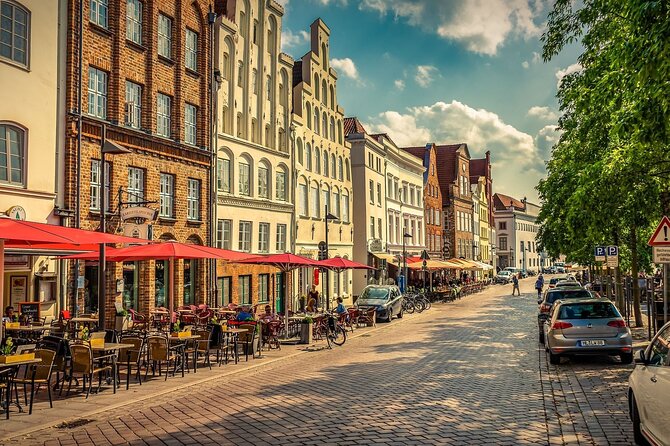
The walk ends around Buddenbrook House and the nearby decorated streets. The house is connected with Heinrich and Thomas Mann and their novel Buddenbrooks, giving the final section a literary focus.
This is a smart ending because it shows Lübeck as more than a medieval trading center. The city’s old streets later became part of its cultural and literary identity, and the decorated houses offer a pleasant close to the walk.
If you have read Buddenbrooks, this stop may carry extra weight. If you have not, the guide can still explain why the Mann family and the novel matter to Lübeck. The tour information does not indicate that an interior visit is included, so treat this as a stop in the area unless your guide confirms otherwise.
The route ends at 23 Lübeck. That endpoint is listed without much detail, so I would confirm the exact finishing point when you book, especially if you need to meet a driver or reach a train on a strict schedule.
What the private guide adds
The strongest feature here is the guide, not just the sequence of buildings. A private tour gives you your own guide for the full group, with no other party joining. The group limit is 15 people, which is generous for a private booking but still manageable if you are traveling with family or friends.
You can ask about the Hanseatic trade system, church art, local architecture, or the stories behind small statues and courtyards. You also avoid the fixed rhythm of a large public group, where one question can hold up thirty people and a missed detail is simply lost.
Several guides have received especially warm praise. Karin is described as a local who grew up in Lübeck and knew the town extremely well. She was also praised for taking a group into small, attractive backyards and for explaining the city in detail.
Brigitte was appreciated for sharing historical facts along with lesser-known local details. Christel received similar praise for showing things that a visitor might not get from a guide without local ties. Those comments suggest that the quality of the experience depends heavily on the individual guide assigned to you.
That is both a strength and a consideration. The provider is Global Guide Services, but you may not be able to choose a specific guide unless you arrange it directly. If having Karin, Brigitte, or Christel matters to you, ask before booking rather than assuming a particular person will lead the walk.
Is $303.73 good value?
The price is $303.73 for the group, up to 15 people. That sounds high if you are traveling alone or as a couple, but the calculation changes quickly with a larger party.
For 10 people, the cost works out to about $30 per person. For 15, it is about $20 per person. For a family, cruise group, or group of friends arriving together, that can be fair for a dedicated English-language guide.
You are paying for privacy, not a long day of sightseeing. The tour lasts about two hours, and admission tickets are not included. Think of the fee as the cost of orientation and local interpretation, then budget separately for any museum or church entry you choose.
I would consider it better value for a group than for one or two people. Solo visitors and couples may prefer a shared walking tour if available, while larger groups gain more from having the guide to themselves.
The experience is also useful when your time is limited. A focused route through the key old-town sights can help you decide what deserves a longer visit later. One two-hour walk cannot cover every museum, tower, and courtyard, but it can prevent you from wandering without a plan.
Timing, walking, and practical details
The tour lasts approximately two hours and requires no transportation. You meet at Museum Holstentor, Holstentorplatz, 23552 Lübeck, Germany, and finish at the listed address of 23 Lübeck.
The walk is described as suitable for any age, and most people can participate. It is near public transportation, which makes the starting point practical, though no specific transit route is provided.
You should wear comfortable shoes because the experience is entirely on foot. The route includes historic streets, market areas, church grounds, and port-related sights. The supplied details do not specify the walking distance or the presence of steps, so ask the provider if anyone in your group has mobility concerns.
The tour is offered in English and includes a mobile ticket. Confirmation arrives at booking. You can cancel for a full refund up to 24 hours before the local start time. Changes or cancellations inside that 24-hour window are not accepted for a refund.
The current rating is 4.5 out of 5 from 10 ratings, and 90 percent of participants recommend it. That is a good result, though the sample is small enough that I would focus more on the repeated praise for the guides than on the number alone.
Who will get the most from this walk?
I would choose this tour if you want a short, private introduction to Lübeck with historical explanation at every major stop. It suits families, older relatives, and groups of friends who prefer to move together rather than split up into a public tour.
It is also a good fit if you are arriving from Kiel and want to understand Lübeck quickly. The tour details identify the experience with Kiel, but the meeting point is in Lübeck, so plan your arrival carefully and allow enough time to reach Holstentorplatz.
History fans will enjoy the Hanseatic trade material, salt storehouses, Town Hall, and port connections. Architecture lovers will get a strong sample of North German brick Gothic design. Readers interested in German literature will appreciate the Buddenbrook House finish.
I would hesitate if you want extensive interior visits or a full-day exploration. The tour is short, admission is extra, and the route only introduces the city. You will need more time afterward if you want to visit museums, climb towers, examine church art at length, or explore the old town at a slow pace.
Should you book the Lübeck private walking tour?
Book it if you are traveling with a group and value a local guide who can explain the city in clear, personal terms. The route covers Lübeck’s best-known symbols while also making room for port history, the salt trade, the little devil, and the Mann family connection.
The smartest way to use it is as your first activity in Lübeck, then continue exploring on your own afterward. Ask about church and museum admission, confirm the exact end point, and request a guide with strong local experience if that is important to you.
For a couple, the group price may be harder to justify. For a larger party, the private format is much more attractive. With the right guide, this short walk can give you a useful map of Lübeck’s past and a clear idea of where to spend the rest of your day.
FAQ
Where does the Lübeck walking tour start?
It starts at Museum Holstentor, Holstentorplatz, 23552 Lübeck, Germany.
Where does the tour end?
The listed end point is 23 Lübeck. The exact finishing location should be confirmed when booking.
How long does the walking tour last?
The tour lasts approximately two hours.
How much does the private tour cost?
The price is $303.73 per group, for up to 15 people.
Is the tour offered in English?
Yes. The experience is offered in English.
Is this a private tour?
Yes. Only your group participates, with a private guide assigned to your party.
Are admission tickets included?
No. Admission tickets are not included in the tour price.
Can I cancel for a full refund?
Yes. You can cancel at least 24 hours before the local start time for a full refund. Cancellations or changes made less than 24 hours before the start are not accepted for a refund.
Just added around Germany
- St George’s Culinary Food Tour★ 5.0 · 3 reviews
- Castle Braunfels Day Trip from Frankfurt★ 5.0 · 3 reviews
- Discover Hamburg: Private Walking Tour★ 5.0 · 3 reviews
- Whodunnit – Interactive city walk in Düsseldorf★ 4.5 · 3 reviews
- Discover Dusseldorf’s most Photogenic Spots with a Local★ 5.0 · 3 reviews
- Kreuzberg Private Walking Tour: Immigrants, Artists & Hipsters★ 5.0 · 3 reviews
- Private Photo Tour in Kreuzberg★ 5.0 · 3 reviews
- Dusseldorf Private Walking Tour With A Professional Guide★ 4.5 · 3 reviews
Walking Tours, compared.





Berlin’s Best: 2 Hour Walking Tour Third Reich and the Cold War
Read our review →


Third Reich Berlin: Hitler and WWII Walking Tour
Read our review →Browse the lists this tour appears in