

Reviewed · WALKING TOURS
Hanover: Guided Walking Tour of the Linden-Limmer District
Linden tells Hanover’s story in two hours. This Linden-Limmer walking tour moves from royal gardens to factory streets, cultural venues, graffiti, and café life, showing how one former village became a workers’ district and then a favorite urban hangout.
I like the mix of social history and everyday city life. You see a 1749 garden pavilion, a former bed factory, the controversial Ihme Center, and the lively Limmerstraße in one compact route. I also like the price: at $17 per person, it offers useful local context without taking a large bite from your Hanover budget.
The main consideration is language. The live tour is offered in German, so you need enough German to follow the explanations. The route also focuses on streets, buildings, and neighborhood history rather than grand royal sights, which may not suit you if you want a traditional old-town tour.
In This Review
- Key points to know before you book
- From royal kitchen garden to workers’ quarter
- Küchengarten and the 1749 pavilion
- Factory growth and the making of modern Linden
- The freight station and Lichtenbergplatz
- The Ihme Center and Hanover’s Brutalist debate
- Faust: a bed factory reborn as a cultural center
- Nedderfeldstraße, graffiti, pubs, and the Apollo cinema
- Limmerstraße and the local art of Limmern
- What the $17 price gets you
- Language, access, and practical fit
- Who should book this Linden-Limmer walk?
- Should you book it?
- FAQ
- Where does the walking tour meet?
- How long does the tour last?
- What language is the tour offered in?
- Is the walking tour wheelchair accessible?
- What sites are covered on the route?
- How much does the tour cost?
- Can I cancel and receive a refund?
Key points to know before you book
- Royal garden origins: Küchengarten began as a food garden for Hanover’s royal family, and its 1749 pavilion still survives.
- A village transformed by industry: Linden changed from one of the Kingdom of Hanover’s prettiest villages into a factory and workers’ district.
- Brutalist architecture with strong opinions: The Ihme Center is disliked by many Hanoverians but attracts interest for its bold concrete design.
- Culture in a former factory: Faust now fills the old Werner & Ehlers bed factory with concerts, exhibitions, and readings.
- Street art and cinema history: Nedderfeldstraße brings graffiti, pubs, and the Apollo cinema, one of Germany’s early arthouse cinemas.
- A lively finish: Limmerstraße is the place for Limmern, with kiosks, restaurants, cafés, and plenty of local foot traffic.
From royal kitchen garden to workers’ quarter
The tour’s strength is its clear story. Linden did not grow as a polished royal suburb. It changed through food production, factories, machinery, textiles, rail transport, and working-class housing.
You begin with the courtly side of the district. The kitchen garden once supplied the royal family, so Küchengarten was not simply a pleasant public green space. It was part of the practical system that fed the court.
The surviving pavilion dates from 1749. It was moved to Lindener Berg in 1913, an unusual detail that gives the site another layer. You are not just looking at an old garden building. You are seeing a piece of royal Linden that was later relocated as the neighborhood changed around it.
From there, the story turns industrial. The beginning of factory development is linked to Johann Egestorff, whose work helped pull Linden into the age of machinery and production. Factories and textile businesses changed the district’s purpose and its population.
That shift explains why Linden can feel so different from Hanover’s more formal central areas. The neighborhood was shaped by work, housing, transport, and local businesses. Its character grew from daily life rather than from grand civic planning.
The tour also covers the former royal kitchen garden area after Hanover was annexed by Prussia in 1866. Once that land became available, a freight station was built there, and a middle-class residential district developed around Lichtenbergplatz.
That change is useful to understand as you walk. Linden was not one uniform quarter. It held royal land, factories, worker housing, rail infrastructure, and more comfortable residential streets. The route helps connect those pieces instead of presenting each building as an isolated sight.
More Walking Tours in Hanover
- Hannover: Guided Old Town Walking Tour
★ 4.5 · 338 reviews - Hanover: Crime Walking Tour
★ 4.5 · 243 reviews - Hanover: Flashlight Guided Walking Tour at Night
★ 4.7 · 52 reviews
Küchengarten and the 1749 pavilion
Küchengarten is likely to be one of the calmer stops on the route. Its importance comes from its former function, not from the sort of monumental design you might expect at a royal palace.
The garden supplied the royal household. That practical role tells you something about court life and about the way Hanover used land beyond its palace buildings. A royal garden was not only for decoration. It also produced food and supported the running of the court.
The pavilion adds a physical reminder of that period. Built in 1749 and moved to Lindener Berg in 1913, it connects two different moments in Linden’s story: the area’s courtly past and its later place within a growing city.
I would pay close attention to the guide here, because the pavilion itself may not take long to see. The value comes from the explanation of why it was built, what the garden did, and why the building was moved.
This stop works well for visitors who like small details with a larger meaning. If you are hoping for lavish interiors or a major palace visit, keep your expectations in check. This is a neighborhood history stop, not a royal residence tour.
Factory growth and the making of modern Linden
Johann Egestorff provides the bridge from garden district to industrial center. The tour uses his connection to explain how factories began taking root in Linden.
The arrival of machine and textile industries changed more than the local economy. It changed the physical shape of the district and the lives of the people who lived there. Linden moved away from its earlier identity as the most beautiful village in the Kingdom of Hanover and became a workers’ quarter.
That contrast gives the walk much of its appeal. You are not being asked to admire a single famous monument. You are watching a neighborhood change under economic pressure.
The industrial story also helps make sense of later sights, including the former Werner & Ehlers bed factory. A factory building can look ordinary from the outside, but its reuse gives it a second life. In Linden, older industrial sites are not simply erased. Some become places for music, art, public events, and local gatherings.
The tour does not appear to be designed around entering every building. Instead, expect the guide to explain how the district developed as you move through it. That format keeps the walk moving, but it also means you should listen closely rather than wait for a long interior visit at each stop.
The freight station and Lichtenbergplatz

The former royal garden land became available after Prussia annexed Hanover in 1866. A freight station was then built on the site, bringing transport and industry into the district.
This is an important piece of the route because railways often explain why a neighborhood grows in a particular direction. Freight movement supported factories, while the surrounding land created room for housing and new streets.
Around Lichtenbergplatz, the district developed a middle-class residential area. That gives you another useful contrast. Linden was not only a workers’ quarter, and it was not only an industrial zone. Different social groups and building types appeared as the old land uses changed.
I like this part of the story because it keeps the tour from becoming too simple. The district was not transformed in one clean step from village to factory town. Its later development included several kinds of residents, transport needs, and urban spaces.
The guide can help you read these changes from the street. Look for the difference between the practical industrial story and the more residential character around the square. The route is at its best when you connect what you see with why it appeared there.
Something different for another day:
- Hannover: 24-Hour Hop-On Hop-Off Sightseeing Bus Ticket
★ 4.2 · 298 reviews - Hanover: SEA LIFE Entry Ticket
★ 4.1 · 160 reviews - SEA LIFE Hannover Ticket
★ 4.0 · 96 reviews - Hanover: Royal Gardens of Herrenhausen Guided Tour
★ 4.6 · 78 reviews
The Ihme Center and Hanover’s Brutalist debate
The Ihme Center is one of the tour’s most distinctive stops. Many Hanoverians consider it an eyesore, while many younger people show strong interest in its Brutalist construction.
That split reaction makes the building worth discussing. You do not need to like the Ihme Center to appreciate what it says about architectural taste, postwar planning, and the changing way people judge concrete city buildings.
Brutalist architecture can be difficult to read at first glance. Large forms, heavy concrete, and practical design often lack the decorative details that make older buildings easy to admire. The Ihme Center asks a different question: can a building be valuable because of its structure and period, even if it is not conventionally beautiful?
The tour gives you a chance to consider that question in context. Instead of treating the building as either a mistake or a masterpiece, the guide can explain why it provokes such different reactions.
This stop may be especially rewarding if you enjoy modern architecture or urban design. If you prefer medieval lanes and ornate façades, it may feel less immediately appealing. Still, it adds variety to a route that could otherwise focus too heavily on old Linden.
Faust: a bed factory reborn as a cultural center
The Faust cultural center occupies the former Werner & Ehlers bed factory. This is one of the clearest examples of Linden’s industrial past continuing in a new form.
The site now hosts concerts, exhibitions, and readings. That range matters. Faust is not just an old factory preserved behind a plaque. It is an active cultural place with a changing program.
You may not enter for a full event during the walking tour, and the exact atmosphere can depend on what is happening there. Even so, the building’s current use gives you a practical view of adaptive reuse. Industrial spaces can remain part of a neighborhood instead of being demolished or converted into something unrelated to their past.
I like this stop because it links architecture with local life. The former factory is not frozen in time. Its new role reflects the creative and social side of Linden.
For a short tour, this is also a useful reminder that culture in Hanover is not limited to formal museums or concert halls. Some of it operates in converted workspaces, with a less polished and more local feel.
Nedderfeldstraße, graffiti, pubs, and the Apollo cinema
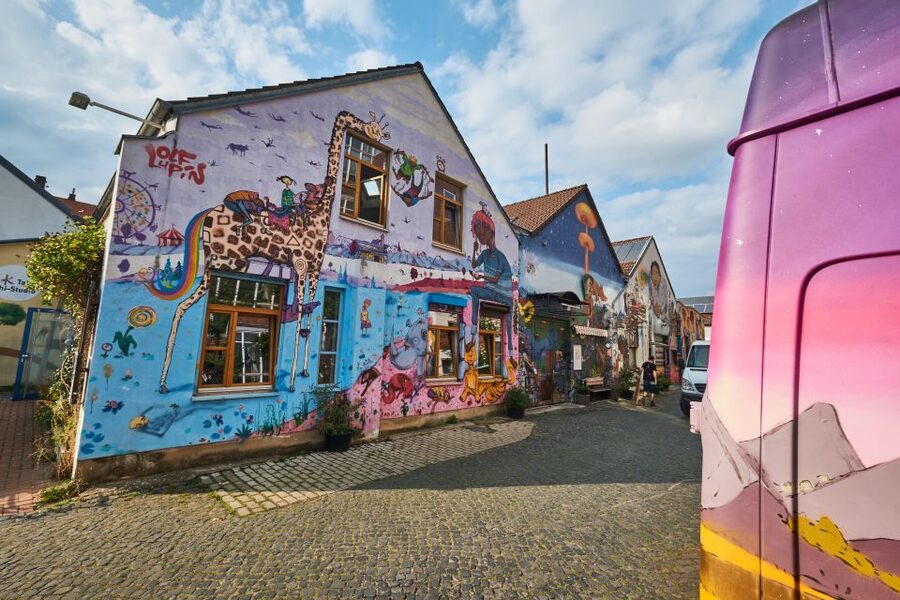
Nedderfeldstraße brings a sharper change of mood. Here, graffiti art and pubs give the walk a more informal street-level character.
The graffiti is part of the neighborhood’s visual language. It may not appeal to everyone, and the artwork can change over time. Still, it helps show how Linden’s identity is expressed beyond official monuments and preserved buildings.
The pubs add another layer. They suggest a district used for social life after work, not merely a place people pass through. That fits the wider story of Linden as a quarter shaped by workers, local businesses, and communal habits.
Nearby, the Apollo cinema offers a different cultural detail. It is associated with the early history of arthouse cinema in Germany. That makes it a worthwhile stop even if you do not plan to watch a film.
The cinema gives the tour a broader cultural frame. Linden’s identity comes not only from factories and cafés, but also from alternative film culture and places that show work outside the mainstream.
This part of the walk may be most enjoyable for you if you like neighborhoods with visible personality. It is less about polished sightseeing and more about noticing how art, entertainment, and old buildings share the same streets.
Limmerstraße and the local art of Limmern
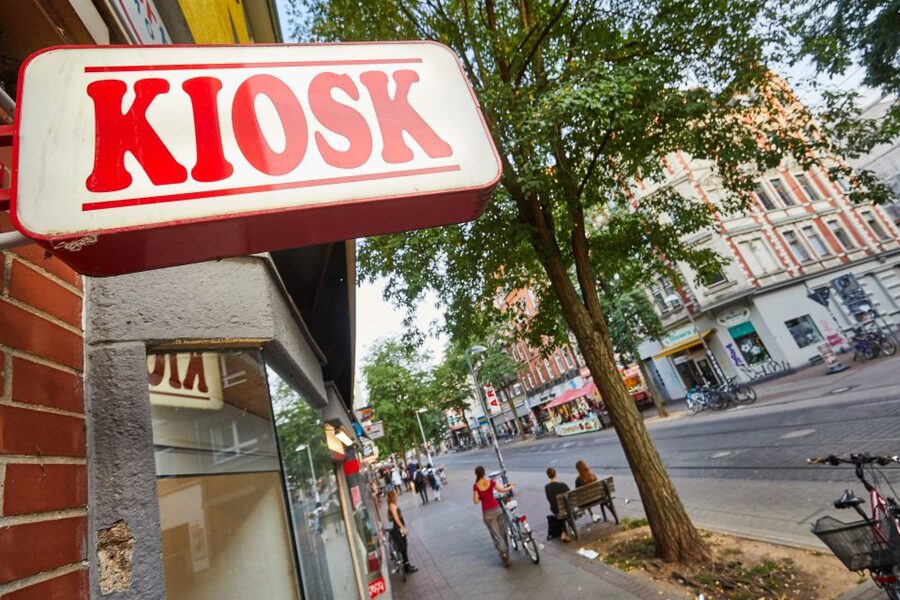
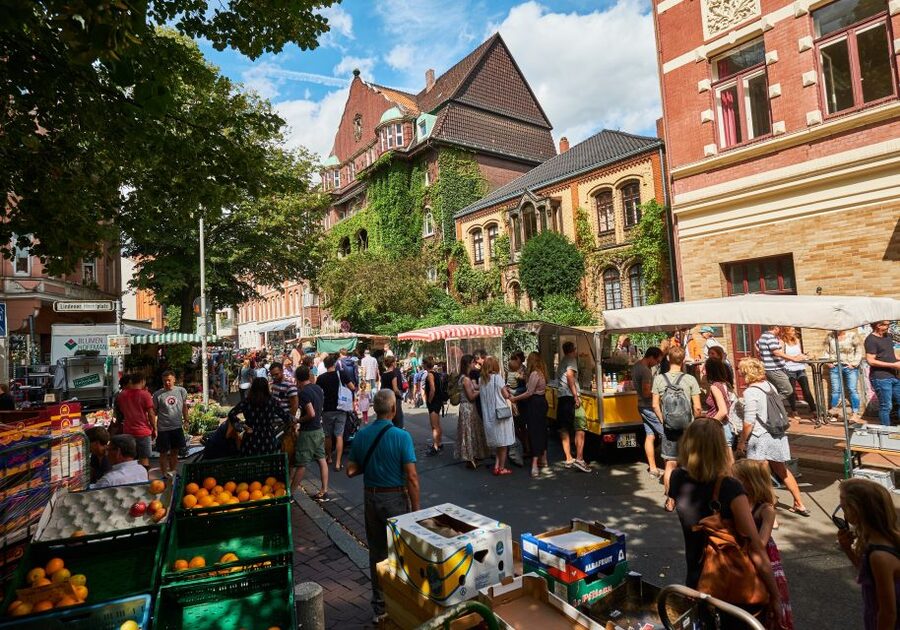
The route finishes on Limmerstraße, the social center of the experience. This is where you encounter Limmern, a local term for spending time along the street, moving between kiosks, restaurants, and cafés.
The high density of small food and drink stops gives Limmerstraße a very different energy from Küchengarten. You move from royal provisions to modern neighborhood refreshments, which makes the ending feel tied to the opening.
You should not expect a formal finale or a major viewpoint. The reward is the chance to see how people use the district today. Limmerstraße is a place for meeting friends, grabbing something from a kiosk, eating out, or sitting in a café.
This is also a good place to extend your visit after the tour. The tour itself lasts two hours, so you may have time to stay for food or a drink. Exact opening hours and prices are not provided, so plan to choose based on what is open when you arrive.
Limmerstraße can also be the busiest-feeling part of the route. If you prefer quiet streets, you may find it less restful. If you want to finish among local businesses and ordinary city life, it is a fitting conclusion.
What the $17 price gets you
At $17 per person, the value comes from interpretation rather than admission tickets. The included service is a guided tour, and the route covers several periods of Linden’s development in only two hours.
You are paying for the connections between places: royal garden, relocated pavilion, factory growth, freight transport, middle-class housing, Brutalist architecture, cultural reuse, arthouse cinema, and café life. Without a guide, you could walk past many of these sites without knowing why they matter.
The price is especially fair if you already plan to spend time in Linden-Limmer. The tour gives you a framework for exploring the district on your own afterward.
It is less valuable if you want entry to multiple attractions or a long stop inside museums. Those are not part of the experience. Think of this as a guided neighborhood orientation, not an admission-based sightseeing package.
The five-star rating from six published bookings points to a strong early response. The praise centers on clear explanations, a relaxed tone, and an enjoyable experience in a small group on at least one departure. That suggests the tour can feel friendly rather than formal, though the group size can vary.
Language, access, and practical fit
The live guide speaks German. That is the most important practical detail, so I would book only if you can follow spoken German or have a companion who can translate quietly.
The meeting point is TAK, Die Kabarett Bühne. Your guide will wear a Hannover Marketing & Tourismus GmbH card around the neck, which makes identification easier at the start.
The walking tour lasts two hours, and starting times depend on availability. Since the route covers several neighborhood streets and public sites, comfortable shoes are sensible, although the supplied information does not specify the exact surface or distance.
The experience is wheelchair accessible. That is useful for planning, but individual access conditions can still vary from stop to stop, especially around older buildings and busy streets. If you need detailed route information, confirm it before booking.
You can cancel up to 24 hours before the start for a full refund. You can also reserve now and pay later, which is helpful if your Hanover plans are still shifting.
Who should book this Linden-Limmer walk?
I would choose this tour if you want to see Hanover beyond the standard central sights. It suits you if you like urban change, working-class history, modern architecture, street art, local culture, and food streets more than formal palace interiors.
It also suits repeat visitors who have already seen the main city center. Linden-Limmer offers a different side of Hanover, and the route gives you enough background to explore independently afterward.
Families with older children may enjoy the contrast between the old pavilion, factory story, concrete architecture, graffiti, and cafés. Younger children may find the historical explanations long, especially if they do not understand German.
Architecture fans should pay special attention to the Ihme Center and the former factory spaces. Film lovers will appreciate the Apollo cinema stop. Food-focused visitors should save time after the walk for Limmerstraße.
I would skip it if you need an English-language guide, want a major museum or palace interior, or have only a short window for a tightly packed list of famous sights. This tour rewards curiosity more than checklist sightseeing.
Should you book it?
Book the Linden-Limmer walking tour if you want a reasonably priced, German-language introduction to one of Hanover’s most layered districts. The best reason to go is the range: royal gardening, industrial growth, rail transport, housing, Brutalist design, cultural reuse, cinema, graffiti, and café life all fit into two hours.
The drawback is equally clear. You will get the most from it if you can follow German and enjoy explanations about buildings and neighborhood change. If that matches your interests, $17 buys a useful local perspective and a strong starting point for exploring Linden on your own.
FAQ
Where does the walking tour meet?
The meeting point is TAK, Die Kabarett Bühne. The guide will wear a Hannover Marketing & Tourismus GmbH card around the neck.
How long does the tour last?
The guided walk lasts two hours.
What language is the tour offered in?
The live tour guide speaks German.
Is the walking tour wheelchair accessible?
Yes, the activity is listed as wheelchair accessible.
What sites are covered on the route?
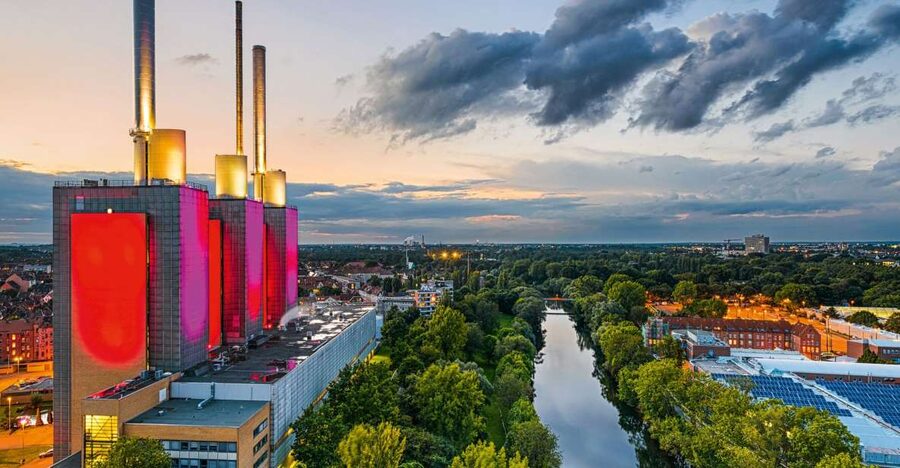
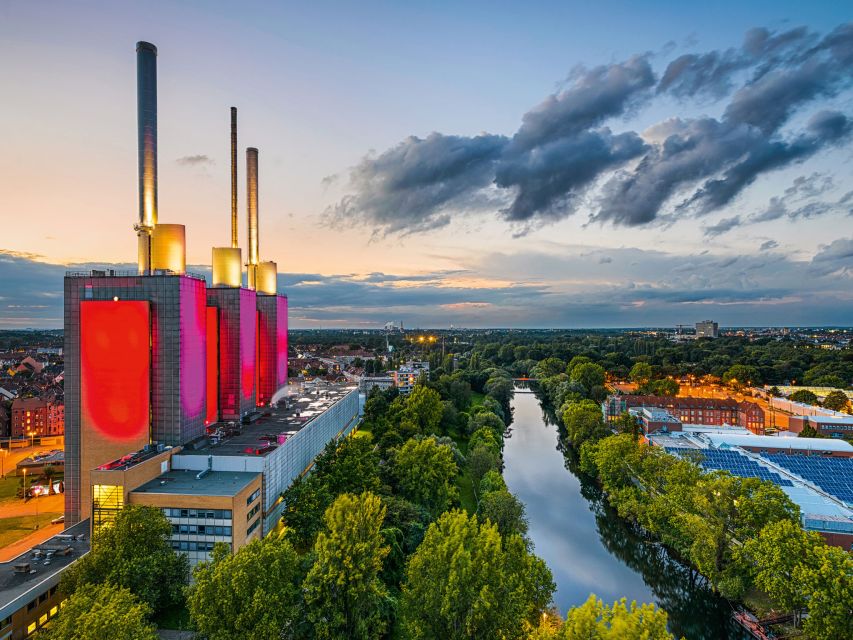
The route includes Küchengarten, the Ihme Center, Hanover’s combined heat and power plant, the Faust cultural center, and Limmerstraße. It also covers the pavilion from 1749, Nedderfeldstraße, and the Apollo cinema.
How much does the tour cost?
The price is $17 per person.
Can I cancel and receive a refund?
Yes. You can cancel up to 24 hours in advance for a full refund. You can also reserve now and pay later.
Just added around Hanover
- Guided tour of the New Town Hall in Hanover★ 5.0 · 4 reviews
- Hannover: Guided tour of the Berggarten★ 4.1 · 4 reviews
- Taste and Travel Odyssey in Hanover★ 5.0 · 5 reviews
- Hanover Private Walking Tour With A Professional Guide★ 5.0 · 7 reviews
- Fritz Haarmann murder tour through Hanover’s old town★ 4.5 · 7 reviews
- Goslar City guided tour★ 4.5 · 11 reviews
- Hanover: Old Town Historical Walking Tour by Geo Epoche★ 4.4 · 11 reviews
- Hannover: Private pub crawl with insider-guide & free shots★ 4.0 · 11 reviews
Walking Tours, compared.





Berlin’s Best: 2 Hour Walking Tour Third Reich and the Cold War
Read our review →


Third Reich Berlin: Hitler and WWII Walking Tour
Read our review →Browse the lists this tour appears in