

Reviewed · WALKING TOURS
Hanover: Crime Walking Tour
Hanover has secrets beneath its calm surface. This two-hour walking tour brings the city’s criminal past to life at original locations, from the Königsmarck Affair to Fritz Haarmann and the Hanebuth robbery murders. I like the way it mixes serious crime stories with familiar sights, so you learn about Hanover without spending the whole tour in a lecture room.
I also like the active format and manageable length. A pleasant group size and questions woven into the tour can make the stories easier to follow, even for people born in Hanover who may still hear new details. The main drawback is clear: the tour is conducted in German, and some subjects are grim. It is not suitable for children under 16 or people with claustrophobia.
In This Review
- Key points at a glance
- Why Hanover’s crime stories make a good city tour
- Starting at Hannover Tourism
- Georgsplatz and the city’s public face
- Leibnizufer and the search for a body
- Hanebuth-Gang and the legend of the robber camp
- Clevertor Prison and Hanover’s darker institutions
- Kröpcke and the best-known Hanover cases
- Fritz Haarmann, the city’s most notorious name
- The Königsmarck Affair and other cases along the route
- How much German do you need?
- Is $19 a fair price?
- Who should book this crime walk?
- Should you book the Hanover Crime Walking Tour?
- FAQ
- Where does the Hanover Crime Walking Tour start?
- Where does the tour end?
- How long does the tour last?
- What language is the tour conducted in?
- Is the tour wheelchair accessible?
- What should I bring?
- Are children allowed to join?
- Can I cancel the booking?
Key points at a glance
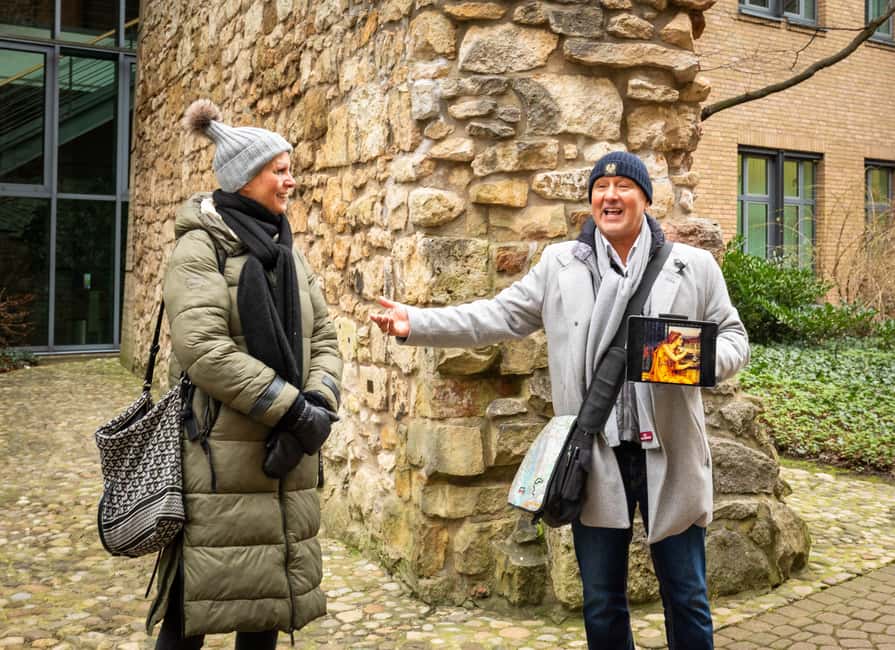
- Original crime locations: Hear stories at Georgsplatz, Leibnizufer, Hanebuth-Gang, Clevertor Prison, and Kröpcke.
- Famous Hanover cases: The tour covers Fritz Haarmann, Jasper Hanebuth, the Königsmarck Affair, and several murder and fraud cases.
- Crime mixed with sightseeing: Your guide also explains well-known Hanover landmarks along the route.
- Two hours on foot: The schedule gives you a focused introduction without taking up an entire day.
- German-language guiding: You need a good command of German to follow the legal, historical, and criminal details.
- Practical year-round format: The walk operates rain or shine, so comfortable shoes and weather protection matter.
Why Hanover’s crime stories make a good city tour
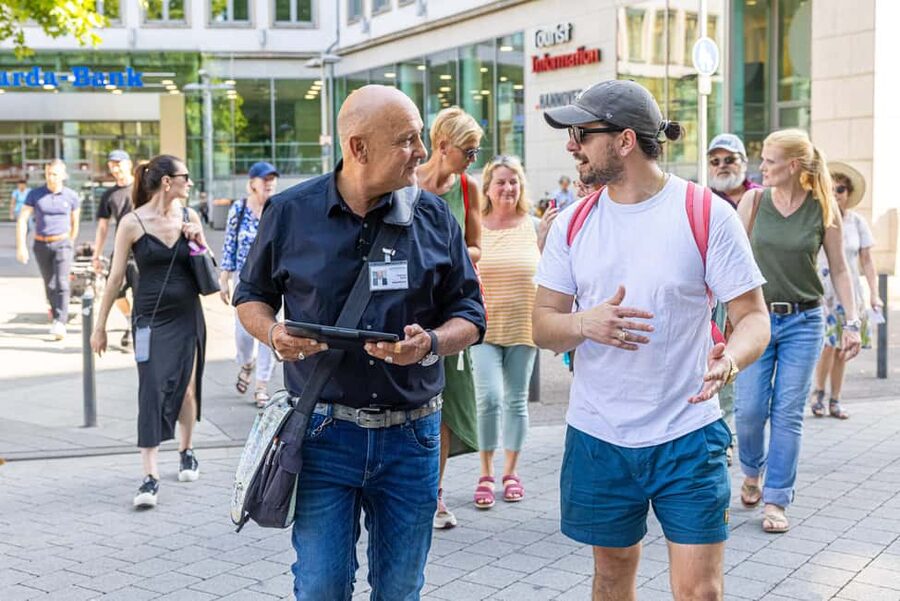
Hanover is easy to read as a pleasant Lower Saxony capital, with broad streets, public squares, and attractive buildings around the center. This tour gives you another way to understand it. Instead of treating the city as a collection of monuments, it connects places with the crimes, scandals, and legends tied to them.
That approach works because crime stories are local by nature. You are not hearing about distant events in a museum display. You are standing near the locations where people lived, worked, were imprisoned, or met a violent end. The result is more immediate, though also more somber than a standard sightseeing walk.
The subject matter ranges from aristocratic intrigue and historic robbery to murder, fraud, and a twentieth-century attack. Some cases are well known in Hanover, while others may be new even to local residents. A five-star rating of 4.5 from 243 ratings suggests that the mix of storytelling and city orientation has broad appeal, but the content still demands the right audience.
I would choose this tour for someone who already knows the main Hanover sights and wants a sharper sense of the city’s past. It also works early in a visit, since the guide points out central locations and gives you useful context for exploring afterward.
More Walking Tours in Hanover
- Hannover: Guided Old Town Walking Tour
★ 4.5 · 338 reviews - Hanover: Flashlight Guided Walking Tour at Night
★ 4.7 · 52 reviews - Hannover: New Town Hall exclusive Guided Walking Tour
★ 4.6 · 49 reviews
Starting at Hannover Tourism
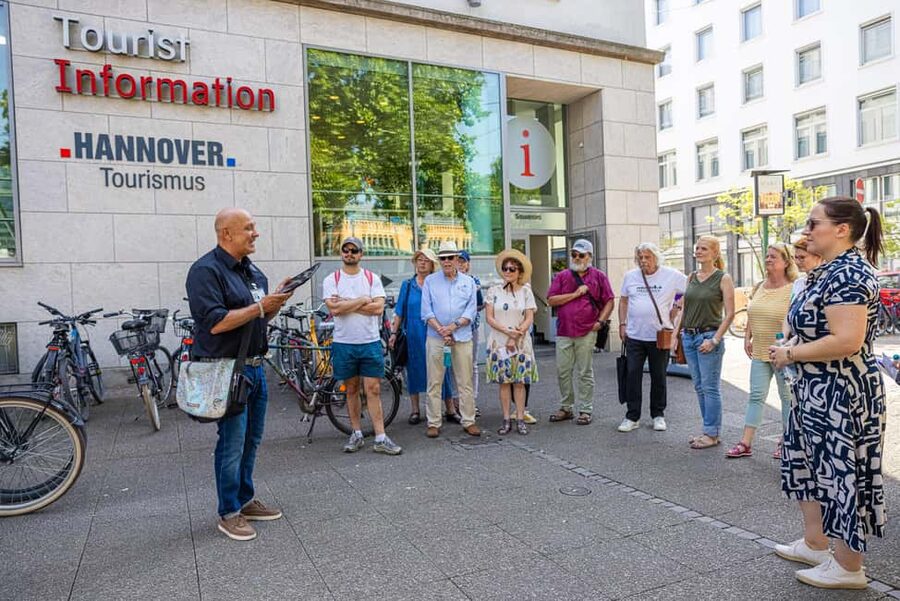
The walk begins at the Hannover Tourism information point. That is a sensible meeting place because it keeps the start central and easy to connect with the rest of a day in Hanover. You finish back at the same meeting point, so you do not need to arrange transport from a distant part of the city.
The tour lasts two hours. That is long enough for several cases and stops, but short enough to combine with lunch, a museum visit, or another city activity. I would avoid scheduling it too tightly against a train departure because the walk takes place outdoors and includes several stops along city streets.
The group moves through the city center and old town. Bring comfortable shoes, since the experience is a walking tour rather than a seated talk. The route is wheelchair accessible, which makes the central format useful for a wider range of people, although anyone with mobility concerns should still consider the practical demands of walking for two hours.
The tour runs rain or shine. Hanover weather can change quickly, so a waterproof jacket or umbrella is more useful than hoping for perfect skies. Rain will not change the stories, but it can affect how enjoyable it is to stand outside while listening.
Georgsplatz and the city’s public face
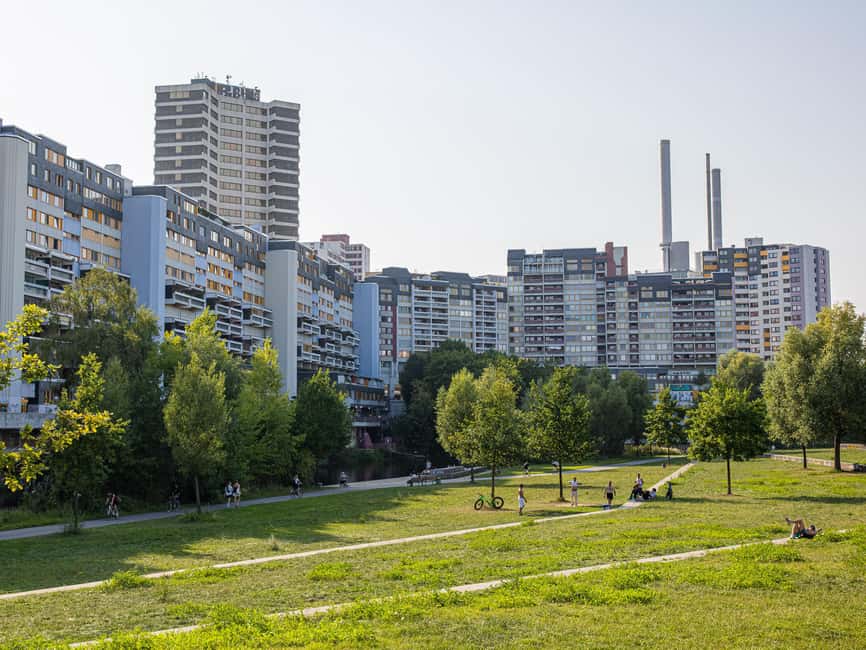
Georgsplatz introduces the contrast at the heart of the tour. On a normal day, you may see it as part of Hanover’s civic center, but the crime walk asks you to consider what public spaces can conceal.
This is where the tour begins to shift your attention from ordinary sightseeing to criminal history. The guide uses the setting to explain cases and local connections, while also pointing out the surrounding sights. That balance matters. You are not simply moving from one grim anecdote to another, and you are not losing all sense of where you are.
The tour’s focus is historical crime, not sensational entertainment. Still, the stories include murderers, family killings, fraud, and robbery. If you prefer light sightseeing, this may feel too dark. If you enjoy social history and want to understand how crime shaped public memory, Georgsplatz sets the right tone.
Leibnizufer and the search for a body
At Leibnizufer, the guide addresses one of the tour’s more unusual questions: what was behind the discovery of a body in the Leine. The waterway gives the story a strong sense of place, since the setting itself becomes part of the explanation rather than a passing backdrop.
This stop shows the advantage of hearing a case outdoors. A short account in a book can feel abstract. At the original location, you can connect the story to the city’s layout and understand why the river mattered to the events and the investigation.
The tour also places criminal cases beside Hanover’s better-known sights. That can help you remember both. You might leave knowing not only the details of a murder case, but also how Leibnizufer fits into the city center.
Some stories may be disturbing, particularly when violence against family members or victims is discussed. I would not choose this as a casual family outing, especially since people under 16 are not allowed.
More Escape Rooms & Games:
- Hanover: Crime Tour by Bike
★ 4.8 · 25 reviews - Hanover: Linden-Limmer Krimi-Rätsel-Tour
★ 4.5 · 15 reviews - Hanover Center: Outdoor Escape Game
★ 4.7 · 13 reviews - Hamburg: Sex and Crime in St. Pauli Tour for Ages 18+
★ 4.7 · 15,447 reviews
Hanebuth-Gang and the legend of the robber camp

Hanebuth-Gang is tied to Jasper Hanebuth, one of the figures featured in the tour. His story involves robbery murders, and the guide also explores the legend of where Hanebuth’s camp was located.
The combination of documented crime and local legend gives this part of the walk a different feel. You are not only learning what happened, but also how stories survive and change as they are passed through a city. The guide can help separate established information from the parts that belong to local tradition.
This is one of the places where a guide adds real value. A map can show you a street name, but it cannot explain why that name matters or how it became linked with a criminal figure. The stop should appeal to anyone interested in folklore, old city stories, and the way public memory works.
The name Hanebuth may mean little if you have never studied Hanover’s past. That is not a problem, provided you understand German well enough to follow the narrative. The guide’s job is to connect the person, the location, and the wider history in a way that makes the story stick.
Clevertor Prison and Hanover’s darker institutions

Clevertor Prison brings the tour closer to the machinery of punishment and law enforcement. The itinerary includes prisons as part of the wider criminal-history theme, so this stop adds institutional context to the individual cases.
That matters because crime stories are not only about suspects and victims. They also involve police, courts, prisons, and the public’s response. A stop connected with Clevertor can help you think about how Hanover dealt with people accused or convicted of serious crimes.
The prison connection may be especially interesting for visitors who want more than a list of notorious names. It places the cases within the city’s legal past and gives the tour a wider frame. At the same time, you should not expect an indoor prison visit or a long architectural tour. The experience is a guided city walk, and the prison is one stop within a broader route.
This is also the point to remember the warning about claustrophobia. The activity is described as unsuitable for people with claustrophobia, so anyone affected by enclosed or prison-related settings should take that seriously before booking.
Kröpcke and the best-known Hanover cases

Kröpcke is one of Hanover’s most recognizable central points and provides another chance to connect a familiar sight with a less familiar story. The tour uses the area to discuss criminal cases while continuing to orient you within the city.
Among the cases covered are the jeweler Düe and the Mauss case, Christine Fricke, known as a husband killer, and Christian Friedrich Lorenz, described as a family killer. Each case brings a different form of crime into the walk, from fraud to domestic and family violence.
The range helps keep the two-hour tour from becoming repetitive. You hear about different motives, different victims, and different periods of Hanover’s past. The drawback is that the themes are not easy listening. If you have a low tolerance for murder cases, the mix of names and details may feel heavy by the end.
The tour also covers the Königsmarck Affair, which adds a courtly and political thread to the program. Set beside later cases, it shows that Hanover’s criminal history is not confined to one era or one type of offender.
Fritz Haarmann, the city’s most notorious name

Fritz Haarmann is perhaps the best-known criminal figure on the route. The tour presents him as both murderer and police informer, an unsettling combination that raises questions about how criminal investigations and official relationships worked at the time.
You will learn where Haarmann got up to mischief, with the guide linking the story to specific Hanover locations. That connection is central to the experience. Rather than treating Haarmann as a remote historical name, the tour shows how his story belongs to the city itself.
This section is likely to be the emotional center of the walk. It has the strongest potential to attract people interested in true crime, but it also carries the greatest risk of feeling sensational if you prefer a more restrained treatment. The best reason to choose the tour is not shock value. It is the chance to understand how one notorious case became part of Hanover’s identity and public memory.
The guide also includes information about well-known sights as you move between locations. That sightseeing layer helps keep the walk grounded in the living city rather than turning Hanover into a crime museum.
The Königsmarck Affair and other cases along the route
The Königsmarck Affair adds a very different kind of drama. Its inclusion broadens the tour beyond street crime and twentieth-century murder. You get a look at intrigue involving powerful figures, which gives the program a wider historical range.
The tour also addresses the jeweler Düe and the Mauss case, as well as Christian Friedrich Lorenz. These names may be unfamiliar before the walk, so listen for the links between people, places, and the city’s institutions. The guide’s explanations are likely to be more useful than trying to remember every detail at once.
One case on the program concerns an attack on 3 July 1989, for which the IRA claimed responsibility. This brings the story closer to modern political violence and shows that the tour is not limited to medieval legends or famous murderers.
The variety is a strength, but it also means the tour may move briskly. You are covering several cases in two hours, along with major sights and multiple locations. I would focus on the broad story and jot down the names afterward if a particular case catches your interest.
How much German do you need?
The live guide speaks German, and there is no indication of an English-language option. This is the most important practical consideration for international visitors.
Crime stories rely on detail. Names, relationships, dates, legal terms, and distinctions between fact and legend all matter. Basic German may not be enough, especially when the guide is speaking outdoors and the group is moving between stops.
I would book this only if you can follow spoken German comfortably. German-speaking visitors should get the full value of the experience, while people with limited German may miss the point of the cases even if they understand the general sightseeing commentary.
For German speakers, the tour can offer a fresh view of a familiar city. The active format is a plus here. A local attendee described learning information they did not already know, taking part in the discussion, and appreciating the pleasant group size. That suggests the tour is not aimed only at first-time visitors.
Is $19 a fair price?
At $19 per person, the tour is reasonably priced for two hours with a live guide. You are paying for researched storytelling at original locations, not simply for a walk through streets you could visit on your own.
The value is strongest if you care about the subject. A standard city walk might show you Kröpcke, Georgsplatz, and Leibnizufer, but it would not normally connect them with the Düe and Mauss case, Haarmann, Hanebuth, or the Königsmarck Affair.
The price is less compelling if you cannot follow German or if you want a general introduction to Hanover without difficult subject matter. In that case, a standard sightseeing tour would likely serve you better.
The reserve-now, pay-later option keeps your plans flexible, and cancellation is free up to 24 hours before the start for a full refund. Those terms reduce the risk of booking around uncertain weather or a changing schedule, though the tour itself still operates in rain.
Who should book this crime walk?
I would recommend it to:
- German-speaking visitors interested in true crime and local history
- People who enjoy learning stories at the places where they happened
- Repeat visitors who have already seen Hanover’s main sights
- Local residents who want a fresh angle on their own city
- Adults and older teenagers who can handle serious subjects
- Visitors who want a two-hour activity rather than a full-day commitment
I would skip it if you want a lighthearted introduction, dislike murder stories, cannot follow German, or feel uncomfortable with prison-related settings. Children under 16 are not suitable for the tour, and the claustrophobia warning deserves attention.
Should you book the Hanover Crime Walking Tour?
Book it if you want Hanover with the polish taken off. The tour connects famous sights with murder, fraud, prison history, political violence, and local legend, giving you a version of the city that ordinary sightseeing rarely shows.
The strongest reasons to go are the original locations, the broad selection of cases, and the two-hour length. The key limitation is the German-only guiding, followed closely by the dark subject matter. If both suit you, $19 is a fair price for a focused and unusual city experience.
FAQ
Where does the Hanover Crime Walking Tour start?
The tour starts at the Hannover Tourism information point.
Where does the tour end?
The activity ends back at the meeting point where it began.
How long does the tour last?
The walking tour lasts two hours. Starting times vary, so check availability when booking.
What language is the tour conducted in?
The live tour guide speaks German.
Is the tour wheelchair accessible?
Yes, the tour is wheelchair accessible.
What should I bring?
Bring comfortable shoes. The tour takes place on foot and operates rain or shine.
Are children allowed to join?
The tour is not suitable for children under 16.
Can I cancel the booking?
Yes. You can cancel up to 24 hours in advance for a full refund. You can also reserve now and pay later.
More Walking Tours
- Hannover: Culinary walking tour district List/Oststadt
★ 4.6 · 28 reviews - Hannover: Culinary Walking Tour Old Town
★ 4.6 · 25 reviews - City walk through Hanover
★ 4.0 · 20 reviews - Discover Berlin Half-Day Walking Tour
★ 5.0 · 9,624 reviews
Just added around Hanover
- Hanover Center: Outdoor Escape Game★ 4.7 · 13 reviews
- Hanover: Linden-Limmer Krimi-Rätsel-Tour★ 4.5 · 15 reviews
- City walk through Hanover★ 4.0 · 20 reviews
- Hannover: Culinary Walking Tour Old Town★ 4.6 · 25 reviews
- Hanover: Crime Tour by Bike★ 4.8 · 25 reviews
- Flashlight tour for children/teenagers★ 4.7 · 28 reviews
- Hannover: Culinary walking tour district List/Oststadt★ 4.6 · 28 reviews
- Fritz Haarmann – Die Mördertour★ 4.6 · 41 reviews
Walking Tours, compared.




Berlin’s Best: 2 Hour Walking Tour Third Reich and the Cold War
Read our review →
Third Reich Berlin: Hitler and WWII Walking Tour
Read our review →Browse the lists this tour appears in