
Reviewed · WALKING TOURS
East Berlin: City of Shadows Walking Tour
Berlin’s past is still underfoot. The East Berlin: City of Shadows Walking Tour connects Cold War landmarks with the human stories behind them, from divided families and guarded subway stations to the protests that brought East Germany’s government down. I like the small group size, limited to eight people, and the route’s strong historical focus. I also like that a local historian leads the walk rather than a guide offering only dates and photo stops.
The main drawback is that this is a brief overview, not a full museum visit. You will need public transportation between several sites, and the advertised pickup details deserve confirmation because hotel pickup is offered in one section, while another says it is not included. Plan on paying about $2.80 for a one-way Berlin AB ticket or $7 for a day pass.
In This Review
- Key points about Berlin’s City of Shadows tour
- Why this three-hour tour works
- Brandenburg Gate and the Cold War divide
- Friedrichstrasse and the Palace of Tears
- Nordbahnhof and Berlin’s ghost stations
- Karl-Marx-Allee and the Socialist ideal
- The Berlin Wall Memorial and the Death Strip
- The Stasi headquarters and the machinery of suspicion
- Alexanderplatz and the end of Communist rule
- Walking, transit, and the pace of the route
- Who will get the most from this tour
- Should you book the City of Shadows walk?
- FAQ
- How long does the East Berlin: City of Shadows Walking Tour last?
- Where does the tour start?
- Where does the tour end?
- Is hotel pickup available?
- Is public transportation included?
- Is the tour offered in English?
- How many people can join the tour?
- Are museum admissions included?
- Are food and drinks included?
- Can the tour be canceled for a refund?
Key points about Berlin’s City of Shadows tour
- A compact Cold War route: In about three hours, you visit seven places tied to Communist East Berlin.
- A guide-led history lesson: A local historian explains political repression, daily life, surveillance, and the fall of the regime.
- A small group of up to eight: The size should make it easier to ask questions and keep up through city streets and transit stops.
- Public transport is part of the experience: You will ride Berlin transit because some locations are too far apart to walk.
- Museums are viewed from the outside: The route includes the Stasi headquarters area, but museum admission and extended indoor visits are not included.
- Strong overall approval: The tour carries a 4.8 rating from 11 published reviews, with 91 percent recommending it.
Why this three-hour tour works
I see this as an orientation tour for anyone who wants to understand Berlin’s divided past before exploring more sites independently. The route moves from the symbolic center of modern Berlin toward the former East Berlin districts, giving you a useful framework for the Wall, the Stasi, the Soviet presence, and the 1989 demonstrations.
The tour is not built around grand interiors or long museum visits. Instead, it uses streets, squares, train stations, monuments, and surviving Cold War structures as evidence. That approach works well in Berlin because the city’s political story is often visible in the contrast between old buildings, rebuilt public spaces, and empty stretches where the Wall once ran.
The group limit of eight matters here. At places such as the Brandenburg Gate and Alexanderplatz, a large group could easily scatter or lose the thread. With fewer people, you should have a better chance to hear the historian and ask about details that interest you.
At $156.53 per person, the price is high for a three-hour walking tour, especially since food, drinks, transit, and museum admission are extra. The value depends on the guide. If you want a clear political explanation and a compact route through several important sites, the fee may be worthwhile. If you mainly want to enter museums, the cost is harder to justify because this experience does not include those admissions.
More City Tours in Berlin
- Berlin: 1-Hour City Tour by Boat with Guaranteed Seating
★ 4.3 · 16,993 reviews - Berlin: City Sightseeing Hop-On Hop-Off Bus Tour
★ 4.1 · 4,233 reviews - Potsdam: City and Castles Tour
★ 4.7 · 3,721 reviews
Brandenburg Gate and the Cold War divide
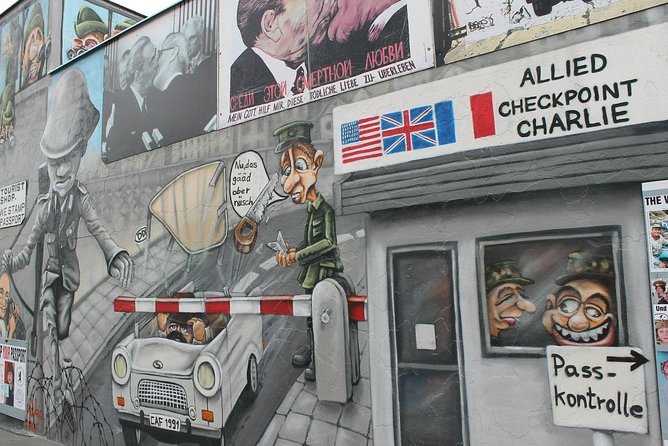
The walk begins at Unter den Linden 42, near Brandenburg Gate. This is an effective starting point because the gate is both a famous Berlin photo stop and a place loaded with Cold War meaning.
Here, the historian places modern Berlin beside its less visible past. You learn how the postwar Allies divided Germany and Berlin into four occupation zones, creating the conditions for decades of conflict between the Soviet Union and the Western powers.
The Brandenburg Gate is also connected with President Ronald Reagan’s 1987 speech calling on Soviet leader Mikhail Gorbachev to tear down the Berlin Wall. The tour uses that moment to explain the tension of the late Cold War, when the Wall still divided the city but the political order was beginning to weaken.
Nearby, you look toward the former Soviet Embassy, a large building created in 1945 amid the ruins of World War II. Its scale was not accidental. It expressed Stalin’s ambition to control Berlin and gave the new postwar order a visible architectural face.
You spend about 20 minutes here. That is enough for an introduction, though not enough for every layer of the site. I would arrive ready to listen rather than expecting a long sightseeing stop. The value is in the explanation of how a familiar monument became part of a dangerous frontier.
Friedrichstrasse and the Palace of Tears
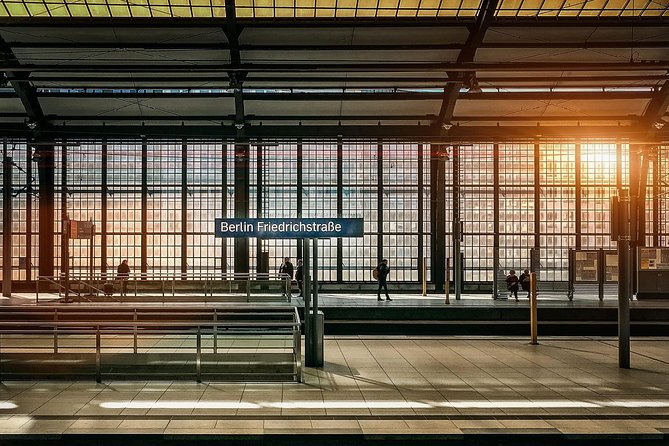
The next stop is Friedrichstrasse train station, once a major crossing point between East and West Berlin. This was not simply a transport hub. It was a place where relatives were separated by East Germany’s strict rules on movement and emigration.
The nearby Palace of Tears received its grim nickname from the farewells that took place there. Families said goodbye after visits, often without knowing when they would see one another again. The name captures the personal cost of a political system better than a list of laws ever could.
You spend about 15 minutes at Friedrichstrasse. That short visit makes sense because the key point is the station’s role in divided life. You should not expect a long indoor exploration as part of the tour, so plan a separate visit if you want more time at the site.
I like this stop because it shifts the story away from presidents and borders. Berlin’s division was felt in ordinary family life, and the station makes that clear.
Nordbahnhof and Berlin’s ghost stations
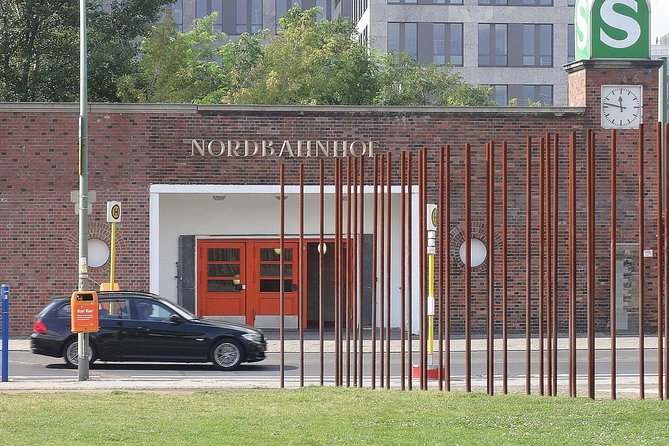
At Park am Nordbahnhof, the tour explains one of the strangest results of Berlin’s division: ghost stations. Some West Berlin subway lines ran through or beside East German territory. The trains continued moving, but selected stations were closed, guarded, and passed without stopping.
This detail makes the border feel unusually real. The division was not only a wall above ground. It also reached below street level, affecting the city’s transport system and turning normal subway journeys into carefully controlled routes.
You spend about 10 minutes here. It is a concise stop, so the guide’s explanation carries much of the experience. If you enjoy urban history, this may be one of the most memorable parts of the route because it shows how political power shaped practical city services.
You will also use public transportation during the tour. The distances between key locations are too long to walk comfortably within three hours. If you do not already have a Berlin visitor transit pass, the suggested choices are a one-way AB ticket at about €2.80, a senior one-way fare of €1.70, or a day ticket at €7, with a senior price of €4.70. The guide can help you buy a ticket at the first metro station if needed.
More Walking Tours in Berlin
- Discover Berlin Half-Day Walking Tour
★ 5.0 · 9,624 reviews - Berlin: Third Reich and Cold War 2 Hour Walking Tour
★ 4.9 · 6,830 reviews - Berlin: Discover Berlin Walking Tour
★ 4.9 · 5,998 reviews - Berlin’s Best: 2 Hour Walking Tour Third Reich and the Cold War
★ 5.0 · 5,486 reviews
Karl-Marx-Allee and the Socialist ideal
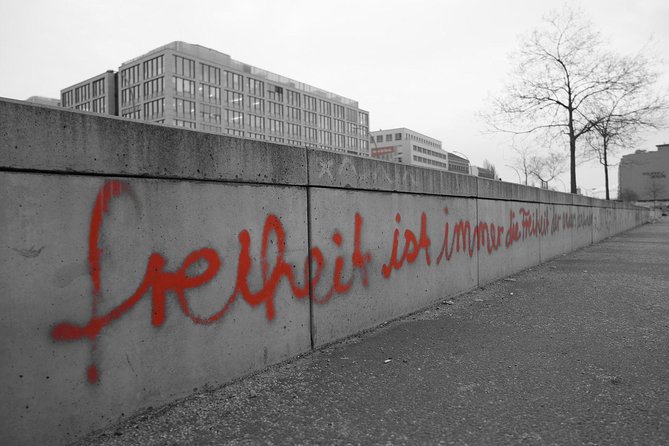
Karl-Marx-Allee brings the tour into one of East Berlin’s most imposing urban projects. The broad, grand housing complex was meant to show the strength and promise of the Socialist state.
The guide uses the avenue to discuss the gap between official ideals and daily conditions. East Germany presented the area as proof that it could provide a modern, dignified life for working people. Yet the wider system became associated with shortages, political control, and suspicion.
You spend about 10 minutes here, which is enough to take in the scale and hear the main political context. It is not a full architectural tour, so you will need to look closely as you walk. Pay attention to the contrast between the monumental design and the disappointment that followed when the promised Socialist paradise failed to match everyday reality.
This stop is especially useful if you want to understand propaganda through buildings. Karl-Marx-Allee was not just housing. It was a public argument in stone, intended to persuade residents and outsiders that the East German system represented progress.
The Berlin Wall Memorial and the Death Strip
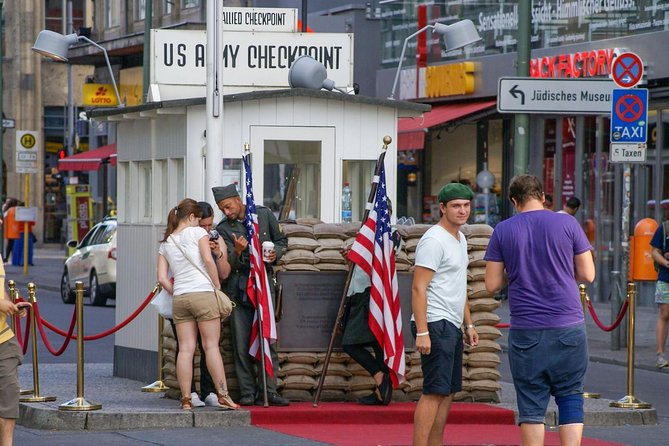
At the Berlin Wall Memorial, the route addresses the most painful part of the story: escape attempts and deaths along the border. You hear about East Berliners who tried to reach the West and were killed in the process.
The memorial gives you a chance to picture the former Death Strip, the controlled zone between sections of the Wall. Berlin’s border system was designed to prevent escape, and the empty space itself became a tool of surveillance and fear.
This stop lasts about 15 minutes. That is enough for a focused explanation, but the memorial deserves more time if you want to read every panel or examine the site carefully. I would treat the guided visit as an introduction, then return later if the subject matters to you.
The memorial is one of the strongest reasons to choose a history-focused tour instead of a general city walk. It connects the physical remains of the border with individual lives. The subject is serious, and the guide’s tone will matter. This is not a light sightseeing stop.
The Stasi headquarters and the machinery of suspicion
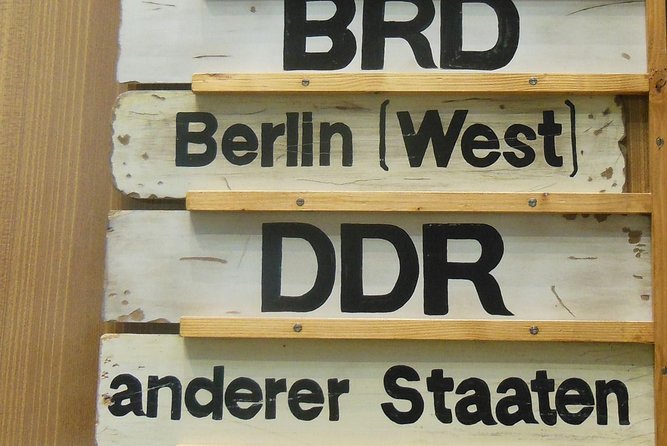
The route then turns to East Germany’s secret police at the Stasimuseum area. You learn how the Stasi recruited a huge network of informants and pressured neighbors, friends, and family members to spy on one another.
The discussion includes Erich Mielke, the feared Stasi leader, and the agency’s surveillance methods. The important point is not only that the government watched people. It is that the system encouraged citizens to participate in watching one another, making trust difficult inside homes, workplaces, and communities.
The stop itself lasts about 10 minutes. This is the clearest limitation for anyone hoping to visit the Stasimuseum. The museum is not included as an extended indoor visit, and the tour does not cover its admission. One published comment described the experience as a useful brief overview and advised returning separately for the actual museum entrance. I agree with that practical approach.
If you want to explore the Stasi in detail, schedule another visit and allow proper time indoors. The tour gives you the political setting and the reason the headquarters matters. It does not replace the museum.
Alexanderplatz and the end of Communist rule
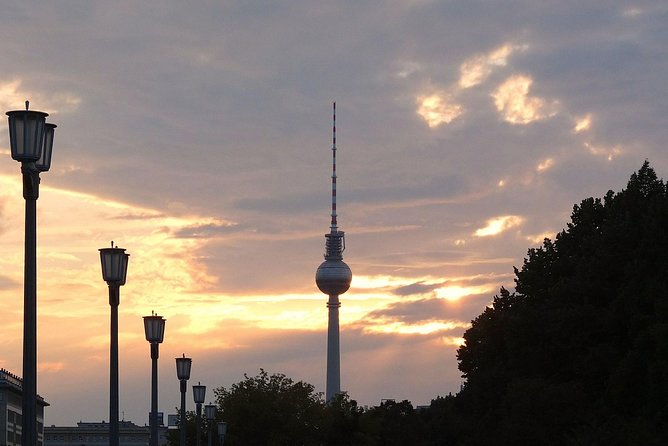
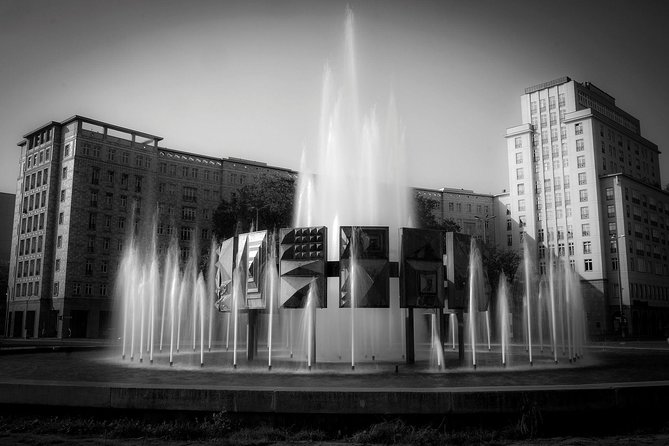
The final major stop is Alexanderplatz, the center of public life in East Berlin. The square was rebuilt in the 1960s, with large modern structures including the TV Tower and a futuristic parliament building.
These projects were meant to express confidence in East Germany’s future. The TV Tower, in particular, became an unmistakable symbol of the state. Yet Alexanderplatz later became the setting for some of the largest demonstrations against the government.
In 1989, crowds gathered here as public anger grew and Communist rule began to collapse. The square therefore carries two meanings at once: it was a showcase for East German power and a stage for the movement that helped end it.
You spend about 10 minutes at Alexanderplatz. That is enough to connect the architecture with the political events, though you may want extra time afterward to look around on your own. The tour ends in Berlin rather than at a specific indoor attraction, so ask the guide for the exact finishing point if you have a tight schedule.
Walking, transit, and the pace of the route
Despite its name, this is not three hours of uninterrupted walking. You walk between nearby sites, then use Berlin’s subway or other public transportation when the route covers greater distances.
A moderate level of physical fitness is recommended. You should be comfortable walking through central city areas, standing during explanations, and managing a few transit connections. Wear practical shoes and keep your ticket accessible.
The pace is designed to cover a lot in a short period. That is useful for a first day in Berlin, but it also means you will not linger at every stop. I would avoid scheduling a museum appointment immediately after the tour unless you have generous extra time.
Pickup is listed as available from any hotel or accommodation in Berlin, while the included details also say hotel pickup and drop-off are not included. That conflict is important. Confirm the meeting arrangement before booking, especially if you are relying on pickup rather than meeting at Unter den Linden 42.
The tour is offered in English and includes a mobile ticket. Food and drinks are not included, so bring water and plan a snack before or after the walk.
Who will get the most from this tour
I would recommend this experience to you if you want a clear introduction to East Berlin’s political past and prefer learning through places rather than spending three hours inside a museum. It suits first-time visitors who need orientation, history-minded families with older children, and anyone curious about how the Cold War affected daily life.
It is also a good choice if you value a small group. A maximum of eight people creates a more personal setting than a large city walk and gives you room to ask about family separation, surveillance, the Wall, or the 1989 protests.
I would be more cautious if your main goal is museum access. The Stasimuseum is discussed but not fully visited, and the other stops are also short. You may get more value by booking the tour and then adding separate museum visits, but that raises the total cost.
The price is the central decision point. At $156.53, you are paying for a specialist-led route, a small group, and a concentrated explanation of Communist-era Berlin. You are not paying for meals, transit, hotel drop-off, or museum tickets. The tour earns its price only if the historian’s interpretation is your main reason for going.
Should you book the City of Shadows walk?
Book it if you want a sharp three-hour framework for Berlin’s Communist past, especially the connection between public architecture and private suffering. The Brandenburg Gate, Palace of Tears, ghost stations, Karl-Marx-Allee, Berlin Wall Memorial, Stasi headquarters, and Alexanderplatz give you a strong spread of subjects.
Skip it if you prefer long museum visits, a slow walking pace, or a lower-cost sightseeing option. You can also choose it with the understanding that it is a starting point, then return independently to the Stasimuseum and Berlin Wall Memorial.
The 4.8 rating from 11 reviews and 91 percent recommendation figure point to a well-received experience, though the sample is small. I would book with free cancellation at least 24 hours before the start time, confirm the pickup details, and budget separately for public transit. For the right history-minded visitor, this is a focused and worthwhile way to get your bearings in Berlin’s divided past.
FAQ
How long does the East Berlin: City of Shadows Walking Tour last?
The tour lasts approximately three hours.
Where does the tour start?
The listed meeting point is Unter den Linden 42, 10117 Berlin, Germany.
Where does the tour end?
The tour ends in Berlin, with no more specific final address provided.
Is hotel pickup available?
Pickup is listed as available from any hotel or accommodation in Berlin. However, the details also say hotel pickup and drop-off are not included, so confirm the arrangement before booking.
Is public transportation included?
No. You need to pay for public transportation during the tour. A one-way Berlin AB ticket is listed at about €2.80, and a day ticket is about €7.
Is the tour offered in English?
Yes. The experience is offered in English.
How many people can join the tour?
The tour has a maximum group size of eight people.
Are museum admissions included?
No. Museum admission is not included. The Stasi headquarters area is visited, but you should return separately if you want to enter and explore the Stasimuseum.
Are food and drinks included?
No. You need to arrange your own food and drinks.
Can the tour be canceled for a refund?
Yes. You can cancel for a full refund up to 24 hours before the experience begins. Cancellations or changes made less than 24 hours before the start time are not accepted for a refund.
Just added around Berlin
- Kreuzberg Private Walking Tour: Immigrants, Artists & Hipsters★ 5.0 · 3 reviews
- Private Photo Tour in Kreuzberg★ 5.0 · 3 reviews
- Individual city tour Berlin for max. 8 persons★ 5.0 · 3 reviews
- Berlin’s Jewish Heritage: Private Tour of the Vibrant Jewish District★ 5.0 · 3 reviews
- Berlin & The Third Reich Private Guided Tour★ 5.0 · 3 reviews
- Private Analogue Photography Experience in Berlin★ 5.0 · 3 reviews
- Spy Mission in Berlin: Self-Guided Espionage Puzzle Quest★ 5.0 · 3 reviews
- Berlin Christmas Markets Walking Tour with Local Guide★ 5.0 · 3 reviews
Walking Tours, compared.





Berlin’s Best: 2 Hour Walking Tour Third Reich and the Cold War
Read our review →


Third Reich Berlin: Hitler and WWII Walking Tour
Read our review →Browse the lists this tour appears in