
Reviewed · WALKING TOURS
Dresden: Guided City Walk and City Museum Entrance Ticket
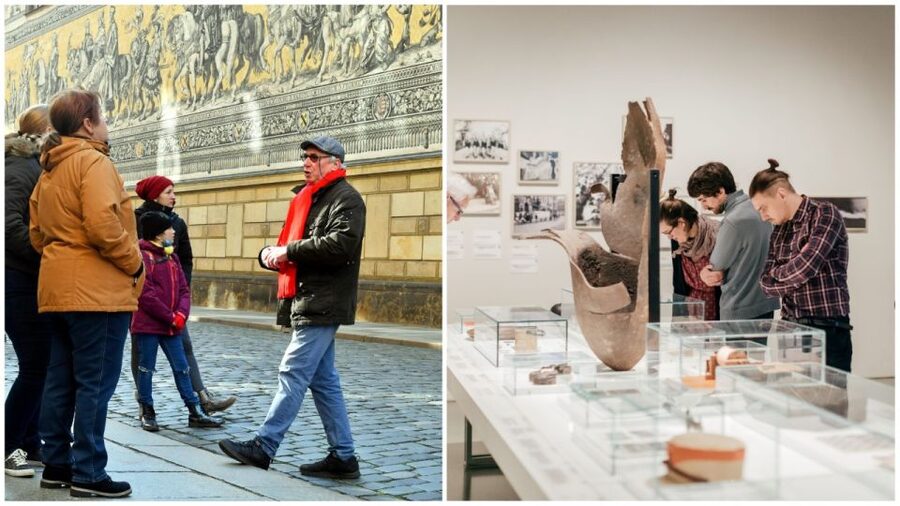
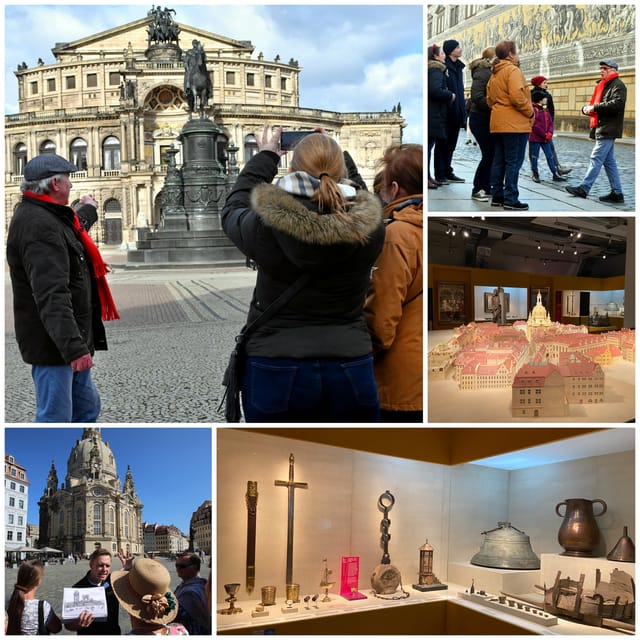
Dresden’s Baroque center rewards a closer look. I like that this tour connects the Frauenkirche, Semperoper, Zwinger, Residenzschloss, and Fürstenzug in one compact walk, then adds admission to the City Museum and Städtische Gallery for about $20. The guide’s stories, especially those about the 1989 Peaceful Revolution, give the handsome buildings a human side.
I also like the unusual museum displays, from the Sophienschatz and Dresden inventions to the neck ring for quarrelsome women and the fool’s house for drunks. The main consideration is that the guide speaks German, and the guide does not accompany you inside the museums. A little independence is needed after the walking portion.
In This Review
- Key Points at a Glance
- What the $20 Dresden Tour Actually Gives You
- Finding the Meeting Point at QF Passage
- Neumarkt and the Rebuilt Heart of Dresden
- Frauenkirche, Semperoper, and Dresden’s Musical Past
- The Zwinger’s Fountains, Lawns, and Baroque Showmanship
- Residenzschloss and the Fürstenzug
- Stories of the GDR and the Peaceful Revolution
- Inside the Dresden City Museum
- The Städtische Gallery from 1500 to Today
- How the Tour Handles Time and Pace
- Cancellation, Tickets, and Planning Your Visit
- Who Will Get the Most from This Dresden Walk?
- Should You Book This Dresden Experience?
- FAQ
- How long does the guided Dresden walk last?
- What sights are included in the walking tour?
- Is museum admission included?
- Where are the museums located?
- Does the guide accompany the group inside the museums?
- What language is the walking tour conducted in?
- Where is the meeting point?
- Is the tour wheelchair accessible?
- Can I cancel the booking?
Key Points at a Glance
- A 90 to 100-minute route through central Dresden: See the city’s major sights without committing half a day.
- Neumarkt puts Dresden’s wartime story front and center: The square was destroyed during the Second World War and rebuilt as part of the old town.
- The Semperoper adds musical drama: Strauss and Wagner had works premiered at this famous opera house.
- The Zwinger delivers classic Baroque spectacle: Fountains, lawns, pavilions, and grand decoration make this a highlight for architecture fans.
- The museums add real depth for a low extra cost: About 1,000 exhibits cover 800 years, while the Städtische Gallery presents art from 1500 to today.
- German is the only listed tour language: This suits German speakers best, though the museum may offer an app, and headphones are useful.
What the $20 Dresden Tour Actually Gives You
At $20 per person, this is priced as an inexpensive introduction to Dresden rather than a full museum program or specialist architecture tour. You receive a guided walk past the city’s best-known central sights, plus entry to two cultural institutions at Landhausstrasse 2.
That combination is the main value. A short walk alone can leave you with a string of impressive facades but little understanding of what happened here. The City Museum fills in the political and social story, while the Städtische Gallery shifts attention toward art.
The walking portion is advertised at 1.5 hours, while the description also refers to a 100-minute route. I would allow roughly an hour and a half to one hour and forty minutes for the guided section. Afterward, you can visit the museums on your own, so the total time depends on how long you spend with the displays.
This is useful if you have only a short stay in Dresden. You can see the central monuments first, then decide how much museum time your schedule allows. It is less suitable if you want a slow, highly detailed tour of every building or a guide inside the collections.
More City Tours in Dresden
- Dresden: City & Semperoper Guided Walking Tour
★ 4.8 · 2,293 reviews - Dresden: City Sightseeing Tour with Live Guide
★ 4.6 · 1,730 reviews - Dresden: Guided City Walk with a Cup of Coffee
★ 4.7 · 1,568 reviews
Finding the Meeting Point at QF Passage
The meeting point is in the lower level of the QF Passage, in the seating area of Dresden Information. The German directions are: Bitte gehen Sie in das Untergeschoss der QF Passage. The meeting point is in the seating area of Dresden Information.
This detail matters. The meeting point is not simply an outdoor statue or an obvious spot beside the Frauenkirche. One practical note from the tour experience is that the meeting-point description could be clearer, so give yourself extra time to find the basement level.
Look for the Dresden Information seating area rather than waiting on Neumarkt. If you are using a phone, have the meeting instructions open before you arrive. The guide may be identified there, and one guide specifically praised in the feedback is Herr Richter.
The tour is listed as wheelchair accessible. No group size is provided, so I would not assume a small private-style walk. The route remains within the historic center, where the main sights are close together.
Neumarkt and the Rebuilt Heart of Dresden
The walk begins in or near Neumarkt, one of Dresden’s most important central spaces. It is also a place where the city’s past is impossible to ignore. Neumarkt was destroyed during the Second World War, and its rebuilt appearance invites questions about what is original, what has been reconstructed, and how Dresden presents its past today.
This is where a good guide earns the fee. The buildings are attractive, but the story behind their reconstruction is just as important as the decoration. You get a quick introduction to Dresden’s destruction and rebirth before moving toward the city’s major monuments.
The Frauenkirche dominates the area with its high towers and great visual presence. The church is one of the city’s defining sights, and the walk gives you a chance to appreciate its scale from the surrounding square.
Do not expect a long interior visit as part of the route. The focus is on the old town streets and the exterior views. If you want to explore the church at length, set aside separate time.
Frauenkirche, Semperoper, and Dresden’s Musical Past
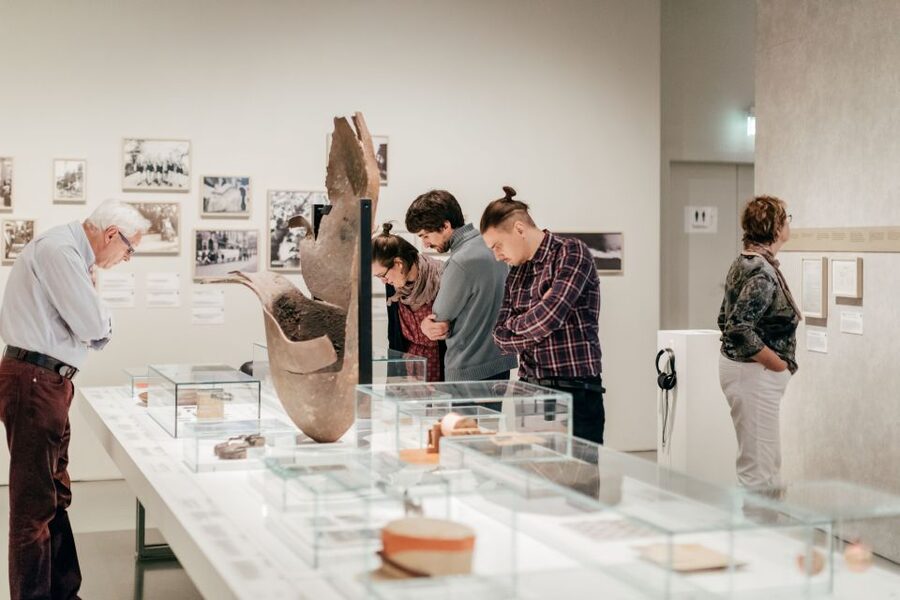
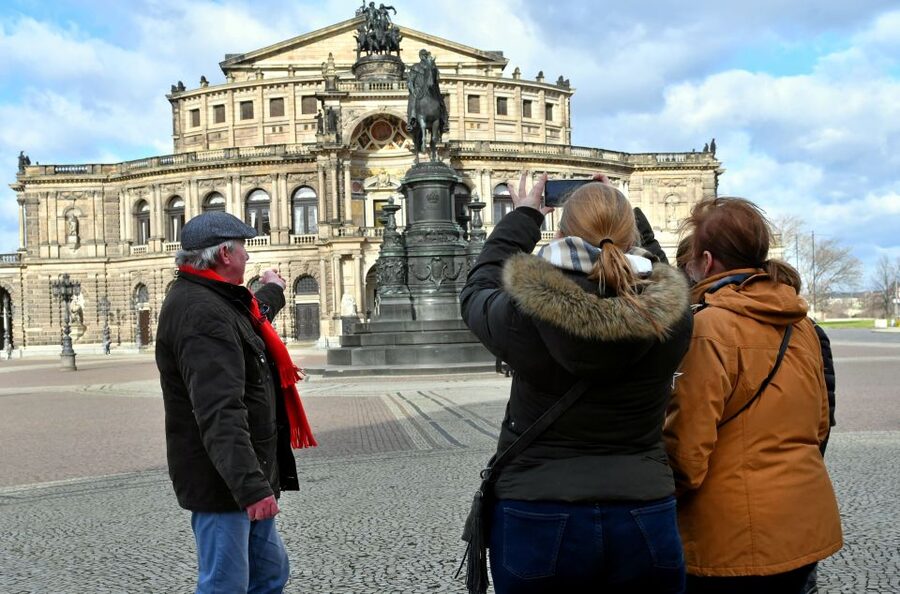
From Neumarkt, the walk continues toward the Semperoper. This opera house is not just another grand building on a sightseeing list. Works by Richard Strauss and Richard Wagner were premiered there, giving the building a direct link to European musical history.
I like this stop because it adds a cultural layer to the architecture. You are not only looking at an ornate facade. You are hearing about the performances and composers connected with the building, which helps explain why the Semperoper remains so important to Dresden.
The guide also tells stories from the Middle Ages through the modern era. The strongest parts of the tour are likely to be these short stories and local anecdotes, rather than a long series of dates. Several comments describe the guiding as informative, entertaining, calm, friendly, and humorous. One German guide was praised for showing clear affection for the city.
Because the tour covers several major sights in a short time, explanations will necessarily be selective. You will get a useful framework, not a full study of Dresden’s opera tradition or architectural development.
More Museums in Dresden
- Dresden: Church of Our Lady Guided Tour of Gallery
★ 4.7 · 2,421 reviews - Dresden: Zwinger Museum Entry Ticket
★ 4.7 · 1,436 reviews - Dresden: Guided Walking Tour and Chocolate Museum Ticket
★ 4.5 · 385 reviews - Dresden: Dresden Transport Museum Entrance Ticket
★ 4.6 · 189 reviews
The Zwinger’s Fountains, Lawns, and Baroque Showmanship
The route then reaches the Zwinger, one of Germany’s most important Baroque complexes. This is the visual high point of the walk for many people. Its decorated buildings frame green lawns and water fountains, creating a formal setting that feels more like a royal stage than an ordinary city square.
The Zwinger is best understood as a display of power and taste. Its design was made to impress, and it still does the job. Your guide can explain how it fits into Dresden’s Baroque golden age, when the city was shaped by court culture, art, ceremony, and ambitious building projects.
The fountains and lawns also give you a brief change of pace from city streets. You can pause for photographs and take in the symmetry. Since the tour is moving on foot, do not count on a long break here unless the guide allows one.
The Zwinger is also a good reason to choose this tour early in your Dresden visit. After seeing it with an explanation, you may understand the surrounding palace district more clearly when you return on your own.
Residenzschloss and the Fürstenzug
The included route also passes the Residenzschloss and the Fürstenzug. These sights help complete the picture of Dresden as a historic court city, rather than leaving the tour focused only on the Frauenkirche and opera house.
The Residenzschloss belongs to the central royal quarter, while the Fürstenzug offers a long, memorable artistic view connected with Dresden’s rulers. The itinerary does not promise an interior tour of the palace or a detailed visit to every element of the mural, so think of these as guided exterior stops.
That is not a weakness if you want to get your bearings quickly. In 100 minutes or less, the tour links several major landmarks into one coherent route. You can then choose which buildings deserve a return visit.
A short city walk works best when you pay attention to the connections between places. Dresden’s sights are not isolated photo stops. The route shows how the old town, royal buildings, religious monuments, opera, and Baroque gardens fit together.
Stories of the GDR and the Peaceful Revolution
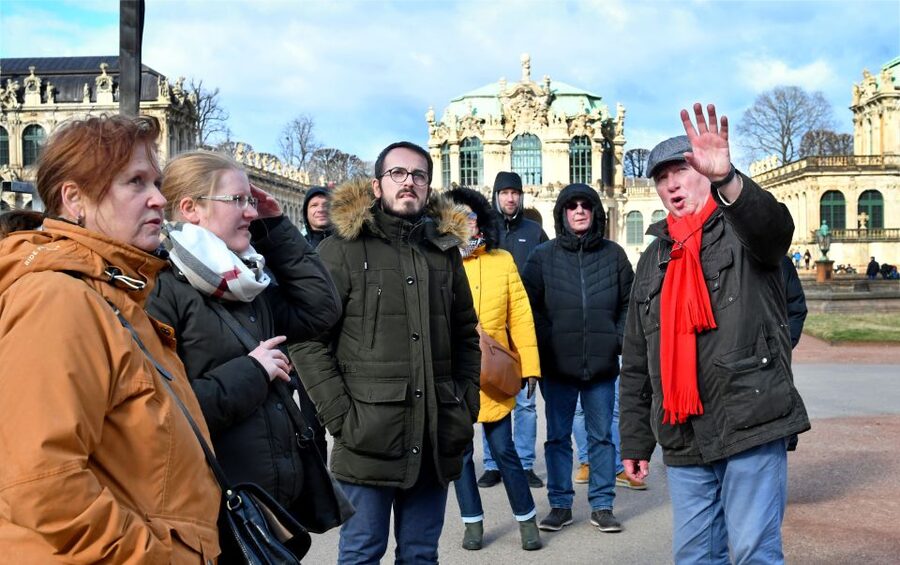
The modern section of the tour is especially useful. You hear about everyday life in the GDR and the events surrounding the Peaceful Revolution of 1989, when public pressure helped bring major political change in East Germany.
This prevents the tour from becoming a postcard parade. Dresden is not only a city of court buildings and restored monuments. Its recent past includes division, state socialism, protest, and reunification. Those subjects make the city feel more real.
There is one point to keep in mind. A German-language city tour depends heavily on the guide’s wording and interpretation, especially for complicated political subjects. One piece of feedback raised concerns about small inaccuracies in the presentation of people and events from the GDR period. That did not ruin the overall experience, but you may want to treat the guide’s account as an introduction rather than the final word on 20th-century history.
For visitors with a strong interest in East German politics, this part may feel too brief. For everyone else, it is a valuable reminder that Dresden’s story did not end with the Baroque period.
Inside the Dresden City Museum
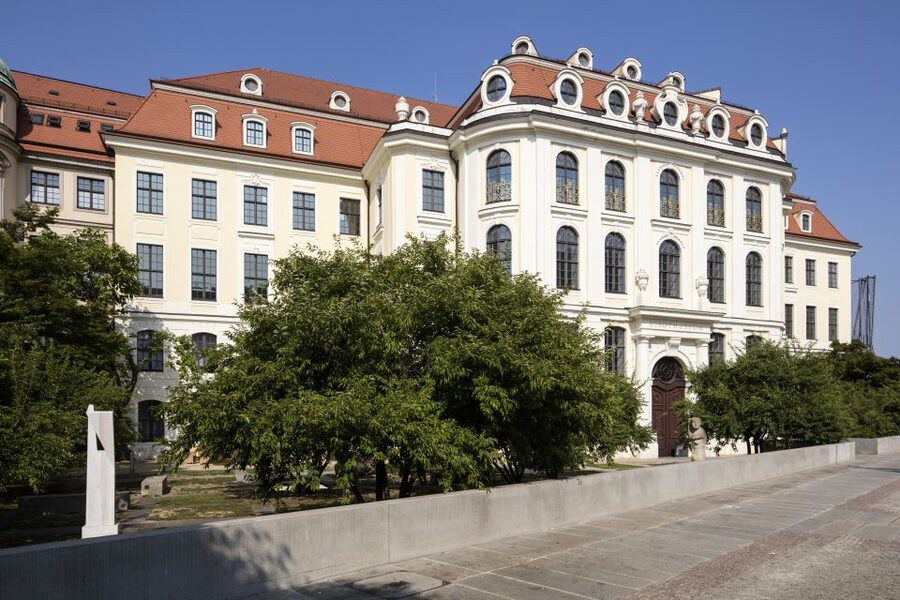
The City Museum is at Landhausstrasse 2, right in the old town. Admission is included, and the collection uses about 1,000 exhibits to tell more than 800 years of Dresden’s story.
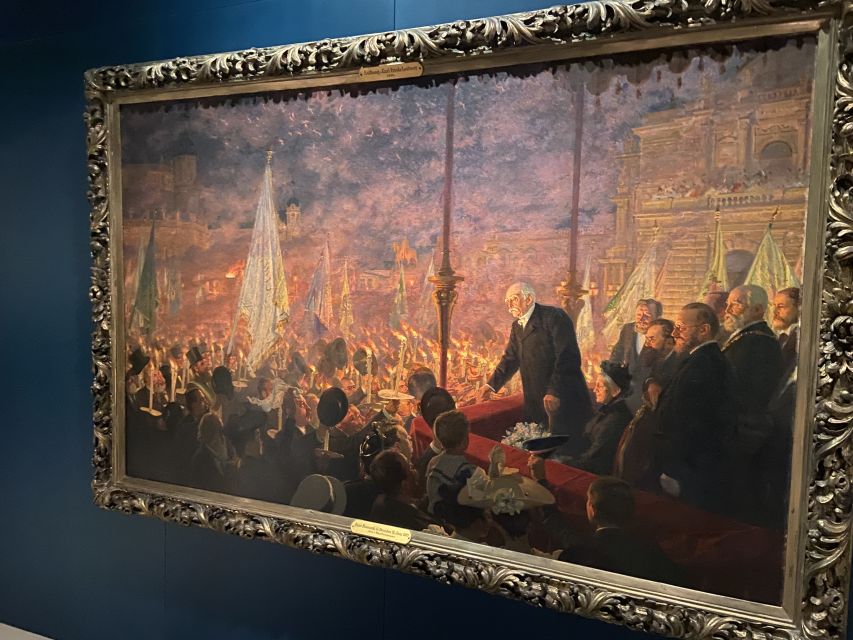
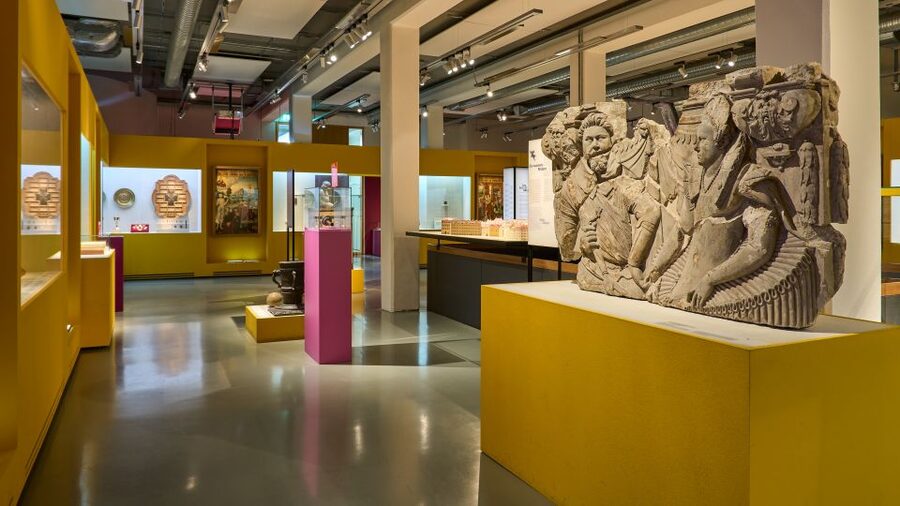
The museum moves from the first settlement of the Elbe valley and the city’s founding through the Baroque period, the destruction of the old city, life in the GDR, and the Peaceful Revolution of 1989. You will find rare film footage, old documents, paintings, and art objects alongside everyday and unusual items.
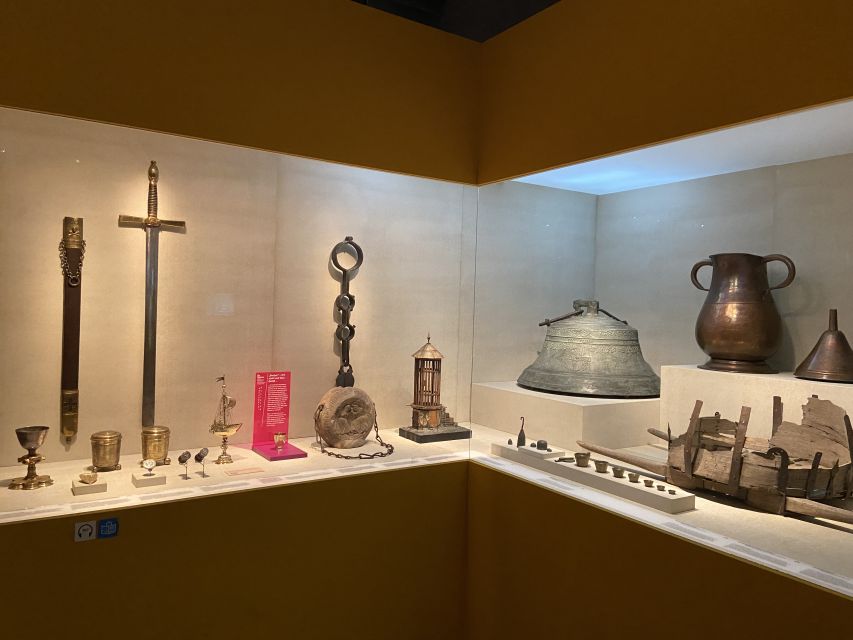
The oddities are part of the appeal. A neck ring for quarrelsome women and a fool’s house for drunks may sound strange, but displays like these show how past societies tried to control behavior and make sense of disorder. They also keep the museum from feeling like a room full of solemn dates.
The Sophienschatz and Dresden inventions add another dimension. These objects point to the city’s artistic, technical, and civic life, not just its rulers and monuments.
You are not rushed through the museum by the walking guide. That is good if you want time to read and look closely. It also means you need to keep track of your own route and ticket arrangements once the walk ends.
The Städtische Gallery from 1500 to Today
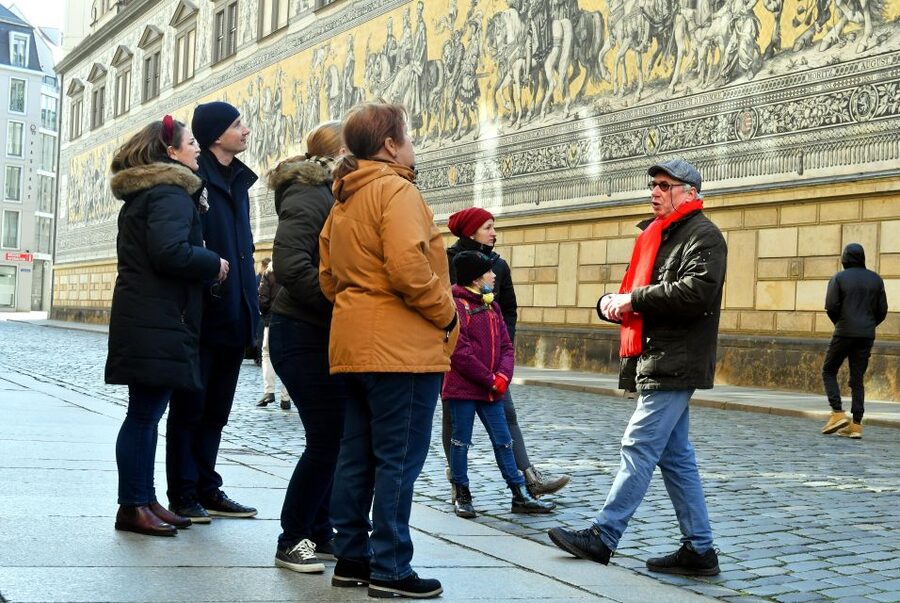
The Städtische Gallery is included with the City Museum visit and presents important artworks from 1500 to the present. This makes the museum admission more worthwhile for people who want more than urban history.
The date range gives you a long view of Dresden’s artistic development. You can move from older works to more recent art and compare how artists represented people, places, and ideas across changing periods.
The gallery is not described as a guided portion of the tour, so you should plan to explore it independently. If you enjoy art but do not want to spend a full day in a large museum, this is a manageable addition to a city walk.
A useful tip from the practical feedback is that the museum may provide an app. Bring headphones if you want to use audio content without relying on your phone’s speaker. The app detail is not guaranteed as a formal part of every visit, but it is worth being prepared.
How the Tour Handles Time and Pace
The route is designed to cover many central sights in a short period. That makes it efficient, but it also sets a brisk pace. You will walk from one major landmark to another, listen to explanations, and take in the main views without lingering at every stop.
The length is well chosen for a first orientation. You get enough time for the guide to explain the landmarks, but the tour does not take over your entire day. If you have children, older companions, or anyone who prefers a slower pace, check the starting time and allow for the fact that the walk is continuous.
The route is wheelchair accessible, which is an important practical advantage. Still, central historic areas can involve varied surfaces, so check any personal mobility needs with the provider before booking if you require specific arrangements.
The tour is conducted in German. That is the most important suitability question. German speakers can get the full benefit from the anecdotes and historical explanations. If you do not speak German, the sights remain easy to see, but the central value of the tour is reduced.
Cancellation, Tickets, and Planning Your Visit
You can cancel up to 24 hours in advance for a full refund, and the reserve-now, pay-later option keeps your plans flexible. Those terms are useful when your Dresden schedule depends on trains, weather, or a changing itinerary.
The experience includes skip-the-ticket-line admission, but the guide does not escort you through the museums. Clarify how and where to use the museum entry before the walking portion ends. A little confusion about the museum ticket has occurred, although the museum visit itself was completed successfully.
The City Museum and Städtische Gallery are both at Landhausstrasse 2, so you do not need another trip across town after the walk. That location also makes it easy to continue exploring the old town afterward.
Who Will Get the Most from This Dresden Walk?
I would choose this tour if you want a compact introduction to Dresden’s central sights and prefer a guide who adds stories rather than simply pointing out buildings.
It suits:
- First-time visitors with limited time
- German-speaking adults and families
- People interested in Baroque architecture
- Anyone curious about Dresden’s 1989 revolution and GDR period
- Art lovers who want a small gallery visit added to a city walk
- Visitors who value flexibility and a low price
I would look for another option if you need an English-language guide, want a private tour, or expect detailed instruction inside the museums. You should also choose a longer specialist tour if your main interest is architecture, the Second World War, or East German politics.
Should You Book This Dresden Experience?
Book it if you want a well-priced first look at Dresden, especially in German. The best reasons are the efficient route, the lively local stories, the Zwinger and Semperoper stops, and the unusual museum collection included for the same price.
Do not book it expecting a guided museum tour or extensive time at each landmark. Plan to find the QF Passage meeting point carefully, confirm the museum ticket procedure, and bring headphones in case the museum app is available.
For roughly $20, this is a strong value for a compact old-town orientation followed by two worthwhile cultural stops.
FAQ
How long does the guided Dresden walk last?
The listed duration is 1.5 hours. The tour description also refers to seeing the main sights in 100 minutes, so plan for roughly 90 to 100 minutes.
What sights are included in the walking tour?
The route passes the Frauenkirche, Semperoper, Zwinger, Residenzschloss, and Fürstenzug. It also goes through Neumarkt.
Is museum admission included?
Yes. The price includes admission to the Dresden City Museum and the Städtische Gallery.
Where are the museums located?
The Dresden City Museum and Städtische Gallery are at Landhausstrasse 2 in the center of Dresden’s old town.
Does the guide accompany the group inside the museums?
No. The guide does not accompany you to the City Museum or Städtische Gallery.
What language is the walking tour conducted in?
The listed tour language is German.
Where is the meeting point?
Meet in the lower level of the QF Passage, in the seating area of Dresden Information.
Is the tour wheelchair accessible?
Yes, the activity is listed as wheelchair accessible.
Can I cancel the booking?
Yes. Cancellation up to 24 hours in advance is allowed for a full refund. A reserve-now, pay-later option is also available.
More Walking Tours in Dresden
- Görlitz: Old Town Guided Walking Tour
★ 4.7 · 723 reviews - Dresden: Complete Walking Tour with Frauenkirche Visit
★ 4.8 · 700 reviews - Dresden: Walking Tour with a Night Watchman and Meal
★ 4.4 · 487 reviews - Dresden: Taste of Dresden Food Walk
★ 4.6 · 348 reviews
Just added around Dresden
- From Dresden: Guided Day Tour by Bus of Seiffen Toy Village★ 4.0 · 13 reviews
- Dresden: Christmas Sightseeing Tour with a ‘Pflaumentoffel’★ 4.5 · 13 reviews
- Dresden: Bike Rental – City Bike with Option Children Seat★ 4.5 · 13 reviews
- Sightseeing tour by ConferenceBike★ 5.0 · 14 reviews
- Dresden Neustadt: Scavenger Hunt for Children★ 4.8 · 15 reviews
- Dresden: Scavenger Hunt to Elbe River & Castles★ 4.7 · 15 reviews
- Street Art Tour Dresden Neustadt★ 4.0 · 15 reviews
- Dresden: 150-minute Trabi tour as a guided city tour★ 4.9 · 15 reviews
Walking Tours, compared.




Berlin’s Best: 2 Hour Walking Tour Third Reich and the Cold War
Read our review →
Third Reich Berlin: Hitler and WWII Walking Tour
Read our review →Browse the lists this tour appears in