
Reviewed · WALKING TOURS
Berlin: Private walking tour through the city center
Berlin tells its story in layers. This private two-hour walk links Cold War landmarks, Nazi-era memorials, bold modern buildings, and the city’s most famous gate in one compact route. I like the private format, since you can focus on the subjects that matter most to your group, and I like the clear east-to-west flow from Checkpoint Charlie to the Brandenburg Gate. The main drawback is pace: two hours covers a lot, so you should expect an overview rather than a slow, detailed visit inside each site.
The tour costs $22 per person, which is good value if you want a guide to connect Berlin’s major sights. I would plan for cold or wet weather with care, since this is an entirely outdoor walk, and one January review praised the guide’s enthusiasm despite the cold. Stefan earned especially strong praise for combining historical detail with entertaining stories, though one comment found the English serviceable rather than polished.
In This Review
- Key points at a glance
- Why this two-hour route works well
- Checkpoint Charlie begins the Cold War story
- Seeing the Berlin Wall in pieces
- Topography of Terror and the difficult Nazi-era past
- Potsdamer Platz and the rebuilt city
- The Holocaust Memorial asks for a slower look
- Finishing beneath the Brandenburg Gate
- What the guide adds to the experience
- Is $22 per person good value?
- Who should book this Berlin walk?
- My verdict on the Checkpoint Charlie route
- FAQ
- How long does the private Berlin walking tour last?
- Where does the tour begin?
- Where does the tour finish?
- What sights are covered during the walk?
- Is this a private tour?
- Which languages are available?
- Are entrance tickets included?
Key points at a glance
- Checkpoint Charlie start: Begin at the former Cold War crossing point, meeting your guide in front of the Asisi Mauerpanorama entrance.
- A compact historical route: Walk from Checkpoint Charlie to the Brandenburg Gate in two hours, with several important stops along the way.
- Berlin Wall remains: See surviving pieces of the Wall and learn about its fall and influence on the city.
- History beside new architecture: Compare the Topography of Terror area and Holocaust Memorial with the rebuilt Potsdamer Platz and Sony Center.
- Private attention: Your own group has a local guide, rather than joining a large public walk.
- Best for first-time orientation: The route gives you a useful map of central Berlin, but it does not include entrance tickets or long indoor visits.
Why this two-hour route works well
Berlin’s center can feel scattered at first. Historic sites sit beside empty plots, office towers, memorials, embassies, and rebuilt streets. This walk helps you connect those pieces in a sensible order.
You begin at Checkpoint Charlie, follow Cold War and Nazi-era history through the center, pass Potsdamer Platz, and finish at the Brandenburg Gate. That sequence gives you a basic timeline as well as a physical sense of how the divided city changed.
I especially like the route for a first day in Berlin. You see enough to decide which places deserve a second visit. The guide can explain the main events, while you note where you want to return for a museum, a longer memorial visit, or a closer look at surviving Wall sections.
The private setup matters here. Berlin’s 20th-century history raises difficult questions, and a small group lets you ask about the Wall, the Third Reich, rebuilding, or the memorials without waiting for a large crowd to move along. You also avoid the fixed rhythm of a big group, although the two-hour limit still keeps the walk moving.
More City Tours in Berlin
- Berlin: 1-Hour City Tour by Boat with Guaranteed Seating
★ 4.3 · 16,993 reviews - Berlin: City Sightseeing Hop-On Hop-Off Bus Tour
★ 4.1 · 4,233 reviews - Potsdam: City and Castles Tour
★ 4.7 · 3,721 reviews
Checkpoint Charlie begins the Cold War story
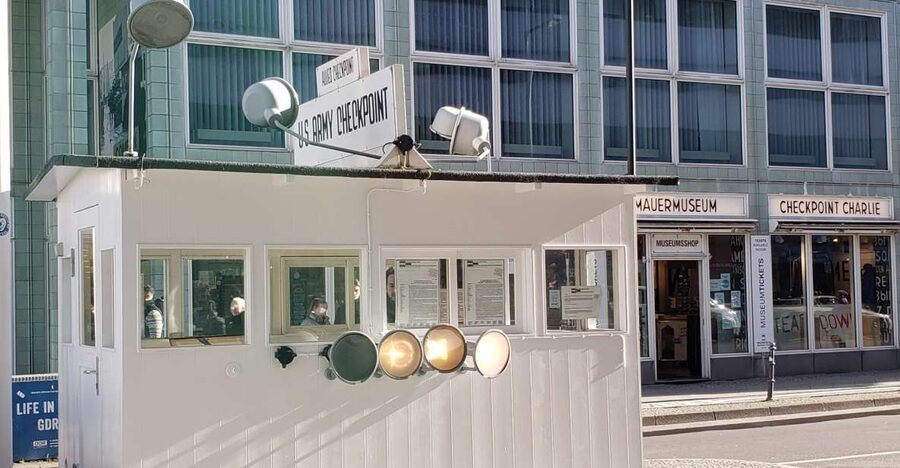
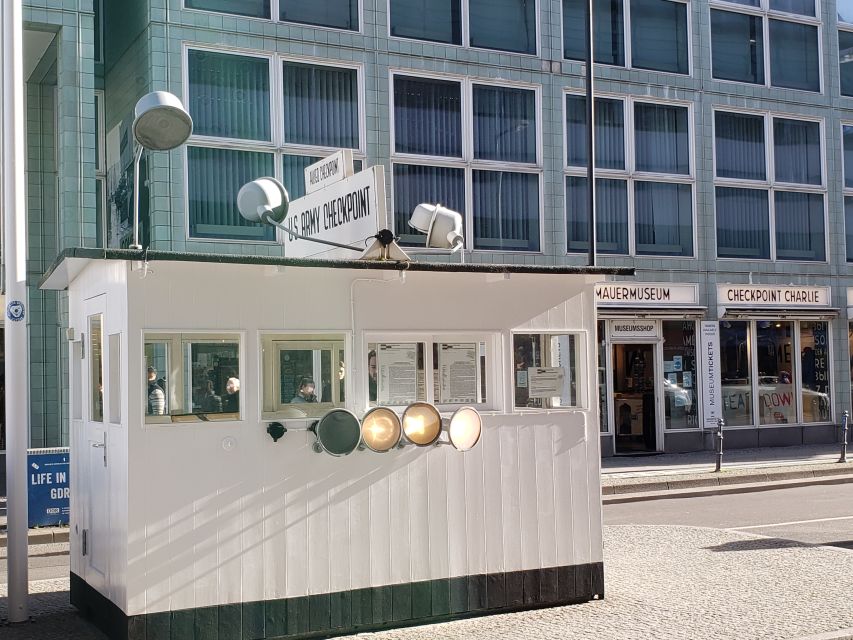
Meet your guide at Checkpoint Charlie, in front of the entrance to the Asisi Mauerpanorama exhibition. The guide will hold a sign with your name, which makes the meeting point easier to find in a busy part of central Berlin.
Checkpoint Charlie is one of Berlin’s best-known Cold War sights. Its name refers to the former crossing point between East and West Berlin. On this walk, the guide uses the location to explain the city’s division and the role of border crossings in everyday life.
Do not expect an entrance visit to the Asisi exhibition or another attraction. Entrance tickets are not included, and the advertised experience is a guided walk. That is not a problem if your aim is orientation, but you should budget extra time and money if you want to visit museums along the way.
The point of this first stop is context. You are not simply looking at a famous sign or guardhouse. You are starting with the political split that shaped Berlin’s streets, families, and buildings for decades.
Seeing the Berlin Wall in pieces
The next part brings you to remaining pieces of the Berlin Wall. These fragments matter because Berlin can otherwise look almost completely rebuilt. Much of the physical barrier disappeared, but surviving sections help you picture the force of the division.
Your guide explains the fall of the Wall and how the event changed the city. The story works best when you pay attention to the spaces around the fragments, not just the concrete itself. The Wall was not an isolated structure. It cut through roads, neighborhoods, and daily routines.
The walk does not promise a long visit at a major Wall museum or a large preserved section. Instead, you get a concise introduction as part of a broader city route. I see that as a strength for a short first visit, but anyone focused mainly on Wall history may want a separate, longer tour.
One practical note: the tour can move faster than you expect. A May review specifically described the walk as faster than anticipated, although the guide added an extra stop. Wear comfortable shoes and keep your questions ready so you can use the private format well.
Topography of Terror and the difficult Nazi-era past
The stop at the Topography of Terror brings the tour into the history of the Third Reich. This is one of the most serious parts of the route, and the subject deserves your full attention.
The site addresses the institutions and actions behind Nazi rule. On a short guided walk, you will receive an overview rather than a full museum visit. Since entry is not included, you should not assume that the tour includes time inside the exhibition.
I appreciate this stop because it prevents the route from becoming a simple parade of famous landmarks. Berlin’s story is not only about the Wall and reunification. The city also has to explain the crimes committed under the Nazi regime, and the guide places that period within the larger story of modern Berlin.
Give yourself emotional space here. The route includes several memorials and historical sites in quick succession. You may find that the information is dense, especially if this is your first introduction to Berlin’s 20th-century past.
More Walking Tours in Berlin
- Discover Berlin Half-Day Walking Tour
★ 5.0 · 9,624 reviews - Berlin: Third Reich and Cold War 2 Hour Walking Tour
★ 4.9 · 6,830 reviews - Berlin: Discover Berlin Walking Tour
★ 4.9 · 5,998 reviews - Berlin’s Best: 2 Hour Walking Tour Third Reich and the Cold War
★ 5.0 · 5,486 reviews
Potsdamer Platz and the rebuilt city
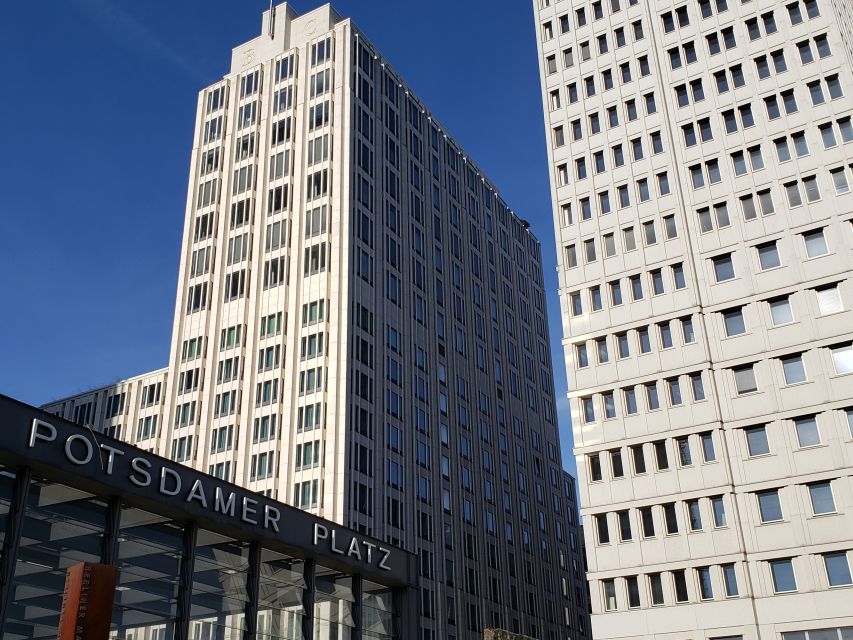
Potsdamer Platz changes the mood. After the Cold War and Nazi-era sites, you encounter a district known for modern architecture and large new buildings.
The Sony Center is the visual highlight. Its shiny architecture offers a sharp contrast with the historic locations earlier in the walk. The guide explains how modern Berlin developed among the traces of its past, which is one of the most useful themes of the tour.
Potsdamer Platz also helps you understand Berlin’s rebuilding process. The area shows how a city can move from division and destruction toward a new urban identity. You are not only looking at attractive buildings. You are seeing an example of how modern construction filled spaces that had been shaped by war, division, and political change.
I would not book this walk solely for architecture. The time at Potsdamer Platz is part of a larger historical route, so the explanation will likely be brief compared with a specialist architecture tour. Still, the contrast is valuable. Berlin’s modern buildings make much more sense after you have seen the events that left the center fragmented.
The Holocaust Memorial asks for a slower look
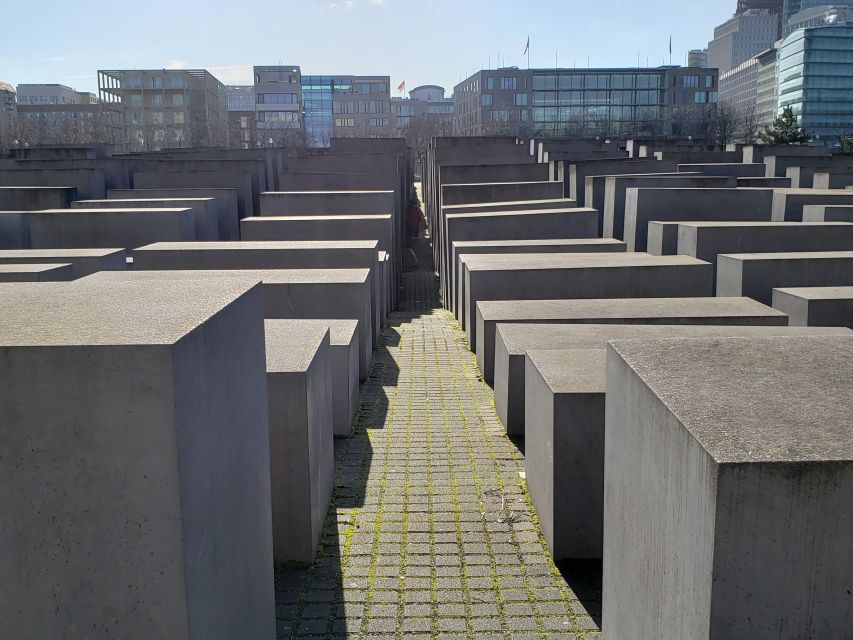
The Memorial to the Murdered Jews of Europe is among the most important stops. Its field of concrete slabs creates an experience that is hard to understand from a photograph alone.
The tour takes you through the memorial area and explains its place in Berlin. Since the walk has a tight schedule, you may not have unlimited time to explore every part at your own pace. If the memorial matters deeply to you, I would return later for a quieter visit.
This is also a good point to remember that guided explanation and personal reflection are different things. The guide can provide historical background and help you understand the site, but you may want silence and time alone as well.
The memorial sits close to the Brandenburg Gate, making it an efficient stop on the route. Its location also shows how central Berlin places reminders of the past beside government buildings, tourist streets, and everyday city life.
Finishing beneath the Brandenburg Gate
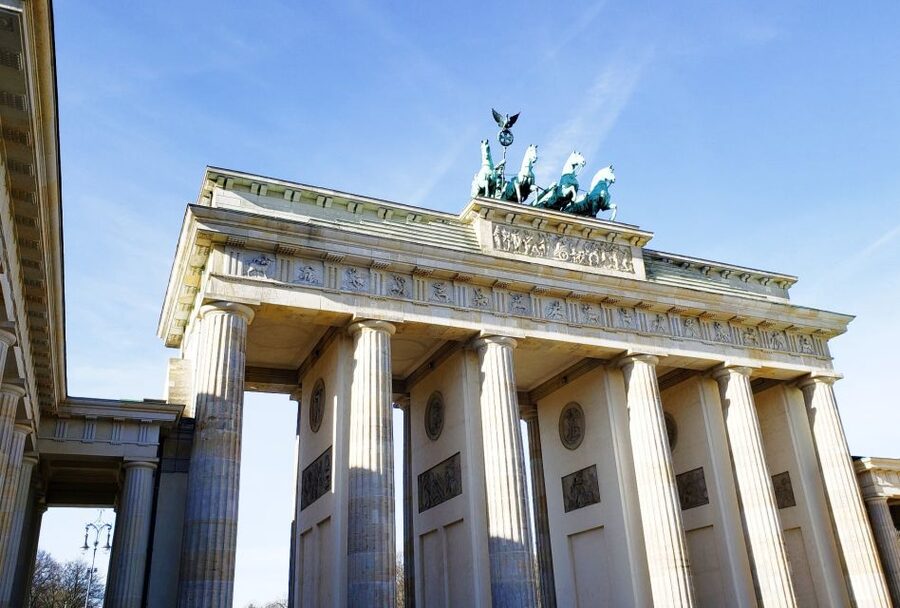
The walk ends at the Brandenburg Gate, Berlin’s most recognizable landmark. You finish with a building connected to the city’s political history, reunification, and present-day identity.
The gate makes a satisfying endpoint because it is both visually striking and easy to use as a reference for the rest of your stay. From here, you can continue exploring central Berlin on your own or return to another location by public transport, though the tour itself does not provide transportation.
Ending here also gives the guide a chance to tie together the route. Checkpoint Charlie represented division. The Wall represented physical separation. Potsdamer Platz showed rebuilding, and the memorials addressed the crimes and losses that Berlin continues to remember. The Brandenburg Gate then brings the story to a symbol of a united city.
You should not expect a long guided visit inside the gate or nearby attractions. The experience finishes at the landmark, so treat this as the end of your orientation walk rather than the start of an included sightseeing admission.
What the guide adds to the experience
The guide is the main reason to choose this tour instead of walking the route with a map. You can find the landmarks yourself, but the connections between them are less obvious.
Stefan received particularly warm praise for his historical knowledge and storytelling. His style appears to combine factual information with stories that keep the walk lively. That balance is important in Berlin, where a string of dates can quickly become hard to follow.
Language is worth considering. Tours are offered in German and English. One English-language assessment found the guide’s skills acceptable but not excellent, so travelers who need highly polished English should keep that in mind. Other feedback praised the guide’s explanations and entertainment, which suggests that the experience can depend partly on the individual guide assigned.
The private group format gives you a useful advantage. If an explanation is unclear, you can ask for it another way. You can also tell the guide which subjects interest you most, though the two-hour schedule may limit how far the conversation can go.
Is $22 per person good value?
At $22 per person, this is a reasonable price for a private two-hour introduction to central Berlin. You are paying for a local guide and personal attention, not admission to museums or memorial buildings.
The value is strongest for two or more people who want a focused orientation without joining a large group. A private walk can also suit families or friends with different levels of interest, since you can ask questions and keep the discussion at a useful level.
The value is weaker if you want extensive time inside attractions. No entrance tickets are included, and the tour moves across a large number of major subjects in only two hours. You will see and discuss each location, but you will not study every museum or memorial in detail.
I would think of the price as paying for the connections between places. If you walked alone, the route would cost less, but you would need to research the history and work out how the sites fit together. For a first visit, that tradeoff makes sense.
Who should book this Berlin walk?
I would recommend it to first-time visitors who want to understand central Berlin quickly. It is also a good choice if you have limited time and want a route that covers Checkpoint Charlie, Wall remains, the Topography of Terror, Potsdamer Platz, the Holocaust Memorial, and the Brandenburg Gate.
History-minded families may like the private format because children can ask direct questions. The guide can also adjust the discussion, at least within the time available, instead of delivering a fixed speech to a large crowd.
This is less suitable for anyone who wants a relaxed stroll with long pauses. The route is packed, and one assessment found it faster than expected. It is also not the best fit for a visitor seeking a specialist tour of only the Berlin Wall, Nazi history, modern architecture, or memorial design.
Plan for changing weather. A January participant specifically noted the cold, and the whole experience takes place outdoors. Comfortable shoes, warm clothing, and a sensible attitude toward the two-hour pace will make a real difference.
My verdict on the Checkpoint Charlie route
I like this tour because it gives Berlin’s center a clear shape. You move from Cold War division through Nazi-era remembrance and postwar rebuilding to the Brandenburg Gate, with modern architecture appearing between the historical sites.
The strongest points are the private guide, the efficient route, and the chance to ask questions about subjects that can feel confusing when you explore alone. Stefan appears to be an especially strong guide when available, thanks to his mix of history and storytelling.
The limits are just as clear. Two hours is short, the walk may feel brisk, and no attraction admission is included. You should book it as a guided introduction, then return to the places that deserve more time.
Book it if you want a personal overview of Berlin’s central history for $22 per person. Skip it if you prefer slow museum visits or already know the city’s major historical sites well.
FAQ
How long does the private Berlin walking tour last?
The tour lasts two hours.
Where does the tour begin?
It begins at Checkpoint Charlie, in front of the entrance to the Asisi Mauerpanorama exhibition.
Where does the tour finish?
The tour finishes at the Brandenburg Gate.
What sights are covered during the walk?
The route includes Checkpoint Charlie, remaining sections of the Berlin Wall, the Topography of Terror, the Sony Center, Potsdamer Platz, the Memorial to the Murdered Jews of Europe, and the Brandenburg Gate.
Is this a private tour?
Yes. The experience is for a private group with a local guide.
Which languages are available?
The tour is offered in German and English.
Are entrance tickets included?
No. Entrance tickets to attractions are not included.
Just added around Berlin
- Kreuzberg Private Walking Tour: Immigrants, Artists & Hipsters★ 5.0 · 3 reviews
- Private Photo Tour in Kreuzberg★ 5.0 · 3 reviews
- Individual city tour Berlin for max. 8 persons★ 5.0 · 3 reviews
- Berlin’s Jewish Heritage: Private Tour of the Vibrant Jewish District★ 5.0 · 3 reviews
- Berlin & The Third Reich Private Guided Tour★ 5.0 · 3 reviews
- Private Analogue Photography Experience in Berlin★ 5.0 · 3 reviews
- Spy Mission in Berlin: Self-Guided Espionage Puzzle Quest★ 5.0 · 3 reviews
- Berlin Christmas Markets Walking Tour with Local Guide★ 5.0 · 3 reviews
Walking Tours, compared.





Berlin’s Best: 2 Hour Walking Tour Third Reich and the Cold War
Read our review →


Third Reich Berlin: Hitler and WWII Walking Tour
Read our review →Browse the lists this tour appears in