
Reviewed · WALKING TOURS
Berlin: Gay Berlin Out in Schöneberg Walking Tour
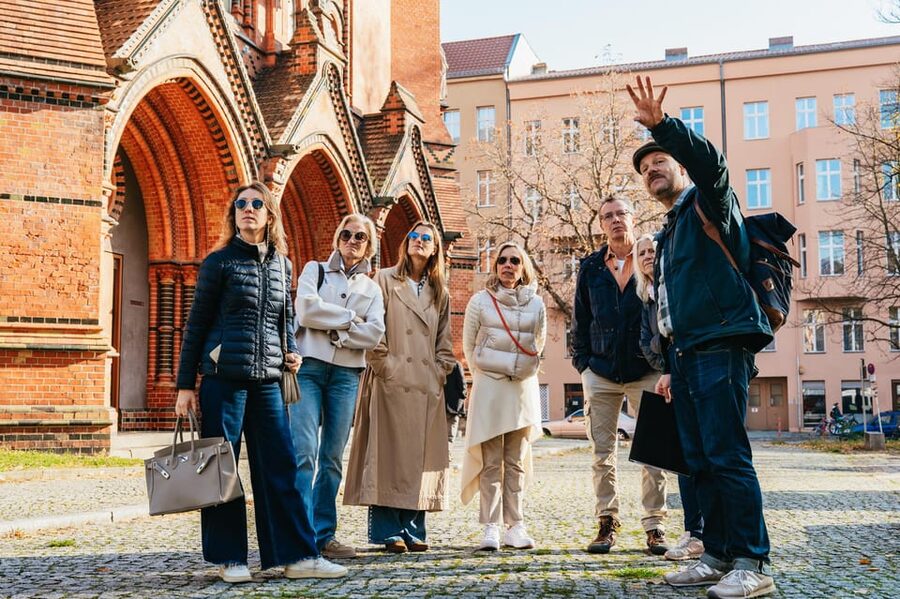
Berlin’s queer past is written into its streets. This 2.5-hour walk around Schöneberg and Nollendorfplatz brings the neighborhood’s former clubs, political meeting places, writers, and activists into focus. At $23 per person, it offers a strong mix of local history and present-day context without the cost or formality of a museum visit.
I like the way the tour connects vanished places to streets you can still walk today, especially Motzstraße and Nollendorfstraße. I also like the use of archive pictures and text, which helps you picture the Hollandais club, the El Dorado cabaret, and the Nationalhof when the buildings themselves no longer tell the story. The main consideration is simple: this is an outdoor walking tour, so cold, rain, or heat can affect your comfort.
The guide, Tobias, receives especially strong praise for his wit, preparation, and personal connection to LGBTQIA+ life in Berlin. He explains difficult subjects with care, answers questions as the walk unfolds, and adds stories about people and buildings that help the past feel close rather than sealed away in a textbook.
In This Review
- Key points to know before booking
- Why Schöneberg matters to Berlin’s queer story
- Starting around Nollendorfplatz
- The Nationalhof and the politics of meeting places
- Motzstraße and the vanished El Dorado
- Christopher Isherwood on Nollendorfstraße
- From suppression to West Berlin’s revival
- Schwerin Straße and the lesbian quarter
- What Tobias adds to the walk
- Is $23 a fair price?
- Who will enjoy this tour most?
- Should you book the Schöneberg queer history walk?
- FAQ
- Where does the Gay Berlin Out in Schöneberg tour take place?
- How long does the tour last?
- What is included in the price?
- Are food and drinks included?
- How much does the tour cost?
- Which languages are available?
- Is the tour wheelchair accessible?
- Which historic places are included?
- Does the tour include Christopher Isherwood?
- Can the tour date, time, or meeting point be arranged for a group?
- Can you cancel for a refund?
- Do you have to pay when booking?
Key points to know before booking
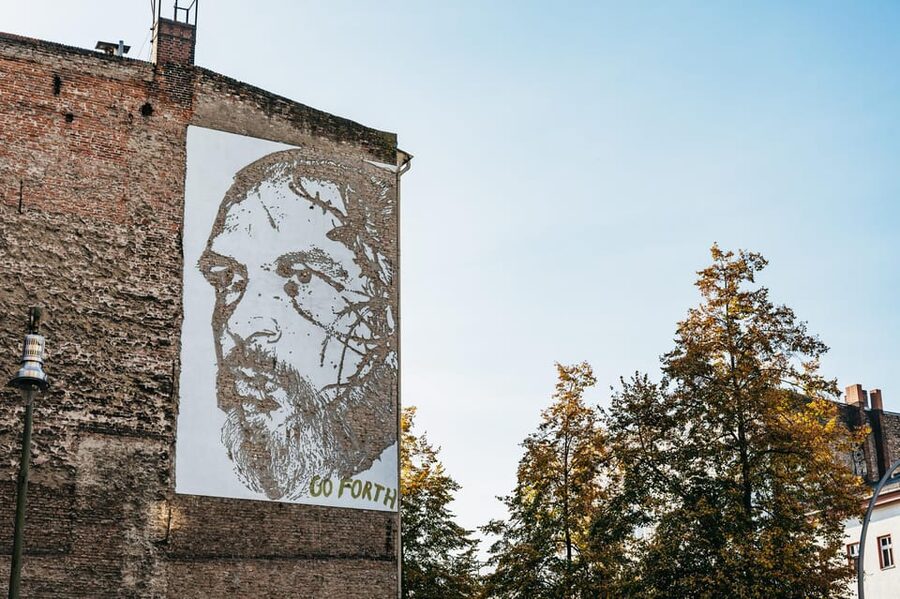
- Schöneberg is the main character: The tour centers on Nollendorfplatz, Motzstraße, Eisenacher Straße, and nearby streets that shaped Berlin’s queer public life.
- You see historic sites rather than only hear names: Stops include the former Hollandais club, Kleist Casino, Nationalhof, and El Dorado cabaret site.
- The interwar years receive major attention: You learn how the neighborhood flourished after World War I and how that freedom was crushed after the Nazi Party came to power.
- Christopher Isherwood has a clear place in the story: The walk passes his former home on Nollendorfstraße and explains why his writing mattered to later gay liberation.
- The tour reaches beyond gay male history: Schwerin Straße’s lesbian quarter and stories involving trans, intersex, and gender-nonconforming people are included.
- The format is practical: It lasts 2.5 hours, is offered in German or English, and is listed as wheelchair accessible.
Why Schöneberg matters to Berlin’s queer story
Schöneberg is not simply a district with a few rainbow flags and nightlife venues. It became a place where queer people could meet, organize, socialize, and build public lives at a time when that freedom was far from secure.
The walk focuses on the years between the end of World War I and the Nazi takeover in the early 1930s. This period is central because Berlin became known for an unusually open and active queer culture. Clubs, cabarets, cafés, political groups, and publishing efforts gave people ways to find one another and argue for legal and social change.
I find this setting especially useful for understanding Berlin today. The current scene did not appear from nowhere. It grew from earlier networks, suffered brutal destruction under the Nazis, and later began rebuilding in West Berlin from the late 1960s onward.
Your guide also places the neighborhood in a wider social setting. The point is not just to memorize old club names. You learn how public space, politics, art, literature, and nightlife worked together to give a community visibility.
More Walking Tours in Berlin
- Discover Berlin Half-Day Walking Tour
★ 5.0 · 9,624 reviews - Berlin: Third Reich and Cold War 2 Hour Walking Tour
★ 4.9 · 6,830 reviews - Berlin: Discover Berlin Walking Tour
★ 4.9 · 5,998 reviews
Starting around Nollendorfplatz
The tour explores the area around Nollendorfplatz, one of Schöneberg’s key reference points. Your exact meeting place may depend on the option you book, so check the confirmation carefully before setting out.
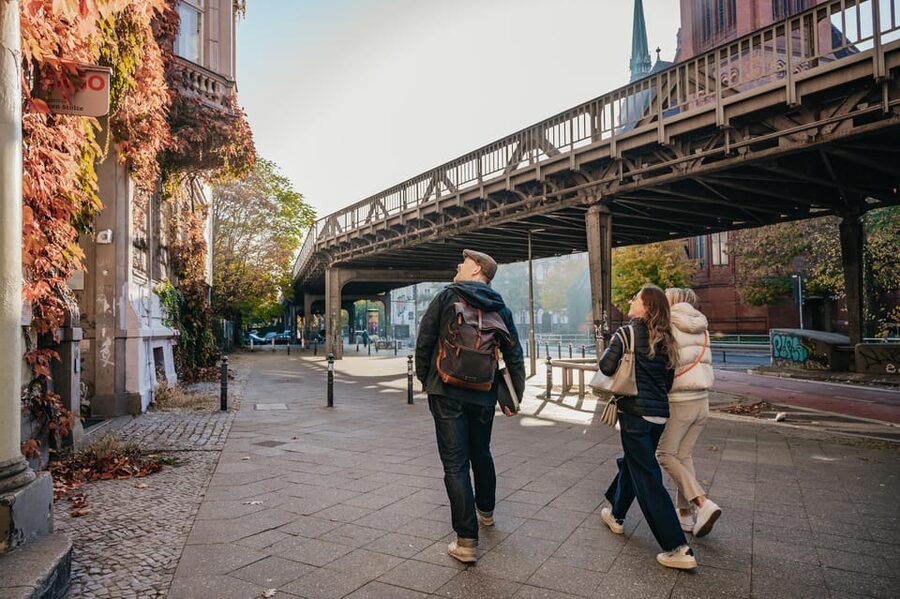
This is a useful part of Berlin to explore on foot because the important locations are linked by ordinary streets. You are not being driven between isolated attractions. Instead, you walk through a functioning neighborhood and pause where a former meeting place, club, or residence once changed the life of the community.
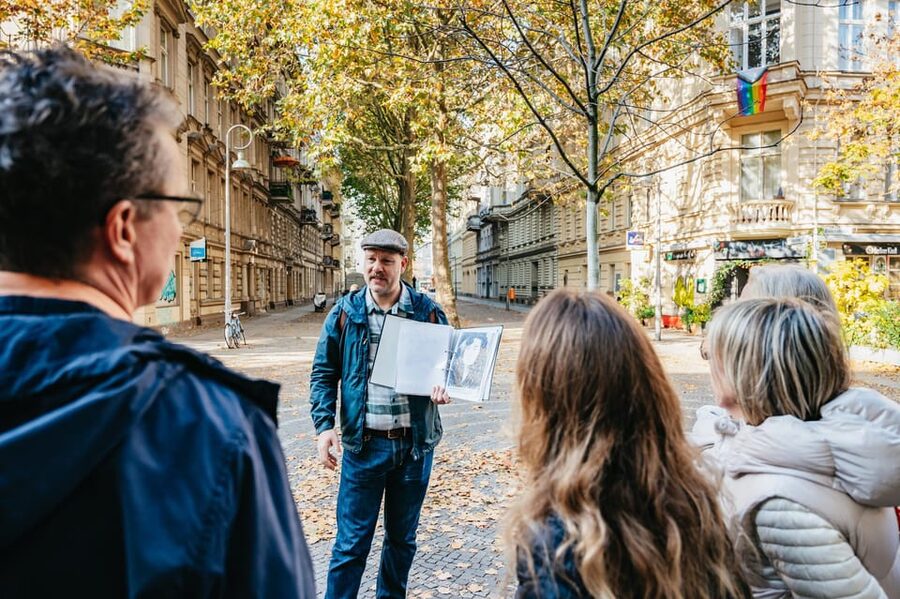
Tobias often uses archive images and written material during the walk. That matters here because many historic venues are gone, renamed, rebuilt, or no longer recognizable. A photograph held beside a modern street can make the contrast clear in a way that a plaque cannot.
The walk includes time for questions and pauses. Several accounts describe Tobias as patient and flexible, including during poor weather or transport delays. Comfort stops have also been part of the pacing, though you should still wear shoes suited to a 2.5-hour city walk.
The Nationalhof and the politics of meeting places
The Nationalhof is presented as a major center of the gay rights movement. Its importance was not only architectural or commercial. It was a place where people could gather, exchange ideas, and take part in the early push for gay rights.
This stop gives the tour political weight. You begin to see that queer history was not made only in cabarets and bars. It was also made through organizing, debate, publishing, and efforts to challenge laws and public attitudes.
The former Hollandais club and Kleist Casino add to this picture. These names can sound like simple points on a route, but Tobias explains how such venues helped create a social network. A club could be a place to meet friends, find romance, share news, or locate a sense of safety.
The drawback is that you should not expect grand surviving interiors at every stop. Much of the value comes from explanation and imagination. If you want a tour filled with preserved rooms and museum displays, this will feel more interpretive. If you enjoy seeing the present city through the stories of what came before, it works very well.
Motzstraße and the vanished El Dorado
Motzstraße is one of the walk’s most memorable stretches. Here you visit the site of El Dorado, the famed cabaret club associated with Berlin’s interwar queer culture.
El Dorado helps explain why the period became so legendary. Cabaret offered performance, spectacle, humor, gender play, and social contact. It also showed how queer life could be visible in public, even while legal and social dangers remained.
The important word is site. You are not entering the old cabaret itself. The building and surroundings must be read through the guide’s account, archive material, and the street layout in front of you.
I like this approach because it avoids turning the past into a theme-park version of Berlin. You see a real street, with real modern uses, and then learn what happened there. The contrast can be striking. It also gives you a reason to walk Motzstraße again later, perhaps at a slower pace, after you know what you are looking at.
Something different for another day:
- Berlin: Reichstag, Dome and Government District Guided Tour
★ 4.7 · 18,288 reviews - Berlin: 1-Hour City Tour by Boat with Guaranteed Seating
★ 4.3 · 16,993 reviews - Berlin: Boat Tour Along the River Spree
★ 4.4 · 11,252 reviews - Berlin: Hop-on Hop-off Bus Tour with Live Commentary
★ 4.3 · 8,579 reviews
Christopher Isherwood on Nollendorfstraße
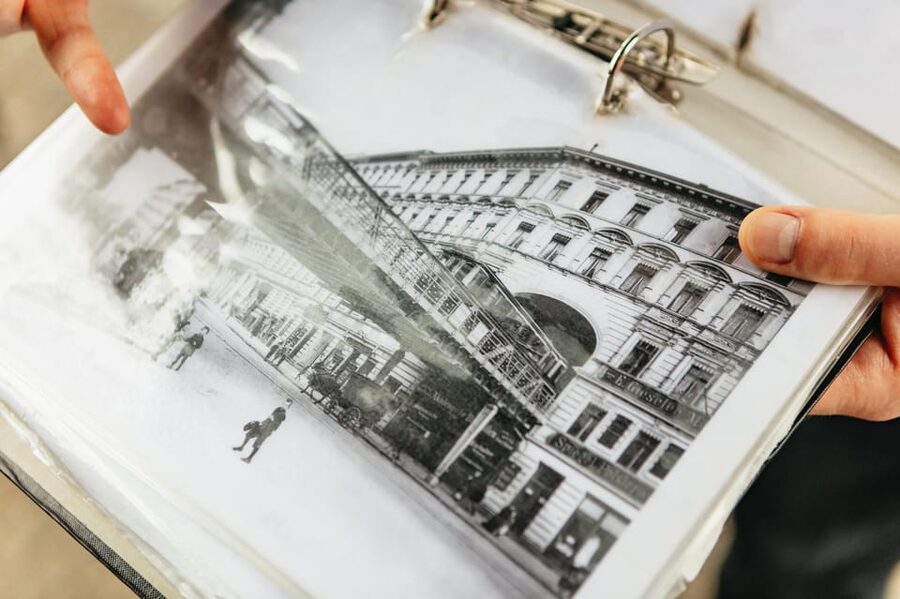
The stop at Christopher Isherwood’s former home on Nollendorfstraße adds a literary thread. Isherwood’s work helped shape later gay liberation by preserving a vivid picture of Berlin’s queer life before the Nazi era.
This part of the walk is useful even if you have not read Isherwood. Tobias explains how the writer’s view of Berlin became part of the way later generations understood the city’s interwar culture.
For readers familiar with Isherwood, the address gives the story a physical anchor. You are not just discussing a novelist in an abstract way. You are standing outside a place connected to his life and work.
The stop also raises a worthwhile question about who gets to record a community’s life. Literature can preserve atmosphere, names, and social detail, but it is not the whole story. The tour broadens the picture with political figures, club culture, lesbian history, and stories of people whose experiences were often pushed aside.
From suppression to West Berlin’s revival
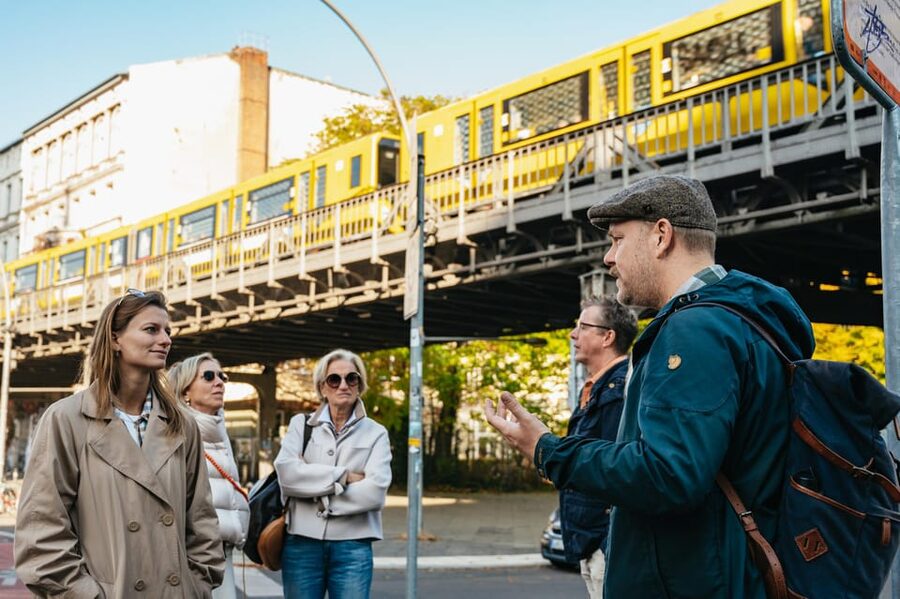
The tour does not stop in the early 1930s. That is one of its strengths. You learn what happened when the Nazi Party gained power and the earlier public queer culture was attacked and dismantled.
This section is handled as a serious break in the neighborhood’s story, not as a minor footnote. The clubs and organizations that once supported queer life could not simply continue as before. The loss was social, political, and personal.
From there, the tour moves toward the revival of Schöneberg as West Berlin’s main gay district from the end of the 1960s. This gives you a more complete timeline. The neighborhood’s identity was damaged, rebuilt, and reshaped across several decades.
I appreciate that the walk links the past to the present rather than treating history as finished. Eisenacher Straße, in particular, is presented as a place that still reflects the varied life of the neighborhood. You get a sense of continuity, but also change. Today’s cafés, businesses, nightlife, and public culture belong to a district that has repeatedly adapted.
Schwerin Straße and the lesbian quarter
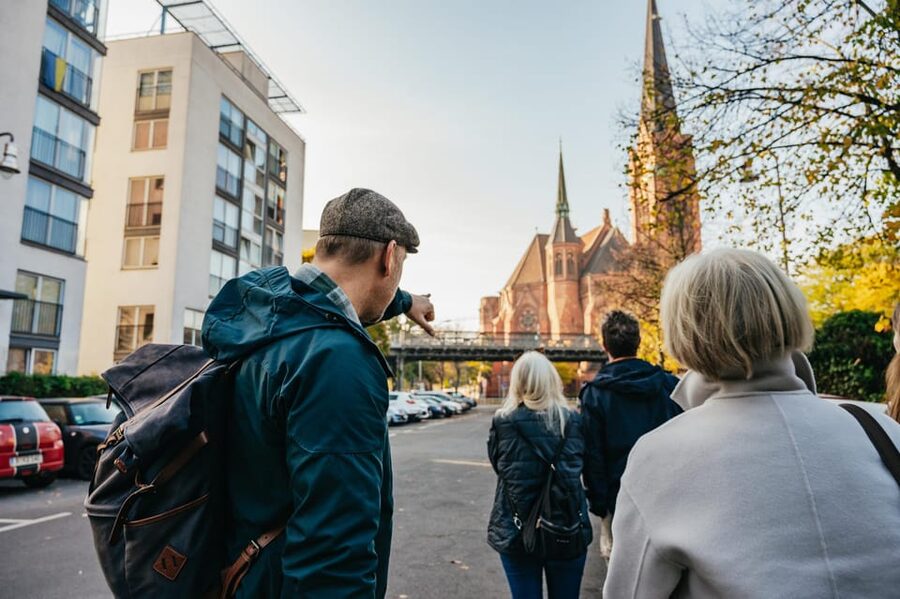
The walk also includes the lesbian quarter around Schwerin Straße. This broadens the tour beyond a familiar story centered on gay men, cabaret, and male writers.
That balance matters. Lesbian history can be harder to see in a city walk because it was often recorded through different organizations, social circles, and meeting places. Including Schwerin Straße shows that queer Schöneberg was never one single community with one shared experience.
The guide’s coverage also reaches trans, intersex, and gender-nonconforming stories. This is a particularly welcome feature if you want a tour that reflects the range of people who shaped Berlin’s queer life.
You should still expect the level of detail to depend partly on questions and the pace of the group. The tour has a lot to cover in 2.5 hours. It offers a broad historical frame, rather than a specialist seminar on one identity group or one decade.
What Tobias adds to the walk
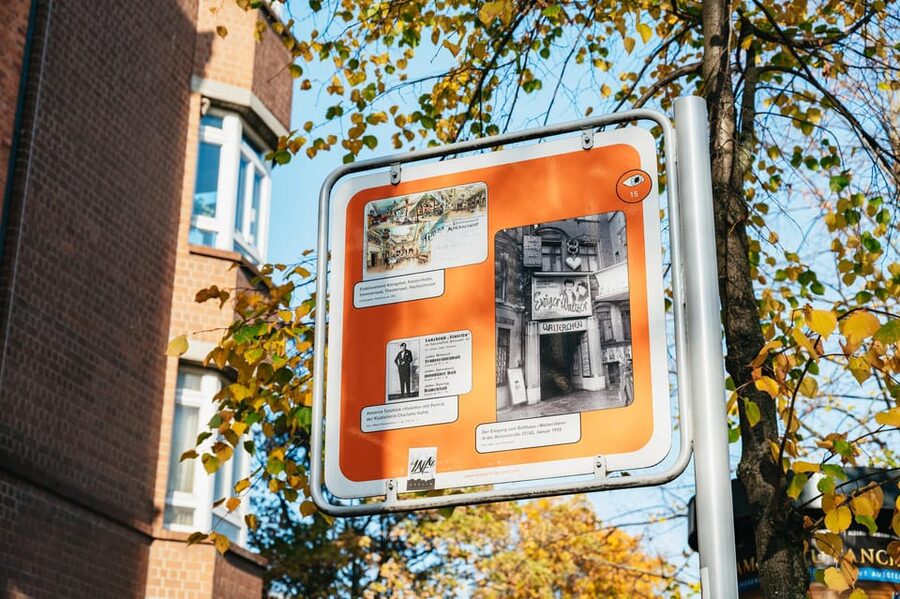
Tobias is the name most closely associated with this experience. He is repeatedly praised for his strong preparation, fluent English, humor, and ability to make historical figures feel like real people rather than names on a list.
I would value that approach on a subject with plenty of painful material. The Nazi period, discrimination, and the long fight for acceptance require sensitivity. At the same time, a tour about Berlin’s queer culture should not be solemn from start to finish. Tobias uses humor and personal anecdotes to keep the walk human.
His personal connection to the community also gives the tour a present-day voice. He has been described as open, friendly, and willing to answer questions from different viewpoints. That makes the walk feel less like a lecture and more like a conversation with someone who has spent serious time researching and thinking about the subject.
There is one small caution. Guide style can vary if your booking is handled by someone else, and the meeting point may change by option. The strong feedback is centered on Tobias, so check the tour details if having him specifically matters to you.
Is $23 a fair price?
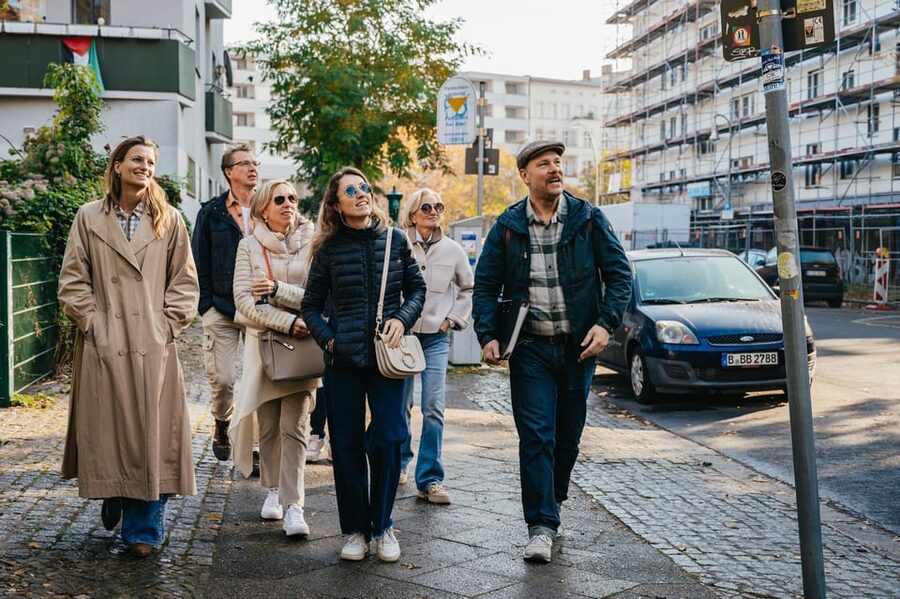
At $23 per person, I consider this good value. You receive 2.5 hours with a live guide, a focused route through one of Berlin’s most important queer districts, and historical material that would be difficult to assemble on your own during a casual walk.
The price is especially fair if you are interested in social history, literature, politics, or LGBTQIA+ culture. You are paying for interpretation, not admission to a single attraction. The former venues are mainly viewed from public streets, so the guide’s research and storytelling do much of the work.
Food and drinks are not included. That is no surprise for a walking tour, but plan accordingly. The route may finish near queer cafés, shops, or a bookshop, and stopping afterward can be a good way to continue supporting the local community. One recommended café received a poor personal assessment for service, so I would treat any end-of-tour recommendation as optional rather than part of the paid experience.
The tour allows free cancellation up to 24 hours before departure, and you can reserve now while paying later. Those terms help if your Berlin schedule is still shifting.
Who will enjoy this tour most?
I would choose this walk if you want more than a nightlife recommendation. It suits first-time Berlin visitors who want a clear introduction to queer history, as well as returning visitors who have seen the major political sights and want a more local route.
It is also a good fit for couples, solo visitors, and small groups who enjoy asking questions. The guide’s use of images and text makes the vanished clubs easier to understand, while the street walk keeps the experience active.
You may want to skip it if you dislike outdoor tours, have little interest in social or political history, or expect to enter historic interiors. The route is accessible for wheelchairs according to the activity information, but you should still confirm the exact meeting point and route details when booking.
The 2.5-hour length is well judged. It is long enough to build a timeline from the interwar years to modern Schöneberg, but short enough to fit into a full day of sightseeing. In winter, bring warm layers. The tour has gone ahead in freezing rain and snow, but your comfort will depend on your clothing.
Should you book the Schöneberg queer history walk?
Yes, if you want a thoughtful and personal introduction to Berlin’s LGBTQIA+ past. The best reasons to book are the focused Schöneberg route, the stops at the Nationalhof and El Dorado site, the Isherwood connection, and the inclusion of lesbian, trans, intersex, and gender-nonconforming stories.
The 4.8 rating from 281 bookings reflects the tour’s main strengths: Tobias’s preparation, humor, warmth, and command of the subject. The occasional concerns are minor, such as an unsatisfying café recommendation or a rushed ending after questions.
Book this early in your Berlin stay if you can. It will give you a better sense of what you are seeing when you return to Motzstraße, Nollendorfplatz, or Eisenacher Straße on your own. At $23, it is a practical way to connect ordinary streets with the people and movements that changed Berlin.
FAQ
Where does the Gay Berlin Out in Schöneberg tour take place?
The walk explores the area around Nollendorfplatz in Berlin’s Schöneberg district. It also includes Motzstraße, Nollendorfstraße, Schwerin Straße, and Eisenacher Straße.
How long does the tour last?
The walking tour lasts 2.5 hours.
What is included in the price?
The price includes the walking tour and a live guide.
Are food and drinks included?
No. Food and drinks are not included in the tour price.
How much does the tour cost?
The listed price is $23 per person.
Which languages are available?
The tour is offered in German and English.
Is the tour wheelchair accessible?
Yes. The activity is listed as wheelchair accessible.
Which historic places are included?
The route includes the locations of the Nationalhof, Hollandais club, Kleist Casino, and El Dorado cabaret club.
Does the tour include Christopher Isherwood?
Yes. The walk stops at the former home of novelist Christopher Isherwood on Nollendorfstraße.
Can the tour date, time, or meeting point be arranged for a group?
Special dates, times, and meeting points can be arranged for a group according to its wishes. You should provide those details when telephoning.
Can you cancel for a refund?
Yes. You can cancel up to 24 hours in advance for a full refund.
Do you have to pay when booking?
The reserve-now, pay-later option lets you reserve your place without paying immediately.
More LGBTQ-Friendly
- Berlin’s Gay, Lesbian, and Queer Scene Small-Group Walking Tour
★ 4.5 · 66 reviews - Street Art & Berlin Gay, Queer, Trans History + Free Gay Map
★ 4.9 · 15 reviews
Just added around Berlin
- Berlin: Private Guided Tour of the Main Sights★ 5.0 · 13 reviews
- Private Highlights of Berlin Bike Tour★ 5.0 · 13 reviews
- Modern Berlin Private Walking Tour: Diverse, Vibrant and Exciting German Capital★ 5.0 · 13 reviews
- Tour in Berlin from Warnemünde and Rostock Cruise Port★ 4.1 · 13 reviews
- Berlin: Stasi Museum Private Guided Tour with Entry Ticket★ 4.8 · 13 reviews
- Private Food Tour Experience with a born and bred Berliner★ 5.0 · 14 reviews
- Berlin: Rheinsberg Palace Entrance Ticket★ 4.8 · 14 reviews
- Berlin in one day – day tour with an expert guide★ 5.0 · 14 reviews
Walking Tours, compared.

Berlin’s Best: 2 Hour Walking Tour Third Reich and the Cold War
Read our review →
Third Reich Berlin: Hitler and WWII Walking Tour
Read our review →Browse the lists this tour appears in