
Reviewed · WALKING TOURS
Small Group Walking Tour of East Berlin with a French Guide
Berlin’s past is still written on its streets. This French-language walk links the Berlin Wall Memorial, Alexanderplatz, Karl-Marx-Allee, and the East Side Gallery in about three hours, giving you a clear route through the political story of former East Berlin. I especially like the French-speaking guide and the chance to reach several major Cold War sites in one outing. I also like that the tour uses public transport and walking rather than keeping you inside a bus.
The main consideration is the pace. You walk for roughly three hours, use the S-Bahn, and finish in a different part of town from where you began. A Berlin AB day card is required and is not included, so you need to plan that before the 10 a.m. meeting time.
In This Review
- Key points to know before booking
- Why this three-hour route works
- Nordbahnhof and the vanished border
- Bernauerstrasse and the Berlin Wall Memorial
- Alexanderplatz and the pressure of public protest
- The East Side Gallery’s 104 murals
- The French guiding style
- Price, walking effort, and practical value
- Who will get the most from this walk
- Should you book the East Berlin walking tour?
- FAQ
- What language is the tour conducted in?
- How long does the tour last?
- What time does the tour start?
- Where does the tour begin?
- Where does the tour end?
- Is public transportation included?
- Which major sights are included?
- Is the Berlin Wall Memorial free to enter?
- How many people can join the tour?
- Can I cancel for a full refund?
Key points to know before booking
- A French-language history walk: Guides such as Paul and Stéphane have been praised for clear explanations, warmth, and an energetic way of telling difficult stories.
- A ghost station begins the journey: You take the S-Bahn from Potsdamer Platz to Nordbahnhof, a station closed for nearly 30 years after the Wall divided Berlin.
- The Berlin Wall Memorial offers the most serious stop: You see an original section of the death strip and hear about escape tunnels, failed escapes, and people killed while trying to cross.
- Alexanderplatz connects politics with public protest: The tour explains how peaceful demonstrations challenged the East German state and helped bring down the Wall.
- The East Side Gallery provides a colorful finish: You see 104 murals, including the famous painted kiss between Leonid Brezhnev and Erich Honecker.
- The price is modest for a guided city walk: At $27.91 per person, the cost is attractive, though your public transportation ticket is extra.
Why this three-hour route works
East Berlin is not a single sight. Its story is spread across train stations, apartment avenues, public squares, preserved Wall sections, and painted remnants. That makes a guided route useful. Without some background, it is easy to see concrete and empty space without understanding what happened there.
This tour gives you a chronological and geographic thread. You begin with the practical effects of the Wall, move into the machinery and symbols of socialist East Berlin, then finish with the demonstrations and the art that followed the Wall’s fall. I like that structure because it turns separate sights into one connected story.
The tour begins at 10 a.m. at Potsdamer Platz, at Potsdamer Platz 10. From there, the group takes the S-Bahn to Nordbahnhof. Public transportation is part of the experience, but you must buy your own Berlin AB day card. That extra cost is worth remembering when you compare the total price with other guided tours.
The group can include up to 25 people. That is not an intimate private walk, but it is still small enough for a guide to address the group directly. Your experience will depend partly on where you walk and how easily you can hear, especially at busy streets and open public spaces.
More Walking Tours in Berlin
- Discover Berlin Half-Day Walking Tour
★ 5.0 · 9,624 reviews - Berlin: Third Reich and Cold War 2 Hour Walking Tour
★ 4.9 · 6,830 reviews - Berlin: Discover Berlin Walking Tour
★ 4.9 · 5,998 reviews
Nordbahnhof and the vanished border
The first stop is Nordbahnhof, reached by S-Bahn from Potsdamer Platz. The station is important because it was one of Berlin’s ghost stations. After the Wall went up, trains from West Berlin continued to pass through several stations in East Berlin without stopping. Nordbahnhof remained closed for nearly 30 years.
That simple fact gives you an early lesson in how division worked. The border was not only a wall above ground. It reached into the transit system, reshaping ordinary journeys and turning stations into sealed, watched spaces.
You spend about 10 minutes here, with no admission charge. It is a short opening stop, but it helps you understand why the tour begins with public transport rather than heading straight to a monument. The S-Bahn ride shows how Berlin’s division affected daily movement.
Bring a valid public transportation ticket before the tour starts. Transportation to and from the attractions is not included, and the route ends away from Potsdamer Platz.
Bernauerstrasse and the Berlin Wall Memorial
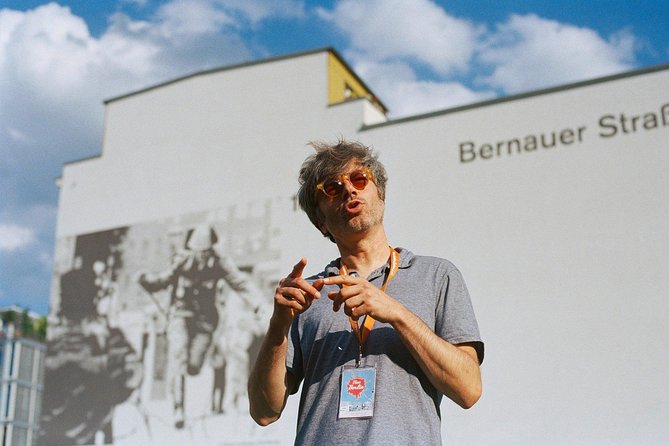
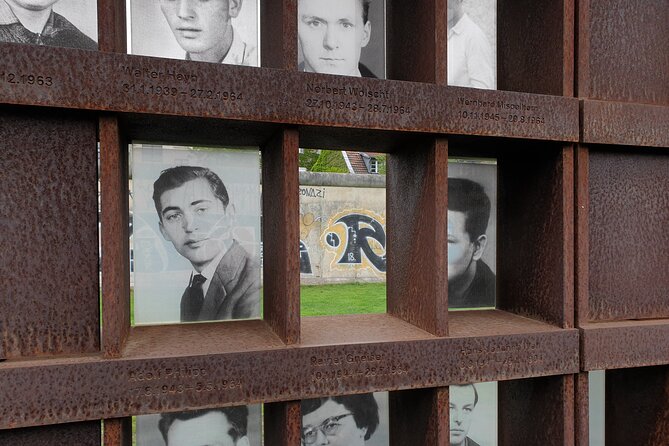
The Berlin Wall Memorial on Bernauerstrasse is the emotional center of the walk. You spend about 50 minutes here, which gives the guide enough time to explain both the physical border and the human cost of its construction.
This is where you encounter an original part of the death strip, the no-man’s-land between the two sides. The preserved area helps you picture the Wall as a controlled border zone rather than a single slab of concrete. The setting also makes clear why crossing was so dangerous.
Your guide discusses escape attempts, including tunnels dug beneath the border. You also hear the terrible stories of people who lost their lives because of the Wall. The subject is heavy, but it is handled as a central part of understanding East Berlin, not as a quick photo stop.
I value this portion because it puts personal lives ahead of slogans. Political labels such as East and West can feel abstract. Stories of divided families, escape plans, and deaths at the border make the consequences easier to grasp.
The memorial is also a place where you should slow down and listen. The tour covers a lot of ground, so you may want to take a moment after the guide’s explanation to look closely at the preserved border area. Admission is free.
This stop may be difficult for younger children or anyone hoping for a light sightseeing walk. The material includes repression, failed escapes, and loss of life. The tour is not designed to soften that past.
Alexanderplatz and the pressure of public protest
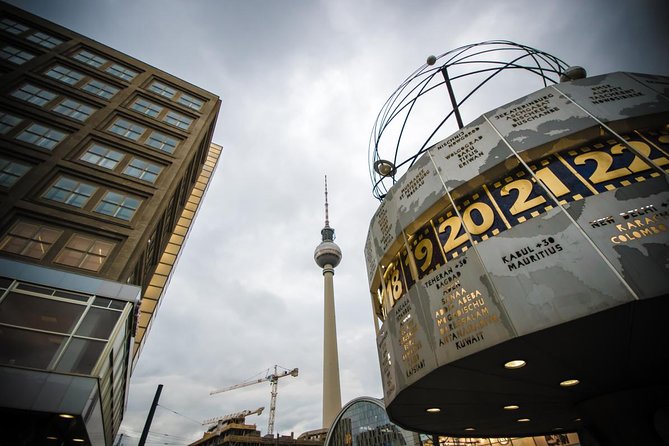
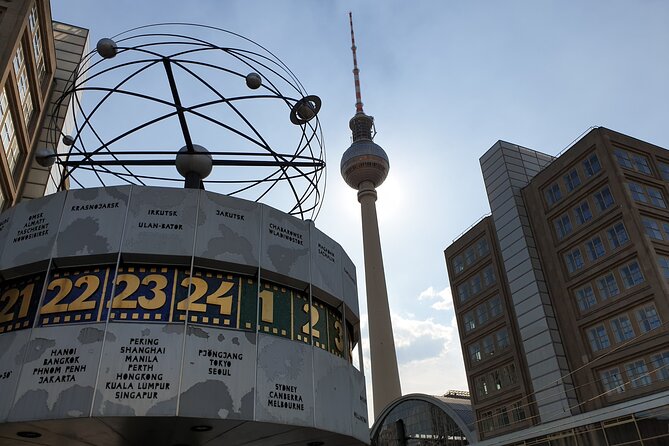
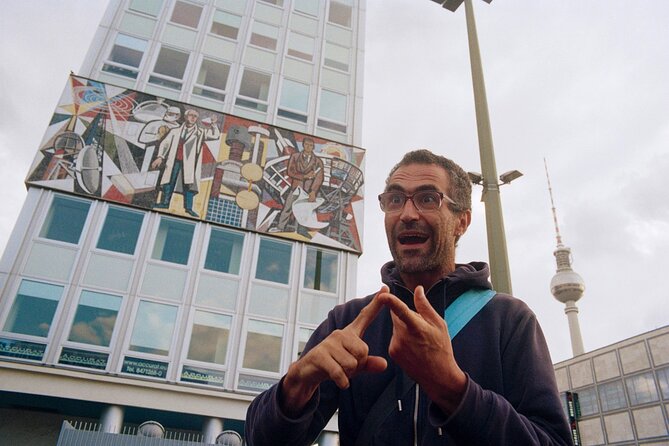
From the Wall Memorial, the route continues to Alexanderplatz, one of the best-known public spaces in Berlin. The stop lasts about 20 minutes and focuses on the representative buildings of socialist East Berlin and the peaceful demonstrations that challenged the East German government.
Alexanderplatz matters because it connects the built city with political change. The square became a place where large numbers of people publicly opposed state repression and the influence of the STASI. The guide explains how these demonstrations helped trigger the collapse of the Wall and the later breakup of the Soviet bloc.
This is a useful contrast with Bernauerstrasse. At the memorial, you learn about the border’s force and fear. At Alexanderplatz, you learn how public pressure helped weaken that system. The story moves from people trying to cross the border in secret to people gathering in public to demand change.
You should expect explanation rather than a long sightseeing pause here. Twenty minutes is enough to identify key buildings and understand the political setting, but not enough for an in-depth architectural tour. If you want to study Alexanderplatz’s buildings or take many photographs, you may need to return on your own.
The route also includes Karl-Marx-Allee as one of the important locations associated with socialist East Berlin. The information provided does not give a separate timed stop for the avenue, so treat it as part of the wider route and commentary rather than a dedicated visit with its own admission.
Something different for another day:
- Berlin: Reichstag, Dome and Government District Guided Tour
★ 4.7 · 18,288 reviews - Berlin: 1-Hour City Tour by Boat with Guaranteed Seating
★ 4.3 · 16,993 reviews - Berlin: Boat Tour Along the River Spree
★ 4.4 · 11,252 reviews - Berlin: Hop-on Hop-off Bus Tour with Live Commentary
★ 4.3 · 8,579 reviews
The East Side Gallery’s 104 murals
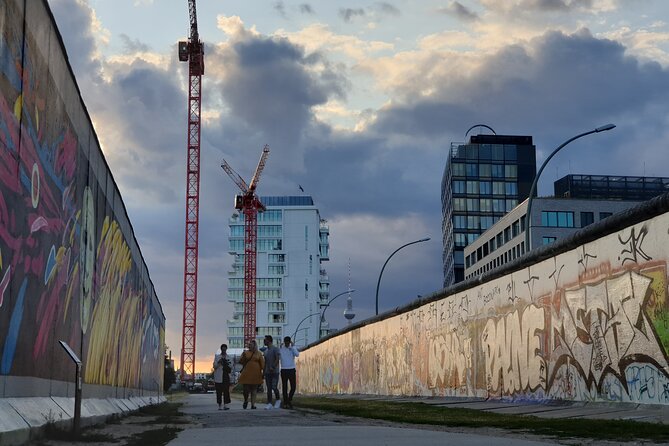
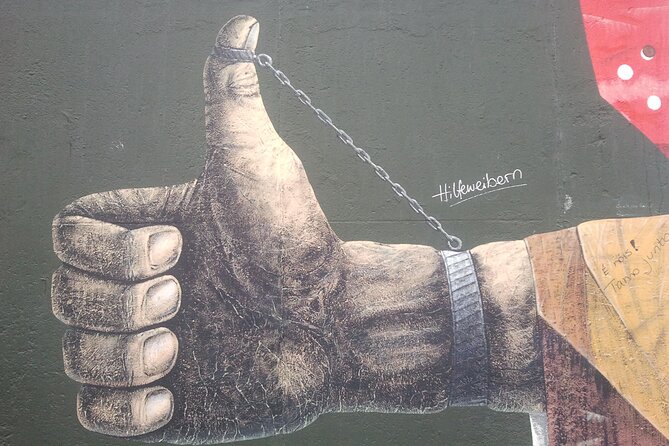
The tour ends at the East Side Gallery on Mühlenstrasse, where you see the most famous colorful section of the Berlin Wall. The gallery contains 104 murals, including the well-known image of the kiss between Soviet leader Leonid Brezhnev and East German leader Erich Honecker.
After the serious tone of the Wall Memorial and Alexanderplatz, this final stop changes the mood. The painted Wall shows how a former barrier became a public art site. The murals are not just decoration. They reflect the political symbolism of the Wall after its fall and the desire to turn a painful object into something open and expressive.
You spend about 15 minutes here. That is enough for the guide to point out key images and explain the setting, but the East Side Gallery can reward a separate visit if you want to inspect more of the 104 works. The tour gives you an introduction, not unlimited time with every painting.
The East Side Gallery is also where the route finishes, at the nextbike BerlinJelbi stop near Mühlenstraße and Straße der Pariser Kommune. You do not return to Potsdamer Platz, so check your plans for the rest of the day before booking. The ending point is useful if you plan to continue exploring East Berlin, but less convenient if you have an appointment near the original meeting point.
The French guiding style
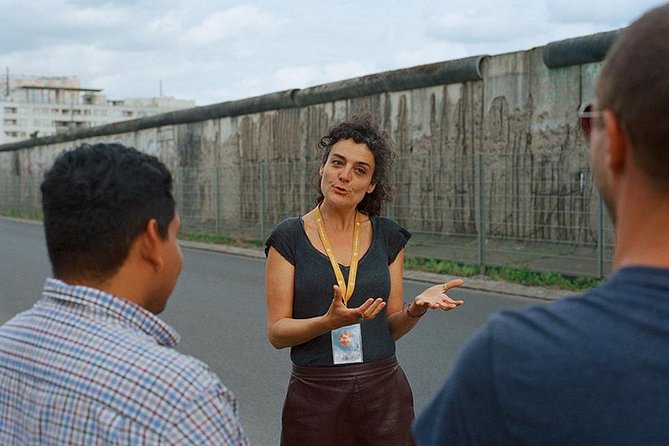
The guide is the heart of this experience. The walk is conducted in French, and the strongest praise has focused on clear, engaging explanations. Paul is described as both friendly and educational, while Stéphane is praised for telling the story with energy and providing a great deal of information.
That combination matters. Cold War Berlin can become a list of dates, leaders, and political terms. A guide who explains the human journeys behind those events makes the route easier to follow and more memorable.
You should book this tour only if you are comfortable listening to history in French. The tour’s value depends on understanding the commentary, since the landmarks themselves do not provide the full context. If your French is strong enough for a three-hour historical discussion, the format should work well. If you only know basic French, a tour in another language may serve you better.
The guide also helps you connect places that might otherwise feel unrelated. The ghost station, the Wall Memorial, Alexanderplatz, Karl-Marx-Allee, and the East Side Gallery each tell part of the story. The benefit of a walking tour is that the explanations arrive at the places where they matter.
Price, walking effort, and practical value
At $27.91 per person, this is a good-priced guided experience. You are paying for about three hours with a local guide, not for entry tickets, since the listed stops are free. You also receive commentary in French across several major East Berlin locations.
The public transportation day card for zones AB is extra. You need it for the S-Bahn ride from Potsdamer Platz to Nordbahnhof, and it may be useful for getting back after the tour. Since transportation is not included, add that cost before judging the final price.
The tour requires a moderate level of physical fitness. You will walk through central Berlin, use public transportation, and remain on your feet for much of the three-hour period. Wear comfortable shoes and check the weather before leaving. The tour does not list hotel pickup or drop-off, so you must reach Potsdamer Platz independently.
A mobile ticket makes access simple. Confirmation is provided when you book, and service animals are allowed. The meeting point is near public transportation, which helps with the early start.
Free cancellation is available if you cancel at least 24 hours before the 10 a.m. start time. Changes or cancellations made less than 24 hours before the start are not accepted for a refund.
Who will get the most from this walk
I would recommend this tour to French-speaking visitors who want political history tied to real places. It suits first-time visitors who want an organized introduction to East Berlin and people who prefer learning through walking rather than sitting in a museum.
It is also a good fit if you want to see several major sights without arranging the route yourself. The guide supplies the order, the context, and the connections between them.
You may want a different option if you dislike group walking tours, need frequent breaks, or want to spend a long time photographing the East Side Gallery. A maximum of 25 people is reasonable, but it is not the same as a private tour. The three-hour schedule also leaves limited time for extended exploration at each stop.
The subject is serious. You will hear about state repression, dangerous escape attempts, and people killed at the Wall. That makes the tour meaningful, but it is not a casual stroll focused only on architecture or street art.
Should you book the East Berlin walking tour?
Book it if you want a French-language introduction to Cold War Berlin with a sensible route and strong historical focus. The best parts are the Berlin Wall Memorial, the explanation of Nordbahnhof’s ghost-station past, and the way Alexanderplatz links peaceful protest with the Wall’s collapse.
The $27.91 price is fair, especially for a three-hour guided walk across several free landmarks. Just budget for the Berlin AB transportation day card, prepare for steady walking, and remember that the tour ends near the East Side Gallery rather than at Potsdamer Platz.
If you want clear storytelling from guides such as Paul or Stéphane, and you can follow detailed French commentary, this is an efficient and worthwhile way to meet East Berlin’s past face to face.
FAQ
What language is the tour conducted in?
The tour is conducted in French with a French-speaking local guide.
How long does the tour last?
The walking tour lasts approximately three hours.
What time does the tour start?
The tour starts at 10 a.m.
Where does the tour begin?
The meeting point is Potsdamer Platz 10, 10785 Berlin, Germany.
Where does the tour end?
The tour ends at the nextbike BerlinJelbi stop near Mühlenstraße and Straße der Pariser Kommune in Berlin.
Is public transportation included?
No. You need to purchase a public transportation day card for Berlin zones AB.
Which major sights are included?
The route includes Nordbahnhof, the Berlin Wall Memorial on Bernauerstrasse, Alexanderplatz, Karl-Marx-Allee, and the East Side Gallery.
Is the Berlin Wall Memorial free to enter?
Yes. The listed stops, including the Berlin Wall Memorial, have no admission charge.
How many people can join the tour?
The tour has a maximum of 25 participants.
Can I cancel for a full refund?
Yes, if you cancel at least 24 hours before the experience starts. Cancellations or changes made less than 24 hours before the start are not refunded or accepted.
Just added around Berlin
- Berlin: Private Guided Tour of the Main Sights★ 5.0 · 13 reviews
- Private Highlights of Berlin Bike Tour★ 5.0 · 13 reviews
- Modern Berlin Private Walking Tour: Diverse, Vibrant and Exciting German Capital★ 5.0 · 13 reviews
- Tour in Berlin from Warnemünde and Rostock Cruise Port★ 4.1 · 13 reviews
- Berlin: Stasi Museum Private Guided Tour with Entry Ticket★ 4.8 · 13 reviews
- Private Food Tour Experience with a born and bred Berliner★ 5.0 · 14 reviews
- Berlin: Rheinsberg Palace Entrance Ticket★ 4.8 · 14 reviews
- Berlin in one day – day tour with an expert guide★ 5.0 · 14 reviews
Walking Tours, compared.

Berlin’s Best: 2 Hour Walking Tour Third Reich and the Cold War
Read our review →
Third Reich Berlin: Hitler and WWII Walking Tour
Read our review →Browse the lists this tour appears in