
Reviewed · WALKING TOURS
Rostock: City Walking Tour
Rostock rewards a closer look. This private two-hour walk brings you through the Hanseatic city center, from the Rathaus and Gothic churches to old lanes, riverside boulevards, and the historic harbor area. I like the focus on seeing the city rather than sitting through a long lecture, and I like the chance to ask questions as you go.
The main consideration is language: the live tour is offered in German, and the route is not suitable for people with mobility impairments. At $147 per group of up to six, it is a sensible buy for a full group, but a costly choice if you are alone or traveling as a pair.
In This Review
- Key points to know before you book
- Starting under the griffin at Rostock’s Rathaus
- Gothic churches and the shape of the old town
- Old alleys, university square, and lesser-known corners
- Medieval city wall and the historic harbor area
- A two-hour pace that favors seeing over lecturing
- What the private group price really means
- Who will enjoy this Rostock walking tour
- Practical advice for making the most of it
- Should you book the Rostock City Walking Tour?
- FAQ
- Where does the Rostock walking tour meet?
- How long does the tour last?
- How much does the private tour cost?
- What language is the tour conducted in?
- What places are included in the walk?
- Can I cancel for a full refund?
Key points to know before you book
- Meet beneath the Rathaus griffin: Your guide waits at the main entrance of Rostock’s town hall, under the symbol of the Greif.
- A true old-town overview: The route links the town hall, Gothic churches, university square, city wall, alleys, harbor area, and riverside streets.
- Private groups only: You have the guide to yourself, with space to ask questions and shape the conversation.
- German is the tour language: This matters if you need commentary in English or another language.
- History stays in proportion: The walk gives context without making you memorize a string of dates.
- Best value for up to six people: The fixed $147 price works out to $24.50 per person for six, but $73.50 each for two.
Starting under the griffin at Rostock’s Rathaus
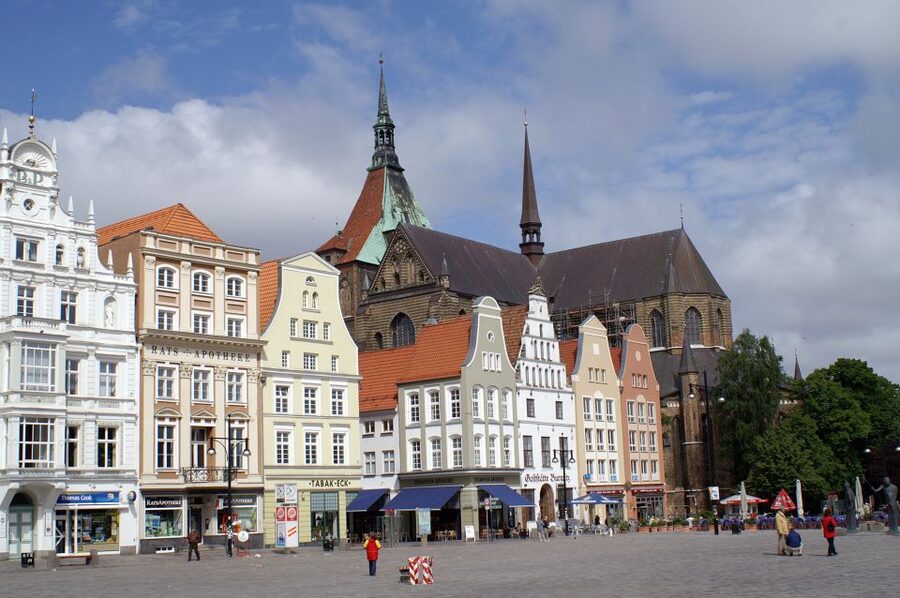
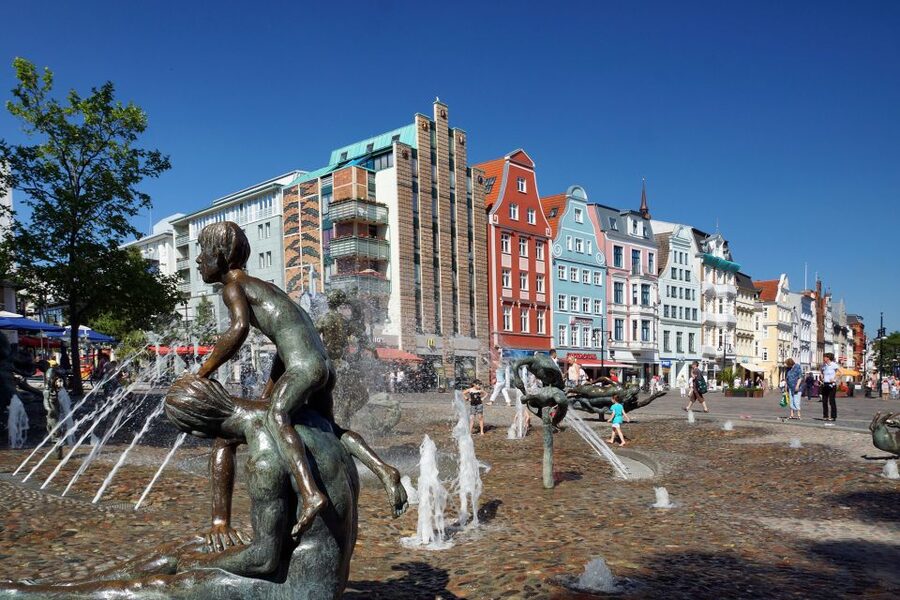
The meeting point is easy to picture: stand at the main entrance of Rostock’s Rathaus, directly beneath the Greif, or griffin, symbol. That detail is useful in a busy square, since it gives you a clear landmark instead of a vague instruction to meet near the town hall.
From here, the tour begins in the heart of the old town. The Rathaus is a fitting place to start because it connects Rostock’s civic life with its medieval city center. You can expect your guide to use the building and the surrounding square to explain how the town developed and how its public spaces functioned.
I like this kind of opening because it gives you bearings fast. In two hours, you do not have time for a long preamble. You need a guide who can put the major sights in order, explain what matters, and keep you moving.
The private format should help here. You are not trying to hear a guide over a large crowd, and you can ask for clarification when a church, street, or city building catches your eye. The German-language format is the clear limit, so book only if everyone in your group can follow German comfortably.
More Walking Tours:
- Warnemünde: Guided Walking Tour
★ 4.3 · 102 reviews - Discover Berlin Half-Day Walking Tour
★ 5.0 · 9,624 reviews - Berlin: Third Reich and Cold War 2 Hour Walking Tour
★ 4.9 · 6,830 reviews
Gothic churches and the shape of the old town
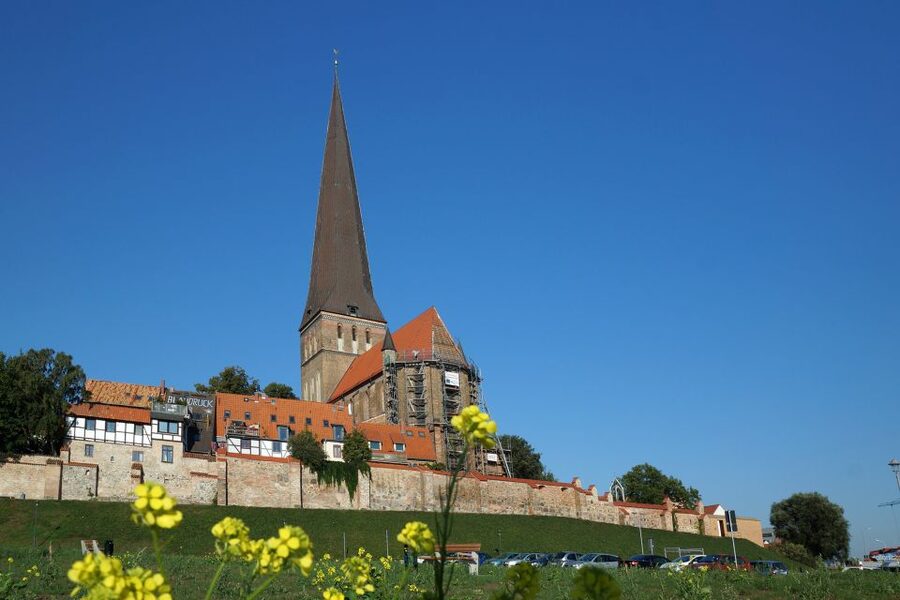
The route includes Rostock’s Gothic churches, one of the most important parts of the city’s visual character. You will see how these tall medieval buildings help define the old town and how their scale reflects the importance of Rostock during its Hanseatic period.
The tour does not promise a lengthy interior visit or a detailed religious art program, so you should think of the churches as part of a wider city walk. Their value lies in the way your guide places them within Rostock’s streets, civic life, and medieval growth.
That broader view is helpful. A church can be impressive on its own, but a good walking tour explains why it appears where it does and how it relates to nearby squares and routes. You will get more from the architecture when it is tied to the city around it.
The balance also seems well judged. One particularly useful feature of this experience is its avoidance of too many historical numbers. The guide keeps attention on the walk and gives information in a way that leaves room for questions. If you want a specialist lecture on Hanseatic trade, church architecture, or medieval dates, you may find this tour too light. If you want a clear first look at Rostock, that restraint is a plus.
Old alleys, university square, and lesser-known corners
Rostock’s appeal is not limited to its biggest buildings. The walk passes through old-town alleys and includes the university square, giving you a chance to see the city at street level rather than only from its grandest viewpoints.
These smaller spaces often make a walking tour worthwhile. A guide can point out details you might pass without noticing, explain how different parts of the center connect, and show you a route that is harder to understand from a map. The supplied tour description calls attention to lesser-known corners, but it does not list each one in advance. That is useful to remember: you are booking a guided overview, not a fixed checklist of named attractions.
The university square adds another layer to the city center. Along with the Rathaus and churches, it shows that Rostock is more than a medieval display. The route moves from older architecture toward later periods, including the 20th century, so you get a sense of change rather than a frozen picture of the past.
I appreciate that the walk includes both major landmarks and ordinary connecting streets. You need both to understand a city. Big sights tell you what Rostock wants you to notice, while side lanes and public squares show how the center fits together.
Medieval city wall and the historic harbor area
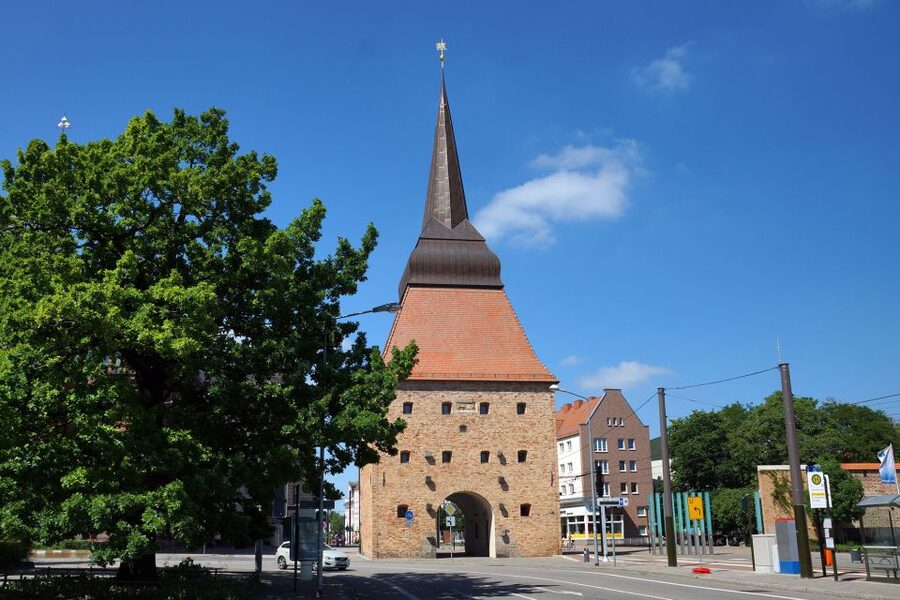
The medieval city wall is another key stop. Even when only sections remain, a wall helps you picture the limits of the old city and the need to control movement, trade, and defense in earlier times.
Your guide can make this kind of feature useful by showing how it relates to the modern street plan. That is one reason a local guide earns their fee on a short tour. A wall can look like an isolated remnant if you see it alone. In context, it becomes part of the city’s former shape.
The walk also reaches the historic harbor area and riverside boulevards. This change of setting helps keep the two-hour route varied. You move from civic buildings and churches to spaces linked with water, commerce, and the city’s wider Hanseatic identity.
The harbor section should not be confused with a boat trip or an extended port excursion. It is part of a walking route, and the information provided does not promise harbor transport, museum entry, or a long stop beside the water. Expect an outdoor overview with commentary, not a separate harbor attraction.
This mix is one of the strongest reasons to choose the experience. You get architecture, public squares, old defenses, university life, and waterfront history in one compact outing. It gives you a framework for later exploring on your own.
More City Tours:
- Rostock: Guided tour of the historic city center
★ 4.5 · 311 reviews - Rostock: Hot Rod Harbor City Tour
★ 4.9 · 16 reviews - Berlin: 1-Hour City Tour by Boat with Guaranteed Seating
★ 4.3 · 16,993 reviews - Leipzig: City History Canal Sightseeing Tour on a Motorboat
★ 4.7 · 6,232 reviews
A two-hour pace that favors seeing over lecturing
Two hours is enough to introduce the city, but not enough to cover every corner of Rostock. The tour works best when you treat it as orientation. You will leave with a sense of the center’s main sights and a better idea of where to return for a slower look.
The pace appears to favor walking and conversation. A German-language review described the explanations as informative without too many dates, with questions welcomed during the route. Another praised the fact that the focus stayed on showing the city instead of spending ten minutes on a single Hanseatic topic.
That distinction matters. Some city tours are really history talks delivered outdoors. This one is designed more as a guided circuit. You can still ask about the Hanseatic period or a particular building, but the guide’s job is to keep the whole route moving.
I would allow a little extra time around the two-hour booking, especially if you want photos or expect several questions. The official duration is two hours, so do not plan another appointment immediately afterward if your day is tightly timed.
The format also suits a first visit early in your stay. After the tour, you can decide which church, square, harbor stretch, or old lane deserves more time. If Rostock is only a short stop, the route gives you a useful sweep of the center without taking the whole day.
What the private group price really means
The cost is $147 per group of up to six people. That is not a per-person ticket, so the value changes sharply with group size.
- One person: $147
- Two people: $73.50 each
- Three people: $49 each
- Four people: $36.75 each
- Six people: $24.50 each
For six people, the price is reasonable for a private local guide and a focused introduction to Rostock. You are paying for personal attention, the ability to ask questions, and a route arranged around the center rather than joining an unknown-sized crowd.
For one or two people, the calculation is less favorable. You should choose this option because the private format matters to you, not because it is the cheapest way to see Rostock. A couple who values direct conversation may still find it worthwhile, while a solo visitor on a tight budget may prefer to explore independently.
The booking terms add some flexibility. You can reserve now and pay later, and cancellation is free up to 24 hours before the tour for a full refund. Those policies do not change the tour itself, but they make it easier to fit into a changing German itinerary.
Who will enjoy this Rostock walking tour
I would recommend this experience to you if you want a compact introduction with a human guide rather than a self-guided route. It is especially well suited to:
- A private group of friends or family, where the $147 fee can be shared.
- First-time visitors who want the main old-town sights placed in context.
- People who prefer questions and conversation over a long prepared speech.
- Visitors who want to connect medieval architecture with later city development.
- Anyone with only a short period available in Rostock.
The tour may not suit you if you need English commentary, cannot walk comfortably for two hours, or want entry into several interiors. The activity is specifically marked as unsuitable for people with mobility impairments, and no alternate accessible route is described.
It may also disappoint you if you are looking for a highly specialized history seminar. The strength here is the complete city walk, not an exhaustive study of one subject. You will hear about the Hanseatic city and its major sites, but the route keeps moving.
Practical advice for making the most of it
Wear shoes that you can walk in comfortably. The experience covers old-town alleys, open public spaces, riverside streets, and historic areas, so the route is best approached as a real city walk rather than a short stop between parked vehicles.
Arrive at the Rathaus entrance with the Greif symbol in mind. The meeting point is specific, but a town-hall square can still have several approaches and entrances. Finding the griffin before the start should prevent a rushed beginning.
Since the guide speaks German, consider your group’s language level before booking. The private format gives you room to ask questions, but it does not change the tour language. If one person in your party understands only a little German, the experience may be difficult to follow.
Bring questions. The tour is built for conversation, and the best value comes when you use the guide to connect the places you are seeing. Ask about the town hall, the churches, the city wall, the harbor area, or anything that catches your attention in the old streets.
You should also keep expectations realistic. The two-hour route gives you a broad look at Rostock’s center. It does not promise a full museum program, transport, food, or a long harbor excursion. What you receive is a local-led walk through the city’s key historic zones.
Should you book the Rostock City Walking Tour?
Book it if you want a private German-language overview of Rostock that keeps history connected to the streets in front of you. The route covers the town hall, Gothic churches, university square, city wall, old lanes, harbor area, and riverside boulevards, which is a strong range for two hours.
The decision is easiest for a group of four to six, where the fixed price offers good value. For a couple, the cost is harder to justify unless personal attention and local conversation are high on your list.
I would choose this tour early in a Rostock visit, especially if you like to get oriented before exploring alone. Skip it if you need accessible walking arrangements, English commentary, or an in-depth specialist lecture. For everyone else, it offers a practical first look at the Hanseatic city without burying the experience under too many dates.
FAQ
Where does the Rostock walking tour meet?
Meet your guide in front of Rostock’s Rathaus at the main entrance, beneath the symbol of the Greif, or griffin.
How long does the tour last?
The walking tour lasts two hours.
How much does the private tour cost?
The price is $147 for a private group of up to six people.
What language is the tour conducted in?
The live tour guide speaks German. No other tour language is listed.
What places are included in the walk?
The route covers key areas of Rostock’s town center, including the Rathaus, Gothic churches, medieval city wall, old-town alleys, university square, historic harbor area, and riverside boulevards.
Can I cancel for a full refund?
Yes. You can cancel up to 24 hours in advance for a full refund. You can also reserve the tour and pay later.
Just added around Rostock
- Brewery tour with guide!★ 4.8 · 13 reviews
- Distillery tour with guide!★ 4.7 · 14 reviews
- Rostock: Hot Rod Harbor City Tour★ 4.9 · 16 reviews
- Warnemünde Shore Excursion: Private Tour of Berlin’s World War II and Cold War Sites★ 5.0 · 17 reviews
- Rostock: Hot Rod Sightseeing Tour to Warnemünde★ 5.0 · 19 reviews
- Rostock: Tour with the Rostocker Executioner★ 4.7 · 28 reviews
- Berlin and Sachsenhausen: Shore Trip from Warnemünde Port★ 4.8 · 40 reviews
- Lovely Rostock and Warnemünde Shore Excursion for Cruise Ships★ 5.0 · 44 reviews
Walking Tours, compared.




Berlin’s Best: 2 Hour Walking Tour Third Reich and the Cold War
Read our review →
Third Reich Berlin: Hitler and WWII Walking Tour
Read our review →Browse the lists this tour appears in