
Reviewed · WALKING TOURS
Queer Berlin Walking Tour
Queer Berlin rewards curious walkers. This 3.5-hour tour links Schöneberg’s gay neighborhood with the Tiergarten, using bars, memorials, streets, and former institutions to explain how queer Berlin changed over time. I like its clear mix of social history and city sightseeing, and I especially like that it includes lesbian, gay, transgender, and political stories rather than narrowing Berlin’s past to one famous figure. The main consideration is simple: this is a long walking tour, and public transport or entrance fees are not included.
I also like the way the tour connects glamorous cabaret with painful chapters such as Nazi persecution and Section 175. Guides such as Tom, Tobi, Finn, Beth, and Jared have been praised for their humor, patience, and ability to answer questions, though the guide for your departure will vary. Bring comfortable shoes, a drink, and a little patience for Berlin weather.
In This Review
- Key points to know before booking
- Why queer history gives Berlin a different shape
- Schöneberg, Berlin’s famous queer district
- The former Eldorado and Berlin nightlife
- Magnus Hirschfeld’s bold work for sexual science
- Section 175 and the cost of legal persecution
- The Tiergarten and the Berlin Wall’s shadow
- From Friedrich the Great to modern Berlin
- Guide style, walking demands, and the group experience
- Is $23 a fair price?
- Who should book this walk?
- Should you book the Queer Berlin Walking Tour?
- FAQ
- Where does the Queer Berlin Walking Tour take place?
- How long does the tour last?
- How much does the tour cost?
- Which languages are available?
- Is public transport included?
- Are entrance fees included?
- Does the tour run in bad weather?
- How can I identify the guide?
- Can I cancel for a refund?
Key points to know before booking
- Schöneberg supplies the tour’s center of gravity: You’ll visit sites linked to Berlin’s queer nightlife, Marlene Dietrich, Christopher Isherwood, Otto Dix, and the former Eldorado.
- The story reaches far beyond the twentieth century: Friedrich the Great and Klaus Wowereit appear alongside Magnus Hirschfeld and the people who resisted Nazi persecution.
- Magnus Hirschfeld gets proper attention: His Institute for Sexual Science offered support to queer and transgender people before the Nazis closed it in 1933.
- The tone is serious but not bleak: Cabaret, nightlife, funny anecdotes, and practical city stories help balance the memorials and persecution sites.
- The Tiergarten adds a present-day connection: You’ll walk through Berlin’s best-known gay meeting place, near the former Berlin Wall.
- Plan for 3.5 hours on foot: The tour runs in all weather, and meeting points can change with the option you book.
Why queer history gives Berlin a different shape
Berlin is often introduced through palaces, museums, war memorials, and the Berlin Wall. Those subjects matter, but they can leave out the people who built their lives around the city’s clubs, meeting places, political campaigns, and private networks of support.
This walking tour gives you another way to read Berlin. A street corner can become a clue to cabaret culture. A former bar can open a discussion about gender expression. A quiet memorial can show how law, police power, and dictatorship affected ordinary people.
I like this approach because it makes queer history part of Berlin’s main story, not a small side trip for specialists. The tour moves from personal lives to public law, then back to the streets where people met, worked, performed, loved, and found safety.
The history is not presented as a simple tale of steady progress. Berlin could be unusually open and fiercely repressive at the same time. The city had pioneering thinkers and lively queer venues, yet Section 175 criminalized male homosexuality for decades, including long after World War II.
That tension is one of the tour’s strongest features. You get a more honest picture of Berlin: daring in some periods, cruel in others, and never quite as simple as its reputation as Europe’s queer capital might suggest.
More Walking Tours in Berlin
- Discover Berlin Half-Day Walking Tour
★ 5.0 · 9,624 reviews - Berlin: Third Reich and Cold War 2 Hour Walking Tour
★ 4.9 · 6,830 reviews - Berlin: Discover Berlin Walking Tour
★ 4.9 · 5,998 reviews
Schöneberg, Berlin’s famous queer district
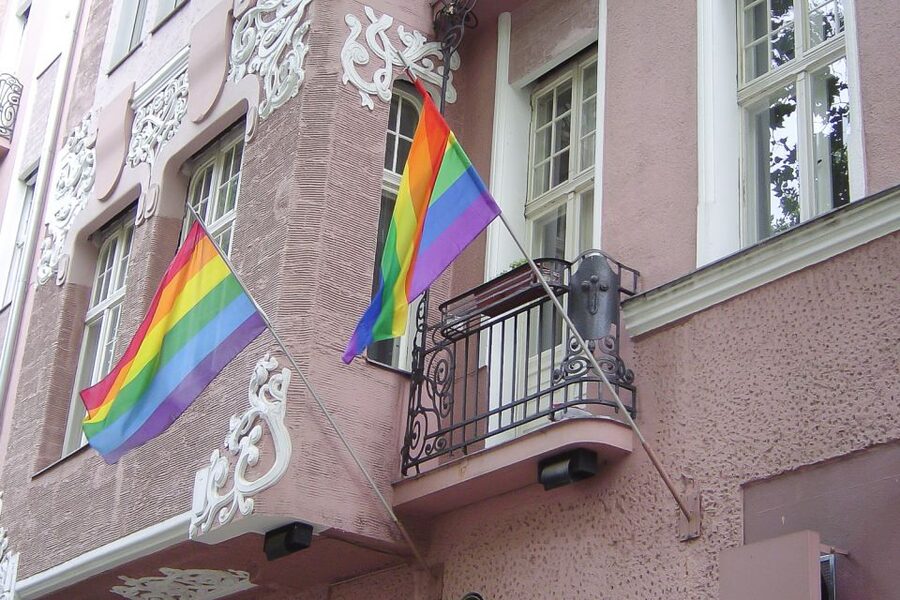
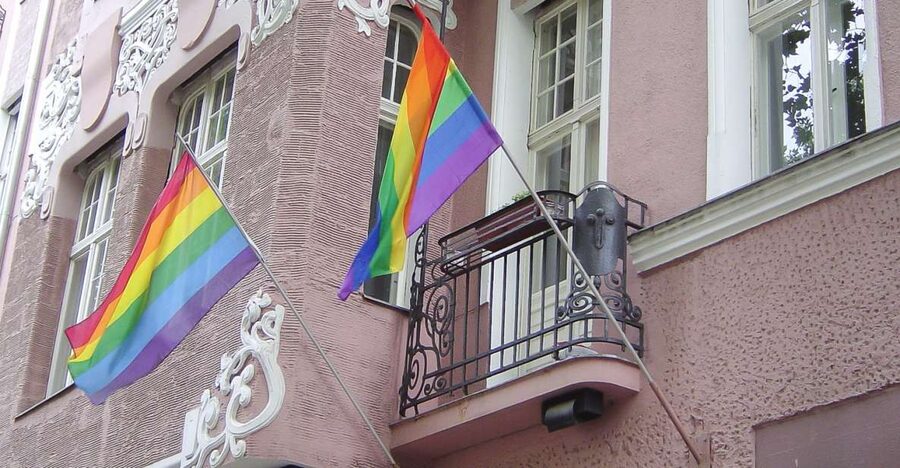
Schöneberg is the natural place to begin this story. The neighborhood became closely linked with queer nightlife, cabaret, and political life, and the tour uses its streets to show how public spaces shaped private lives.
You’ll hear about Marlene Dietrich, whose career and personal image remain tied to Berlin’s stage culture. You’ll also encounter the literary and artistic record left by Christopher Isherwood and Otto Dix. Their work helped preserve a sense of the city’s nightlife, performance culture, and social freedom before the Nazi period destroyed so much of it.
The value here is not just seeing a celebrity address or hearing another famous name. The guide explains how the district worked as a social world. Cafés, bars, theaters, and apartments could offer contact and community, even when laws and social pressure made openness risky.
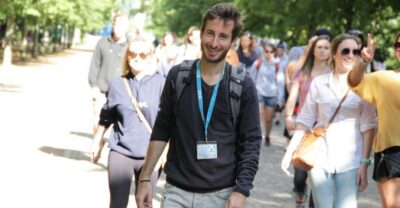
The exact meeting point can vary depending on the option booked, so check your confirmation carefully. The guide will wear a blue Original Berlin Walks name badge, which should make the group easier to find in a busy area.
Schöneberg is also a useful place to ask questions. The guides have been praised for making room for discussion, and the tour works best when you treat it as a conversation rather than a one-way lecture. You can ask about nightlife, women’s history, transgender lives, changing neighborhoods, or current queer culture.
The former Eldorado and Berlin nightlife
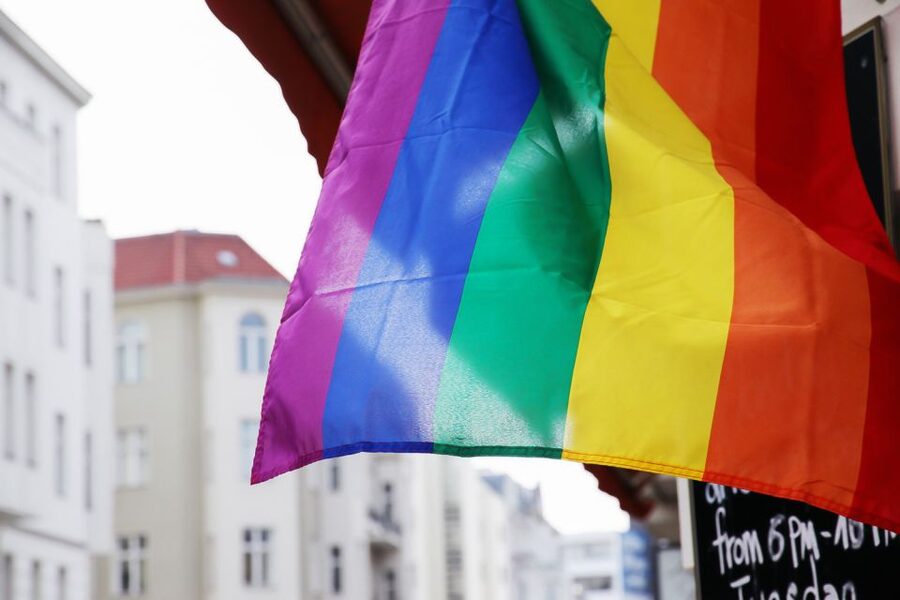
One of the most memorable stops is the site of the former Eldorado, described as one of Berlin’s oldest queer and trans bars. The building or location may not deliver a grand museum display, so set your expectations accordingly. Its importance comes from the story attached to the place.
The Eldorado helps explain how nightlife could serve as a meeting point, a stage, and a place to test social roles. It also brings transgender and gender-nonconforming lives into the tour, rather than treating queer history as only the history of gay men.
That wider scope matters. One past walking tour was praised for giving women’s history a proper place, including former lesbian bars and the politics of inclusion. You should still expect the balance to depend partly on the guide and the group’s questions, but the stated material reaches across the queer community.
The cabaret section also adds needed energy. Berlin’s nightlife was not only political or tragic. It could be clever, theatrical, playful, and wonderfully unruly. Stories about performers and patrons help you picture a city where identity could be staged in public, even if that freedom was fragile.
This is where the tour’s humor helps. Guides including Tom and Tobi have been praised for combining facts with funny stories and an easy manner. That matters during a long historical walk. A steady stream of human details keeps the past from turning into a list of dates and laws.
Magnus Hirschfeld’s bold work for sexual science
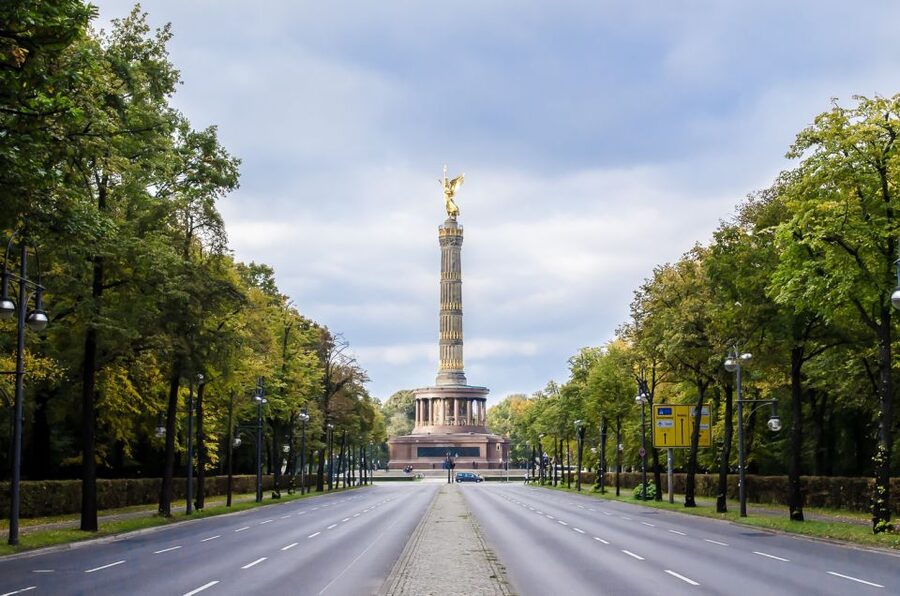
Magnus Hirschfeld is one of the key figures on this walk, and rightly so. His work gives the tour a strong intellectual and practical center.
Hirschfeld supported openly queer and transgender people at a time when many had few safe places to turn. His Institute for Sexual Science brought research, advice, and direct assistance together in a way that was unusual for its day.
The institute was shut down in 1933, and its library was destroyed during the Nazi book burnings. That detail makes the attack on queer life feel concrete. It was not only a matter of new laws or public propaganda. Books, research, records, and institutions were deliberately erased.
You may not see the former institute as a preserved attraction. The value is in understanding what happened at the site and why Hirschfeld’s work still matters. The guide turns an address and a vanished institution into a story about science, medicine, identity, and political courage.
I especially appreciate that this part does not reduce Hirschfeld to a heroic statue. His work opens questions about who gets to define identity, how medicine can help or harm, and why evidence-based research can become dangerous to an authoritarian government.
This section can also be emotionally heavy. If you prefer a light sightseeing walk, the Nazi-era material may feel intense. For most people interested in Berlin’s social history, though, it is one of the reasons the tour is worth the time.
Something different for another day:
- Berlin: Reichstag, Dome and Government District Guided Tour
★ 4.7 · 18,288 reviews - Berlin: 1-Hour City Tour by Boat with Guaranteed Seating
★ 4.3 · 16,993 reviews - Berlin: Boat Tour Along the River Spree
★ 4.4 · 11,252 reviews - Berlin: Hop-on Hop-off Bus Tour with Live Commentary
★ 4.3 · 8,579 reviews
Section 175 and the cost of legal persecution
The tour explains Section 175, the German penal code provision that criminalized male homosexuality for decades. You’ll learn how the law shaped queer lives and how its effects continued after the war.
This is important context because legal persecution can be easy to flatten into a single Nazi-era story. The end of the Nazi regime did not instantly remove every anti-gay law or erase its consequences. The tour makes that longer timeline visible.
The subject can be difficult, but the walking format helps. You are not sitting in a classroom hearing abstract legal history. You are moving through neighborhoods where people once took risks simply to meet others or live more openly.
The tour also places persecution alongside resistance. Berlin’s queer story includes people who organized, wrote, performed, offered support, and kept community life going when official structures worked against them.
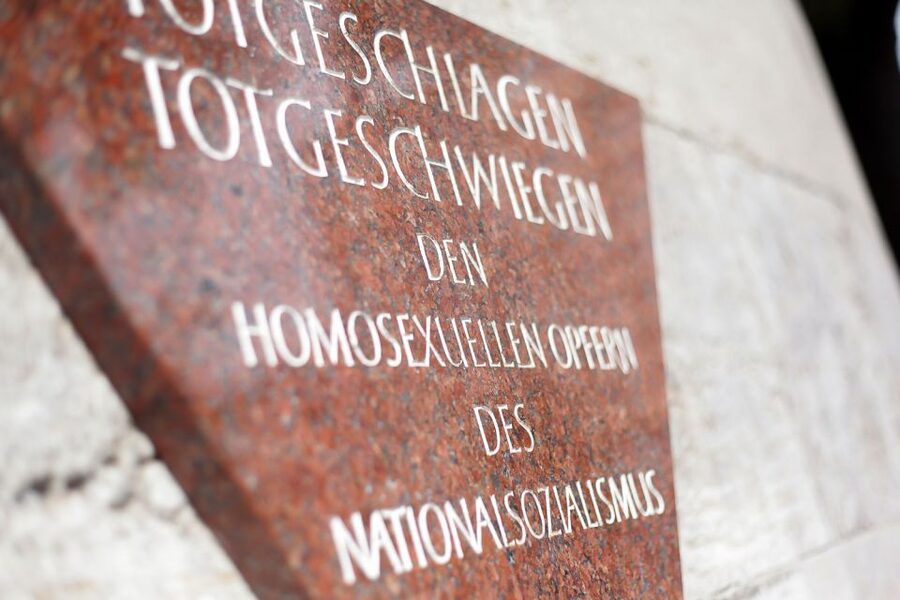
A memorial to homosexual people persecuted by the Nazis and sent to concentration camps provides one of the walk’s quietest moments. This is a stop for reflection, not a photo opportunity. The tour’s broader message becomes clear here: queer history includes joy and nightlife, but it also includes imprisonment, loss, and remembrance.
The balance is handled well when the guide keeps connecting the memorial to real places and individual lives. You are encouraged to understand the victims as people with relationships, ambitions, and daily routines, not only as a group named in a history book.
The Tiergarten and the Berlin Wall’s shadow
The route continues through the Tiergarten, described as Berlin’s best-known gay meeting spot. The park changes the pace after the tighter streets of Schöneberg and gives you room to consider how queer public life operates outdoors as well as inside bars and clubs.
The location near the former Berlin Wall adds another layer. Berlin’s division shaped movement, policing, neighborhood life, and the development of different queer scenes in East and West Berlin. The walk connects these political changes with the people who used the city’s spaces.
A previous itinerary included discussion of the former East German gay neighborhood and later gentrification. That topic is useful because it brings the story into the present. Neighborhoods change, rents rise, clubs close, and a district’s identity can become a marketing label. A queer neighborhood may offer safety and visibility while also becoming less affordable or less connected to the people who created its culture.
The Tiergarten section may be especially useful if you want more than a historical account of Schöneberg. It shows that queer Berlin is not frozen in the era of cabaret. Public meeting places, nightlife, politics, and city development continue to shape the community.
You will also hear about Klaus Wowereit, Berlin’s openly gay former mayor, and how queer political visibility reached city hall. His inclusion helps connect personal openness with public leadership and the city’s modern image.
From Friedrich the Great to modern Berlin
The tour reaches back to Friedrich the Great, then moves forward to contemporary Berlin. That broad timeline keeps the experience from becoming a single-century tour.
Friedrich the Great is a useful reminder that royal reputations and private lives do not always fit neatly into modern labels. The guide can use his story to discuss how historians interpret queer figures from periods when today’s identity terms did not exist.
The goal is not to force every historical person into a present-day category. It is to ask how sexuality, reputation, power, and privacy worked in different eras. That makes the tour more thoughtful than a simple list of famous queer people.
The later focus on Klaus Wowereit shows how much public language has changed. An openly gay mayor could become part of Berlin’s civic identity, even though discrimination and inequality did not disappear.
This contrast between royal secrecy, cabaret visibility, Nazi repression, postwar law, and modern political openness gives the walk its shape. You leave with a sense of changing possibilities, not a single claim that Berlin was always tolerant.
Guide style, walking demands, and the group experience
The strongest praise for this experience goes to the guides. Tom was described as funny, patient, and highly informed. Tobi was praised for covering many parts of queer Berlin, while Finn, Beth, Kyle, and Jared were also singled out for personable presentations and strong command of the subject.
Guide names are not guaranteed, and the quality of a walking tour always depends partly on who leads it. Still, the pattern is encouraging: the guides are described as approachable, willing to answer questions, and able to handle logistical problems calmly.
The tour lasts 3.5 hours, so comfortable shoes are essential. One past participant specifically advised packing light, carrying snacks, and bringing a cool drink. That is sensible advice, especially because the walk runs in all weather.
Do not expect a formal museum visit at every stop. Entrance fees are not included, and the experience is built around outdoor locations, stories, and interpretation. Public transport is also not included if it becomes useful during your chosen option.
The group itself can add to the experience. The tour attracts people interested in queer culture and Berlin history, and one past participant enjoyed joining the group for nightlife suggestions afterward. That is not an official part of the tour, but it reflects the social side of a good walking experience.
If you need frequent breaks or dislike walking for several hours, consider that before booking. The provided information does not specify accessibility arrangements, so contact the operator if you have mobility concerns or need a particular meeting point.
Is $23 a fair price?
At $23 per person, this is a reasonable price for a 3.5-hour guided walk, especially if you value interpretation over admission to a single attraction. You are paying for a specialist subject, a route through several parts of Berlin, and the guide’s ability to connect scattered locations into one story.
The value is strongest if you are new to queer Berlin history. The tour can help you recognize places you might otherwise pass without understanding, and it gives you background for later visits to Schöneberg, the Tiergarten, memorials, and nightlife areas.
It is less valuable if you want a museum-style experience with extensive indoor exhibits or if you already know the main figures and sites well. You may also spend extra on transport, food, or any entrance fee that applies to your chosen option.
Free cancellation up to 24 hours before the tour and reserve-now, pay-later booking make it easier to fit into a changing Berlin schedule. Still, check the starting time and meeting location for your specific option. The meeting point can vary.
Who should book this walk?
I would recommend it to anyone interested in LGBTQIA+ history, Berlin’s cabaret past, social movements, or the way cities create spaces for minority communities. It is also a strong choice if you have already seen Berlin’s major political sights and want a more personal view of the city.
The tour suits solo visitors particularly well because the group setting makes conversation easy. Couples and friends will also find plenty to discuss afterward, especially around the difference between historical queer identities and modern labels.
It is less suitable for young children, not because the subject is inappropriate in every case, but because the material includes criminalization, concentration camps, Nazi persecution, and the destruction of Hirschfeld’s institute. The long walking time also calls for reasonable stamina.
The tone is not relentlessly solemn. Cabaret, nightlife, personal stories, and humor keep it approachable. But you should come prepared for difficult subjects and give the memorial stops the attention they deserve.
Should you book the Queer Berlin Walking Tour?
Book it if you want Berlin explained through people, meeting places, laws, art, and resistance. The combination of Schöneberg, the former Eldorado, Hirschfeld’s work, Nazi persecution, the Tiergarten, the Berlin Wall, Friedrich the Great, and Klaus Wowereit gives you a wide view in one afternoon.
Skip it if you want a short, easy stroll or a tour focused mainly on buildings you can enter. For everyone else, $23 is a fair price for a thoughtful, well-paced introduction to a part of Berlin that many standard tours leave out.
Bring shoes you trust, a drink, and an open mind. Then let the city’s bars, parks, memorials, and ordinary streets do the talking.
FAQ
Where does the Queer Berlin Walking Tour take place?
The tour explores Schöneberg and the Tiergarten in Berlin. The meeting point can vary depending on the option booked, so check the details for your selected departure.
How long does the tour last?
The walking tour lasts 3.5 hours.
How much does the tour cost?
The listed price is $23 per person.
Which languages are available?
The tour is offered in English and German. Live guides lead the experience.
Is public transport included?
No. Public transport is not included if it is needed during the tour.
Are entrance fees included?
No. Entrance fees are not included.
Does the tour run in bad weather?
Yes. The tour runs in all weather, so dress for the conditions and wear suitable shoes.
How can I identify the guide?
The guide will wear a blue Original Berlin Walks name badge.
Can I cancel for a refund?
Yes. You can cancel up to 24 hours in advance for a full refund. You can also reserve now and pay later.
Just added around Berlin
- Berlin: Private Guided Tour of the Main Sights★ 5.0 · 13 reviews
- Private Highlights of Berlin Bike Tour★ 5.0 · 13 reviews
- Modern Berlin Private Walking Tour: Diverse, Vibrant and Exciting German Capital★ 5.0 · 13 reviews
- Tour in Berlin from Warnemünde and Rostock Cruise Port★ 4.1 · 13 reviews
- Berlin: Stasi Museum Private Guided Tour with Entry Ticket★ 4.8 · 13 reviews
- Private Food Tour Experience with a born and bred Berliner★ 5.0 · 14 reviews
- Berlin: Rheinsberg Palace Entrance Ticket★ 4.8 · 14 reviews
- Berlin in one day – day tour with an expert guide★ 5.0 · 14 reviews
Walking Tours, compared.



Berlin’s Best: 2 Hour Walking Tour Third Reich and the Cold War
Read our review →
Third Reich Berlin: Hitler and WWII Walking Tour
Read our review →Browse the lists this tour appears in