
Reviewed · WALKING TOURS
Karlsruhe: Guided City History & Culture Walking Tour
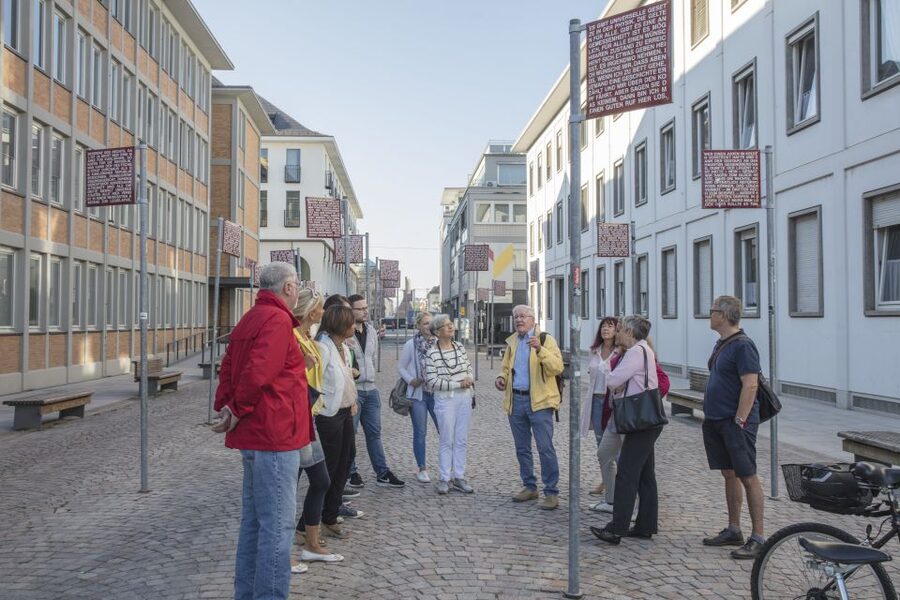
Karlsruhe was planned around a palace. That unusual design gives this 1.5-hour walking tour a clear story, not just a string of monuments. I like the focus on Karl III Wilhelm, the margrave who founded the city in 1715, and the attention given to architect Friedrich Weinbrenner. I also like the guide’s funny anecdotes and personal tips, which can make a young city feel more human.
The main consideration is language. The live tour is offered in German only, so you need enough German to follow the explanations and humor. It is also outdoors in every kind of weather, and the tour does not include food, drinks, museum admission, or optional activities.
In This Review
- Key points to know before you book
- Starting beside Karlsruhe’s market square
- Karl III Wilhelm and the choice to leave Durlach
- Reading Karlsruhe’s Baroque city plan
- Weinbrenner’s Karlsruhe and classical architecture
- Anecdotes and insider advice keep the history moving
- Tuesday’s special theme: Residence of Law
- Is $12 a good value for 90 minutes?
- Who will enjoy this Karlsruhe walk?
- Practical advice for getting the most from the walk
- Should you book the Karlsruhe city history tour?
- FAQ
- How long does the Karlsruhe walking tour last?
- Where does the tour begin?
- Where does the tour end?
- What language is the tour in?
- Is the tour wheelchair accessible?
- What happens if the weather is poor?
Key points to know before you book
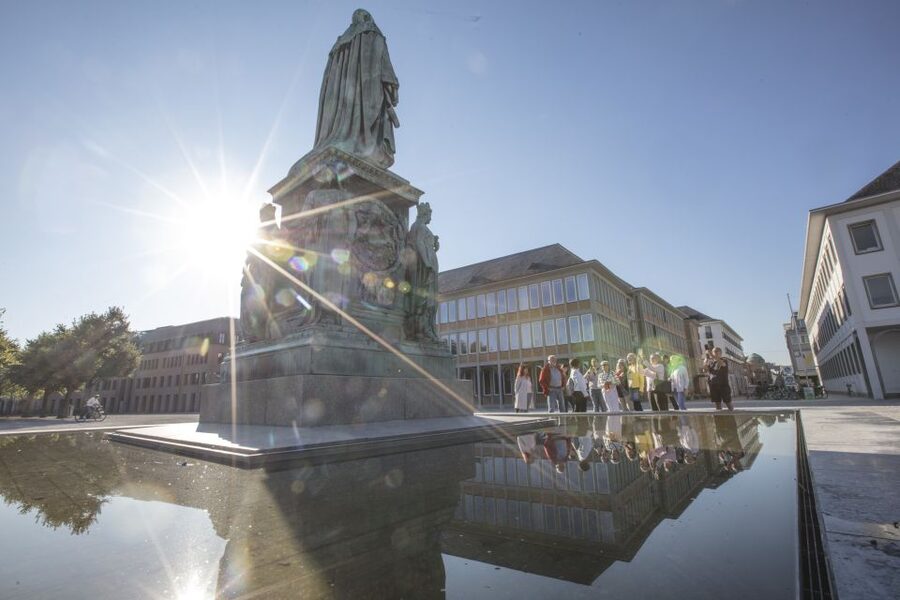
- Karl III Wilhelm’s decision changed the region: Learn why the margrave left Durlach and created a new capital in 1715.
- Karlsruhe’s fan-shaped plan matters: The city was designed as a Baroque experiment, rather than growing by accident over many centuries.
- Weinbrenner gives the tour an architectural thread: You hear how the classical architect helped shape Karlsruhe’s appearance.
- The meeting point is easy to find: Begin at the Tourist-Information Karlsruhe beside the market square on Kaiserstraße.
- Tuesday has a different focus: The theme is Hometown Karlsruhe, Residence of Law.
- The price is modest: At $12 per person, this is an inexpensive way to get historical context before exploring on your own.
Starting beside Karlsruhe’s market square
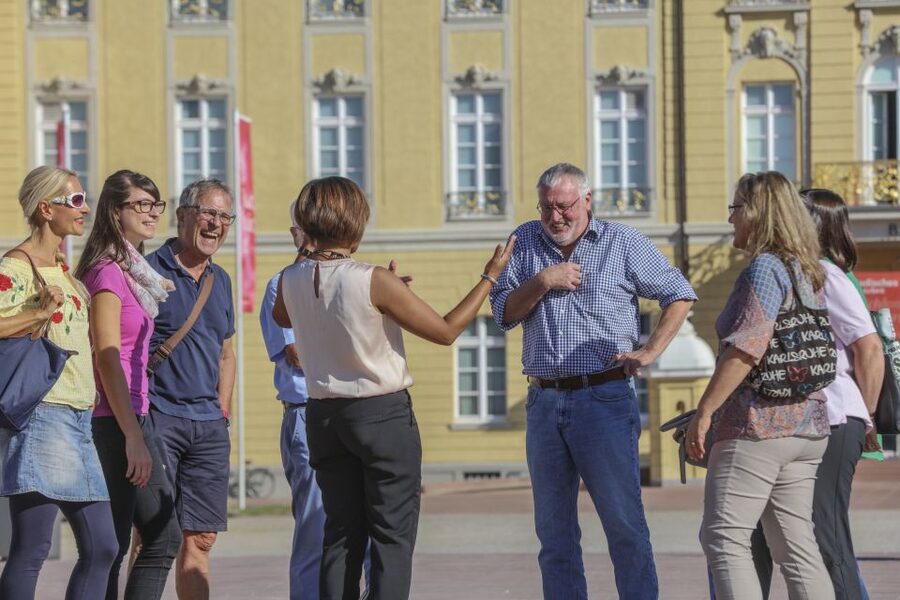
I like a city walk that begins somewhere practical, and this one starts at the Tourist-Information Karlsruhe, beside the market square at Kaiserstraße 72 to 74. That gives you a useful central point for arriving, asking last-minute questions, and orienting yourself before the guide begins.
The tour also ends back at this meeting point. You do not need to worry about finding your way to a distant final stop, and you can continue exploring Karlsruhe from the same central area afterward.
The meeting location ties neatly into the city’s story. Karlsruhe was founded as a planned Baroque city in 1715, and the market square helps introduce that sense of order. The city was not simply built up around an old village. It was conceived as a new residence for Karl III Wilhelm, Margrave of Baden-Durlach.
You should arrive dressed for a proper outdoor walk. The tour operates in all weather, so comfortable shoes and a weatherproof layer matter more than stylish clothing. Rain or strong sun can change the feel of a 90-minute walk, especially if you are not used to walking tours in German weather.
More Historical Tours in Germany:
- Leipzig: City History Canal Sightseeing Tour on a Motorboat
★ 4.7 · 6,232 reviews - Berlin: Natural History Museum Entrance Ticket
★ 4.6 · 3,382 reviews - Leipzig: 1.5-Hour Historical Walking Tour in German
★ 4.7 · 2,217 reviews
Karl III Wilhelm and the choice to leave Durlach
The strongest part of the experience is the founding story. Karlsruhe is only about 300 years old, which makes its past relatively compact by German standards. Yet the city’s creation involved a bold decision: Karl III Wilhelm left his old capital of Durlach and ordered a completely new city to be built.
Your guide explains what pushed the margrave toward that choice. The supplied tour information does not promise a fixed list of individual stops, so you should not expect a rigid monument-by-monument route. Instead, the historical thread is the important part: you follow the reasoning behind the city’s creation and see how that decision still shapes Karlsruhe.
This is valuable because a planned city can seem confusing if you only look at streets and buildings one at a time. Once you understand the original idea, the pattern becomes easier to read. You begin to see Karlsruhe as a political and architectural project, not just another stop in Baden-Württemberg.
I especially like this angle for a first visit. You are not merely told that Karlsruhe is Baroque. You learn why a ruler wanted a new residence, what made the plan unusual for its time, and how that early choice gave the city its distinct atmosphere.
The guide also adds anecdotes to the historical account. That matters. Dates and titles can blur together, but a funny story about a margrave or a local custom can give the subject a human face. The tour promises personal insider tips as well, which may help you decide what to see or do after the walk.
Reading Karlsruhe’s Baroque city plan
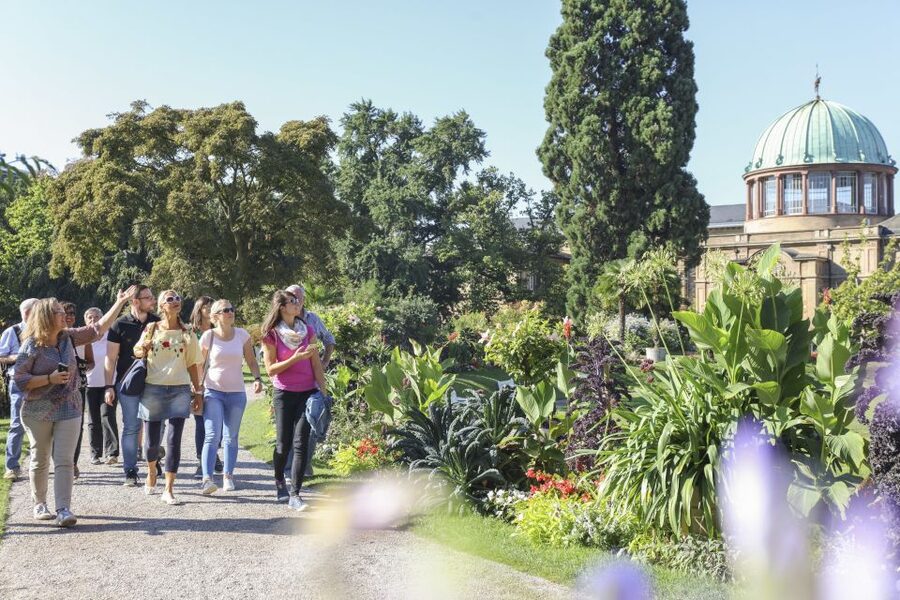
Karlsruhe’s design is one of the clearest reasons to take a guided walk instead of exploring only with a map. The city was planned in the Baroque period, when rulers used architecture and city planning to express authority, order, and ambition.
A guide can point out how that plan shaped the city’s character. You will hear about Karlsruhe as a novelty of its time and about the pioneering spirit the city has kept. The point is not simply to admire a street pattern. It is to understand the thinking behind it.
I would pay close attention when the guide connects the city’s past with its present. Karlsruhe is presented as a place that looks backward to its foundation, examines current life, and imagines its future. That makes the walk more than a history lesson. You are encouraged to consider how an old plan continues to affect a modern city.
The tour’s title promises history and culture, so the experience should suit you if you enjoy connections between politics, architecture, and daily life. It may be less satisfying if you want long interior visits or a detailed museum tour. Admission tickets are not included, and the activity remains an outdoor walking experience.
The city’s age is also part of its appeal. A 300-year-old city does not offer the same layers as a medieval center, but that is exactly why Karlsruhe can feel different. Its identity is tied to a deliberate founding moment, a ruler’s decision, and a plan that can still be discussed in clear terms.
Weinbrenner’s Karlsruhe and classical architecture
Friedrich Weinbrenner provides the architectural focus of the walk. The tour introduces him as Karlsruhe’s classical city architect, giving you a way to understand the buildings and public spaces shaped by his work.
You should expect the guide to explain Weinbrenner’s importance rather than offer a full architecture course. The information provided does not name every building visited, so I would avoid booking this if you require a precise architectural itinerary. Still, Weinbrenner’s role gives the walk a strong visual theme.
Classical architecture can look simple at first glance. A guide helps you notice the choices behind that simplicity: proportion, public presence, and the way buildings contribute to a city center. In Karlsruhe, those choices sit within the earlier Baroque plan, creating a useful contrast between the city’s founding design and later classical influence.
This is one reason I would take the tour early in a Karlsruhe stay. Once you know Weinbrenner’s name and role, you can look at the city with more purpose. A building is no longer just an attractive facade. It becomes part of the story of how Karlsruhe presented itself as a residence and civic center.
The tour does not include admission to buildings. That keeps the price low, but it also means you should think of the walk as preparation for independent sightseeing. If a building or institution catches your attention, you can decide later if you want to return and pay for entry.
More Walking Tours in Germany:
- Discover Berlin Half-Day Walking Tour
★ 5.0 · 9,624 reviews - Berlin: Third Reich and Cold War 2 Hour Walking Tour
★ 4.9 · 6,830 reviews - Munich: Third Reich & WWII Walking Tour
★ 4.6 · 6,181 reviews - Berlin: Discover Berlin Walking Tour
★ 4.9 · 5,998 reviews
Anecdotes and insider advice keep the history moving
Historical tours can become dry when every sentence is a date. This one deliberately adds funny anecdotes and personal advice from the guide. I see that as a major strength, especially because the central subject is an eighteenth-century ruler with a long title and a complicated political setting.
The highest praise attached to the experience is that the content is highly interesting and explained very clearly. That is the right quality to look for in a short tour. With only 90 minutes, the guide must choose carefully and explain the main ideas without turning the walk into a lecture.
You should also listen for the practical suggestions woven into the tour. The exact tips will depend on the guide and the day, but the activity promises personal insider advice. That could help you shape the rest of your time in Karlsruhe, even though specific recommendations are not guaranteed in advance.
The German-only format makes the guide’s clarity especially important. If you understand German well, you can enjoy the humor and the local details. If you only know a few German phrases, you may miss the main value of the tour, since there is no indication of English guiding or translation.
The experience is led by a local guide rather than delivered through an audio device. That gives you the chance to hear explanations in context and follow up with questions during the walk. It also means the tone can vary from one guide to another, which is normal for a live city tour.
Tuesday’s special theme: Residence of Law
If you book on a Tuesday, the subject changes to Hometown Karlsruhe, Residence of Law. That is an important detail to check before selecting a date.
The standard theme centers on the city’s founding, Karl III Wilhelm, and Weinbrenner. Tuesday’s theme points instead toward Karlsruhe’s identity as a legal center. The provided information does not list the exact stops or legal institutions covered, so you should not assume that the Tuesday walk follows the regular route with only a small change in emphasis.
I would choose Tuesday if the law theme interests you or if you have already learned the basic founding story elsewhere. I would choose another day if Karl III Wilhelm and the Baroque plan are your main reasons for booking.
The Tuesday option also shows that Karlsruhe’s identity has more than one layer. The city is not presented only as a former margrave’s residence. It is also connected with law and civic life in the present. That broader view can make the tour useful for repeat visits as well as first-time arrivals.
Is $12 a good value for 90 minutes?
At $12 per person, I consider this strong value if German is comfortable for you. The price covers a live local guide, historical explanation, anecdotes, and personal tips. You are paying for orientation and interpretation, not transport or admissions.
That distinction matters. A low price does not mean you receive entry to museums, food, drinks, or optional activities. You should budget separately if you want to visit attractions after the walk.
The tour can also save you time. A planned city makes more sense once someone explains its founding logic and architectural development. You might spend hours wandering without noticing the relationship between Karl III Wilhelm’s decision, the Baroque plan, and Weinbrenner’s later work.
The 90-minute length is another practical advantage. It is long enough to establish a clear story but short enough to fit around lunch, a museum visit, or onward travel. I would not expect every detail of Karlsruhe’s history in that time. The best use of the tour is to gain a framework, then explore further at your own pace.
Free cancellation up to 24 hours before the start gives you some flexibility, and you can reserve while paying later. Those policies are useful if your schedule is still shifting, but the main value remains the modest cost and central start.
Who will enjoy this Karlsruhe walk?
I would recommend the tour to you if you want a first look at Karlsruhe with context. It should suit history fans, architecture enthusiasts, and anyone curious about how rulers shaped European cities.
It also works well for people who prefer a short introduction rather than a full-day program. You can finish at the original meeting point and still have time for independent sightseeing.
Families may find the anecdotes helpful, since humor can make a city’s founding story easier for children to follow. Children under three can participate free of charge. Still, remember that the tour lasts 90 minutes outdoors, so the weather and your child’s tolerance for walking should guide your decision.
The walk is wheelchair accessible, which makes it a practical option for many visitors. The outdoor format remains important, however. Accessibility does not remove the need to prepare for rain, cold, heat, or uneven conditions that may occur along a city route.
I would be more cautious if you need English, want interior visits, or prefer a tour with a published stop-by-stop schedule. The available language is German, and the information supplied does not promise specific buildings, entry visits, or a particular group size.
Practical advice for getting the most from the walk
Check the date before booking, especially if Tuesday’s Residence of Law theme appeals to you. The subject can change the experience more than the day of the week might suggest.
Arrive at the Tourist-Information Karlsruhe by the market square on Kaiserstraße 72 to 74. Since the tour ends in the same place, you can use the walk as a starting point for the rest of your day and return to the central area without arranging extra transport.
Wear shoes meant for walking and bring clothing suited to the forecast. The tour runs in all weather, and Karlsruhe’s history will not pause for rain.
Try to listen for the links between the three main ideas: Karl III Wilhelm’s decision to found a new city, the Baroque plan that gave Karlsruhe its shape, and Weinbrenner’s classical architectural influence. Those connections are more useful than trying to memorize every date.
If you have questions, ask them during the walk. The live format and promised personal tips are most useful when you engage with the guide instead of treating the tour as a one-way speech.
Should you book the Karlsruhe city history tour?
Book it if you understand German and want an inexpensive, human introduction to Karlsruhe’s unusual beginnings. The $12 price, central meeting point, wheelchair accessibility, and short duration make it easy to fit into a wider itinerary.
I like it most for the way it connects a margrave’s decision with the city’s plan and architecture. The clear explanations, funny anecdotes, and insider tips give the walk more personality than a bare list of dates.
Skip it if you need English, expect museum admissions, or want a detailed fixed route with named buildings. For the right audience, though, this is a practical first step into Karlsruhe, and the 4.5 out of 5 score from 79 ratings supports its appeal.
FAQ
How long does the Karlsruhe walking tour last?
The tour lasts 1.5 hours, or 90 minutes.
Where does the tour begin?
It begins at the Tourist-Information Karlsruhe by the market square, Kaiserstraße 72 to 74, 76133 Karlsruhe.
Where does the tour end?
The tour ends back at the original meeting point.
What language is the tour in?
The live guide conducts the tour in German.
Is the tour wheelchair accessible?
Yes, the activity is listed as wheelchair accessible.
What happens if the weather is poor?
The tour takes place in all weather and is outdoors, so you should dress according to the forecast.
More City Tours in Germany
- Berlin: 1-Hour City Tour by Boat with Guaranteed Seating
★ 4.3 · 16,993 reviews - Cologne: Panoramic City Cruise
★ 4.3 · 5,698 reviews - Berlin: City Sightseeing Hop-On Hop-Off Bus Tour
★ 4.1 · 4,233 reviews - Potsdam: City and Castles Tour
★ 4.7 · 3,721 reviews
Just added around Germany
- e-Scavenger hunt Aachen: Explore the city at your own pace★ 4.0 · 13 reviews
- Munich: Private or Group Third Reich and WWII Walking Tour★ 4.9 · 13 reviews
- Canyoning Advanced Day Trip★ 5.0 · 13 reviews
- Wiesbaden Biebrich: Outdoor Escape Game★ 4.7 · 13 reviews
- Trier, Moselle: Wine excursion with boat trip★ 3.9 · 13 reviews
- Berlin: Private Guided Tour of the Main Sights★ 5.0 · 13 reviews
- From Munich: Neuschwanstein Castle and Linderhof Private Tour★ 5.0 · 13 reviews
- From Dresden: Guided Day Tour by Bus of Seiffen Toy Village★ 4.0 · 13 reviews
Walking Tours, compared.




Berlin’s Best: 2 Hour Walking Tour Third Reich and the Cold War
Read our review →
Third Reich Berlin: Hitler and WWII Walking Tour
Read our review →Browse the lists this tour appears in