
Reviewed · WALKING TOURS
Frankfurt Walking Tour: Explore Top Sights & Hidden Gems
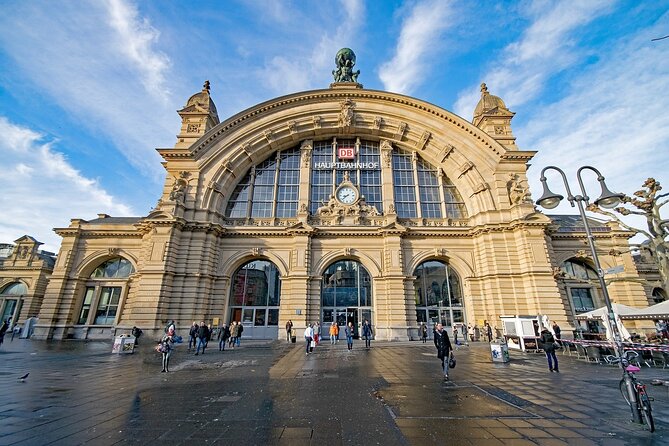
Frankfurt’s story unfolds on foot. This guided route links the Alte Oper, Goethe House, St. Paul’s Church, Römerberg, Frankfurt Cathedral, and Eiserner Steg, giving you a useful first look at the city’s culture, politics, religion, and old-town core.
I like the clear north-to-south flow and the mix of major sights with important local history. I also like the small group limit of 15 people, which should make it easier to hear the guide and ask questions. The main drawback is pace: seven stops in about two hours and 30 minutes leaves limited time at each place, and the published details give both a two-hour duration and an approximate two-hour-30-minute duration.
In This Review
- Five useful things to know before you book
- Why this route works for a first look at Frankfurt
- Starting at the Alte Oper
- Goetheplatz and the city’s literary connection
- Goethe House and 18th-century Frankfurt
- St. Paul’s Church and the story of German democracy
- Römerberg, Frankfurt’s old-town postcard
- Frankfurt Cathedral and imperial power
- Eiserner Steg and the Main River view
- What $32 buys you
- Timing, group size, and practical details
- Who will get the most from this walk
- Should you book the Frankfurt Walking Tour?
- FAQ
- Where does the Frankfurt walking tour begin?
- What time does the tour start?
- How long does the walking tour last?
- Where does the tour end?
- What language is offered?
- What is included in the $32 price?
- Are gratuities included?
- How many people can join the tour?
- Can I cancel for a refund?
Five useful things to know before you book
- The tour begins at the Alte Oper at 11:00 am, a central starting point for seeing Frankfurt’s modern and historic sides.
- Goethe appears twice on the route, first through Goetheplatz and then at Goethe House, where his early life comes into focus.
- St. Paul’s Church gives the walk political weight, thanks to its role in the first freely elected German parliament in 1848.
- Römerberg and Frankfurt Cathedral form the old-town center, with timber-framed buildings, imperial history, and a major Gothic church.
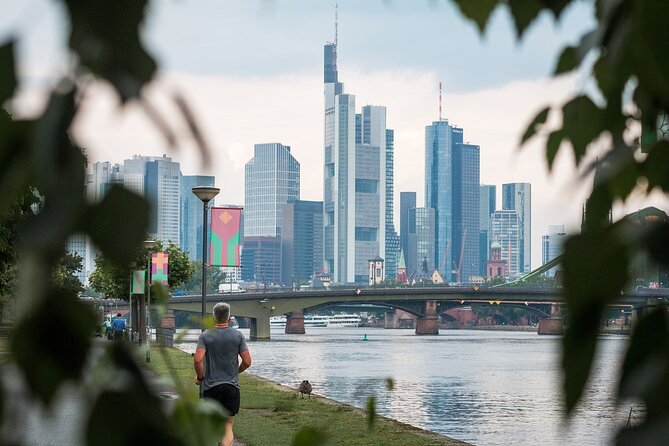
- Eiserner Steg provides the route’s best viewpoint, looking across the Main River toward Frankfurt’s skyline.
- The $32 price includes a professional guide, with an optional gratuity and free cancellation up to 24 hours before the start.
Why this route works for a first look at Frankfurt
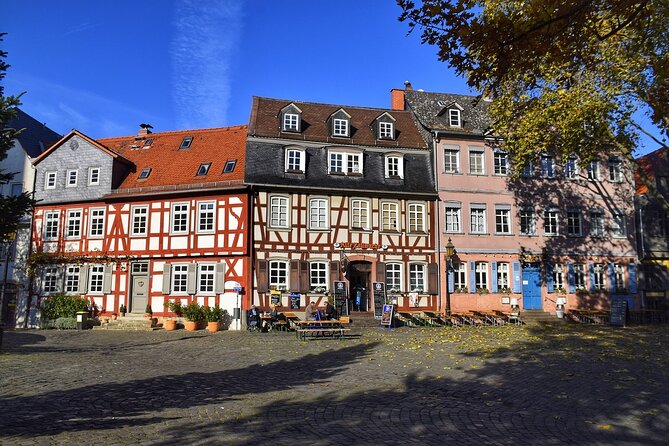
This is a sightseeing walk with a strong historical thread. You begin at a grand opera house, pass through a square named for Germany’s most famous writer, enter the world of Goethe’s childhood, and then move into the political and religious heart of the old city.
The route finishes at the Main River, where the Eiserner Steg footbridge connects the old town with Sachsenhausen. That progression is useful because Frankfurt can feel split between its modern financial center and its rebuilt historic district. This walk gives you both in one outing.
The route also covers subjects that are easy to miss if you explore alone. You get art and architecture at the Alte Oper, literary history at Goethe House, democracy at St. Paul’s Church, civic life at Römerberg, religious power at the cathedral, and city views from the bridge.
The timing is worth watching. Seven listed stops at about 20 minutes each add up to 140 minutes, while the included service is also described as a two-hour walking tour. The practical lesson is simple: expect a brisk overview rather than long visits inside buildings. The schedule may include walking time, explanations, and brief pauses at some locations.
More Walking Tours in Frankfurt
- Frankfurt Highlights English Walking Tour
★ 5.0 · 1,203 reviews - Frankfurt on Foot Daily Walking Tour in English
★ 4.9 · 323 reviews - Frankfurt: Private or Shared Walking Tour
★ 4.8 · 156 reviews
Starting at the Alte Oper
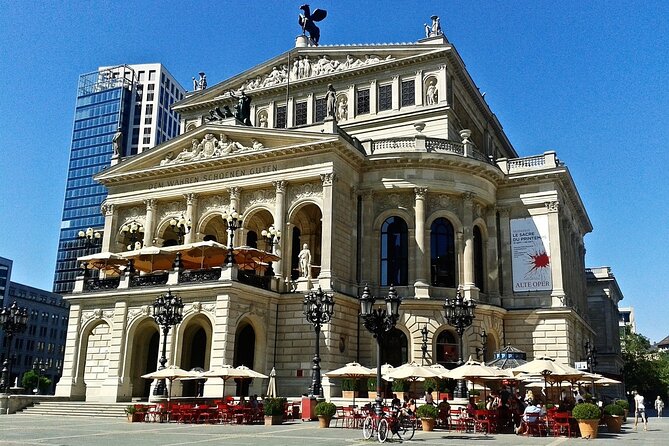
The walk begins at Opernpl. 1 at 11:00 am, beside the Alte Oper. This grand neo-Renaissance building once served as Frankfurt’s main opera house and remains one of the city’s best-known cultural landmarks.
Its importance goes beyond the facade. The building represents Frankfurt’s artistic life and the city’s determination to restore a major cultural symbol after World War II. That gives your first stop a useful theme: Frankfurt is a city that has had to rebuild, preserve, and redefine itself.
You have about 20 minutes here, and admission is listed as free. The information provided does not promise an interior visit, so you should expect the guide to focus on the building and its place in the city rather than a full performance venue tour.
Starting here is practical. The location is near public transportation, and the formal square gives the group a clear place to meet. Arriving a little early is sensible, particularly because the tour starts at a fixed time and the group may contain up to 15 people.
Goetheplatz and the city’s literary connection
From the opera house, the walk continues to Goetheplatz, a central square named after Johann Wolfgang von Goethe. This stop connects the city’s present-day urban life with one of Germany’s best-known literary figures.
The square is surrounded by shops and city landmarks, so this is not a quiet museum setting. You will be looking at a working part of Frankfurt while hearing about the cultural figure attached to its name. That contrast helps show how historic references remain part of daily city life.
The stop lasts about 20 minutes and carries no separate admission charge. I would treat it as a context stop, not a major sightseeing pause. The guide can help you understand where Goethe fits into Frankfurt’s identity, while the surrounding city gives you a feel for the central district.
This is also a good point to listen for practical orientation. The walk is moving from the modern commercial center toward the older historic quarter, so the guide’s commentary can help connect the separate districts rather than presenting them as isolated sights.
Goethe House and 18th-century Frankfurt
Goethe House brings the literary story closer. This is the birthplace of Johann Wolfgang von Goethe and offers a look at 18th-century life and the early influences that shaped his writing.
A birthplace is different from a statue or a street name. It gives the tour a more personal angle, focusing on the home environment behind the public figure. You can expect the guide to explain Goethe’s early setting and why the house matters to Frankfurt’s cultural identity.
The scheduled stop is about 20 minutes, and admission is listed as free. The supplied details do not specify whether the tour enters the house or only discusses it from outside. If seeing the interior is essential to you, confirm that point before booking. The short stop also means you should not expect a long museum visit.
Still, this is one of the route’s more distinctive features. Many city walks mention Goethe in passing. This one gives him two stops, allowing the story to move from a public square to the place where his life began.
Something different for another day:
- Frankfurt: River Main Sightseeing Cruise with Commentary
★ 4.3 · 5,127 reviews - Frankfurt: Hop-On, Hop-Off Grand or Express Bus Ticket
★ 3.9 · 2,088 reviews - Frankfurt: 1-Hour Panorama Boat Cruise on the river Main
★ 4.4 · 1,822 reviews - Rhine Valley Castles: 1.5-Hour Boat Tour from Rüdesheim
★ 4.2 · 1,390 reviews
St. Paul’s Church and the story of German democracy
St. Paul’s Church changes the subject from literature to politics. The church hosted the first freely elected parliament in 1848, making it one of the most important places on the route for understanding Germany’s democratic development.
That historical role gives the building unusual weight. It is not only a religious site. It is also connected with the foundations of modern German political life. A guide can explain why 1848 mattered and how the church became linked with the effort to create a representative German nation.
The stop lasts about 20 minutes, with no admission fee listed. Again, the published details do not promise an interior tour, so the value here will depend heavily on the guide’s explanation and the amount of time available.
The guide can make a real difference at this stop. The public rating is 4.4 from seven ratings, and one specific commendation names Srishti, who was praised for clear knowledge of Frankfurt and its history. That is the kind of guide quality you want at St. Paul’s Church, where a short explanation can turn an ordinary-looking building into a major political landmark.
Römerberg, Frankfurt’s old-town postcard
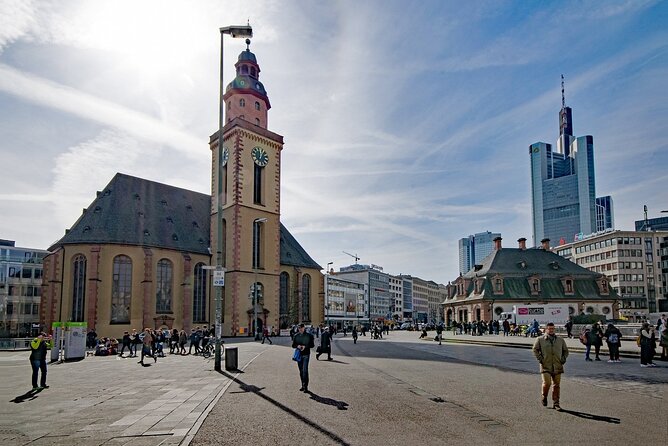
Römerberg is the route’s most immediately recognizable old-town scene. Timber-framed houses surround the square, creating the medieval look many people associate with Frankfurt.
The square has been tied to civic and commercial life for centuries. It is a place where architecture and public history meet, and it gives you a strong visual break from the broad streets and modern buildings around the Alte Oper.
The 20-minute stop should be enough for an explanation, photographs, and a look around. It is not enough for a slow architectural study, especially if the group is also moving toward the cathedral. I would pay attention to how the guide explains the relationship between the square, city government, trade, and the rebuilding of Frankfurt’s historic center.
Römerberg is also the point where the tour feels most like a classic old-town walk. If your main goal is historic architecture, this is likely to be one of your favorite sections. If you prefer long, quiet visits, the schedule may feel too tight.
Frankfurt Cathedral and imperial power
Frankfurt Cathedral, also called the Kaiserdom, brings religious and imperial history into the route. Its Gothic form is a major feature of the old town, while its historical role reaches into the political structure of the Holy Roman Empire.
The cathedral played a central part in imperial coronations. That makes it more than a church to photograph. It helps explain Frankfurt’s importance as a city where religious ceremony, imperial authority, and civic life came together.
The scheduled visit is about 20 minutes, and admission is listed as free. No interior access is guaranteed in the supplied information, so you should regard this as a guided sightseeing stop unless the operator confirms otherwise.
The cathedral follows naturally after Römerberg. The two sights sit within the same historic core, but they tell different stories. Römerberg focuses on public life and commerce, while the Kaiserdom points to faith and imperial ceremony.
Eiserner Steg and the Main River view
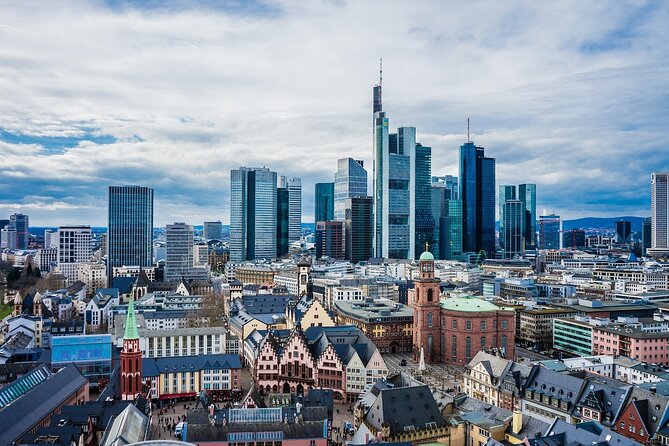
The final named sight is Eiserner Steg, a historic iron footbridge over the Main River. It links Frankfurt’s old town with Sachsenhausen and offers a broad view of the city skyline.
This is a strong ending because it lets you step back from individual buildings and see the city as a whole. From the bridge, the old town, river, and modern skyline come together in one view. The route’s themes also come together here: old and new Frankfurt sit on opposite sides of the water, connected by a simple pedestrian crossing.
The stop is listed at about 20 minutes, with no admission fee. You should expect a viewpoint and historical explanation rather than a special attraction with an entry process.
The bridge may be the most useful place to take photographs, but keep your attention on footing and the group’s movement. A walking tour still has to maintain its schedule, and the guide may not be able to wait while everyone takes as many pictures as they want.
What $32 buys you
At $32 per person, this tour is priced as a guided introduction rather than a basic stroll. The fee includes the walking tour and a professional guide. With a maximum of 15 people, you are paying for structure, local interpretation, and a manageable group rather than simply following a large crowd.
If the tour lasts the full approximate two hours and 30 minutes, the cost works out to about $12.80 per hour. If it follows the shorter two-hour description, the equivalent is $16 per hour. That is fair if you want a clear introduction to Frankfurt and prefer not to build your own route.
The value is strongest for first-time visitors, people with limited time, and anyone who wants historical context at each stop. It is weaker for you if you already know Frankfurt well or want extended interior visits. The advertised stops have no separate admission charge, so the fee mainly pays for the guide and the organization of the walk.
Gratuity is not included, but it is optional. You can decide at the end based on the guide’s clarity, pacing, and ability to bring the history to life.
Timing, group size, and practical details
The tour begins at 11:00 am at the Alte Oper and ends back at the meeting point, according to the supplied details. The route is near public transportation, which makes the start convenient if you are coming from another part of Frankfurt.
A mobile ticket is provided, and confirmation arrives at booking. Service animals are allowed, and most people can participate. The maximum group size is 15, a useful limit for a city walk where you need to hear explanations near busy streets and public squares.
Wear comfortable shoes and plan for outdoor walking for the entire route. The listed stops are spread across central Frankfurt, and the walk includes a bridge crossing. Since the schedule is tight, arrive ready to move rather than expecting long breaks between sights.
Free cancellation is available if you cancel at least 24 hours before the local start time. A cancellation made less than 24 hours before the tour is not refunded, and changes inside that window are not accepted. That policy is reasonable, but it makes the 24-hour deadline important.
Who will get the most from this walk
I would recommend this tour to you if Frankfurt is new and you want the main story quickly. It is especially useful if you have only part of a day, since the route covers cultural, literary, political, religious, and riverfront sights without requiring separate planning.
It also suits you if you enjoy learning why a place matters. St. Paul’s Church and the cathedral need explanation to mean much more than their facades, and Goethe House adds a personal link to the city’s literary past.
Families and mixed-age groups may appreciate the straightforward route and short stops, though the pace may be less comfortable for anyone who needs frequent rests. The information says most people can participate, but it does not provide detailed mobility information about every surface or step, so ask the provider if you have specific access needs.
You may want a different plan if your priority is entering every building, spending hours at the cathedral, or taking an unhurried photography walk. The tour gives you a broad framework. You can then return to the places that deserve more time.
Should you book the Frankfurt Walking Tour?
Book it if you want a compact, guide-led introduction to Frankfurt with a sensible sequence from the Alte Oper to the Main River. The strongest reasons are the small maximum group, the range of subjects, the free cancellation deadline, and the chance to hear a guide such as Srishti explain the city’s past.
Skip it if you want a slow museum tour or guaranteed interior access at Goethe House, St. Paul’s Church, or Frankfurt Cathedral. For $32, I think the walk offers good value when you need orientation and context, provided you are comfortable with a brisk schedule and confirm the exact duration before setting other plans.
FAQ
Where does the Frankfurt walking tour begin?
The tour begins at Alte Oper, Opernpl. 1, 60313 Frankfurt am Main, Germany.
What time does the tour start?
The scheduled start time is 11:00 am.
How long does the walking tour last?
The experience is described as approximately two hours and 30 minutes. The included services also describe it as a two-hour walking tour, so you should allow at least the longer amount of time.
Where does the tour end?
The activity ends back at the meeting point.
What language is offered?
The tour is offered in English.
What is included in the $32 price?
The price includes the walking tour and a professional tour guide.
Are gratuities included?
No. Gratuities are optional and are not included in the price.
How many people can join the tour?
The maximum group size is 15 people.
Can I cancel for a refund?
Yes. You can cancel up to 24 hours before the experience start time for a full refund. Cancellations or changes made less than 24 hours before the local start time are not accepted for a refund.
Just added around Frankfurt
- Castle Braunfels Day Trip from Frankfurt★ 5.0 · 3 reviews
- Frankfurt to Prague – Private Transfer with 2 hours of Sightseeing★ 5.0 · 3 reviews
- Frankfurt – Private tour with Licensed guide★ 5.0 · 4 reviews
- Arrival by Luxury Vehicule from Frankfurt Airport to Frankfurt★ 4.0 · 4 reviews
- Frankfurt: Old Town Highlights Private Walking Tour★ 5.0 · 4 reviews
- Discover Frankfurt’s most Photogenic Spots with a Local★ 5.0 · 4 reviews
- 2 Hour Private Guided Walking Tour: Gutenberg and Mainz Cathedral★ 5.0 · 4 reviews
- Frankfurt: Private German Beer Tasting Tour in Old Town★ 4.5 · 4 reviews
Walking Tours, compared.





Berlin’s Best: 2 Hour Walking Tour Third Reich and the Cold War
Read our review →


Third Reich Berlin: Hitler and WWII Walking Tour
Read our review →Browse the lists this tour appears in