
Reviewed · WALKING TOURS
Frankfurt: Private or Shared Walking Tour
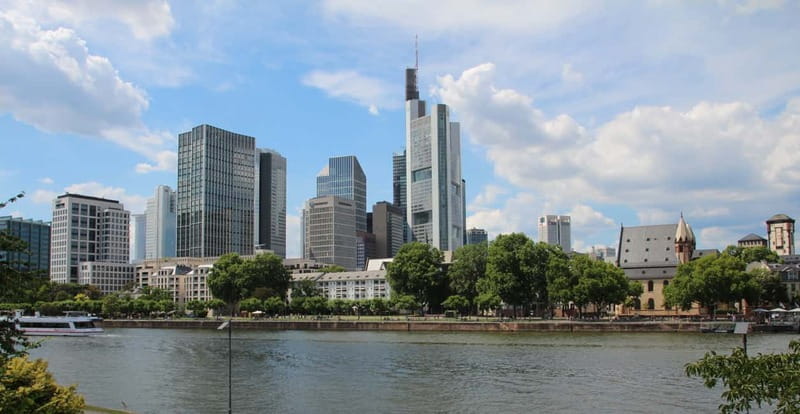
Frankfurt’s past and present meet in one short walk. I like the way this 1.5-hour tour links the old Römerberg sights with the city’s newer buildings, and I like the focus on the rebuilt Neue Altstadt rather than only the postcard monuments. You also get a useful history lesson at Paulskirche, the site of Germany’s first national assembly. The main consideration is language: the live tour guide is listed as German, so this is best for German speakers.
The starting point at the Justitia-Brunnen makes sense because you are already in the heart of Frankfurt’s historic center. At $17 per person, the tour offers good value if you want a quick orientation, though the short running time means you should not expect long interior visits or an exhaustive account of every street.
In This Review
- Key points to know before booking
- Starting at Justitia-Brunnen on Römerberg
- Crossing the Eiserner Steg, Frankfurt’s 1868 iron bridge
- Understanding what World War II changed
- The Römer and Frankfurt’s traditional civic center
- Paulskirche and the first German national assembly
- Exploring the Neue Altstadt, Frankfurt’s rebuilt old town
- A short tour with a clear purpose
- Shared or private: which option suits you?
- What the German-language format means for you
- Value at $17 per person
- Who should book this Frankfurt walking tour?
- Should you book it?
- FAQ
- Where does the Frankfurt walking tour start?
- Where does the tour finish?
- How long does the tour last?
- What language is the tour conducted in?
- Is a private group option available?
- How much does the tour cost?
Key points to know before booking
- The route begins at Justitia-Brunnen: Meet at the fountain on Römerberg, then return to the same point at the end.
- Eiserner Steg adds a city-wide view: The iron footbridge dates from 1868 and gives the walk a change of scene beyond the central square.
- Neue Altstadt is a major focus: You see how Frankfurt rebuilt a historic-looking quarter after the destruction of World War II.
- Paulskirche connects Frankfurt with German democracy: The church is tied to the first German national assembly.
- Private and shared options are available: You can choose a private group, while the shared version keeps the price at $17 per person.
- The guide service is in German: A live guide leads the walk, and the provider is Show-me-Frankfurt.de.
Starting at Justitia-Brunnen on Römerberg
The tour begins at the Justitia-Brunnen, the fountain at Römerberg. This is a practical meeting point because Römerberg is the natural center of Frankfurt’s Altstadt, or old town. You do not begin on the edge of the historic district and spend half the tour simply getting there. The first steps place you directly among the monuments that define the city’s traditional image.
I like this start because it gives the guide an easy way to explain Frankfurt’s layers. The square presents the old city in a compact form, while nearby modern buildings remind you that Frankfurt is not a preserved medieval town. It is a working German city that has been rebuilt, reshaped, and updated more than once.
You should arrive ready to walk rather than expecting a seated introduction. The experience is designed as a continuous walking tour, and it ends back at the same meeting point. That makes it easy to continue exploring Römerberg afterward or use the location as a fixed point while planning the rest of your day.
More Walking Tours in Frankfurt
- Frankfurt Highlights English Walking Tour
★ 5.0 · 1,203 reviews - Frankfurt on Foot Daily Walking Tour in English
★ 4.9 · 323 reviews - Frankfurt Self-Guided Historical Walking Tour
★ 4.0 · 58 reviews
Crossing the Eiserner Steg, Frankfurt’s 1868 iron bridge
One of the first major stops is the Eiserner Steg, an iron footbridge built in 1868. The bridge gives the tour a welcome change of pace. Instead of looking only at façades and squares, you cross a piece of Frankfurt’s infrastructure and see the city from a different position.
The bridge also helps explain the contrast that shapes the entire experience. Frankfurt is known for its modern high-rises, yet this older iron crossing remains part of the city’s visual identity. The tour uses that contrast well: you are not asked to choose between old Frankfurt and new Frankfurt. You see how both exist side by side.
The supplied route information does not promise a long stop or a dedicated skyline viewpoint, so keep your expectations sensible. The bridge is one part of a broader walk, not a separate sightseeing visit. Still, it adds texture to the route and prevents the experience from becoming a simple circuit of historic buildings.
Understanding what World War II changed
A useful part of the commentary concerns the destruction of many grand Frankfurt buildings during World War II. This context matters because the old town you see today is not simply an untouched survival from earlier centuries. The city’s appearance reflects both wartime damage and later decisions about what to rebuild.
The tour also covers the major renovation of 2008 and 2009. That information is especially helpful when you reach the Neue Altstadt, or new old town. Without this background, the quarter can be confusing. Some buildings look traditional, but the area is part of a recent city project, not an entirely original medieval district.
I value this kind of explanation because it keeps the walk honest. You can admire the old-style forms without assuming every building is ancient. The history is more interesting when you understand the gaps, repairs, and choices behind the scenery.
The Römer and Frankfurt’s traditional civic center
The Römer is one of the main historic sights on the route. Its familiar façade and position on Römerberg make it a natural symbol of Frankfurt. The walk gives you useful information about the attraction rather than asking you to simply stop, take a photograph, and move on.
The Römer works well in a short tour because it represents the civic side of the old town. You get a sense of how Frankfurt presented itself through its public buildings and central square. The guide’s role is important here. A building can look impressive in seconds, but its place in the city’s story takes longer to understand.
Do not expect the tour to replace a full visit to every historic site. The format is a guided overview, and the main benefit is the connection between several landmarks. You see the Römer as part of Frankfurt’s wider story, alongside the bridge, Paulskirche, and the rebuilt old town.
Something different for another day:
- Frankfurt: River Main Sightseeing Cruise with Commentary
★ 4.3 · 5,127 reviews - Frankfurt: Hop-On, Hop-Off Grand or Express Bus Ticket
★ 3.9 · 2,088 reviews - Frankfurt: 1-Hour Panorama Boat Cruise on the river Main
★ 4.4 · 1,822 reviews - Rhine Valley Castles: 1.5-Hour Boat Tour from Rüdesheim
★ 4.2 · 1,390 reviews
Paulskirche and the first German national assembly
The stop at Paulskirche gives the tour its clearest political and national importance. The church is where the first German national assembly took place. That makes it more than another attractive building in the Altstadt. It connects Frankfurt with a major chapter in Germany’s political development.
I particularly like this stop for visitors who want more than architecture. Frankfurt can sometimes be reduced to banks, offices, and skyscrapers. Paulskirche shows another side of the city, one tied to national debate and the effort to shape a modern German state.
The visit should be understood as a stop for explanation and context within a walking route. The information provided does not promise entry inside Paulskirche, a special exhibit, or a long interior visit. If you want detailed museum time, you will need to plan that separately. For a 90-minute overview, though, its place on the route adds real substance.
Exploring the Neue Altstadt, Frankfurt’s rebuilt old town
The Neue Altstadt is the most distinctive part of this experience. Frankfurt’s new old town is a recent city project that recreates the feel of a traditional central quarter after the damage and rebuilding that shaped the city.
This area is worth seeing with a guide because its appearance can raise questions. Why do some buildings look historic if the project is recent? What was lost, and what was restored or reconstructed? The tour supplies the basic framework so you can look at the quarter with a more informed eye.
I like the Neue Altstadt because it turns the walk into a lesson about city-making. You are not simply admiring old streets. You are looking at a modern decision about how a historic center should look and function. That makes the experience more useful than a standard checklist of old buildings.
At the same time, you should know what this means for your expectations. If you want only original medieval architecture, the Neue Altstadt may feel less satisfying. If you are interested in how Frankfurt combines memory, reconstruction, and modern urban life, it is one of the strongest reasons to book.
A short tour with a clear purpose
At 1.5 hours, this is a compact introduction rather than a full-day historical program. That length is a strength if you have limited time, a spare afternoon, or a first day in Frankfurt when you want to get your bearings fast. It is also long enough to connect several major sights without turning the outing into a tiring marathon.
The short format requires the guide to keep moving. You will get information about each attraction, but you should not expect every architectural detail, a long break at each stop, or extensive time inside buildings. The tour works best when you treat it as a framework for later independent exploring.
The route returns to the Justitia-Brunnen, which adds practical value. You finish where you started, not at an unrelated point across the city. That makes the tour easier to fit around other plans, although the exact starting time depends on availability when you book.
Shared or private: which option suits you?
The shared option is the straightforward value choice. At $17 per person, you receive a guided walk through several of Frankfurt’s most important central sights without paying for a longer excursion. If you want a low-cost introduction and are comfortable joining other people, this option makes sense.
The private option is more appealing if you want a group setting of your own or need greater flexibility. One private booking received high praise for the guide’s willingness to adjust the time, even shortening the tour while still offering useful insights. That same experience took place on a rainy evening, and the guide was able to keep it enjoyable despite the weather.
That detail gives you a practical clue about the private format. It may be a better fit when your schedule is tight or when you want the guide to respond to your group’s needs. The supplied information does not state the private price, so you should check the current option before deciding if the extra privacy is worth the difference.
The guide named in the strongest personal account was Sanel, who was praised for giving an in-depth view of Frankfurt’s history. Another person who described themselves as a Frankfurter found the tour especially impressive and strongly recommended it. That is a good sign for the depth of the commentary, though you should still remember that the tour is conducted in German.
What the German-language format means for you
The live tour guide is listed as German, and the activity information also lists German as the available language. This is the single most important booking detail for many people.
If you understand German, the language should suit the historical focus. The route depends on spoken explanation, especially at Paulskirche and the Neue Altstadt, where context matters more than simply seeing a façade. If you do not understand German, you may still recognize the landmarks, but you would miss much of the tour’s main value.
Because the guide’s commentary is a central part of the experience, I would not book this as an English-language tour based only on the route description. Check the language carefully before paying. The provider, Show-me-Frankfurt.de, offers the activity with a live German-speaking guide, and the information supplied does not identify an English option.
Value at $17 per person
The price is modest for a guided city walk. You are paying for a local guide, a structured route, and historical context at several important sites. The strongest value comes from the way the stops relate to one another: the bridge shows older infrastructure, the Römer represents the traditional center, Paulskirche adds political history, and the Neue Altstadt explains recent reconstruction.
You are not paying for admission tickets, transport, or a long attraction visit. The activity is a walking tour with a guide, so its value depends on how much you want interpretation. If you already know Frankfurt well, the shared tour may feel basic unless you choose the private option and request more depth.
For a first look at the city, I consider $17 fair. The route is short, central, and focused. You can then decide which places deserve more of your time. The free cancellation policy, available up to 24 hours before the tour, and the reserve-now-pay-later option also make it easier to fit the walk into a changing schedule.
Who should book this Frankfurt walking tour?
I would recommend this experience to you if:
- You want a quick introduction to Frankfurt’s Altstadt.
- You are interested in the difference between original historic fabric and recent reconstruction.
- You want to connect Frankfurt’s buildings with World War II and postwar renovation.
- You understand German well enough to follow a live historical explanation.
- You prefer a central route that begins and ends at Römerberg.
- You want the choice of a low-cost shared walk or a private group.
You may want something else if you need an English-language tour, extensive time inside buildings, or a long and highly detailed architectural study. The 1.5-hour length keeps the outing manageable, but it also limits how much detail the guide can cover.
Bring sensible walking shoes and allow for the fact that the tour takes place outdoors. The rainy-evening private experience remained enjoyable, but weather can still affect comfort. Since the tour ends at the starting point, you can keep your wider plans nearby.
Should you book it?
Book this tour if you want a short, well-priced German-language introduction to Frankfurt’s most important central sights. Its best feature is the link between the old Römerberg, the politically important Paulskirche, the 1868 Eiserner Steg, and the recently created Neue Altstadt.
Choose the shared option for value. Choose private if flexibility, group privacy, or a more tailored pace matters to you. Just confirm the language before booking. For German speakers with limited time, this is a practical way to understand why Frankfurt looks both historic and modern within the same few streets.
FAQ
Where does the Frankfurt walking tour start?
The tour starts at the Justitia-Brunnen on Römerberg.
Where does the tour finish?
The activity ends back at the meeting point at the Justitia-Brunnen.
How long does the tour last?
The walking tour lasts 1.5 hours. Starting times depend on availability.
What language is the tour conducted in?
The live tour guide and listed activity language are German.
Is a private group option available?
Yes. You can choose a private group option, or join the shared walking tour.
How much does the tour cost?
The shared tour is listed at $17 per person. The price for the private option should be checked when you select your preferred booking option.
Just added around Frankfurt
- Wiesbaden Biebrich: Outdoor Escape Game★ 4.7 · 13 reviews
- from Frankfurt – romantic Black Forest & brewery, private tour★ 5.0 · 13 reviews
- Frankfurt : Highlights & hidden Gems Private Walking Tour★ 4.6 · 13 reviews
- Discover the Heart of Frankfurt – City Tour in German★ 5.0 · 13 reviews
- From Frankfurt: Heidelberg and Rothenburg Guided Day Trip★ 5.0 · 14 reviews
- Private German Beer Tasting Experience in Frankfurt Old Town★ 5.0 · 14 reviews
- Frankfurt: Old Town Crime Mystery Game★ 4.3 · 14 reviews
- Mainz Highlights, private walking tour★ 4.9 · 15 reviews
Walking Tours, compared.


Berlin’s Best: 2 Hour Walking Tour Third Reich and the Cold War
Read our review →
Third Reich Berlin: Hitler and WWII Walking Tour
Read our review →Browse the lists this tour appears in