
Reviewed · WALKING TOURS
East Berlin and the Wall: Walking Tour
Berlin’s past is still under your feet. This walking tour makes that past easier to grasp by linking the Berlin Wall Memorial, former ghost stations, socialist architecture, Alexanderplatz, and the East Side Gallery in one focused route. I love the human stories at Bernauer Strasse, where the Wall split homes, streets, and families. I also like the way public transport connects the stops, so you see several parts of former East Berlin rather than one isolated monument. The main consideration is that you must buy your own AB transport ticket, and the tour involves a fair amount of walking and station changes.
The tour lasts about three to three and a half hours and costs $351 for a group of up to six people. That price is easiest to justify if you are sharing it with several companions, especially since the tour can be arranged as a private group. The high 4.9 rating from 407 bookings reflects the guides’ clear explanations and personal approach. Names praised in recent feedback include Paul, Paolo, Elisa, Claudia, and Catherine.
In This Review
- Key points to know before booking
- Why this route gives East Berlin a human scale
- Starting at Potsdamer Platz and entering divided Berlin
- Nordbahnhof and the eight-minute ride into the past
- Bernauer Strasse, where the Wall cut through homes
- Alexanderplatz and the pressure on the GDR
- The TV Tower and the look of socialist Berlin
- East Side Gallery and the Wall after 1989
- What the guide style adds to the experience
- Price, transport, and the real value
- Who will enjoy this Wall tour most
- Should you book East Berlin and the Wall?
- FAQ
- How long does the East Berlin and Wall tour last?
- What sites are included?
- Is public transportation included?
- Which languages are available?
- Can I book a private group?
- Is hotel pickup available?
- Can I cancel for a full refund?
Key points to know before booking
- Bernauer Strasse is the emotional center: Original Wall sections, the death strip, escape attempts, and stories of people killed while trying to cross make this more than a photo stop.
- You see East Berlin through several eras: The route connects postwar division, GDR daily life, peaceful protests, the Wall’s collapse, and the later East Side Gallery.
- Public transport is part of the route: S-Bahn and metro rides save time between distant sites, but an AB ticket is not included.
- The former ghost station adds atmosphere: Nordbahnhof helps explain how Berlin’s transport system was sealed and controlled after 1961.
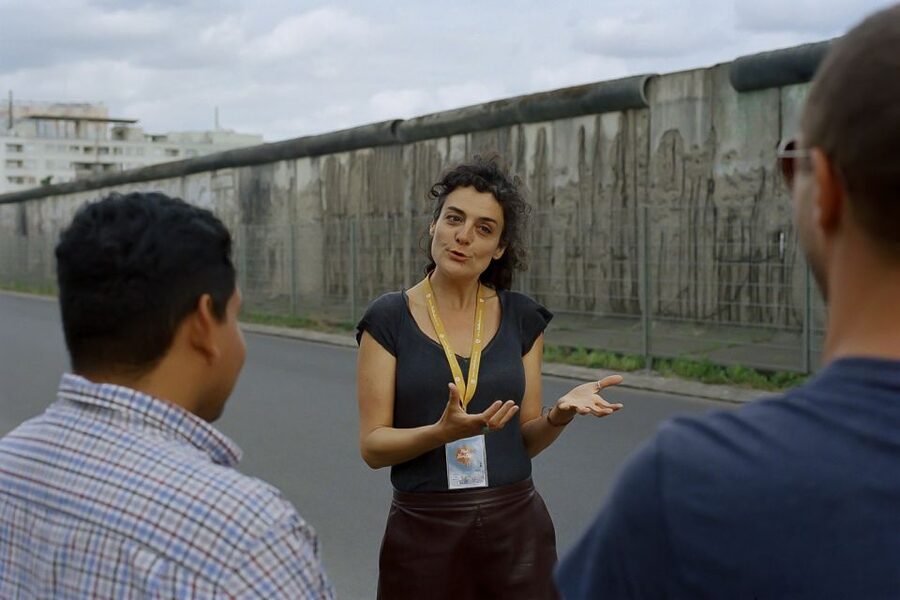
- Guide quality matters here: The strongest praise centers on warm, engaging guides who explain difficult subjects in plain language.
- The price favors small groups: At $351 for six people, the cost works out to about $58.50 per person before transport, but solo or couple bookings pay much more per person.
Why this route gives East Berlin a human scale
A Wall tour can easily become a parade of famous photographs. This one has a better shape. It begins with the physical division of Berlin, moves into the systems that controlled daily life, then follows the pressure that brought the Wall down.
That order matters. You first see why the Wall was built and what it did to ordinary people. Later, at Alexanderplatz, you learn how citizens challenged the GDR government. At the East Side Gallery, the Wall becomes a public artwork and a symbol of what came after.
Your guide is central to the experience. The supplied language options are English, German, French, Italian, and Spanish, with a private group available. Recent feedback gives special credit to Paolo, Elisa, Claudia, Paul, and Catherine for making the subject understandable, lively, and personal. Catherine also added a family connection to her explanations, which shows how much a guide’s background can shape this tour.
You should expect serious subject matter, including political repression, escape attempts, and deaths at the Wall. It is not a light sightseeing walk. Still, the route appears carefully paced, with short guided stops rather than one long lecture.
More Walking Tours in Berlin
- Discover Berlin Half-Day Walking Tour
★ 5.0 · 9,624 reviews - Berlin: Third Reich and Cold War 2 Hour Walking Tour
★ 4.9 · 6,830 reviews - Berlin: Discover Berlin Walking Tour
★ 4.9 · 5,998 reviews
Starting at Potsdamer Platz and entering divided Berlin
The meeting point depends on the option you book. The tour begins at Potsdamer Platz, a place that helps set up Berlin’s postwar story before you head north by S-Bahn.
The train ride takes about eight minutes. That short trip is useful because it moves you from a major modern city center toward the Wall Memorial without spending too much of your tour standing around. Your guide can use the ride and the station area to explain how Berlin was split into separate political and economic systems after World War II.
You should arrive ready to walk and keep your transport ticket close. Comfortable shoes are important, and the tour requires a valid ticket for the public transport AB zones. The ticket is not included, so check Berlin’s current fare rules before you arrive. The activity description specifically calls for an AB ticket for the day.
This part of the route may feel less dramatic than Bernauer Strasse, but it gives the day a useful starting point. Potsdamer Platz also reminds you that Berlin is a city of sharp contrasts: modern redevelopment sits beside places shaped by war, division, and surveillance.
Nordbahnhof and the eight-minute ride into the past
Nordbahnhof was once a ghost station. After the Wall went up, it remained closed for nearly three decades, even though trains still passed through the sealed stations of divided Berlin.
That detail makes the station more than a transport link. It shows how the Wall reached beyond concrete barriers and guard towers. It also disrupted the ordinary systems of a city, including routes that once connected neighborhoods.
The guided section here lasts about 15 minutes. That is enough time to introduce the idea without letting one station take over the entire morning. You will likely find this stop most useful if you enjoy seeing how political decisions affected everyday routines. It is a reminder that GDR control was not only about speeches and party offices. It shaped where people could go, which routes were available, and how the city functioned.
The practical drawback is simple: you change from walking to public transport, then later use the metro again. That is part of the tour’s design, but it means you should pay attention to meeting instructions and keep some flexibility in your pace.
Bernauer Strasse, where the Wall cut through homes
Bernauer Strasse is the tour’s strongest stop. The guided visit lasts about 50 minutes, giving your guide time to explain the Wall’s construction, its security zone, escape attempts, and the personal tragedies caused by the division.
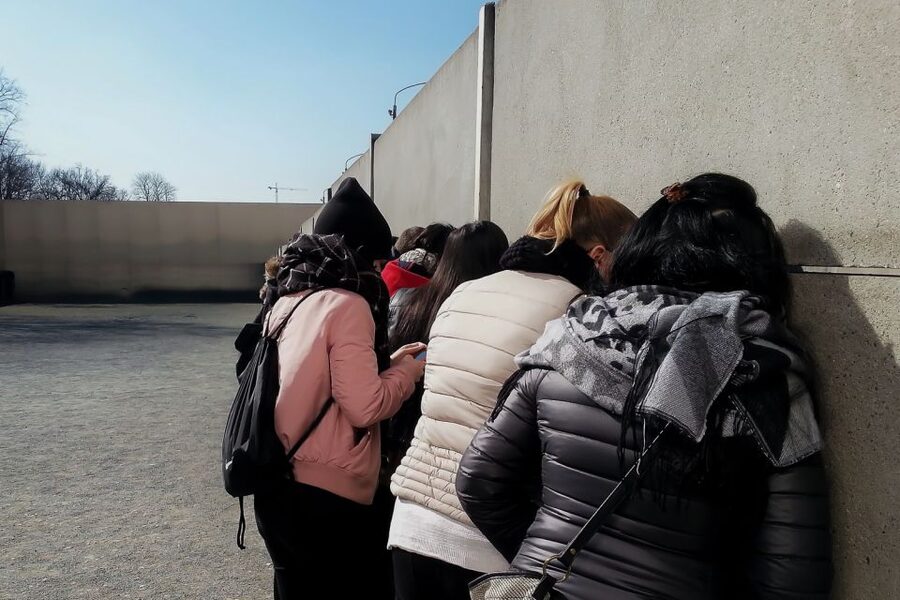
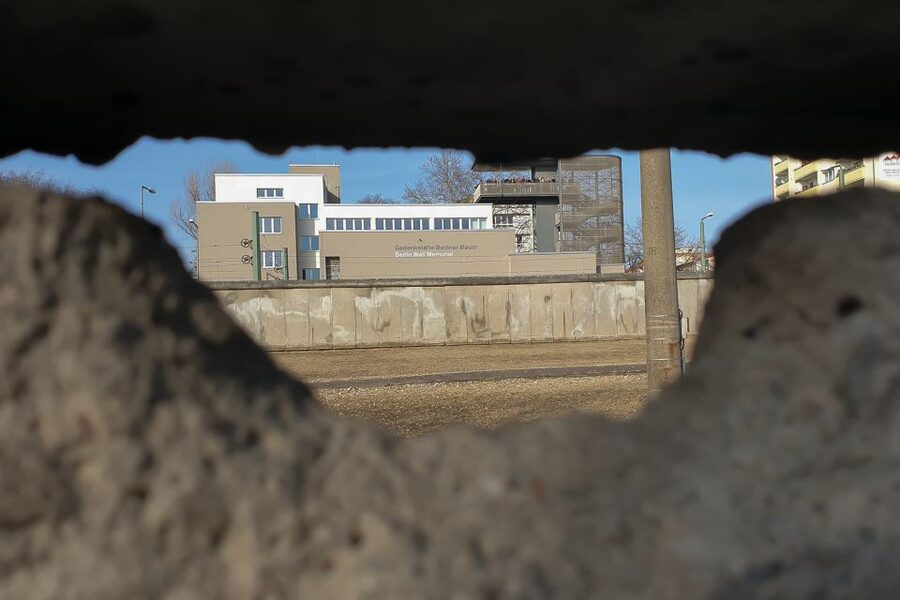
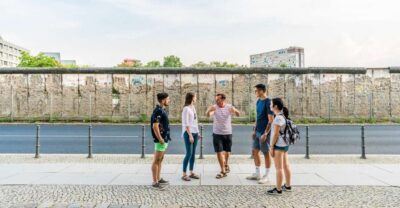
Here you see original portions of the Wall and the former death strip. Those remains help you understand the barrier as a controlled border, not simply a slab of painted concrete. The open space, layered defenses, and stories of attempted escape make the site much more powerful than a restored fragment in an ordinary city street.
Bernauer Strasse is also important because the Wall did not always follow a neat boundary between districts. Buildings and doorways were caught on the wrong side. Families could find themselves separated from nearby relatives, workplaces, or familiar streets. Your guide’s job is to connect the physical remains with those human consequences.
The guide’s explanation matters especially here. A dry account of dates and political leaders would miss the point. The best version of this stop links the construction of the Wall to people trying to cross, people helping them, and people who lost their lives. Feedback praising guides for clear language and personal stories is particularly relevant at this site.
You should allow yourself time to look closely rather than rushing from marker to marker. The memorial is not just a place to take a quick photograph. It asks you to picture how a normal street became a dangerous frontier.
Something different for another day:
- Berlin: Reichstag, Dome and Government District Guided Tour
★ 4.7 · 18,288 reviews - Berlin: 1-Hour City Tour by Boat with Guaranteed Seating
★ 4.3 · 16,993 reviews - Berlin: Boat Tour Along the River Spree
★ 4.4 · 11,252 reviews - Berlin: Hop-on Hop-off Bus Tour with Live Commentary
★ 4.3 · 8,579 reviews
Alexanderplatz and the pressure on the GDR
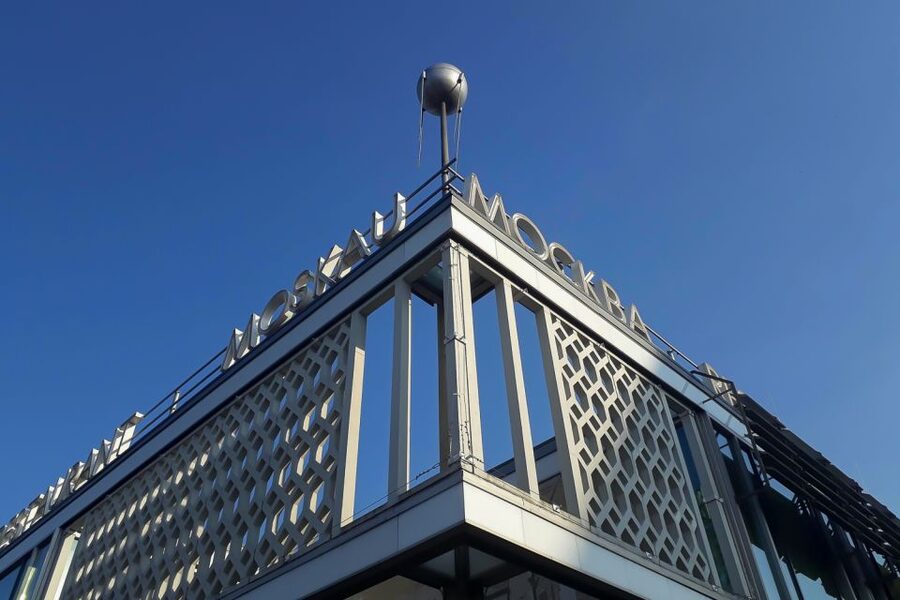
After Bernauer Strasse, you take the metro for about ten minutes before reaching Alexanderplatz. The guided portion here lasts around ten minutes, so this is a shorter stop, but it serves an important purpose.
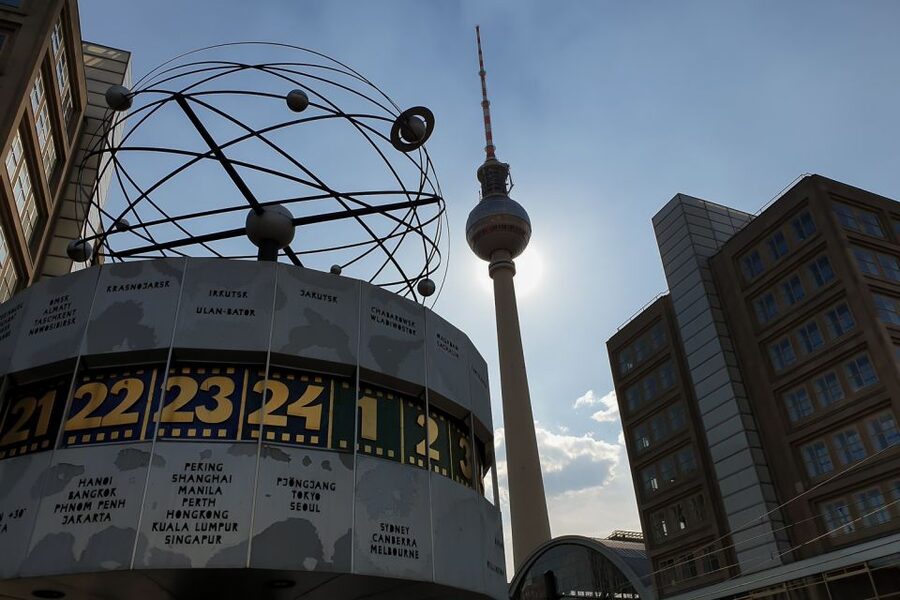
Alexanderplatz is associated with the public life of East Berlin and its socialist architecture. Your guide explains how peaceful demonstrations grew into a serious challenge to the GDR government and its political repression. This brings the story forward from the early years of the Wall to the events that helped bring it down.
The value of Alexanderplatz is that it shifts attention from escape stories to public resistance. Not everyone opposed the regime in the same way, and not every act of courage involved crossing a border. Demonstrations, public gatherings, and growing pressure inside East Germany also played a role.
The ten-minute stop may feel brief if you want an extended architectural discussion. The tour is trying to cover a wide subject in a limited time, so Alexanderplatz works mainly as a historical marker and transition point. You will get a broad explanation rather than a long study of every building.
The TV Tower and the look of socialist Berlin
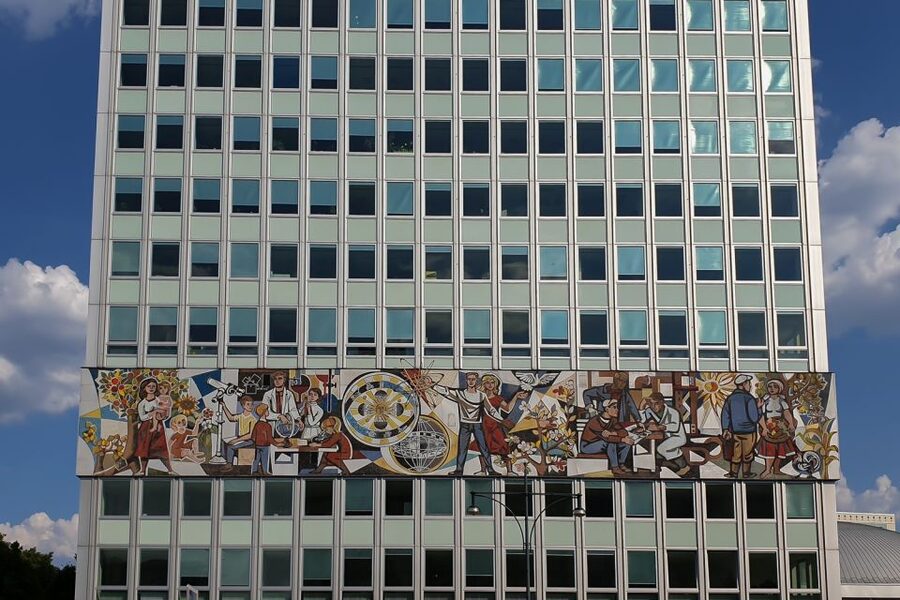
The nearby TV Tower receives another ten-minute guided explanation. Its presence offers a clear way to discuss the visual language of East Berlin and the GDR’s effort to project modernity, order, and state power.
The tower is one of the city’s best-known landmarks, but this tour uses it as part of a larger political story. You are not simply looking at a tall building. You are considering how architecture and public monuments communicated the ideals of socialist East Germany.
Do not confuse this stop with a ticketed tower visit. The supplied details describe a guided stop at the TV Tower, not entry to an observation deck. If you want to go inside separately, you would need to arrange that on your own.
The short stop works well for a first visit to Berlin because it gives you a visual reference point without adding another attraction booking. It also keeps the route moving toward the final Wall site.
East Side Gallery and the Wall after 1989
A second metro journey of about ten minutes takes you to the East Side Gallery. The guided visit here lasts about 15 minutes.
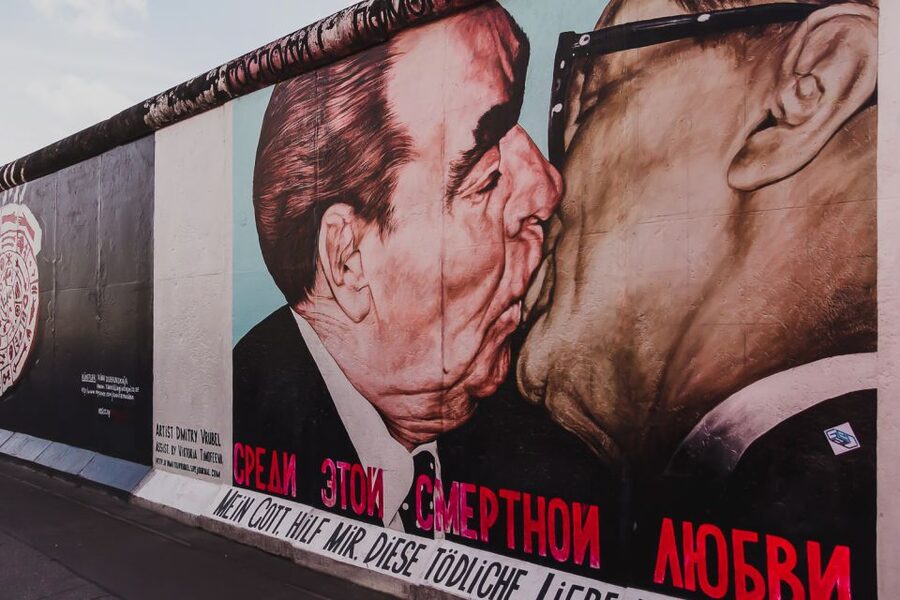
The gallery contains 104 murals painted on a surviving section of the Wall. The best-known image is the kiss between Soviet leader Leonid Brezhnev and East German leader Erich Honecker. It is an arresting final scene for the tour because the Wall has changed from a tool of control into a canvas open to public expression.
The East Side Gallery also shows why memory in Berlin is not fixed. The same structure that once divided families now carries art, humor, anger, and political commentary. Your guide can help you read the murals as part of the post-Wall story rather than treating them as unrelated street art.
Fifteen minutes is enough for an introduction, but not enough to study all 104 murals in detail. If you want time for photographs or a closer look at several paintings, plan to return on your own. This is one of the tour’s clearest tradeoffs: you gain a carefully linked historical route, but each major site gets a limited amount of time.
Ending here gives the tour a hopeful note without pretending that reunification erased every wound. The Wall is gone as a border, but Berlin continues to argue about how its former division should be remembered.
What the guide style adds to the experience
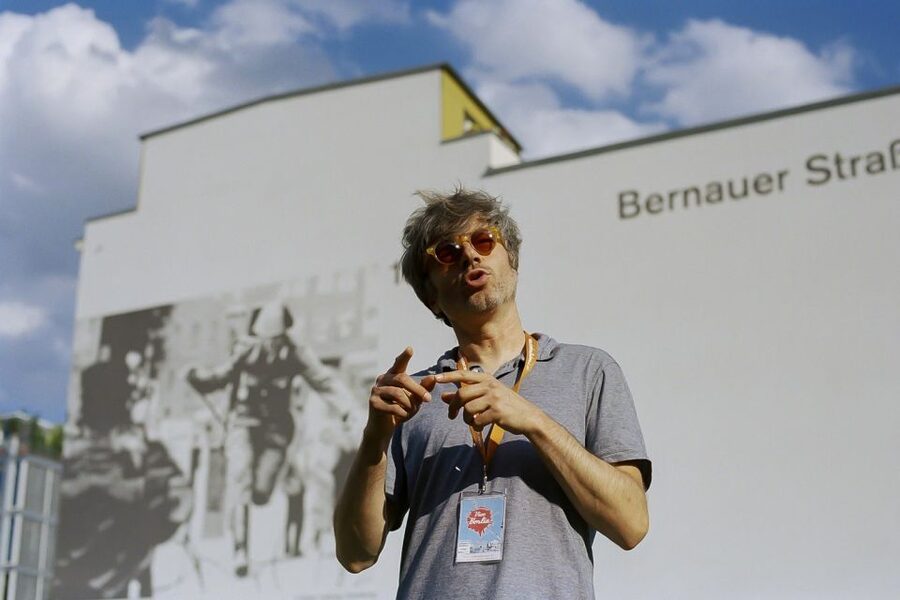
The strongest part of this activity is the guide’s ability to make difficult history understandable. Recent feedback describes the explanations as clear, engaging, and easy to follow. Paolo was praised for holding attention so well that the group could have listened for hours. Elisa was singled out for a well-structured route and an enthusiastic presentation.
Claudia’s warm manner earned similar praise, while Paul was credited with adding useful anecdotes. Catherine included personal testimony alongside the sightseeing, giving the subject a more direct emotional connection. You should not assume that every guide will offer the same personal story, but these names show the standard the activity has reached for.
Language choice can make a major difference. French, Italian, Spanish, English, and German are available, so you can book in the language that lets you ask questions and follow political details without strain. This is especially useful when discussing the GDR, the STASI, the Soviet bloc, and the collapse of the Wall.
The tour is private when that option is selected, and the price covers a group of up to six. A private format can be valuable if your group wants to ask many questions or needs a departure time chosen in advance. The private tour cannot be arranged with less than 72 hours’ notice, so last-minute planners should check availability early.
Price, transport, and the real value
The $351 group price looks high for a walking tour, but the math changes with group size. Six people pay about $58.50 each, while three people pay $117 each. For one or two people, the cost is harder to justify unless a private guide and a chosen departure time are especially important to you.
The fee includes the walking tour and the guide, but not food, drinks, or the AB transport ticket. Since the route uses the S-Bahn and metro, transport is not a minor extra. You should budget for it before the tour begins.
I see the value in the route itself. You are not paying for a single monument visit. You are getting a guided connection between several sites spread across Berlin, along with explanations that make the remains meaningful. The value is best for a small group that wants a focused account of East Berlin rather than a broad city tour.
Free cancellation up to 24 hours before the activity and the option to reserve now and pay later also make planning easier. Those features do not change the tour’s historical content, but they reduce some of the risk when your Berlin schedule is still moving.
Who will enjoy this Wall tour most
I would recommend this experience to first-time Berlin visitors who want a clear introduction to the city’s division and the GDR period. It also suits families with older children, couples, and friends who prefer a guide’s explanation to reading memorial panels alone.
The tour works best for people who are comfortable walking, using public transport, and giving serious attention to political history. Comfortable shoes are essential. You should also expect emotionally difficult stories at Bernauer Strasse.
It may be less suitable if you want a slow art walk, a long architectural tour, or plenty of unstructured time at each site. The route covers a lot in three to three and a half hours, so the stops are purposeful and fairly short after the longer memorial visit.
Should you book East Berlin and the Wall?
Book it if you want the Wall explained as part of ordinary life, public protest, and the changing identity of Berlin. Bernauer Strasse is the main reason to go, while the ghost station, Alexanderplatz, TV Tower, and East Side Gallery give the story a useful beginning, middle, and end.
For the best value, share the private group price with up to six people and choose a guide language your group follows comfortably. Bring comfortable shoes, arrange the AB ticket in advance, and leave extra time if you want to examine the East Side Gallery after the guided portion.
If you are choosing between a quick Wall photo stop and this route, I would choose this one. It asks for more time and planning, but it gives you a much clearer sense of what division meant for people living in East Berlin.
FAQ
How long does the East Berlin and Wall tour last?
The tour lasts approximately three to three and a half hours.
What sites are included?
The route includes Potsdamer Platz, Nordbahnhof, the Berlin Wall Memorial at Bernauer Strasse, Alexanderplatz, the TV Tower, and the East Side Gallery.
Is public transportation included?
No. You need a valid public transport ticket for Berlin’s AB zones during the tour.
Which languages are available?
Live guides are available in English, German, French, Italian, and Spanish.
Can I book a private group?
Yes. A private group option is available, and the listed price covers a group of up to six people.
Is hotel pickup available?
Pickup is optional. If selected, you should wait in the hotel lobby 10 minutes before the scheduled time and provide the hotel name and address when booking. You should also contact the activity provider to confirm the pickup details.
Can I cancel for a full refund?
Yes. You can cancel up to 24 hours in advance for a full refund.
Just added around Berlin
- Berlin: Private Guided Tour of the Main Sights★ 5.0 · 13 reviews
- Private Highlights of Berlin Bike Tour★ 5.0 · 13 reviews
- Modern Berlin Private Walking Tour: Diverse, Vibrant and Exciting German Capital★ 5.0 · 13 reviews
- Tour in Berlin from Warnemünde and Rostock Cruise Port★ 4.1 · 13 reviews
- Berlin: Stasi Museum Private Guided Tour with Entry Ticket★ 4.8 · 13 reviews
- Private Food Tour Experience with a born and bred Berliner★ 5.0 · 14 reviews
- Berlin: Rheinsberg Palace Entrance Ticket★ 4.8 · 14 reviews
- Berlin in one day – day tour with an expert guide★ 5.0 · 14 reviews
Walking Tours, compared.

Berlin’s Best: 2 Hour Walking Tour Third Reich and the Cold War
Read our review →
Third Reich Berlin: Hitler and WWII Walking Tour
Read our review →Browse the lists this tour appears in