
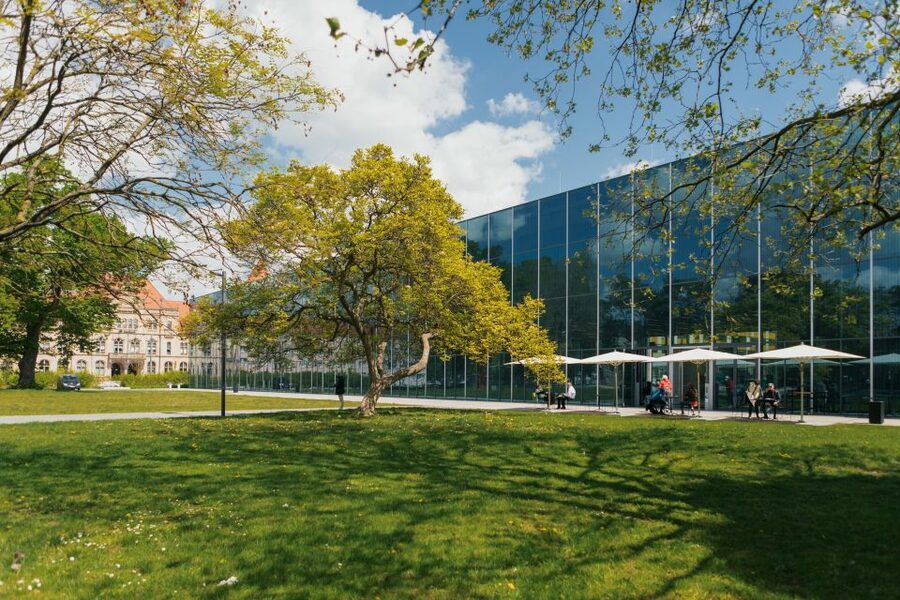
Reviewed · WALKING TOURS
Dessau: Guided Walking Tour through History
Dessau’s story has plenty of sharp turns. This 90-minute walk makes an unusual city easier to understand, linking eight hundred years of change with Bauhaus, the Basic Law, local industry, music, and the people who shaped Dessau-Roßlau. I like the way the tour connects famous names such as Walter Gropius, Wassily Kandinsky, Kurt Weill, and Hugo Junkers with the streets around you. I also like the small anecdotes, which give the city a human voice instead of treating it like a list of dates.
The main consideration is language. The live guide speaks German only, so you will need a good level of German to follow the stories. The tour also runs rain or shine, and the supplied feedback suggests it is especially useful for people who want context and local detail, rather than a long parade of major monuments.
In This Review
- Key Points At A Glance
- Why A Short Walk Helps You Read Dessau
- The Opening: Dessau’s Eight Hundred Years
- Bauhaus Comes To Dessau
- The Basic Law And Dessau’s Political Story
- Local People With Wider Reach
- What The City-Center Route Feels Like
- Guide Style And Language
- Meeting Point, Timing, And Weather
- Who Will Get The Most From This Walk?
- Should You Book The Dessau History Tour?
- FAQ
- How long does the Dessau guided walking tour last?
- How much does the tour cost?
- What language is the tour offered in?
- Is the tour wheelchair accessible?
- Where do I show my voucher?
- Does the tour run in bad weather?
- Can I cancel for a full refund?
- Can I reserve the tour without paying immediately?
- What historical subjects does the tour cover?
Key Points At A Glance
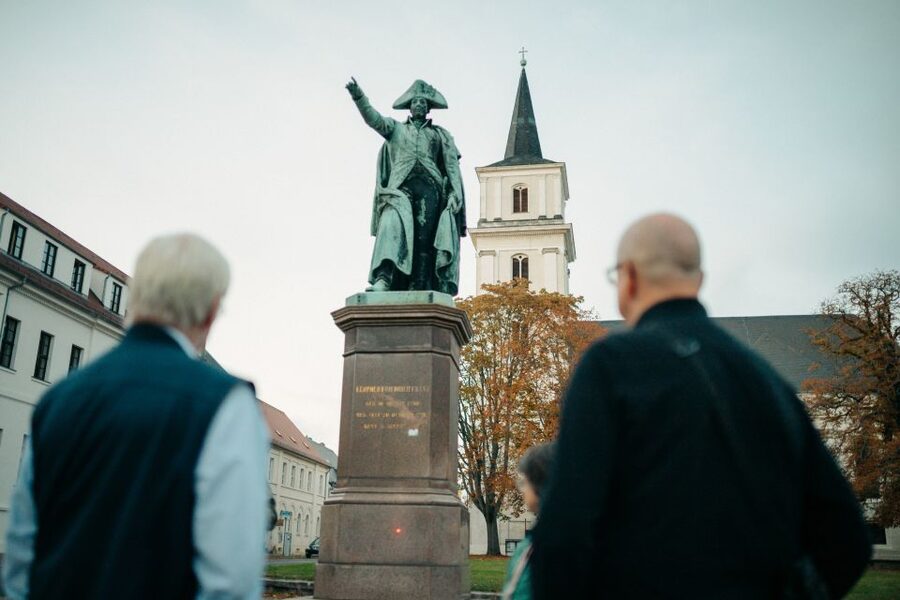
- Eight centuries in 90 minutes: Follow Dessau’s changing identity from the age of Prince Leopold III. Friedrich Franz through modern cultural and political history.
- Bauhaus with a local setting: Learn why Bauhaus came to Dessau and how the movement fits into the wider story of the city.
- Stories beyond the headline names: Hear about Moses Mendelssohn, Kurt Weill, the Müller family, Hugo Junkers, Walter Gropius, and Wassily Kandinsky.
- Small anecdotes matter: The best part may be the short local stories that bring familiar places and lesser-known corners to life.
- Good value at $13: For a guided walk lasting 1.5 hours, the price is modest, especially if you are new to Dessau.
- Accessible and weatherproof: The route is wheelchair accessible, but you should dress for the forecast because the walk goes ahead in rain or shine.
Why A Short Walk Helps You Read Dessau
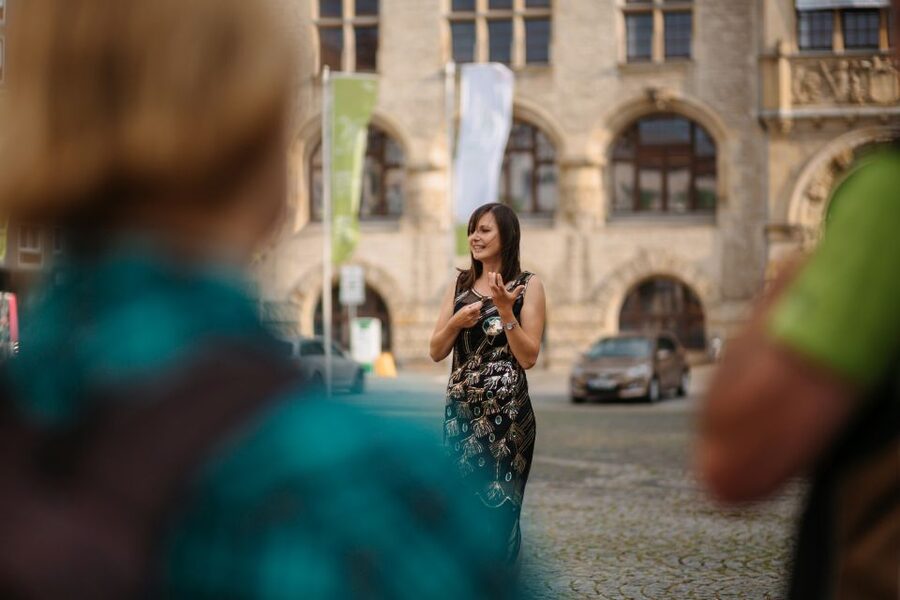
Dessau can be a difficult city to grasp at first. Its identity is spread across several periods, and its most important stories do not belong to one neat chapter. A single walk gives you a frame for the city, so later visits to Bauhaus sites, museums, or historic buildings make more sense.
The tour’s central idea is change. You are not simply shown old buildings and told when they were built. Instead, the guide uses urban spaces to explain how different eras left their mark, from princely Dessau to the city associated with designers, artists, engineers, composers, and political history.
That approach is valuable because Dessau’s best-known subject, Bauhaus, is only one piece of the picture. You learn how the school came to Dessau, but you also hear why other people connected to the city matter. The result should feel less like a specialist architecture lecture and more like a guided introduction to a place with several competing identities.
At $13 per person, the cost is easy to justify if you are staying in Dessau or passing through with time for a proper orientation. You are paying for a local guide’s selection of details, not transport, admission to an attraction, or a full-day program. That keeps the price low, but it also means the value depends heavily on your interest in listening and looking closely.
More Historical Tours in Germany:
- Leipzig: City History Canal Sightseeing Tour on a Motorboat
★ 4.7 · 6,232 reviews - Berlin: Natural History Museum Entrance Ticket
★ 4.6 · 3,382 reviews - Leipzig: 1.5-Hour Historical Walking Tour in German
★ 4.7 · 2,217 reviews
The Opening: Dessau’s Eight Hundred Years
The walk begins by placing Dessau in a long timeline. The city is presented as an eight-hundred-year-old place shaped by political figures, cultural figures, technology, and changing ideas about public life.
One important name is Prince Leopold III. Friedrich Franz. His presence represents the era when Dessau was tied to court life and regional power. You should expect this part of the tour to help you understand the older foundations of the city before the story moves into its more modern chapters.
Friedrich Wilhelm Erdmannsdorff adds another important thread. Moses Mendelssohn brings a different one, helping show that Dessau’s past cannot be reduced to princes and buildings. The guide’s job is to join these figures into a connected account, using the streets and public spaces around you as prompts.
This is where the tour’s pace matters. Ninety minutes is long enough to create a useful overview, but not long enough for an exhaustive study of every period. You will hear selected stories rather than receive a complete academic history. I see that as a strength for a first visit, though history fans who want detailed dates and extended site visits may want to add another activity afterward.
Bauhaus Comes To Dessau

Bauhaus is the subject most people will expect to hear about, and the tour explains how the movement came to Dessau. That question matters. It moves the discussion beyond Bauhaus as a famous design label and places it within the city that helped give the school room to develop.
Walter Gropius and Wassily Kandinsky are among the names tied into this part of the walk. Their inclusion gives you a useful bridge between city history and modern art, design, and architecture. You may already know the Bauhaus name, but the tour helps connect it to a particular place and local story.
Do not expect this short walk to replace a dedicated Bauhaus visit. The available information does not promise interior tours, museum entry, or a detailed architectural inspection. Instead, you get a city-center introduction that explains why Dessau became important to the movement and points out how the subject belongs within a much longer local story.
For many people, that is the right order. A guided overview can help you decide what deserves closer attention later. If you are visiting specifically for Bauhaus buildings, treat this walk as preparation rather than the main event.
The Basic Law And Dessau’s Political Story
One of the tour’s more unusual subjects is Dessau’s connection with the Basic Law. That detail gives the walk a political and constitutional angle that you may not expect from a city-center tour.
The Basic Law is central to Germany’s modern political identity, so learning what Dessau has to do with it adds weight to the city’s twentieth-century story. The experience does not present Dessau only as a place of art and design. It also asks you to consider how the city relates to larger ideas about Germany and public life.
The supplied information does not specify the exact location or event connected with the Basic Law, so you should think of this as a theme the guide explains during the route rather than a promised named stop. That is one reason listening closely matters. The value lies in the connections between places and stories, not just in taking photographs.
More Walking Tours in Germany:
- Discover Berlin Half-Day Walking Tour
★ 5.0 · 9,624 reviews - Berlin: Third Reich and Cold War 2 Hour Walking Tour
★ 4.9 · 6,830 reviews - Munich: Third Reich & WWII Walking Tour
★ 4.6 · 6,181 reviews - Berlin: Discover Berlin Walking Tour
★ 4.9 · 5,998 reviews
Local People With Wider Reach

A particularly good feature is the attention given to people whose names may be better known outside Dessau than in their birthplace. Kurt Weill is one example. His connection gives the tour a musical dimension and reminds you that the city’s cultural influence reaches beyond architecture.
Moses Mendelssohn, Hugo Junkers, Walter Gropius, and Wassily Kandinsky broaden the picture further. The tour also includes Max and Wilhelm Müller, names that may be less familiar to you but are part of the local account presented by the guide.
This mix is more useful than a tour built only around internationally famous figures. You get a sense of how a city remembers its major contributors, but also how local stories can sit beside global reputations. The guide uses contemporary witnesses from different eras, giving each period a voice within the walk.
The short anecdotes are likely to be the most memorable part. Two recent ratings specifically praised the small stories and interesting places, while another simply described the experience as very informative. That points to a tour that succeeds through detail and selection rather than spectacle.
What The City-Center Route Feels Like
The walk brings urban spaces to life, which means you should expect to spend much of the 1.5 hours outdoors, moving through the center and stopping as the guide explains each setting. The information does not provide a fixed list of named stops, so the exact sequence may depend on the guide and current conditions.
That flexible structure can work well in Dessau. Instead of rushing from one major sight to another, you have time to understand how different parts of the city relate to one another. Look for the smaller clues: a place connected with a local person, a street that gains meaning after the guide explains its past, or a location that seems ordinary until an anecdote changes how you see it.
The walk is wheelchair accessible, which is important for anyone who needs a route suitable for mobility aids. The information does not provide details about slopes, paving, rest stops, or toilet access, so you may want to ask at the ticket counter if you need specific route guidance.
Because the tour operates in all weather, comfortable shoes and a rain layer are sensible. Rain will not cancel the experience, and there is no promise of indoor shelter. On a wet day, the storytelling may matter even more because the route itself will be less comfortable.
Guide Style And Language
The tour is led by a trained guide and offered in German. That makes it a good choice for German speakers who want a local account with anecdotes, including residents who think they already know Dessau.
In fact, the feedback includes a useful clue: a Dessau resident said the tour taught them new things about their own city. That is a strong sign that the content goes beyond basic orientation. You do not need to be a first-time visitor to get value from it.
If your German is limited, this walk may be difficult to enjoy fully. The experience depends on spoken explanations, historical connections, and humorous or personal details. A simple ability to recognize place names will not be enough. Check whether your German is strong enough for 90 minutes of live guiding before booking.
No guide names are provided, so you cannot request a particular person. The safest expectation is a professionally led local history walk, with the quality depending on the guide’s storytelling and your own interest in the subject.
Meeting Point, Timing, And Weather
Before the walk begins, show your voucher at the ticket counter. The experience includes skip-the-ticket-line access, so this should be a straightforward start once you arrive with your booking details ready.
The duration is 1.5 hours. That makes it easy to fit into a day of sightseeing without consuming the whole schedule. You can use it near the start of your visit to get oriented, or later as a way to organize impressions after seeing parts of Dessau on your own.
Starting times vary, so check availability for the date you want. The supplied information does not give a fixed daily schedule, meeting address, group size, or exact route. Those are practical details worth confirming at booking.
Rain or shine is the firm weather rule. Bring suitable clothing and do not choose this activity if you want a guaranteed indoor experience. The wheelchair-accessible route is helpful, but weather can still affect comfort for everyone.
You can cancel up to 24 hours before the tour for a full refund. You can also reserve now and pay later, which is useful if your schedule is still changing.
Who Will Get The Most From This Walk?
I would recommend the tour to you if you want a clear introduction to Dessau before exploring its sights in greater detail. It should suit history fans, Bauhaus enthusiasts, German speakers, and local residents who suspect there are stories they have missed.
The modest price also makes it a sensible choice for a short stay. At $13, you do not need the experience to fill an entire day to feel that you received fair value. A local guide can help you notice connections that are easy to miss when you walk alone with only a map.
It is less suitable if you expect museum entry, a long architectural tour, or extensive time inside specific buildings. It is also a poor match if you need English guiding or dislike outdoor activities in uncertain weather.
The strongest reason to book is the combination of range and local detail. In a short time, you hear about princes, artists, engineers, composers, designers, and Germany’s political story. The tour gives Dessau a shape you can carry with you for the rest of your visit.
Should You Book The Dessau History Tour?
Book it if you speak German and want an affordable, local introduction to Dessau-Roßlau. The 90-minute format is manageable, the subject range is unusually broad, and the small anecdotes appear to be a major strength.
Skip it if you need English, want a dedicated Bauhaus architecture tour, or prefer indoor sightseeing. For everyone else, $13 is a reasonable price for a guided walk that can turn a complicated city into a more understandable place.
FAQ
How long does the Dessau guided walking tour last?
The tour lasts 1.5 hours, or 90 minutes.
How much does the tour cost?
The listed price is $13 per person.
What language is the tour offered in?
The live tour guide speaks German.
Is the tour wheelchair accessible?
Yes, the tour is wheelchair accessible.
Where do I show my voucher?
Show your voucher at the ticket counter before the tour begins.
Does the tour run in bad weather?
Yes. The tour takes place rain or shine.
Can I cancel for a full refund?
Yes. You can cancel up to 24 hours in advance for a full refund.
Can I reserve the tour without paying immediately?
Yes. The reserve-now-and-pay-later option lets you book your place without paying today.
What historical subjects does the tour cover?
The tour covers Dessau’s eight-hundred-year history, the arrival of Bauhaus, the city’s connection with the Basic Law, and local figures including Prince Leopold III. Friedrich Franz, Friedrich Wilhelm Erdmannsdorff, Moses Mendelssohn, Kurt Weill, Max and Wilhelm Müller, Hugo Junkers, Walter Gropius, and Wassily Kandinsky.
Just added around Germany
- e-Scavenger hunt Aachen: Explore the city at your own pace★ 4.0 · 13 reviews
- Canyoning Advanced Day Trip★ 5.0 · 13 reviews
- Wiesbaden Biebrich: Outdoor Escape Game★ 4.7 · 13 reviews
- Munich: Private or Group Third Reich and WWII Walking Tour★ 4.9 · 13 reviews
- Berlin: Private Guided Tour of the Main Sights★ 5.0 · 13 reviews
- From Munich: Neuschwanstein Castle and Linderhof Private Tour★ 5.0 · 13 reviews
- Trier, Moselle: Wine excursion with boat trip★ 3.9 · 13 reviews
- From Dresden: Guided Day Tour by Bus of Seiffen Toy Village★ 4.0 · 13 reviews
Walking Tours, compared.




Berlin’s Best: 2 Hour Walking Tour Third Reich and the Cold War
Read our review →
Third Reich Berlin: Hitler and WWII Walking Tour
Read our review →Browse the lists this tour appears in