
Reviewed · WALKING TOURS
Cochem: Private Guided Walking Tour
Cochem rewards a closer look. This private walk brings the Mosel town’s Celtic, Roman, medieval, and wartime past into one compact outing. I like the private format, which lets your group ask questions and request some on-the-spot adjustments. I also like the local angle, especially the personal stories and wine knowledge praised by several participants.
The main drawback is the short 90-minute length. You will see and discuss many important places, but this is an orientation walk rather than a full visit to every sight. Entrance fees are not included, and the steep setting around Reichsburg may be difficult for anyone with limited mobility.
In This Review
- Key points to know before you book
- Why Cochem makes a strong walking-tour town
- Meeting at Endertplatz and finding your bearings
- St. Martin’s Church and Cochem’s religious past
- The Market Square and half-timbered Cochem
- From Celtic settlement to French occupation
- Reichsburg, the hilltop symbol of Cochem
- The Black Plague and the town’s harder chapters
- What the private format is really worth
- Who will enjoy this walk most
- Timing, cancellation, and simple planning tips
- Should you book the Cochem private walking tour?
- FAQ
- Where does the Cochem walking tour meet?
- How long does the tour last?
- How much does the private tour cost?
- What languages are available?
- Are entrance fees included?
- Is the tour suitable for wheelchair users?
- Can I cancel the tour or pay later?
Key points to know before you book
- A private group of up to 15: The $272 rate covers the group, so the value improves sharply when shared by a larger family or party.
- Cochem’s story reaches from Celtic times to World War II: The walk connects Roman rule, the Black Plague, French occupation, Prussian control, and the town’s wartime destruction.
- St. Martin’s Church and the Market Square anchor the old town: These stops help you read Cochem’s streets, religious buildings, and half-timbered houses.
- Reichsburg is the visual prize: The hilltop castle gives the tour its signature view, even though admission is extra.
- Local guides add the human touch: Bridget received special praise for her pacing, personal stories, local history, and knowledge of Mosel wine.
- Comfortable shoes are essential: This is a walking tour in a hill town, and it is not suitable for wheelchair users or people with mobility impairments.
Why Cochem makes a strong walking-tour town
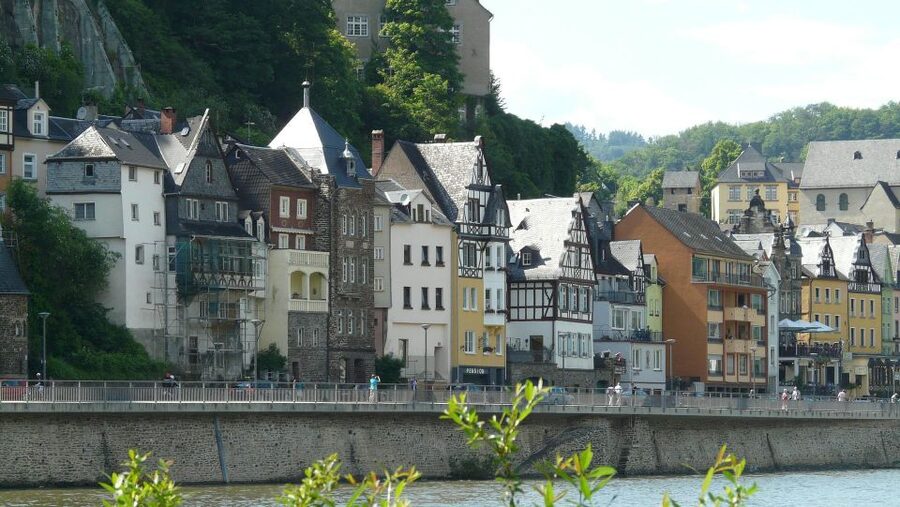
Cochem is small enough to explore on foot but layered enough to keep the walk from feeling like a quick postcard stop. The town sits along the Mosel River, framed by wooded hills and crowned by Reichsburg. Its romantic look is real, but the story underneath is not all pretty façades and wine shops.
The town was inhabited in Celtic times and later became part of the Roman Empire. Its first recorded name, Villa Cuchema, appeared in the ninth century. That early name matters because it shows that Cochem was already an established settlement long before the castle and half-timbered houses gave it its familiar appearance.
I like tours that explain how a place changed hands, rather than simply pointing at old buildings. Cochem was once an imperial estate, was besieged and occupied by French forces, and later came under Prussian rule after Napoleon’s defeat. A guide can turn those dry political shifts into a clear story about why the town looks and feels the way it does today.
The walking tour lasts 90 minutes, so expect a brisk overview. You will get the town’s main historical framework and a chance to ask questions, but you should not expect a long castle visit, museum time, or a relaxed wine tasting built into the price.
More Walking Tours:
- Discover Berlin Half-Day Walking Tour
★ 5.0 · 9,624 reviews - Berlin: Third Reich and Cold War 2 Hour Walking Tour
★ 4.9 · 6,830 reviews - Munich: Third Reich & WWII Walking Tour
★ 4.6 · 6,181 reviews
Meeting at Endertplatz and finding your bearings
The tour begins in front of the tourist office at Endertplatz 1, 56812 Cochem. This is a practical starting point because it places you near the center of town and gives you an easy landmark for meeting your guide.
I would arrive a little early. The guide needs to identify your group, and a few extra minutes give you time to get settled before the history begins. Since the tour is private, the meeting is less about joining a large crowd and more about starting a conversation with a local guide.
The language options are English and German. If your party includes people with different interests, the private setup can help. One person might want more on the castle, another might care about wartime history, and someone else may be curious about Mosel wine. The guide can respond to those priorities within the limits of the 90-minute route.
St. Martin’s Church and Cochem’s religious past
St. Martin’s Church is one of Cochem’s main landmarks and an early stop worth taking seriously. The church gives you a strong sense of how central religion was to daily life in the old town.
The walk also introduces the Capuchin Monastery, founded in 1623 by Elector Lothar von Metternich. That date places the monastery in a period when religious institutions shaped education, charity, politics, and local identity. You are not simply looking at another old building. You are seeing part of the network that organized life in Cochem during the early modern period.
The available information does not promise entry inside the church or monastery, so plan on hearing about their history from outside unless the guide confirms otherwise. That is one reason the tour works best as a town introduction. It gives you context for later independent visits, rather than treating every stop as a full interior tour.
A guide’s storytelling matters here. Several participants praised the tours for being entertaining, clear, and personal. That combination should help keep the religious and political background from turning into a list of dates.
The Market Square and half-timbered Cochem
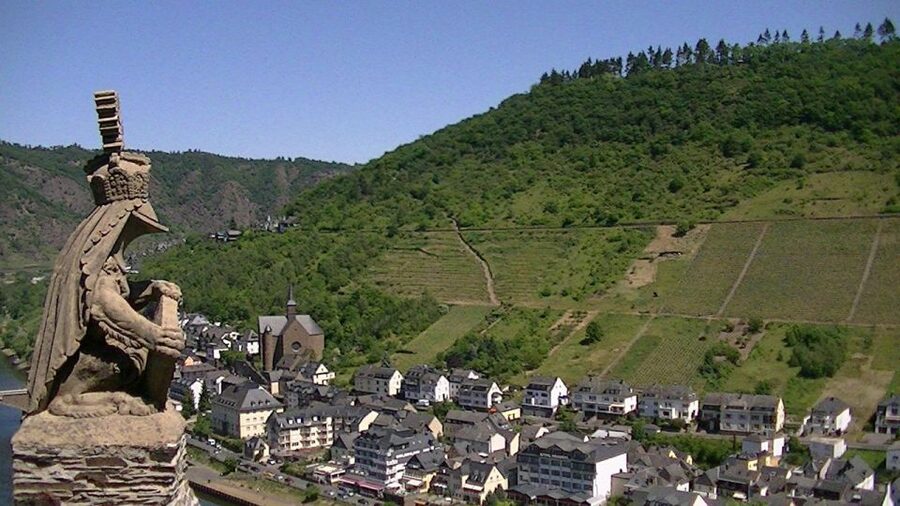
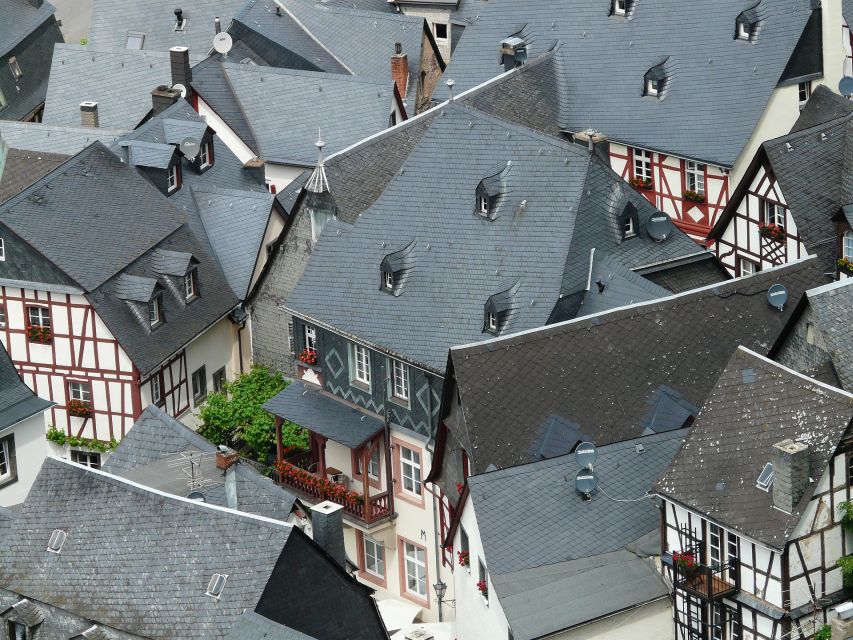
The Market Square shows Cochem at its most instantly appealing. Half-timbered houses surround the square, and the space played an important role in the late Middle Ages.
Look beyond the decorative façades. A medieval market square was a place for trade, public business, announcements, and social contact. Its position tells you something about how the town functioned before modern roads and railways changed movement through the Mosel Valley.
This part of the walk is also a good test of your guide’s local feel. A basic tour may point out the square and move on. A better one explains how the buildings, streets, and market activity fit together. The feedback from this experience repeatedly highlights humor, personal stories, and insider information, so this is likely where the private format pays off most.
You will want time for photographs, but remember that the tour has a fixed 90-minute schedule. If you stop often, you may hear less detail later. I suggest listening during the main explanation, then returning to the square after the tour for slower photographs and a closer look.
A few more tours and experiences worth a look
- Private audio book city rally around the Jahrhunderthalle in Bochum
★ 5.0 · 12 reviews - Private city rally around the Zollverein Coal Mine Industrial Complex in Essen
★ 3.5 · 10 reviews - Private audio book city rally around the old town of Essen Kettwig
★ 4.0 · 6 reviews - Koblenz: Private pub crawl with insider guide & free shots
★ 5.0 · 5 reviews
From Celtic settlement to French occupation
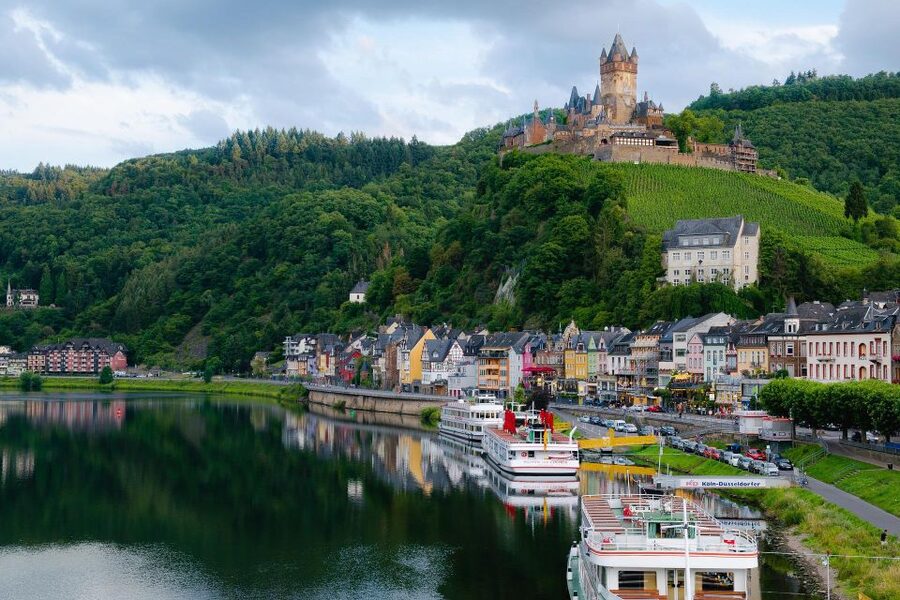
Cochem’s political story is unusually useful because several major European powers left their mark here. Celtic settlement came first, followed by Roman rule. The town later became an imperial estate, then faced French military pressure and occupation.
King Louis XIV’s forces burned the original castle and conquered the city. The destruction led to a long period of rebuilding, which helps explain why Cochem’s appearance is not simply a preserved medieval scene. Parts of what you see reflect later reconstruction and restoration.
Napoleon’s army occupied the city in the 18th century, and after Napoleon fell, Cochem was assigned to Prussian rule. These changes are valuable to hear on foot because they connect local buildings with events much larger than the Mosel Valley.
I appreciate this kind of historical scale. You can look at a quiet street and understand that the town has dealt with war, occupation, changing borders, and rebuilding many times. The story gives the pretty riverfront more weight without taking away its charm.
Reichsburg, the hilltop symbol of Cochem
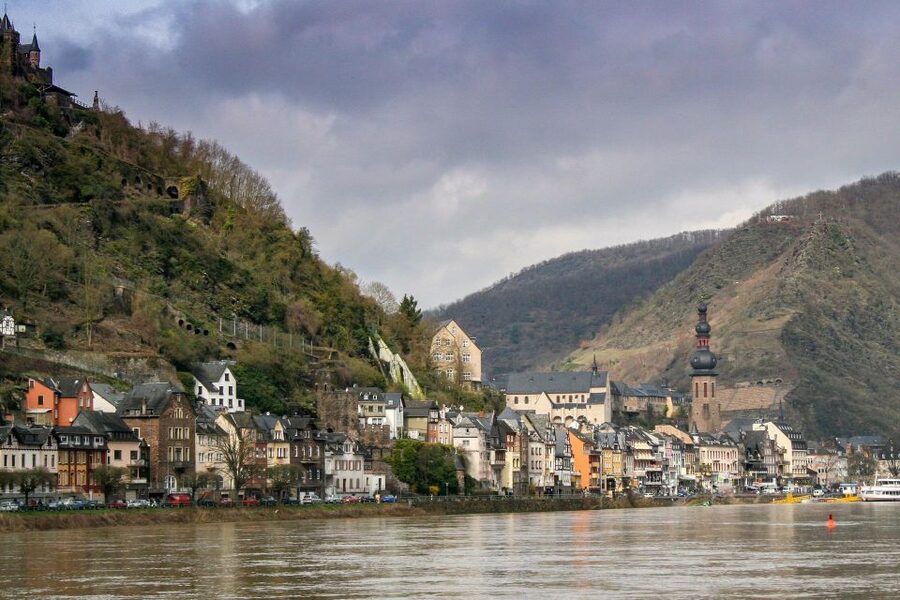
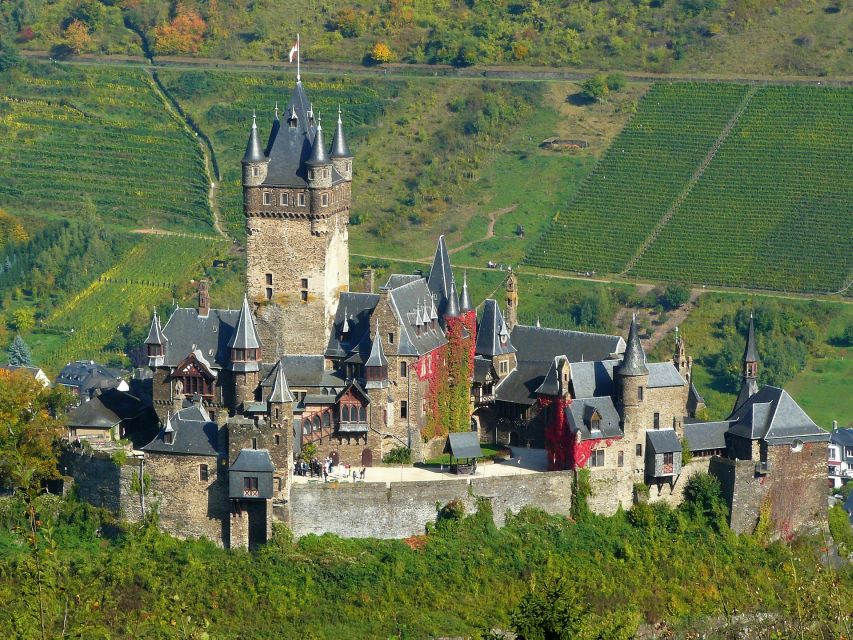
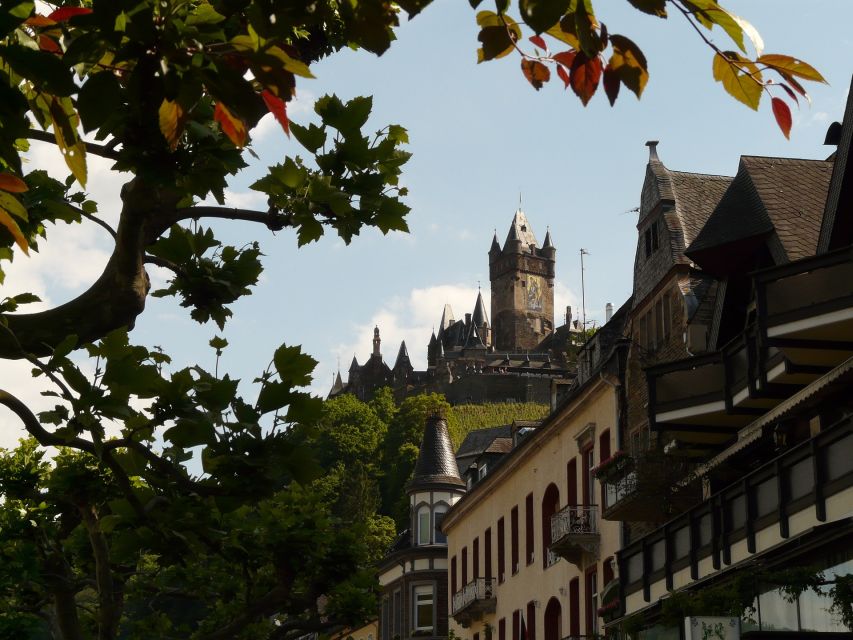
Reichsburg is the tour’s big visual payoff. It is a beautifully restored medieval castle high above the Mosel and one of the highest hill castles along the river.
The castle’s position explains much of Cochem’s appeal. From below, it dominates the town. From the surrounding area, it helps create the classic view of rooftops, wooded hills, and river bends. Even if you do not enter, the guide’s explanation can make the castle more than a scenic backdrop.
Do not confuse a walking-tour discussion with a castle visit. Entrance fees are not included, and the tour description does not promise admission. If you want to explore Reichsburg’s interior, you will need to arrange that separately and allow extra time.
The hilltop setting also has a practical downside. Cochem is not flat, and visitors with mobility impairments or wheelchair users are specifically advised that this activity is unsuitable. Comfortable shoes are not a minor suggestion here. They are the sensible choice for uneven streets and uphill sections.
The Black Plague and the town’s harder chapters
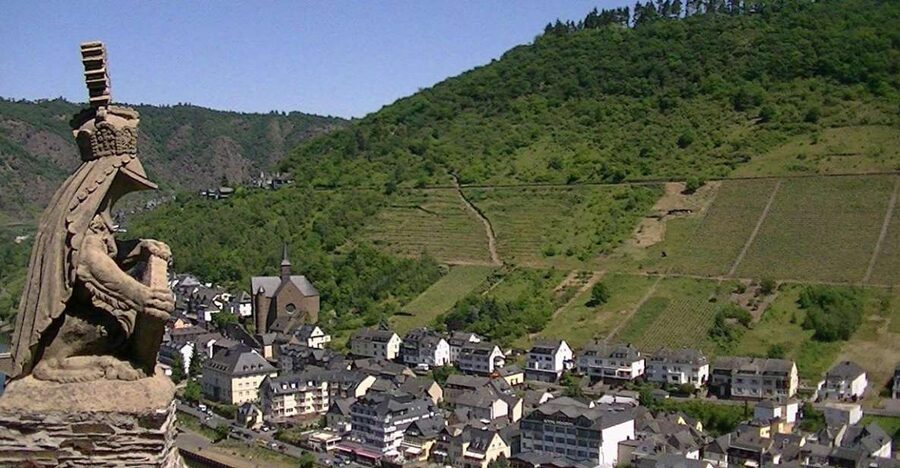
The walk also covers the impact of the Black Plague. This subject adds needed balance to Cochem’s romantic image. Medieval towns were not simply centers of trade and celebration. Disease could reshape families, work, religion, and population within a short time.
A local guide can help connect the broad European disaster with Cochem’s own development. The value is not in memorizing a statistic. It is in understanding why old towns often have strong religious foundations, tight streets, and layers of rebuilding.
The experience also reaches into the Second World War. Cochem was heavily damaged, and its subcamps connected the town to the Natzweiler concentration-camp system. That part of the tour may feel more sobering than the castle and market square, but it belongs in any honest account of the town.
I would choose this tour partly because it does not stop at the attractive parts of Cochem. The wartime material reminds you that the town’s present appearance came after severe loss and reconstruction. It also gives you a reason to look more closely at what survived, what was rebuilt, and what may no longer be visible.
What the private format is really worth
The price is $272 for a group of up to 15. That is not a cheap solo activity, but the calculation changes when you divide it among several people. For 10 people, the cost works out to about $27 per person. For 15, it is about $18 per person. For a couple, the cost is much harder to justify unless privacy and flexibility matter a great deal.
The strongest value comes from the guide’s attention. You are not paying only for a set route. You are paying for a private conversation in which your group can ask questions and possibly adjust the focus on the spot.
That matters in Cochem because the town offers several different stories. You may care most about Reichsburg, the French attacks, religious history, wine, or the wartime past. A group-only guide can spend more time on what interests you rather than following the needs of strangers.
The feedback points to the same strengths. Bridget was singled out for excellent pacing and strong knowledge of Cochem. Another participant especially valued a guide’s personal stories about life in town. Wine knowledge also received praise, which is useful in the Mosel region, where local culture and vineyards are closely linked.
Still, the price does not cover entrance fees. If Reichsburg is a must-see inside, add that cost to your planning. The tour also does not appear to include food, wine, or transport. Its value rests on interpretation and access to a local guide, not on bundled extras.
Who will enjoy this walk most
I would recommend this experience to a small family, a group of friends, or a cruise stop group that wants a private introduction to Cochem. It is especially useful if you have only a short time in town and want a guide to organize the main story quickly.
History-minded visitors should find plenty to hold their attention. The material covers Celts, Romans, the imperial period, French rule, Napoleon, Prussia, the Black Plague, religious institutions, Reichsburg, and World War II.
It also suits people who prefer human stories to formal lectures. The strongest feedback describes the guides as friendly, funny, personable, and good at explaining local life. If you enjoy asking questions, the private format is a real advantage.
I would be cautious about booking it for anyone who cannot manage hills or ordinary walking. The activity is not suitable for wheelchair users or people with mobility impairments. The 90-minute length is manageable for many people, but the terrain still matters.
Timing, cancellation, and simple planning tips
You choose the starting time from the available options when booking. The tour lasts 90 minutes, so it fits neatly before or after another Cochem activity, but you should avoid scheduling a tight connection immediately afterward.
Free cancellation is available up to 24 hours before the tour for a full refund. You can also reserve now and pay later, which helps if your plans are still moving around.
Bring comfortable shoes. I would also keep your group together near the meeting point and arrive with a few topics in mind. Asking about the castle, wine, wartime damage, or local life can help you get more from a private guide than simply following the route silently.
Should you book the Cochem private walking tour?
Book it if you want a compact, local-led introduction and can share the $272 group price with several people. The combination of St. Martin’s Church, the Market Square, Capuchin history, Reichsburg, occupation, plague, and wartime memory gives you a useful first read of Cochem.
Skip it if you mainly want to tour the inside of Reichsburg, spend a long time taking photos, or explore at a slow and unstructured pace. You will need extra time and separate admission for the castle.
For most groups, I see this as a strong first activity in Cochem. It gives you the town’s story, points out what deserves a second look, and leaves you free to return to the places that catch your interest. The private setting, friendly guiding style, and local stories are the main reasons to choose it over a basic orientation walk.
FAQ
Where does the Cochem walking tour meet?
The meeting point is in front of the tourist office at Endertplatz 1, 56812 Cochem.
How long does the tour last?
The tour lasts 90 minutes.
How much does the private tour cost?
The price is $272 per group, with up to 15 people included.
What languages are available?
The tour is offered in English and German.
Are entrance fees included?
No. Entrance fees are not included in the tour price.
Is the tour suitable for wheelchair users?
No. The activity is not suitable for wheelchair users or people with mobility impairments.
Can I cancel the tour or pay later?
You can cancel up to 24 hours in advance for a full refund. Reserve now and pay later is also available.
Just added around Koblenz
- e-Scavenger hunt Paderborn: Explore the city at your own pace★ 5.0 · 4 reviews
- Evening-Cruise to the fireworks of the Cochemer Winefest.★ 4.5 · 4 reviews
- Koblenz: Old Town Tour with the Ehrenbreitstein Fortress★ 4.8 · 4 reviews
- Koblenz: Private pub crawl with insider guide & free shots★ 5.0 · 5 reviews
- Bielefeld Scavenger Hunt and Private Sights Self-Guided Tour★ 4.0 · 5 reviews
- Private scavenger hunt around Broich Castle in Mülheim an der Ruhr★ 5.0 · 5 reviews
- Private audio book city rally around the old town of Essen Kettwig★ 4.0 · 6 reviews
- Koblenz – Old Town with the Ehrenbreitstein Fortress★ 4.0 · 7 reviews
Walking Tours, compared.





Berlin’s Best: 2 Hour Walking Tour Third Reich and the Cold War
Read our review →


Third Reich Berlin: Hitler and WWII Walking Tour
Read our review →Browse the lists this tour appears in