
Reviewed · OLD TOWN WALKS
Koblenz: Old Town Tour with the Ehrenbreitstein Fortress
The Rhine has a dramatic front door. This private three-hour Koblenz tour pairs Ehrenbreitstein Fortress with the city’s old town, giving you sweeping river views and a compact walk through Roman, medieval, and imperial history. I especially like the private format and the way the route joins the fortress with Koblenz’s key squares and churches. The main consideration is price: at $430 for up to 20 people, it makes more sense for a group than for one or two people, and fortress admission costs extra.
I also like the guide’s focus on odd details, not just major monuments. One highly praised guide was described as informative, attentive to the group, and good at adding quirky local sights to the historical stops. The tour is wheelchair accessible, offered in English, German, or Italian, and can include pickup at a centrally located hotel or cruise docking point, though the listed meeting point is the Koblenz cable car station.
In This Review
- Key points at a glance
- Why this three-hour route works well
- Beginning above the Rhine at Ehrenbreitstein Fortress
- Münzplatz and the Roman roots of Koblenz
- The old town churches and the romantic street
- Schängel Fountain and Koblenz’s local humor
- Deutsches Eck and the Kaiser Wilhelm memorial
- What the private guide adds
- Timing, access, and practical limits
- Who gets the best value from this tour
- Should you book the Koblenz fortress and old town tour?
- FAQ
- How long is the Koblenz old town and fortress tour?
- What is the price of the private tour?
- Is the tour private?
- Where does the tour start?
- Where does the tour end?
- Is Ehrenbreitstein Fortress admission included?
- Which languages are available?
- Is hotel or cruise pickup available?
- Is the activity wheelchair accessible?
- Can I cancel for a full refund?
- Can I reserve now and pay later?
Key points at a glance
- Ehrenbreitstein rises 118 meters above the Rhine: Start with fortress walls and broad views across the river valley.
- A private group keeps the pace personal: The guide is exclusively with your party, with room for questions and tailored explanations.
- Münzplatz connects modern Koblenz to Roman beginnings: The square marks the area of the ancient Roman fort Castellum apud confluentes.
- Two important churches anchor the old town: See the onion-domed Liebfrauenkirche and the older Basilica of St. Castor.
- The Schängel Fountain adds local character: Its story comes from Koblenz’s long connection with France.
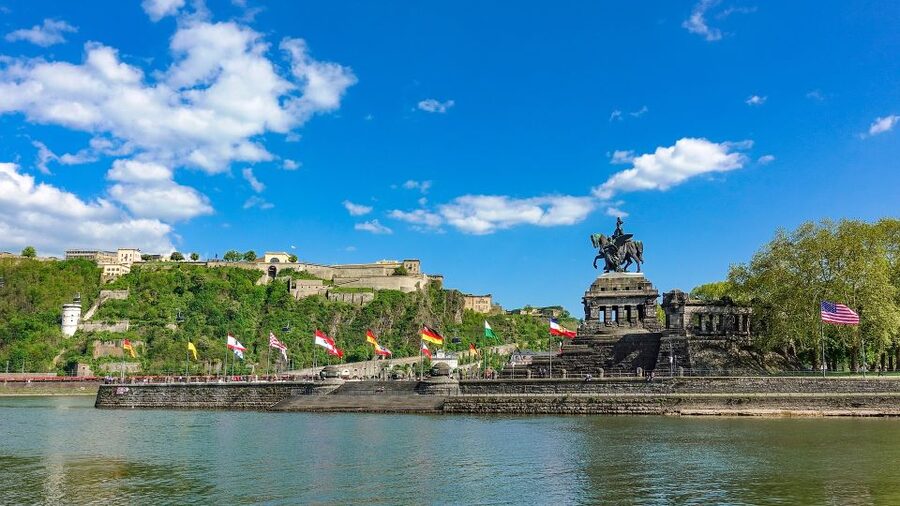
- Deutsches Eck finishes the history lesson: The Kaiser Wilhelm memorial marks the famous meeting point of the Rhine and Moselle.
Why this three-hour route works well
Koblenz can feel spread across several historic areas, especially if you are arriving by cruise ship and have only part of a day. This route solves that problem by linking the fortress above the Rhine with the old town below it, then continuing to the city’s best-known monuments.
You are not signing up for a long day of museums or a distant excursion. Instead, you get a fast but meaningful introduction to Koblenz. The fortress supplies the big views and military story. The old town supplies churches, fountains, squares, and traces of Roman and French rule.
I would think of this as a first look rather than a complete study of Koblenz. Three hours is enough to understand the city’s main story, but not enough to linger at every stop. A private guide helps because explanations can be adjusted to your interests instead of following a fixed group script.
The price is $430 per group of up to 20 people. That is a strong value for a larger family group, wedding party, cruise group, or gathering of friends. For only one or two people, the cost is harder to justify unless private guiding is especially important to you.
More Old Town Walks in Koblenz:
- Koblenz: Old Town Sightseeing Cruise along the Rhine
★ 4.5 · 305 reviews - Koblenz – Old Town including the Deutsches Eck
★ 4.5 · 16 reviews - Koblenz – Old Town with the Ehrenbreitstein Fortress
★ 4.0 · 7 reviews
Beginning above the Rhine at Ehrenbreitstein Fortress
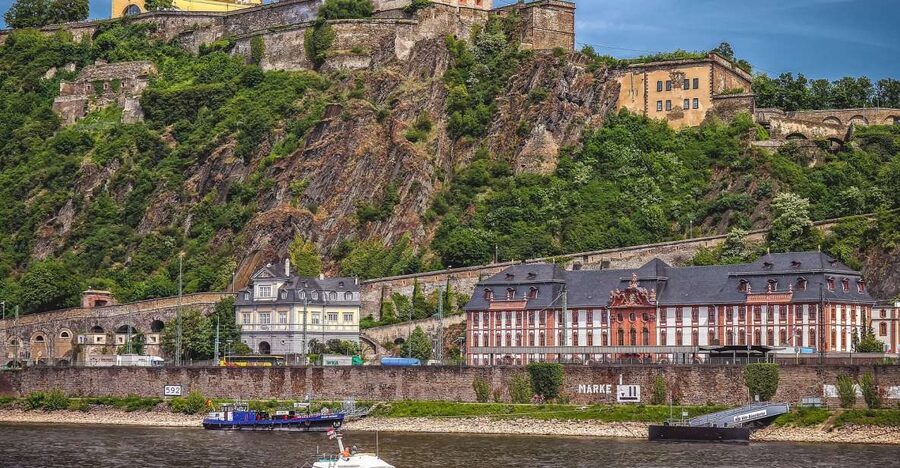
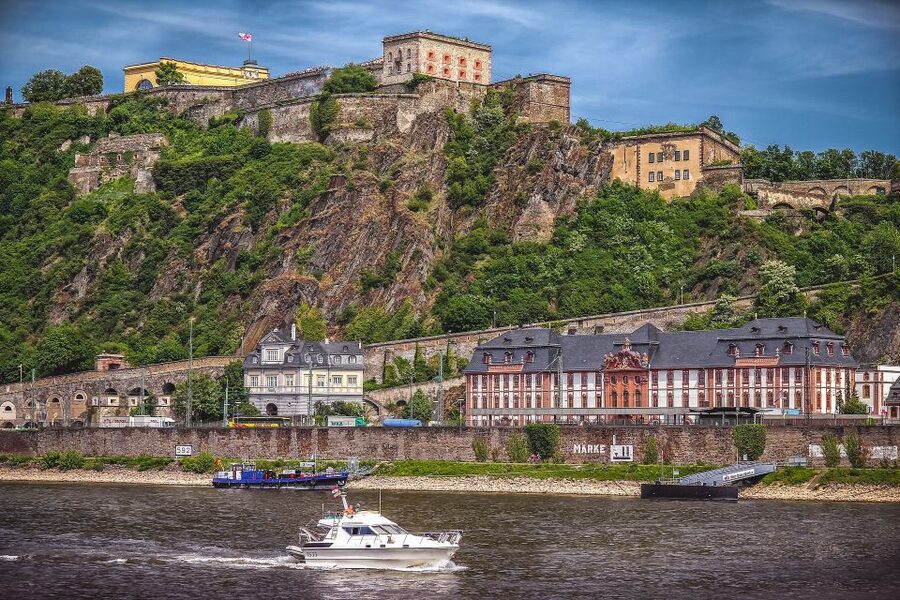
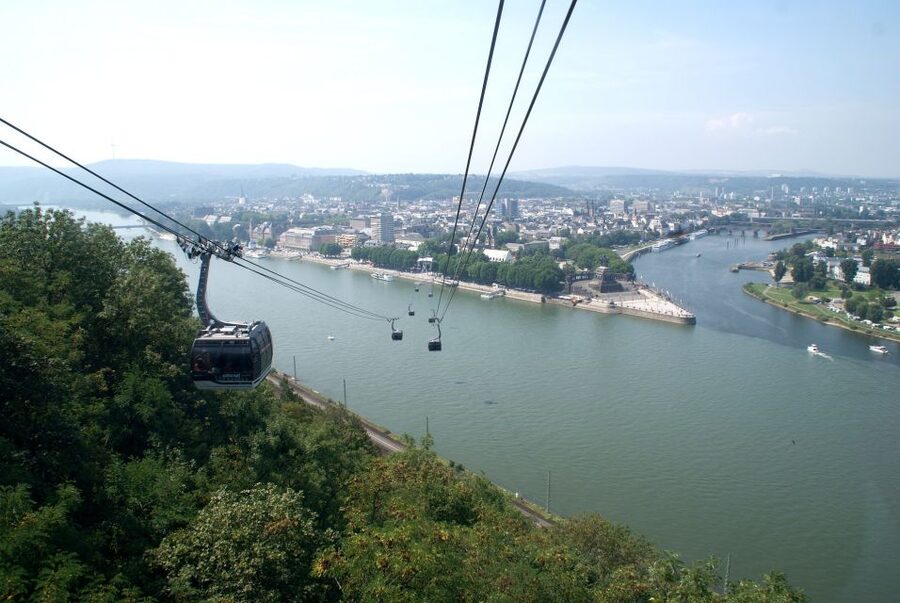
The tour begins at the cable car station on the Koblenz side, with the fortress as the first major stop. Ehrenbreitstein is connected to the city by cable car, and its position is the immediate attraction. At 118 meters above the Rhine, it gives you a high view over the river and the surrounding area before you even begin the old town walk.
The fortress you see today was built between 1817 and 1828 as part of the effort to protect the Middle Rhine region. That date matters. The site is older than the present structure, but much of the fortress visible today belongs to the period after the Napoleonic wars.
The fortification was destroyed by French troops in 1801. The supplied history also connects the ruined fortress with the British poet Lord Byron, who wrote about its shattered walls and the damage caused by war. His poem helped draw attention to the site and contributed to the decision to rebuild it.
That combination of military power and romantic ruin gives Ehrenbreitstein more personality than a simple stone wall. You can look across the Rhine and understand why the position mattered. It controlled views and access along one of Europe’s major rivers, while its later reconstruction reflected a different era of German power and order.
The fortress is Europe’s second-largest fortress, according to the tour information. That is a large claim, and it gives you a sense of scale, but the visit is not presented as a full-day fortress exploration. Your guide concentrates on the important story and the best viewpoints before moving down toward the city.
Admission to Ehrenbreitstein Fortress is not included in the tour price. You should account for that extra cost when comparing this experience with a standard walking tour. The cable car connection is useful, but the information provided does not specify whether the cable car ticket itself is included, so confirm the full arrangement when booking.
Münzplatz and the Roman roots of Koblenz
After the fortress, the route reaches Münzplatz in Koblenz’s old town. This is a good change of mood. You move from a high defensive site to a city square where the story is less about armies and more about trade, government, and daily life.
The name Münzplatz comes from the electoral coin known as Münz. Coins were minted here in the 11th century, giving the square a direct link to medieval administration and money. In 1992, for Koblenz’s 2,000-year anniversary, the city received a fountain designed by Wili Heinzen as a gift from Sparkasse Koblenz.
The deeper connection is Roman. This is where the Romans founded Castellum apud confluentes, meaning a fort at the confluence. The Roman name explains Koblenz itself, since the city sits where the Rhine and Moselle meet.
A guide adds value here because the square does not necessarily announce all of this history on its own. You can admire the buildings and fountain without realizing that you are standing near the beginning of Koblenz’s recorded urban story. This is one of the stops where a short explanation changes the way you see an ordinary-looking public space.
The old town churches and the romantic street
The tour continues along a romantic street between two churches. The route is compact, and that helps you cover a lot without spending the entire afternoon on foot.
The Liebfrauenkirche sits on the highest point in the city. Its onion domes are easy to recognize, and they give the old town a distinctive silhouette. The church was built in the 17th century, destroyed in 1944, and rebuilt in 1955.
That rebuilding date adds an important layer to the visit. Koblenz is not a city where every attractive old building survived untouched. Some of what you see is historic fabric, while some reflects postwar reconstruction. The result can be visually beautiful, but the story is not simple preservation.
The church also served as one of the main parish churches during the French Revolution. That detail helps place Koblenz within the wider political upheaval of the period. Your guide can connect local religious life with the larger changes affecting the city.
The Basilica of St. Castor is the oldest church in Koblenz. The Archbishop of Trier had it built between 817 and 836 with the support of Emperor Louis the Pious. It began as a Carolingian proprietary church, a church under the control of a powerful owner rather than a modern parish structure.
You do not need to memorize those terms to enjoy the stop. The useful point is that St. Castor reaches back more than a thousand years, making it one of the clearest reminders that Koblenz was important long before modern Germany existed.
The church pairing works well. Liebfrauenkirche gives you domes, reconstruction, and French-era context. St. Castor gives you early medieval roots. Together, they show how different periods sit close together in the old town.
Something different for another day:
- Koblenz: Rhine Valley Castles and Palaces Boat Tour
★ 4.4 · 1,824 reviews - Koblenz: 2-Hour Sightseeing Cruise on the Rhine
★ 4.6 · 839 reviews - Koblenz: Panoramic Cruise on Moselle River to Winningen
★ 4.4 · 283 reviews - From Alken: Return Day Trip by Boat to Cochem
★ 4.6 · 141 reviews
Schängel Fountain and Koblenz’s local humor
A good city tour needs a pause from rulers and wars. In Koblenz, that pause comes at the Schängel Fountain near the city hall.
The word Schängel comes from Koblenz’s 20-year allegiance to France, from 1794 to 1813. The fountain was designed by Carl Burger in 1940 and dedicated to the poet Josef Cornelius. It is regarded as a symbol of the city.
This is the sort of stop I value because it offers local identity rather than another grand monument. The story is tied to language, occupation, civic pride, and the way residents see themselves. Your guide may also point out quirky details in this area, which is one of the strongest reasons to choose a private tour instead of relying only on a map.
The provided information does not spell out every feature of the fountain, so do not expect a long standalone attraction. Its importance comes from the explanation around it. Allow your guide to connect the fountain with Koblenz’s French past and the city’s sense of humor.
Deutsches Eck and the Kaiser Wilhelm memorial
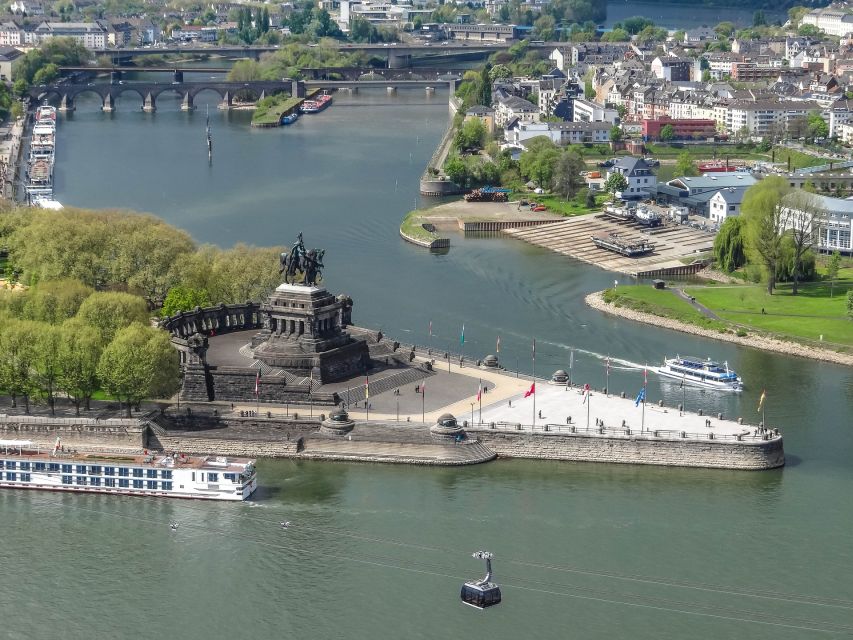
The final major stop is Deutsches Eck, the famous headland in Koblenz. The name refers to the meeting point at the Rhine, and it is one of the city’s most recognizable places.
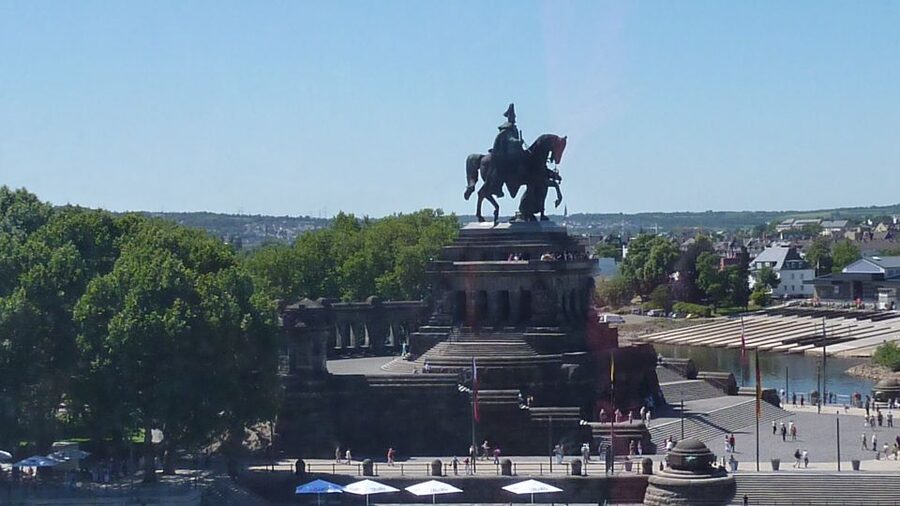
The Kaiser Wilhelm memorial was erected in 1897 for Kaiser Wilhelm I, the first German Emperor. It is a grand, political monument, and it brings the tour’s history into the era of German unification and imperial ambition.
This is a fitting endpoint because the tour has already moved through Roman beginnings, medieval coin minting, French rule, religious history, war damage, and reconstruction. At Deutsches Eck, the story becomes explicitly national. The broad riverside setting also gives you another open view after the fortress, though from a very different angle.
The tour ends back at the meeting point. Since the route begins at the Koblenz cable car station, ask your guide how the return works if you are using hotel or cruise pickup. The experience information lists pickup at a cruise docking location or centrally located hotel, but the formal start and end point is the cable car station.
What the private guide adds
The best reason to book this tour is not simply the list of sights. You can find the churches, squares, fortress, and memorial on a map. The guide supplies the connections.
A private guide can explain why Koblenz has Roman, French, German, religious, and military layers all in one short route. You can ask about the fortress, the city’s name, the rebuilt churches, or the meaning of Schängel without waiting for a large group to move along.
One guide was praised for being highly informative, taking the group to historically important places as well as unusual local attractions, and adding extra detail during the fortress visit. That is exactly the kind of guiding that helps on a short tour. You want clear context, not a flood of dates with no reason to care.
The private format also matters for families and mixed-age groups. If someone wants more time at the fortress, or if the church history is less interesting to part of your group, the guide can adjust the emphasis. The listed maximum is 20 people, so private does not necessarily mean tiny. A group of 20 will still feel different from a one-on-one walk, but the guide is reserved for your party.
Languages are English, German, and Italian. If several people in your group have different language needs, confirm the language arrangement before paying.
Timing, access, and practical limits
Three hours is a sensible length for a first introduction to Koblenz. You get the fortress and central old town without committing to a full day. It should also fit neatly into a cruise stop or a short city stay, provided the starting time matches your schedule.
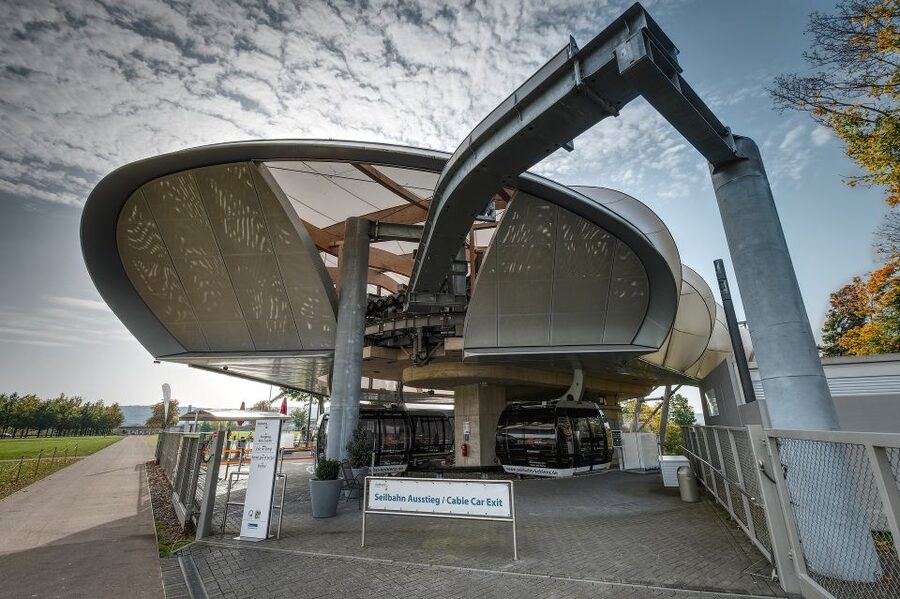
The meeting point is the cable car station on the Koblenz side. Pickup is also listed at a cruise docking location or centrally located hotel. Because both details appear in the arrangements, clarify the exact meeting instructions and transport plan before the day of the tour.
The activity is listed as wheelchair accessible. That is useful, but the route includes a fortress, a cable car connection, historic streets, churches, and public squares. Accessibility can vary from one part of the route to another, so ask for practical details about surfaces, slopes, and access to the fortress before booking if someone in your group uses a wheelchair.
Entrance fees for Ehrenbreitstein Fortress are not included. The tour also has free cancellation up to 24 hours before the start and allows you to reserve now and pay later. Those policies make it easier to fit the tour into a changing cruise or weekend plan, but they do not change the basic need to budget for admission.
Who gets the best value from this tour
I would recommend this experience most strongly to a group that wants private attention and has limited time in Koblenz. A family group can see the major sights without organizing the history alone. A cruise group can cover the fortress and old town in one efficient block. Friends sharing the $430 cost may find the per-person price reasonable.
It also suits you if you like history presented through places rather than through a museum collection. The route moves from a fortress wall to a Roman foundation, from churches to a civic fountain, and finally to a national memorial. You keep walking, looking, and asking questions.
I would hesitate if you are traveling alone or as a couple and mainly want a low-cost stroll. The group price is the central drawback. I would also hesitate if you want long interior visits, lots of free time for photographs, or a specialist military history tour. The three-hour schedule favors breadth.
The overall rating is 4.8 from four reviews, which is a very small sample. Still, the strongest praise centers on the guide’s clear explanations, historical detail, attention to the group, and ability to include quirky attractions. Those are the qualities that matter most on a private city tour.
Should you book the Koblenz fortress and old town tour?
Book it if you are splitting the cost with a group, arriving by cruise, or want a guide to make sense of Koblenz’s many historical layers in a short time. The combination of Ehrenbreitstein’s Rhine views, Münzplatz’s Roman origins, two major churches, the Schängel Fountain, and Deutsches Eck gives you a well-chosen introduction.
Skip it if the $430 group rate feels too high for your party or if you prefer to explore independently. In that case, you can still visit the public sights on your own, but you will miss the private explanations that connect them.
Before booking, confirm the starting arrangement, the fortress entrance cost, and the cable car details. If those fit your plans, this is a practical and history-filled way to get your bearings in Koblenz without wasting half a day finding the city’s highlights on your own.
FAQ
How long is the Koblenz old town and fortress tour?
The tour lasts three hours.
What is the price of the private tour?
The price is $430 per group of up to 20 people.
Is the tour private?
Yes. The guide is exclusively with your private group.
Where does the tour start?
The listed meeting point is the cable car station on the Koblenz side.
Where does the tour end?
The activity ends back at the meeting point.
Is Ehrenbreitstein Fortress admission included?
No. Entrance fees for Ehrenbreitstein Fortress are not included.
Which languages are available?
The live tour guide is available in English, German, and Italian.
Is hotel or cruise pickup available?
Pickup is listed at your cruise docking location or at a centrally located hotel.
Is the activity wheelchair accessible?
Yes, the activity is listed as wheelchair accessible.
Can I cancel for a full refund?
Yes. You can cancel up to 24 hours in advance for a full refund.
Can I reserve now and pay later?
Yes. The tour allows you to reserve your place and pay later.
Just added around Koblenz
- e-Scavenger hunt Paderborn: Explore the city at your own pace★ 5.0 · 4 reviews
- Evening-Cruise to the fireworks of the Cochemer Winefest.★ 4.5 · 4 reviews
- Koblenz: Private pub crawl with insider guide & free shots★ 5.0 · 5 reviews
- Bielefeld Scavenger Hunt and Private Sights Self-Guided Tour★ 4.0 · 5 reviews
- Private scavenger hunt around Broich Castle in Mülheim an der Ruhr★ 5.0 · 5 reviews
- Private audio book city rally around the old town of Essen Kettwig★ 4.0 · 6 reviews
- Koblenz – Old Town with the Ehrenbreitstein Fortress★ 4.0 · 7 reviews
- Koblenz Guided tour of the Ehrenbreitstein Fortress★ 4.5 · 7 reviews
Old Town Walks, compared.
Old Town & Viktualienmarkt City Walk in German
Read our review →

The Night Watchman Old Town Walking Tour in German
Read our review →
Browse the lists this tour appears in