
Reviewed · WALKING TOURS
Charité Hospital Walking Tour: Exploring Berlin’s Medical History
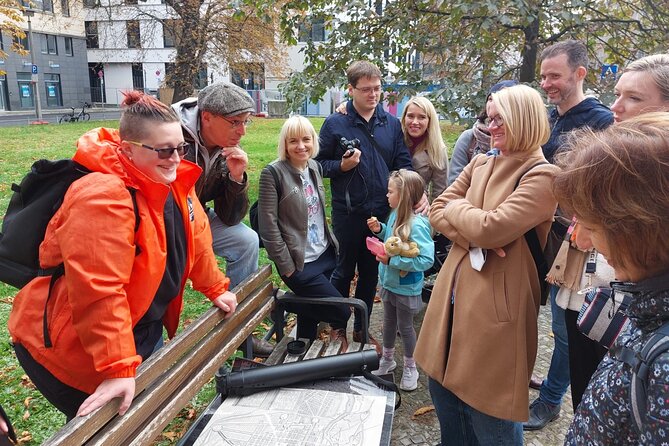
Medical history gets personal here. This small-group walk around Charité Hospital links Nobel-winning science, wartime choices, and Cold War escape stories across central Berlin. I like the strong storytelling and the compact two-hour format, which gives you real context without taking half a day. I also like that the group is limited to 15 people, so questions should be easier to ask.
The main drawback is that you do not enter buildings where clinical or university work takes place. The tour is mostly outdoors, and it requires good weather, so bring suitable clothing and keep that limitation in mind before booking.
In This Review
- Key points to know before you go
- Why Charité makes an unusual Berlin walking tour
- Robert Koch-Platz and the beginning of modern medical science
- The Tieranatomisches Theater and medicine before modern science
- Rudolf Virchow and the social side of medicine
- Albrecht von Graefe and the rise of specialist medicine
- Charité Campus Mitte and medicine under dictatorship
- Humboldthafen and the Cold War escape stories
- Group size, timing, and the outdoor format
- Who will get the most from this Charité tour?
- Should you book it?
- FAQ
- How long is the Charité Hospital Walking Tour?
- Where does the tour begin?
- Where does the tour end?
- Is the tour offered in English?
- Does the tour include entry into Charité buildings?
- What happens if bad weather cancels the tour?
Key points to know before you go
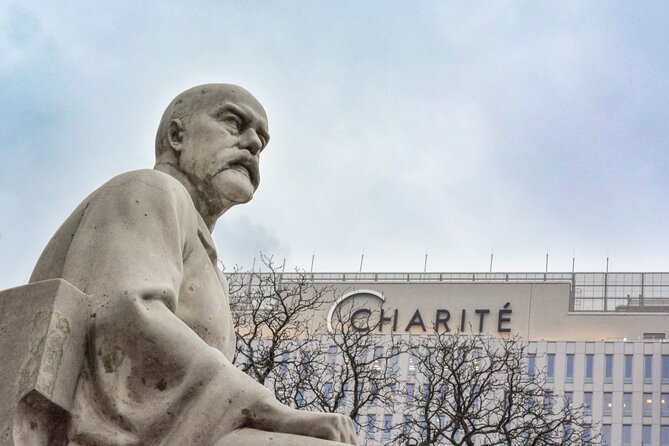
- Robert Koch’s monument opens the story: You begin with the scientist linked to tuberculosis, anthrax, and cholera research, along with an early pharmaceutical scandal.
- The tour covers six stops in about two hours: Each stop receives roughly 20 minutes, making this a good choice for a busy Berlin schedule.
- The Tieranatomisches Theater is a rare architectural stop: This 18th-century neoclassical building is Berlin’s oldest surviving academic building.
- Charité’s past is not presented as a simple success story: You hear about medical abuse under the Third Reich as well as doctors who continued treating people without discrimination.
- The final stop adds Cold War history: By the Humboldthafen canal, you learn about East Berliners who tried to swim to the West.
- The price buys interpretation, not interior access: At about $30.12 per person, the value rests on the guide’s stories, historical links, and small group rather than paid admissions.
Why Charité makes an unusual Berlin walking tour
Berlin offers plenty of walks about kings, walls, spies, and war. This one takes a different route through the city’s medical past. Charité Hospital, founded in the 18th century, is presented not just as a place of treatment, but as a setting where science, politics, ethics, and everyday life collided.
I like that the tour does not stay inside one narrow subject. You move from disease research to veterinary medicine, pathology, eye surgery, Nazi-era abuses, socialist-era hospital life, and attempted escapes across the Berlin canal. That range gives you a clearer idea of how hospitals are shaped by the societies around them.
The experience is also short by walking-tour standards. With about two hours and six stops, you get a focused introduction rather than an all-day academic lecture. If you have a packed Berlin itinerary, this can fit neatly between visits to nearby museums, the central station, or other sights around Mitte.
The tour is offered in English, uses a mobile ticket, and includes a guide and all fees and taxes. Since there are no admission charges at the listed stops, your payment mainly covers the guide’s time and interpretation. At $30.12, I consider that fair if you enjoy historical storytelling. It is less compelling if you want to tour hospital interiors or spend long periods inside museums.
More Historical Tours in Berlin
- Berlin: Natural History Museum Entrance Ticket
★ 4.6 · 3,382 reviews - Berlin: World Heritage Cruise to Potsdam
★ 4.5 · 1,435 reviews - Berlin Historical Highlights Walking Tour
★ 4.9 · 657 reviews
Robert Koch-Platz and the beginning of modern medical science
The walk starts at Robert-Koch-Platz, where the Robert Koch monument provides the first major story. You learn why Charité was established in the 18th century and how the hospital grew into one of Berlin’s key medical institutions.
Robert Koch is a useful figure for setting the tone. He won the Nobel Prize and is linked here to identifying the causes of tuberculosis, anthrax, and cholera. Those discoveries changed how doctors understood infectious disease. Instead of treating illness as a vague or mysterious force, scientists could begin connecting specific diseases to specific causes.
The story also includes what is described as the first pharmaceutical scandal in medical history. That detail helps keep the tour from turning Koch into a flawless hero. Scientific progress can save lives, but it can also raise questions about money, testing, responsibility, and public trust.
You spend about 20 minutes at this stop, and admission is free. Expect to look at the monument and surrounding area rather than enter a museum. The value comes from the guide’s explanation of why the hospital was founded and why Koch matters.
This is a strong starting point because it gives you a timeline. You are not simply shown a statue and handed a date. You begin to see Charité as a working institution shaped by changing ideas about disease and treatment.
The Tieranatomisches Theater and medicine before modern science
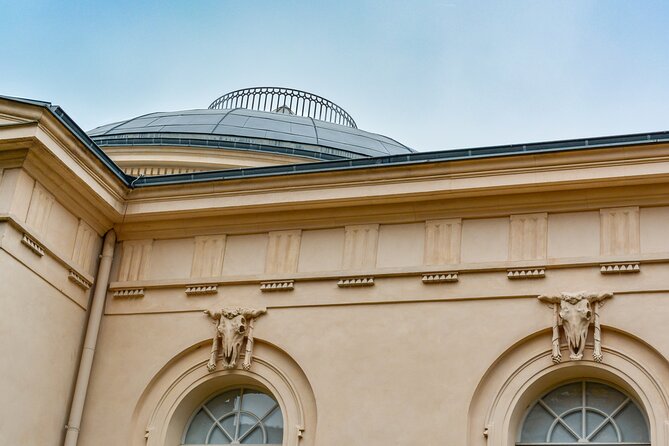
The next stop, the Tieranatomisches Theater, offers a change of pace. This 18th-century neoclassical building is Berlin’s oldest surviving academic building, and its original purpose connects medicine with veterinary study.
The name refers to animal anatomy, and the building was used by veterinarians studying disease in animals. That makes it an especially useful stop for understanding how doctors and researchers worked before modern laboratory science became established.
You hear stories about how diseases were treated before the arrival of modern scientific methods. The contrast is the point. Earlier medical treatment often relied on limited evidence, inherited beliefs, and observation without a full understanding of how infection or disease worked.
The building itself adds visual interest. Its neoclassical design gives you something concrete to look at while the guide explains the ideas once taught there. Since the tour does not include interior visits to buildings where clinical or university operations take place, you should not expect a full architectural tour inside.
Still, this stop helps break up the monuments and outdoor paths. You get a building, a medical subject, and a reminder that science developed through slow, uncertain steps. I find that useful because it gives human scale to the history. Doctors did not begin with modern tools. They had to build knowledge over time, often through mistakes.
Rudolf Virchow and the social side of medicine
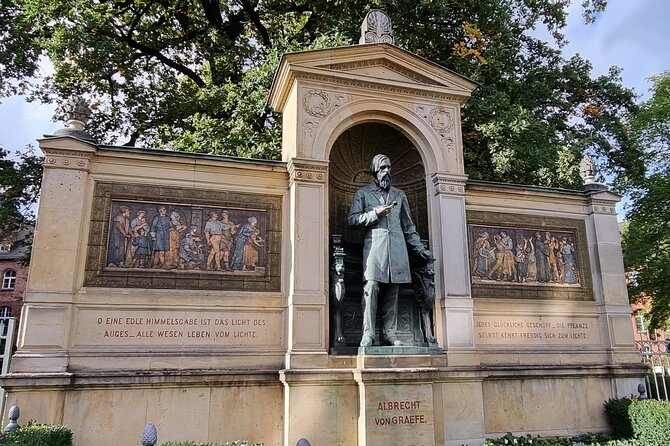
At the monument to Rudolf Virchow, the tour turns toward pathology and public health. Virchow is presented as the father of modern pathology and the founder of social medicine.
Pathology focuses on the causes and effects of disease in the body. Social medicine widens the frame by asking how living conditions, poverty, public policy, and society affect health. That combination is important. It shows that medical history is not only about laboratory breakthroughs or famous surgeons.
This stop may appeal most to you if you want ideas rather than a list of dates. The guide’s job here is to connect Virchow’s scientific work with his belief that health cannot be separated from society. The subject also gives the tour a bridge between individual treatment and wider public responsibility.
Again, the stop lasts about 20 minutes. You are looking at the monument and listening, so comfortable shoes matter more than museum-style preparation. The route is designed as a walk through the Charité area, not as a sequence of indoor exhibitions.
I like this section because it broadens the meaning of medical progress. A hospital can discover new treatments, but it also has to confront the conditions that make people sick. That is a more useful lesson than simply memorizing the names of prominent doctors.
More Walking Tours in Berlin
- Discover Berlin Half-Day Walking Tour
★ 5.0 · 9,624 reviews - Berlin: Third Reich and Cold War 2 Hour Walking Tour
★ 4.9 · 6,830 reviews - Berlin: Discover Berlin Walking Tour
★ 4.9 · 5,998 reviews - Berlin’s Best: 2 Hour Walking Tour Third Reich and the Cold War
★ 5.0 · 5,486 reviews
Albrecht von Graefe and the rise of specialist medicine
The monument to Albrecht von Graefe introduces another branch of medical history. Von Graefe was a groundbreaking ophthalmologist, and his monument was the first in Berlin dedicated to a scientist.
That detail gives the stop two layers. First, you hear about the development of eye medicine. Second, you learn how Berlin chose to honor scientific work in public space. A monument is never only about the person shown. It also reveals what a city considers worthy of recognition.
The 20-minute stop should suit anyone curious about how medical specialties developed. Ophthalmology is a clear example of medicine becoming more focused and technical. Instead of treating the body as one undifferentiated problem, doctors developed specialized knowledge for particular organs and conditions.
This is also a good place to notice the tour’s structure. Each stop deals with a different figure or setting, but the guide keeps returning to the larger question of how medicine changed. Koch represents infectious disease research. Virchow represents pathology and social medicine. Von Graefe represents specialist care.
The limitation remains the same: the monument is the focus, not an interior collection of medical instruments or treatment rooms. If you want that sort of visit, you will need a separate museum or hospital experience.
Charité Campus Mitte and medicine under dictatorship
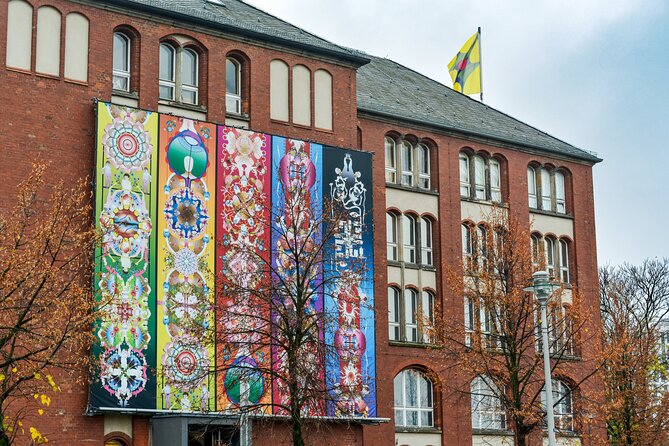
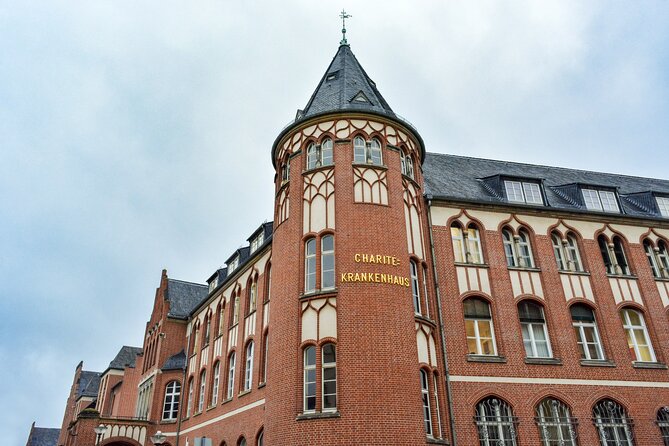
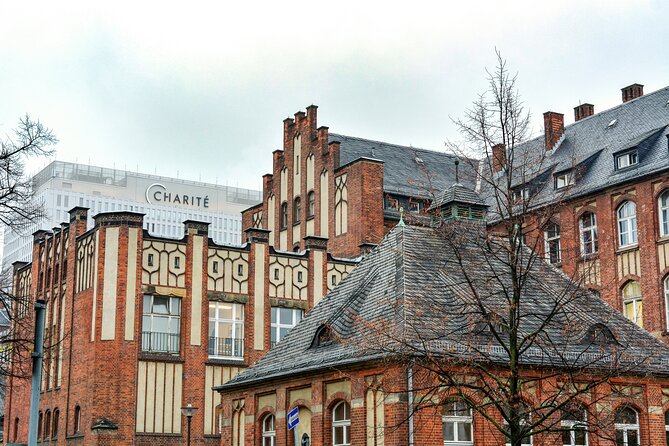
The Charité Campus Mitte is likely to be the emotional center of the walk. The campus has beautiful neogothic red-brick buildings, but the stories connected to it are far from decorative.
Here you learn how some doctors abused medicine during the Third Reich. You also hear about doctors who treated everyone without discrimination until the final days of the Second World War. Placing those stories together matters. It shows that institutions are made up of individuals who can make very different choices under pressure.
This part requires a serious tone. The subject is not presented as a simple tale of heroic progress. Medical authority can be used to heal, but it can also be twisted by ideology and state power. The campus becomes a place where professional ethics, personal courage, and institutional failure can be discussed together.
I appreciate that the tour includes both wrongdoing and resistance. Focusing only on abuse would make the history incomplete. Focusing only on brave doctors would make it dishonest. The contrast gives you a sharper understanding of what medical responsibility can mean during political crisis.
You should also remember that the tour does not take you through active clinical or university buildings. You view the campus from the permitted outdoor areas and listen to the guide’s account. For many people, that is enough to make the stop meaningful, but anyone expecting an inside look should adjust expectations.
Humboldthafen and the Cold War escape stories
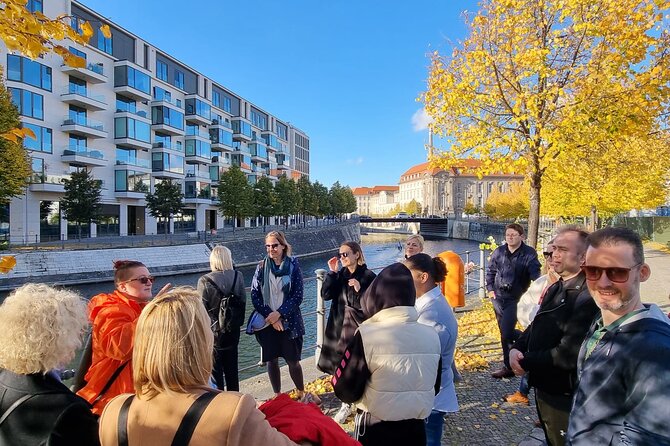
The final stop is near Design Offices Berlin Humboldthafen, by the canal a short walk from Berlin Central Station. Here the subject shifts from Nazi Germany to the socialist era and the years after the Berlin Wall fell.
You hear about several East Berliners who tried to escape to the West by swimming across the city canal just outside the Charité campus. That is a striking detail because it places Cold War history in an ordinary urban setting. The canal is not treated as a distant border on a map. It becomes part of the hospital’s immediate surroundings.
The stop also covers life at the hospital during the socialist period and after reunification. That wider time frame helps you see Charité as a continuing institution rather than a place frozen in the past.
The walk ends on Alexanderufer, by the Humboldthafen canal. From there, Berlin Central Station is about a 10-minute walk away. That makes the ending practical if you are catching a train or continuing around Mitte.
The final section gives the tour a strong human finish. You move from famous scientists and medical institutions to people who risked their lives trying to cross a canal. It reminds you that history is often closest at street level.
Group size, timing, and the outdoor format
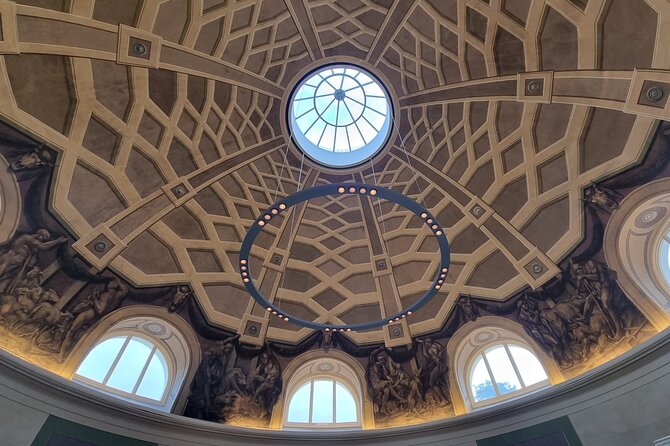
The maximum group size is 15 people. That is small enough to make the guide easier to hear and gives you a better chance to ask questions than on a large city walk. The exact feel will still depend on the group and guide, but the limit is a real advantage for a story-heavy tour.
Each stop is planned for about 20 minutes, though actual timing can vary. The route covers six stops in roughly two hours, so you should expect a steady walk with regular pauses. Wear comfortable shoes and plan for outdoor conditions.
The experience requires good weather. If poor weather forces a cancellation, you are offered another date or a full refund. You can also cancel for a full refund up to 24 hours before the start time. Changes or cancellations inside that 24-hour window are not accepted.
The meeting point is Robert-Koch-Platz, 10115 Berlin. The finish is Alexanderufer, 10117 Berlin, near the canal. The tour is close to public transportation, and service animals are allowed. Most people can participate, but the supplied information does not give a precise route length or detailed mobility assessment, so you may want to confirm route conditions if that matters for you.
Who will get the most from this Charité tour?
I would choose this walk if you like Berlin’s less obvious stories, especially the connection between science and politics. It is a good fit for adults, students, history fans, and anyone who wants more than the usual Wall and palace circuit.
It also suits visitors with limited time. Two hours is enough to build a clear picture of Charité without giving up an entire morning or afternoon. Ending near Berlin Central Station adds useful flexibility to your day.
You may enjoy it less if you want a hands-on medical museum, access to hospital interiors, or a tour focused only on architecture. This is an interpretive outdoor walk. The guide’s stories are the main attraction.
The perfect 5 rating from 26 submitted ratings, along with a 100 percent recommendation rate, fits the experience’s strongest feature: the guide-led storytelling. One written comment praised the look at medical history and current issues, along with the leader’s strong storytelling. That is exactly where this tour earns its price. You are paying for connections and context, not admission tickets.
Should you book it?
Book the Charité Hospital Walking Tour if you want a thoughtful, compact look at Berlin through medicine. The route covers Robert Koch, Rudolf Virchow, Albrecht von Graefe, veterinary science, Nazi-era ethics, socialist hospital life, and Cold War escape attempts in one well-shaped walk.
At $30.12, the cost is reasonable for a small group capped at 15 people, especially if the guide brings the same clear storytelling praised in the available feedback. Just remember that the tour stays outdoors and does not include active hospital or university interiors.
If the weather forecast is poor, wait or keep your schedule flexible. If you are drawn to overlooked parts of Berlin and want history with real human consequences, this is a smart two-hour choice.
FAQ
How long is the Charité Hospital Walking Tour?
The tour lasts approximately two hours. It includes six stops, with about 20 minutes planned at each location.
Where does the tour begin?
The tour begins at Robert-Koch-Platz, 10115 Berlin, Germany.
Where does the tour end?
The tour ends at Alexanderufer, 10117 Berlin, by the Humboldthafen canal. Berlin Central Station is about a 10-minute walk from the ending point.
Is the tour offered in English?
Yes. The experience is offered in English and uses a mobile ticket.
Does the tour include entry into Charité buildings?
No. The tour does not include visits to buildings where clinical or university operations take place. The listed stops have no admission charge.
What happens if bad weather cancels the tour?
If the experience is canceled because of poor weather, you can choose another date or receive a full refund. You can also cancel up to 24 hours before the start time for a full refund.
Just added around Berlin
- Berlin: Private Guided Tour of the Main Sights★ 5.0 · 13 reviews
- Private Highlights of Berlin Bike Tour★ 5.0 · 13 reviews
- Modern Berlin Private Walking Tour: Diverse, Vibrant and Exciting German Capital★ 5.0 · 13 reviews
- Tour in Berlin from Warnemünde and Rostock Cruise Port★ 4.1 · 13 reviews
- Berlin: Stasi Museum Private Guided Tour with Entry Ticket★ 4.8 · 13 reviews
- Private Food Tour Experience with a born and bred Berliner★ 5.0 · 14 reviews
- Berlin: Rheinsberg Palace Entrance Ticket★ 4.8 · 14 reviews
- Berlin in one day – day tour with an expert guide★ 5.0 · 14 reviews
Walking Tours, compared.



Berlin’s Best: 2 Hour Walking Tour Third Reich and the Cold War
Read our review →
Third Reich Berlin: Hitler and WWII Walking Tour
Read our review →Browse the lists this tour appears in