
Reviewed · WALKING TOURS
Braunschweig: Private City Walking Tour with Certified Guide
Old stones tell Braunschweig’s story. This private walk links the city’s medieval squares, ducal landmarks, half-timbered houses, and modern art with a certified local guide. I like the private format, which lets your group ask questions and request a preferred starting point. I also like the compact 1.5-kilometer route, a useful way to see major sights without giving up half a day.
The main consideration is language: the live tour is offered in German. You should also expect a brisk visit rather than long interior stops, since the experience lasts only 90 minutes and follows a full central-city route.
In This Review
- Key details before you book
- Why a short private walk works well in Braunschweig
- Burgplatz and the Brunswick Lion
- Town Hall and the former ducal palace
- Magniviertel and the Happy Rizzi House
- Kohlmarkt and the old trade routes
- Altstadtmarkt and Braunschweig’s Hanseatic past
- What the private format is really worth
- Walking comfort, timing, and access
- What the feedback suggests about the guiding
- Who should book this walk?
- Should you book the Braunschweig city walk?
- FAQ
- How long does the Braunschweig walking tour last?
- How far do you walk?
- How much does the private tour cost?
- What language is the tour offered in?
- Is the tour private?
- Is the route wheelchair accessible?
- Where does the tour end?
- What should I bring?
- Can I cancel the booking?
Key details before you book
- Burgplatz begins the story: See the Brunswick Lion, the cathedral, and historic buildings around one of the city’s most important squares.
- A private group of up to 25: Your party gets a dedicated guide, with room for questions and some flexibility in the meeting point.
- The route covers several distinct quarters: You move from Burgplatz to Magniviertel, Kohlmarkt, and the Old Town.
- The Happy Rizzi House adds a sharp modern contrast: Its colorful design breaks up the sequence of medieval and early modern buildings.
- Hanseatic trade shapes the Old Town section: Altstadtmarkt, St. Martin’s Church, and the Cloth Hall reveal Braunschweig’s commercial past.
- Plan for an easy but steady walk: Comfortable shoes are sensible, and the tour runs in rain or shine.
Why a short private walk works well in Braunschweig
Braunschweig is a city best understood by connecting places. A cathedral alone tells you little about the city’s political power. A market square alone does not explain its trading role. This walk ties those pieces together, moving through the old center with a guide who can explain how churches, merchants, rulers, craftspeople, and modern artists share the same streets.
I like the private setup for this reason. You are not simply following a flag through a crowd. Your group can ask for clarification, spend a little more time at a favorite stop, or arrange to begin where it suits your plans. The group limit of 25 is generous, so this is not automatically an intimate tour for a couple or a small family, but it gives you a more personal structure than a standard public walk.
The tour’s 90-minute length is another strength and a limitation. It is long enough to cover the main central sights, yet short enough to fit before lunch, after arriving by train, or between other plans. At the same time, you will not have time for extended museum visits or a detailed look inside every church. Think of it as an intelligent orientation walk, not a full-day study of Braunschweig.
More Walking Tours in Goslar:
- Quedlinburg: Guided City Highlights Walking Tour
★ 4.5 · 353 reviews - Quedlinburg: Historical Old Town Evening Walking Tour
★ 4.5 · 148 reviews - Braunschweig: Guided Walking Tour with Food Tastings
★ 4.8 · 68 reviews
Burgplatz and the Brunswick Lion
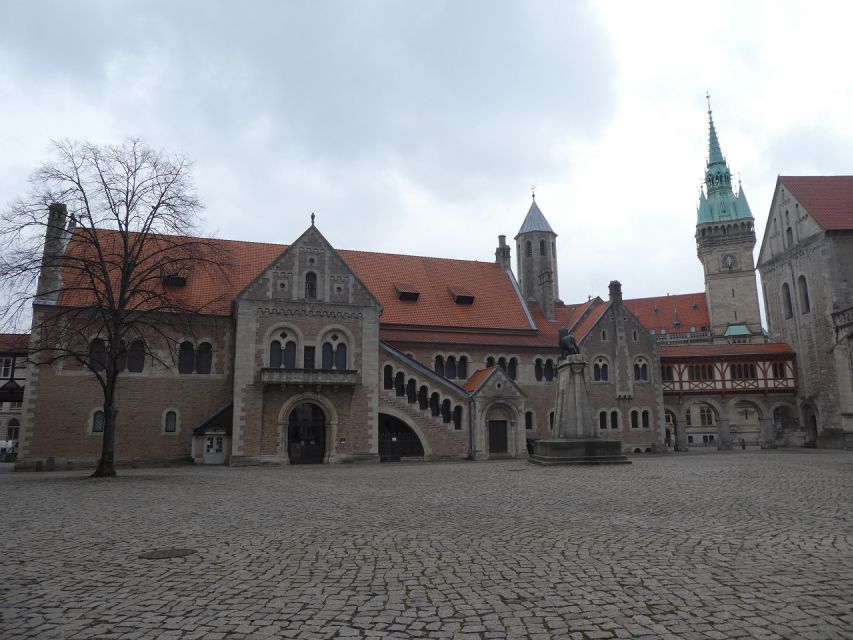
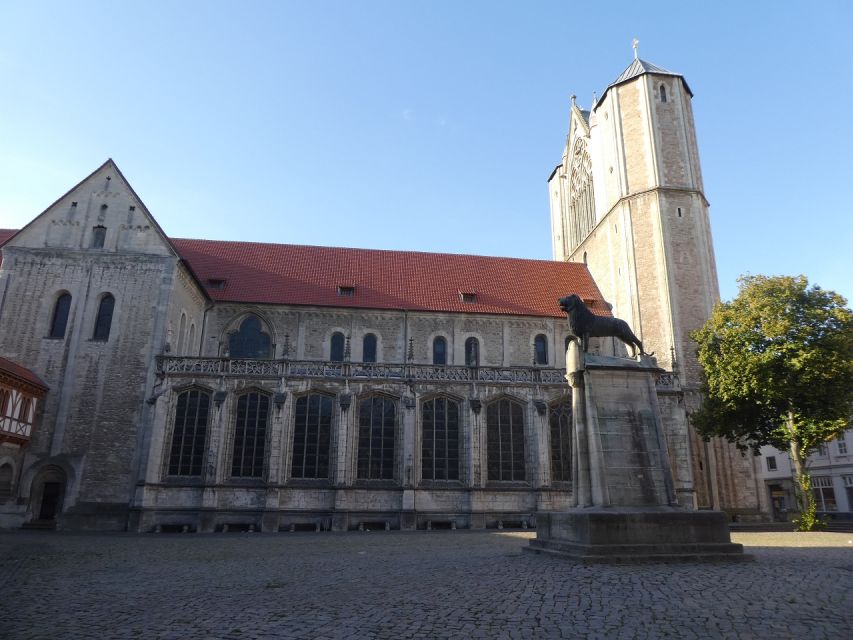
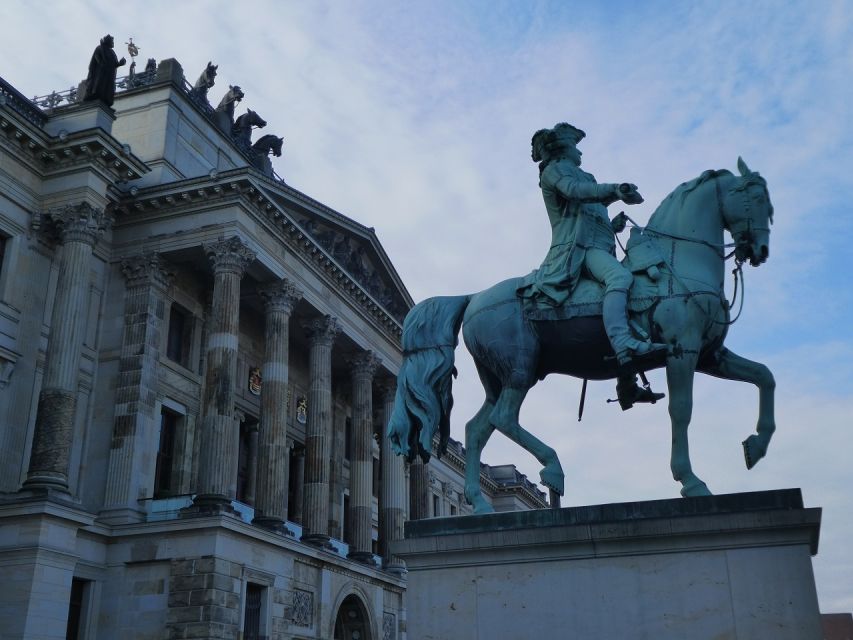
The walk begins at Burgplatz, the natural place to introduce Braunschweig. This square gathers several of the city’s most recognizable symbols in one view, including the cathedral and the Brunswick Lion.
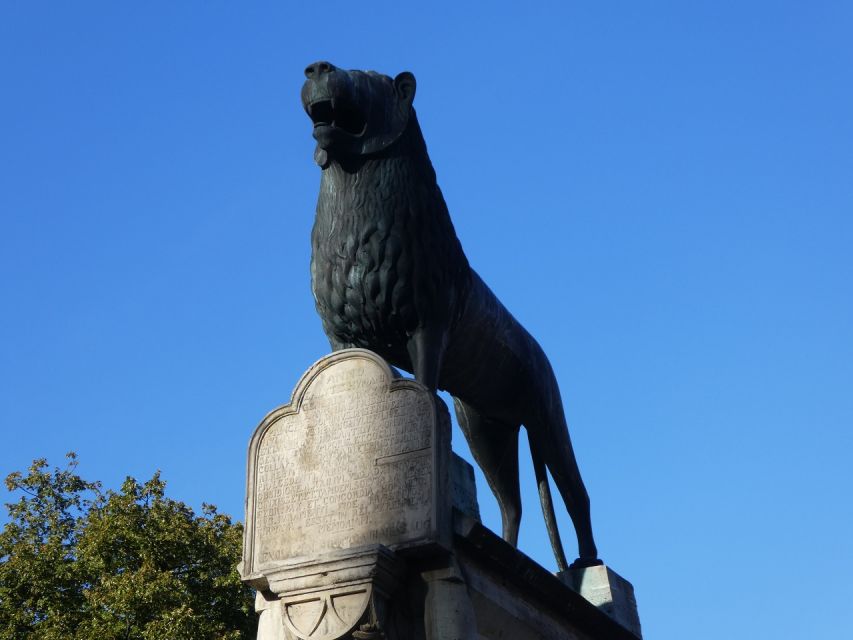
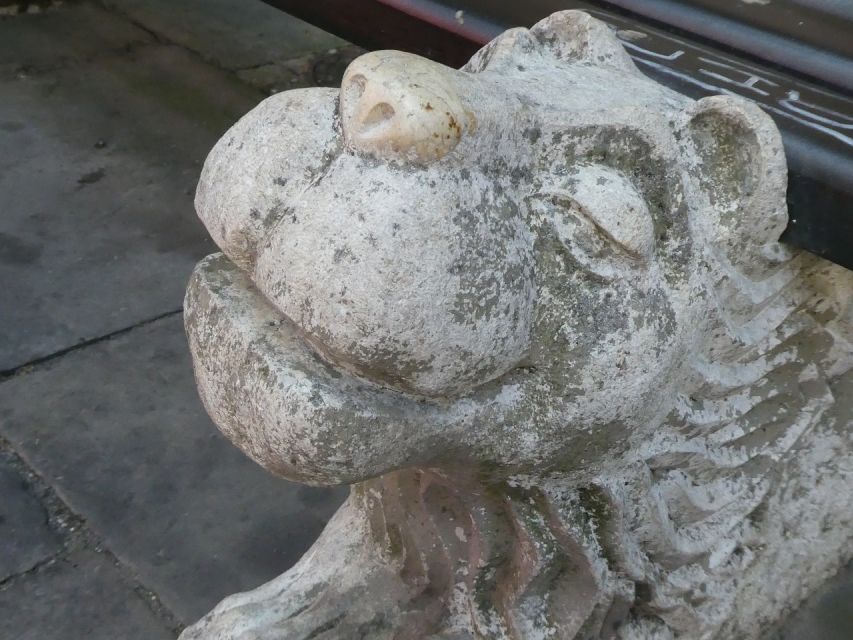
The lion statue is especially important because it represents Braunschweig itself. It gives the square a clear focal point, while the surrounding buildings show how power and religion shaped the city center. Your guide can provide the historical links that are easy to miss when you walk through alone.
The cathedral adds a different layer. It is not simply an old church placed beside a statue. Together, the cathedral, the lion, and the former ducal surroundings point to the city’s long connection with ruling families and public authority. The value of having a guide here is context. You can look at the buildings yourself, but the story behind their arrangement makes the square more memorable.
The tour also points out half-timbered buildings connected with the Chamber of Crafts. These houses bring a more everyday architectural note to the square. Their timber frames and older construction methods contrast with the larger civic and religious buildings nearby.
Give yourself a few minutes before the official start to take in the whole square. The guide waits up to 30 minutes, but you should arrive five minutes early. Look for a guide wearing a backpack with an LED display marked Get Your Guide and Braunschweig.
Town Hall and the former ducal palace
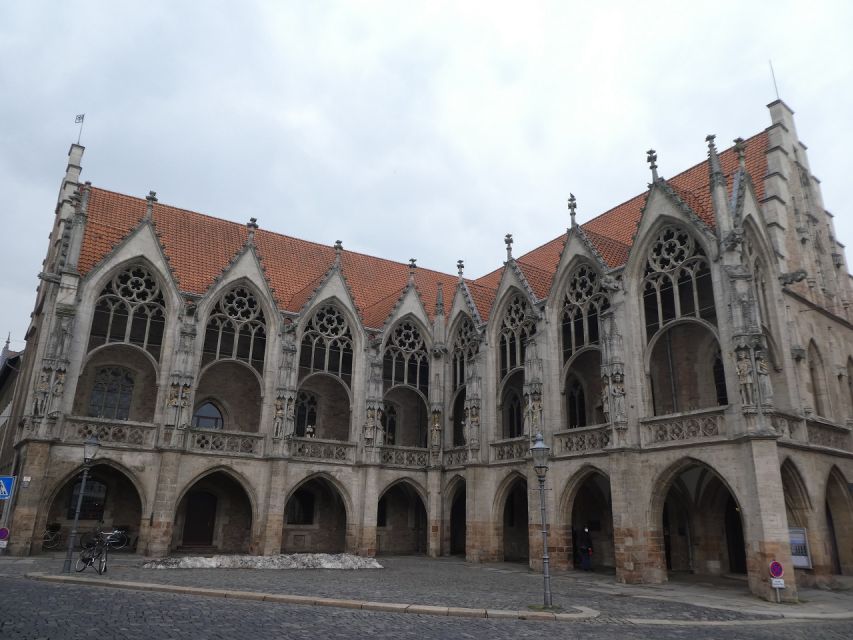
From Burgplatz, the route continues toward the Town Hall and the former ducal palace. This section broadens the story from medieval religion and civic identity to government and court life.
The Town Hall helps explain how the city organized public business. The former ducal palace, meanwhile, represents the ruling side of Braunschweig’s past. You get a useful contrast between the institutions that managed city affairs and the residence associated with the dukes.
The tour does not promise extended access to interiors, so you should expect to view these places from the streets and hear the explanation outdoors. That is both practical and limiting. A walking guide can show you how these sites fit into the city, but visitors hoping for long indoor visits should plan separate stops.
This is also where the certified guide matters most. Architectural details can blur together when you see several old buildings in a row. A good explanation gives each one a role, so you leave with a basic map of who lived, worshipped, traded, and governed in central Braunschweig.
Magniviertel and the Happy Rizzi House
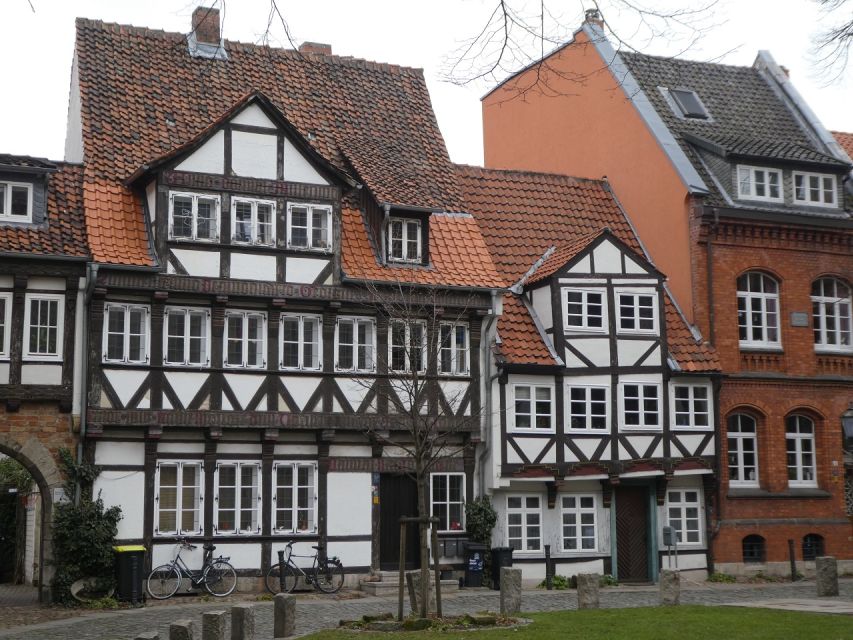
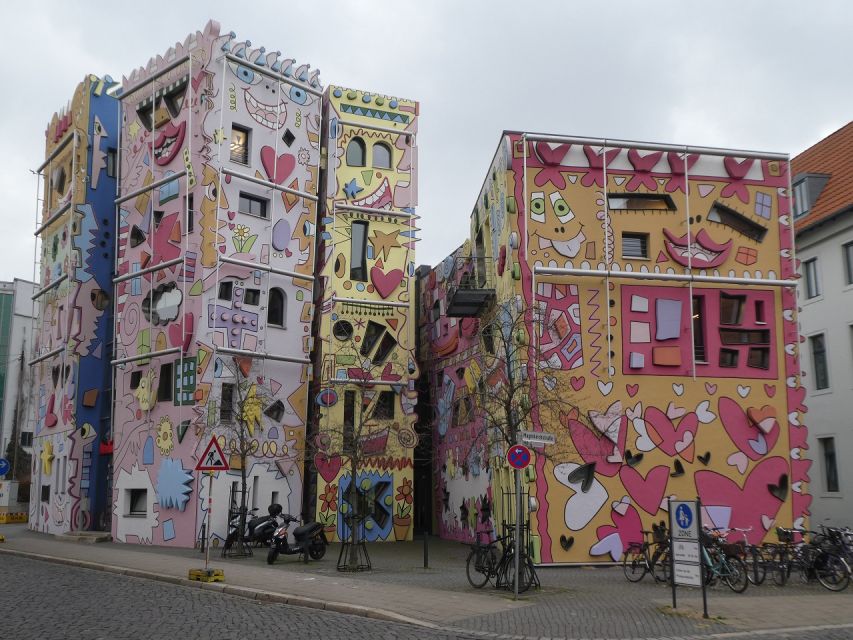
The route then reaches Magniviertel, one of the most visually varied parts of the walk. Here, half-timbered houses create a traditional German townscape, while the Happy Rizzi House offers a sudden burst of contemporary color.
I like this pairing because it keeps the walk from becoming a procession of similar old façades. The historic houses show the scale and texture of earlier city life. The Happy Rizzi House brings a playful modern voice into the same urban setting. Its presence also makes a useful point: Braunschweig is not preserved in one single period.
The contrast is especially helpful if you are not an architecture specialist. You do not need to know building styles in advance. The guide can point out what is old, what is modern, and why both belong in the city’s present-day center.
Magniviertel is also a good section for photographs, though the tour’s purpose is explanation rather than a dedicated photo stop. If you want carefully composed pictures, you may need to return later. The 90-minute schedule keeps the group moving.
A few more tours and experiences worth a look
- Quedlinburg UNESCO World Heritage Group Tour (private)
★ 4.6 · 32 reviews - Berlin: Private Reichstag and Glass Dome Tour
★ 4.8 · 2,226 reviews - Berlin Private Complete History All Day Walking Tour
★ 5.0 · 474 reviews - Munich Private Tour with a Local – Highlights & Hidden Gems
★ 5.0 · 469 reviews
Kohlmarkt and the old trade routes
Next comes Kohlmarkt, a square tied to Braunschweig’s role as a junction for important medieval trade routes. This is where the tour shifts from royal and religious landmarks to movement, commerce, and connections beyond the city.
A market square can look simple today, but its purpose becomes clearer when you hear how routes once met there. Merchants, goods, and information passed through places like Kohlmarkt, helping shape the city’s wealth and influence. The guide’s explanation turns an ordinary urban space into part of a much wider network.
This stop is valuable because it adds economic history to the tour. You are not only seeing attractive buildings. You are learning why the city developed where it did and how its central squares supported trade.
Do not expect a recreated medieval market or a staged performance. The appeal is in reading the modern city with the past in mind. If you enjoy history that connects buildings to practical daily life, Kohlmarkt may be one of the more rewarding stops.
Altstadtmarkt and Braunschweig’s Hanseatic past
The final major section takes you into the Old Town, where the Altstadtmarkt served as a center of Hanseatic life in Braunschweig. The Hanseatic League was a powerful trading network of northern European cities, and Braunschweig’s place within that world shaped its commercial identity.
Here, the tour includes St. Martin’s Church and the Cloth Hall, also known as the guildhouse of the Cloth Merchant. These sites help show how trade was organized and how merchant groups influenced public life.
The Cloth Hall is a particularly useful stop because cloth was not just another market product. The building points to guilds, skilled work, regulation, and the wealth created by long-distance commerce. Your guide can connect the building to the merchants who handled this trade and to the wider Hanseatic setting.
St. Martin’s Church adds a religious and civic presence to the square. As with the cathedral, the tour may be affected by official events or public functions. If access to a church or another public building is blocked despite confirmation, the guide will offer an alternative attraction. That possibility is worth knowing in advance, especially if interior access is important to you.
The walk finishes at Altstadtmarkt or another agreed point in the city center. This is convenient if you want to continue exploring on foot, find a café, or make your way to another central sight.
What the private format is really worth
The price is $113 per group of up to 25, including the guide and booking fee. For one person or two people, that is a fairly serious outlay. For a larger family, school group, work group, or collection of friends, the calculation changes quickly.
At the full group limit, the cost works out to about $4.52 per person. A group of 10 pays about $11.30 per person, while two people would effectively pay $56.50 each. The value therefore depends less on the length of the tour than on how many people share it.
You are paying for a certified local guide, a private arrangement, and a planned route through the city’s key historic areas. You are not paying for food, drinks, hotel pickup, or drop-off. Since the route ends in the city center, transport is not a major issue if you are already staying or arriving nearby, but you should not expect a vehicle or door-to-door service.
I would see this as a good-value choice for a group that wants a shared introduction without arranging research and navigation on its own. For a couple on a tight budget, a self-guided walk may cost less. The private tour becomes easier to justify if you value questions, local explanation, and a meeting point tailored to your plans.
Walking comfort, timing, and access
The route covers about 1.5 kilometers. That is not a long distance, but the guide will be talking while you move between several areas, so comfortable shoes and practical clothes are the right choice.
The tour operates rain or shine. Bring suitable clothing rather than relying on perfect weather. There is no promise of shelter for every explanation, and the outdoor nature of the walk means conditions can affect your comfort.
The route can be done barrier-free and is described as wheelchair accessible. If you use a wheelchair or have specific mobility needs, confirm the details of your preferred meeting point and any desired interior visits when booking. The tour’s route length is manageable, but public buildings and temporary events can affect access.
The live tour language is German. This is the most important practical point for many international visitors. If you understand German, the tour offers a direct way to hear the city explained by a local guide. If you do not, you should not assume that an English option is available, since the stated language is German.
Audio and video recording are not allowed. You should plan to listen and take in the sights rather than document the commentary on your phone.
What the feedback suggests about the guiding
The experience has a 4.8 rating from 35 reviews, with praise focused on the quality of the explanations and the route’s interesting stops. The strongest comments describe the guide as lively, thorough, and able to lead the group to the city’s most engaging places without making the information dull.
That emphasis matters. A city walk succeeds or fails on the guide’s ability to connect facts to what you are seeing. Here, the positive feedback points to detailed explanations that remain entertaining, rather than a dry list of dates and names.
There is also useful evidence of flexibility. One group arranged to start where it wanted, and the experience worked well for them. That does not mean every request is guaranteed, but it suggests you should ask about a preferred starting point instead of assuming the listed meeting location is your only option.
The rating is strong, but 35 reviews is not a huge sample. I would treat it as encouraging rather than definitive. The German-only format and short duration remain the two biggest factors in deciding if this is right for you.
Who should book this walk?
I would recommend it to:
- Groups who want a private introduction to Braunschweig
- Families who prefer a short route with several different types of sights
- Visitors interested in medieval trade and the Hanseatic League
- German-speaking visitors who want local historical context
- First-time visitors who need a clear orientation to the central districts
- Anyone who enjoys comparing historic architecture with modern design
I would be more cautious if you want extensive interior visits, a long architectural lecture, or an English-language tour. The walk is designed to cover many places efficiently, so it favors range and context over extended time at one landmark.
It also suits people with limited time. The route can fit into a half-day plan without swallowing your schedule. You will see the key squares and understand their links, then decide which places deserve a longer return visit.
Should you book the Braunschweig city walk?
Book it if you want a focused, private introduction to Braunschweig and can follow a German-language tour. The route covers the city’s main historical themes in a sensible order: power at Burgplatz, government near the Town Hall, traditional houses in Magniviertel, modern art at the Happy Rizzi House, trade at Kohlmarkt, and Hanseatic life around Altstadtmarkt.
The best value comes with a group. For two people, the fixed price is harder to defend unless you strongly prefer a private guide. For a family or larger party, it becomes much more reasonable.
I would especially choose this walk early in a Braunschweig visit. It gives you a working map of the center and enough background to make later sightseeing more meaningful. Just confirm the language, wear comfortable shoes, arrive early, and keep your expectations focused on an informative outdoor tour rather than a series of long indoor visits.
FAQ
How long does the Braunschweig walking tour last?
The tour lasts 1.5 hours.
How far do you walk?
The tour involves approximately 1.5 kilometers of walking.
How much does the private tour cost?
The price is $113 per group of up to 25 people.
What language is the tour offered in?
The live guided tour is offered in German.
Is the tour private?
Yes. It is available as a private group experience.
Is the route wheelchair accessible?
Yes. The tour can be done barrier-free and is described as wheelchair accessible.
Where does the tour end?
The tour ends at Altstadtmarkt or at another desired point in the city center. The stated activity information also describes the end as back at the meeting point, so confirm your preferred end point when arranging the tour.
What should I bring?
Bring comfortable shoes and comfortable clothes. The tour operates rain or shine.
Can I cancel the booking?
You can cancel up to 24 hours in advance for a full refund. Reserve now and pay later is also available.
More City Tours
- City tour Braunschweig: diverse and full of surprises.
★ 5.0 · 35 reviews - Berlin: 1-Hour City Tour by Boat with Guaranteed Seating
★ 4.3 · 16,993 reviews - Leipzig: City History Canal Sightseeing Tour on a Motorboat
★ 4.7 · 6,232 reviews - Cologne: Panoramic City Cruise
★ 4.3 · 5,698 reviews
Just added around Goslar
- Goslar: Witches – From delusion to myth★ 4.7 · 16 reviews
- Braunschweig’s Mystery Morning: Breakfast & Escape Game★ 4.4 · 18 reviews
- Goslar: Rathausführung – historisch & multimedial★ 4.6 · 21 reviews
- Goslar: Ganz schön gruselig – das Mittelalter wird lebendig!★ 4.2 · 26 reviews
- Quedlinburg UNESCO World Heritage Group Tour (private)★ 4.6 · 32 reviews
- Goslar: On the road with the night watchman’s wife★ 4.6 · 34 reviews
- Braunschweig: Scavenger Hunt Self-Guided Walking Tour★ 4.6 · 35 reviews
- City tour Braunschweig: diverse and full of surprises.★ 5.0 · 35 reviews
Walking Tours, compared.
Berlin’s Best: 2 Hour Walking Tour Third Reich and the Cold War
Read our review →
Third Reich Berlin: Hitler and WWII Walking Tour
Read our review →Browse the lists this tour appears in