
Reviewed · HISTORICAL TOURS
Quedlinburg UNESCO World Heritage Group Tour (private)
Quedlinburg rewards a closer look. This private walk brings you through a UNESCO-listed old town filled with medieval lanes, churches, and a remarkable range of half-timbered houses. I like the personal format, which lets your group stay together and ask questions, and I like the route’s mix of famous sights and tucked-away corners such as the Schuhhof and the half-cave museum. The main drawback is that the tour is conducted in German, and one guide, Klaus, has been praised for his stories but also described as speaking too quickly for some listeners.
The tour costs $117 for a private group of up to 12, which is strong value if you fill much of the group. Children and young people up to 16 are free, making it especially appealing for families. You should be ready for cobblestones and a steeper stretch up the Schlossberg, and the Collegiate Church of St. Servatii is viewed from outside rather than included inside.
In This Review
- Key points at a glance
- Starting on Quedlinburg’s market square
- Reading the town hall and St. Benedikti Church
- The Schuhhof and Quedlinburg’s half-timbered streets
- The Hell, Blasii Church, and the half-cave museum
- Climbing the Schlossberg
- St. Servatii and the limit of the visit
- Stories about Quedlinburg’s famous people
- Food advice after the walking tour
- What $117 means for a private group
- Weather, walking, and family fit
- Who should book this Quedlinburg walk?
- Should you book the private Quedlinburg tour?
- FAQ
- Where does the Quedlinburg tour begin?
- How long does the tour last?
- Is this a private tour?
- What language is the tour conducted in?
- Is the Collegiate Church of St. Servatii included inside?
- What sights are included in the old-town section?
- What does the Schlossberg section include?
- Is the tour suitable in bad weather?
- Are children free?
Key points at a glance
- A private route through more than 1,100 years of history: Your group visits Quedlinburg’s market square, churches, medieval streets, half-timbered houses, and Schlossberg without being folded into a large public crowd.
- The guide brings local personalities into the walk: Klopstock and Lyonel Feininger are part of the Schlossberg route, giving the tour a human side beyond dates and buildings.
- A useful look at Quedlinburg’s half-timbered architecture: The route includes the Schuhhof and other old-town lanes where the variety of building styles becomes easy to compare.
- A practical starting point: Meet in front of the green Quedlinburg Tourist Information office on the market square, where the guide will greet your group.
- A German-language tour with mixed guide feedback: Klaus has earned praise for his enthusiasm and local stories, though some people found his fast speech difficult to follow.
- A good family price: Young people up to age 16 are free, but everyone should be comfortable walking on uneven streets and up the Schlossberg.
Starting on Quedlinburg’s market square
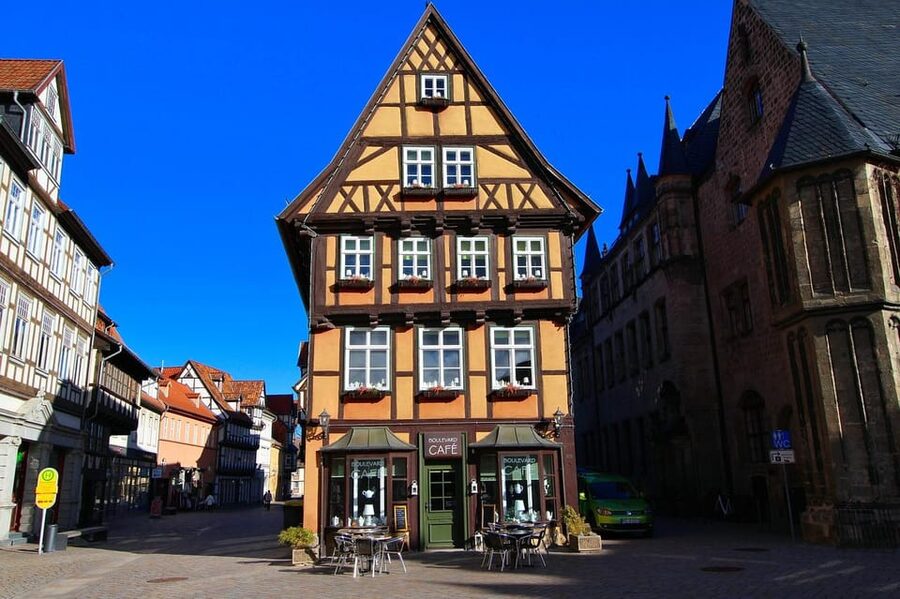
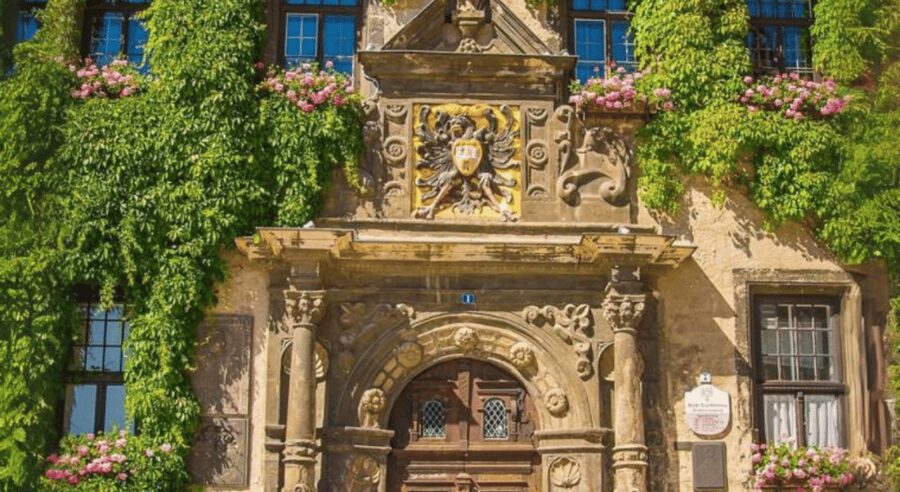
The tour begins in front of the friendly Quedlinburg Tourist Information office, marked in green on the picturesque market square. This is a sensible meeting point because it places you right in the center of the historic town, with no complicated transfer or out-of-town pickup to manage.
Your guide greets the group there before setting off on foot. Since this is a private tour, you are not sharing the two-hour route with strangers. That matters if your group has children, older relatives, or a particular interest in architecture, local people, or food.
The opening stretch gives you a quick sense of Quedlinburg’s appeal. The town is not presented as a single monument. Instead, the streets, churches, civic buildings, and homes work together to show how the town developed over more than 1,100 years.
I would arrive a few minutes early and use the market square as your orientation point. The tour does not include transport, so comfortable shoes matter from the first step.
More Historical Tours:
- Quedlinburg: Historical Old Town Evening Walking Tour
★ 4.5 · 148 reviews - Leipzig: City History Canal Sightseeing Tour on a Motorboat
★ 4.7 · 6,232 reviews - Berlin: Natural History Museum Entrance Ticket
★ 4.6 · 3,382 reviews
Reading the town hall and St. Benedikti Church
The route includes Quedlinburg’s town hall and the market church of St. Benedikti. These are not simply photo stops. They help explain the civic and religious sides of the old town, and your guide supplies the background that can be hard to pick up while walking alone.
A self-guided stroll can show you handsome façades, but it may not explain why a church or town hall mattered to the town’s growth. The value here is the connection between the buildings. You move through Quedlinburg as a functioning historic town rather than a row of isolated sights.
The two-hour schedule also keeps the visit focused. You will not have time for every church interior or museum collection, but you should get a clear introduction to the city’s main historic areas. If you prefer slow photography, extended shopping, or long stops inside buildings, you may want extra time before or after the tour.
The Schuhhof and Quedlinburg’s half-timbered streets
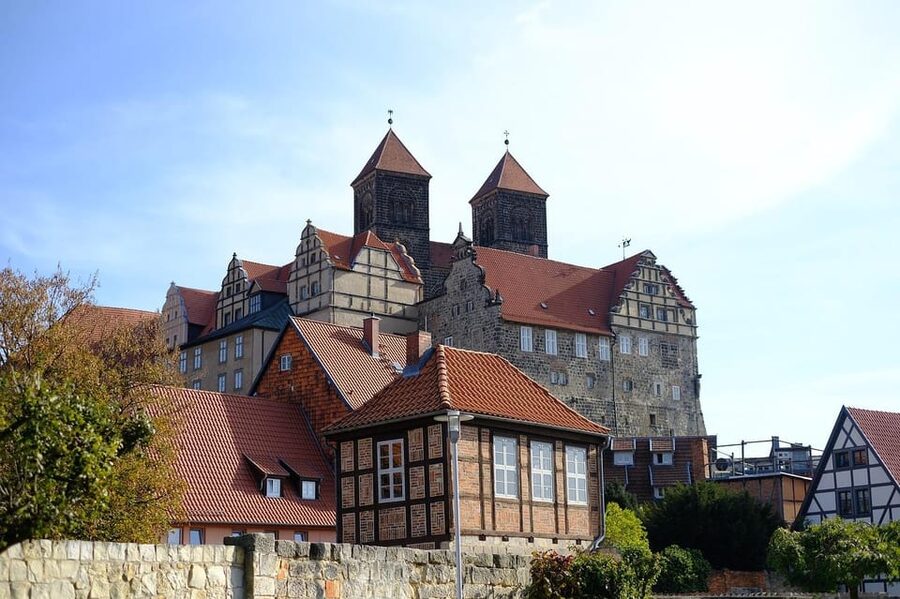
The Schuhhof is one of the more distinctive parts of the old-town route. Along with the medieval lanes, it offers a close look at Quedlinburg’s half-timbered building tradition.
The appeal is in the variety. Half-timbered houses can look similar from a distance, yet their frames, proportions, decoration, and condition can differ widely. A guide can point out details that you might otherwise pass without noticing.
This is also where the tour’s promise of 1,100 years of history becomes easier to understand. Quedlinburg’s past is not kept in one building. It appears in the street plan, the narrow passages, the old façades, and the way different periods sit beside one another.
The cobblestones are part of the charm, but they are also a practical issue. Wear shoes with firm soles, and take care on uneven sections. The tour operates in rain or shine, so bring suitable clothing rather than hoping the weather will cooperate.
The Hell, Blasii Church, and the half-cave museum
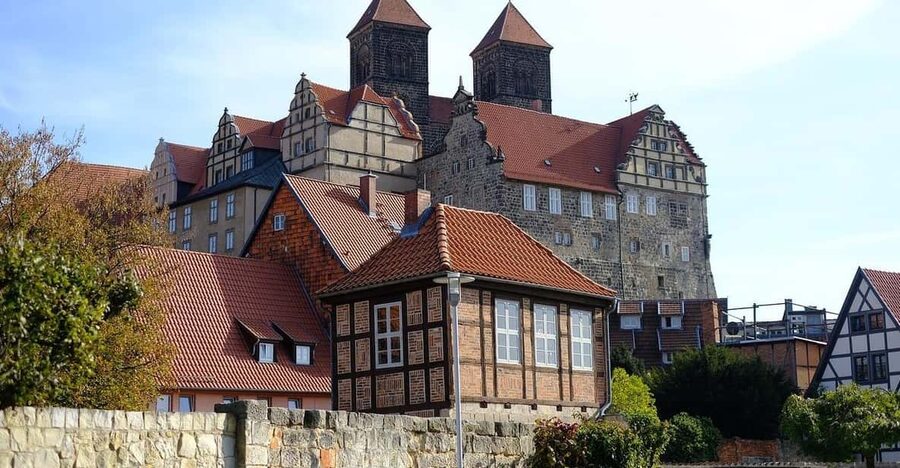
The itinerary includes a place called the Hell, the Blasii Church, and the half-cave museum. These stops add variety to the walk and move you beyond the most obvious market-square views.
The Hell is especially useful as an example of the unusual corners that can be easy to miss without a local guide. The name alone is likely to catch your attention, and the stop gives the route a bit of personality alongside its formal history.
The Blasii Church continues the religious and architectural thread introduced at St. Benedikti. The half-cave museum adds another change of pace. Because these places are included in a guided sequence, you get a better sense of how Quedlinburg’s streets and buildings fit together rather than seeing them as unrelated curiosities.
The information provided does not specify the length of each stop or the museum’s interior details, so you should think of these as guided points along a walking route, not guaranteed long visits. If one of them is your main interest, ask the guide at the start how much time can be given to it.
A few more tours and experiences worth a look
- Braunschweig: Private City Walking Tour with Certified Guide
★ 4.8 · 35 reviews - Berlin: Private Reichstag and Glass Dome Tour
★ 4.8 · 2,226 reviews - Berlin Private Complete History All Day Walking Tour
★ 5.0 · 474 reviews - Munich Private Tour with a Local – Highlights & Hidden Gems
★ 5.0 · 469 reviews
Climbing the Schlossberg
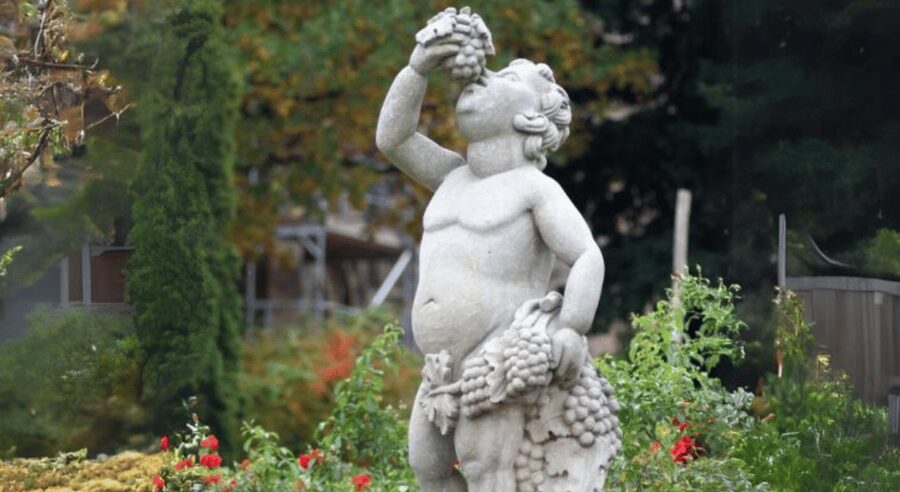
The tour’s main rise comes at the Schlossberg, the hill above the old town. This is the most demanding section of the walk, with a steeper stretch that may be tiring for anyone who dislikes hills or has difficulty on cobblestones.
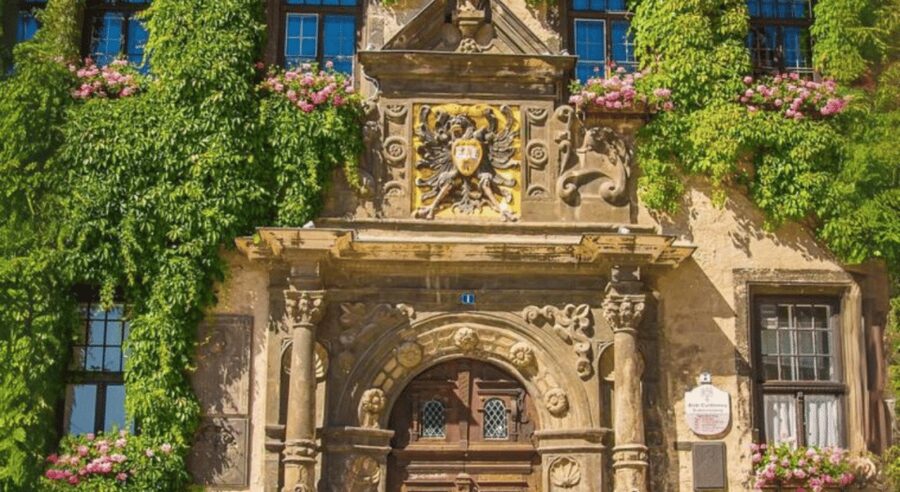
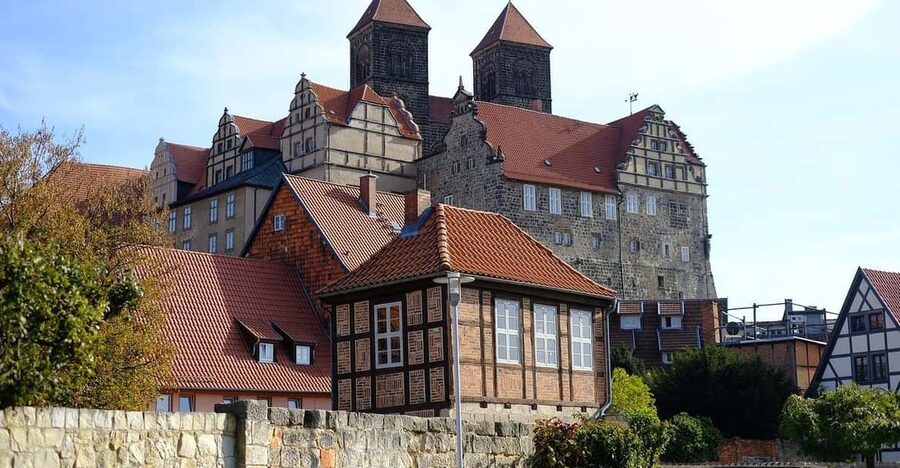
It is also the part that gives the tour its strongest sense of place. The Schlossberg gathers several important stops into one area: Klopstock House, the Lyonel Feininger Museum, the castle gardens, and the Collegiate Church of St. Servatii.
The route lets you connect Quedlinburg’s medieval setting with later cultural figures. Klopstock House points to one famous personality associated with the town, while the Lyonel Feininger Museum brings in a modern artistic voice. The tour is not only about old stone and timber. It also introduces people whose lives add character to Quedlinburg.
The castle gardens provide a pause in the uphill route. The available information does not promise a detailed garden visit or a particular viewpoint, so keep expectations focused on a guided look at the Schlossberg area rather than a long garden stay.
St. Servatii and the limit of the visit
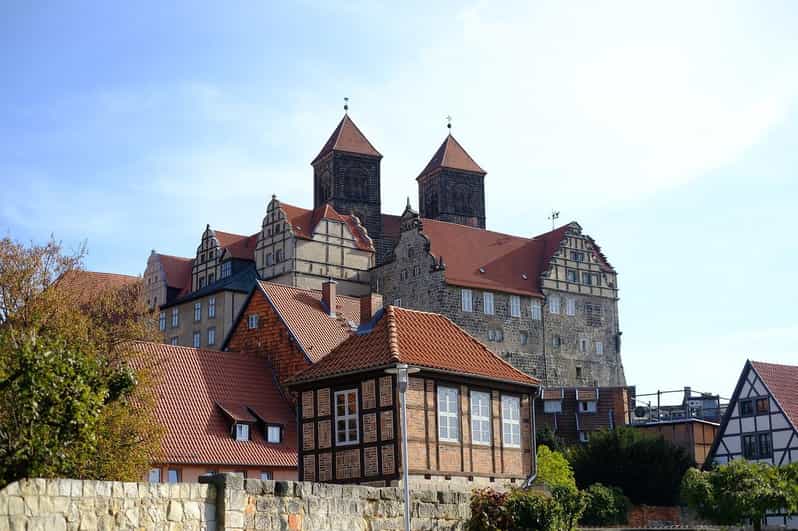
The high point of the route is the Collegiate Church of St. Servatii. Its position on the Schlossberg gives it major visual importance, and the tour treats it as the key landmark of the excursion.
There is one clear limit: entrance to the church is not included. You will see the building as part of the Schlossberg tour, but you should not book this walk expecting an interior visit.
That distinction matters if sacred art, church architecture, or the church treasury is a priority for you. The tour is a strong introduction to the setting and history around St. Servatii, but you may need a separate plan for interior access. The stated information does not give an opening schedule, admission cost, or separate entry arrangements, so check those details independently if you want to go inside.
The listing notes that the tour skips the ticket line, but since the church interior is excluded, you should treat that as a general convenience connected with the tour rather than a promise of entry to St. Servatii.
Stories about Quedlinburg’s famous people
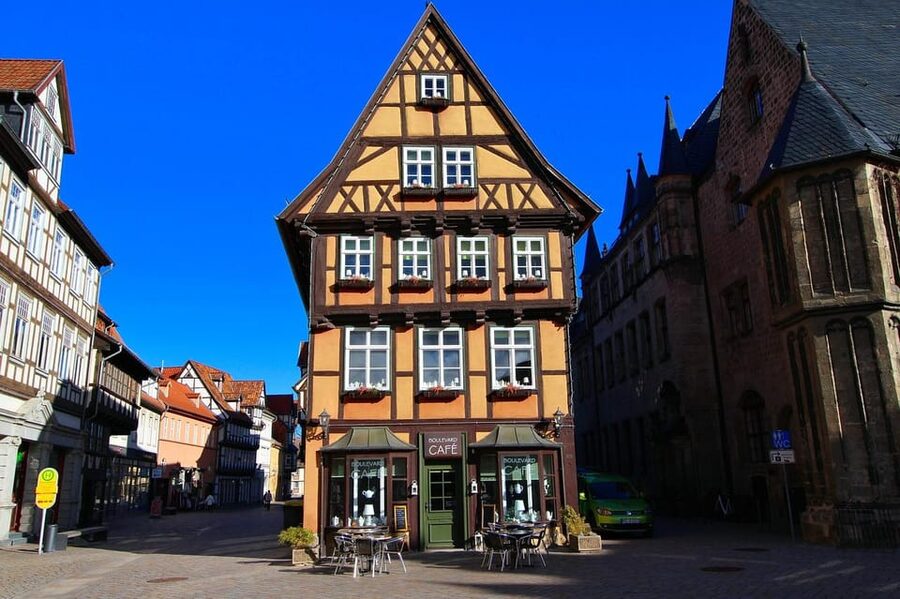
One of the best reasons to choose a private guide is the chance to hear local stories rather than only standard monument descriptions. The tour specifically brings in famous personalities from Quedlinburg, with Klopstock and Lyonel Feininger named along the Schlossberg route.
Klaus received especially warm praise for his enthusiasm for his city and for the many small stories he tells. That kind of local connection can make a short walk memorable. It also helps you understand why a building or street matters to Quedlinburg’s identity.
There is a tradeoff. One assessment found Klaus’s speech too fast, making parts of the explanation hard to follow. Another assessment criticized a different guide’s pronunciation, general knowledge, and approach with children. The overall rating is 4.6 out of 5 from 32 ratings, so the broad picture is positive, but guide quality may vary.
If you understand German well, this is likely to be a much better fit than if you only know basic phrases. At the beginning, tell the guide if children need simpler explanations or if anyone in the group benefits from a slower pace. A private format gives you a better chance to adjust the rhythm.
Food advice after the walking tour
The guide presents culinary hotspots and gives recommendations for places to eat. This is a practical extra, especially because the tour begins and ends in the central historic area.
The food advice is not described as a tasting, meal, or reservation service. Think of it as local orientation. You can use the suggestions to decide where to eat after the tour rather than spending time searching while hungry.
This feature also makes the tour useful at the start of a Quedlinburg visit. You get a quick map of the old town, hear about places worth returning to, and can then choose your own restaurant or café afterward. Since the tour lasts two hours, you still have room in your day for a meal, museum visit, or independent walk.
What $117 means for a private group
The stated price is $117 per group of up to 12 people. If 12 people share the cost, it works out to less than $10 per person for a private, two-hour guided walk. Even a smaller group may find the price reasonable if privacy and direct access to a local guide matter to you.
The value is strongest for families and friends traveling together. You are paying for the group rather than buying 12 separate public-tour places, and children and young people up to 16 are free. That makes the arrangement particularly attractive when several adults are traveling with children.
The value is less clear for a solo visitor or a couple. A private group rate can feel expensive when divided between only one or two people, especially since the tour is only two hours and the church interior is not included.
I would book it when you have a group large enough to share the cost, want German-language local guidance, and prefer a set introduction to Quedlinburg. If you are traveling alone and enjoy researching historic towns on your own, you may get better value by exploring independently and choosing paid admissions separately.
Weather, walking, and family fit
This is a walking tour in all weather. Rain does not cancel the route, so you need a coat or umbrella when conditions are wet and shoes that can handle slippery cobblestones.
The Schlossberg adds the main physical challenge. The route is not presented as a strenuous hike, but the steeper section deserves attention. If someone in your group has trouble with hills or uneven paving, consider that before booking.
Families may appreciate the free admission for children and younger people, as well as the private setting. The tour includes enough changes of scene to hold attention: market square, churches, medieval lanes, the unusual Hell, the half-cave museum, the Schlossberg, gardens, museums, and the collegiate church.
Still, the family experience may depend on the individual guide. One assessment specifically found a guide not friendly toward children, while the private format gives you a chance to explain your family’s needs in advance. The tour is conducted in German, so language ability is another key factor for younger participants.
Who should book this Quedlinburg walk?
I would choose this tour if you want a focused first look at Quedlinburg and prefer stories, context, and local recommendations over a quick photo walk. It suits families, friend groups, and history-minded visitors who can follow German.
It also works well if you have only a short time in town. In two hours, you cover both the old town and the Schlossberg, including major civic, religious, architectural, and cultural sights.
I would hesitate if you need an English-language guide, want guaranteed interior access to St. Servatii, or dislike uneven streets and uphill walking. I would also think twice if your group is very small and the full private price is difficult to justify.
The mixed feedback about guide pace and child-friendliness is worth taking seriously, but it does not cancel out the tour’s strengths. The high overall rating, strong praise for Klaus’s enthusiasm, and detailed route make this a useful option when the language and walking conditions fit.
Should you book the private Quedlinburg tour?
Book it if you are traveling with a group, want a German-speaking local guide, and would like Quedlinburg’s old town explained in a clear two-hour route. The price becomes attractive with several people, and the free rate for children up to 16 improves the family value.
Before you commit, make three checks: confirm that German works for everyone, prepare for cobblestones and the Schlossberg climb, and remember that St. Servatii is viewed from outside. If those points suit you, this is a well-planned introduction to Quedlinburg, with enough local color to make the town easier to appreciate on your own afterward.
FAQ
Where does the Quedlinburg tour begin?
The meeting point is in front of the green Quedlinburg Tourist Information office on the market square. The guide meets the group there shortly before the tour begins.
How long does the tour last?
The walking tour lasts two hours.
Is this a private tour?
Yes. It is offered for a private group of up to 12 people.
What language is the tour conducted in?
The live tour guide speaks German.
Is the Collegiate Church of St. Servatii included inside?
No. The tour includes the Schlossberg and an exterior visit to the Collegiate Church of St. Servatii, but entry inside is not included.
What sights are included in the old-town section?
The old-town route includes the town hall, the market church of St. Benedikti, the Schuhhof, the Hell, Blasii Church, the half-cave museum, medieval streets, and half-timbered houses.
What does the Schlossberg section include?
The Schlossberg route includes Klopstock House, the Lyonel Feininger Museum, the castle gardens, and the Collegiate Church of St. Servatii.
Is the tour suitable in bad weather?
Yes. The tour operates in all weather conditions, including rain. The route includes cobblestones and a steeper section on the Schlossberg.
Are children free?
Yes. Children and young people up to 16 years old are free.
Just added around Goslar
- Goslar: Witches – From delusion to myth★ 4.7 · 16 reviews
- Braunschweig’s Mystery Morning: Breakfast & Escape Game★ 4.4 · 18 reviews
- Goslar: Rathausführung – historisch & multimedial★ 4.6 · 21 reviews
- Goslar: Ganz schön gruselig – das Mittelalter wird lebendig!★ 4.2 · 26 reviews
- Goslar: On the road with the night watchman’s wife★ 4.6 · 34 reviews
- Braunschweig: Scavenger Hunt Self-Guided Walking Tour★ 4.6 · 35 reviews
- Braunschweig: Private City Walking Tour with Certified Guide★ 4.8 · 35 reviews
- City tour Braunschweig: diverse and full of surprises.★ 5.0 · 35 reviews
Historical Tours, compared.
City History Canal Sightseeing Tour on a Motorboat
Read our review →
Bamberg: Guided Beer History Tour with Optional Tasting
Read our review →Browse the lists this tour appears in