
Reviewed · MUSEUMS
Berlin’s Gallery Scene
Berlin keeps its best art behind ordinary doors. This private, three-hour walking tour takes you through Berlin’s gallery districts with a professional art historian, linking today’s exhibitions to the city’s dramatic changes since 1989. I like the small-group format, limited to your own party of up to 10, and I like the chance to see several changing galleries rather than only one large museum. The main consideration is that exhibitions change, and the KW Institute admission fee is extra.
I also appreciate the tour’s flexible morning or afternoon schedule and its focus on places such as Auguststraße and Potsdamer Straße. Guides Justin and Laureline have received especially warm praise for explaining both individual artists and the wider forces behind Berlin’s art scene. Still, this is best for people who enjoy contemporary art and discussion. If you want a standard sightseeing walk with famous monuments at every turn, this may feel too specialized.
In This Review
- Key points to know before you book
- Why Berlin’s galleries deserve a closer look
- KW Institute: 40 minutes at a major contemporary art center
- Auguststraße: art inside a former Jewish girls’ school
- Potsdamer Straße: two galleries, two short visits
- Galerie Giti Nourbakhsch and Berlin’s gallery network
- What the art historian adds
- The private format and the $330 price
- Timing, walking, and changing exhibitions
- Who will get the most from this tour?
- Is Berlin’s Gallery Scene worth booking?
- FAQ
- How long does Berlin’s Gallery Scene last?
- How many people can join the private tour?
- How much does the tour cost?
- Is an art historian included?
- Is admission to KW Institute included?
- Are the other gallery admissions free?
- Does the tour operate on Tuesday?
- Where does the tour start?
- Can I cancel for a full refund?
Key points to know before you book
- Private access to Berlin’s art world: Only your group participates, with space for up to 10 people.
- Three hours on foot: The route visits five gallery stops, with time varying from 20 to 40 minutes at each.
- An art historian leads the way: The guide adds context about Berlin’s art scene, artists, galleries, and the city after the fall of the Wall.
- KW costs extra: Admission is not included, priced at €10 for adults and €6 for seniors or students.
- Tuesday needs special planning: KW Institute is closed that day, so the tour operates as the walking portion only.
- Shows can change: The route may shift to match current exhibitions and major art events.
Why Berlin’s galleries deserve a closer look
Berlin’s contemporary art scene grew quickly after the Wall fell in 1989. The city became a place where artists, galleries, institutions, and experimental projects could find room to develop. This tour gives you a way to understand that growth while standing in the very buildings now used to show new work.
I like this approach because a gallery visit can otherwise feel puzzling. You may walk into a former school, an old industrial space, or a plain-looking building and wonder why the room matters. An art historian can explain the setting, the artist’s aims, and the larger story without forcing you to pretend that every piece makes instant sense.
The tour also offers variety. You may see eye-pleasing work, difficult work, classical modernist pieces, and installations that ask more questions than they answer. That mix is part of Berlin’s appeal, but it also means the experience depends on the current shows and your own taste.
The five listed stops do not all receive the same amount of time. KW gets about 40 minutes, while the other galleries receive approximately 20 or 30 minutes. Think of this as a guided introduction to several spaces, not a slow study visit at one museum.
More Museums in Berlin
- Berlin: Jewish Museum Berlin Entrance Ticket
★ 4.5 · 8,393 reviews - Berlin: DDR Museum Tickets
★ 4.3 · 3,443 reviews - Berlin: Natural History Museum Entrance Ticket
★ 4.6 · 3,382 reviews
KW Institute: 40 minutes at a major contemporary art center
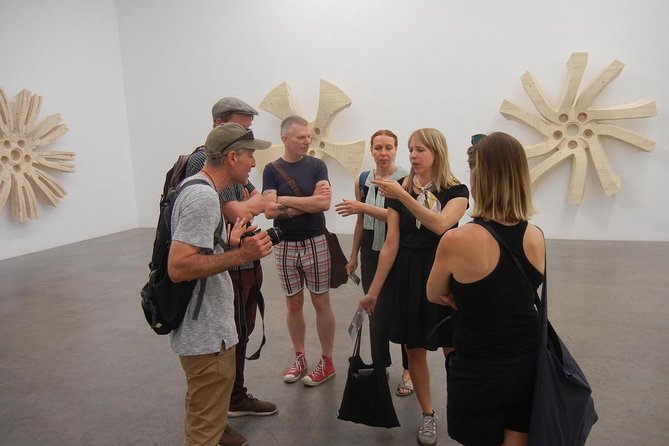
The tour begins at the KW Institute for Contemporary Art, described as one of Germany’s key institutions for contemporary art. KW does not maintain a permanent collection. Instead, it works as a testing ground for exhibitions, artist studios, and events connected to national and international contemporary culture.
That difference matters. You are not walking through a fixed sequence of famous masterpieces. The experience depends on what KW is presenting at the time of your visit. The guide’s role becomes particularly useful here, since the current exhibition may include artists or ideas unfamiliar to you.
Allow about 40 minutes at KW, the longest stop on the route. That gives you enough time for an introduction to the institution and a focused look at the show, though it will not cover every corner in detail.
Admission is not included. Adults pay €10, while seniors and students pay €6. Build that fee into your budget before booking, especially if everyone in your party plans to enter.
Tuesday is the important exception. KW is closed that day, and the experience operates as the walking portion only. If KW is central to your interest, choose another day and confirm the current schedule before you go.
Auguststraße: art inside a former Jewish girls’ school
Auguststraße brings the tour into a very different kind of gallery setting. Michael Fuchs Galerie presents contemporary art alongside classical modernist works in the former assembly hall and two classrooms of the former Jewish Girls’ School in Berlin.
The building gives this stop a strong sense of place. The rooms are not neutral white boxes designed solely for display. Their former use adds historical weight, and the changing solo and group exhibitions create a link between the building’s past and the art on its walls.
The visit lasts about 30 minutes, and admission is free. That makes it a useful point in the tour for comparing how different spaces present art. A former school can shape your response to a work before the guide has said a word, and the guide can help you consider that setting rather than treating it as mere decoration.
The selection changes, so I would not book this stop expecting a particular artist or style. Go for the setting, the range of work, and the chance to see how Berlin galleries use older buildings in new ways.
Potsdamer Straße: two galleries, two short visits
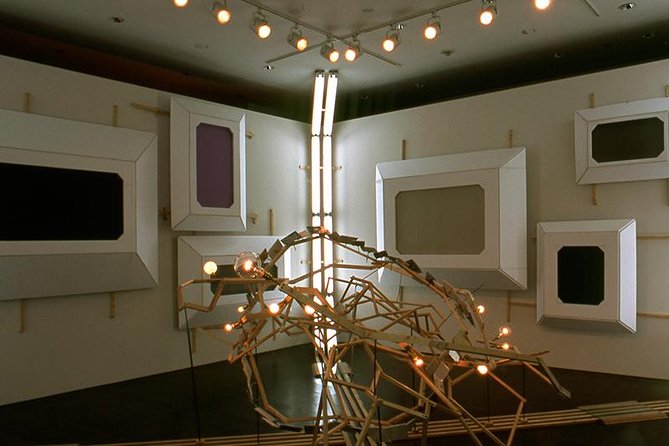
The itinerary then turns to Potsdamer Straße, an important gallery area on the route. You visit Esther Schipper for about 20 minutes. This is a contemporary art gallery based in Berlin, and the short visit gives you another chance to see how a professional gallery presents current work.
The next stop is Galerie Eigen & Art, also scheduled for about 20 minutes. Its exhibitions take place in a former school and feature temporary work by international contemporary artists. The former-school setting echoes Auguststraße, but the galleries are separate stops with their own programs and viewpoints.
These two visits are brief, so you should not expect long conversations about every artwork. Instead, use them as comparison points. Notice how the rooms feel, how much information is provided, and how the art changes from one gallery to the next.
This is one of the tour’s strengths. You are not given a single definition of Berlin art. You see several approaches in a compact period and can ask the guide why a gallery, artist, or building matters.
Something different for another day:
- Berlin: Reichstag, Dome and Government District Guided Tour
★ 4.7 · 18,288 reviews - Berlin: 1-Hour City Tour by Boat with Guaranteed Seating
★ 4.3 · 16,993 reviews - Berlin: Boat Tour Along the River Spree
★ 4.4 · 11,252 reviews - Discover Berlin Half-Day Walking Tour
★ 5.0 · 9,624 reviews
Galerie Giti Nourbakhsch and Berlin’s gallery network
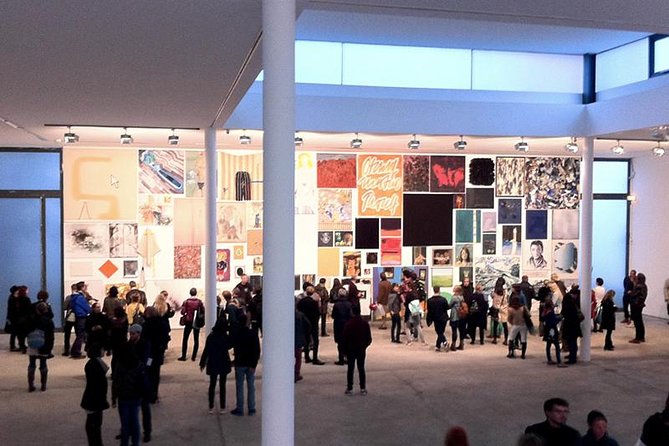
The final listed stop is Galerie Giti Nourbakhsch, another gallery associated with Berlin’s gallery district near Potsdamer Platz. Giti Nourbakhsh is identified as one of the first gallerists in that district and as a founding member of Berlin Gallery Weekend.
That background helps explain how individual gallery owners shaped Berlin’s rise as an art center. Berlin’s art scene is not only about museums and famous institutions. It also depends on the people who bring artists together, find spaces, organize exhibitions, and build connections across the city.
The stop lasts about 20 minutes. Admission is listed as not included, so confirm any current entrance arrangements when you book. Like the other galleries, its program may change.
Taken together, the route gives you a cross-section of gallery culture: a major contemporary art institution, former school buildings, commercial galleries, and people connected to the city’s wider gallery network. You will not see everything Berlin offers, but you will leave with a clearer idea of how the pieces fit together.
What the art historian adds
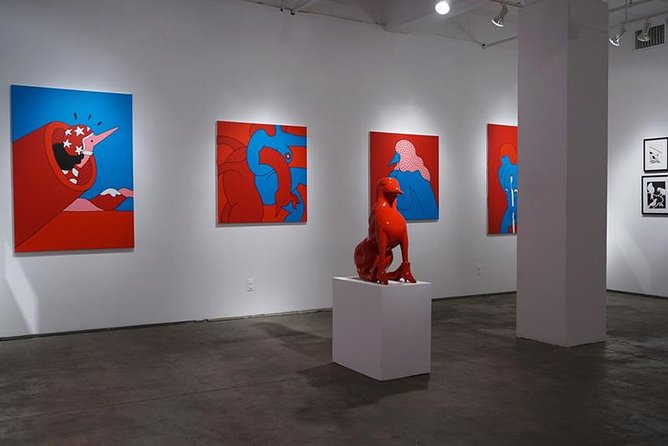
The guide is the heart of this experience. You are not simply being led from door to door. The stated aim is to explain how and why Berlin became a major center of creativity after 1989, then connect that story to the artworks and buildings in front of you.
Justin has been praised for showing a broad range of galleries and for offering context on local artists and well-known German painters. Laureline has also received strong praise for preparing carefully, explaining artists and their work, and connecting the galleries to Berlin’s historic center, including parts of former East Berlin.
Those details point to the kind of guide you should hope for: someone who can discuss both the art and the city around it. The experience is not limited to technical terms or artist biographies. It can also include questions about why Berlin attracted creative people, how galleries operate, and what happens when old spaces receive new purposes.
Your own questions will matter. If you are curious about one work, ask. If a piece seems confusing, say so. A private tour gives you more room for conversation than a large scheduled group, and the guide can adjust the level of explanation to your interests.
The private format and the $330 price
The price is $330 per group, with up to 10 people included. For a full group of 10, that works out to $33 per person before admission fees. For two people, it becomes $165 each, and for a small group of three, $110 each.
That makes the tour much better value for a larger party. A couple paying the full private price should be especially interested in the art historian’s expertise and the private format, since the cost is less favorable per person.
You are paying for a dedicated guide, not simply transportation between attractions. The professional art historian can put current exhibitions into context, and your group avoids being combined with strangers. Pickup is offered, but the listed starting point is Schöneberger Ufer 65, 10785 Berlin. Confirm the pickup details and meeting arrangement after booking.
The end point is listed as Berlin, Germany, rather than a precise address. Since the tour moves through several gallery areas, ask for the final location if you need to coordinate dinner, a train, or another timed activity afterward.
Food and drinks are not included. Three hours is manageable without a meal, but plan a snack before or after if you know you need one. The tour is near public transportation, which helps with reaching the start and continuing your day afterward.
Timing, walking, and changing exhibitions
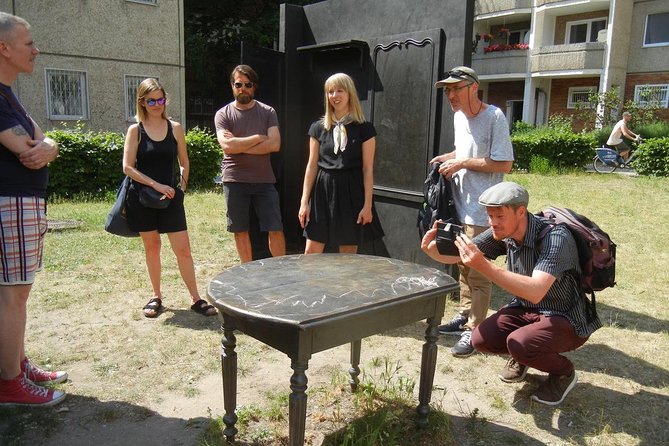
The experience lasts about three hours and is offered in the morning or afternoon. That flexibility is useful if you are fitting the art tour between museums, a meal, or another Berlin activity.
This is a walking tour, so wear shoes that you can use comfortably for several hours. The information says most people can participate, but it does not provide detailed accessibility specifications. If you have mobility needs, ask the provider about the exact route, gallery entrances, and any stairs before booking.
The itinerary can change based on current gallery shows and major art events. In this case, flexibility is not a minor detail. Galleries do not operate like permanent museums, and a change may be made to give you a better current exhibition or avoid a closure.
That also means you should not treat the five stops as guaranteed displays of specific artists or works. The value is the guided look at Berlin’s gallery system as it exists during your visit.
Who will get the most from this tour?
I would recommend it to anyone who already enjoys contemporary art or wants a serious introduction without committing to a full day of museums. It suits curious first-time visitors, returning visitors who have already seen Berlin’s major sights, and people who want historical context along with gallery visits.
It is also a good fit for a family group or group of friends that can share the private fee. The guide can explain difficult work at a level that suits your party, and the private setting makes it easier to pause for questions.
You may want to skip it if you prefer only famous paintings, permanent collections, or a fixed route. The exhibitions can be experimental, the visit to each gallery is short, and the most important subject is Berlin’s contemporary art culture rather than the city’s standard postcard sights.
The tour can also work well as a first step. After three hours, you may know which gallery or artist deserves a longer independent visit. Ask your guide for suggestions while you are still on the route.
Is Berlin’s Gallery Scene worth booking?
Book this tour if you want to understand how Berlin became an art center, not just look at isolated pictures on gallery walls. The strongest features are the private format, the art historian’s perspective, and the range of spaces, from KW Institute to former schools and commercial galleries.
For the best value, bring a group of several people and avoid Tuesday if KW matters to you. Budget the extra KW entrance fee, accept that the shows may change, and choose this experience for discussion and discovery rather than a checklist of famous works.
If that sounds like your kind of afternoon, Berlin’s Gallery Scene is a smart, focused way to meet the city’s creative side.
FAQ
How long does Berlin’s Gallery Scene last?
The tour lasts approximately three hours.
How many people can join the private tour?
The price covers one private group of up to 10 people. Only your group participates.
How much does the tour cost?
The price is $330 per group of up to 10 people.
Is an art historian included?
Yes. A professional art historian guide is included.
Is admission to KW Institute included?
No. KW admission costs €10 for adults and €6 for seniors or students.
Are the other gallery admissions free?
Admission is listed as free for Michael Fuchs Galerie, Esther Schipper, and Galerie Eigen & Art. Galerie Giti Nourbakhsch is listed as not included.
Does the tour operate on Tuesday?
Yes, but KW Kunst-Werke Berlin is closed on Tuesday. On that day, the tour operates as the walking portion only.
Where does the tour start?
The listed starting point is Schöneberger Ufer 65, 10785 Berlin, Germany. Pickup is offered, so confirm the exact arrangement after booking.
Can I cancel for a full refund?
Yes. You can cancel at least 24 hours before the local start time for a full refund. Cancellations or changes made less than 24 hours before the start time are not accepted for a refund.
Just added around Berlin
- Private Photo Tour in Kreuzberg★ 5.0 · 3 reviews
- Kreuzberg Private Walking Tour: Immigrants, Artists & Hipsters★ 5.0 · 3 reviews
- Individual city tour Berlin for max. 8 persons★ 5.0 · 3 reviews
- Berlin’s Jewish Heritage: Private Tour of the Vibrant Jewish District★ 5.0 · 3 reviews
- Berlin & The Third Reich Private Guided Tour★ 5.0 · 3 reviews
- Private Analogue Photography Experience in Berlin★ 5.0 · 3 reviews
- Spy Mission in Berlin: Self-Guided Espionage Puzzle Quest★ 5.0 · 3 reviews
- Berlin Christmas Markets Walking Tour with Local Guide★ 5.0 · 3 reviews
Museums, compared.

Skip-the-Line: Berlin Wall Museum at Checkpoint Charlie
Read our review →
Browse the lists this tour appears in