
Reviewed · WALKING TOURS
Berlin: walking tour about Charité
Medicine has a human story. This two-hour Berlin walk follows the Charité from an 18th-century plague house to one of Europe’s major university hospitals, with stories about Rudolf Virchow, Robert Koch, Emil von Behring, and Ferdinand Sauerbruch. I especially like the focus on medical breakthroughs and the visit to Berlin’s old Animal Anatomical Theatre, a rare chance to see a teaching building from inside. The main drawback is clear: the tour is German only, and you see the Charité hospital itself from outside.
You’ll also hear about the institution’s darker years, including doctors who worked with the Nazi regime. That gives the walk more weight than a simple parade of famous names. The hospital grounds and Bed House are closed to group tours, so you should book this for its stories, streets, and historic teaching room, not for an interior hospital visit.
In This Review
- Key points about the Charité walking tour
- Starting at the Charité Tower
- Seeing the Charité Bed House from outside
- Walking along Luisenstraße and the university campus
- The doctors behind Berlin’s medical reputation
- The Charité’s difficult years
- Entering the Animal Anatomical Theatre
- What the two-hour format gives you
- Is $27 a fair price?
- Who should book this Berlin medical history walk?
- Practical advice before you go
- Should you book the Charité tour?
- FAQ
- Where does the Charité walking tour start?
- Where does the tour end?
- How long does the tour last?
- What language is the tour conducted in?
- Can I enter the Charité Bed House?
- Can group tours enter the Charité Campus Mitte grounds?
- Is the Animal Anatomical Theatre always open during the tour?
Key points about the Charité walking tour

- Three centuries of medicine: Follow the Charité from its beginnings as a plague house in the 18th century to its present role as a leading university hospital.
- Famous medical figures: Learn about Rudolf Virchow, Emil von Behring, Robert Koch, and Ferdinand Sauerbruch, along with Berlin’s Nobel Prize history.
- A rare interior visit: Enter the Animal Anatomical Theatre, Berlin’s oldest surviving teaching building.
- A sober look at medicine: The tour covers scientific progress as well as the Charité’s cooperation with the Nazi regime.
- Outside view of the hospital: See the Charité Bed House and campus area, but do not enter the hospital grounds.
- German-language format: The live guide speaks German, and the walk lasts about two hours.
Starting at the Charité Tower

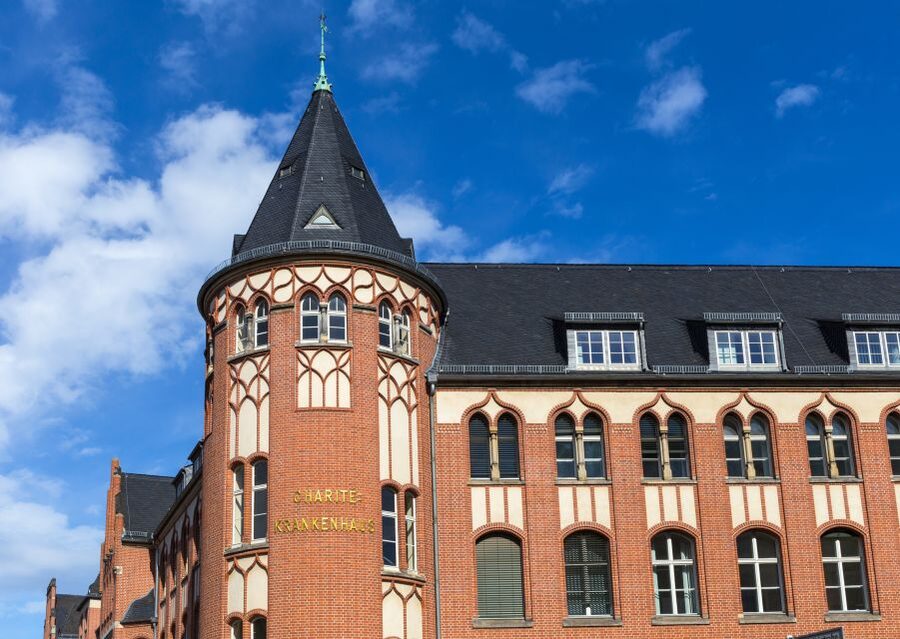
The tour begins in front of the Charité Tower, at the crossroads of Schumannstraße, Charitéplatz, and Charitéstraße. This is a useful starting place because you are immediately beside the institution that gives the tour its name, rather than beginning with a long walk from some unrelated city landmark.
You’ll meet the guide at the stated meeting point, and the tour starts on time. Give yourself a little extra time to find the crossroads, especially if you are unfamiliar with this part of Berlin. The activity ends back at the same meeting point, which makes planning the rest of your day fairly simple.
The opening sets the tone: the Charité is not presented only as an impressive hospital. You’ll hear how its story began with a plague house in the 18th century. From there, the institution developed into a center for teaching, research, and treatment.
That change is the central idea of the walk. Berlin’s medical story is not a straight line from ignorance to progress. It includes bold discoveries, strange theories, institutional rivalries, personal courage, and serious moral failures.
More Walking Tours in Berlin
- Discover Berlin Half-Day Walking Tour
★ 5.0 · 9,624 reviews - Berlin: Third Reich and Cold War 2 Hour Walking Tour
★ 4.9 · 6,830 reviews - Berlin: Discover Berlin Walking Tour
★ 4.9 · 5,998 reviews
Seeing the Charité Bed House from outside
One early stop is the Charité Bed House, which you view from outside. The building is still a hospital facility, so normal protection and hygiene rules apply. Group tours do not enter it.
This limitation matters if you arrive expecting a hospital museum. You won’t be walking through patient wards or touring the working hospital interior. Instead, the building provides a physical reference point for the Charité as a living medical institution.
I think this outside view works best when you treat it as a starting chapter. The guide can explain how the Charité developed while you look at the hospital complex in its present setting. You get a sense of the institution’s continuing role without disrupting a functioning medical facility.
The stop also helps separate this tour from a standard sightseeing walk. The focus is not Berlin’s grand facades or famous royal monuments. It is the relationship between buildings, scientific work, patients, and the city’s changing ideas about disease.
Walking along Luisenstraße and the university campus

From the Bed House, the group continues along Luisenstraße and across the university campus. The walk lasts two hours, so the route gives the guide time to connect individual locations with larger changes in medicine.
You’ll hear about physicians and scientists who shaped Berlin’s medical reputation. Rudolf Virchow is especially important to the story, as are Robert Koch, Emil von Behring, and Ferdinand Sauerbruch. The tour also places Berlin’s Nobel Prize winners within the city’s scientific setting.
The value here is the connection between people and place. You are not simply given a list of discoveries. You walk through the area where medical teaching and research developed, which makes the names easier to place in a real city.
The campus itself is not fully open to group tours. The Charité Campus Mitte grounds are inaccessible for this activity, so the route uses public streets and permitted areas instead. If you want a detailed look at hospital courtyards or clinical buildings, this is not the right format.
For many people, though, the public route is a sensible compromise. You see the surroundings, hear the stories, and avoid turning an active hospital into a tourist attraction.
The doctors behind Berlin’s medical reputation
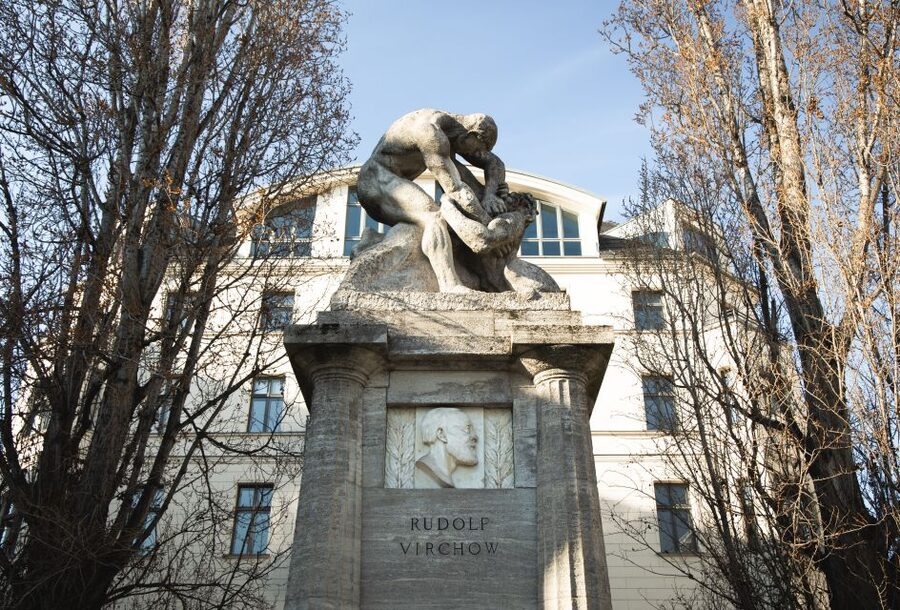
The tour’s strongest subject is its group of famous physicians. Rudolf Virchow, Emil von Behring, Robert Koch, and Ferdinand Sauerbruch each represent a different part of Berlin’s medical past.
Virchow is tied to the development of modern medical thinking and Berlin’s scientific life. Koch is linked with major work in infectious disease. Behring is part of the story of medical breakthroughs and Nobel recognition. Sauerbruch represents the era of ambitious surgical practice.
The guide’s job is to make these names human and local. You’ll learn about the geniuses of Berlin medicine, but the tour also looks at the limits and risks of their work. Medicine involves people in vulnerable situations, and progress can carry a cost.
That balance is important. A tour that only praises famous doctors would feel like a hall of fame. Here, the stories include life and death, success and failure, discovery and responsibility. I like that the walk treats medicine as a human profession rather than a collection of perfect achievements.
The German-language format will shape your experience. You need enough German to follow a live spoken tour, especially when the guide is explaining scientific terms, historical events, and connections between several figures. If you are comfortable with German, the format can feel direct and natural. If you are not, the language requirement is a serious reason to choose another activity.
Something different for another day:
- Berlin: Reichstag, Dome and Government District Guided Tour
★ 4.7 · 18,288 reviews - Berlin: 1-Hour City Tour by Boat with Guaranteed Seating
★ 4.3 · 16,993 reviews - Berlin: Boat Tour Along the River Spree
★ 4.4 · 11,252 reviews - Berlin: Hop-on Hop-off Bus Tour with Live Commentary
★ 4.3 · 8,579 reviews
The Charité’s difficult years
The tour does not avoid the Charité’s darker history. You’ll hear about the period when doctors collaborated with the Nazi regime.
This section gives the walk moral seriousness. Medical institutions can save lives, but doctors also hold authority over people who may not be able to protect themselves. The Nazi era shows what can happen when professional knowledge serves an abusive political system.
The subject may feel heavy, but it belongs in any honest account of a major medical institution. It also changes how you understand the earlier stories about scientific achievement. A Nobel Prize or famous operation is not the whole measure of a doctor or an institution.
Expect the guide to move between scientific history and ethical questions. This is not a light entertainment tour, even though it includes unusual facts and an intriguing historic building. You should choose it if you want Berlin’s medical past presented with both admiration and criticism.
Entering the Animal Anatomical Theatre
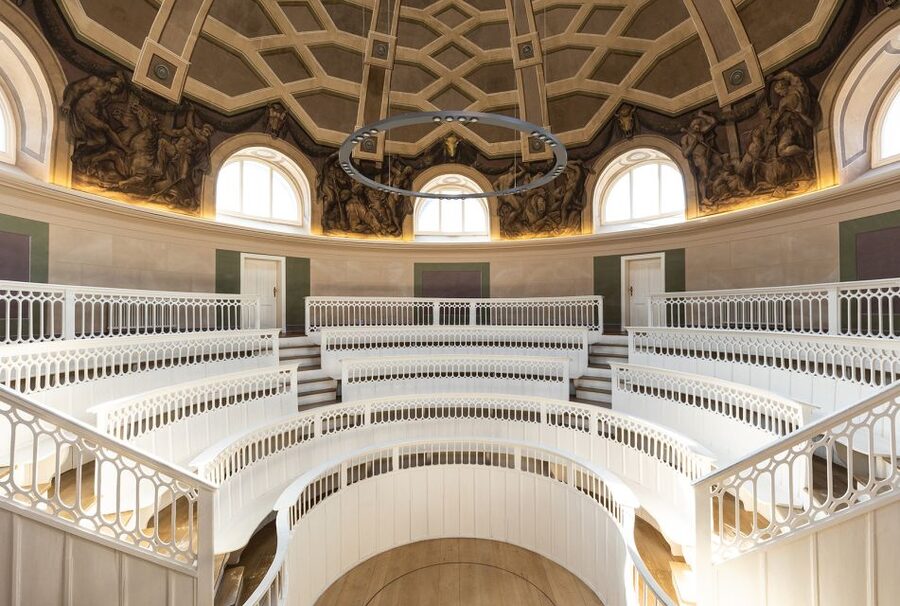
The final major stop is the Animal Anatomical Theatre, often referred to as the TAT. You visit this building from inside, making it the tour’s most distinctive physical experience.
The building is described as Berlin’s oldest surviving teaching building. Its nickname, a medicine temple, hints at its unusual character. It was built for medical instruction, and the setting gives you a direct sense of how teaching once took place before modern lecture halls and digital displays.
This is not just another old room added to a walking route. The theatre explains how medicine was taught through observation, demonstration, and anatomy. The building itself becomes part of the lesson.
I would save your attention for the guide’s explanation here. The room’s age and atmosphere may catch your eye first, but the important question is how the space was used and what it tells you about medical education. The visit provides a strong ending because it turns an abstract story about teaching into a place you can actually enter.
There is one practical warning. The Animal Anatomical Theatre can adjust its opening hours at short notice for closed events, and it is closed on public holidays. If this interior visit is the main reason you want to book, check the tour date carefully. Without access to the TAT, the experience would lose its most unusual stop.
What the two-hour format gives you
Two hours is enough time for a focused introduction to the Charité without taking over your whole day. The route combines outdoor walking, historical explanation, and one interior visit.
You should wear comfortable shoes, since the experience moves along city streets and across the university area. The supplied details do not give a precise walking distance or group size, so I would not plan a tight connection immediately afterward.
The pace should suit you if you like stops with explanation rather than a rapid list of landmarks. The guide has several centuries to cover, including medical figures, Nobel Prize winners, the Nazi period, and the Animal Anatomical Theatre. That means the walk will necessarily select key episodes instead of telling every part of the Charité’s story.
The activity returns to the starting point, which is helpful if you are meeting someone afterward or continuing to another part of Berlin. Since the tour begins at a named crossroads rather than inside the hospital, you can also wait outside without entering a medical facility.
Is $27 a fair price?
At $27 per person, this is a reasonable price for a two-hour guided walk with an interior visit to a historic teaching building. You are paying for interpretation, not a long list of admissions or transport.
The value depends heavily on your interest in the subject. If you enjoy science, medicine, Berlin’s university life, or the history of institutions, the price is easy to justify. The tour covers 300 years and includes several major medical figures, which gives the experience more substance than a short neighborhood walk.
The value is weaker if you expect a broad Berlin sightseeing tour. You will not see the city’s main monuments, enter the hospital Bed House, or walk freely through the Charité grounds. You also need German-language ability, which limits the tour’s usefulness for many international visitors.
One good feature is the ability to reserve now and pay later. You can hold a place without paying immediately, and cancellation is free up to 24 hours before the start time. Those terms make it easier to fit the walk into a changing Berlin schedule, though the key attraction, the TAT, can still change its opening hours.
Who should book this Berlin medical history walk?
I would recommend this tour to you if you fall into one of these groups:
- You have a strong interest in medicine, surgery, anatomy, or public health.
- You want to understand Berlin through its scientists and university institutions.
- You enjoy serious historical subjects, including the moral failures of respected institutions.
- You speak German well enough to follow a live, detailed explanation.
- You prefer a focused two-hour activity over a full-day museum visit.
- You want to see an unusual historic building that ordinary sightseeing routes often skip.
Families with older children may also find the subject engaging, depending on their interest in anatomy and medical history. The tour’s tone includes life-and-death stories and the Nazi period, so it may not suit young children or anyone seeking a light afternoon activity.
You should also choose it for the content, not for hospital access. The Charité Bed House is seen from outside, and the hospital grounds are closed to group tours. The Animal Anatomical Theatre is the interior highlight.
Practical advice before you go
The tour starts in front of the Charité Tower at Schumannstraße, Charitéplatz, and Charitéstraße. Since the tour starts on time, arrive early enough to identify the correct crossroads and locate the guide.
Check the available starting time when you book. The experience lasts two hours and ends at the same meeting point.
Most important, confirm the language. The live guide speaks German. This is not a tour with a choice of English, German, and other languages.
If you are visiting on a public holiday, check carefully because the Animal Anatomical Theatre is closed on public holidays. The TAT may also alter its hours at short notice because of closed events.
Think of the outing as a walking seminar with a historic room at the end. That mindset will help you appreciate what the tour offers and avoid expecting a behind-the-scenes hospital visit.
Should you book the Charité tour?
Book it if you want Berlin’s medical story, especially the connection between famous scientists, university teaching, and the ethical problems of modern medicine. The combination of outdoor history and the Animal Anatomical Theatre gives the tour a clear identity, and $27 is fair for two hours of guided content.
Skip it if you do not understand German, need full access to the hospital campus, or prefer a general Berlin sightseeing walk. Before booking, confirm that the TAT is open on your chosen date. If it is, and you can follow German comfortably, this is a thoughtful and unusual way to see a less familiar side of Berlin.
FAQ
Where does the Charité walking tour start?
The tour starts in front of the Charité Tower at the crossroads of Schumannstraße, Charitéplatz, and Charitéstraße.
Where does the tour end?
The activity ends back at the meeting point in front of the Charité Tower.
How long does the tour last?
The walking tour lasts two hours. Starting times depend on availability.
What language is the tour conducted in?
The live tour guide speaks German.
Can I enter the Charité Bed House?
No. The Charité Bed House is viewed from outside because it is a functioning hospital facility with protection and hygiene regulations.
Can group tours enter the Charité Campus Mitte grounds?
No. The hospital grounds are not accessible for group tours.
Is the Animal Anatomical Theatre always open during the tour?
No. The Animal Anatomical Theatre is closed on public holidays and may adjust its opening hours at short notice for closed events.
Just added around Berlin
- Berlin: Private Guided Tour of the Main Sights★ 5.0 · 13 reviews
- Private Highlights of Berlin Bike Tour★ 5.0 · 13 reviews
- Modern Berlin Private Walking Tour: Diverse, Vibrant and Exciting German Capital★ 5.0 · 13 reviews
- Tour in Berlin from Warnemünde and Rostock Cruise Port★ 4.1 · 13 reviews
- Berlin: Stasi Museum Private Guided Tour with Entry Ticket★ 4.8 · 13 reviews
- Private Food Tour Experience with a born and bred Berliner★ 5.0 · 14 reviews
- Berlin: Rheinsberg Palace Entrance Ticket★ 4.8 · 14 reviews
- Berlin in one day – day tour with an expert guide★ 5.0 · 14 reviews
Walking Tours, compared.




Berlin’s Best: 2 Hour Walking Tour Third Reich and the Cold War
Read our review →


Third Reich Berlin: Hitler and WWII Walking Tour
Read our review →Browse the lists this tour appears in