
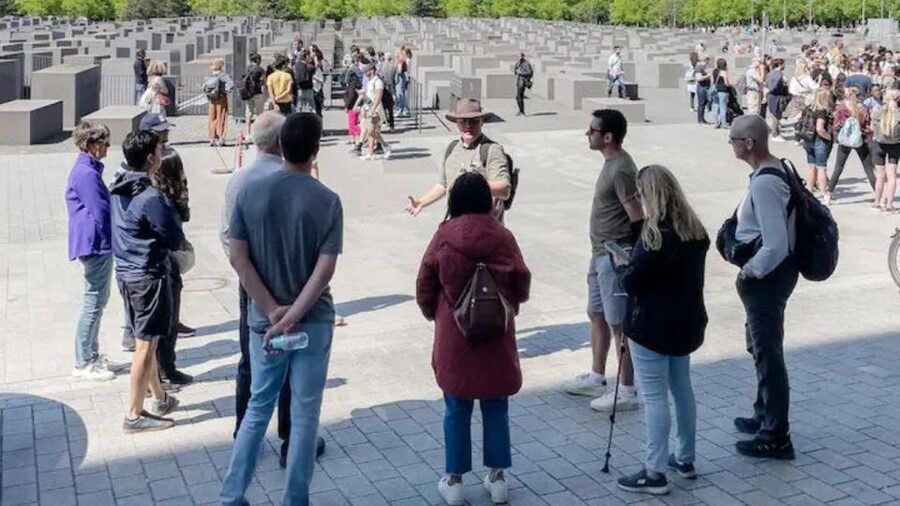
Reviewed · WALKING TOURS
Berlin: Hitler’s Berlin The Rise & Fall Guided Walking Tour
The darkest story is written into Berlin’s streets. This 150-minute walking tour makes Nazi Germany easier to understand by linking Hitler’s rise, dictatorship, terror, and defeat to the places where those events unfolded. I like its clear structure, and I like that trained history guides use old photographs and maps instead of relying on dramatic gimmicks. The main drawback is the amount of walking, all outdoors, so weather and footwear matter.
At $47 per person, this is a fair price for a small-group tour led in English by a guide with an academic background in Second World War history. Guides such as Scott, Hannah, and Matthew have been praised for explaining difficult subjects in simple terms and welcoming questions. Just remember that this is a street tour, not an indoor museum visit.
In This Review
- Key points to know before you book
- Starting at Brandenburg Gate with the big picture
- The Reichstag and the collapse of democratic government
- The Soviet War Memorial and the Battle of Berlin
- The Holocaust Memorial and the human cost
- Hitler’s bunker site and the final days of the war
- Johann Georg Elser and the difficult choices of resistance
- The Finance Ministry and the machinery of control
- The Topography of Terror and the nerve center of repression
- Why the guides matter so much
- Is $47 a fair price?
- Who should book this walk?
- Should you book Hitler’s Berlin?
- FAQ
- How long does the Hitler’s Berlin walking tour last?
- How much does the tour cost?
- Where does the tour meet?
- Where does the tour finish?
- Is the tour conducted in English?
- Does the tour enter museums or indoor exhibitions?
- Which major sites are included?
- Is the tour wheelchair accessible?
- What should I bring?
- Can I cancel for a full refund?
Key points to know before you book
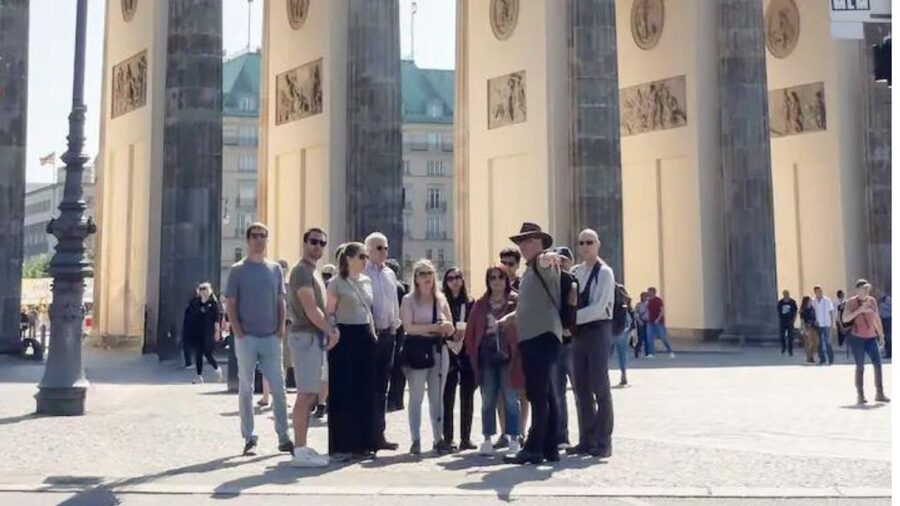
- Hitler’s rise is explained step by step: The tour connects the Reichstag, Brandenburg Gate, and former government sites to the dismantling of democracy.
- The route covers major Nazi and wartime landmarks: You visit the Holocaust Memorial, Hitler’s bunker site, the former Gestapo and SS headquarters, and the Soviet War Memorial.
- The guides are the main strength: Scott, Hannah, Matthew, Mark, and other guides have earned praise for clear explanations, warmth, and detailed answers.
- It is an outdoor history lesson: You do not enter the indoor exhibitions at the Topography of Terror or other museums.
- The walking is substantial but paced with stops: Most of the time is spent moving between sites, listening, and pausing for questions.
- Bring weather protection: Comfortable shoes, water, and your own umbrella or walking stick are sensible additions.
Starting at Brandenburg Gate with the big picture
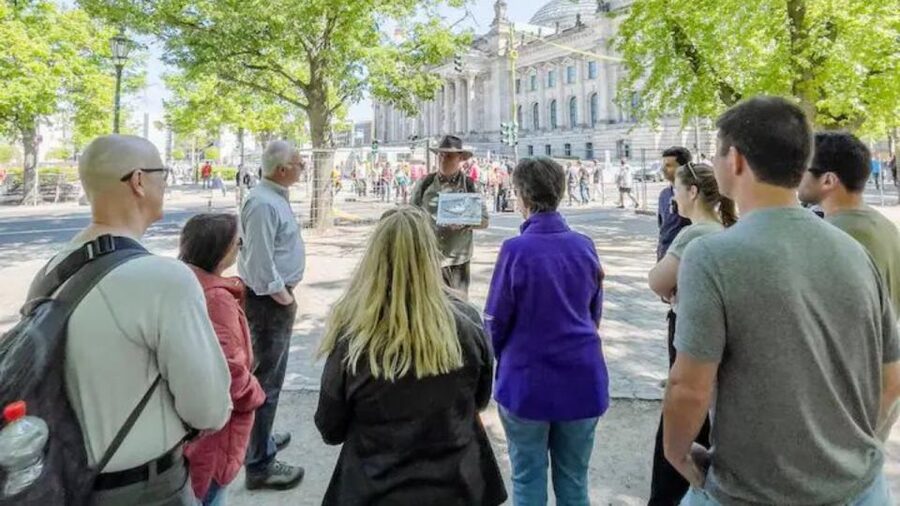
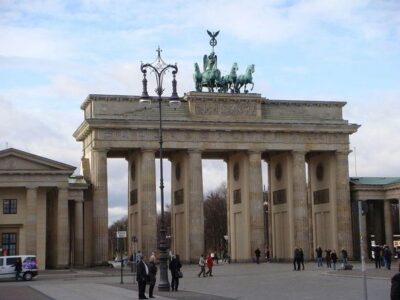
You meet at the Tourist Office by Brandenburg Gate and look for the blue umbrella. This is a sensible starting point because the gate is one of Berlin’s best-known symbols, but the guide uses it for more than a quick photograph.
Here, the story begins with the political world Hitler entered and then destroyed. The tour explains how the Nazis seized power, how democracy was dismantled, and how Berlin became the capital of the Third Reich. That opening matters because it keeps the tour from becoming a parade of war ruins. You get the political framework first, then see how ideology and power appeared in the city.
The Brandenburg Gate stop lasts about 10 minutes. It is short, so you should arrive ready to listen rather than expect a long photo session. The route is designed to keep moving, and the guide’s explanation gives you useful context for every stop that follows.
The nearby Memorial to the Sinti and Roma Victims of National Socialism brings another persecuted group into the story. This is an important stop because Nazi persecution was not limited to one community. The guide places the memorial within the wider system of racial policy, exclusion, and murder.
You spend about 10 minutes here. It is a quiet, focused pause early in the walk, and it helps prevent the tour from presenting Nazi crimes through only one narrow lens.
More Walking Tours in Berlin
- Discover Berlin Half-Day Walking Tour
★ 5.0 · 9,624 reviews - Berlin: Third Reich and Cold War 2 Hour Walking Tour
★ 4.9 · 6,830 reviews - Berlin: Discover Berlin Walking Tour
★ 4.9 · 5,998 reviews
The Reichstag and the collapse of democratic government
The Reichstag is one of the most useful places to discuss the end of the German republic. Today, the building represents democracy and reunified Germany. During the Nazi period, it became associated with the destruction of democratic government and the concentration of power.
The guide explains how the Nazis turned political opportunity into dictatorship. You will hear about the seizure of power, the use of fear and propaganda, and the methods used to remove opposition. This is where the tour’s promise of a clear narrative pays off. Instead of treating Hitler’s dictatorship as something that appeared overnight, the guide shows how control was built.
The Reichstag portion lasts about 20 minutes and includes walking and sightseeing. You should not expect an indoor visit to the parliamentary building. The value is in the setting and the explanation, especially if you are still trying to sort out the order of events before the Second World War.
I especially like this part for first-time learners. The subject can feel tangled, with elections, political violence, laws, police power, and propaganda all happening at once. A good guide can put those pieces in order, and the strongest guide comments describe exactly that ability.
The Soviet War Memorial and the Battle of Berlin
The route then reaches the Soviet War Memorial in Tiergarten. This stop shifts the focus from political control and persecution to the military defeat of Nazi Germany and the violent Battle of Berlin.
The memorial is a reminder that the final battle was fought in the city itself. It also places Berlin within the larger war in Europe, rather than treating Hitler’s bunker as an isolated ending. Your guide connects the military events to the condition of Berlin in 1945 and the collapse of the regime.
About 20 minutes are set aside here. There is time for a photograph, explanation, and questions. The memorial gives you a physical place to consider the enormous cost of the war, though the subject is necessarily heavy.
This is also one of the points where the tour’s outdoor format is most noticeable. You may be standing in open space while listening, so a coat, water, and weatherproof clothing will make a real difference. A sudden downpour did not stop one particularly determined group, but you should not count on dry weather in Berlin.
The Holocaust Memorial and the human cost
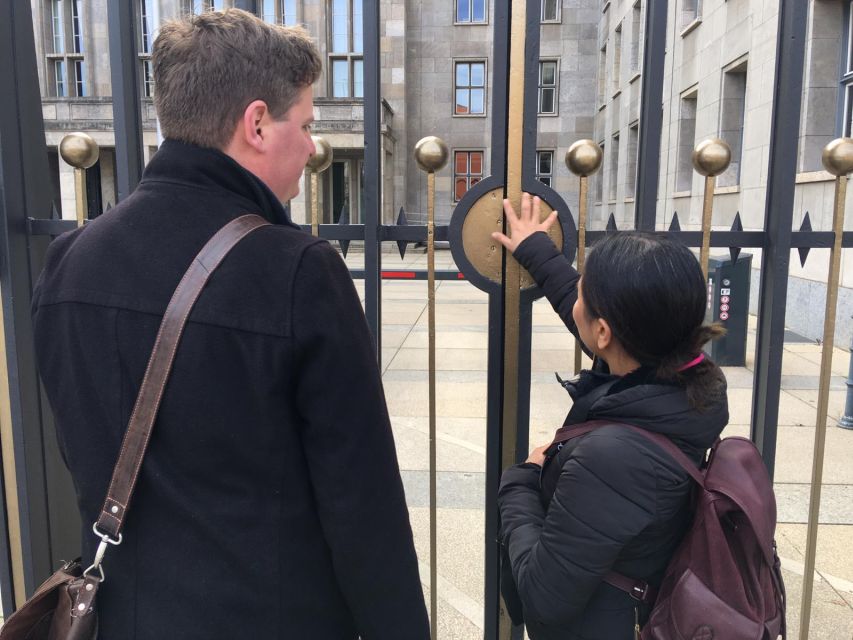
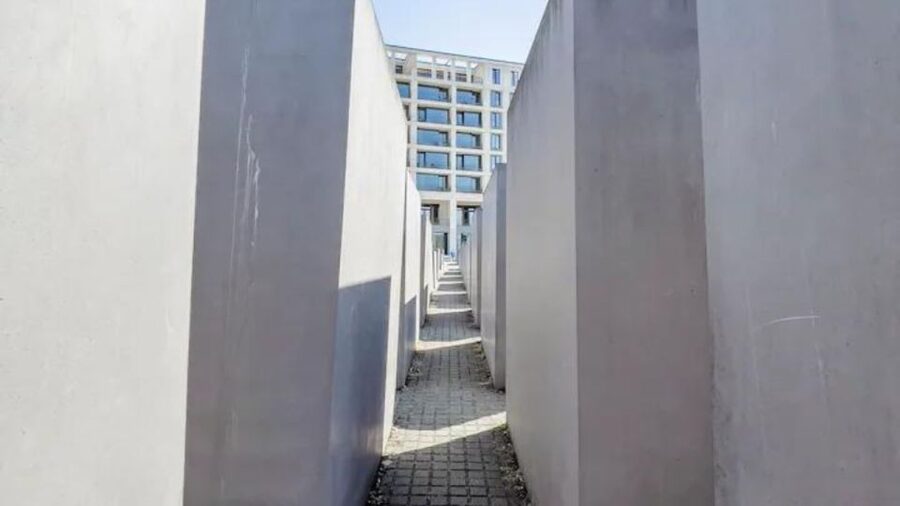
The Memorial to the Murdered Jews of Europe is one of Berlin’s most powerful and often misunderstood sites. The tour gives you time to consider what the memorial represents and explains why it occupies such a central place in the city.
The stop lasts about 20 minutes. You will have a photo opportunity, guided commentary, and time for reflection. The route does not treat the memorial as a quick backdrop for pictures. Its purpose is tied to the systematic murder of Europe’s Jewish population, and the guide explains how antisemitic policy developed into mass murder.
This is a crucial point in the tour because it links ideology to action. You learn not only that Jewish people were targeted, but how propaganda, law, fear, bureaucracy, deportation, and murder worked together.
The memorial can be busy, and the surrounding open area offers little shelter. The guide’s exact presentation may vary, but the overall approach is intended to be direct and respectful. If you prefer to spend a long quiet period at memorials, you may want to return later on your own.
Something different for another day:
- Berlin: Reichstag, Dome and Government District Guided Tour
★ 4.7 · 18,288 reviews - Berlin: 1-Hour City Tour by Boat with Guaranteed Seating
★ 4.3 · 16,993 reviews - Berlin: Boat Tour Along the River Spree
★ 4.4 · 11,252 reviews - Berlin: Hop-on Hop-off Bus Tour with Live Commentary
★ 4.3 · 8,579 reviews
Hitler’s bunker site and the final days of the war
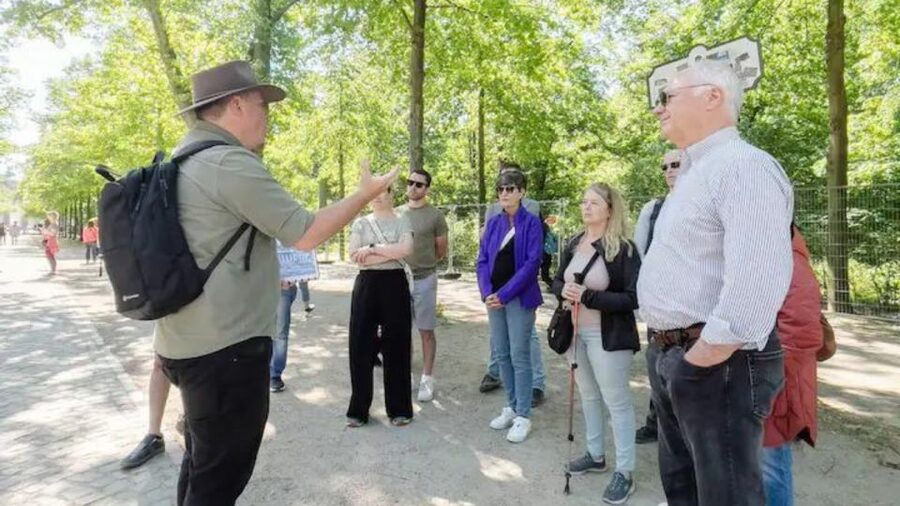
The bunker site is one of the tour’s most anticipated stops. It is also a place where a guide adds real value, because there is no grand surviving entrance or dramatic underground room to visit. The site is marked by an ordinary setting, which makes the explanation more important than the view.
The guide describes the final days of Hitler’s regime and the point where the war in Europe came to an end. You hear how the collapse of Nazi Germany unfolded on Berlin’s streets and why the bunker became linked to the last days of the dictatorship.
The stop lasts about 15 minutes. It is best approached as a history lesson at a location, not as a preserved attraction. If you expect to enter Hitler’s bunker, this tour will disappoint you. If you want to understand the site, its setting, and its place in the collapse of the regime, it is worthwhile.
This stop also helps strip away the mythology surrounding Hitler. The guide’s job is to explain the events accurately without turning the bunker into a shrine or spectacle. That restrained approach suits the subject.
Johann Georg Elser and the difficult choices of resistance
The Johann Georg Elser Memorial introduces an individual who tried to kill Hitler before the war reached its full scale. It gives the tour a chance to discuss resistance inside Germany and the risks faced by people who opposed the regime.
The stop is around 10 minutes. It is brief, but useful. The story widens your understanding of life under dictatorship. Not everyone accepted Nazi rule, yet resistance was dangerous, fragmented, and often crushed.
I value this stop because tours about Hitler can become too focused on the dictator himself. Elser’s memorial shifts attention toward an ordinary German who made an extraordinary decision. It also gives the guide a way to discuss courage without pretending that opposition was simple or easy.
The Finance Ministry and the machinery of control
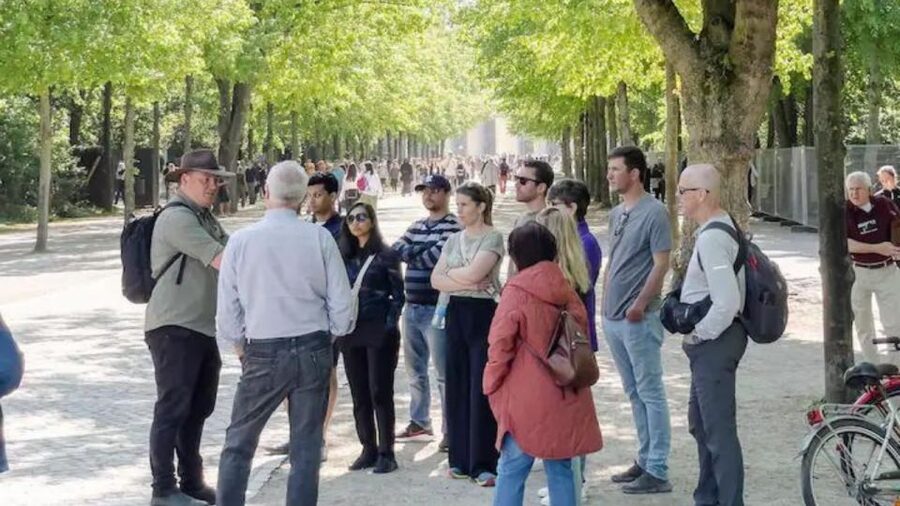
The German Finance Ministry is a short, five-minute stop, but it fits the route’s larger argument. Nazi rule depended on offices, laws, money, records, and civil institutions, not just speeches and soldiers.
At this point, the guide can show how government systems supported persecution and war. A brief stop is appropriate here. You will not spend long examining the building, but the location helps make a larger point: repression required administration.
This is one of several places where the tour works best as a connected story. On its own, the building may not seem like a major attraction. In sequence with the Reichstag, memorials, bunker site, and former security headquarters, it helps explain how dictatorship operated in daily life.
The Topography of Terror and the nerve center of repression

The walk finishes at the Topography of Terror, located at the former Gestapo and SS headquarters. This is a fitting end because the site brings together the themes of police power, terror, surveillance, and organized persecution.
The tour spends about 15 minutes here. You receive guided commentary and a final chance to ask questions, but the indoor museum exhibition is not included. You can return afterward if you want more detail, and I recommend allowing extra time if the subject has caught your interest.
Ending here also gives the tour a clear shape. You start with democracy and political power, move through persecution and war, and finish with the institutions that enforced Nazi terror. The route does not pretend that one walk can cover every part of the period, but it gives you a useful framework for further reading or museum visits.
The Topography of Terror area can be busy and exposed to the weather. Since the tour ends here, you can continue exploring independently, find a nearby place to rest, or visit the indoor exhibition if you choose.
Why the guides matter so much
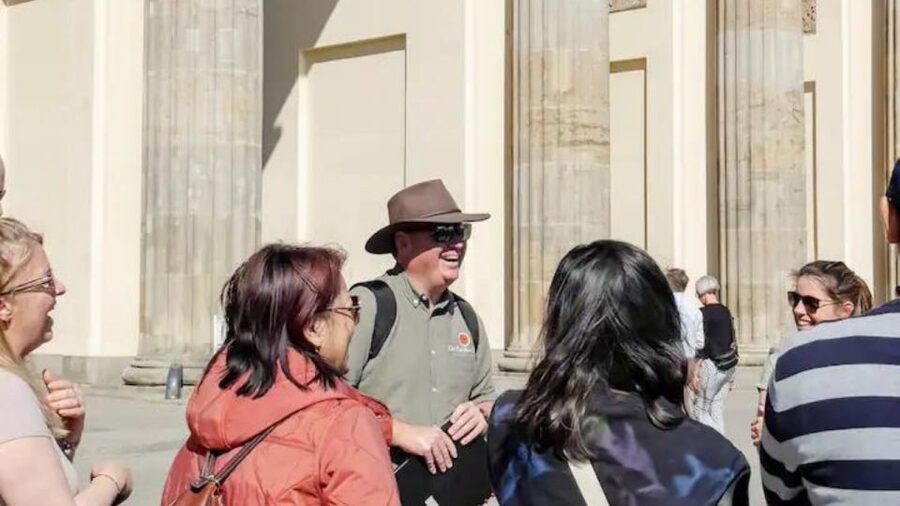
The strongest feature of this tour is the guide. Names change from departure to departure, but Scott, Hannah, Matthew, Mark, Ben, Jörg, and others have been singled out for clear speaking, warmth, and strong command of the subject.
Scott is repeatedly praised for answering questions, keeping the group engaged while walking, and explaining difficult facts without losing people. Hannah is noted for heartfelt stories and for presenting more than one angle when discussing the past. Matthew is described as especially good at detailed answers and making complex material easy to remember.
That variety is useful because this subject needs both facts and judgment. You want a guide who can explain political events, military developments, antisemitic ideology, daily life, and personal stories without turning the walk into a lecture. You also want room for questions.
Some guides have continued beyond the scheduled 150 minutes when the group needed more explanation. That is a welcome sign of care, but you should plan around the stated duration rather than assume the tour will always run long.
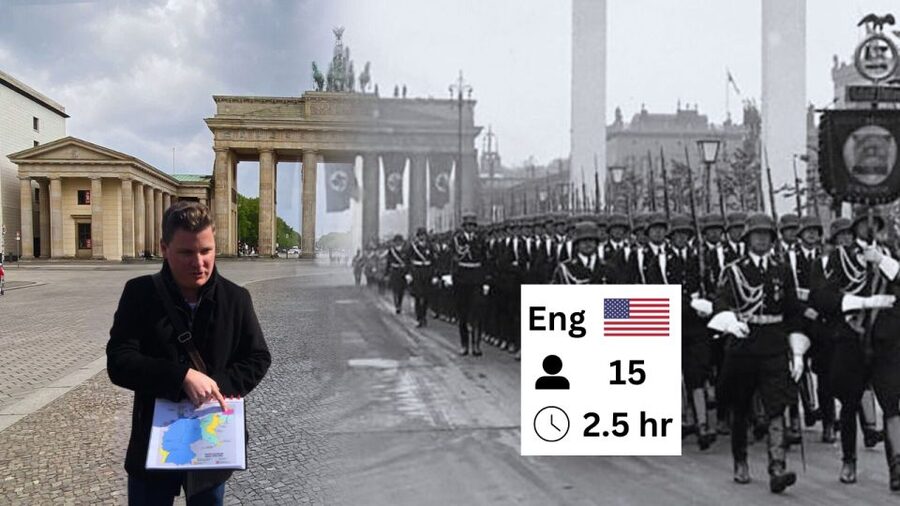
The use of Then and Now photographs and historic maps is another practical strength. Berlin changed enormously after 1945, and many wartime sites are difficult to recognize. Visual comparisons help you see where buildings once stood and how the city has been rebuilt.
Is $47 a fair price?
At $47 per person, this is not the cheapest way to walk around central Berlin. You can visit many public memorials independently at no entry cost. The question is what you want from the visit.
You are paying for a structured route, a live English-speaking guide, historic maps, old photographs, and a connected explanation of events from 1933 through 1945. You also receive the chance to ask questions at the exact places being discussed. For someone new to the subject, that can save hours of trying to assemble the story alone.
The price is easier to justify if you plan to visit the indoor Topography of Terror exhibition afterward or pair the walk with another museum. The tour gives you an outline, while a museum visit can add documents, photographs, and personal accounts.
It is less suitable if you already know Berlin’s Nazi-era sites well and prefer to explore quietly at your own pace. You may find the fixed route and timed stops limiting. For most people who want an informed introduction, the price is reasonable.
Who should book this walk?
I would choose this tour if you want a serious introduction to Nazi Berlin but do not want a dry academic lecture. It suits adults, older children, and teenagers who can manage a difficult subject and a substantial walk. One parent specifically found that even teenagers enjoyed the experience.
It also suits people who already know a fair amount about the Second World War. Several strong guide comments describe learning new details despite having prior background. The value comes from local context and the connection between sites, not from a basic list of dates.
You should think twice if you dislike outdoor tours, need frequent indoor breaks, or expect to enter historic buildings. The route is wheelchair accessible, but it still involves considerable walking, so check that the pace and distance work for your needs.
Wear comfortable shoes and dress for the forecast. Bring water, and bring your own umbrella or walking stick if you need one. There is no food, drink, hotel pickup, public transportation, or indoor museum admission included.
You can cancel up to 24 hours before the start for a full refund, and the reserve-now, pay-later option gives you some flexibility. The tour is offered in English.
Should you book Hitler’s Berlin?
Book it if you want the major sites to make sense as one story. The route handles the difficult balance between Hitler’s rise, the persecution of Jewish people and other groups, the machinery of terror, resistance, and the final battle for Berlin.
I particularly recommend it for a first visit to Berlin, especially early in your stay. The guide can give you a framework for later visits to the Reichstag area, memorials, and museums. At $47, it offers solid value when you want context rather than just photographs.
Skip it if you want indoor access, very little walking, or a tour focused only on military hardware and battle tactics. Otherwise, this is a thoughtful, well-paced way to confront Berlin’s darkest period with a guide who can explain what happened and why it mattered.
FAQ
How long does the Hitler’s Berlin walking tour last?
The tour lasts 150 minutes, or two and a half hours.
How much does the tour cost?
The price is $47 per person.
Where does the tour meet?
You meet at the Tourist Office at Brandenburg Gate. Look for the blue umbrella.
Where does the tour finish?
The walk finishes at the Topography of Terror.
Is the tour conducted in English?
Yes. The live tour guide speaks English.
Does the tour enter museums or indoor exhibitions?
No. The tour takes place outdoors, and indoor museum exhibitions are not included.
Which major sites are included?
The route includes Brandenburg Gate, the Memorial to the Sinti and Roma Victims of National Socialism, the Reichstag, the Soviet War Memorial in Tiergarten, the Holocaust Memorial, Hitler’s bunker site, the Johann Georg Elser Memorial, the German Finance Ministry, and the Topography of Terror.
Is the tour wheelchair accessible?
Yes, the activity is listed as wheelchair accessible. It also involves a considerable amount of walking.
What should I bring?
Wear comfortable shoes and clothing suited to the weather. A water bottle is advised, and you should bring your own umbrella or walking stick if needed.
Can I cancel for a full refund?
Yes. You can cancel up to 24 hours in advance for a full refund. You can also reserve the tour and pay later.
Just added around Berlin
- Berlin: Private Guided Tour of the Main Sights★ 5.0 · 13 reviews
- Private Highlights of Berlin Bike Tour★ 5.0 · 13 reviews
- Modern Berlin Private Walking Tour: Diverse, Vibrant and Exciting German Capital★ 5.0 · 13 reviews
- Tour in Berlin from Warnemünde and Rostock Cruise Port★ 4.1 · 13 reviews
- Berlin: Stasi Museum Private Guided Tour with Entry Ticket★ 4.8 · 13 reviews
- Private Food Tour Experience with a born and bred Berliner★ 5.0 · 14 reviews
- Berlin: Rheinsberg Palace Entrance Ticket★ 4.8 · 14 reviews
- Berlin in one day – day tour with an expert guide★ 5.0 · 14 reviews
Walking Tours, compared.


Berlin’s Best: 2 Hour Walking Tour Third Reich and the Cold War
Read our review →
Third Reich Berlin: Hitler and WWII Walking Tour
Read our review →Browse the lists this tour appears in