
Reviewed · WALKING TOURS
Berlin Highlights Private Guided Walking Tour
Berlin’s past is never far from its pavements. This private walking tour links the Brandenburg Gate, Reichstag, Holocaust Memorial, Berlin Wall, Checkpoint Charlie, Museum Island, and other central sights in about four hours. I like the private format, which lets your guide adjust the pace and answer your family’s questions, and I like the strong focus on Berlin’s Nazi and Cold War past. The main caution is simple: this is a serious walking tour, despite wording about pickup, and one complaint reported a tour lasting only three hours rather than four.
A good guide makes or breaks this experience. Guides named in the feedback, including James, Ben, Joana, Pip, Johnny, Jesse, Sebastien, Marcos, and Loana, were praised for clear storytelling, patience, and adapting the route to personal interests. Still, the tour does not include entry into the Reichstag dome or the museums, and the non-refundable booking policy means you should check the details carefully before paying.
In This Review
- Key points before you book
- A four-hour introduction to Berlin’s complicated center
- Brandenburg Gate and the Reichstag: Berlin’s political front door
- The Holocaust Memorial and Hitler’s bunker site
- Potsdamer Platz shows Berlin rebuilding itself
- Berlin Wall history near the former Nazi headquarters
- Gendarmenmarkt and Bebelplatz add royal Berlin to the route
- Unter den Linden leads to Museum Island
- What the private guide adds
- Price, group size, and the walking question
- Timing, route changes, and possible drawbacks
- Who should book this Berlin tour?
- Should you book it?
- FAQ
- Where does the tour start?
- Where does the tour end?
- How long does the tour last?
- Is this a walking tour?
- Is transportation included?
- Are museum or monument admission tickets included?
- How many people can join the private tour?
- What language is offered?
Key points before you book
- Berlin’s major political sights in one route: Brandenburg Gate, the Reichstag, Bebelplatz, Gendarmenmarkt, Museum Island, and Potsdamer Platz all fit into the central-city circuit.
- A walking tour in practical terms: You should expect to walk for most or all of the four-hour experience. Comfortable shoes are essential.
- Private attention for up to 15 people: Your own group participates, making it easier to ask questions or request more time for Nazi history, the Cold War, photography, or family-friendly explanations.
- Mostly outdoor sightseeing: Admission is listed as free because the experience focuses on monuments, squares, memorials, and exterior views rather than museum visits.
- Strong guide feedback, with a few service problems: Many guides earned high praise for storytelling and flexibility, but some complaints involved unclear pickup wording, a missed guide, a shorter tour, and booking confusion.
- Good value for a group: At $417.23 for up to 15 people, the price is most attractive when shared by several people, not when booked by one or two.
A four-hour introduction to Berlin’s complicated center
This is not a gentle stroll through pretty streets. Berlin’s central sights tell a hard story: Prussian royalty, Nazi dictatorship, the Holocaust, the destruction of World War II, the Cold War, and German reunification.
The route covers a lot of ground. The listed stops add up to about 175 minutes of time at sights, leaving roughly 65 minutes for walking between them, orientation, questions, photographs, and any small changes made by your guide. That is a full program, so you should expect a steady pace rather than a slow photographic walk.
The private arrangement helps here. A guide can spend more time on the topics that matter to you instead of delivering the same speech to a large mixed group. If your group is fascinated by World War II, you can lean into that. If you care more about architecture, modern Berlin, or photography, you can ask for that balance.
The experience is offered in English, and public transportation may enter the plan. One guide was praised for helping a group navigate transport and another adjusted the tour after a late start. That flexibility is useful, but you should still confirm whether your version will be entirely on foot and where the guide will meet you.
More Walking Tours in Berlin
- Discover Berlin Half-Day Walking Tour
★ 5.0 · 9,624 reviews - Berlin: Third Reich and Cold War 2 Hour Walking Tour
★ 4.9 · 6,830 reviews - Berlin: Discover Berlin Walking Tour
★ 4.9 · 5,998 reviews
Brandenburg Gate and the Reichstag: Berlin’s political front door
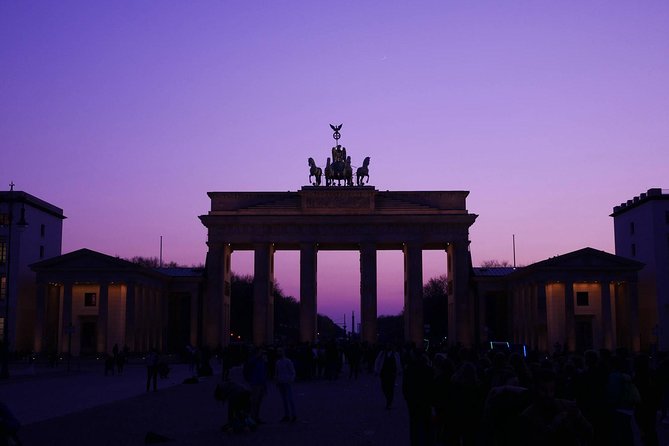
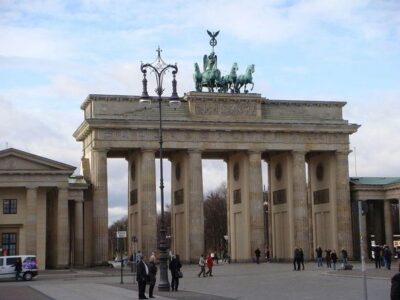
The tour begins at Pariser Platz, Berlin’s grandest square and the address of the Brandenburg Gate. The square sits at the end of Unter den Linden, the city’s royal boulevard, so it is an excellent place to begin understanding how Berlin was shaped around power and ceremony.
The Brandenburg Gate was once a royal entrance used by the Hohenzollern family and one of 18 gates in the old city. It survived Napoleon and World War II, then spent almost three decades beside the Berlin Wall, a symbol of a divided city. Today, it represents German unity.
Your guide is likely to spend more time here than the short 15-minute listing suggests if your group has questions. The Gate is visually simple, but its political story is anything but simple. Give yourself a moment to look beyond the famous columns and consider how the same monument has been used by monarchy, dictatorship, division, and reunification.
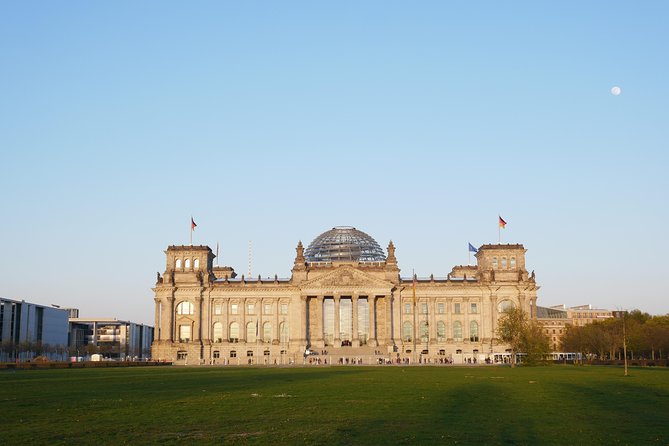
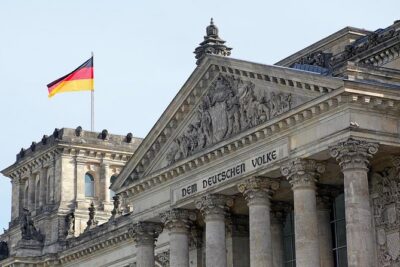
Nearby, the Reichstag provides another lesson in power. This is Germany’s parliament, linked to the 1933 fire that helped Adolf Hitler take total control. It was also fought over during the Battle of Berlin, when German and Soviet forces battled for the city in the final stage of World War II.
The building now has a glass dome designed by British architect Norman Foster. The tour description refers to the dome, but it does not promise admission. Treat this as an exterior visit and historical explanation, not a dome tour. If entering the Reichstag matters to you, arrange that separately and do not assume this walking tour includes it.
The Holocaust Memorial and Hitler’s bunker site
The Memorial to the Murdered Jews of Europe is one of the most difficult places on the route. Its field of stone stelae creates a stark, uneven space in the middle of the city. The memorial honors the six million Jews murdered by the Nazis in concentration and extermination camps across Europe.
The listed visit lasts about 20 minutes. That is enough for an introduction, but the site rewards quiet time. I would avoid treating it as a quick photo stop. Walk through with care, listen to your guide, and allow the memorial’s design to work without forcing it into a tidy explanation.
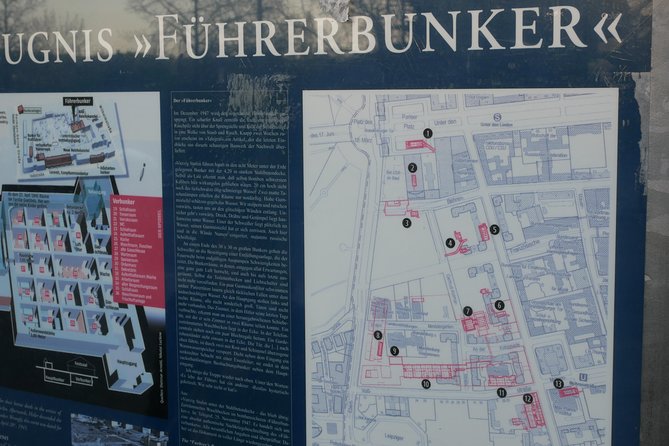
A short distance away, the former Führerbunker site is now a parking area with a modest information sign. This lack of dramatic remains is the point. Hitler spent his final days there, married Eva Braun, and died by suicide as the war in Europe ended.
The guide discusses the final days of the Nazi regime and Hitler’s last hours. This is a useful place to separate history from the mythmaking that often surrounds the bunker. You will not see an underground room or preserved Nazi headquarters. You will see an ordinary modern setting marking an extraordinary and terrible place.
Potsdamer Platz shows Berlin rebuilding itself
Potsdamer Platz shifts the tone. In the 1920s, it was one of Europe’s busiest traffic intersections, with more than 20,000 cars crossing each day. World War II nearly destroyed it, and the site remained divided and neglected during the Cold War.
The district was rebuilt during the 1990s and early 2000s as one of Berlin’s most modern precincts. That contrast is valuable. In a single stop, you move from the city’s prewar energy to wartime ruin, Cold War division, and post-reunification construction.
The stop is listed at 10 minutes, so expect a brief explanation rather than an architectural tour. If modern buildings and urban change interest you, tell your guide. A private tour gives you a better chance of turning a short stop into a useful discussion instead of simply checking off another square.
Something different for another day:
- Berlin: Reichstag, Dome and Government District Guided Tour
★ 4.7 · 18,288 reviews - Berlin: 1-Hour City Tour by Boat with Guaranteed Seating
★ 4.3 · 16,993 reviews - Berlin: Boat Tour Along the River Spree
★ 4.4 · 11,252 reviews - Berlin: Hop-on Hop-off Bus Tour with Live Commentary
★ 4.3 · 8,579 reviews
Berlin Wall history near the former Nazi headquarters
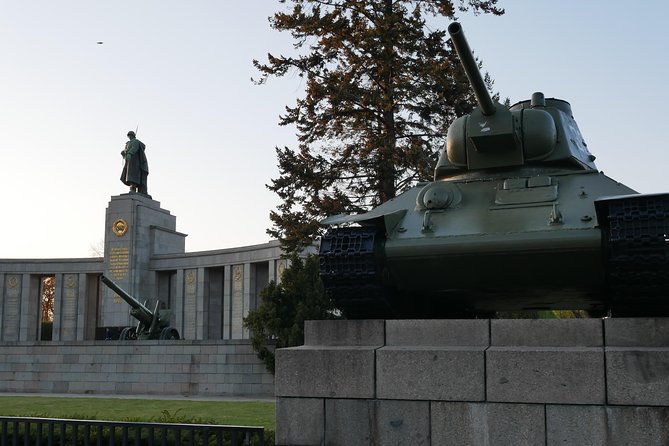
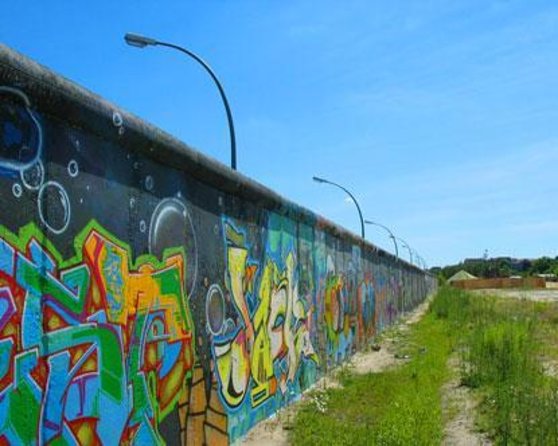
The Berlin Wall memorial section connects two dark chapters of German history. The route visits one of three remaining stretches of the Wall, located near the former SS and Gestapo headquarters. It is also across from the former Nazi Luftwaffe headquarters, a heavy reminder that Berlin’s Nazi past and Cold War story occupy the same city blocks.
The Wall can be hard to understand from photographs alone. A guide can explain how the barrier worked, why this area mattered, and how the city changed after reunification. The Wall was not just a slab of concrete. It cut through streets, neighborhoods, families, and daily routines.
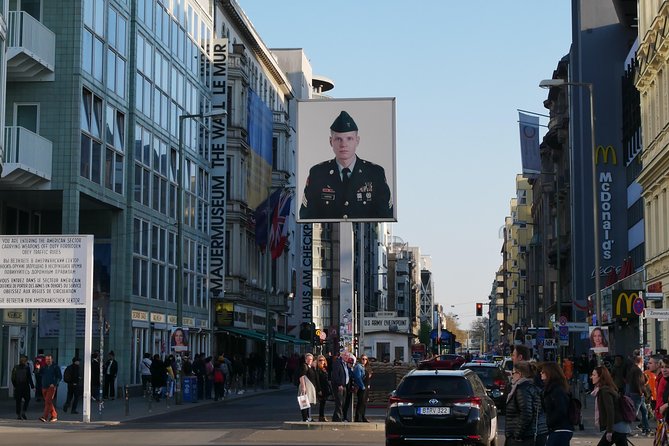
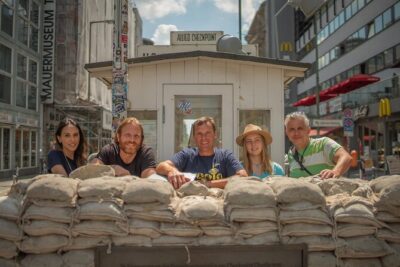
The tour then continues to Checkpoint Charlie, the famous Cold War crossing point controlled by American and Soviet forces. The surviving location is heavily visited and can feel more commercial than solemn. That is a fair limitation. The value here comes less from the present-day checkpoint display and more from understanding the confrontations and escape attempts connected with the crossing.
If Cold War history is your main reason for booking, say so at the start. The private setup lets you ask for more context rather than accepting only the standard ten-minute stop.
Gendarmenmarkt and Bebelplatz add royal Berlin to the route
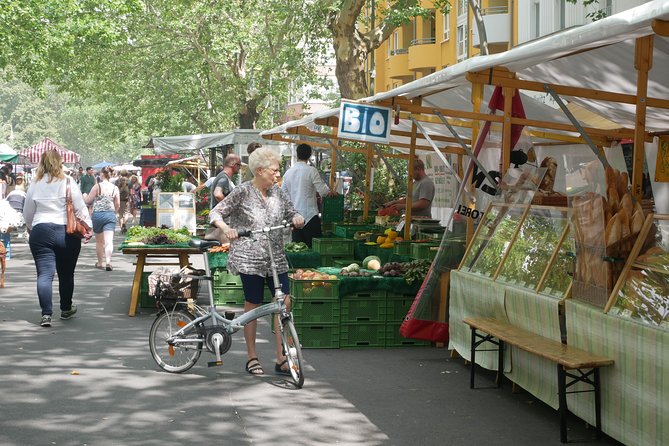
Gendarmenmarkt is one of Berlin’s most handsome squares. It is framed by the French Cathedral, the German Cathedral, the Konzerthaus, gardens, and statues. After so much twentieth-century history, this square offers a reminder that Berlin was also a royal and cultural capital.
The tour allows about 15 minutes here. That is enough to take in the layout and hear the basic story, though not enough for detailed visits inside every building. The square’s architectural balance makes it one of the best photo stops on the route.
Bebelplatz brings the story back to Nazi Germany. Formerly known as Frederick’s Forum after Frederick the Great, the square now includes Humboldt University, the Opera House, the former Royal Library, and Hedwig’s Cathedral.
It was also the site of the Nazi book burning on May 10, 1933. The event is remembered by an underground room of empty bookshelves, visible through a pane of glass in the pavement. The route information does not promise a close visit to that installation, but your guide should explain the event and its meaning.
Bebelplatz is especially useful for showing how dictatorship took hold in public spaces. The square is not an isolated war memorial. It is part of a normal working city, surrounded by institutions associated with learning, religion, and culture.
Unter den Linden leads to Museum Island
Unter den Linden means under the linden trees. This grand boulevard connects the Brandenburg Gate with Museum Island and the former City Palace. It gives the tour a clear geographic thread, linking the royal entrance to Berlin’s historic center.
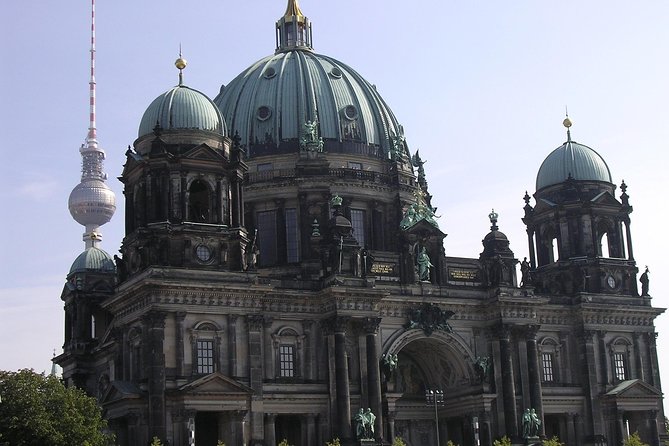
The route ends at Museum Island, a UNESCO World Heritage Site with six world-class museums, Berlin Cathedral, and the newly rebuilt Hohenzollern city palace. Since museum admissions are not included, you will mainly receive an outdoor introduction and suggestions for a later visit.
This is one of the tour’s best practical features. After four hours, you will know where the museums are and how they fit into the city’s history. You can then return to the Pergamon Museum, Neues Museum, Bode Museum, or another site with a better sense of what you want to see. The tour itself does not provide enough time to visit them properly.
The listed itinerary gives Museum Island about 15 minutes. That is a quick orientation, not a museum day. Plan a separate visit if you want interiors, collections, or the cathedral.
What the private guide adds
The best feedback focuses on the guides, not on luxury extras. James was praised for bringing history to life and pointing out small details that are easy to miss. Ben was described as patient, entertaining, and good at answering questions. Joana asked about interests and timing before shaping the tour around the group.
Pip was praised for making four hours pass quickly. Jesse adjusted the pace, asked thoughtful questions, and even helped a group find its way through the station toward the airport after the tour. Johnny was noted for allowing time for photographs and responding fully to questions. Loana engaged a family that included a 12-year-old and a 20-year-old, while Sebastien received praise for explaining a great deal of German history in a short time.
These details tell you what to hope for: not just dates and names, but a guide who connects each place to the next. The experience is strongest when your guide explains why the Reichstag, Wall, bunker, memorial, and Brandenburg Gate belong in one story.
Guide quality can vary. Two serious complaints involved a guide who called in sick 30 minutes after the scheduled start and another case of confusion about the booked tour. Those situations appear unusual, but they matter because a private tour costs enough that communication should be dependable.
Price, group size, and the walking question
The listed price is $417.23 for a group of up to 15 people. For a full group, that works out to about $28 per person. For four people, it is roughly $104 per person. For two people, the cost is about $209 each.
That makes the tour a much better deal for a family or group of friends than for a couple. You are paying for a private guide, not admissions or transport. The value comes from personal attention and a route shaped around your interests.
The walking element needs special attention. The experience is described as a private walking tour, and one person was surprised by how much walking was required after interpreting pickup and drop-off language as a vehicle service. Another group paid for a taxi during part of the route because of a knee problem.
You should wear comfortable walking shoes and have a moderate level of fitness. If you have limited mobility, ask about the route and transport before booking. Service animals are allowed, and the route is near public transportation, but that does not turn it into a vehicle tour.
Pickup is offered, with the guide meeting you at your accommodation or chosen meeting point before visiting the listed sights. The advertised meeting point is Brandenburg Gate at Pariser Platz, and the activity ends back there. Because the wording can be read in different ways, confirm the exact meeting arrangement and whether pickup changes the route.
Timing, route changes, and possible drawbacks
The tour is advertised at about four hours, but one complaint reported a three-hour experience and said the places visited did not fully match the expected list. This is the clearest practical weakness. A private route may change due to timing, guide judgment, traffic, ceremonies, or group interests, but you should still ask at the start which stops will receive the most attention.
The stop times are short at several places. Ten minutes at the Reichstag, Potsdamer Platz, Checkpoint Charlie, and Unter den Linden gives you an introduction, not a full visit. Fifteen minutes at Brandenburg Gate, Gendarmenmarkt, Bebelplatz, or Museum Island lets you orient yourself and take photographs, but you will need separate time for museums and interiors.
The good news is that guides have shown flexibility. Some adjusted pace and subject matter, helped with public transport, or accommodated a late start. The private format gives you a better chance of shaping the day, but it cannot make four hours long enough for every Berlin sight.
The booking is non-refundable and cannot be changed for any reason. That makes careful planning important. Check the walking requirement, meeting location, group size, and your preferred historical focus before you commit.
Who should book this Berlin tour?
I would choose this experience for a first visit when you want Berlin’s central landmarks tied together by one guide. It also suits families, small groups, and history-focused visitors who ask many questions and want to adjust the pace.
It is a good fit if you want an overview before visiting museums on your own. It works especially well for people interested in World War II, the Nazi regime, the Holocaust, the Berlin Wall, and the Cold War.
I would hesitate if you need a vehicle, have difficulty walking, want substantial indoor sightseeing, or prefer a slow architecture-and-photography tour. I would also think twice if only two people are sharing the price, unless private guiding is a high priority.
Should you book it?
Book this tour if you want a focused introduction to Berlin and can comfortably walk for several hours. Its greatest strength is the guide: the right person can turn a chain of famous sites into a clear story about power, destruction, division, and reunification.
Before paying, confirm that your group understands this is primarily an outdoor walking experience, that the Reichstag dome and museums are not included, and that the full four-hour duration is expected. If those points suit you, the private format and strong guide feedback make this a useful way to get your bearings fast in Berlin.
FAQ
Where does the tour start?
The listed meeting point is Brandenburg Gate at Pariser Platz, 10117 Berlin. Pickup from your accommodation or another chosen meeting point is also offered, so confirm the exact arrangement when booking.
Where does the tour end?
The activity ends back at the meeting point.
How long does the tour last?
The tour is scheduled to last about four hours. One reported experience lasted three hours, so it is sensible to confirm the expected duration with the provider.
Is this a walking tour?
Yes. It is a private guided walking tour, and you should expect to walk for most or all of the experience. Comfortable walking shoes are recommended.
Is transportation included?
The tour is near public transportation, and guides may help you use it. The experience does not promise a private vehicle. One group arranged a taxi for part of the route and paid the fare separately.
Are museum or monument admission tickets included?
The listed stops show free admission, but the tour is mainly an outdoor visit to squares, memorials, historic sites, and building exteriors. Entry to the Reichstag dome or Museum Island museums is not stated as included.
How many people can join the private tour?
Your private group can include up to 15 people.
What language is offered?
The tour is offered in English.
Just added around Berlin
- Berlin: Private Guided Tour of the Main Sights★ 5.0 · 13 reviews
- Private Highlights of Berlin Bike Tour★ 5.0 · 13 reviews
- Modern Berlin Private Walking Tour: Diverse, Vibrant and Exciting German Capital★ 5.0 · 13 reviews
- Tour in Berlin from Warnemünde and Rostock Cruise Port★ 4.1 · 13 reviews
- Berlin: Stasi Museum Private Guided Tour with Entry Ticket★ 4.8 · 13 reviews
- Private Food Tour Experience with a born and bred Berliner★ 5.0 · 14 reviews
- Berlin: Rheinsberg Palace Entrance Ticket★ 4.8 · 14 reviews
- Berlin in one day – day tour with an expert guide★ 5.0 · 14 reviews
Walking Tours, compared.


Berlin’s Best: 2 Hour Walking Tour Third Reich and the Cold War
Read our review →
Third Reich Berlin: Hitler and WWII Walking Tour
Read our review →Browse the lists this tour appears in