
Reviewed · WALKING TOURS
Berlin: Guided Walking Tour in English
Berlin makes more sense when you walk it in order. This 2.5-hour tour links Alexanderplatz to Brandenburg Gate, turning scattered landmarks into one readable story. I like the clear east-to-west route, and I like that it includes both grand sights and difficult places such as Checkpoint Charlie and Hitler’s former bunker site. The main consideration is pace: you cover a lot of central Berlin on foot, and there is no food or drink included.
The tour is led in English by a local guide, with J.R., Jule, Ru, and Will receiving especially warm praise for their engaging storytelling and practical advice. At $31 per person, the value is good if you want a strong first look at central Berlin, though you should arrive ready to walk and dress for the weather.
In This Review
- Key points at a glance
- Why this route works for Berlin
- Meeting Berlin at Alexanderplatz
- Museum Island and the Hohenzollern palace question
- Humboldt University and the heart of old Berlin
- Checkpoint Charlie and the divided city
- The former Hitler bunker site
- Finishing at Brandenburg Gate
- Guides, pace, and the practical side
- Who will get the most from this walk?
- Is $31 a fair price?
- Should you book this Berlin walking tour?
- FAQ
- Where does the Berlin walking tour meet?
- How long does the tour last?
- What language is the tour conducted in?
- What places does the tour visit?
- Does the tour include museum entry?
- Is food or drink included?
- Is the tour wheelchair accessible?
- Can I cancel the booking?
Key points at a glance
- A chronological route: Begin with medieval Berlin at Alexanderplatz and finish with modern Germany at Brandenburg Gate.
- Museum Island without a museum visit: Enjoy the open spaces and views of Berlin Cathedral, but this tour does not include entry to the museums.
- Berlin’s hardest stories are included: Checkpoint Charlie and the former Hitler bunker site receive important attention.
- A useful first-day tour: Guides such as J.R. have also offered practical tips for seeing Berlin afterward.
- A central meeting point: Meet in front of the Red Town Hall, near the TV Tower and Neptune Fountain.
- Flexible booking: You can cancel up to 24 hours before the start for a full refund and reserve without paying immediately.
Why this route works for Berlin
Berlin is not a city that hands you its story in one tidy square. Its important places are spread across a large central area, and many of its most meaningful sights are separated by ordinary streets, modern buildings, and open plazas.
That is why I like the design of this walking tour. It starts at Alexanderplatz, on the eastern side of the historic center, and moves west through several chapters of Berlin’s past. You begin with the city’s older roots, pass through the royal and intellectual center, confront the Nazi and Cold War eras, and finish at the Brandenburg Gate, a symbol of a united Germany and Europe.
The sequence matters. You are not simply ticking off famous places. You are being given a framework for understanding why Berlin looks so unusual today. Old fragments sit beside bold modern reconstruction. Empty spaces carry as much meaning as grand buildings.
The tour lasts about two and a half hours. That is long enough to cover the route but short enough to fit into a busy sightseeing day. I would schedule it early in your visit, since the route gives you useful orientation for later museum visits and independent walks.
The price is $31 per person. Food, drinks, and hotel pickup are not included. The booking fee also covers the guide’s payment, despite the tour being connected with a general pay-as-you-wish format. That detail is worth understanding before you book: you are not simply paying a small reservation charge and then expected to decide on another amount afterward.
More Walking Tours in Berlin
- Discover Berlin Half-Day Walking Tour
★ 5.0 · 9,624 reviews - Berlin: Third Reich and Cold War 2 Hour Walking Tour
★ 4.9 · 6,830 reviews - Berlin: Discover Berlin Walking Tour
★ 4.9 · 5,998 reviews
Meeting Berlin at Alexanderplatz
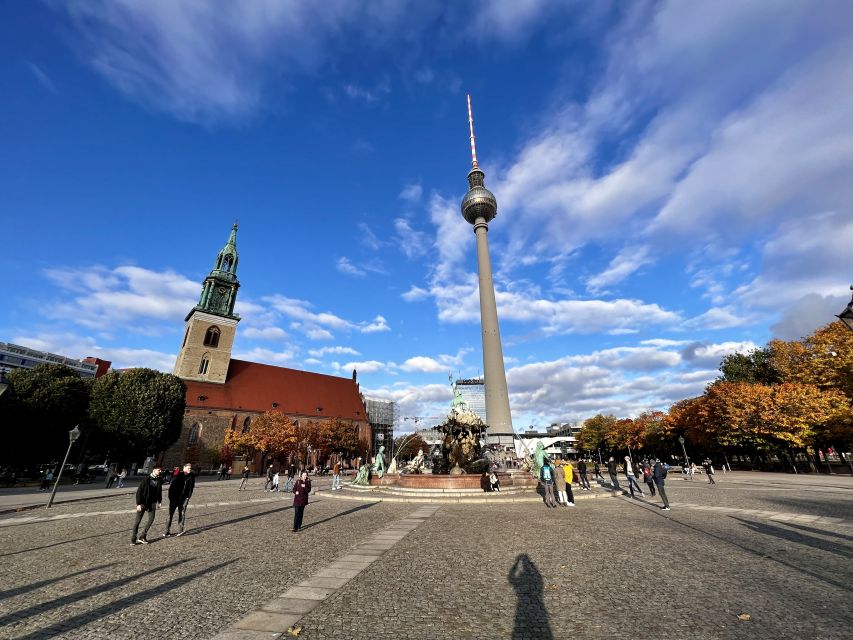
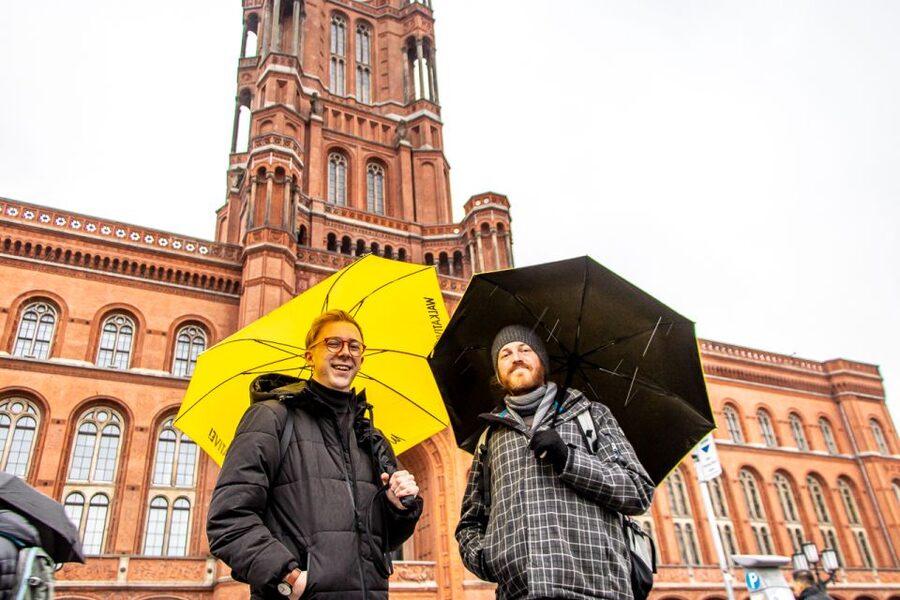
The meeting point is in front of the Red Town Hall, called the Rotes Rathaus, close to the TV Tower and Neptune Fountain. Arrive at least 10 minutes early. Alexanderplatz is a busy part of town, and giving yourself a few minutes makes it easier to locate the group without beginning the tour in a rush.
The TV Tower provides an easy landmark. It is one of the first modern symbols of Berlin you will see, but the tour quickly shifts attention to the city’s older beginnings. That contrast is part of Berlin’s appeal. Alexanderplatz can feel broad and modern, yet nearby are traces of the small medieval settlement from which Berlin grew.
You will learn about the original town and how limited Berlin was for much of its early history. This opening is useful because it keeps the city in proportion. Berlin is now Germany’s capital, but it was not always a major European center. Starting with that modest beginning makes the later royal, imperial, Nazi, divided, and reunited chapters easier to follow.
I also like beginning here instead of at Brandenburg Gate. The famous gate is a natural finale, not a starting point. Moving toward it gives the walk a sense of direction and lets the meaning of that final stop build gradually.
Museum Island and the Hohenzollern palace question
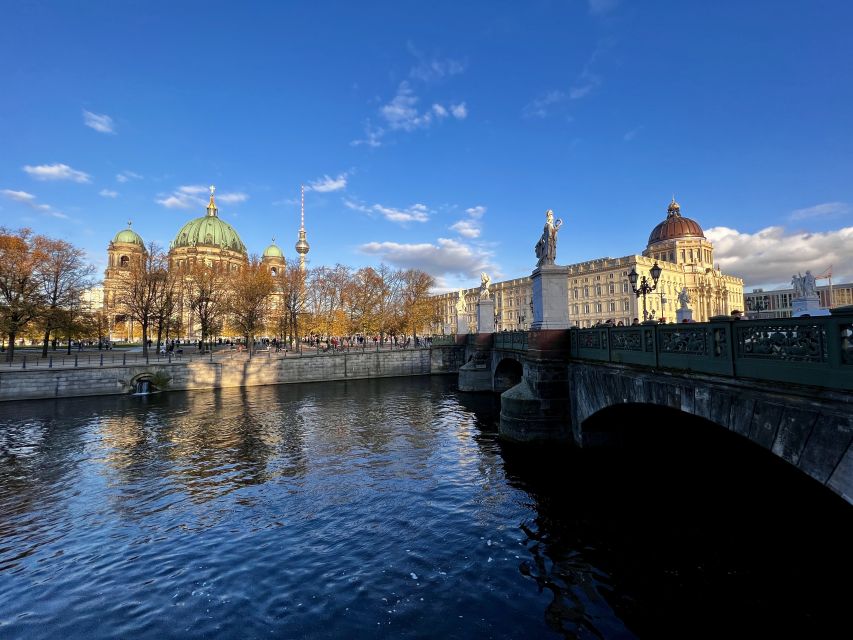
From Alexanderplatz, the route continues toward the former Royal Palace of the Hohenzollern. The palace was controversially reconstructed, so this is more than a quick photo stop. It opens a useful discussion about how Berlin chooses what to rebuild, what to preserve, and how a city deals with symbols connected to its royal past.
You will then reach Museum Island, one of central Berlin’s most impressive public spaces. The tour does not include museum admission, but you can enjoy the setting and the view of Berlin Cathedral. This is an important distinction. If you want to go inside the Pergamon Museum, Neues Museum, or another institution on the island, plan a separate visit and ticket.
The open space around Museum Island gives the walking tour room to breathe. After the broad modern feel of Alexanderplatz and the political questions around the palace, the cathedral and surrounding buildings create a more formal scene. Your guide can connect the architecture to Berlin’s ambitions as a royal and cultural capital.
You should not expect a detailed museum tour here. The value is in seeing the island as part of the city’s larger story and getting a strong view of the cathedral. If museums are your main reason for visiting Berlin, use this stop as an orientation rather than a substitute for entering them.
Humboldt University and the heart of old Berlin
The walk continues past Humboldt University and into the central streets. This section helps connect Berlin’s intellectual life with its political center. The university is one of the city’s major historic institutions, and seeing it in the sequence after the palace and cathedral gives you a sense of how power, learning, and culture were grouped in the old center.
The route then leads through a maze of central streets toward Gendarmenmarkt. That wording matters: this is a walking tour through the city, not a hop between isolated monuments. You will spend time moving through streets that may seem less dramatic than the major squares, but those transitions help you understand how Berlin’s center fits together.
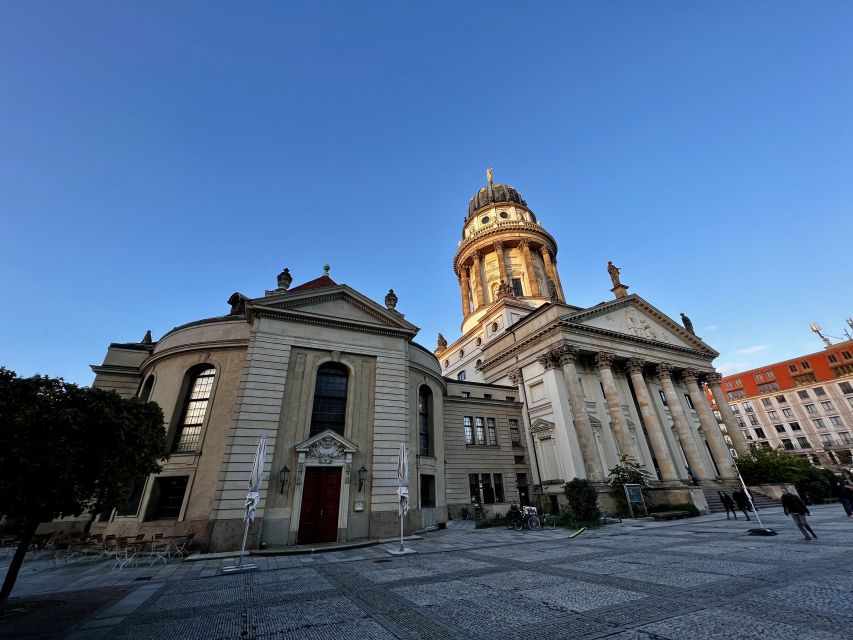
Gendarmenmarkt is one of the prettiest squares in the German capital. It has the kind of composed architecture that many people expect from a grand European city, and it offers a welcome change from the rougher edges and open construction zones found elsewhere in central Berlin.
Your guide’s job here is to explain the square rather than simply point at it. I value that approach because Gendarmenmarkt can be admired in a few minutes, but its place in Berlin’s story is easier to grasp when it is set beside the other sites you have already seen.
Something different for another day:
- Berlin: Reichstag, Dome and Government District Guided Tour
★ 4.7 · 18,288 reviews - Berlin: 1-Hour City Tour by Boat with Guaranteed Seating
★ 4.3 · 16,993 reviews - Berlin: Boat Tour Along the River Spree
★ 4.4 · 11,252 reviews - Berlin: Hop-on Hop-off Bus Tour with Live Commentary
★ 4.3 · 8,579 reviews
Checkpoint Charlie and the divided city
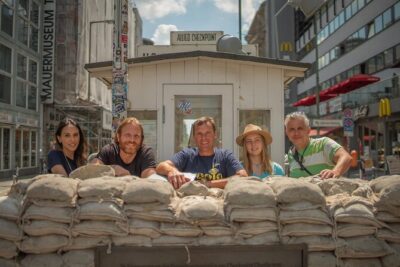
The tone changes at Checkpoint Charlie. This is where the tour turns firmly toward the 20th century and the Berlin Wall.
Checkpoint Charlie is one of Berlin’s best-known Cold War sites, but it can also feel heavily packaged for tourists. That is precisely why historical explanation helps. Without context, you might see a famous sign and a busy photo stop. With context, you can understand the border crossing as part of the system that divided Berlin and separated families, streets, and daily lives.
The tour explains the history of the Berlin Wall and the role of Checkpoint Charlie in that divided city. I consider this one of the most useful parts of the route because Berlin’s Cold War story is easy to reduce to a few images. A guide can show how the wall affected the city as a whole rather than treating it as a single monument.
You should also keep your expectations realistic. This is a walking explanation, not a visit to a large museum or preserved stretch of wall with extensive exhibits. If you want a longer look at the Wall, you will need to add another site to your Berlin plans.
Still, this stop earns its place. The tour’s chronological structure means you arrive here with a sense of the city that came before, making the division feel like a rupture rather than an isolated event.
The former Hitler bunker site
The next stop deals with one of the darkest chapters in German history: the place where Hitler’s former bunker stood.
There is no grand bunker interior to tour here. The location is significant partly because it is ordinary. That can feel anticlimactic if you expect a dramatic ruin, but the plain setting is also the point. It gives your guide space to discuss the final days of the Nazi regime, the destruction around the site, and the careful way Germany handles places tied to Hitler.
I appreciate that this stop is included without being turned into a spectacle. Berlin’s difficult history should be faced directly, but not turned into entertainment. A good guide can explain the facts, answer questions, and help you understand why the site looks as it does today.
This portion may be especially useful for anyone visiting Berlin without much background on the Second World War. The tour places the Nazi period within the wider story of the city, rather than allowing it to swallow every other chapter.
Finishing at Brandenburg Gate
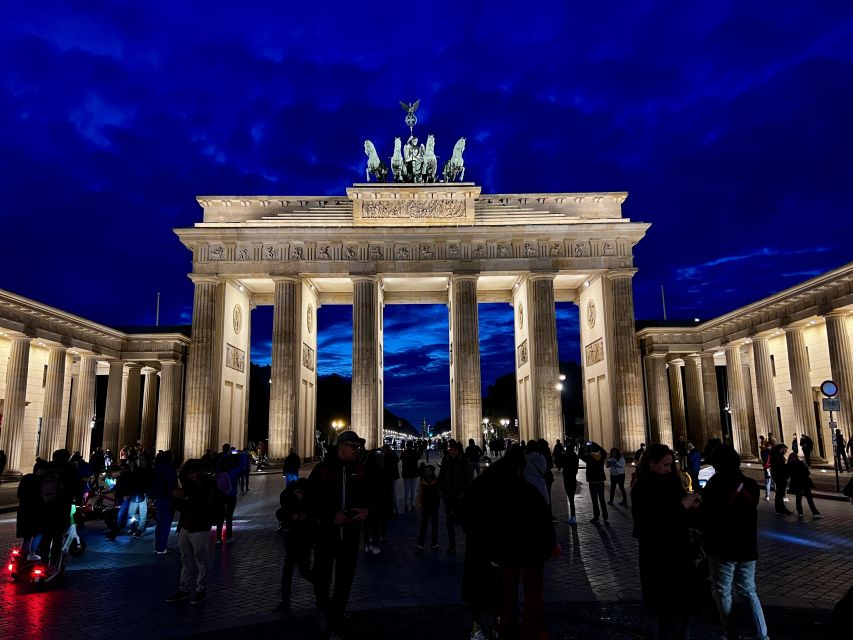
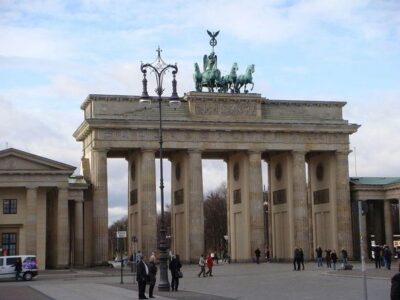
The route ends at Brandenburg Gate, with its broad classical archways and strong symbolic meaning. This is an effective final stop because the gate has come to represent German and European unity, not just Prussian power.
At the beginning of the tour, Berlin is presented as a small medieval settlement. Along the way, you encounter monarchy, scholarship, war, dictatorship, division, and political change. At Brandenburg Gate, those separate chapters come together in a place associated with a new era.
I like ending here more than beginning here. If you start at the gate, you may take a few photographs and move on without understanding why it matters. After the walk, the location feels like a conclusion to the route. You can also continue sightseeing from here, although the tour itself ends at the gate.
The Brandenburg Gate is a popular place, so do not expect a quiet finale. Its importance is not based on solitude. It is based on the layers of meaning your guide has built during the previous two and a half hours.
Guides, pace, and the practical side
The strongest praise has gone to the guides’ ability to mix facts with stories. J.R. was singled out for being entertaining, informative, and helpful with practical suggestions for the rest of a Berlin visit. Jule received warm praise for making the city easier to understand on foot, while Ru was noted for adjusting well to cold weather. Will was also credited with making the tour both informative and a good way to get exercise.
Those details tell you something useful about the experience. The guide can shape the day. Berlin history is heavy, and a flat lecture would make this route tiring. The best version of the tour balances serious subjects with a personable delivery.
The walk is described as wheelchair accessible, which makes the route possible for wheelchair users. You should still dress for the weather. Berlin’s streets and open squares can feel cold, wet, or exposed, and the tour continues outdoors for the full duration.
Food and drinks are not provided. One piece of practical advice is to use a restroom and bring water before you meet. A break is not clearly promised, so do not count on a scheduled café stop during the walk.
The tour has a rating of 4.9 from 18 reviews, with repeated praise for the guides’ clear explanations and engaging style. That is a small sample, but the consistency is encouraging. The one useful criticism was that the booking information could have explained restroom and drink arrangements more clearly.
Who will get the most from this walk?
I would recommend this tour to first-time visitors who want a usable overview before choosing which museums and memorials deserve more time. It is also a good fit if you prefer to learn by moving through real places rather than sitting in a lecture room.
History-minded visitors will appreciate the full sequence, from medieval Berlin to reunification. People with only a short stay can use the route to see many major central sights in one morning or afternoon.
You should think twice if you dislike walking, need frequent scheduled breaks, or want lengthy interior visits. The tour visits important buildings and locations, but it does not include museum entry, food, drinks, or hotel pickup.
Families and mixed-age groups may find the structure helpful, since the route gives each stop a clear place in the story. Still, the Nazi and Cold War sections require mature attention. Parents should decide if that subject matter suits their children.
Is $31 a fair price?
At $31 per person, the tour offers solid value for a live, English-language introduction to central Berlin. You are paying for a local guide, a carefully ordered route, and two and a half hours of explanation across a wide area.
The value is strongest if you would otherwise wander between these sights without understanding their connections. The tour can save you time and help you decide where to return later.
The price is less attractive if you only want photographs of the main landmarks. You can see many of the exterior sights independently, but you will not get the same chronological structure or the guide’s answers to questions.
Since the fee covers the reservation and the guide’s payment, you should treat the $31 as the main tour cost. The reserve-now-and-pay-later option also helps if your schedule is still changing, and cancellation is free up to 24 hours before the start.
Should you book this Berlin walking tour?
Book it if you want Berlin’s central sights to form one clear story. The route is smart, the final stop at Brandenburg Gate feels earned, and the guides have been praised for making serious history approachable without losing its weight.
I would book it near the start of your stay, arrive 10 minutes early at the Red Town Hall, wear weather-ready clothes, and bring water. If you want museum interiors, a longer look at the Berlin Wall, or a dedicated Nazi history tour, add those separately.
For a first orientation to Berlin at a reasonable price, this is a strong choice. It gives you the city’s major landmarks, but its real value is showing you how they connect.
FAQ
Where does the Berlin walking tour meet?
The meeting point is in front of the Red Town Hall, or Rotes Rathaus, near the TV Tower and Neptune Fountain at Alexanderplatz.
How long does the tour last?
The walking tour lasts 2.5 hours.
What language is the tour conducted in?
The tour is conducted in English by a live English-speaking local guide.
What places does the tour visit?
The route includes Alexanderplatz, the TV Tower area, medieval remnants of Berlin, the former Hohenzollern Royal Palace, Museum Island, Berlin Cathedral, Humboldt University, Gendarmenmarkt, Checkpoint Charlie, Hitler’s former bunker site, and Brandenburg Gate.
Does the tour include museum entry?
No. The experience includes the open space of Museum Island and views of Berlin Cathedral, but museum admission is not included.
Is food or drink included?
No. Food and drinks are not included in the tour.
Is the tour wheelchair accessible?
Yes. The activity is listed as wheelchair accessible.
Can I cancel the booking?
Yes. You can cancel up to 24 hours before the activity for a full refund. You can also reserve now and pay later.
Just added around Berlin
- Berlin: Private Guided Tour of the Main Sights★ 5.0 · 13 reviews
- Private Highlights of Berlin Bike Tour★ 5.0 · 13 reviews
- Modern Berlin Private Walking Tour: Diverse, Vibrant and Exciting German Capital★ 5.0 · 13 reviews
- Tour in Berlin from Warnemünde and Rostock Cruise Port★ 4.1 · 13 reviews
- Berlin: Stasi Museum Private Guided Tour with Entry Ticket★ 4.8 · 13 reviews
- Private Food Tour Experience with a born and bred Berliner★ 5.0 · 14 reviews
- Berlin: Rheinsberg Palace Entrance Ticket★ 4.8 · 14 reviews
- Berlin in one day – day tour with an expert guide★ 5.0 · 14 reviews
Walking Tours, compared.



Berlin’s Best: 2 Hour Walking Tour Third Reich and the Cold War
Read our review →
Third Reich Berlin: Hitler and WWII Walking Tour
Read our review →Browse the lists this tour appears in