
Reviewed · WALKING TOURS
Berlin: David Bowie & 1970s Berlin Guided Walking Tour
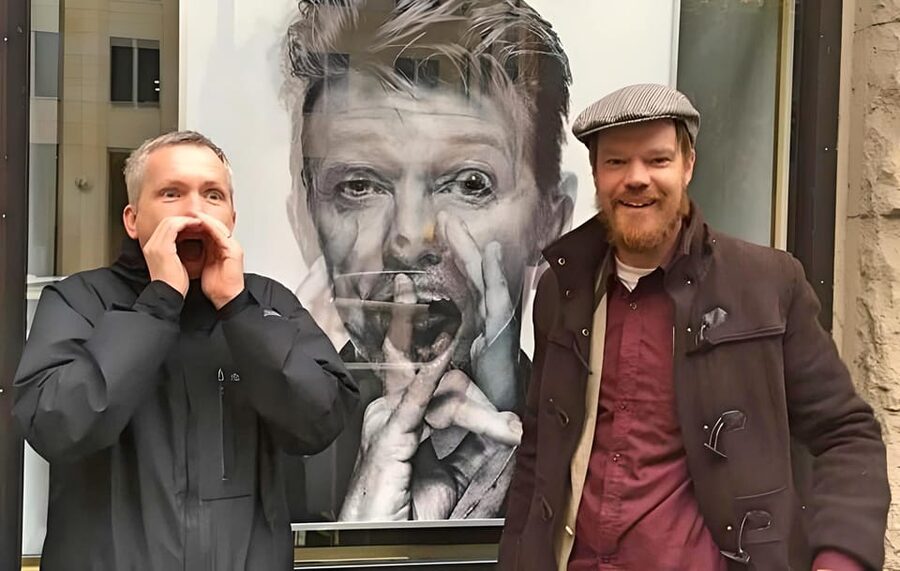
Berlin still sounds like Bowie. This three-hour guided tour follows the city that shaped Low, Heroes, and Lodger, linking recording studios, clubs, cafés, Cold War sites, and Bowie’s former home. I like the way it treats Berlin as more than a backdrop, showing how the city’s tension and creative freedom fed the music.
I also like the use of photographs, video clips, and music excerpts, which several guests found especially helpful. The main drawback is practical: this is not a continuous walk. You will use trains, buses, and possibly several public transport connections, and the $135 price can feel steep if you are traveling alone or mainly want a quick look at the famous sites.
In This Review
- Key points to know before you book
- Why Bowie’s 1970s Berlin still matters
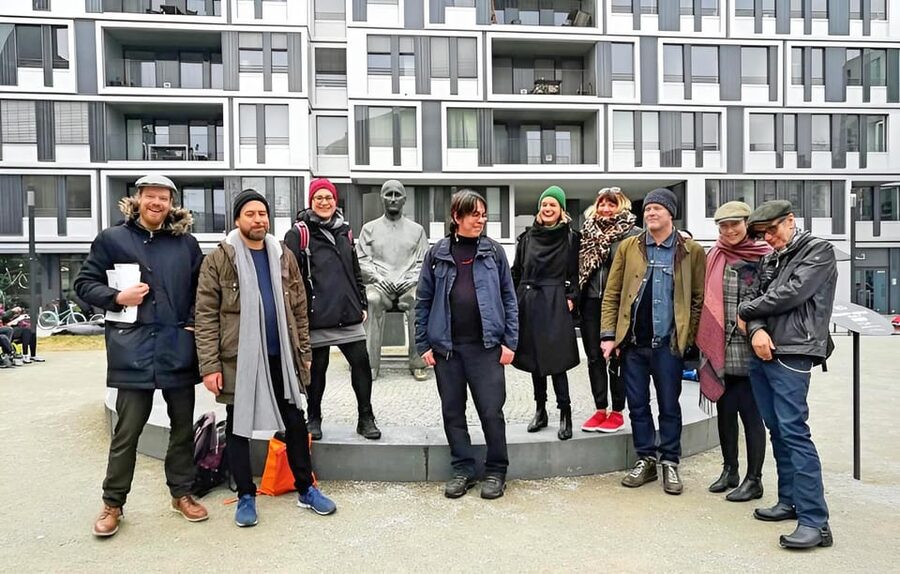
- Starting at Ständige Vertretung and Bertolt-Brecht-Platz
- Tränenpalast and the human side of a divided city
- Anhalter Bahnhof and the city’s fractured spaces
- Martin-Gropius-Bau and Topography of Terror
- Hansa Studios and the sound of West Berlin
- KaDeWe, Bahnhof Zoo, and Bowie’s West Berlin
- Bowie’s former home and the Iggy Pop connection
- Café Neues Ufer and the final stretch
- How the transport changes the experience
- Guides who make the biggest difference
- Is $135 a fair price?
- Who should book this Berlin tour?
- Should you book it?
- FAQ
- How long does the David Bowie and 1970s Berlin tour last?
- What language is the tour conducted in?
- Where is the meeting point?
- Will I walk the entire route?
- Do I need a public transport ticket?
- Does the tour include food or drinks?
- Can I cancel the booking?
Key points to know before you book
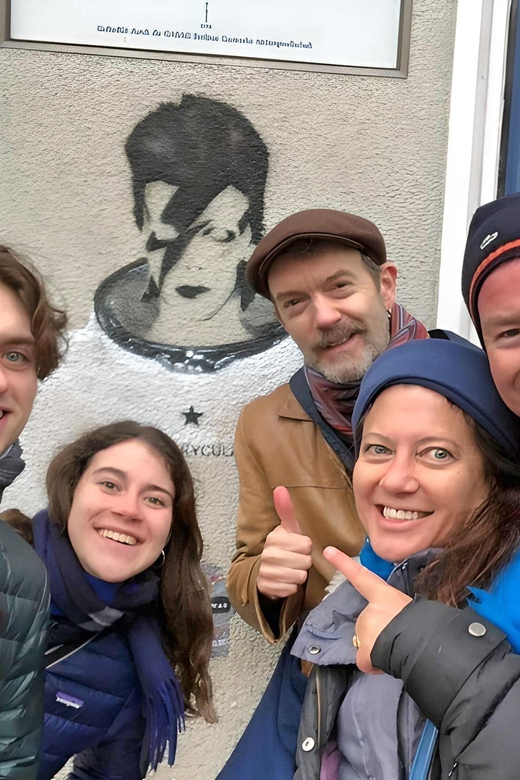
- Bowie’s Berlin is shown through real places: The route includes Hansa Studios, Bowie’s former flat, Café Neues Ufer, the former Dschungel Club, Bahnhof Zoo, and the Berlin Wall area.
- The tour also explains Cold War Berlin: Stops such as Tränenpalast, Anhalter Bahnhof, Martin-Gropius-Bau, and Topography of Terror add political and social context.
- Expect a moving, music-led experience: Guides may play excerpts from Low and Heroes and use archive photographs and video clips.
- You need a public transport ticket: Some distances are too great to cover on foot, so a Berlin day pass is a sensible purchase.
- The guides are serious subject specialists: Guides have included Dan, Lee, Ronen, Martin, Klaus, Rachel, and others with backgrounds in history, journalism, academia, art criticism, and writing.
- It suits fans and curious first-timers: You do not need to know every Bowie album, though familiar songs make certain moments more powerful.
Why Bowie’s 1970s Berlin still matters
When David Bowie arrived in Berlin in 1976, he entered a divided city with a particular pull. West Berlin sat inside East Germany, surrounded by political tension, concrete barriers, and a sense of separation from the rest of West Germany.
That setting mattered to Bowie’s work. The city offered an unusual mix of Cold War unease, artistic freedom, nightlife, and personal reinvention. This tour helps you connect those pressures to the albums usually called Bowie’s Berlin trilogy: Low, Heroes, and Lodger.
The experience is not simply a celebrity address hunt. At its best, it shows you how Bowie’s life, his work with Iggy Pop, Berlin’s music scene, and the city’s divided geography overlapped.
I particularly like that the route includes places that are not famous only because Bowie visited them. The Berlin Wall, Topography of Terror, Anhalter Bahnhof, and Tränenpalast give you a stronger sense of the city he encountered, not just the places later attached to his name.
More Walking Tours in Berlin
- Discover Berlin Half-Day Walking Tour
★ 5.0 · 9,624 reviews - Berlin: Third Reich and Cold War 2 Hour Walking Tour
★ 4.9 · 6,830 reviews - Berlin: Discover Berlin Walking Tour
★ 4.9 · 5,998 reviews
Starting at Ständige Vertretung and Bertolt-Brecht-Platz
The listed meeting point is Ständige Vertretung, a memorabilia-filled café at Schiffbauerdamm 8. The wider starting arrangements can vary, so check your confirmation carefully before setting out.
From there, the route includes Bertolt-Brecht-Platz. This early stop helps broaden the story beyond Bowie. You are looking at Berlin as a city shaped by writers, theatre, politics, and artistic argument, not only rock music.
A historian or arts-focused guide can make this part worthwhile by setting up the cultural background before the group reaches the better-known Bowie locations. Guides such as Dan and Lee have been praised for connecting Bowie with Berlin’s wider creative scene, while also keeping the tone relaxed and entertaining.
Arrive about ten minutes early. That gives you time to find the meeting point, meet your guide, and avoid beginning the tour in a rush.
Tränenpalast and the human side of a divided city
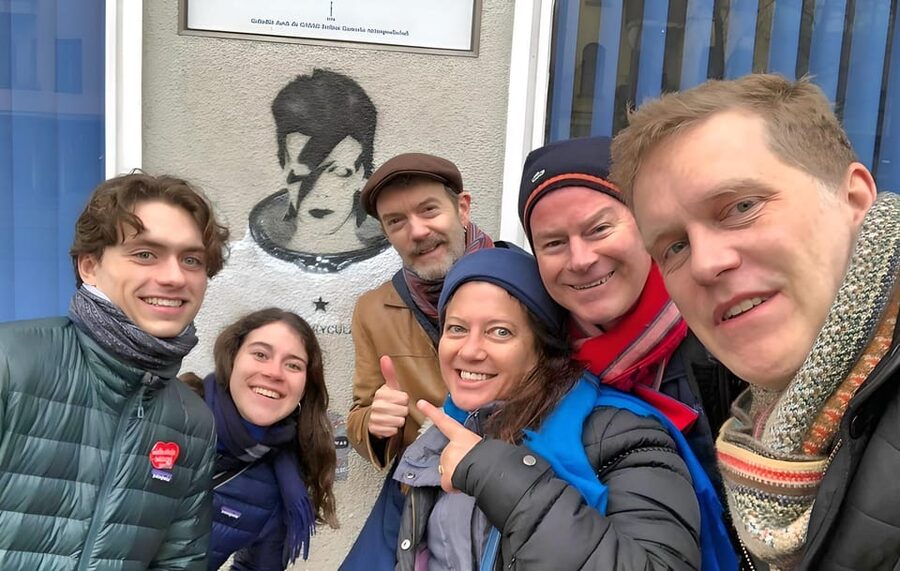
Tränenpalast, the former border crossing beside Friedrichstrasse Station, brings the Cold War into personal focus. Its name translates as Palace of Tears, and the stop is useful because it moves the discussion from broad political facts to the reality of crossing between East and West Berlin.
For a Bowie fan, this may not be an obvious stop. That is exactly why it works. The tour is trying to show the city as Bowie found it, a place where the border was part of everyday life and not simply a historical monument viewed from a distance.
This section can also help if you have not yet taken a general Berlin history tour. One guest noted that the Bowie experience worked especially well after seeing the Wall and learning the basic history of Berlin. If this is your first history-focused activity in the city, pay close attention here. It will make later stops more meaningful.
Anhalter Bahnhof and the city’s fractured spaces
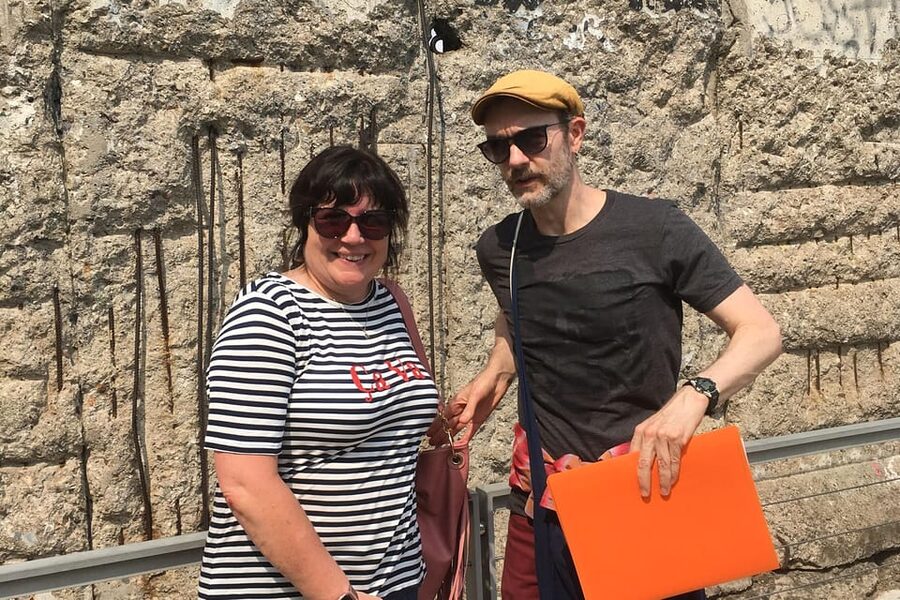
Anhalter Bahnhof is another stop where the physical setting carries much of the story. The former station points to Berlin’s broken transport network and the damage left by war and division.
The tour uses places like this to show how Bowie’s Berlin was not polished or neatly packaged. You move through spaces marked by loss, change, and unfinished edges. That helps explain why the music from this period feels so different from a standard pop recording.
The route covers a lot of ground. You may walk for stretches, then use public transport to reach the next area. Wear supportive shoes and dress for Berlin weather. One guide’s past guests specifically recommended sturdy footwear and clothing suited to sudden changes in conditions.
Something different for another day:
- Berlin: Reichstag, Dome and Government District Guided Tour
★ 4.7 · 18,288 reviews - Berlin: 1-Hour City Tour by Boat with Guaranteed Seating
★ 4.3 · 16,993 reviews - Berlin: Boat Tour Along the River Spree
★ 4.4 · 11,252 reviews - Berlin: Hop-on Hop-off Bus Tour with Live Commentary
★ 4.3 · 8,579 reviews
Martin-Gropius-Bau and Topography of Terror
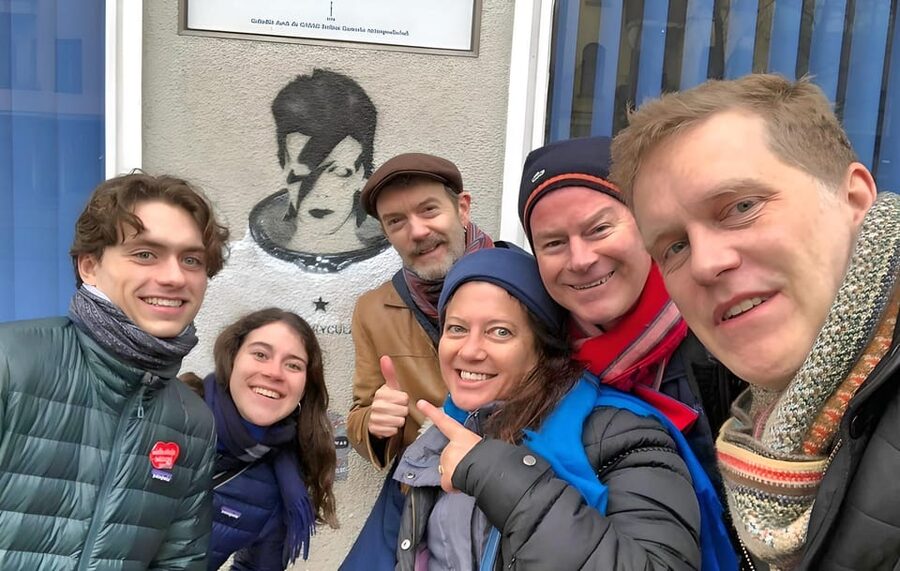
The Martin-Gropius-Bau adds an arts and architecture stop to the route. The building is close to Topography of Terror, where the tour turns toward the darker political history of Germany.
Topography of Terror examines the institutions and crimes of the Nazi period. It is not a Bowie site, but it gives the surrounding streets a harder edge. A good guide can explain how Berlin’s earlier history remained visible during Bowie’s time, even as West Berlin developed a countercultural identity.
This is one of the tour’s strengths. You do not simply hear that Bowie lived in an exciting city. You see how Berlin’s past, divided present, art institutions, nightlife, and political pressures occupied the same compact urban space.
The stop may feel heavy compared with the club and music portions. That is appropriate, but you should know the tour is not light entertainment from start to finish. It combines music with serious history.
Hansa Studios and the sound of West Berlin
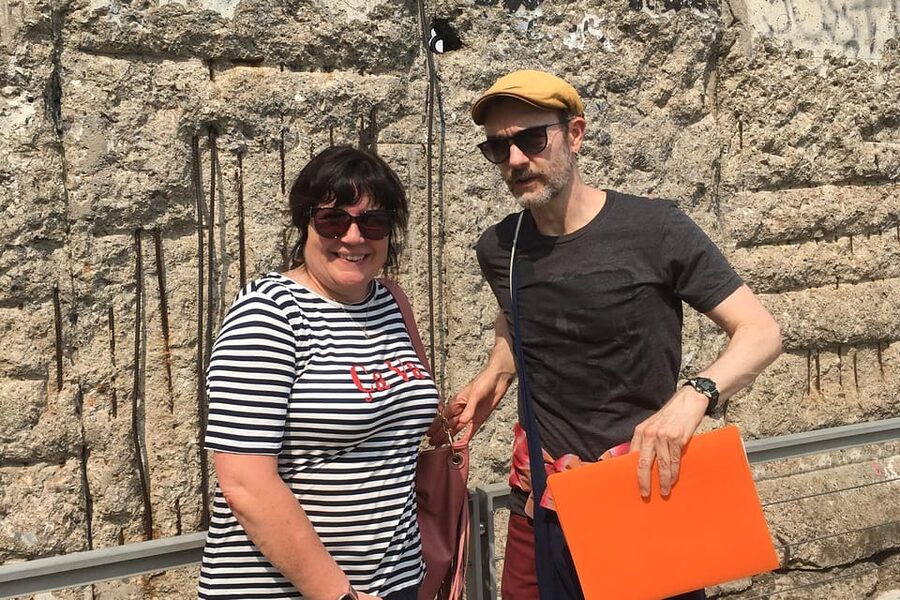
Hansa Studios is the emotional center of the route for many people. The tour takes you to the studio area where Bowie reached a creative high point in Berlin.
You should not assume this means an interior studio visit. The experience is described as a stroll by Hansa Studios with a guided explanation of its importance. Even from outside, the location has meaning because it connects the streets around you to the sound of Low and Heroes.
This is where the music clips and photographs can make a real difference. Hearing a short passage from Heroes while standing near the place linked to its recording gives the song a physical setting. Several guides have used music, images, and video to connect the recordings with the sites, rather than relying on a long lecture.
I would listen to Low, Heroes, and Lodger before booking. You do not need to become a Bowie expert, but knowing the music lets you notice the contrast between the albums and the city around you.
KaDeWe, Bahnhof Zoo, and Bowie’s West Berlin
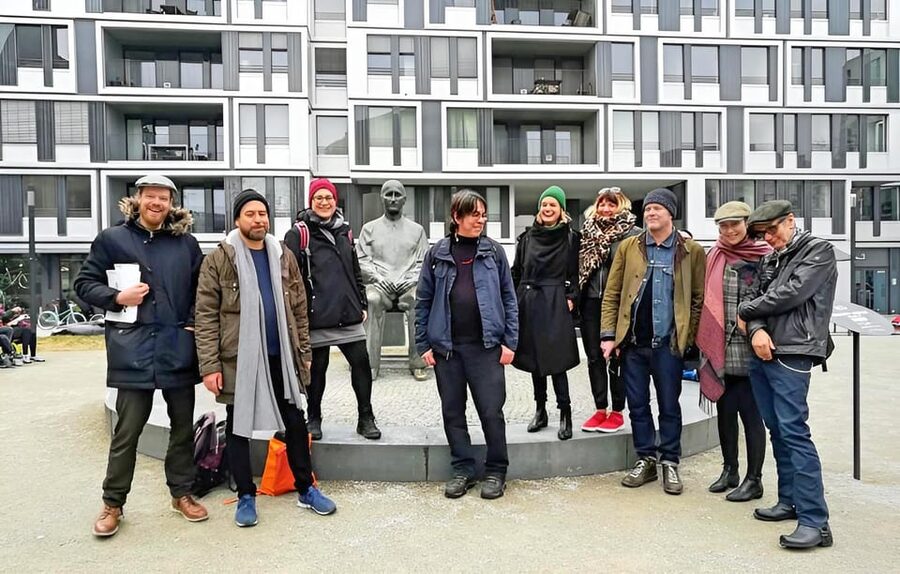
KaDeWe represents another side of 1970s West Berlin. The department store was part of the city’s commercial and social life, and its inclusion shows that Bowie’s Berlin was not only abandoned buildings, recording rooms, and underground clubs.
The route then reaches Zoologischer Garten Station, better known as Bahnhof Zoo. This was a key transport point and a defining part of West Berlin’s city life. The station also gives the tour a useful link between Bowie’s movements and the broader rhythms of the neighborhood.
You may hear about the former Dschungel Club during this portion of the tour. The club is no longer operating in its original form, so the value is in learning what the place meant to the city’s nightlife and to Bowie and Iggy Pop.
Expect a mix of visible sites and locations that survive mainly through memory, photographs, or their changed surroundings. If you want every stop to look exactly as it did in 1977, you may be disappointed. If you want help reading the modern city through its past, the route works much better.
Bowie’s former home and the Iggy Pop connection
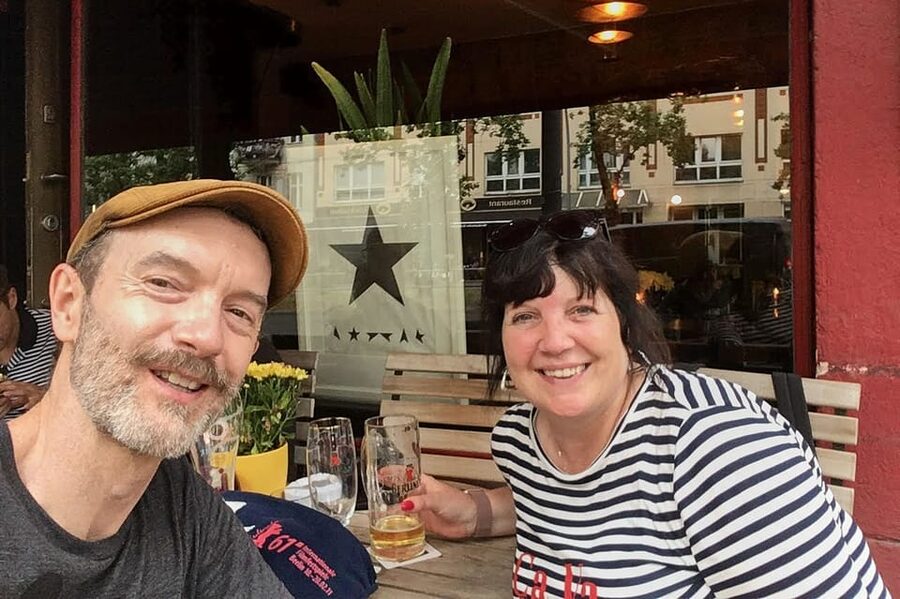
One of the most personal stops is the flat Bowie shared with Iggy Pop. The tour follows the trail to Bowie’s former home, giving you a chance to see the neighborhood where the two musicians lived and spent time.
This is not a grand monument. That is part of its appeal. You are looking at an ordinary residential setting connected to an extraordinary period in music. The experience becomes less about a staged attraction and more about imagining Bowie moving through an everyday neighborhood.
The Iggy Pop connection is important because the Berlin story was not Bowie’s alone. The two artists were closely linked during this period, and the tour places their work and social life together rather than treating Bowie as an isolated genius.
One particularly nice touch from a past tour was a guide making an extra detour to show the apartment where writer Christopher Isherwood lived. That is not guaranteed, so do not book expecting it, but it shows how the best guides can connect Bowie’s Berlin to other artists who shaped the city’s cultural image.
Café Neues Ufer and the final stretch
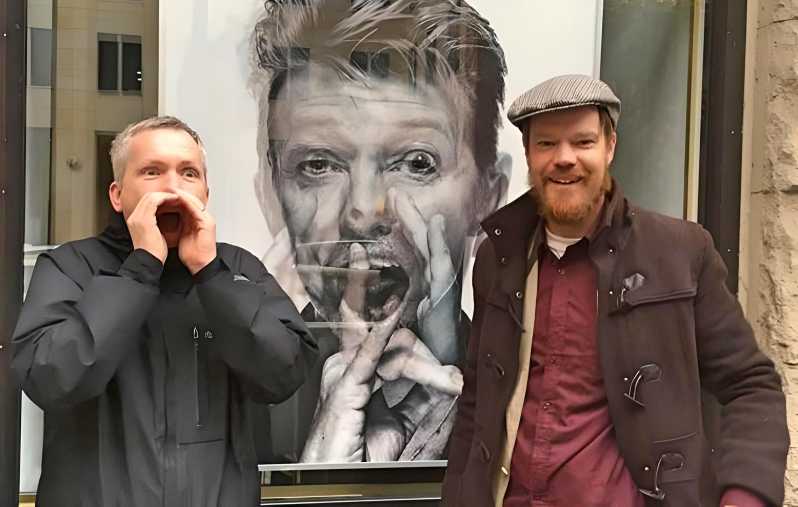
Café Neues Ufer was one of Bowie’s favorite Berlin cafés and is one of the most intimate stops on the route. It gives you a quieter setting after the stations, border sites, streets, and studio area.
Food and drinks are not included, so think of this as a place connected with Bowie’s routine rather than a hosted meal. Depending on the day and the exact finish, you may have time to look around or return later on your own.
Past guests have enjoyed the way the tour ends near Bowie’s former neighborhood and links the final locations back to the music. One useful criticism was that the exact finishing point was not always clear, making it harder to plan a meal afterward. Ask your guide where the tour will end before you set your post-tour plans.
How the transport changes the experience
The title calls this a walking tour, but you should picture it as a walking and public transport tour. Some key locations are too far apart to reach on foot within three hours.
You will use Berlin trains and buses several times. This has two benefits. First, you cover much more of the city than a compact neighborhood walk would allow. Second, you get a practical introduction to moving around Berlin, which can help you explore independently later.
The tradeoff is pace. Waiting for transport, finding platforms, and getting a group on and off a vehicle takes time. Buy a Berlin day metro pass in advance if you do not already have a valid visitor transit pass. If needed, your guide can help you purchase a ticket at the first station, but handling this before the tour will save time.
The route is not ideal for someone who wants a slow photographic walk with long stops. It is better for someone who values coverage and context.
Guides who make the biggest difference
The guides vary, but the standard is unusually academic. The tour uses professors, doctoral students, historians, journalists, art critics, and published authors. That matters because Bowie’s Berlin years involve music, politics, architecture, art, nightlife, and personal biography.
Names praised across different departures include Dan, Lee, Ronen, Martin, Klaus, Rachel, Nadav, and Jim. Dan appears particularly often in strong feedback, with guests praising his humor, preparation, music knowledge, and ability to explain German history alongside Bowie’s story. Lee is also repeatedly singled out for his passion, archive material, and ability to make the period feel immediate.
The guide’s personality shapes the day. Some groups may get more music analysis, while others may spend more time on Cold War history or Bowie’s personal life. A strong guide welcomes questions and adjusts the discussion to the group, which is why private or small-group options can be appealing.
One guest received extra time, while another group found the guide patient and accommodating with a young child. Those details suggest a flexible style, but the tour is still three hours long and involves walking and public transport.
Is $135 a fair price?
At $135 per person, this is not a cheap sightseeing add-on. The price is easier to justify if you book a private tour or travel with people who share your interest in Bowie, Iggy Pop, and Berlin’s music scene.
You are paying for more than transport between addresses. The value comes from the guide’s research, the audio and visual material, the carefully linked route, and the chance to ask questions. A self-guided visit to Hansa Studios, Bahnhof Zoo, and Café Neues Ufer would cost much less, but it would not provide the same narrative or historical connections.
Solo visitors should check the booking terms carefully. One person paid for two places because there was no option to buy a single ticket, which made the experience particularly expensive. If you are traveling alone, confirm the minimum booking requirement before paying.
The tour also offers free cancellation up to 24 hours before departure and a reserve-now, pay-later option. These are useful if your Berlin schedule is still shifting, though they do not change the basic question of value: you should be interested in the story, not just collecting a few Bowie-related addresses.
Who should book this Berlin tour?
I would choose it for a committed Bowie fan, someone fascinated by the Berlin albums, or anyone who likes cultural history told through real streets. It also works well for a mixed group, since people who are not major fans can learn about the Cold War, Berlin’s arts scene, and the city’s changing neighborhoods.
You will get the most from it if you:
- Listen to Low, Heroes, and Lodger beforehand.
- Bring a valid public transport ticket or buy a day pass.
- Wear supportive shoes.
- Allow for cold, wet, or changeable weather.
- Leave room in your schedule after the tour to revisit a favorite area.
- Ask where the tour finishes before planning dinner.
I would skip it if you want a short, static museum visit, dislike public transport, or only know Bowie’s biggest singles. The route is active, spread out, and more historical than a simple fan pilgrimage.
Should you book it?
Book this tour if you want the story behind the songs, not just the photo stops. The strongest part is the connection between Bowie’s music and Berlin’s divided streets, creative communities, clubs, studios, and ordinary residential blocks.
The experience earns its high rating through its guides, sound clips, archive images, broad route, and thoughtful Cold War context. The main cautions are the price, the need for public transport, the weather, and the fact that some locations have changed or can only be viewed from outside.
For a Bowie fan, this is likely to be a highlight of a Berlin visit. For a curious newcomer, it can work too, especially if you want a fresh way to understand the city. Just arrive prepared to walk, ride, listen, and think.
FAQ
How long does the David Bowie and 1970s Berlin tour last?
The tour lasts three hours.
What language is the tour conducted in?
The live guide speaks English.
Where is the meeting point?
The listed meeting point is Ständige Vertretung, a memorabilia-filled café at Schiffbauerdamm 8, 10117 Berlin. The exact starting location can depend on the option you select.
Will I walk the entire route?
No. You will walk between some sites and use Berlin public transport several times because some locations are too far apart to reach on foot within the tour time.
Do I need a public transport ticket?
Yes. Public transport is not included. If you do not already have a valid Berlin visitor transit pass, a day metro pass is advised. Your guide can help you buy one at the first metro station if necessary.
Does the tour include food or drinks?
No. Food and drinks are not included.
Can I cancel the booking?
Yes. You can cancel up to 24 hours before the tour for a full refund. A reserve-now, pay-later option is also available.
Just added around Berlin
- Berlin: Private Guided Tour of the Main Sights★ 5.0 · 13 reviews
- Private Highlights of Berlin Bike Tour★ 5.0 · 13 reviews
- Modern Berlin Private Walking Tour: Diverse, Vibrant and Exciting German Capital★ 5.0 · 13 reviews
- Tour in Berlin from Warnemünde and Rostock Cruise Port★ 4.1 · 13 reviews
- Berlin: Stasi Museum Private Guided Tour with Entry Ticket★ 4.8 · 13 reviews
- Private Food Tour Experience with a born and bred Berliner★ 5.0 · 14 reviews
- Berlin: Rheinsberg Palace Entrance Ticket★ 4.8 · 14 reviews
- Berlin in one day – day tour with an expert guide★ 5.0 · 14 reviews
Walking Tours, compared.



Berlin’s Best: 2 Hour Walking Tour Third Reich and the Cold War
Read our review →
Third Reich Berlin: Hitler and WWII Walking Tour
Read our review →Browse the lists this tour appears in