

Reviewed · WALKING TOURS
Berlin: Charité Hospital History Walking Tour
Medical history gets personal here. Berlin’s Charité Hospital began as a plague house in 1710, then became the workplace of Robert Koch, Rudolf Virchow, and other figures who changed medicine. This two-hour walk also includes the Veterinary Anatomy Theatre, Berlin’s oldest surviving academic building.
I especially like the strong mix of medical and political history, and I like that the tour includes a real historic interior rather than keeping you on the pavement. Guide Martina has been praised for her warm manner, clear explanations, and thoughtful analysis. The main drawback is simple: much of the tour is outdoors, so cold weather can make two hours feel long.
In This Review
- Key points to know before you book
- Why Charité makes a strong Berlin history tour
- Starting at Robert-Koch-Platz
- The Veterinary Anatomy Theatre and its 18th-century purpose
- A walk through Charité’s neo-Gothic campus
- Robert Koch, Rudolf Virchow, and the progress of medicine
- Rachel Hirsch and the changing role of women in medicine
- Charité under the Nazi regime
- East Germany, blocked windows, and a divided city
- Timing, walking conditions, and the value of $28
- The Charité television connection
- Where the walk ends and what to do next
- Who should book this Charité walk?
- Should you book the Charité Hospital History Walking Tour?
- FAQ
- Where does the Charité Hospital History Walking Tour start?
- How long does the tour last?
- What languages are available?
- Is the Veterinary Anatomy Theatre included?
- Can the Veterinary Anatomy Theatre be closed?
- Does the tour enter hospital buildings?
- Is the tour suitable for children?
- What should I bring?
Key points to know before you book

- A plague house became a world-famous hospital: Charité’s story begins in 1710, when Berlin prepared for an approaching epidemic.
- The Veterinary Anatomy Theatre is the star interior visit: You get a short visit to Berlin’s oldest surviving academic building.
- Robert Koch and Rudolf Virchow appear in the story: Their work gives the hospital international medical importance.
- Rachel Hirsch adds a vital social history: Her 1913 appointment made her the first woman to hold a medical professorship in Prussia.
- The Nazi and East German periods are treated directly: The tour covers medical crimes, racial hygiene, psychiatric killings, and the hospital’s place in divided Berlin.
- Bring warm clothes and good shoes: You will walk and stand for about two hours, mostly outside.
Why Charité makes a strong Berlin history tour
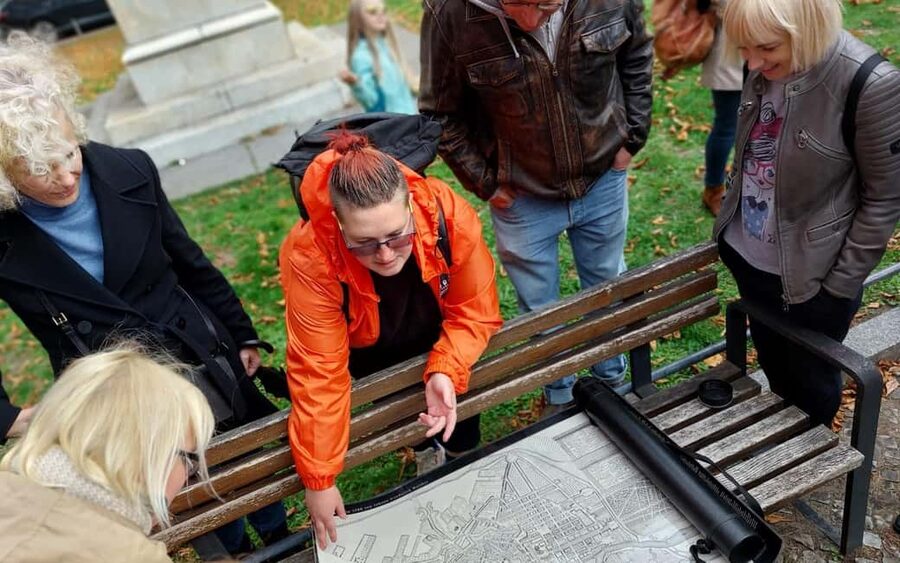
You can visit Berlin’s famous palaces, museums, and Cold War sites without ever thinking much about medicine. Charité gives you another way into the city’s past. It connects public health, science, war, political power, and social change in one compact area.
The hospital began in a grim but practical way. In 1710, officials built a simple plague house to protect Berlin from an approaching epidemic. At that point, modern medicine was still far away. Bloodletting, mercury, and amputations were accepted treatments, even when they caused great suffering.
That early chapter helps you see medical progress in human terms. The tour is not just a list of famous discoveries. It shows how limited doctors once were, how slowly ideas changed, and how institutions learned through both success and painful error.
I like this approach because it gives Charité a human scale. You are not simply looking at an impressive campus and hearing names. You are following the changing ideas that shaped care for patients, animals, soldiers, and city residents.
The tour also works well for anyone interested in Berlin beyond the usual royal and wartime subjects. Charité touches nearly every major theme in the city’s modern story: disease, science, class, gender, dictatorship, ideology, and the division between East and West.
More Historical Tours in Berlin
- Berlin: Natural History Museum Entrance Ticket
★ 4.6 · 3,382 reviews - Berlin: World Heritage Cruise to Potsdam
★ 4.5 · 1,435 reviews - Berlin Historical Highlights Walking Tour
★ 4.9 · 657 reviews
Starting at Robert-Koch-Platz
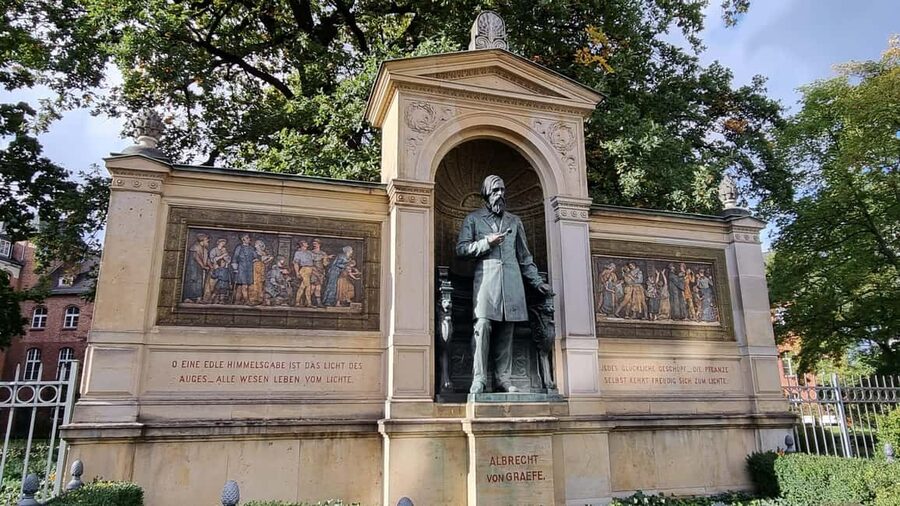
The meeting point is by the Robert Koch statue at Robert-Koch-Platz. Look for the guide holding an orange umbrella, a useful marker in a city where several groups may gather for walking tours.
Starting beside Robert Koch sets the tone immediately. Koch was one of the leading medical pioneers connected with Charité, and his work on infectious disease helped change the way doctors understood epidemics. The exact focus of the talk depends on the guide, but you can expect the opening to place Koch within the larger story of the hospital and German medicine.
The opening is also a practical chance to get comfortable with the pace. This is a walking and standing tour, not a bus route with frequent seats. Wear comfortable shoes, carry water, and avoid treating it as a quick photo stop between other appointments.
The tour is offered in English or German. Martina, who has led the experience for BB Tours, has received especially warm praise for making a large amount of material easy to follow. Her style has been described as entertaining, thoughtful, and well organized, with extra material used to explain parts of the story.
The Veterinary Anatomy Theatre and its 18th-century purpose
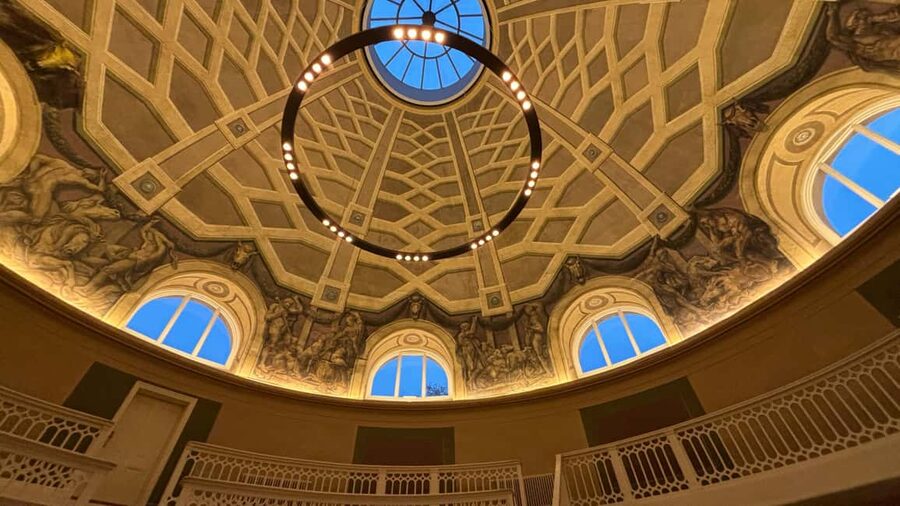
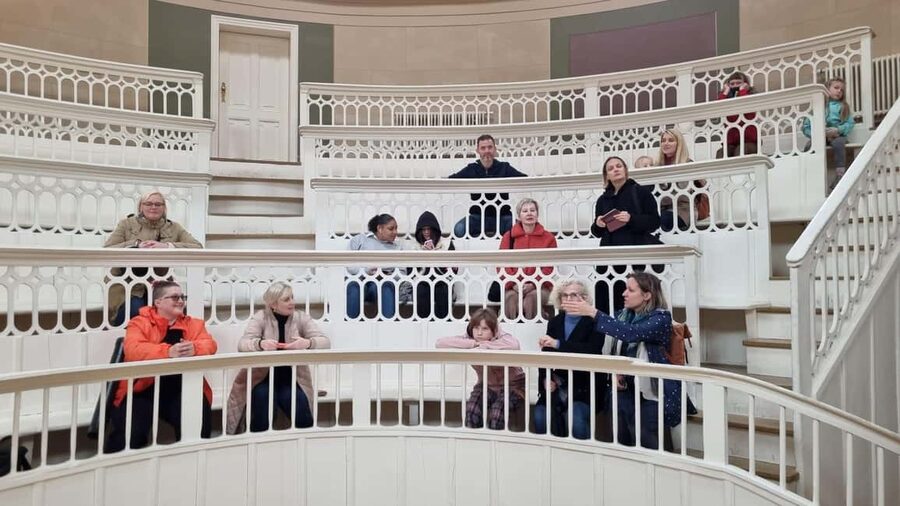
The visit to the Veterinary Anatomy Theatre is the tour’s key indoor stop. You spend about 15 minutes inside this historic building, which is described as Berlin’s oldest academic building still in existence.
The theatre takes you back to the 18th century, when doctors and veterinarians were trying to understand disease through direct study of animal bodies. The focus was practical. Berlin needed better knowledge of illnesses affecting livestock and cavalry horses, both important to the city’s food supply, transport, and military life.
This stop widens the story beyond human medicine. It shows that veterinary science was not a minor side subject. Healthy animals mattered to the whole city, and understanding their illnesses required careful observation, anatomy, and teaching.
The building itself adds weight to the visit. Instead of hearing about old medical education in a modern lecture room, you enter a place built for that purpose. The short visit will not satisfy someone seeking a long museum tour, but it gives the walk a valuable change of pace and a clear physical link to the past.
The theatre can occasionally close for internal events or public holidays. If this building is the main reason you want to book, check availability and remain aware that the visit cannot always be guaranteed.
A walk through Charité’s neo-Gothic campus
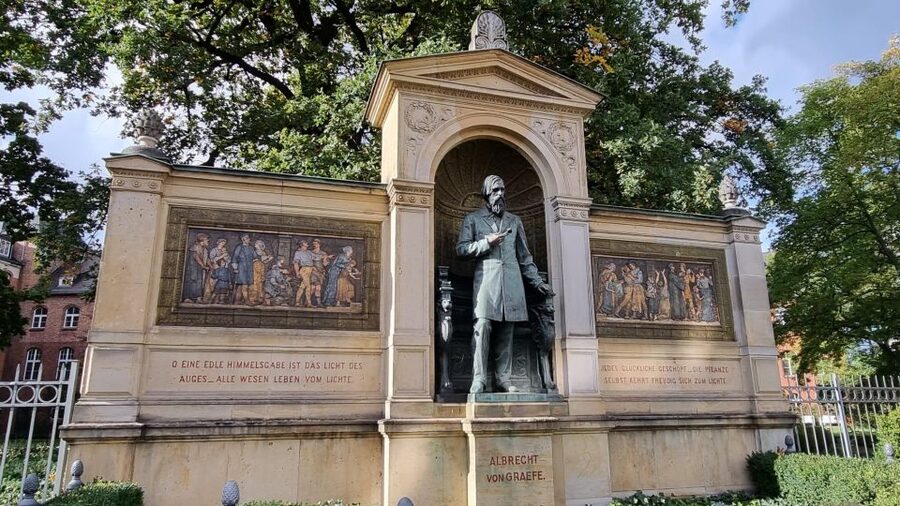
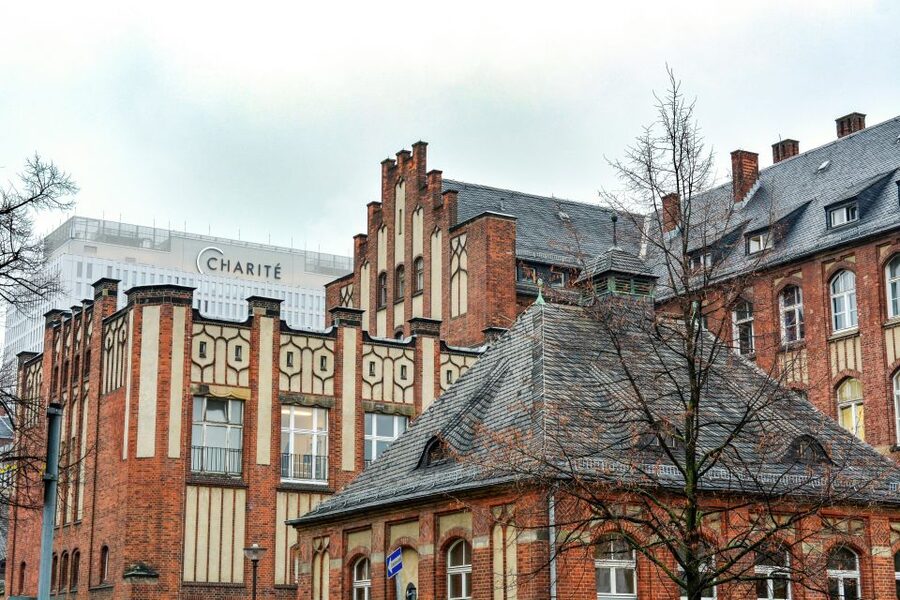
After the theatre, the route circles the historic Charité campus. The neo-Gothic architecture gives the hospital a strong sense of place, with pointed forms and decorative details that feel far removed from the plain plague house of 1710.
You should not expect regular entry into hospital wards, university buildings, or working medical facilities. Those spaces are used for hospital and academic activity, and certain parts of the campus are restricted. That limitation is reasonable, but it matters if you imagine a full behind-the-scenes hospital tour.
The outdoor route instead lets you understand the campus as a working institution shaped by many eras. The guide explains what happened here and links people, buildings, and political events. Some areas may be open for you to explore independently after the tour, but the guided walk does not include every part of the complex.
The architecture is best appreciated with the historical explanation. On its own, a hospital campus may not seem like a standard sightseeing attraction. Once you know where medical pioneers worked and how the institution changed, the buildings become part of the story rather than just a backdrop.
More Walking Tours in Berlin
- Discover Berlin Half-Day Walking Tour
★ 5.0 · 9,624 reviews - Berlin: Third Reich and Cold War 2 Hour Walking Tour
★ 4.9 · 6,830 reviews - Berlin: Discover Berlin Walking Tour
★ 4.9 · 5,998 reviews - Berlin’s Best: 2 Hour Walking Tour Third Reich and the Cold War
★ 5.0 · 5,486 reviews
Robert Koch, Rudolf Virchow, and the progress of medicine
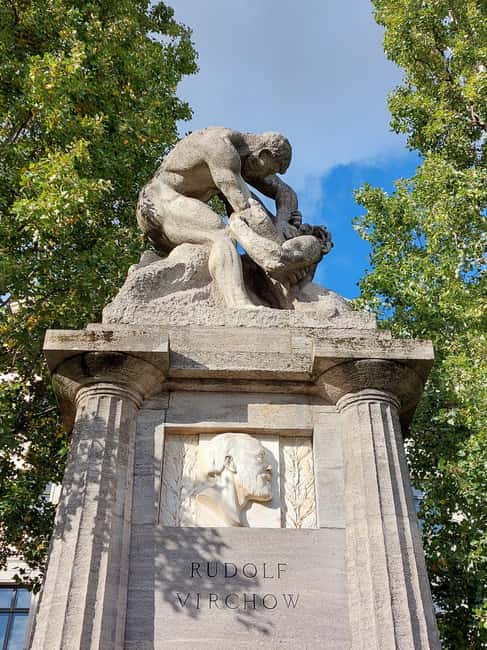
Charité’s scientific reputation rests on figures such as Robert Koch and Rudolf Virchow. Their work gives the tour a clear intellectual center, but the guide also places them within the imperfect medical world of their time.
Koch is tied to the study of infectious disease, a subject that makes particular sense at a hospital founded during an epidemic threat. Virchow is remembered as another major medical thinker connected with Charité. Their names are not presented as isolated achievements. They help explain how medical research moved toward closer observation, evidence, and public health.
This section will appeal to you if you like science presented through stories rather than technical lectures. The tour has to cover a great deal in two hours, so it cannot offer a full biography of every researcher. Its value comes from showing how Charité became a place where new medical ideas could be tested, debated, and put into practice.
The experience also makes clear that progress was uneven. A hospital can produce major discoveries while still reflecting the prejudices and failures of the society around it. That tension becomes especially important later in the walk.
Rachel Hirsch and the changing role of women in medicine
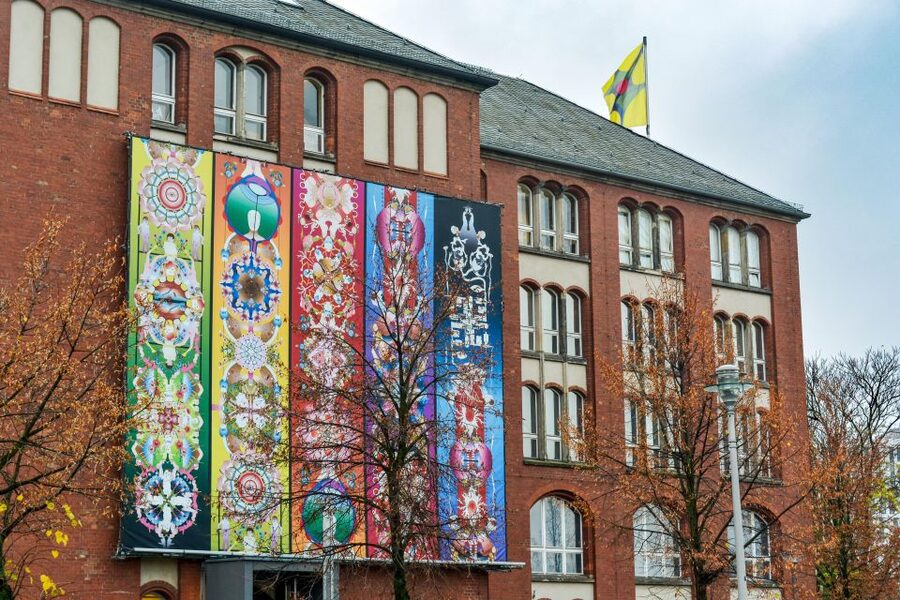
One of the most useful parts of the tour is the story of Rachel Hirsch. In 1913, she became the first woman to hold a medical professorship in Prussia.
That appointment marked an important step for women in medicine, but the story is not presented as an easy victory. Hirsch faced resistance within the institution, reminding you that a formal appointment did not erase the barriers facing women doctors and researchers.
I value this part because it keeps the tour from becoming a parade of famous men. Medical history often leaves women at the edge of the picture. Hirsch brings questions of education, professional status, and institutional power into the main story.
Her experience also helps you read the early 20th century more carefully. Social attitudes were shifting, but progress was contested. A single appointment could be groundbreaking and still fail to create equal conditions for everyone who followed.
Charité under the Nazi regime
The tour takes a serious turn when it addresses the Nazi period. At Charité, medical ethics were pushed aside and racial hygiene was imposed with brutal force.
Some doctors stayed silent. Others actively helped organize the killing of psychiatric patients. This is not a comfortable section, and it should not be. The hospital’s scientific reputation makes the subject more disturbing, not less. An institution associated with healing also became connected to crimes committed in the name of medicine.
A good guide is essential here. The strongest part of the experience is not simply hearing that atrocities occurred. It is understanding how professional institutions, individual choices, and political power interacted. Silence mattered. Cooperation mattered. The language of science was used to give cruelty a false authority.
The tour does not treat Charité as either wholly heroic or wholly criminal. It shows an institution with major achievements and grave failures. That balanced treatment is one of the reasons the walk has earned such strong praise.
If you are traveling with teenagers, think about the content before booking. There is no strict age rule, but the tour is recommended for ages 14 and up because of its historical depth. Every minor must be accompanied by an adult.
East Germany, blocked windows, and a divided city
The story continues after the Nazi period, when East Germany took pride in Charité’s achievements. The hospital became an important symbol of scientific accomplishment in the socialist state.
The political geography of divided Berlin also reached into the campus. Windows facing the capitalist West were bricked up, a small physical detail with a large political meaning. It shows how the border shaped ordinary buildings and daily life, not just checkpoints and government offices.
I find details like this especially useful because they make Cold War history concrete. You can understand a political system more clearly when it appears in a blocked window, a changed façade, or a restricted view.
This section also keeps the tour from ending with the Second World War. Charité continued to change under a new ideology, and the guide connects medical achievement with political control. The hospital’s story is therefore not frozen in the 18th century or the age of famous scientists.
Timing, walking conditions, and the value of $28
The tour costs $28 per person and lasts two hours. For Berlin, that is a reasonable price if you want a guided explanation of a specialized site rather than a simple walk around the campus.
The price includes an expert local guide and admission to the Veterinary Anatomy Theatre. It does not include entry to buildings where hospital or university work takes place, and access to some campus areas is restricted.
The value depends on your interests. If you already know a great deal about Charité and prefer to read plaques at your own pace, you may find the guided format less necessary. If you want the hospital’s medical, social, and political stories connected by a clear narrative, the cost is easier to justify.
The tour receives a 4.8 rating from 191 reviews, with especially strong praise for its planning, enthusiastic delivery, and the amount covered in two hours. Martina has been singled out for making the subject entertaining while also offering thoughtful analysis. One particularly useful feature is the guide’s additional material, which helps illustrate parts of the story that the buildings alone cannot show.
Most of the tour takes place outside. In cold weather, dress warmly. Comfortable shoes are essential, and water is sensible. You should be ready to walk and stand for roughly two hours, with only the short theatre visit taking place indoors.
The tour is wheelchair accessible, but campus access can still depend on restricted areas and the theatre’s operating conditions. If you have specific access needs, confirm the current route before booking.
The Charité television connection
The walk also explains the real-life stories behind the Charité television series. This gives fans of the show a useful way to separate drama from documented history.
You do not need to have watched the series to enjoy the tour. The medical figures, institutional conflicts, and changing political settings work on their own. If you have watched it, however, the tour can add context to characters and events by connecting them with the actual hospital and the people who worked there.
This is another reason the tour feels more substantial than a film-location walk. The series is only one doorway into a much larger story about medicine and Berlin.
Where the walk ends and what to do next
The route is listed as finishing at Alexanderufer, near Berlin Central Station. That makes it convenient for continuing into another part of Berlin, catching a train, or stopping for food nearby.
The meeting information also says the activity ends back at the meeting point, so I would confirm the precise final location when you book. The two points are close enough to avoid major planning trouble, but knowing the exact endpoint helps if you have a tight schedule.
The location works well in a larger day plan. You can combine the tour with nearby central Berlin sights, but leave breathing room afterward. The guide covers several centuries, and rushing straight into another timed attraction may make the day feel crowded.
Who should book this Charité walk?
I would recommend it to you if you enjoy:
- Medical discoveries explained through people and places
- Berlin history beyond monuments and battle sites
- Honest treatment of Nazi and socialist-era institutions
- Architecture with a clear historical purpose
- Small, focused tours led by an active guide
- The real stories connected to the Charité television series
It is also a good choice for older teenagers and adults who enjoy serious subjects. The content asks you to pay attention, especially during the sections on psychiatric killings and racial hygiene.
I would be more cautious if you want a fully indoor experience, extensive access to hospital interiors, or a long museum visit. The Veterinary Anatomy Theatre visit is short, and most of the route is outside. You will see and discuss the campus rather than tour active hospital departments.
Should you book the Charité Hospital History Walking Tour?
Book it if you want a thoughtful two-hour look at Berlin through medicine, science, and politics. The combination of the Veterinary Anatomy Theatre, neo-Gothic campus, major medical figures, Rachel Hirsch’s breakthrough, and the hospital’s Nazi and East German past gives the walk real substance.
The strongest reason to go is the storytelling. A guide such as Martina can turn an unfamiliar hospital complex into a sequence of human choices and scientific turning points. At $28, the tour offers good value for anyone who wants context rather than a quick exterior visit.
Skip it if cold weather, long periods of standing, or difficult historical material would spoil your day. For everyone else, bring warm clothes, wear practical shoes, and meet the guide by Robert Koch’s statue with your eyes open for the orange umbrella.
FAQ
Where does the Charité Hospital History Walking Tour start?
The tour starts at Robert-Koch-Platz, by the Robert Koch statue. Look for the guide holding an orange umbrella.
How long does the tour last?
The walking tour lasts two hours. You should be comfortable walking and standing for approximately that long.
What languages are available?
The tour is offered in English and German.
Is the Veterinary Anatomy Theatre included?
Yes. Admission to the Veterinary Anatomy Theatre is included in the tour price.
Can the Veterinary Anatomy Theatre be closed?
Yes. The theatre can occasionally close because of internal events or public holidays.
Does the tour enter hospital buildings?
No. Entry to buildings where hospital or university activities take place is not included. Some parts of the Charité campus are also restricted for guided tours.
Is the tour suitable for children?
There is no strict age restriction, but the tour is recommended for people aged 14 and up because of its historical content. Minors must be accompanied by an adult.
What should I bring?
Bring comfortable shoes and water. Dress warmly in cold weather because most of the tour takes place outside.
Just added around Berlin
- Berlin: Private Guided Tour of the Main Sights★ 5.0 · 13 reviews
- Private Highlights of Berlin Bike Tour★ 5.0 · 13 reviews
- Modern Berlin Private Walking Tour: Diverse, Vibrant and Exciting German Capital★ 5.0 · 13 reviews
- Tour in Berlin from Warnemünde and Rostock Cruise Port★ 4.1 · 13 reviews
- Berlin: Stasi Museum Private Guided Tour with Entry Ticket★ 4.8 · 13 reviews
- Private Food Tour Experience with a born and bred Berliner★ 5.0 · 14 reviews
- Berlin: Rheinsberg Palace Entrance Ticket★ 4.8 · 14 reviews
- Berlin in one day – day tour with an expert guide★ 5.0 · 14 reviews
Walking Tours, compared.




Berlin’s Best: 2 Hour Walking Tour Third Reich and the Cold War
Read our review →


Third Reich Berlin: Hitler and WWII Walking Tour
Read our review →Browse the lists this tour appears in