
Reviewed · WALKING TOURS
Augsburg: Historical Highlights Private Walking Tour
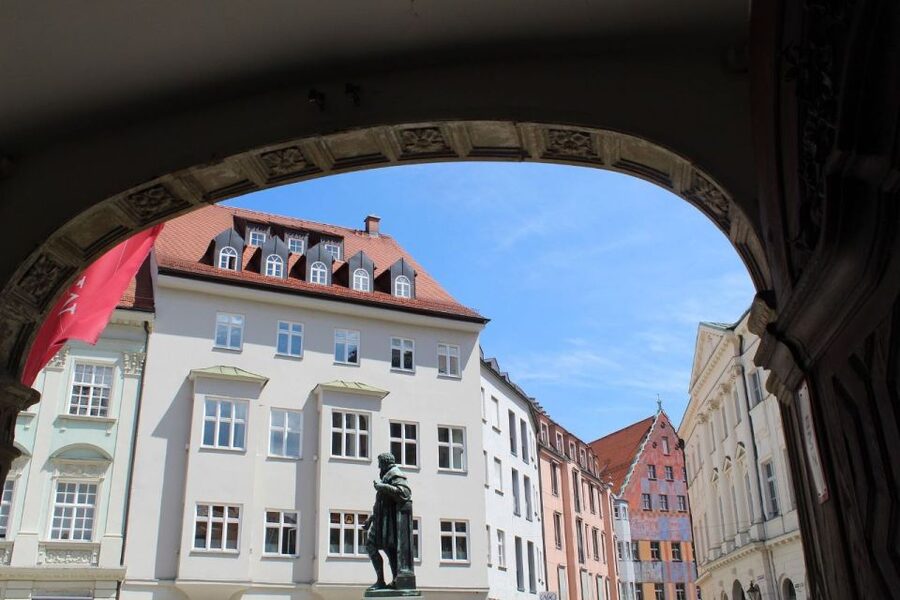
Augsburg’s story begins before Germany existed. This private two-hour walk links Roman beginnings in 15 B.C. with the Fugger family, Mozart’s family, and Berthold Brecht, giving you a quick but meaningful introduction to Bavaria’s third-oldest city. I like the way the tour connects famous names with ordinary streets, rather than treating Augsburg as just another pretty old town.
I also like the private format, since your guide can adjust the focus for your group on the spot. The highly praised guiding is another strong point: past participants describe the tour as exceptionally informative, engaging, and led by an experienced city guide. The main drawback is price. At $362 for up to 15 people, it can be good value for a full group, but expensive for two or three people. One German participant specifically felt a comparable tour at 115 euros offered better value.
In This Review
- Key points at a glance
- Starting at the Fuggerei, Augsburg’s social experiment
- Roman foundations from 15 B.C.
- The Town Hall and Augsburg’s civic ambition
- The Fugger family and the cost of wealth
- Mozart’s father and the city’s musical connection
- Berthold Brecht’s birthplace and modern Augsburg
- Finishing at SchaezlerPalais after two hours
- What the private format really adds
- Timing, walking comfort, and access
- Who will get the most from this Augsburg walk
- Should you book the Augsburg Historical Highlights tour?
- FAQ
- How long does the Augsburg Historical Highlights tour last?
- What language is the tour offered in?
- Where does the tour meet?
- Where does the tour finish?
- Is this a private tour?
- Are entrance fees included?
- Is the tour suitable for wheelchair users?
Key points at a glance
- Roman Augsburg begins in 15 B.C.: Learn how a provincial Roman capital developed into the city you see today.
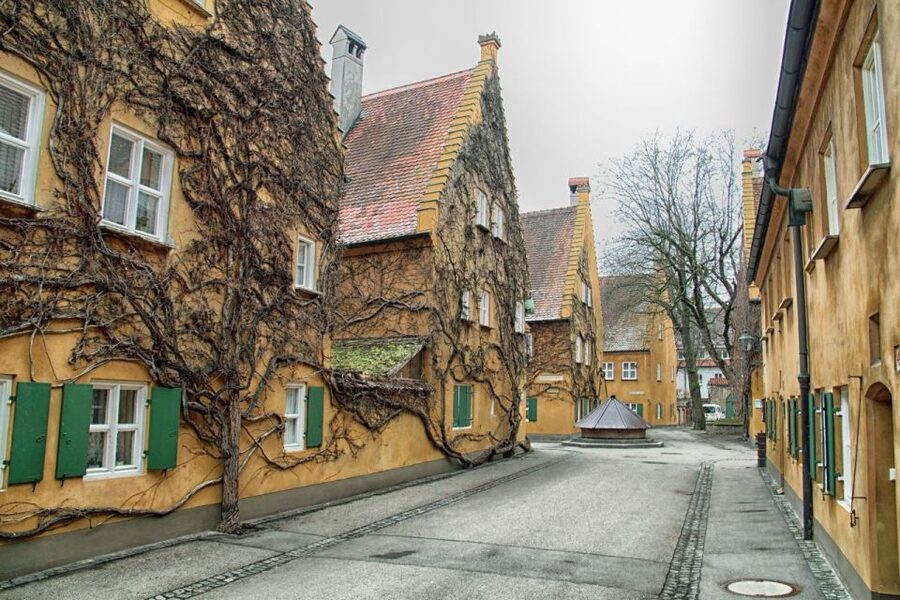
- The Fugger family shaped Augsburg: Visit the Fuggerei, founded as the world’s oldest social settlement.
- The Town Hall is the architectural headline: See the building described as the first in the world to have six floors.
- Music and literature meet in the streets: Find the birthplace of Wolfgang Amadeus Mozart’s father and Berthold Brecht.
- Your guide can tailor the walk: A private group lets you request more art, politics, architecture, or local history.
- The tour ends at SchaezlerPalais: This palace survived World War II without a scratch, making it a striking final stop.
Starting at the Fuggerei, Augsburg’s social experiment
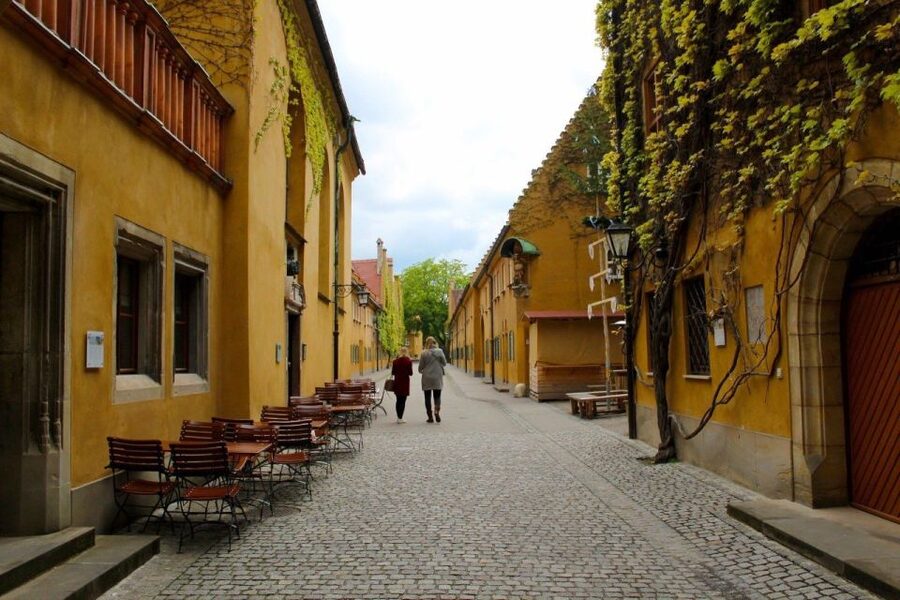
You meet your local guide at the Fuggerei, a smart starting point because this walled housing complex introduces one of Augsburg’s most distinctive stories right away. The Fugger family founded it as a place for people in need, and it is described as the oldest social settlement in world history.
That fact gives the tour a useful human scale. Augsburg was not shaped only by Roman officials, emperors, merchants, and artists. It was also shaped by decisions about housing, charity, and the responsibilities of wealth. The Fuggerei lets you consider those questions before the walk moves into the city’s larger political story.
The meeting point also makes practical sense. You begin among one of Augsburg’s best-known sights instead of spending the first part of the tour simply finding the old center. If the Fuggerei is a major reason you want to visit Augsburg, tell your guide at the start. The private format allows you to request more attention to it, although entrance fees are not included.
More Historical Tours in Germany:
- Leipzig: City History Canal Sightseeing Tour on a Motorboat
★ 4.7 · 6,232 reviews - Berlin: Natural History Museum Entrance Ticket
★ 4.6 · 3,382 reviews - Leipzig: 1.5-Hour Historical Walking Tour in German
★ 4.7 · 2,217 reviews
Roman foundations from 15 B.C.
Augsburg was founded as a Roman colony in 15 B.C., and the tour uses that date as its starting marker. You will learn how the settlement grew into the capital of a Roman province, a change that says a lot about Augsburg’s early importance.
I like this part because it gives the city a proper timeline. Without it, Augsburg’s later monuments can feel like separate pieces: a town hall here, a famous family there, a literary figure somewhere else. The Roman story ties them together and explains why this provincial city developed enough influence to matter for two thousand years.
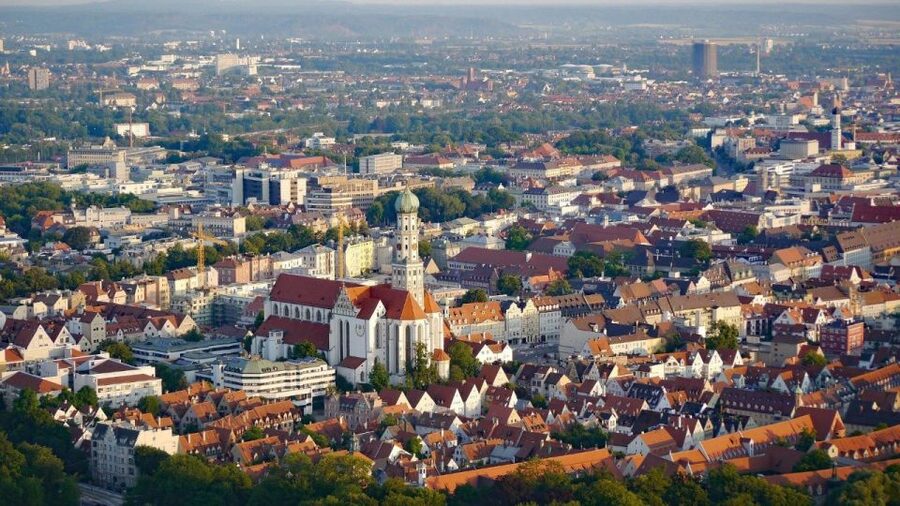
The tour also places modern Augsburg in that longer setting. Today, it is the capital of Swabia in Bavaria and Germany’s third-oldest city. Those labels are useful, but the guide’s explanation is what gives them weight. You are not simply hearing that Augsburg is old. You are learning how Roman rule helped set its course.
The supplied details do not specify which Roman remains you will see or whether any archaeological site entrance is included. Expect the Roman past to be explained as part of the walking route, not assume that a museum visit or excavated ruin is part of the package.
The Town Hall and Augsburg’s civic ambition
The Town Hall is one of the tour’s major sights and likely one of its clearest architectural highlights. The building is described as the first in the world to have six floors, a claim your guide can place in the context of Augsburg’s growth and civic confidence.
That detail is more than a curious fact. A large town hall tells you that Augsburg wanted to present itself as a serious city, not merely a regional settlement. This is where the story shifts from Roman administration to the pride and power of a later urban community.
Your guide can explain the building as part of the city’s public life, rather than leaving you to admire the facade and move on. Since the tour lasts only two hours, the depth of the discussion will depend on your interests and the walking pace. If architecture matters to you, say so early. A private guide is better placed to spend time on the Town Hall than a fixed group tour.
There is also a practical limitation. The tour information says to see the Town Hall, but it does not promise an interior visit. Entrance fees are not included, so you should treat this as a guided exterior highlight unless your guide confirms otherwise.
The Fugger family and the cost of wealth
The Fuggers give Augsburg one of its strongest personal stories. This banking family helped shape the city and founded the Fuggerei, connecting immense wealth with a social settlement intended to support people in need.
That contrast makes the stop worthwhile. You get more than a success story about a powerful family. You can think about how wealth worked in Augsburg, how families gained influence, and how charitable housing fitted into the city’s social order.
The private setting helps here. You can ask direct questions rather than wait for a general explanation. If you want to know more about the Fugger family, the Fuggerei’s purpose, or the city’s economic growth, this is one of the clearest points in the walk to guide the conversation.
Do not expect the tour to turn into a specialist study of banking or social policy. It is a highlights walk, and the guide must also cover Roman Augsburg, the Town Hall, Mozart’s father, Brecht, and SchaezlerPalais. Still, the Fugger story gives the tour a strong center and makes Augsburg feel more distinctive than a standard old-town stroll.
More Walking Tours in Germany:
- Discover Berlin Half-Day Walking Tour
★ 5.0 · 9,624 reviews - Berlin: Third Reich and Cold War 2 Hour Walking Tour
★ 4.9 · 6,830 reviews - Munich: Third Reich & WWII Walking Tour
★ 4.6 · 6,181 reviews - Berlin: Discover Berlin Walking Tour
★ 4.9 · 5,998 reviews
Mozart’s father and the city’s musical connection
Augsburg also claims a link to Wolfgang Amadeus Mozart through the birthplace of his father. The stop is a small but memorable way to connect the city with European music history.
The appeal is partly personal. Instead of hearing only about the famous composer, you are pointed toward the family background that came before him. It reminds you that major cultural figures often have roots in places that are not the first locations associated with their names.
The information provided does not say that the birthplace is open during the tour or that an admission ticket is included. Expect to see the location and hear its story. If music history is a priority, ask your guide how much time can be devoted to the Mozart connection.
This is also a good example of why the tour works best for visitors who enjoy links between people and places. You are not just collecting sights. You are following the threads that connect Augsburg to Roman government, major merchant families, music, and literature.
Berthold Brecht’s birthplace and modern Augsburg
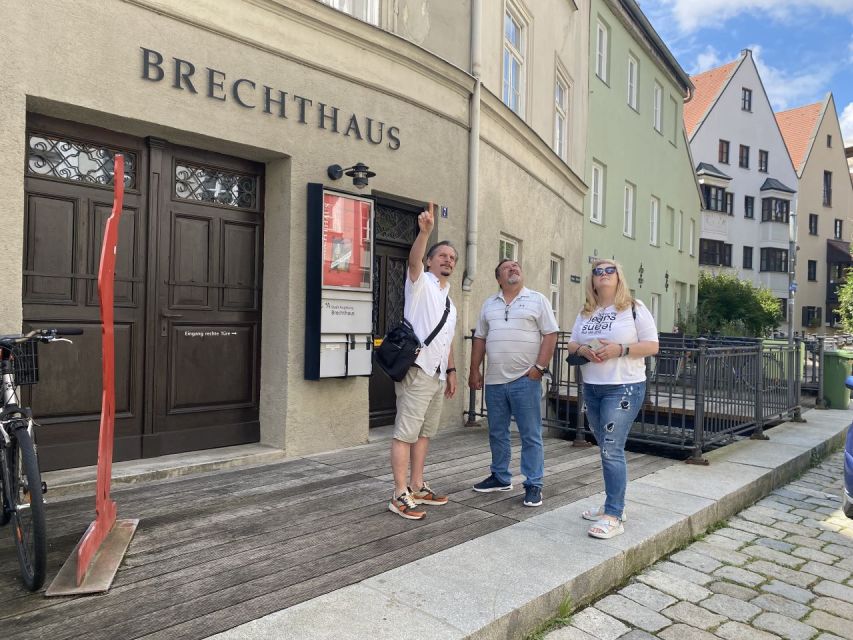
The walk includes the birthplace of Berthold Brecht, the acclaimed German artist and writer. His presence adds a more modern cultural layer to a city often introduced through Roman ruins, grand civic buildings, and wealthy merchant families.
Brecht helps shift the mood. The tour is not only about old stone and imperial titles. It also shows Augsburg as a place connected to German writing and artistic life. For readers, theater fans, and anyone interested in Germany’s cultural figures, this stop can make the city feel more personal.
Again, the tour information identifies the birthplace but does not promise an interior visit. If you hope to spend time inside a museum or literary memorial, ask about admission and opening arrangements before booking. Entrance fees are excluded, and the two-hour schedule is designed around several highlights.
I would especially value this stop if you have already seen Augsburg’s major civic sights. Brecht gives you another way into the city, one based on ideas and creative work rather than rulers and money.
Finishing at SchaezlerPalais after two hours
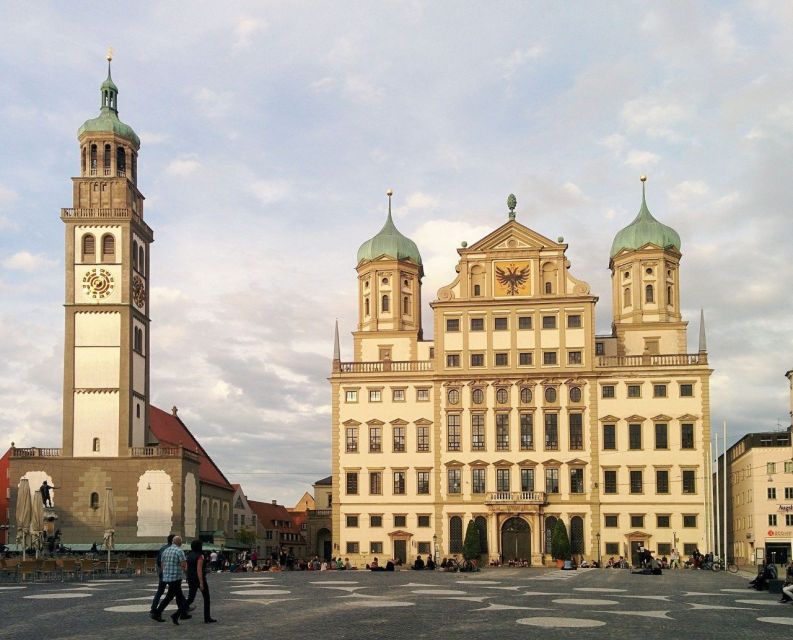
The tour finishes at SchaezlerPalais, a palace that survived World War II without a scratch. That makes it an unusual endpoint and a useful final reminder of Augsburg’s luck and survival during a period that damaged many German cities.
Ending here gives the walk a clear sense of closure. You begin with the Fuggerei and its social purpose, move through Roman and civic history, meet the Fugger family, Mozart’s father, and Brecht, then finish with a surviving palace. The sequence covers a lot of ground without requiring a full day.
The tour details do not state that entrance to SchaezlerPalais is included. Since admission fees are not part of the package, confirm the plan if seeing the inside is important to you. The palace is still valuable as a final location because it brings architecture and wartime history into the conversation.
What the private format really adds
A private tour is not automatically better than a group tour. Here, it earns its keep through flexibility. Your guide can customize the highlights during the walk, which matters when one person wants Roman history, another wants Brecht, and someone else mainly wants architecture.
Past feedback gives this format a strong record. One participant praised the guide for responding to the group’s wishes and sharing a broad body of information. Other comments describe the tour as highly informative, entertaining, and led by an excellent guide. A separate German-language comment praised a very experienced city guide and a lively presentation.
That is the main reason to book privately: you can shape the conversation. You can ask to linger at the Fuggerei, focus on the Town Hall, or give more time to the Mozart and Brecht connections. The guide speaks German or English, so you should choose the language that lets you ask the most questions.
The tradeoff is cost. The $362 price covers the group, not each individual. With 15 people, that works out to about $24 per person. With two people, it is $181 each, before any separate admission fees. A large family group or reunion may find the price reasonable. A couple on a tight budget may prefer a less expensive shared walk.
Timing, walking comfort, and access
Two hours is a useful length for a first look at Augsburg. You can cover the city’s main themes without giving up half a day, and the schedule fits well before or after another activity.
It is also a brisk amount of time for the number of subjects included. The tour covers Roman beginnings, the Town Hall, the Fuggerei, the Fugger family, Mozart’s father, Brecht, and SchaezlerPalais. You will get a guided overview, not an exhaustive study of every building.
The activity is not suitable for wheelchair users. That is an important booking point, especially because this is a walking tour through the old city and the route details do not promise step-free access.
Starting times vary, so you need to check availability for your date. The activity allows cancellation up to 24 hours in advance for a full refund, and you can reserve now and pay later. Those terms help if your Augsburg plans are still shifting, but they do not change the need to check the exact start time.
Who will get the most from this Augsburg walk
I would recommend this tour to you if you want a fast, guided orientation with a strong historical thread. It suits first-time visitors who want the major names and places explained rather than simply photographed.
It is also a good fit for families, friends, or larger private groups. Up to 15 people can share the booking, and the fixed price becomes more attractive as the group grows. The ability to adjust the focus is useful when your group has mixed interests.
History fans will appreciate the span from 15 B.C. to modern German culture. Architecture lovers will want to focus on the Town Hall and SchaezlerPalais. Readers and music fans will enjoy the Brecht and Mozart connections.
I would hesitate if you are traveling alone or as a couple and mainly want the lowest possible cost. The strong feedback on the guide suggests good delivery, but the price remains high for a small group. I would also hesitate if your priority is entering several attractions, since admission fees are not included and interior visits are not clearly promised.
Should you book the Augsburg Historical Highlights tour?
Book it if you value a private guide who can respond to your questions and if you want Augsburg explained through connected stories. The Roman foundation, Fuggerei, Town Hall, Mozart family link, Brecht birthplace, and SchaezlerPalais create a well-rounded first visit.
For a group of eight to 15, the price makes much more sense. For a smaller party, compare it with other city walks before committing, especially since one past participant found a similar tour for 115 euros. The guide quality appears to be the main strength, with repeated praise for clear, informative, and engaging delivery.
My practical call: choose this tour for flexible storytelling and a personal introduction to Augsburg. Skip it if you want a bargain, a wheelchair-accessible route, or guaranteed interior admissions.
FAQ
How long does the Augsburg Historical Highlights tour last?
The walking tour lasts two hours.
What language is the tour offered in?
The live guide speaks German or English.
Where does the tour meet?
The meeting point is at the Fuggerei.
Where does the tour finish?
The tour finishes at SchaezlerPalais.
Is this a private tour?
Yes. It is a private group tour for up to 15 people.
Are entrance fees included?
No. Entrance fees are not included in the price.
Is the tour suitable for wheelchair users?
No. The activity is not suitable for wheelchair users.
Just added around Germany
- St George’s Culinary Food Tour★ 5.0 · 3 reviews
- Castle Braunfels Day Trip from Frankfurt★ 5.0 · 3 reviews
- Discover Hamburg: Private Walking Tour★ 5.0 · 3 reviews
- Whodunnit – Interactive city walk in Düsseldorf★ 4.5 · 3 reviews
- Discover Dusseldorf’s most Photogenic Spots with a Local★ 5.0 · 3 reviews
- Kreuzberg Private Walking Tour: Immigrants, Artists & Hipsters★ 5.0 · 3 reviews
- Private Photo Tour in Kreuzberg★ 5.0 · 3 reviews
- Dusseldorf Private Walking Tour With A Professional Guide★ 4.5 · 3 reviews
Walking Tours, compared.





Berlin’s Best: 2 Hour Walking Tour Third Reich and the Cold War
Read our review →


Third Reich Berlin: Hitler and WWII Walking Tour
Read our review →Browse the lists this tour appears in