
Reviewed · WALKING TOURS
Walking Through Dresden’s Past with Dr. Fraser Macdonald
Dresden’s stones tell several stories at once. This two-hour walk with Dr. Fraser Macdonald links the riverbank, Neustadt, and Altstadt while showing how religion, royal power, war, and rebuilding shaped the city. I like the route’s clear historical arc and the way it includes both famous sights and less obvious stops. The main drawback is that the tour stays outside the museums and churches, so you will need extra time and admission fees if you want to go inside.
I also like the manageable pace and useful finish at Theaterplatz. You cover roughly a mile, cross Augustus Bridge, and reach the Zwinger, Semperoper, and Dresden Castle area with time left for your own plans. At $60.34 per person, it is not a bargain-priced stroll, but the price makes sense if you want a strong orientation and thoughtful explanation rather than a quick look at pretty buildings.
In This Review
- Key points before you book
- Starting beside the Elbe at the Golden Rider
- The former monastery and the story behind today’s museum
- Altendresden and the Baroque church tower
- Frauenkirche and seven centuries of change
- Holy Cross Church and the Reformation
- Denkraum Sophienkirche and a church that disappeared
- Dresden Castle and the rise of a royal city
- What Dr. Fraser Macdonald adds to the walk
- Pace, group size, and physical effort
- Is $60.34 good value?
- Who should book it?
- Final verdict: book it for context, not just landmarks
- FAQ
- Where does the Dresden walking tour begin?
- Where does the tour end?
- How long does the experience last?
- What language is the tour offered in?
- Are museum and church admission fees included?
- How much does it cost to climb the Dreikönigskirche tower?
- Does the tour enter Dresden Castle?
- Can I cancel for a full refund?
Key points before you book
- The route crosses two Dresdens: Begin in Neustadt at the Golden Rider, then cross Augustus Bridge into the historic Altstadt.
- Dr. Fraser Macdonald brings an anthropologist’s eye: His approach connects architecture and major events with the people and cultures behind them.
- The walk covers medieval, Baroque, wartime, GDR, and modern Dresden: It is useful if you want more than dates and royal names.
- Several landmark interiors are optional extras: Church towers, museums, and the Residenzschloss require separate admission.
- The tour ends in an excellent sightseeing zone: Theaterplatz puts you near the Zwinger, Semperoper, and other major sights.
- It works best early in your stay: The route helps you understand Dresden’s layout and choose where to spend the rest of your day.
Starting beside the Elbe at the Golden Rider
The meeting point is the Golden Rider at Neustädter Markt, 14, 01097 Dresden. This statue of Augustus the Strong points toward Warsaw, a fitting place to begin a tour about Dresden’s ambitions, rulers, and links beyond Saxony.
From here, the walk heads toward Köpckestraße and the banks of the Elbe. This first pause looks at the earliest permanent settlement in Dresden and the people who lived here before the city became a royal center. Fraser also addresses culture, language, and the eventual displacement of those early communities.
That opening matters because it puts human lives before grand buildings. Dresden is often presented through palaces and churches, but this first stop asks you to consider who occupied the riverbanks before the famous skyline appeared. It gives the rest of the walk a wider frame.
You are not simply being led from one postcard view to another. The route asks how a city grows, who controls it, and what gets forgotten when rulers rebuild it in their own image. That is a strong start for a history-minded visitor.
More Walking Tours in Dresden
- Dresden: City & Semperoper Guided Walking Tour
★ 4.8 · 2,293 reviews - Dresden: Guided City Walk with a Cup of Coffee
★ 4.7 · 1,568 reviews - Görlitz: Old Town Guided Walking Tour
★ 4.7 · 723 reviews
The former monastery and the story behind today’s museum
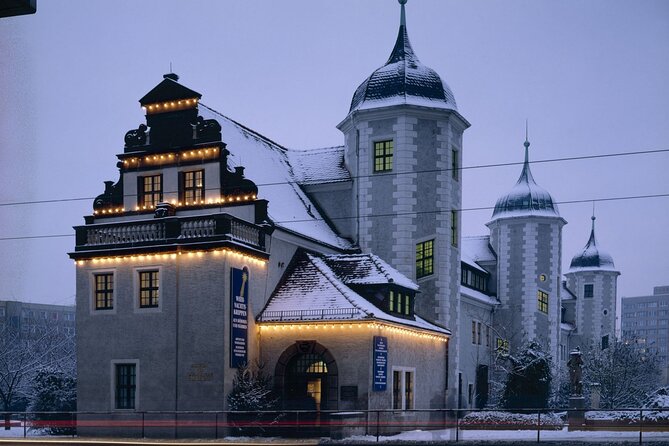
The next stop is the Museum für Sächsische Volkskunst mit Puppentheatersammlung. You do not enter the museum during the walking tour, but Fraser explains the site’s earlier life as a wealthy Augustinian monastery in the 15th century.
After Luther’s Reformation, the monastery was demolished and converted into a royal hunting lodge in the 16th century. That change captures Dresden’s religious and political shifts in a single location. A sacred institution gave way to a building serving the court, reflecting how quickly ownership and purpose could change.
The museum itself later became a home for Saxon folk art and puppet theater collections. Admission is not part of the walk, and the stated entrance price is €5. If you are interested in regional craft, popular culture, or puppetry, you could return after the tour rather than trying to fit a full museum visit into the two-hour route.
This is one of the tour’s less obvious stops, and that is part of its value. A solo walk might take you past the building without explaining why it matters. The tradeoff is simple: you get a useful outdoor introduction, but not the exhibits.
Altendresden and the Baroque church tower
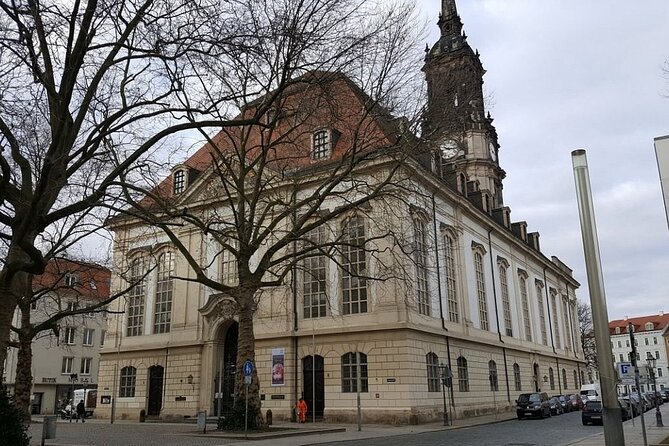
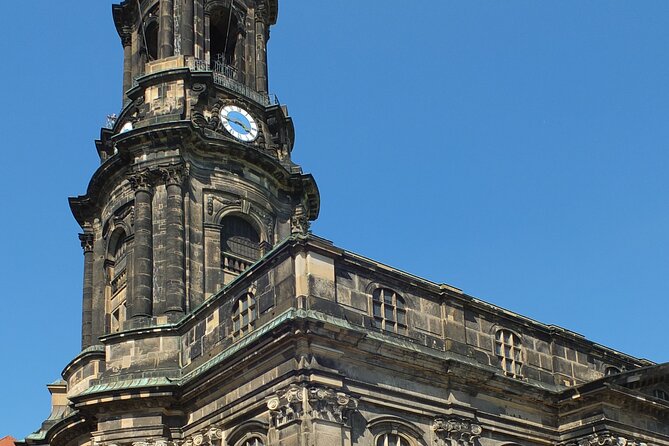
At Haus der Kirche, also known as Dreikönigskirche, the focus shifts to Altendresden. This area once developed separately from the old city across the river, and the church provides a way to understand that earlier urban division.
The building you see today is a beautiful Baroque church, but the story begins in the early 15th century. Fraser uses the site to explain the former Altendresden and the changes that affected its religious buildings and residents.
The tour does not enter Dreikönigskirche or climb the tower. You can do both independently, with tower admission listed at €5. That extra climb may appeal if you want a higher view of Dresden, but plan it for another part of your day. The walking tour keeps moving.
From here, the route crosses Augustus Bridge. This is a useful transition, not just a scenic crossing. You leave Neustadt behind and enter the Altstadt, where Dresden’s medieval, royal, and Baroque identities become more concentrated.
The bridge also gives you a chance to understand Dresden’s position on the Elbe. The river is not background decoration. It explains the city’s settlement, movement, defense, trade, and later division into distinct districts.
Frauenkirche and seven centuries of change
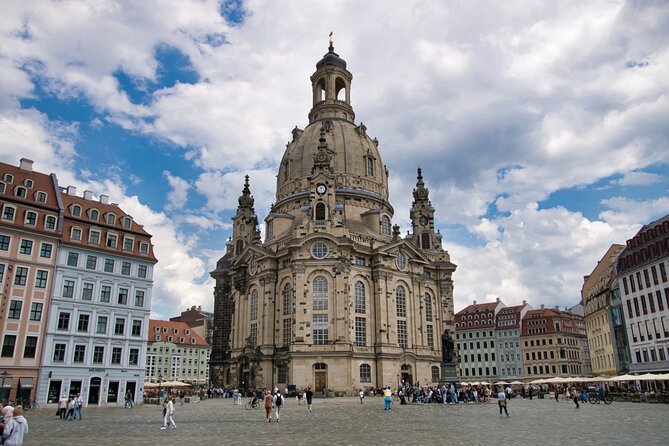
The Frauenkirche is the tour’s longest landmark stop at about 20 minutes. Most visitors recognize its great stone dome, but Fraser places the church within a 700-year story.
The building we associate with Dresden is Baroque, yet the site witnessed many earlier religious and structural changes. The church’s history reaches back long before the grand 18th-century form, making it a useful place to discuss the Reformation and the changing role of faith in Saxony.
You will not enter the Frauenkirche on this tour. The visit is an outdoor explanation, followed by the option to return on your own. That arrangement keeps the walk efficient, though anyone hoping for an interior visit should allow extra time later.
The Frauenkirche also gives Fraser room to address Dresden’s wartime destruction and reconstruction. Several people value his ability to explain the bombing of Dresden and the architectural differences between the prewar city, the postwar period, the GDR years, and reunification.
That context is especially useful here. The restored church is not simply an old building that survived untouched. Its present form reflects destruction, memory, political change, and a later decision to rebuild. You get more from the façade once you understand those layers.
Something different for another day:
- Dresden: Semperoper Tickets and Guided Tour
★ 4.7 · 12,102 reviews - Dresden: The Original Night Watchman Tour in Lantern Light
★ 4.6 · 6,653 reviews - Dresden: Semperoper and Old Town Tour
★ 4.8 · 5,735 reviews - Dresden: River Sightseeing Boat Cruise
★ 4.3 · 5,323 reviews
Holy Cross Church and the Reformation
The walk continues to Holy Cross Church, where the story reaches back to the 13th century. The church was destroyed several times, and its history includes crucial moments in the Reformation.
This stop helps correct the easy assumption that Dresden’s religious buildings have followed a neat, uninterrupted path. They have been rebuilt, altered, and forced to adapt as the city changed around them.
The church is also a good setting for discussing the relationship between faith and civic life. Religious change in Saxony was not an abstract matter confined to theologians. It affected buildings, institutions, rulers, and the daily character of the city.
The tour remains outside, and admission is free at this stop. You should expect explanation rather than a formal interior visit. If the doors are open during your later explorations, you can decide for yourself how much time to spend inside.
Denkraum Sophienkirche and a church that disappeared
Denkraum Sophienkirche offers one of the walk’s most affecting stories. The site began as Dresden’s first Franciscan monastery, constructed in the 13th century. It later became the Sophienkirche, an important church that was eventually lost.
Fraser uses the vanished church to show how political and religious currents can reshape a city’s physical identity. Few subjects explain Dresden better than disappearance. Buildings were removed, damaged, repurposed, or rebuilt as rulers and governments changed.
This is not just a stop about architecture. It is a stop about memory. The Denkraum keeps attention on what no longer exists, which is easy to miss in a city famous for restored monuments.
I especially like the balance here. The tour does not treat Dresden as a perfect Baroque stage set. It acknowledges gaps, losses, and difficult decisions. That makes the polished squares and grand churches easier to understand, and less sentimental.
Dresden Castle and the rise of a royal city
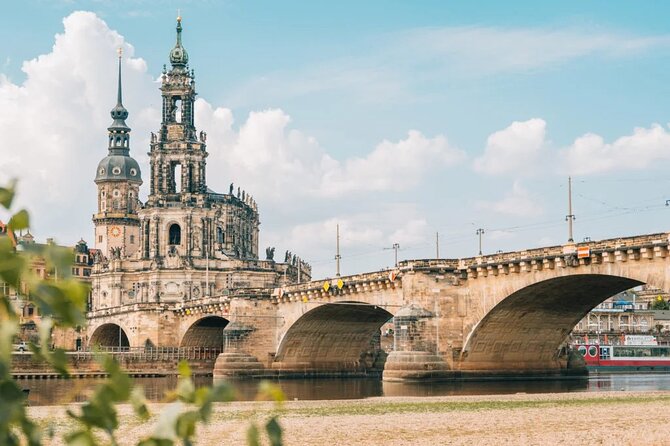
The final stop is Dresden Castle, or Residenzschloss. This palace began as the residence of Saxony’s Electors and Kings, and its story explains how Dresden grew from a relatively minor city into a major center within the Holy Roman Empire.
The castle has changed repeatedly over time. Those changes reflect the increasing power and wealth of the Saxon court. Fraser connects the palace to Dresden’s larger rise, giving you a useful explanation of why so many monumental buildings gathered here.
The walking tour does not enter the castle or its museums. Admission is listed at €14, so you should treat the exterior discussion as an introduction, not a substitute for the Royal Palace museums. If you have limited time, Fraser’s overview can help you decide if the interior deserves priority.
The tour ends at Theaterplatz, a smart finish for a sightseeing walk. From here, you can continue to the Zwinger, visit the Semperoper area, explore Dresden Castle, or take a tram to your next stop.
What Dr. Fraser Macdonald adds to the walk
Fraser’s strongest quality is his ability to connect facts with people and place. His background in anthropology gives the walk a broader angle, and the commentary includes history, architecture, culture, and modern differences between Dresden and other parts of Germany.
The delivery is enthusiastic without feeling like a classroom lecture. That matters during a two-hour walk. You get enough detail to understand the sites, but the route still feels like a city walk rather than a list of dates.
He also makes room for questions and personal conversation. Several accounts describe him as friendly, approachable, and willing to suggest places to visit afterward. One particularly useful example is his recommendation of the Stasi Museum in Leipzig, which helped a couple continue exploring GDR history after leaving Dresden.
You might also benefit from his eye for photographs. One booking party praised the pictures he took during the walk, and the route includes several photogenic views. Do not book it as a dedicated photo tour, but it is worth having your camera ready around the river, bridge, and central squares.
Pace, group size, and physical effort
The tour lasts about two hours and has a maximum of 30 people. That is large enough to feel like a standard public walk, but the route itself is short, roughly a mile according to one detailed account.
The pace is described as steady and comfortable. You will stop often, listen, walk a little farther, and regroup. This makes it suitable for most people who can manage an ordinary city walk, though cobbled or uneven surfaces may still require sensible footwear.
The short distance is a real strength. You see both Neustadt and Altstadt without spending the whole day on your feet. At the same time, the route covers a lot of history, so visitors who prefer a very slow tour with long interior visits may find it brisk.
The tour requires good weather. If poor weather cancels it, you are offered another date or a full refund. A minimum number of participants is also required. Confirmation arrives when you book, service animals are allowed, and the start is near public transportation.
Is $60.34 good value?
At $60.34 per person, the cost is best judged against the guide’s interpretation, not the number of buildings you pass. You are paying for a structured route, historical context, and a chance to ask questions while moving through the city.
The price does not include museum or church admission. If you add the €5 museum, €5 church tower, and €14 castle entry, your total sightseeing budget rises quickly. The good news is that you do not need to pay all of those fees to benefit from the walk.
For a first visit, I think the tour offers fair value if you want to get your bearings and understand what you are seeing. It is less suitable if you only want a cheap orientation or plan to spend the entire day inside museums.
Because the tour is often booked 36 days ahead, reserve early if your Dresden dates are fixed. The 99 percent recommendation rate from 73 ratings also suggests a strong record, though no guided walk can guarantee the same experience for every group.
Who should book it?
I would choose this tour for a first visit, especially if you have only a day in Dresden. It gives you a physical map of the city and points out places worth revisiting.
It is also a good match for history buffs, architecture fans, and anyone curious about the Reformation, the GDR period, wartime destruction, and postwar rebuilding. Families can benefit too, provided everyone is comfortable walking and listening for two hours.
You may want something else if your top priority is entering every major church and museum. This experience is an outdoor introduction, not a full interior tour. You should also allow extra time at the end if you plan to visit the Zwinger, Semperoper, or castle museums.
Final verdict: book it for context, not just landmarks
Book Walking Through Dresden’s Past with Dr. Fraser Macdonald if you want Dresden to make sense quickly. The route covers major sights, but its real strength is the explanation between them: early settlement, religious change, royal ambition, loss, dictatorship, and rebuilding.
I would schedule it near the start of your stay. You will finish at Theaterplatz with a better idea of where to go next, and the short route leaves the rest of your day open. Skip it only if you already know Dresden well or want a tour focused mainly on interiors.
FAQ
Where does the Dresden walking tour begin?
It begins at the Golden Rider, Neustädter Markt 14, 01097 Dresden, Germany.
Where does the tour end?
The tour ends at Theaterplatz in Dresden’s Altstadt.
How long does the experience last?
It lasts approximately two hours.
What language is the tour offered in?
The tour is offered in English.
Are museum and church admission fees included?
No. Admission to the Museum für Sächsische Volkskunst, Dreikönigskirche tower, and Residenzschloss is not included.
How much does it cost to climb the Dreikönigskirche tower?
The listed price to climb the tower is €5 per person.
Does the tour enter Dresden Castle?
No. The tour discusses Dresden Castle from outside. You may visit the castle and its museums separately, with the listed entrance fee of €14.
Can I cancel for a full refund?
Yes, if you cancel at least 24 hours before the experience start time. Cancellations made less than 24 hours before the start are not refunded. If poor weather or an insufficient number of participants cancels the tour, you are offered another date or a full refund.
Just added around Dresden
- From Dresden: Guided Day Tour by Bus of Seiffen Toy Village★ 4.0 · 13 reviews
- Dresden: Christmas Sightseeing Tour with a ‘Pflaumentoffel’★ 4.5 · 13 reviews
- Dresden: Bike Rental – City Bike with Option Children Seat★ 4.5 · 13 reviews
- Sightseeing tour by ConferenceBike★ 5.0 · 14 reviews
- Dresden Neustadt: Scavenger Hunt for Children★ 4.8 · 15 reviews
- Dresden: Scavenger Hunt to Elbe River & Castles★ 4.7 · 15 reviews
- Street Art Tour Dresden Neustadt★ 4.0 · 15 reviews
- Dresden: 150-minute Trabi tour as a guided city tour★ 4.9 · 15 reviews
Walking Tours, compared.



Berlin’s Best: 2 Hour Walking Tour Third Reich and the Cold War
Read our review →
Third Reich Berlin: Hitler and WWII Walking Tour
Read our review →Browse the lists this tour appears in