
Reviewed · WALKING TOURS
Ulm: True Crime Walking Tour
Ulm has a darker side. This 90-minute walking tour uses real criminal cases from Ulm and Neu-Ulm to tell a different kind of city story. Instead of medieval legends, you look at the 1970s and 1990s, when Münsterplatz was still a car park, American forces shaped local nightlife, and both cities faced drug problems and skinhead activity.
I like the way the tour connects crime with its social setting, rather than treating each case as an isolated murder mystery. I also like the unusual time frame: the stories are recent enough to feel familiar, yet old enough to show how much Ulm has changed. The main point to consider is that the live tour is in German, so you need strong German skills to follow the detail and twists.
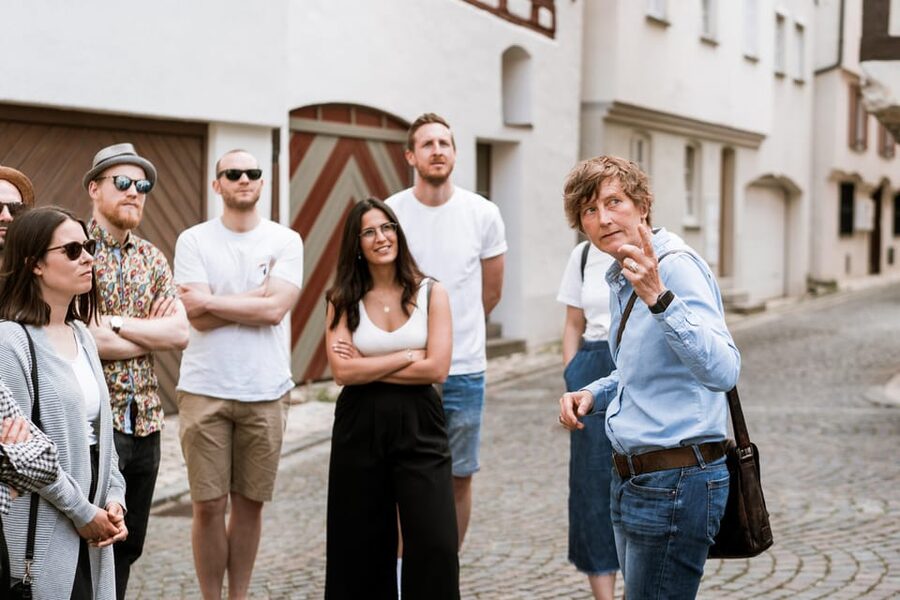
The tour is led by Daniela Brandt and Manfred Chaloun, and its format has earned a very strong 4.9 rating from 10 reviews. The available written response, Sehr unterhaltsam, means very entertaining, which fits a tour built around unusual cases, surprising turns, and grim local history.
In This Review
- Key points about Ulm’s true crime tour
- A different way to read Ulm and Neu-Ulm
- Münsterplatz before it became today’s gathering place
- Ulm, Neu-Ulm, and the border between two cities
- The 1970s: American nightlife and changing habits
- The 1990s and the skinhead scene
- How the storytelling works
- What $17 buys you in 90 minutes
- Language, access, and planning details
- Who will enjoy this tour most
- Should you book Ulm’s True Crime Walking Tour?
- FAQ
- How long is the Ulm True Crime Walking Tour?
- What language is the tour conducted in?
- How much does the tour cost?
- Is the tour wheelchair accessible?
- Who leads the tour?
- Can I cancel the booking for a refund?
Key points about Ulm’s true crime tour
- Recent cases, not medieval tales: The stories focus on Ulm and Neu-Ulm in the 1970s and 1990s.
- Münsterplatz before the makeover: You consider the central square as a former car park, not only as the historic heart seen today.
- Crime meets social history: Drug culture, American nightlife, Milli Vanilli, and the skinhead scene help explain the period around each case.
- Two named guides: Daniela Brandt and Manfred Chaloun lead the discovery tour.
- German-language format: The tour is live and conducted in German.
- Practical flexibility: It lasts 1.5 hours, costs $17 per person, is wheelchair accessible, and allows cancellation up to 24 hours before the start for a full refund.
A different way to read Ulm and Neu-Ulm
Most city tours begin with architecture, rulers, churches, and famous dates. This one takes a side road. It asks what was happening in ordinary streets and public spaces when Ulm and Neu-Ulm were dealing with crime, changing nightlife, and social tension.
That change in viewpoint is the tour’s main appeal. You do not simply hear that a crime occurred. You are also given the period around it: what the cities looked like, which groups shaped public life, and how attitudes and institutions were changing.
The cases come from the 1970s and 1990s. That choice matters. These decades are close enough to modern memory that the details can feel surprisingly familiar, yet they belong to a different Germany. Public spaces have changed. Nightlife has changed. The way people talk about drugs, youth groups, and violence has changed too.
For me, that makes the walk more useful than a string of sensational stories. The crimes provide the hook, but the city and its recent past provide the substance.
More Escape Rooms & Games in Germany:
- Hamburg: Sex and Crime in St. Pauli Tour for Ages 18+
★ 4.7 · 15,447 reviews - Hamburg: Treasure Hunt Game through HafenCity
★ 4.7 · 364 reviews - Hamburg: Scavenger Hunt Self-Guided Tour for Children
★ 4.5 · 319 reviews
Münsterplatz before it became today’s gathering place
Münsterplatz is one of the clearest examples of how the tour reworks familiar ground. The square is now closely linked with Ulm Minster and the city’s public image. During the period covered by the tour, it was still used as a car park.
That single detail changes how you picture the city. Instead of imagining a polished historic square, you are asked to picture cars, traffic, and a very different daily rhythm. A place that now feels symbolic and civic once had a much more practical role.
The tour uses locations such as this to set the scene for the cases. The exact crime details are only part of the experience. The setting helps you understand how people moved through the city and how public life worked at the time.
Do not expect a standard sightseeing walk with a long list of buildings. The value here is in seeing familiar places with a new frame of reference. If you already know central Ulm, that can make the experience especially rewarding. If you are new to the city, it gives you an unusual introduction, though it will not replace a classic tour of the Minster and old town.
Ulm, Neu-Ulm, and the border between two cities
The tour deals with both Ulm and Neu-Ulm. They are twin cities, but they are not the same place, and their connection adds useful context to the stories.
Crime does not stop at a municipal boundary. The tour’s attention to both cities allows you to consider how people, nightlife, and social problems moved across the area. This is particularly relevant when the subject turns to the drug scene and youth subcultures.
The twin-city setting also keeps the walk from becoming too narrow. You are not only learning about one address or one incident. You are looking at a local area with connected communities and different public identities.
The supplied information does not specify every stop or the exact route, so you should not book this expecting a published checklist of crime scenes. The focus is the guided storytelling and the way the cases are tied to place. Daniela Brandt and Manfred Chaloun shape that experience as a discovery tour, with the route serving the stories rather than the other way around.
The 1970s: American nightlife and changing habits
One of the tour’s most colorful time markers is the role of the American presence in local nightlife. The period is also linked with the music of Milli Vanilli, a small detail that helps place the stories in a recognizable cultural moment.
This is the sort of detail I appreciate. A date on its own can feel dry. A reference to the music people heard and the groups that organized nightlife gives the period a human scale. It helps you imagine the public mood without pretending that every part of the past was glamorous.
The tour also deals with the drug scene in Ulm and Neu-Ulm. Here, the crimes are presented alongside the wider problems facing the cities. That approach gives you more to think about than the basic question of who did what.
The subject matter will not suit everyone. True crime can become cheap entertainment when it focuses only on shock. This tour appears designed to avoid that narrow approach by changing perspective and tracing the time and society around the cases. Still, you should choose it only if you are comfortable with real criminal events and serious themes.
More Walking Tours in Germany:
- Discover Berlin Half-Day Walking Tour
★ 5.0 · 9,624 reviews - Berlin: Third Reich and Cold War 2 Hour Walking Tour
★ 4.9 · 6,830 reviews - Munich: Third Reich & WWII Walking Tour
★ 4.6 · 6,181 reviews - Berlin: Discover Berlin Walking Tour
★ 4.9 · 5,998 reviews
The 1990s and the skinhead scene
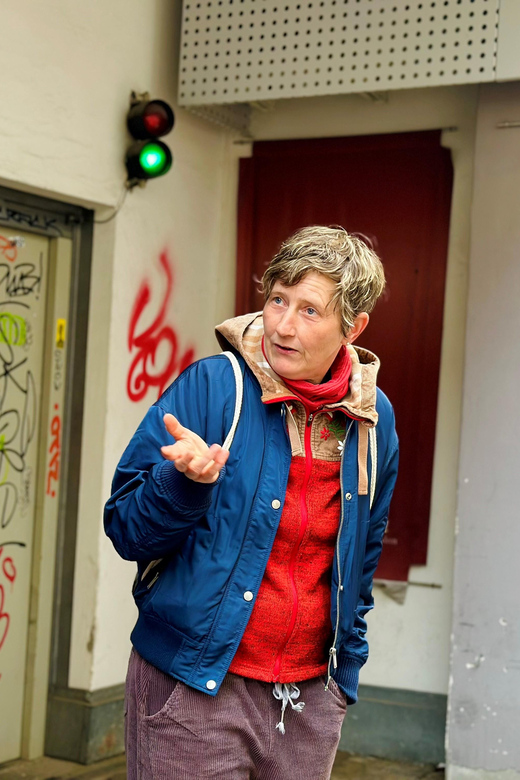
The 1990s section brings another kind of social tension into view through the skinhead scene. Again, the point is not simply to name a group or describe a crime. The tour uses the cases to show the setting in which those events took place.
This gives the walk a broader reach than a murder mystery format. You get questions about identity, belonging, public order, and the pressures affecting young people. The information provided describes the tour as the first true crime format focused exclusively on young cases, which sets it apart from tours built around much older legends.
That focus on recent decades is one of the strongest reasons to choose this activity. You are more likely to recognize the cultural references, and the subjects connect to modern European social history. At the same time, the recent setting may make the material feel more unsettling than a medieval crime story. The events are not safely separated from the present by centuries.
How the storytelling works
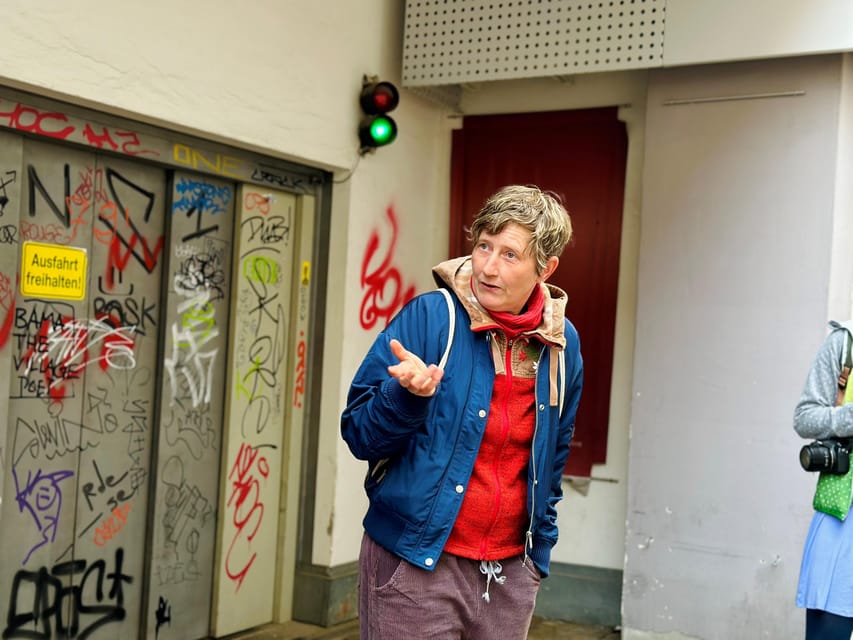
The tour is built around carefully chosen criminal cases, but it repeatedly shifts perspective. That means you may move from the crime itself to the people involved, the public mood, the city at the time, or the social issue behind the event.
This structure should suit you if you enjoy context and discussion. It may be less satisfying if you want a rapid list of shocking facts or a tightly plotted mystery with a final solution. The description emphasizes unsolved mysteries, unexpected turns, deceptive methods, and unlikely coincidences, so not every story offers a neat answer.
The unresolved element is important. An unsolved case asks you to tolerate uncertainty. The guide’s role is not simply to announce a conclusion, but to lead you through what is known, what is unclear, and how the surrounding circumstances matter.
A live guide also adds room for tone and pacing. Daniela Brandt and Manfred Chaloun are named as the guides, giving the experience a more personal shape than an audio recording or printed route. The strong score of 4.9 from 10 reviews, along with the specific praise for entertainment value, suggests that the delivery is a major part of the appeal.
What $17 buys you in 90 minutes
At $17 per person, this is priced as an affordable specialty tour rather than a full-day activity. You receive a live 1.5-hour walking experience with a focused theme and access to local cases that would be difficult to assemble on your own.
The value depends on your interests. If you enjoy true crime, modern city history, or social history told through personal events, the price is reasonable. You are getting more than a walk between landmarks. You are getting a guided interpretation of Ulm and Neu-Ulm during two specific decades.
If you want a broad introduction to Ulm’s architecture, the money may be better spent on a conventional city tour. This experience does not appear designed to cover every major sight or explain the full history of the city.
The 90-minute length is well judged for the subject. It is long enough to develop several cases and their context, but short enough to fit around other plans. You should check the available starting times before booking, since the precise schedule is not fixed in the information provided.
Language, access, and planning details
The live guide speaks German, and German is the listed language for the activity. You should be able to follow detailed spoken German, including references to crime, social conditions, and events from several decades. Basic tourist German is unlikely to be enough for the full effect.
The tour is wheelchair accessible, which is useful for anyone who needs an accessible walking activity. The available details do not describe the exact surface, route length beyond the 1.5-hour duration, or restroom arrangements, so contact the provider if you need those specifics.
Ulm/Neu-Ulm Touristik GmbH operates the experience. You can reserve now and pay later, keeping your plans flexible without paying at the time of booking. Cancellation is free up to 24 hours before the start for a full refund.
Because this is a walking tour with serious subject matter, check the meeting instructions and starting time carefully. The provided information does not give the meeting point, group size, or a full stop-by-stop route, so those details should be confirmed before you set out.
Who will enjoy this tour most
I would recommend it first to people who like true crime with a local and historical angle. You should also consider it if you have already seen Ulm’s main sights and want a fresh way to understand the city.
It suits:
- True crime fans who prefer real cases to fictional ghost stories
- Visitors interested in the 1970s and 1990s
- People curious about drug culture, nightlife, and youth movements
- German speakers who enjoy live storytelling
- Repeat visitors looking beyond the usual old-town route
- Visitors who want a compact activity lasting 1.5 hours
It may not suit children or anyone looking for a light family outing. The material concerns real criminal cases and includes difficult social subjects. It is also not the right pick if you need an English-language tour or want a traditional overview of Ulm’s monuments.
Should you book Ulm’s True Crime Walking Tour?
Book it if you want to see Ulm and Neu-Ulm through recent cases, changing public spaces, and the social tensions of the 1970s and 1990s. The combination of real crime, Münsterplatz’s former role as a car park, American nightlife, Milli Vanilli, the drug scene, and the skinhead scene gives the walk a clear local identity.
At $17, it offers solid value for a focused 90-minute experience, especially with guides Daniela Brandt and Manfred Chaloun leading it. I would skip it only if your German is not strong enough for detailed storytelling, or if you would rather spend your sightseeing time on art, architecture, and medieval history.
FAQ
How long is the Ulm True Crime Walking Tour?
The tour lasts 1.5 hours. Starting times vary, so check availability when planning.
What language is the tour conducted in?
The live tour is conducted in German. German is the only listed language.
How much does the tour cost?
The listed price is $17 per person.
Is the tour wheelchair accessible?
Yes, the activity is listed as wheelchair accessible.
Who leads the tour?
The discovery tour is led by Daniela Brandt and Manfred Chaloun.
Can I cancel the booking for a refund?
Yes. You can cancel up to 24 hours before the tour for a full refund. You can also reserve now and pay later.
Just added around Germany
- St George’s Culinary Food Tour★ 5.0 · 3 reviews
- Discover Hamburg: Private Walking Tour★ 5.0 · 3 reviews
- Castle Braunfels Day Trip from Frankfurt★ 5.0 · 3 reviews
- Whodunnit – Interactive city walk in Düsseldorf★ 4.5 · 3 reviews
- Discover Dusseldorf’s most Photogenic Spots with a Local★ 5.0 · 3 reviews
- Kreuzberg Private Walking Tour: Immigrants, Artists & Hipsters★ 5.0 · 3 reviews
- Private Photo Tour in Kreuzberg★ 5.0 · 3 reviews
- Dusseldorf Private Walking Tour With A Professional Guide★ 4.5 · 3 reviews
Walking Tours, compared.





Berlin’s Best: 2 Hour Walking Tour Third Reich and the Cold War
Read our review →


Third Reich Berlin: Hitler and WWII Walking Tour
Read our review →Browse the lists this tour appears in