

Reviewed · MUSEUMS
Stuttgart: Museum of Illusions Entry Ticket
Your eyes will argue with your brain here. Stuttgart’s Museum of Illusions turns simple rooms, mirrors, lights, and moving patterns into a playful lesson about human perception. With a pre-booked ticket, you can spend one valid day exploring optical tricks such as the Vortex Tunnel, Infinity Room, holograms, and distorted mirrors.
I like the mix of fun and explanation. You are not only taking strange photos, you are also learning why your balance fails, why reflections look wrong, and how your mind tries to make sense of confusing images. The $16 price is reasonable for a family-friendly indoor stop, especially when weather spoils outdoor plans.
The main caution is that several attractions can affect your balance or senses. The Vortex Tunnel, Zoetrope, and Tilted Room are not suitable for people with epilepsy, so check the warnings before booking. The museum is also an experience built around short demonstrations and photo opportunities, not a large traditional collection.
In This Review
- Key points to know before you go
- What kind of museum is this?
- Starting with the Mirror Room and holograms
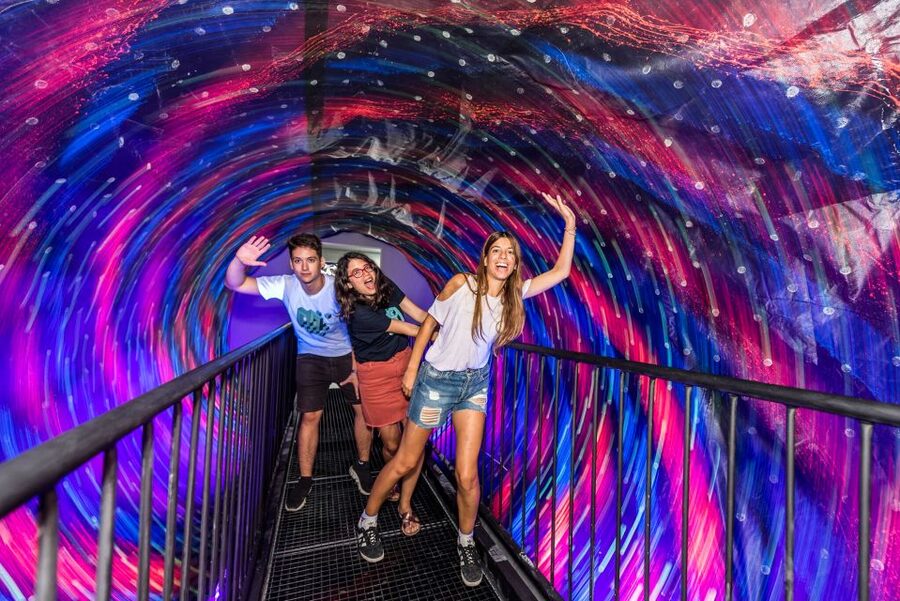
- Testing your balance in the Vortex Tunnel
- Meeting the Anti-Gravity Room and Tilted Room
- Seeing yourself multiply at the Clone Table
- Getting lost in the Infinity Room
- Watching patterns turn at the Turntables
- Trying the Head on the Platter
- The science behind the visual tricks
- How long to plan and how to use the ticket
- Is $16 a fair price?
- Who should book this Stuttgart experience?
- Should you book the Museum of Illusions Stuttgart?
- FAQ
- How much does entry to the Museum of Illusions Stuttgart cost?
- How long is the ticket valid?
- What is included in the ticket?
- Is the museum wheelchair accessible?
- What should I bring?
- Are any exhibits unsuitable for people with epilepsy?
Key points to know before you go

- The Vortex Tunnel feels unstable while remaining flat and still, making it one of the most memorable stops for visitors who enjoy sensory tricks.
- The Mirror Room and Infinity Room are made for photographs, with reflections and repeated images that can make a small space feel endless.
- Holograms change before your eyes, offering a quieter way to think about visual perception between the more active exhibits.
- The Clone Table and Head on the Platter invite group participation, so this works best with friends or family rather than as a silent museum visit.
- The ticket costs $16 per person and is valid for one day, giving you flexibility while you explore Stuttgart.
- Wheelchair access is available, but the Vortex Tunnel, Zoetrope, and Tilted Room require extra care because of their sensory effects.
What kind of museum is this?
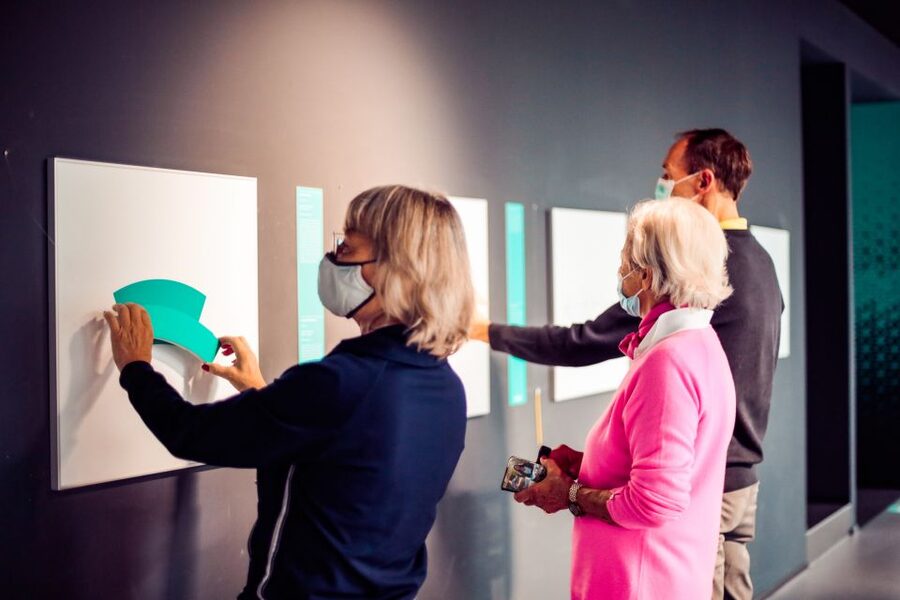
The Museum of Illusions Stuttgart is not a place filled with valuable paintings or historic objects. It is an interactive attraction built around the way your eyes, balance, and brain interpret the world.
That difference matters. You come here to touch, pose, walk through, look closely, and test your senses. The displays are designed to make you question what you see, then give you a basic scientific explanation for the effect.
I like this format for families because adults and children can enjoy the same exhibit for different reasons. A child may laugh at a distorted reflection, while you may pay more attention to the explanation of perception. Friends can compete over the best pose, and couples can take unusual photos without needing a professional photographer.
The museum also suits a short city break. Since the ticket is valid for one day rather than tied to a long guided program, you can fit the visit around other plans. Check the available starting times when booking, since the activity does not simply promise an unrestricted arrival at any hour.
More Museums:
- Stuttgart: Mercedes-Benz Museum Entry Ticket
★ 4.8 · 1,400 reviews - Stuttgart: Stuttgart Wine Museum Wine Tasting
★ 4.7 · 55 reviews - Berlin: Jewish Museum Berlin Entrance Ticket
★ 4.5 · 8,393 reviews
Starting with the Mirror Room and holograms
The Mirror Room is one of the clearest introductions to the museum’s style. Mirrors alter your reflection and make the room appear confusing, giving you a chance to pose, move, and watch the image change.
This is a good first stop because the effect is easy to understand but still surprising. You know the mirrors are responsible, yet the repeated and warped reflections can make the room feel larger, stranger, or less stable than it really is.
Bring a charged smartphone. You will want it for mirror photographs, and the museum specifically lists a charged phone among the things to bring. The photos are part of the fun, not an extra service, so a low battery could cut short one of the most enjoyable parts of the visit.
The holograms offer a different mood. Instead of walking through a physically confusing room, you watch images appear, disappear, and transform. These displays give you a chance to slow down and focus on how the eye follows light and shape.
I like the contrast between the two. The Mirror Room asks you to move and pose. The holograms reward patience and close attention. Together, they show that an illusion does not need to be loud or dramatic to confuse your perception.
Testing your balance in the Vortex Tunnel

The Vortex Tunnel is a rotating cylinder. You walk through a space that is stable and flat, but the moving surroundings can make you feel as if the floor or your body is shifting.
That mismatch is the point. Your eyes report motion, while your body receives different information from the solid floor. Your brain tries to combine those signals, and the result can be a loss of balance or a strong sense of movement.
For many people, this is likely to be the museum’s biggest physical challenge. Go slowly, pay attention to how you feel, and do not treat it like a race. The attraction is meant to test your senses, not your courage.
The health warning is important. The Vortex Tunnel is not suitable for people with epilepsy, along with the Zoetrope and Tilted Room. If you have concerns about flashing, rotating, or disorienting attractions, read the warnings carefully before reserving your ticket.
This stop may also be less comfortable for anyone who is sensitive to motion. The activity information does not provide a specific age or time limit, so use your own judgment and leave the attraction if it makes you feel unwell.
Meeting the Anti-Gravity Room and Tilted Room
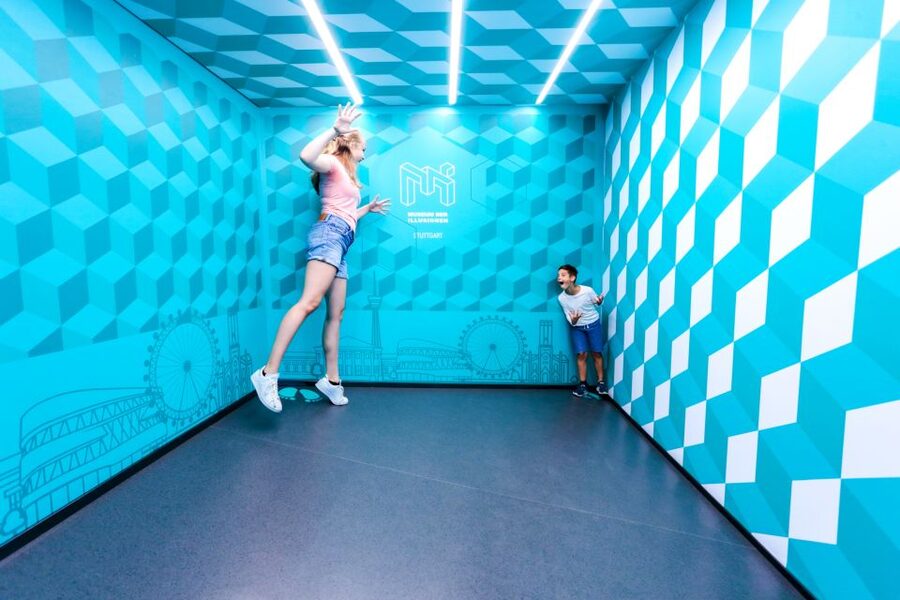
The Anti-Gravity Room plays with your sense of direction. The name tells you what the exhibit is designed to suggest: a space where ordinary ideas about up, down, and body position no longer seem reliable.
You are still in a constructed room, but the visual information encourages your brain to read it differently. That makes this a useful example of a central museum theme: your eyes do not simply record reality, they help your mind interpret it.
The Tilted Room works along similar lines. A slanted environment can make familiar objects and body positions feel wrong, even when you know the room has been designed to create the effect.
These rooms are especially good for group photographs because a simple pose can look much stranger when the surroundings alter your sense of orientation. You may find that the best image comes from a basic pose rather than an elaborate one.
The Tilted Room is included in the epilepsy warning. Treat it as another exhibit where you should pause and decide if the visual effect is comfortable for you.
A few more tours and experiences worth a look
- Tickets SWR Fernsehturm Stuttgart
★ 4.5 · 674 reviews - Stuttgart: Wilhelma Zoological-Botanical Garden Ticket
★ 4.7 · 121 reviews - Stuttgart: Landesmuseum Württemberg Old Castle Entry Ticket
★ 4.5 · 15 reviews - Dresden: Semperoper Tickets and Guided Tour
★ 4.7 · 12,102 reviews
Seeing yourself multiply at the Clone Table
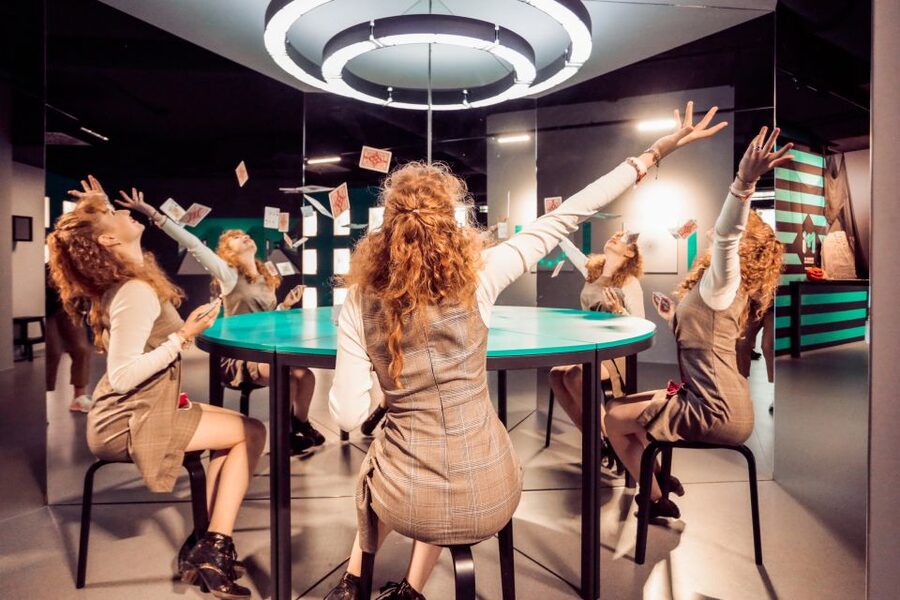
The Clone Table is a group-friendly illusion. It uses reflection and positioning to create the impression of several copies of one person around a table.
This is not a display you simply walk past. You and your companions become part of the effect. Try different positions and poses, then compare how the reflections make one person appear to occupy several places.
The exhibit works well for families because it requires no specialist knowledge. You can understand the basic trick quickly, but the result still looks odd in a photograph. It also gives children a clear example of how mirrors can create an image that appears to contain more people than are actually present.
I would allow time for repeated attempts here. The first photo may show the idea, but a second or third pose can make the illusion much clearer. Since the museum is interactive, your patience and willingness to experiment affect how much you get from the visit.
Getting lost in the Infinity Room
The Infinity Room uses mirrors to repeat light and space, making the room seem far larger than its actual boundaries. It is one of the museum’s strongest visual effects because the usual signs of a small room become difficult to read.
You may feel as if you are surrounded by endless reflections. In reality, the effect comes from a carefully arranged interior, but your eyes keep finding more images and more apparent depth.
This is another excellent place for photographs. Bright points and repeated reflections can produce an image that looks much more elaborate than the simple act of standing in a mirrored room. Move carefully, though, and keep your attention on the actual floor and walls rather than only on the reflected scene.
The Infinity Room also gives the visit a quieter moment after the more physical attractions. You can look around slowly and think about how a limited space can appear limitless when visual information repeats.
Watching patterns turn at the Turntables
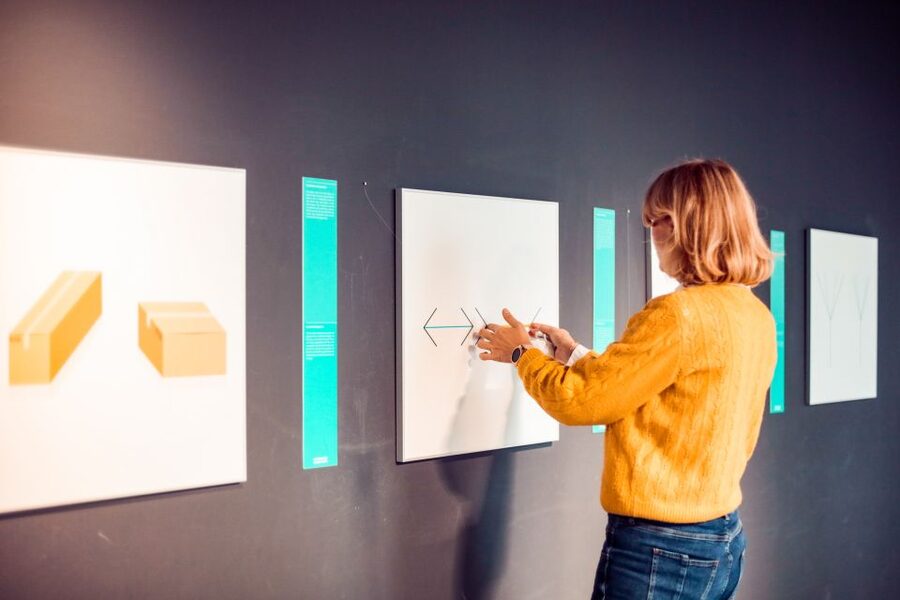
The Turntables create hypnotic visual effects through rotating patterns. As the shapes move, your eyes may begin to interpret the design in unexpected ways.
This exhibit is useful because it shows that illusion is not always about a hidden trick or a false reflection. Motion and repetition alone can change what you think you are seeing.
You may notice different turning patterns as you watch. The attraction encourages you to compare what happens when the movement changes, making it a simple but effective lesson in how the brain handles repeated visual information.
The Turntables are also a nice break from the photo-focused rooms. You can simply watch and notice how long the illusion lasts after you look away. The museum does not require you to understand technical science, but the explanations around the exhibits help connect the experience to vision and intellect.
Trying the Head on the Platter
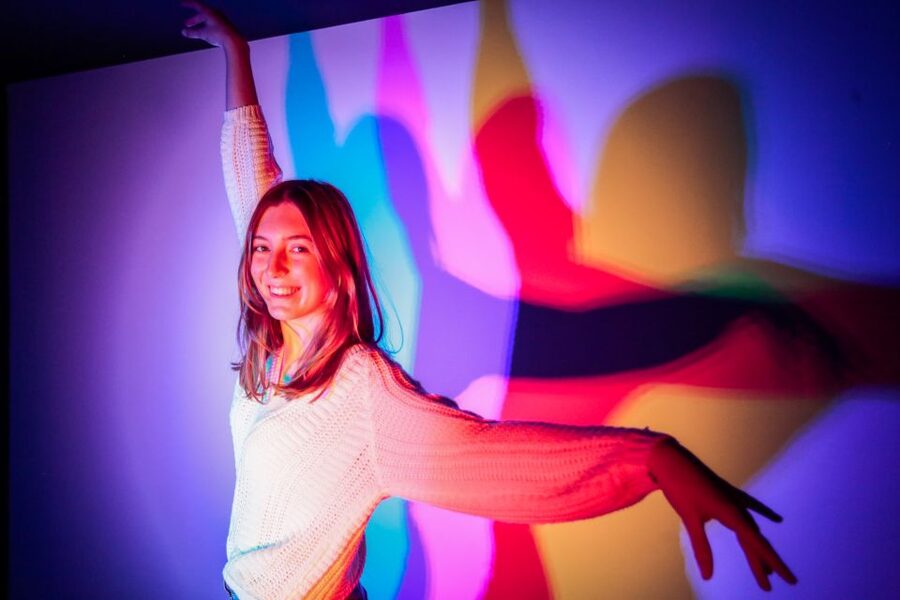
The Head on the Platter is designed for a funny group moment. It creates the appearance that a person’s head is sitting on a platter, producing the kind of photograph that looks absurd at first glance.
This is a good example of the museum’s sense of humor. Not every exhibit needs to leave you pondering perception for several minutes. Some are simply built to make you laugh and give you an unusual picture to take home.
It works best when one person poses while friends or family members help frame the image. You may need to experiment with the camera angle to make the illusion clear, so keep the phone ready and try more than one shot.
For families, these easy visual jokes can keep younger children involved between the more abstract exhibits. For adults, they provide a welcome reminder that a museum visit can be playful without being entirely empty of educational value.
The science behind the visual tricks
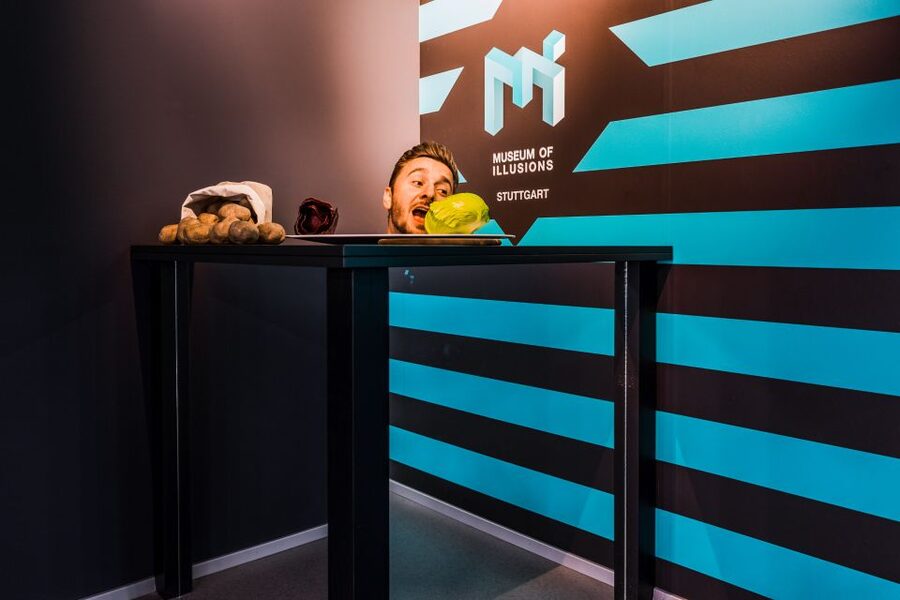
The museum’s explanations are an important part of the visit. Without them, you would have a collection of strange rooms and photographs. With them, the exhibits become examples of how human vision, perception, and intellect work together.
The basic lesson is that seeing is not as simple as taking a picture with your eyes. Your eyes receive information, but your brain organizes that information and makes judgments about distance, motion, balance, and shape.
The Vortex Tunnel shows how visual motion can conflict with the information your body receives from a stable floor. The Mirror Room and Clone Table show how reflections can create extra images. The Infinity Room demonstrates how repeated patterns can make a small area appear much larger.
I appreciate that the science is connected to things you have just experienced. You do not need to read a long technical display before understanding the effect. First, your senses get confused. Then the explanation gives you a reason.
This approach makes the museum useful for school-age children, families, and adults who enjoy learning through examples rather than formal lectures. It is educational, but it does not feel like a classroom.
How long to plan and how to use the ticket
The ticket is valid for one day, and the activity information asks you to check availability for starting times. That gives you some planning flexibility, but you should still confirm the time options before building the rest of your Stuttgart schedule.
No transportation is included, so you need to make your own way to the museum. Food and drinks are also not included, which is easy to manage if you treat this as one stop within a larger day rather than a full-day attraction with meals.
I would plan the museum for a flexible block of your day. The official duration is listed as valid for one day rather than a fixed number of hours, so the information does not promise a precise visit length. Your time will depend on how long you spend taking photographs, trying each illusion, and reading the explanations.
A charged smartphone is the one practical item you should not forget. The mirror displays, Infinity Room, Clone Table, and Head on the Platter all invite photos, and the phone is also useful for recording the visual patterns you want to remember.
Wheelchair accessibility is available, which makes the attraction more approachable for many visitors. Even so, the sensory warnings still apply, and you should consider which exhibits are comfortable for you.
Is $16 a fair price?
At $16 per person, the museum offers fair value if you enjoy interactive attractions and plan to use the exhibits rather than rush through them.
The price covers entry only. You pay separately for transportation, food, and drinks, so the total cost of your outing will be higher if you make this part of a larger day. Still, the ticket is modest compared with many major paid attractions, and the experience can serve several purposes: entertainment, family activity, indoor sightseeing, and a short lesson in perception.
The value is strongest for groups. One person can pose while others take pictures, and many exhibits become more enjoyable when you have someone beside you to compare reactions. If you are alone, the museum can still work, but some displays lose part of their humor when nobody is there to help with the photos.
The $16 price is less convincing if you want a conventional art museum or a long historical collection. This attraction is about participation, not famous objects. You should book it for the hands-on effects, not because you expect a large museum building filled with exhibits.
A rating of 4.2 from 507 published ratings suggests solid overall approval, though not universal perfection. That fits the experience: people who like visual puzzles, photographs, and playful science are likely to get more from it than visitors seeking quiet galleries.
Who should book this Stuttgart experience?
I would recommend the Museum of Illusions to families, friends, couples, and anyone who enjoys taking unusual photos. It is also a useful rainy-day choice because the core activity is indoors and does not depend on good weather.
Children can take part without needing advanced reading skills, while adults can appreciate the explanations about perception. The range of exhibits helps keep the visit varied: some involve walking, some watching, some posing, and some thinking.
You may want to skip it if rotating spaces, distorted rooms, or balance effects make you uncomfortable. Pay close attention to the epilepsy warning for the Vortex Tunnel, Zoetrope, and Tilted Room.
The museum is also not the best choice if you prefer traditional cultural attractions. It offers limited historical context and focuses instead on playful experiments with sight and balance.
Should you book the Museum of Illusions Stuttgart?
Book it if you want a short, active, photo-friendly attraction where you can laugh with your companions and learn why your senses get confused. The $16 admission is sensible when you take your time with the Mirror Room, Infinity Room, holograms, Vortex Tunnel, Clone Table, Turntables, and other displays.
Think twice if you are sensitive to motion or expect a large conventional museum. Check the available starting times, bring a charged smartphone, and read the health warnings before paying.
Free cancellation up to 24 hours in advance and the reserve-now, pay-later option add useful flexibility. For a family afternoon or an indoor break in Stuttgart, this is an easy attraction to recommend, with just enough science behind the jokes to give the visit lasting value.
FAQ
How much does entry to the Museum of Illusions Stuttgart cost?
The entry ticket costs $16 per person.
How long is the ticket valid?
The ticket is valid for one day. Check availability to see the available starting times.
What is included in the ticket?
Entry to the Museum of Illusions Stuttgart is included. Transportation, food, and drinks are not included.
Is the museum wheelchair accessible?
Yes, the activity is listed as wheelchair accessible.
What should I bring?
Bring a charged smartphone, especially if you want to take photographs in the mirror rooms and other interactive exhibits.
Are any exhibits unsuitable for people with epilepsy?
Yes. The Vortex Tunnel, Zoetrope, and Tilted Room are not suitable for people with epilepsy.
Just added around Stuttgart
- Stuttgart: Landesmuseum Württemberg Old Castle Entry Ticket★ 4.5 · 15 reviews
- Stuttgart: Winter Sunday Brunch Buffet★ 4.6 · 16 reviews
- Stuttgart : Guided Walking Tour With A Guide (Private Tour)★ 4.5 · 20 reviews
- Stuttgart: Exklusive Floßboote Finne & Fischle★ 4.5 · 23 reviews
- Premium wine hike Stuttgart with games and winemaker’s snack★ 4.7 · 26 reviews
- Stuttgart city library – an architectural tour★ 4.4 · 27 reviews
- Stuttgart: Guided Wine Walk & Wine Tasting★ 4.6 · 28 reviews
- Stuttgart: Karlshöhe Crime Mystery Tour★ 4.6 · 34 reviews
Museums, compared.





Skip-the-Line: Berlin Wall Museum at Checkpoint Charlie
Read our review →
Browse the lists this tour appears in