
Reviewed · MUSEUMS
Stuttgart: Mercedes-Benz Museum Entry Ticket
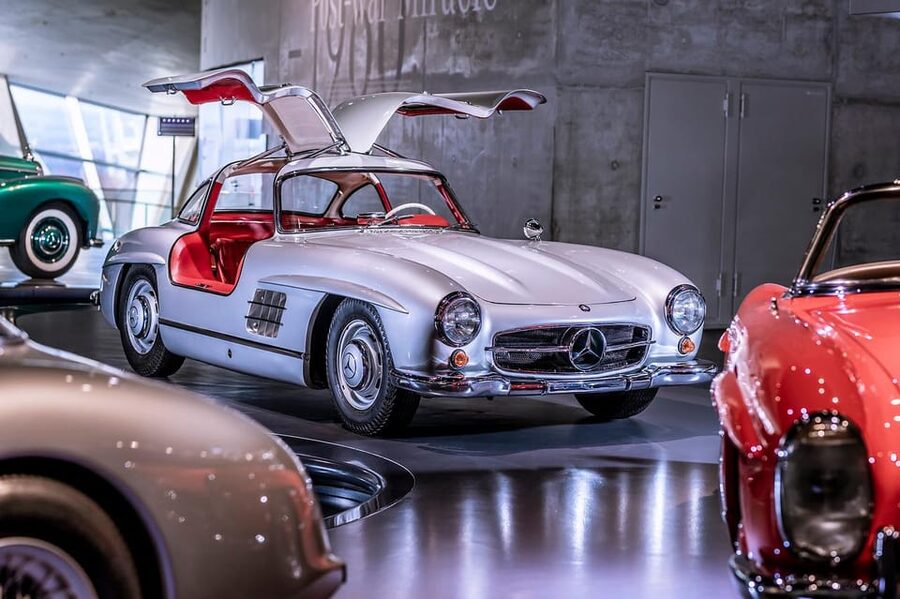
Cars tell bigger stories here. The Mercedes-Benz Museum follows the automobile from Carl Benz’s 1886 invention through racing machines, family cars, aircraft, trams, and futuristic research vehicles. I especially like the chronological route and the way car design is tied to daily life, industry, politics, and popular culture. I also like the free audio guide in eight languages, which gives the displays more meaning than a quick walk past polished metal.
The main thing to plan for is time. The museum covers 16,500 square meters, with more than 160 vehicles across twelve exhibition rooms and a route spread over seven floors. You can see the highlights in about two hours, but three to five hours is a much better target. A late entry can leave you admiring the final cars while the closing announcement is already in the air.
In This Review
- Key points before you go
- Why this museum is about more than Mercedes cars
- Starting with the 1886 automobile
- Following the Legend route through seven floors
- Choosing the Collection route for focused viewing
- Racing cars and futuristic research vehicles
- The building, videos, and display design
- Using the audio guide without losing your pace
- How long should you allow?
- Is the $18 ticket good value?
- Families, accessibility, and the gift shop
- Who will enjoy it most?
- Should you book the Mercedes-Benz Museum?
- FAQ
- Where is the Mercedes-Benz Museum located?
- How much does admission cost?
- How long is the ticket valid?
- What are the museum’s opening hours?
- Which languages are available for the audio guide?
- Is the Mercedes-Benz Museum wheelchair accessible?
- Can I cancel my booking?
Key points before you go
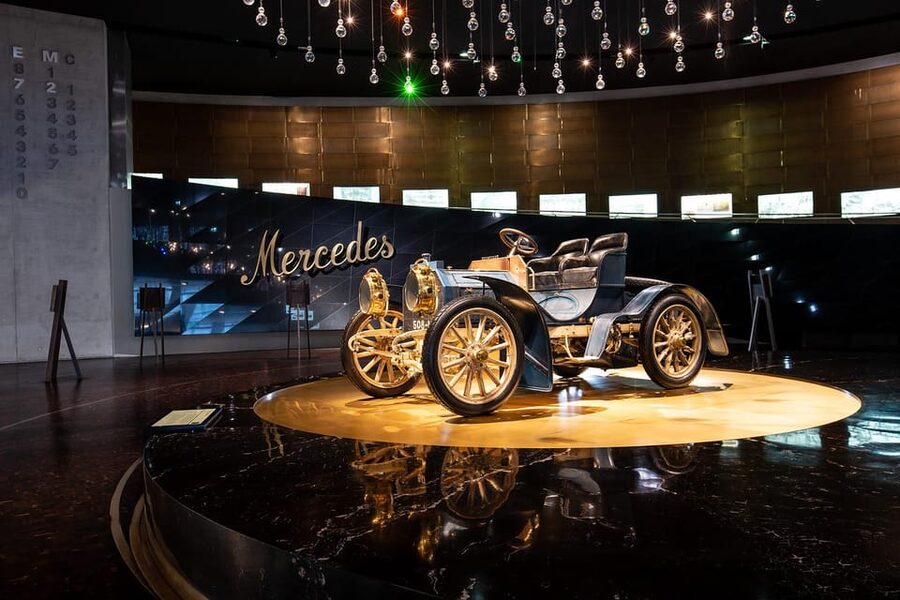
- Carl Benz’s 1886 motorcar begins the story: The museum connects Mercedes-Benz with the birth of the automobile, rather than treating the collection as a simple display of luxury cars.
- Two routes shape the visit: Follow the Legend path for a time-based story, or the Collection path for groups of vehicles and themes.
- More than 160 vehicles fill 16,500 square meters: This is a serious museum visit, not a quick showroom stop.
- The audio guide comes in eight languages: Choose German, English, Italian, Spanish, French, Chinese, Japanese, or Russian.
- Racing cars provide a strong finish: Formula 1 and other competition vehicles bring speed and drama after the slower early history.
- Families have reasons to linger: Children can use a kids audio guide and puzzles, while coloring activities offer a break from reading labels.
Why this museum is about more than Mercedes cars
You do not need to know the difference between every engine type to enjoy this museum. Its best idea is simple: the car changed how people lived, worked, traveled, and thought about distance. Mercedes-Benz becomes the thread running through that larger story.
The opening chapters begin with Carl Benz and the first motorcar in 1886. From there, the displays move through technical progress and changing social conditions. You see how an invention became an industry, then a household product, then a symbol of status, freedom, speed, and modern life.
That wider frame makes the visit work for non-car fans. One partner may be fascinated by vintage bodywork while another is more interested in industrial development or German history. Children can focus on shapes, colors, and racing machines. Teenagers may respond more to the videos and futuristic designs than to early engines.
The museum also reaches beyond road vehicles. The collection includes examples connected with aircraft and trams, showing how engine development found uses in other forms of transport. That broader approach keeps the middle of the visit from feeling like one long row of similar sedans.
More Museums:
- Stuttgart: Museum of Illusions Entry Ticket
★ 4.2 · 507 reviews - Stuttgart: Stuttgart Wine Museum Wine Tasting
★ 4.7 · 55 reviews - Berlin: Jewish Museum Berlin Entrance Ticket
★ 4.5 · 8,393 reviews
Starting with the 1886 automobile
The earliest vehicles give the museum its anchor. Carl Benz’s 1886 invention is not just another old machine in a glass case. It marks the point where the museum’s entire story begins, so take time to understand what you are seeing before rushing toward the flashier cars.
The early section is especially useful if you are visiting with children. It shows how unfamiliar the first automobiles looked and how far basic vehicle design had to develop. You can compare the earliest machines with later cars as you move upward through the museum.
This part may feel quieter than the racing section, but it supplies the context that gives everything else weight. A sleek modern research car is more interesting when you have just seen the crude beginnings of motor travel.
Use the audio guide here. The history can otherwise feel compressed into dates and model names, while the narration helps explain why each step mattered. The guide is available in English and seven other languages, so you can follow the story without relying on German text.
Following the Legend route through seven floors
The Legend route works like a chronological journey. It traces major periods in automobile and Mercedes-Benz history, with the building carrying you from one era to the next. The multi-story layout is part of the experience, since each new level changes the mood and design of the vehicles.
This route is the best choice if you want a clear beginning, middle, and end. You start with invention and early development, pass through important stages of industrial growth, and finish with racing and later innovation. The route also places company developments beside major events in Germany and the wider world.
That context is one of the museum’s strongest features. You are not only looking at how headlights, engines, or body shapes changed. You are also seeing how transport reflected social change and industrial expansion.
The downside is that the route asks for steady attention. There is a lot to read and hear, and the number of vehicles can become tiring if you try to examine every one. If you only have 90 minutes, keep moving and choose a small number of exhibits for closer attention. If you have three or four hours, the chronological structure rewards a slower pace.
Choosing the Collection route for focused viewing
The Collection route groups vehicles by type or theme rather than asking you to follow the full historical sequence. This is useful if you have already visited the museum, have limited time, or care most about a particular part of the collection.
A car enthusiast may prefer to spend extra time with racing cars, famous classics, or research vehicles. Someone less interested in motorsport might focus on early automobiles, elegant road cars, or the connection between engines and other transport.
The two-route system gives you some control, but do not expect a short express visit to cover everything. The museum is large, and the most common timing mistake is treating it like a one-hour attraction. One hour can give you a taste. It cannot give you a fair look at the full story.
A useful plan is to choose your main route before you arrive. You can then pause for standout vehicles without constantly wondering how much remains. The supplied information does not identify a special short route, so you will need to manage your own priorities.
A few more tours and experiences worth a look
- Tickets SWR Fernsehturm Stuttgart
★ 4.5 · 674 reviews - Stuttgart: Wilhelma Zoological-Botanical Garden Ticket
★ 4.7 · 121 reviews - Stuttgart: Landesmuseum Württemberg Old Castle Entry Ticket
★ 4.5 · 15 reviews - Dresden: Semperoper Tickets and Guided Tour
★ 4.7 · 12,102 reviews
Racing cars and futuristic research vehicles
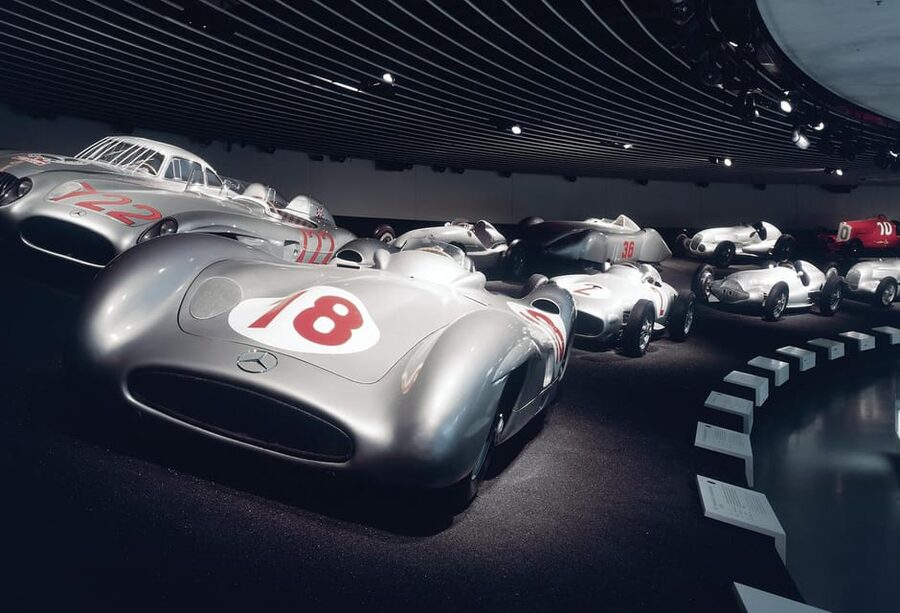
The racing section supplies the obvious thrills. After seeing the gradual development of engines and road vehicles, the competition cars feel almost theatrical. Their shapes, low bodies, and purpose-built designs show what happens when speed becomes the main goal.
This is also where children and teenagers often find the strongest visual appeal. The cars look different from anything on a normal street, and the racing theme gives the final part of the route a natural burst of energy.
Do not skip the futuristic research vehicles. They show that the museum is not only looking backward. Mercedes-Benz uses the collection to present possible directions for vehicle design and technology, giving the final chapters a forward-looking feel.
The racing section can be busy in your attention even if the museum itself is quiet and orderly. You will want to stop, photograph details, and listen to the audio guide. Leave enough time for it rather than arriving at this section just before 6pm.
The building, videos, and display design
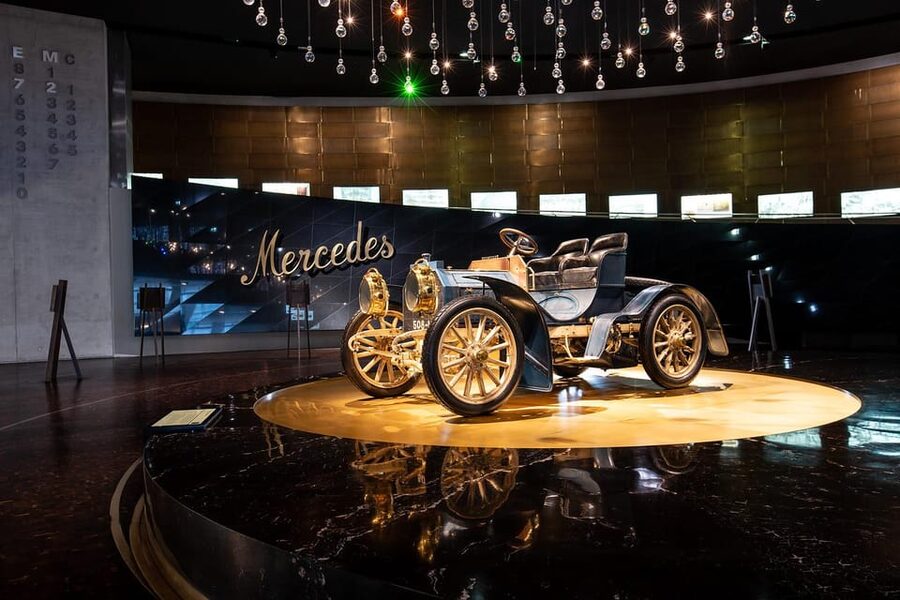
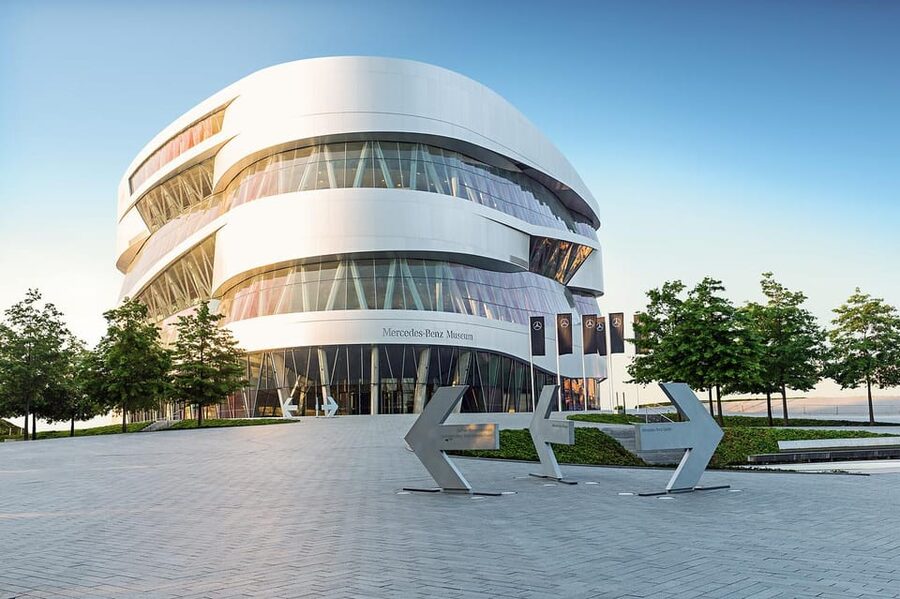
The museum building is part of the attraction. Its modern design and carefully arranged interior make the collection feel like a planned journey rather than a warehouse of vehicles. The cars are the main stars, but the architecture helps connect the floors and keeps the route visually clear.
The displays also use historical material and videos to widen the story. Short films on the floors can be particularly useful for younger visitors, including teenagers who may not want to read every label.
I like this balance of large objects and supporting material. A car gives you the immediate visual impact, while a video or audio segment explains the people, technology, and events around it. You can keep the visit light and visual, or make it a serious history lesson.
There are practical limits. The museum can become noisy, and one visitor found the audio volume too low against the general sound of the building. Handheld audio units also may not activate immediately at every exhibit. If that happens, move closer or ask staff for help rather than assuming the stop has no commentary.
Resting points could also be more generous. The route covers seven floors, so comfortable shoes and sensible pacing matter. Build in pauses instead of trying to march through all 16,500 square meters.
Using the audio guide without losing your pace
The included audio guide is valuable because the museum has more information than most people can absorb from labels alone. It adds background to the vehicles and helps connect mechanical changes with social and historical events.
English, German, Italian, Spanish, French, Chinese, Japanese, and Russian are available. That range makes the museum easier to enjoy for international visitors and families who prefer different listening languages.
Still, you do not have to listen to every entry. A full audio guide session at every stop could stretch the visit well beyond three hours. I suggest listening closely to the opening section, major milestones, vehicles that interest you most, and the racing or research cars near the end.
Test the handset early. A few units have been reported as unreliable, and one group found that two of four headsets did not work. That is a small practical issue, but it is worth sorting out near the entrance instead of discovering it halfway through the building.
How long should you allow?
Allow at least two to three hours for a satisfying first visit. That gives you time to follow the main story, listen to selected audio stops, and spend a little time with the cars that catch your eye.
Four to five hours is reasonable if you are a serious car enthusiast or want to hear most of the commentary. The museum has enough material to fill that time without forcing you to invent reasons to stay.
Ninety minutes is possible, but only as a highlights visit. One visitor managed that amount of time because of a flight, yet still felt that several hours would be needed for a proper look. Another had only one hour after a train delay and found it far too short.
The museum opens Tuesday through Sunday from 9am to 6pm, with last admission at 5pm. I would avoid planning a 4:30pm arrival if the automobile’s evolution is your main reason for coming. That leaves only 90 minutes before closing, and you will have to hurry through the floors.
Is the $18 ticket good value?
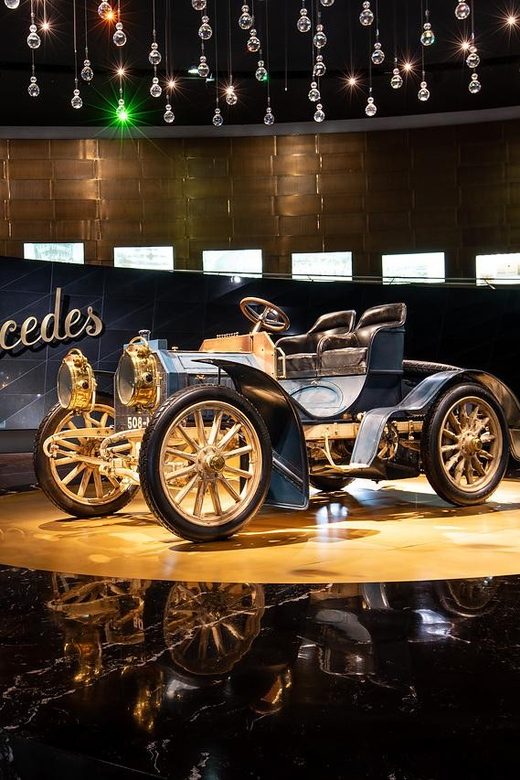
At $18 per person for a full day of admission, the price is reasonable for the size of the collection and the amount of time you can spend inside. You are paying for access to more than 160 vehicles, a 16,500-square-meter exhibition, the building itself, and an audio guide in your chosen language.
The value is strongest if you give the museum at least three hours. At that pace, the ticket compares well with many major European museums, especially because the collection appeals to mixed-interest groups. A car fan can study technical details while other family members follow design, social history, or popular culture.
The value is weaker if you arrive late or have only an hour between other plans. The ticket remains affordable, but the museum’s scale means you will see only a fraction of what it offers.
Prebooking is useful because the ticket lets you skip the ticket line. At the entrance, go directly to the main entrance and scan your ticket at the entry carousel. One visitor found that advance purchase made entry straightforward, though clear staff directions for prepaid tickets could be better.
The activity offers free cancellation up to 24 hours before the visit and a reserve-now, pay-later option. Those terms are useful if your Stuttgart schedule depends on trains or changing weather.
Families, accessibility, and the gift shop
The museum works well for families because it offers more than technical labels. Children can use a kids audio guide and puzzles, and coloring activities provide something hands-on for younger visitors. A ten-year-old who already loves cars will have plenty to focus on, but the building and racing vehicles can also hold the attention of children who are not yet car experts.
The videos may appeal to teenagers, especially if they are less interested in reading long explanations. I would set expectations before entering, though. This is a large museum, and younger children may need breaks before you reach the final floors.
The museum is wheelchair accessible. The provided information does not give detailed route notes, so if you need a particular accessibility arrangement, check with the museum before your visit.
The gift shop is another pleasant stop, especially for children and car enthusiasts. It adds a little time at the end, so do not calculate your departure down to the last minute if you want to browse.
Who will enjoy it most?
You should book this if you like cars, engineering, design, industrial history, or modern architecture. It is also a strong choice for families with children who enjoy vehicles, puzzles, and visual displays.
You do not need to be a Mercedes-Benz loyalist. The museum explains the company through the larger story of the automobile, and that makes it worthwhile for people who would not normally choose a car museum.
You may want to skip it if your Stuttgart schedule is already packed and you can spare only 45 to 60 minutes. In that case, the visit will feel rushed, and the museum deserves more attention than a quick photo stop.
Should you book the Mercedes-Benz Museum?
Yes, if you can give it at least two to three hours. The $18 price is fair, the audio guide adds real value, and the collection reaches well beyond a line of luxury cars. The chronological route, world events, racing machines, and futuristic vehicles create a visit with a clear shape.
Book an early or mid-day entry rather than arriving near closing. Start with the Legend route if this is your first visit, use the audio guide selectively, and save extra time for the racing cars and research vehicles.
For a car enthusiast, four to five hours is not excessive. For everyone else, three hours gives you a relaxed look without turning the museum into an all-day assignment. If you are near Stuttgart, this is one of the city’s strongest museum choices.
FAQ
Where is the Mercedes-Benz Museum located?
The museum is in Stuttgart, in the Baden-Württemberg region of Germany. Enter directly through the main entrance.
How much does admission cost?
The listed price is $18 per person. Admission includes entry to the Mercedes-Benz Museum exhibition and the audio guide.
How long is the ticket valid?
The ticket is valid for one day. Check availability for the available starting times when booking.
What are the museum’s opening hours?
The museum is open Tuesday through Sunday from 9am to 6pm. Last admission is at 5pm.
Which languages are available for the audio guide?
The audio guide is available in German, English, Italian, Spanish, French, Chinese, Japanese, and Russian.
Is the Mercedes-Benz Museum wheelchair accessible?
Yes, the museum is wheelchair accessible.
Can I cancel my booking?
Yes. You can cancel up to 24 hours in advance for a full refund. A reserve-now, pay-later option is also available.
Just added around Stuttgart
- Stuttgart: Landesmuseum Württemberg Old Castle Entry Ticket★ 4.5 · 15 reviews
- Stuttgart: Winter Sunday Brunch Buffet★ 4.6 · 16 reviews
- Stuttgart : Guided Walking Tour With A Guide (Private Tour)★ 4.5 · 20 reviews
- Stuttgart: Exklusive Floßboote Finne & Fischle★ 4.5 · 23 reviews
- Premium wine hike Stuttgart with games and winemaker’s snack★ 4.7 · 26 reviews
- Stuttgart city library – an architectural tour★ 4.4 · 27 reviews
- Stuttgart: Guided Wine Walk & Wine Tasting★ 4.6 · 28 reviews
- Stuttgart: Karlshöhe Crime Mystery Tour★ 4.6 · 34 reviews
Museums, compared.



Skip-the-Line: Berlin Wall Museum at Checkpoint Charlie
Read our review →
Browse the lists this tour appears in