
Reviewed · HISTORICAL TOURS
Stasi Museum GDR History Skip-the-line Private Tour Berlin
Berlin’s past gets personal here. This three-hour private tour links Alexanderplatz with the former Stasi headquarters, giving you both the public face of East Germany and the machinery behind its secret police. I like the included public transport tickets and the reserved museum entry, which remove two common Berlin headaches. I also like the chance to hear firsthand about life in the East from a guide who grew up under Stasi rule. The main drawback is the price: at $258.59 per person, this makes the most sense for a small group that values expert explanation.
You meet outside the Park Inn by Radisson at Alexanderplatz, then travel to the Stasi Museum with your guide. The museum itself is the original Ministry of State Security headquarters, not the former Stasi prison at Hohenschönhausen. Allow extra care with timing, since the reserved entry slot depends on reaching the meeting point on time.
In This Review
- Key points to know before booking
- Why this Stasi tour is worth your time
- Meeting at Alexanderplatz, the right place to begin
- Taking public transport to Normannenstraße
- Entering the original Stasi headquarters
- How the Stasi watched ordinary people
- What makes a private guide useful
- Timing, queues, and the value of the reserved entry
- Who should book this experience
- Price, cancellation, and practical value
- Should you book the Stasi Museum private tour?
- FAQ
- Where does the tour meet?
- Should I enter the Park Inn?
- How long does the experience last?
- Is the tour private?
- Is the tour offered in English?
- Are public transport tickets included?
- Does the tour visit the Hohenschönhausen Memorial?
- What is the cancellation policy?
Key points to know before booking
- Alexanderplatz sets the political stage: Begin where the GDR’s largest 1989 demonstration took place.
- The museum occupies the original Stasi headquarters: You see real offices, surveillance equipment, and administrative spaces.
- A private guide changes the experience: You can ask questions and focus on the parts of communist East Germany that interest you most.
- Personal history adds weight: The guide may explain East German life from direct experience, including what Stasi control felt like.
- Transport and museum entry are included: Your guide handles the public transport tickets and reserved museum admission.
- The tour returns to Alexanderplatz: It begins and ends at the same central meeting point.
Why this Stasi tour is worth your time
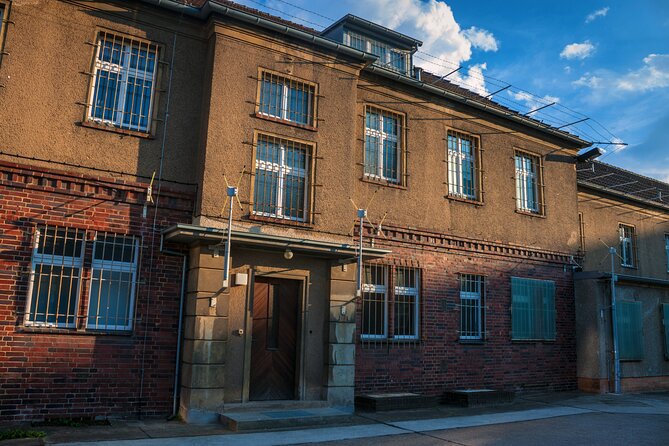
Berlin has no shortage of museums about the 20th century. The Stasi Museum earns its place because it shows how control worked in daily life. You are not only looking at political slogans or reading a timeline. You are entering the former headquarters of the Ministry of State Security, the institution that monitored, pressured, and controlled people across East Germany.
I like this tour because it connects the big public story with the private one. Alexanderplatz was a major civic space in East Berlin. The museum then shows what happened behind closed doors, in offices where officials directed surveillance and managed informants.
That contrast gives the visit shape. You begin in a public square associated with mass protest, then move to the place where the state tried to keep public life under control. It is a useful way to understand why the fall of the Berlin Wall mattered so much.
The experience is private, so only your own group joins the guide. That matters at a museum built around documents, rooms, devices, and personal stories. You can ask why a particular object mattered, stop when a subject catches your attention, or request more explanation about life in East Berlin before 1989.
More Historical Tours in Berlin
- Berlin: Natural History Museum Entrance Ticket
★ 4.6 · 3,382 reviews - Berlin: World Heritage Cruise to Potsdam
★ 4.5 · 1,435 reviews - Berlin Historical Highlights Walking Tour
★ 4.9 · 657 reviews
Meeting at Alexanderplatz, the right place to begin
The meeting point is in front of the Park Inn by Radisson Berlin Alexanderplatz, at Alexanderpl. 5-7. Look for the entrance between Burger King and the T-Mobile store, and wait outside. Do not enter the hotel, since its staff are not informed about the tour.
This is a practical meeting point, but Alexanderplatz also gives the tour an important opening scene. During the German Democratic Republic, or GDR, it was the center of East Berlin’s public life. In 1989, the square became the setting for the largest demonstration in GDR history.
Your guide spends about 10 minutes here before you leave for the museum. That is not a long orientation, but it is enough to place the tour in the city you are standing in. You get a reminder that political change did not happen only in government offices. It unfolded in public spaces, among ordinary people who gathered in large numbers.
Arrive early. The experience depends on a reserved time slot at the museum, and the tour schedule is not designed for late arrivals. Check your email from Rosotravel the day before for any updated meeting instructions.
Taking public transport to Normannenstraße
The Stasi Museum is outside central Berlin, so the tour includes two-way public transport tickets. This is a genuine convenience. You do not need to work out the route, buy a ticket on your own, or worry about whether your ticket covers the journey.
The transport leg takes about 50 minutes within the scheduled program. Treat this part as useful context rather than dead time. You are leaving the central square and heading to the former headquarters complex in Normannenstraße, a change that mirrors the tour’s movement from public spectacle to institutional power.
I especially like having a guide during this transfer because the journey gives you time to ask questions before entering the museum. If you want a fast, self-directed visit, public transport on your own will cost far less. If you prefer someone to handle the route and explain the setting along the way, the included tickets make the arrangement easier.
The museum is not the same place as the Berlin-Hohenschönhausen Memorial. Hohenschönhausen was a former Stasi prison. This tour visits the Stasi Museum, also called the Forschungs- und Gedenkstätte Normannenstraße, which occupies the former headquarters of the secret police.
That distinction matters when planning your Berlin history visits. The two places tell related stories, but they focus on different parts of the system.
Entering the original Stasi headquarters
The main museum visit lasts about two hours. You enter the original building used by the Ministry of State Security and examine the rooms where senior officials worked.
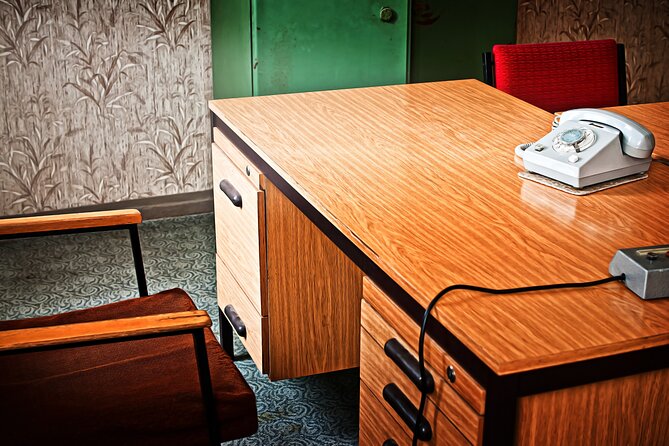
The setting gives the displays unusual force. You are not simply seeing a reconstruction of a secret police office. You are walking through the institution’s former headquarters, including ministerial offices and the office of Erich Mielke, the Stasi minister.
Mielke’s office includes his famous red briefcase, once used to hold sensitive information. It is a small object, but it helps make the bureaucracy feel human and physical. Secret police work depended on files, instructions, storage, and routine office habits, not only dramatic arrests.
This is where a private guide earns the tour’s higher price. Without explanation, a desk, briefcase, or office can look like ordinary furniture. With context, those objects show how authority was organized and how information moved through the state.
You will also see original spying technology, including bugs and hidden cameras. These displays make surveillance easier to understand. The Stasi did not control people through one method alone. It used observation, informants, pressure, and a large administrative system that encouraged citizens to watch one another.
More Museums in Berlin
- Berlin: Jewish Museum Berlin Entrance Ticket
★ 4.5 · 8,393 reviews - Berlin: DDR Museum Tickets
★ 4.3 · 3,443 reviews - Berlin: Neues Museum Entry Ticket
★ 4.6 · 3,261 reviews - Skip-the-Line: Berlin Wall Museum at Checkpoint Charlie
★ 4.1 · 2,041 reviews
How the Stasi watched ordinary people

The tour explains how informants were recruited and how citizens were spied on and controlled. This is the section where the subject becomes most personal.
The Stasi was not only concerned with famous dissidents or major political figures. Its system depended on information about everyday life, personal relationships, workplaces, and opinions. The point was to make opposition difficult and uncertainty constant.
I would listen closely when the guide explains recruitment. The question is not simply how many informants existed. It is how the state persuaded people to provide information, and what fear, pressure, loyalty, or personal advantage could do to a community.
A guide with firsthand experience of growing up in East Germany can add an important human layer. One guide described in the tour material had lived under Stasi rule, which means the explanation may include more than textbook facts. You might hear how the system affected ordinary choices and why people learned to be careful about what they said.
That personal connection is one of the strongest reasons to choose this private tour. It does not turn the visit into a personal memoir, but it can help you understand the difference between reading about surveillance and hearing what life under it felt like.
What makes a private guide useful
A private format is best when you want discussion rather than a fixed speech. The tour is offered in English, and only your group participates. That gives you room to ask direct questions about the GDR, communism, surveillance, or the fall of the Berlin Wall.
I would not choose this format simply because private sounds luxurious. I would choose it because the subject can be hard to sort out on your own. The Stasi Museum contains serious material, and a guide helps connect the objects to the larger political system.
The private arrangement may also suit families or mixed-age groups. Some people may want the political background, while others may focus on spy equipment or the ministerial offices. A guide can adjust the emphasis instead of forcing everyone through the same level of detail.
The tradeoff is cost. At $258.59 per person, this is expensive for a three-hour activity, especially for one or two people. The price becomes easier to defend if you are splitting the experience among a larger private group and would otherwise hire a separate guide or pay for transport and museum entry on your own.
Group discounts are available, so check the final price for your party size. I would compare the total cost, not only the per-person figure.
Timing, queues, and the value of the reserved entry
The tour includes skip-the-line museum admission with a reserved time slot. That does not mean you can arrive whenever you like. It means the museum has a planned entry time for your group, so punctuality matters.
This arrangement is useful during a busy Berlin day. You avoid standing in an uncertain queue, and the guide can keep the visit within the three-hour schedule. The benefit is less about saving hours and more about protecting your plans.
The schedule includes roughly 10 minutes at Alexanderplatz, 50 minutes for the museum transfer and related movement, and two hours inside the museum. That leaves little spare time for late starts, long coffee stops, or wandering away from the meeting point.
I would plan to arrive early and keep your phone available for the operator’s message. The meeting instructions are specific, and the hotel staff cannot help you with the tour.
Who should book this experience

This tour is a strong choice if you enjoy modern European history and want more than a quick museum stop. It is also suitable if you are trying to understand communism through daily life rather than political theory alone.
I would recommend it to:
- People interested in the GDR and the Berlin Wall period
- History students and serious museum visitors
- First-time Berlin visitors who want a guided introduction to East German history
- Small groups that prefer a private conversation
- Anyone who values personal testimony alongside official documents
- Visitors who want transport and museum entry organized for them
You may prefer a cheaper independent visit if you already know the subject well, speak German, or enjoy reading every display at your own pace. The private guide is most valuable when you want explanation, questions, and connections between the museum pieces.
The subject is also serious. This is not a light sightseeing stop, and the material about surveillance and control may feel heavy. That is part of its value, but you should plan it for a day when you have time to think afterward.
Price, cancellation, and practical value
The listed price is $258.59 per person. That is a premium, but it includes the private English-speaking tour, museum admission, skip-the-line entry, and public transport tickets to and from the museum.
The key question is how much you value interpretation. If you only want access to the building, the price is hard to justify. If you want the former headquarters explained by a guide who can discuss East German life and answer questions, the calculation changes.
Free cancellation is available when you cancel at least 24 hours before the experience start time. Cancellations or changes made less than 24 hours ahead are not accepted for a refund. Since the museum entry is tied to a reserved slot, this firm cutoff is worth noting before you book.
Most people can participate, and the meeting point is near public transportation. The tour ends back at Alexanderplatz, which makes it easy to continue sightseeing in central Berlin afterward.
Should you book the Stasi Museum private tour?
Book this tour if you want a clear, guided explanation of how the Stasi worked and why its presence shaped everyday life in East Germany. The original headquarters, Mielke’s office, the red briefcase, and the surveillance devices give you plenty to see, while the guide supplies the political and personal context.
I would be especially inclined to book for a small group that can use the private format and any available group discount. The guide’s lived experience of East Germany is a major plus, and the included transport removes some planning work.
Skip it if your main goal is a low-cost museum visit or if you want the former Stasi prison at Hohenschönhausen. This tour visits the Stasi Museum in Normannenstraße, a different site with a different focus. For the right audience, it is a thoughtful and well-organized way to face one of Berlin’s most important modern stories.
FAQ
Where does the tour meet?
Meet in front of the Park Inn by Radisson Berlin Alexanderplatz at Alexanderpl. 5-7, 10178 Berlin. The meeting point is between Burger King and the T-Mobile store.
Should I enter the Park Inn?
No. Wait at the entrance outside. The hotel staff are not informed about the tour.
How long does the experience last?
The tour lasts about three hours.
Is the tour private?
Yes. Only your group participates in the private activity.
Is the tour offered in English?
Yes. The tour is offered in English.
Are public transport tickets included?
Yes. Two-way public transport tickets to the Stasi Museum are included because the museum is outside central Berlin.
Does the tour visit the Hohenschönhausen Memorial?
No. It visits the Stasi Museum, or Forschungs- und Gedenkstätte Normannenstraße. This is different from the former Stasi prison at the Berlin-Hohenschönhausen Memorial.
What is the cancellation policy?
You can cancel up to 24 hours before the experience start time for a full refund. Changes or cancellations made less than 24 hours before the start time are not accepted.
Just added around Berlin
- Private Photo Tour in Kreuzberg★ 5.0 · 3 reviews
- Kreuzberg Private Walking Tour: Immigrants, Artists & Hipsters★ 5.0 · 3 reviews
- Individual city tour Berlin for max. 8 persons★ 5.0 · 3 reviews
- Berlin’s Jewish Heritage: Private Tour of the Vibrant Jewish District★ 5.0 · 3 reviews
- Berlin & The Third Reich Private Guided Tour★ 5.0 · 3 reviews
- Private Analogue Photography Experience in Berlin★ 5.0 · 3 reviews
- Spy Mission in Berlin: Self-Guided Espionage Puzzle Quest★ 5.0 · 3 reviews
- Berlin Christmas Markets Walking Tour with Local Guide★ 5.0 · 3 reviews
Historical Tours, compared.

City History Canal Sightseeing Tour on a Motorboat
Read our review →



Bamberg: Guided Beer History Tour with Optional Tasting
Read our review →Browse the lists this tour appears in