Reviewed · WALKING TOURS
Keitum: Guided Village Walking Tour
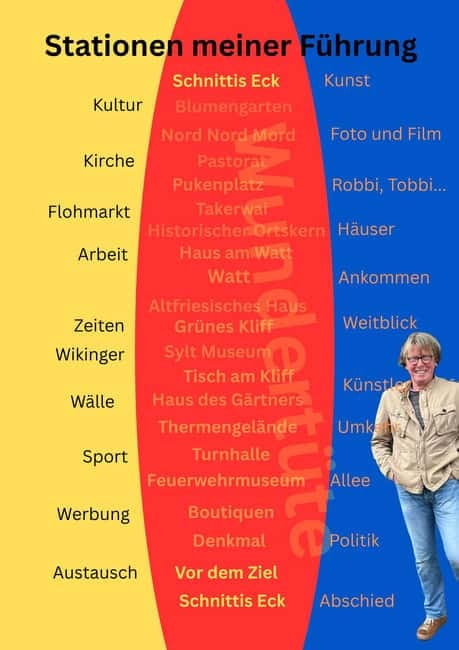
Keitum rewards a slow walk. I like the way this 2.5-hour tour links thatched Frisian homes, walled gardens, artisan workshops, and the Wadden Sea instead of treating the village as a quick photo stop. I also like that guide Jörg Ridder adds stories about whaling, village culture, and Keitum’s Stone Age past. The main drawback is that the experience is conducted in German, and one low rating suggests it may not satisfy you if you want a strictly historical lecture focused on every detail of the village.
This is a gentle, story-led outing rather than a demanding hike. You begin at Keitum Mitte bus station, wind through narrow lanes, walk toward the tidal shore, and return to the same meeting point. At $22 per person, I consider it fair value if you want local context and a relaxed introduction to Sylt’s old village architecture, but less useful if you prefer to explore independently or need an English-language guide.
In This Review
- What makes the Keitum walk worth your time
- Starting at Keitum Mitte bus station
- Keitum’s thatched houses and walled gardens
- Narrow lanes, glassblowers, and goldsmiths
- Keitum’s 18th-century whaling story
- The walk to the Wadden Sea
- Harhoog and Tipkenhoog, Keitum’s Stone Age reminders
- Is $22 a fair price for 2.5 hours?
- Who should book this Keitum walking tour?
- Should you book the Keitum village walk?
- FAQ
- Where does the Keitum walking tour begin?
- Where does the tour end?
- How long does the tour last?
- What language is the tour conducted in?
- What should I bring?
- Is hotel pickup included?
What makes the Keitum walk worth your time
- Harhoog and Tipkenhoog: See ancient Stone Age burial mounds beside the Wadden Sea and connect Keitum with an era long before its Frisian houses.
- Thatched homes from past centuries: Walk past traditional houses, including buildings dating as far back as 1640, with walled gardens and North Sea island design.
- A village known for artisans: Pass glassblowing and goldsmith workshops while learning about Keitum’s current creative identity.
- Whaling-era stories: Hear how the village’s fortunes and culture were shaped by the 18th-century whaling economy.
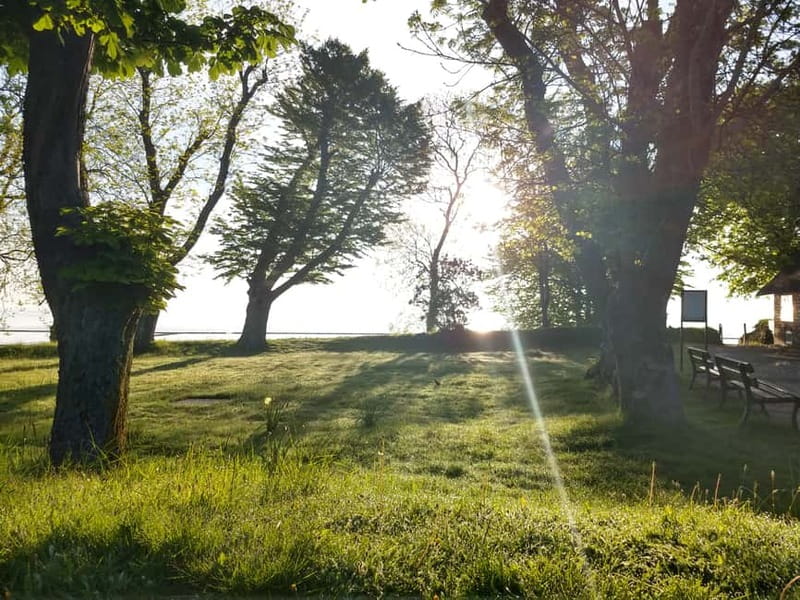
- Open tidal views: Reach the shoreline for broad views, salty air, and a clear change of pace from the tight village lanes.
- A German-language tour with Jörg Ridder: The guide’s unusual program has been praised for being interesting, entertaining, and more than a standard local walk.
Starting at Keitum Mitte bus station
The meeting point is simple: Keitum Mitte bus station. You do not get hotel pickup, so plan your own way to the village and arrive ready to walk. The tour ends back at the same place, which makes the route convenient if you are using local transport or want to continue exploring Keitum afterward.
The total duration is 2.5 hours. That is long enough to give the village some shape without taking an entire day from your Sylt plans. I would set aside extra time before or after the tour if you want to browse the artisan shops, sit in a café, or look more closely at the old houses.
The pace is described as leisurely, but you should still wear comfortable shoes. The route uses rustic paths, small alleyways, and village streets rather than one smooth paved promenade. Rain gear is a sensible addition, since the tour runs rain or shine and coastal weather can change quickly.
More Walking Tours in Germany:
- Discover Berlin Half-Day Walking Tour
★ 5.0 · 9,624 reviews - Berlin: Third Reich and Cold War 2 Hour Walking Tour
★ 4.9 · 6,830 reviews - Munich: Third Reich & WWII Walking Tour
★ 4.6 · 6,181 reviews
Keitum’s thatched houses and walled gardens
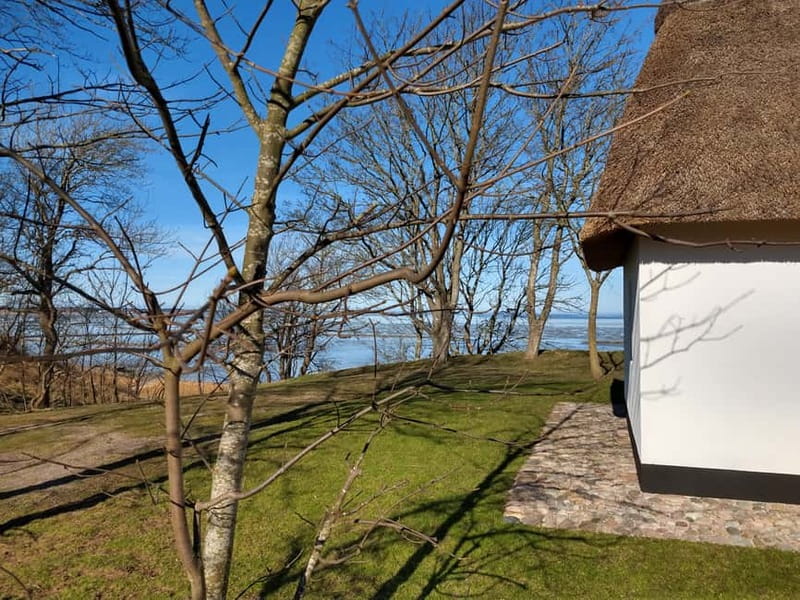
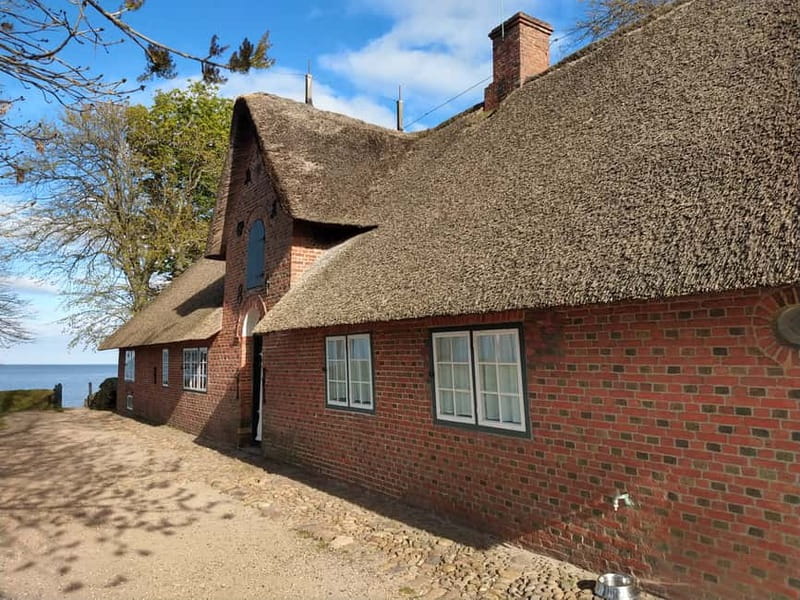
The first part of the walk introduces Keitum through its architecture. You pass houses with traditional thatched roofs, old walls, and gardens protected by classic Frisian boundaries. These details are not just decorative. They show how the village developed around the practical demands of life on a North Sea island.
The narrow lanes are part of the charm. They curve between old homes instead of cutting through the village in straight, modern lines. I like this kind of start because it gives you time to notice small features: roof shapes, garden walls, timber details, and the way the houses sit within the village.
Some homes date to as early as 1640. That does not mean every building you pass comes from that period, but it gives you a sense of the village’s age. A guide can also explain what you are looking at, which is useful when several old houses appear similar at first glance.
The gardens add another layer. Keitum is often called the green heart of the island, and the walled plots help explain why. You get more than a line of old buildings. You see a village shaped by gardens, lanes, walls, and open views toward the shore.
A possible limitation is that this is not advertised as an architectural specialist tour. If you want a detailed account of construction methods, ownership records, or a house-by-house history, the information may feel broad. The focus is wider, connecting buildings with the social life and work of the village.
Narrow lanes, glassblowers, and goldsmiths

As you continue, the route passes artisan shops and workshops, including glassblowers and goldsmiths. This makes the walk feel connected to present-day Keitum rather than frozen in the past.
That contrast is one of the better features of the experience. You can look at old Frisian architecture while hearing how the village has developed an artistic tradition of its own. The workshop stops are not described as demonstrations, so you should not expect a hands-on craft session or a guaranteed chance to watch an artist at work.
Still, their presence gives the village character. Keitum is not presented only as a museum of old houses. It is also a place where creative work takes place today. For me, that makes the walk more useful than a tour that only lists dates and building styles.
The winding lanes also help control the pace. You move between close, sheltered spaces and more open stretches, with the guide setting the rhythm. This suits you if you enjoy looking around and listening rather than rushing from one marked attraction to the next.
The German-language format matters here. Jörg Ridder is the named guide, and the tour is conducted in German. If you understand German well, you should get the full benefit of the stories and explanations. If you do not, this tour may be a poor value even at $22, because the main product is the guide’s spoken interpretation of Keitum.
Keitum’s 18th-century whaling story
The tour puts Keitum’s old houses into a larger economic story by discussing the island’s whaling era and its cultural life in the 18th century. This is an important part of the walk because the village’s prosperity and identity did not develop by accident.
You can look at a handsome house and admire its roof, garden, and walls. The whaling stories help explain the people and work behind that built environment. They also give the village a place within Sylt’s wider North Sea setting, where the sea was a source of income as well as a force to respect.
I appreciate this kind of context because it keeps the tour from becoming a parade of pretty façades. The architecture becomes evidence of changing fortunes, local work, and social life. You are not simply told that Keitum is old. You get a reason to care about how it became the village you see today.
The cultural material may also be the source of the tour’s unusual tone. One very positive assessment describes Jörg’s program as different from a classic local tour, with an approach that was interesting, entertaining, and enriching. That is a strong sign for you if you prefer a guide who connects separate subjects instead of delivering a dry timeline.
At the same time, a three-star assessment warns that this may not be the right choice for someone seeking only historical facts about Keitum. I would take that criticism seriously. The experience seems to mix history, local culture, architecture, and personal interpretation. That variety is a strength for some people and a weakness for anyone wanting a tightly academic history tour.
A few more tours and experiences worth a look
- Berlin: Reichstag, Dome and Government District Guided Tour
★ 4.7 · 18,288 reviews - Dresden: Semperoper Tickets and Guided Tour
★ 4.7 · 12,102 reviews - Berlin: Government District around the Reichstag Guided Tour
★ 4.7 · 8,447 reviews - Hamburg: Elbphilharmonie Plaza Guided Tour
★ 4.7 · 5,882 reviews
The walk to the Wadden Sea
After the village lanes, the route moves toward the shoreline and the Wadden Sea. This change is central to the experience. Keitum’s old homes feel intimate and enclosed, while the coast gives you room to look outward and feel the island’s exposure to wind and water.
You get wide sea views and a fresh breeze along the tidal side of the village. Bring a rain jacket even if the forecast looks kind. The tour goes ahead in all weather, and coastal conditions can make the shoreline feel much cooler than the sheltered lanes.
The Wadden Sea setting also helps explain why Keitum’s history is tied to work on and around the water. The coast is not just a scenic finish. It is the setting for the village’s older economy and its much earlier archaeological remains.
I like the order of the route. You first learn to read Keitum through its houses and gardens, then hear about its working past, and finally reach the open shore. The walk gradually widens your view of the village.
Do not expect a long beach walk or a nature excursion. The supplied details describe shoreline views and stops at burial mounds, not wildlife watching, mudflat instruction, or a guided tidal walk. You are there to connect scenery with history, not to take part in a specialist coastal activity.
Harhoog and Tipkenhoog, Keitum’s Stone Age reminders
The most distinctive stops are the ancient burial mounds of Harhoog and Tipkenhoog. Their presence gives the tour a time span far greater than the age of the village houses.
These Stone Age mounds show that people used and marked this area thousands of years ago. You do not need to be an archaeology expert to appreciate the effect. After walking past houses from the 17th century and hearing about 18th-century whaling, you suddenly confront evidence of a much older human past.
The guide explains Keitum’s Stone Age roots before the tour returns to the meeting point. That interpretive link is valuable. Without context, an ancient mound can look like a simple rise in the ground. With a guide, it becomes part of the story of how people lived, worked, and remembered the dead on Sylt long before modern village life.
The information provided does not promise entry into the burial mounds, excavation sites, or an archaeological demonstration. Think of these as outdoor historical stops viewed along the route. Their appeal comes from their age, setting, and connection to the rest of the walk.
For me, these mounds are the feature that makes this more than a pleasant village stroll. You can find old houses in many European villages. The combination of Frisian architecture, a whaling past, artisan workshops, and Stone Age burial sites gives this route a more unusual shape.
Is $22 a fair price for 2.5 hours?
At $22 per person, the cost is reasonable if you value explanation. You are paying for a live German-speaking guide and a 2.5-hour walking route that covers architecture, local culture, coastal views, whaling history, and archaeology.
The value is less obvious if you only want photographs of Keitum. You can walk through the village on your own, and the tour does not include food, drinks, transportation, or hotel pickup. The price makes sense mainly because of Jörg Ridder’s interpretation and the way he connects the stops.
The reserve-now, pay-later option can help if your Sylt schedule is still changing. Free cancellation is available up to 24 hours before the start for a full refund. Those policies are useful, but they should not be the main reason to book. The language and subject matter matter more.
With a rating of 4.6 from 134 reviews, the overall response is strong. Still, do not treat that number as a promise that the tour will match every interest. The clearest fit is someone who enjoys a relaxed walk with a broad cultural program in German.
Who should book this Keitum walking tour?
I would choose this tour for you if you:
- Want an introduction to Keitum before exploring more of Sylt
- Enjoy old homes, gardens, village lanes, and local stories
- Like history that stretches from the Stone Age to the 18th century and beyond
- Want to see Harhoog and Tipkenhoog with an explanation of their importance
- Speak German well enough to follow a live guide
- Prefer a leisurely outing over a packed sightseeing schedule
I would think twice if you:
- Need an English-language tour
- Want a specialist architecture or archaeology experience
- Prefer to walk entirely at your own pace
- Are looking for food, drinks, transport, or a workshop activity
- Dislike touring in rain or changeable coastal weather
Comfortable shoes, rain gear, and weather-appropriate clothing are essential rather than optional extras. The route is not described as strenuous, but 2.5 hours outdoors is long enough for poor footwear or wet clothing to spoil the experience.
Should you book the Keitum village walk?

Book it if you want Keitum to make sense, not just look pretty. The mix of thatched homes, walled gardens, artisan shops, whaling stories, Wadden Sea views, and Stone Age burial mounds gives the walk a useful range.
I would especially recommend it to German-speaking visitors who want a guide with an individual approach. Jörg Ridder’s program seems to go beyond a standard local introduction, which is why the experience can feel more entertaining and personal than a simple list of dates.
Skip it if your priority is a formal, strictly historical lecture or an English-language tour. At $22, the price is fair, but only when the language and broad subject mix suit you. For the right audience, this is a thoughtful way to meet Keitum at walking speed.
FAQ
Where does the Keitum walking tour begin?
The tour begins at the bus station called Keitum Mitte.
Where does the tour end?
The walk ends back at the Keitum Mitte meeting point.
How long does the tour last?
The tour lasts 2.5 hours. Starting times depend on availability.
What language is the tour conducted in?
The live tour guide speaks German. The named guide is Jörg Ridder.
What should I bring?
Bring comfortable shoes, rain gear, and clothing suited to the weather. The tour takes place rain or shine.
Is hotel pickup included?
No. Hotel pickup and drop-off are not included. Food and drinks are also not included.
Just added around Germany
- e-Scavenger hunt Aachen: Explore the city at your own pace★ 4.0 · 13 reviews
- Munich: Private or Group Third Reich and WWII Walking Tour★ 4.9 · 13 reviews
- Canyoning Advanced Day Trip★ 5.0 · 13 reviews
- Wiesbaden Biebrich: Outdoor Escape Game★ 4.7 · 13 reviews
- Berlin: Private Guided Tour of the Main Sights★ 5.0 · 13 reviews
- From Munich: Neuschwanstein Castle and Linderhof Private Tour★ 5.0 · 13 reviews
- Trier, Moselle: Wine excursion with boat trip★ 3.9 · 13 reviews
- From Dresden: Guided Day Tour by Bus of Seiffen Toy Village★ 4.0 · 13 reviews
Walking Tours, compared.




Berlin’s Best: 2 Hour Walking Tour Third Reich and the Cold War
Read our review →