
Reviewed · WALKING TOURS
Dresden Small Group Walking Tour
Dresden rewards a good first walk. This English-language tour links the city’s grandest sights in about two hours and 15 minutes, moving from Martin Luther’s statue across reconstructed squares, royal buildings, churches, and the Elbe-facing Brühlsche Terrasse. I like the clear historical storyline, which runs from Saxony’s rulers and the Reformation to the destruction of 1945 and Dresden’s rebuilding. I also like the compact route, since the main old-town sights sit close together and you can cover a lot without wearing out your shoes.
The main thing to consider is the pay-as-you-wish format. The listed price is $35.89 per person, but the tour operates in the style of a free walking tour, and some participants felt the booking fee and tipping expectations were not explained clearly. You also remain outside all paid attractions, so this is an introduction to Dresden rather than a museum or palace tour.
In This Review
- Key points before you book
- Starting at Martin Luther’s statue in Neumarkt
- Frauenkirche and Neumarkt: rebuilding Dresden’s heart
- Fürstenzug: Saxony told in porcelain
- Dresden Castle and royal Saxony
- Altmarkt and the city’s wartime story
- Brühlsche Terrasse and the Elbe view
- Hofkirche and Dresden’s Catholic surprise
- Semper Opera House and Zwinger Palace
- What the guides do well
- Is $35.89 good value?
- Who should take this Dresden walk?
- My verdict on the Dresden Small Group Walking Tour
- FAQ
- Where does the Dresden walking tour begin?
- Where does the tour end?
- How long does the tour last?
- What language is the tour offered in?
- Does the tour enter the paid attractions?
- What is included in the price?
- What happens if I need to cancel?
Key points before you book

- See ten major sights in 2 hours and 15 minutes, including the Frauenkirche, Dresden Castle, Semper Opera House, and Zwinger Palace.
- Hear Dresden’s story in English, with particular attention to Saxony, World War II, the bombing of February 1945, and the city’s rebuilding.
- Look for a yellow umbrella at the Martin Luther Statue, a useful meeting-point signal when several walking groups gather nearby.
- Expect an outdoor tour only, with no admission to the Frauenkirche, castle, cathedral, opera house, or Zwinger collections.
- Guides such as Nicola, Nicholas, Nicolo, James, and Dominique have received strong praise for humor, warmth, clear explanations, and personal storytelling.
- Check the payment arrangement carefully, since the $35.89 fee covers the reservation and guide payment, while the tour is presented in a pay-as-you-wish tradition.
Starting at Martin Luther’s statue in Neumarkt
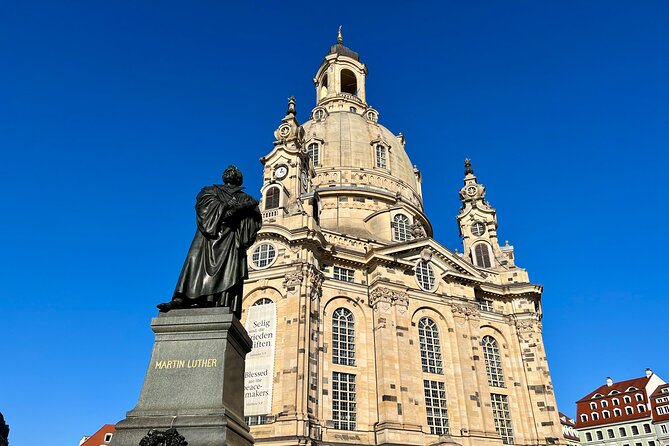
The tour begins at 11:00 a.m. beside the Martin Luther Statue in Neumarkt, at 01067 Dresden. This is a sensible starting place because you are already in the heart of the historic center, close to the Frauenkirche and the city’s reconstructed Baroque core.
The statue provides an opening look at Dresden’s religious past. Martin Luther’s role in the Protestant Reformation shaped Saxony and much of Germany, so this first stop gives the guide a natural way to explain religion, politics, and power before the group moves into the city itself.
You spend about 10 minutes here, and there is no admission charge. Finding the group may take a little care, especially around a busy square. One useful practical detail is that a guide has used a yellow umbrella to make the meeting point easier to spot. Arrive a few minutes early, and watch for that kind of identifying marker.
More Walking Tours in Dresden
- Dresden: City & Semperoper Guided Walking Tour
★ 4.8 · 2,293 reviews - Dresden: Guided City Walk with a Cup of Coffee
★ 4.7 · 1,568 reviews - Görlitz: Old Town Guided Walking Tour
★ 4.7 · 723 reviews
Frauenkirche and Neumarkt: rebuilding Dresden’s heart
The Frauenkirche is one of Dresden’s defining sights. Its great Baroque dome dominates Neumarkt, and the church’s destruction in World War II followed by reconstruction gives the building an emotional weight beyond its architecture.
The planned stop is around 10 minutes. That is enough to look closely at the exterior and hear the basic story, but not enough for a full examination of the interior. Since paid attractions are not entered, you should treat this as an orientation stop. If the church interests you, leave time later to visit it on your own.
Neumarkt itself adds another layer. The square was heavily damaged during the war and has since been rebuilt with Baroque-style buildings, shops, and cafes. I find this part of Dresden especially useful for understanding the city’s central question: how do you recreate an old town after so much of it is gone?
The tour can help you notice the difference between original fabric and reconstruction, though the short schedule means the guide must keep moving. This is one place where a strong storyteller matters more than a long stop.
Fürstenzug: Saxony told in porcelain
The Fürstenzug, or Procession of Princes, is one of the most memorable stops on the route. This enormous porcelain mural stretches for more than 100 meters and shows rulers from the House of Wettin, the dynasty linked to Saxony’s long political story.
You get about 15 minutes here. That is a good amount of time for the guide to explain who appears in the procession and why the mural matters, while giving you a chance to study its scale and detail.
The mural is also a fine example of how Dresden mixes art with history. You are not simply looking at decoration. You are looking at a public statement about power, ancestry, and Saxony’s place in central Europe.
Because the mural is outdoors, weather can affect how comfortable the stop feels. The tour runs in all weather, so wear clothing suitable for the forecast. A light raincoat and comfortable walking shoes are more useful here than anything fancy.
Dresden Castle and royal Saxony
Dresden Castle follows naturally from the Fürstenzug. The castle was home to Saxony’s Electors and Kings for centuries, and its heavy exterior gives you a sense of the political importance of the city.
The group spends about 15 minutes at the castle. You will hear about the building’s role as a royal residence and see its exterior, but you will not enter the paid collections. That distinction matters because Dresden Castle contains major museums, and a visitor expecting an indoor palace visit could feel shortchanged.
I like this stop as part of the overall sequence. The Fürstenzug shows the ruling family in picture form, and the castle shows where that authority operated. The guide can connect the two without sending you across town.
The best use of this tour is to make a list of places you want to return to. If the Green Vault, royal apartments, or other castle collections appeal to you, plan a separate visit and allow much more time.
Something different for another day:
- Dresden: Semperoper Tickets and Guided Tour
★ 4.7 · 12,102 reviews - Dresden: The Original Night Watchman Tour in Lantern Light
★ 4.6 · 6,653 reviews - Dresden: Semperoper and Old Town Tour
★ 4.8 · 5,735 reviews - Dresden: River Sightseeing Boat Cruise
★ 4.3 · 5,323 reviews
Altmarkt and the city’s wartime story
Altmarkt is one of Dresden’s oldest squares and remains a central public space for markets and festivals. It is another stop of about 15 minutes, giving the guide room to explain how the square has changed over time.
This is also an important place for the story of World War II. Dresden’s bombing in February 1945 is difficult history, and one of the tour’s strongest qualities is the care several guides have brought to this subject. Nicola, in particular, received praise for describing the bombing with sensitivity and accuracy while still explaining its wider setting.
You should expect serious material here. The tour does not treat the bombing as a quick dramatic anecdote. It connects the event to Dresden’s destruction, postwar memory, and the later rebuilding of the old center.
The experience may feel different depending on the guide. One account praised a very thoughtful presentation, while another raised concerns about political comments that felt too subjective. I would ask questions freely, but I would also expect the guide to keep political opinions separate from the historical explanation.
Brühlsche Terrasse and the Elbe view
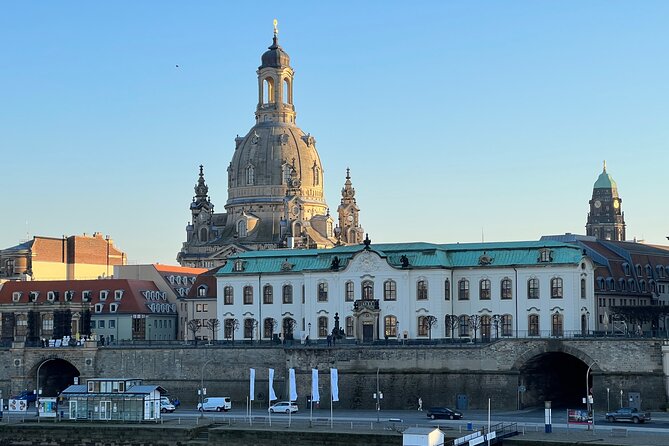
Brühlsche Terrasse is often called the Balcony of Europe. This broad promenade looks toward the Elbe and Dresden’s historic skyline, making it one of the most attractive pauses on the walk.
The stop lasts roughly 15 minutes. It is a welcome change after the denser streets around the castle and squares. Here, you can take in the river views, statues, gardens, and roofline while the guide explains the terrace’s place in Dresden’s public life.
This is a good photo stop, but it is not only about photographs. The view helps you understand the city’s layout. From the terrace, Dresden’s churches, palace buildings, and riverfront architecture begin to make sense as one connected center.
If you have limited time in Dresden, this is one of the places I would revisit after the tour. The group stop gives you an introduction, but the terrace rewards a slower walk when you are not trying to keep up with a group.
Hofkirche and Dresden’s Catholic surprise
The Katholische Hofkirche, also known as Dresden Cathedral, is a striking Baroque church near the riverfront. Its tall exterior and prominent position make it hard to miss, but its story is what makes it especially useful on this route.
Dresden and Saxony are strongly associated with Protestant history, beginning with the opening stop at Luther’s statue. The Catholic Hofkirche creates an interesting contrast and gives the guide a chance to explain the religious and political tensions surrounding its construction.
The tour allows about 15 minutes here. You will see the architecture and hear about the interior, including the famous Silbermann organ, but the group does not enter paid attractions. If the church is open and you want to see more, you will need to return independently.
One guide’s explanation of why a Catholic church was built in Dresden was singled out as especially engaging. That sort of connection is exactly what makes a walking tour useful: the building becomes part of a larger story instead of just another impressive facade.
Semper Opera House and Zwinger Palace
The final stretch brings you to two of Dresden’s best-known cultural buildings: the Semper Opera House and the Zwinger Palace.
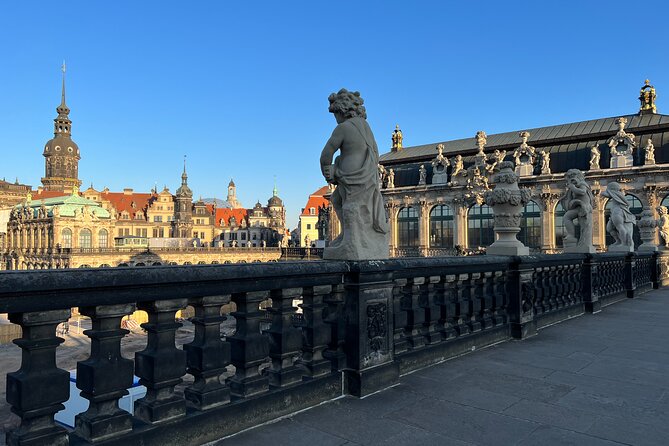
The Semperoper is named for architect Gottfried Semper and is known for its elegant design and long musical tradition. The stop lasts about 15 minutes, enough for an outside explanation and a look at the building’s details. You will not attend a performance or take an interior tour as part of this experience.
From there, the route continues to the Dresden Zwinger, where the tour ends near Sophienstraße. Zwinger Palace is a major Baroque complex with formal gardens and art and historical collections. It makes a strong finish because it gathers together the city’s love of architecture, royal display, and culture.
Again, the practical point is important: the group remains outside paid exhibits. If you want to visit the Zwinger museums, use the walking tour to get oriented, then return with enough time for the collections.
Ending near the Zwinger is convenient. You are close to other central sights and public transportation, and the guide can point you toward the places worth seeing next. The tour does not provide food or drinks, so plan a cafe stop after the walk if you need a break.
What the guides do well
The strongest part of this experience is the guiding. Names appearing in the feedback include Nicola, Nicholas, Nicolo, James, and Dominique. The praise is consistent on several points: clear explanations, humor, warmth, strong pacing, and the ability to connect buildings with events.
Nicola is especially praised for holding attention throughout the walk and making difficult subjects understandable. Nicholas is described as helpful and strong on architecture and history. James reportedly made the tour feel personal and kept the group engaged from beginning to end.
That does not mean every guide will use the same style. One account described a disagreement over differing opinions, and another objected to political remarks about Gaza. I would keep this in mind if you prefer a strictly neutral presentation. The tour’s historical subject matter is already serious enough without unnecessary political debate.
The group can include up to 35 people. That is larger than what many people picture when they hear small group, so do not expect a private stroll. A yellow umbrella or another visible marker helps at the start, but once the walk begins, stay close enough to hear.
Is $35.89 good value?
At $35.89, the price is reasonable if you want a structured introduction to Dresden and do not plan to enter museums during the walk. You receive an English-speaking local guide, a connected route through ten important sites, and a useful overview of the city in a little over two hours.
The value becomes less clear because this operates as a general pay-as-you-wish tour. The booking price covers the reservation fee and guide payment, but the format is still associated with free walking tours, where tipping is commonly part of the arrangement.
Several people felt the price should have been explained more clearly, particularly because they later learned they could join a similar local walk directly. One person reported paying a higher total amount and feeling pressured by the tip discussion. That is a genuine concern, not a minor quibble.
Before booking, make sure you understand the payment setup. If you prefer the convenience of reserving through a major booking platform and want confirmation in advance, the fee may feel worthwhile. If your priority is paying the lowest possible amount and you are comfortable arranging a tour directly, compare the options first.
Who should take this Dresden walk?
I would recommend it to first-time visitors who want the city explained rather than simply photographed. It is especially useful if you have only part of a day in Dresden and need a quick plan for the old town.
History fans will appreciate the links between the Reformation, Saxon rulers, royal architecture, World War II, and reconstruction. Architecture lovers will enjoy the Baroque churches, palace buildings, porcelain mural, opera house, and riverfront views.
You should choose something else if you want extended interior visits, museum time, or a private guide. You should also be comfortable walking outdoors for more than two hours, sometimes in poor weather. The stated fitness requirement is moderate, and children must be accompanied by an adult.
The tour is offered in English, uses a mobile ticket, and is near public transportation. Service animals are allowed. Free cancellation is available up to 24 hours before the 11:00 a.m. start time, but late cancellations and last-minute changes are not accepted. A minimum number of participants is required, and if that is not met, you will be offered another date or experience, or a full refund.
My verdict on the Dresden Small Group Walking Tour
I would book this tour if I wanted a strong historical orientation before choosing which Dresden interiors to visit. The route is efficient, the old center is easy to cover on foot, and the best guides turn a string of handsome buildings into a story about faith, power, destruction, and renewal.
I would not book it blindly at $35.89 without first understanding the pay-as-you-wish arrangement. The outdoor-only format also means you should budget separate time for the Frauenkirche, castle collections, Hofkirche, Semperoper, or Zwinger museums.
For the right person, this is a good first look at Dresden. Come for the guide’s explanation and the connections between the sights, not for admission inside them. If you want a concise, serious, and sometimes funny introduction, it earns a place on your itinerary.
FAQ
Where does the Dresden walking tour begin?
The tour begins at the Martin Luther Statue in Neumarkt, Dresden, Germany. The listed start time is 11:00 a.m.
Where does the tour end?
The walk ends near Dresden Zwinger on Sophienstraße, in central Dresden.
How long does the tour last?
The tour lasts approximately 2 hours and 15 minutes.
What language is the tour offered in?
The tour is offered in English.
Does the tour enter the paid attractions?
No. The group does not enter paid attractions during the walk. The stops focus on exterior views and the guide’s explanations.
What is included in the price?
The experience includes a local expert guide, a prepared narrative, and a mobile ticket. Food and drinks are not included.
What happens if I need to cancel?
You can cancel for a full refund up to 24 hours before the experience start time. Cancellations or changes made less than 24 hours before the start are not accepted for a refund.
Just added around Dresden
- From Dresden: Guided Day Tour by Bus of Seiffen Toy Village★ 4.0 · 13 reviews
- Dresden: Christmas Sightseeing Tour with a ‘Pflaumentoffel’★ 4.5 · 13 reviews
- Dresden: Bike Rental – City Bike with Option Children Seat★ 4.5 · 13 reviews
- Sightseeing tour by ConferenceBike★ 5.0 · 14 reviews
- Dresden Neustadt: Scavenger Hunt for Children★ 4.8 · 15 reviews
- Dresden: Scavenger Hunt to Elbe River & Castles★ 4.7 · 15 reviews
- Street Art Tour Dresden Neustadt★ 4.0 · 15 reviews
- Dresden: 150-minute Trabi tour as a guided city tour★ 4.9 · 15 reviews
Walking Tours, compared.




Berlin’s Best: 2 Hour Walking Tour Third Reich and the Cold War
Read our review →
Third Reich Berlin: Hitler and WWII Walking Tour
Read our review →Browse the lists this tour appears in