
Reviewed · WALKING TOURS
Dresden: Sightseeing Walking Tour in English
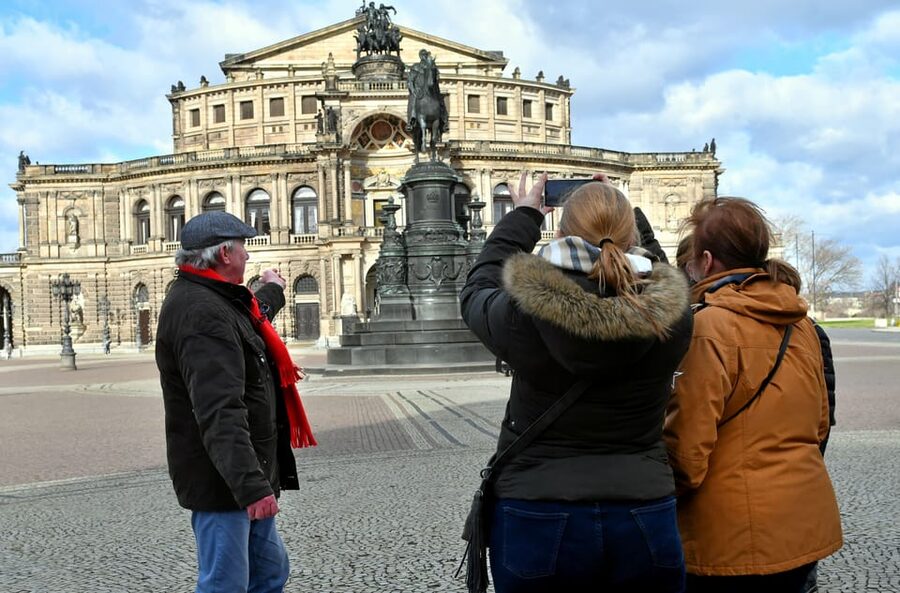
Dresden tells big stories in a compact center. This $15 English walking tour links the Frauenkirche, Zwinger Palace, Royal Castle, and Semper Opera House while a local guide explains how medieval Dresden became a Baroque showpiece, suffered wartime destruction, and changed again in 1989. I like the small-group format and the chance to hear local details that go beyond dates and building names.
I also like the practical tips on restaurants, shopping, nightlife, and events. The main consideration is time: 90 minutes is enough for an excellent orientation, but not enough to visit every interior or explore Dresden at a slow pace.
In This Review
- Key points at a glance
- Why this 90-minute walk works in Dresden
- Starting at Newmarket Square and the Frauenkirche
- Palace Stables and the Procession of Princes
- The Zwinger Palace and its unusual Nyphembad
- Semper Opera House, Taschenbergpalais, and the Royal Castle
- Brühl Terrace and Augustus Bridge
- Dresden’s difficult history, from war to 1989
- What the guide adds to the experience
- Is $15 a fair price?
- Who should book this Dresden walk?
- Should you book this tour?
- FAQ
- How long does the Dresden walking tour last?
- What language is the tour conducted in?
- How much does the tour cost?
- Where is the meeting point?
- Which major sights are included?
- Does the tour include the Zwinger Palace?
- Does the tour cover Dresden’s wartime history?
- Does the tour discuss the events of 1989?
- Is the tour wheelchair accessible?
- Can I cancel the booking?
Key points at a glance
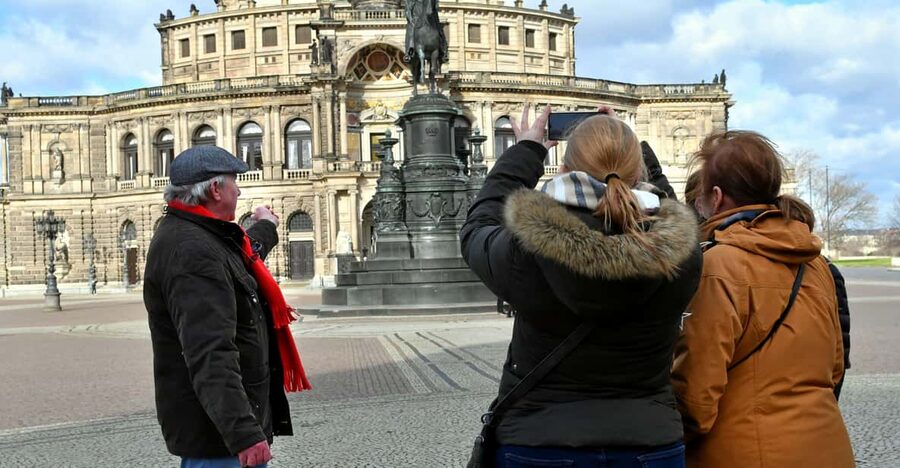
- A compact route through Dresden’s old town: See the Frauenkirche, Royal Castle, Semper Opera House, Zwinger Palace, Brühl Terrace, and more without arranging transport.
- History from the Middle Ages to 1989: The tour connects Dresden’s medieval beginnings, Reformation, Baroque glory, wartime destruction, and peaceful revolution.
- A guide-led look at the Nyphembad: The mysterious feature inside Zwinger Palace adds an unusual detail to the usual sightseeing route.
- Small groups make questions easier: Robert from the United Kingdom specifically appreciated being able to ask questions freely, and that is a real advantage on a short tour.
- Useful local advice: You can ask about places to eat, shop, go out, and find current events.
- Simple, flexible booking: Meet at the Tourist Information seating area in the basement of QF Passage, with free cancellation up to 24 hours before departure.
Why this 90-minute walk works in Dresden
Dresden’s old town is ideal for a walking introduction. Many of its best-known sights sit close together, so you can move from a grand square to a palace courtyard, then on to churches, terraces, and river views without losing time on buses or trams.
That matters because Dresden can feel confusing on a first visit. The city’s story has several sharp turns. Medieval beginnings gave way to religious conflict, courtly Baroque ambition, wartime ruin, socialist rule, and the peaceful revolution of 1989. A good guide helps you connect those periods instead of treating each building as a separate photo stop.
This tour is especially useful early in your stay. I would use it to get your bearings, learn which buildings deserve an interior visit, and collect local suggestions for the rest of your time. It is also a sensible choice if you have only an afternoon in Dresden and want a clear introduction without committing to a long excursion.
The walk is in English and led by a licensed local guide. Recent guide feedback has been especially warm for Franziska, also written as Franceska in one comment. She is described as polite, patient, warm, and highly informed about the city. One particularly useful detail came from a local guide who spoke about growing up in Dresden after World War II, giving the city’s modern story a personal angle that a standard timeline may miss.
More Walking Tours in Dresden
- Dresden: City & Semperoper Guided Walking Tour
★ 4.8 · 2,293 reviews - Dresden: Guided City Walk with a Cup of Coffee
★ 4.7 · 1,568 reviews - Görlitz: Old Town Guided Walking Tour
★ 4.7 · 723 reviews
Starting at Newmarket Square and the Frauenkirche
The meeting point is the seating area at the Tourist Information in the basement of QF Passage. This is a practical place to begin because it puts you near Newmarket Square, the central setting for one of Dresden’s most recognizable sights, the Church of Our Lady, or Frauenkirche.
Newmarket Square gives the tour an immediate sense of Dresden’s style. Baroque buildings frame the open space, and the Frauenkirche dominates the view. The church is not simply a pretty stop. Its story helps explain Dresden’s wartime destruction and the long effort to restore the old town’s architectural identity.
You should expect the guide to explain the church as part of the city’s larger story rather than treat it as an isolated monument. That approach is valuable here. Dresden’s rebuilt center can look almost too polished at first glance, and the context helps you understand what the buildings represent.
The square is also a good place to ask questions. If you want to know which churches or palaces are worth entering later, ask early. A short tour cannot take you through every interior, so local advice can help you spend your remaining time wisely.
One limitation is that this is a sightseeing walk, not an interior tour of the Frauenkirche. The supplied details promise a route past the major sights, not extended visits inside each one. If the church interior is your main reason for coming, set aside separate time.
Palace Stables and the Procession of Princes
From Newmarket Square, the route includes the Palace Stables and the Procession of Princes. These stops show how Dresden’s rulers used art and architecture to display power.
The Procession of Princes is one of the most memorable outdoor artworks in the old town. Its long ceramic mural gives the guide plenty to discuss, from the ruling dynasty to the way Dresden presents its past in public spaces. You get more from it when you know what to look for, and a guide can turn a wall into a readable piece of history.
The Palace Stables add another side of court life. They are part of the same grand royal setting, but they also remind you that palaces were working places, not just elegant façades. A short explanation here can make the royal district feel more connected.
I like this part of the route because it puts Dresden’s grandeur in human terms. The city was shaped by rulers who wanted to make a statement, and the buildings still carry that ambition. At the same time, the guide can help you see where royal display ends and ordinary urban life begins.
Since the route covers several sights quickly, do not expect long pauses at each location. Bring your own questions and use the guide’s commentary to decide what you want to revisit. For a first look, this is a good tradeoff. You see a lot without spending the whole day inside one museum.
The Zwinger Palace and its unusual Nyphembad
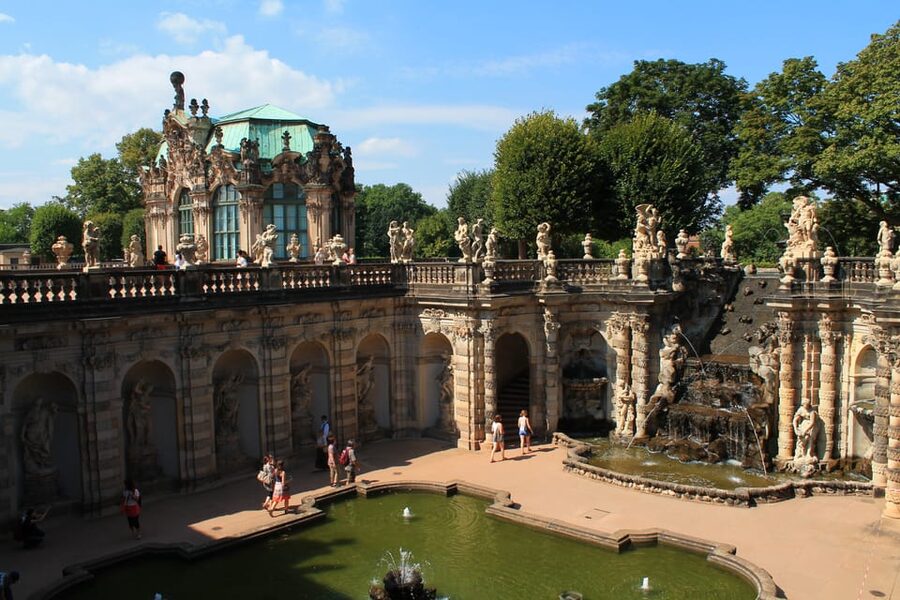
Zwinger Palace is one of Dresden’s signature Baroque buildings, and the tour includes a visit to its mysterious Nyphembad. The palace itself is a strong reason to choose this walk. Its architecture, open spaces, and decorative details show the confidence of Dresden’s Baroque age better than a quick photograph can.
The Nyphembad adds an unusual twist. It is not the most obvious feature for a first-time visitor, which makes the guide’s explanation useful. Details like this are where a local-led tour can feel more rewarding than simply following a map from one famous façade to another.
You will want comfortable shoes here, even though the route is short. The tour is a continuous old-town walk, and the experience depends on moving between outdoor sights rather than sitting through a presentation. Weather may affect your comfort, so dress for a normal walking tour and remember that much of the experience takes place outside.
The Zwinger stop also raises the question of time. A 90-minute route can introduce the palace and its special features, but it cannot replace a full museum visit. If you enjoy art or palace interiors, plan a separate return visit. The tour gives you the background and layout; you provide the extra hours if you want a slower look.
Something different for another day:
- Dresden: Semperoper Tickets and Guided Tour
★ 4.7 · 12,102 reviews - Dresden: The Original Night Watchman Tour in Lantern Light
★ 4.6 · 6,653 reviews - Dresden: Semperoper and Old Town Tour
★ 4.8 · 5,735 reviews - Dresden: River Sightseeing Boat Cruise
★ 4.3 · 5,323 reviews
Semper Opera House, Taschenbergpalais, and the Royal Castle
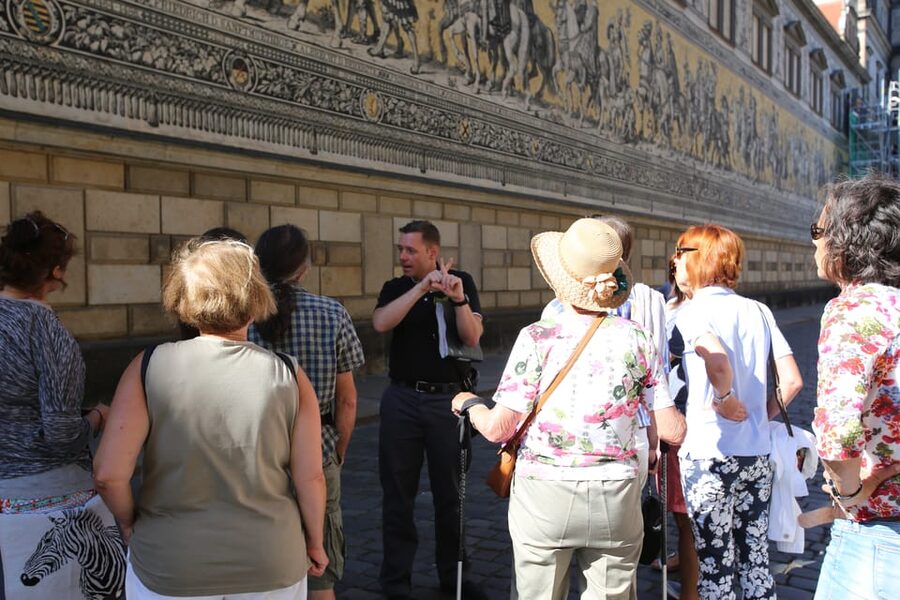
The Semper Opera House, Taschenbergpalais, and Royal Castle create one of the strongest stretches of the walk. Here, Dresden’s public image becomes especially grand. You see how court buildings, cultural institutions, and ceremonial spaces were placed close together in the old town.
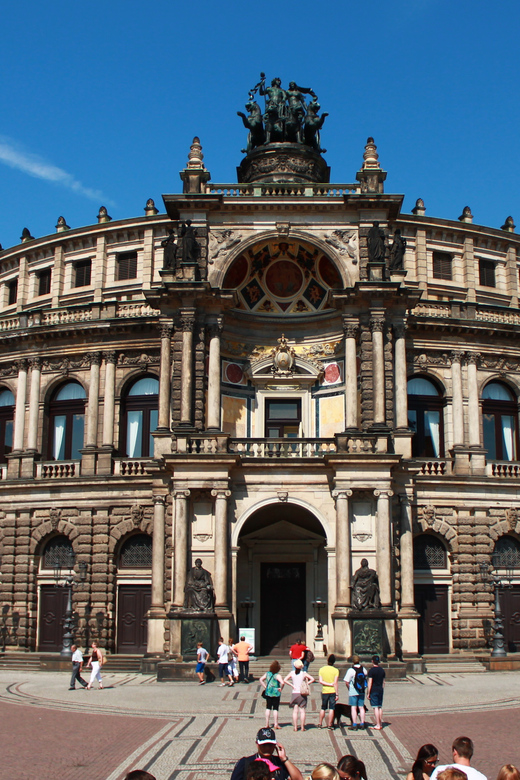
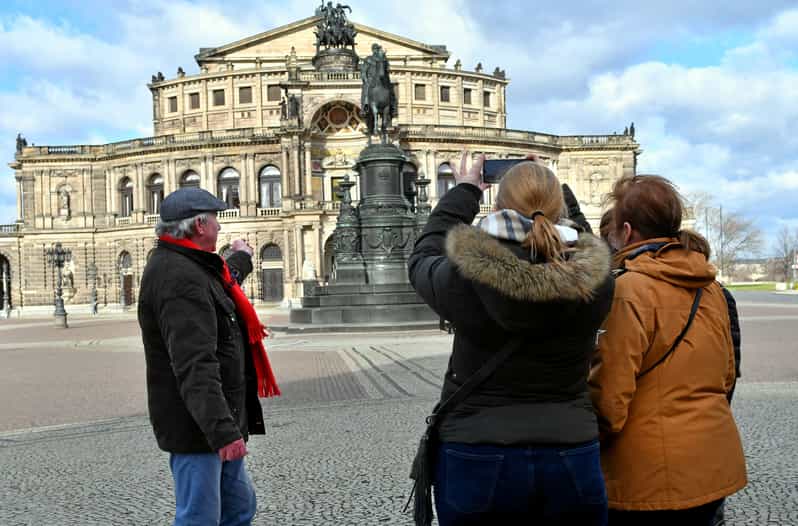
The Semper Opera House is a major architectural highlight, even for visitors who do not plan to attend a performance. The guide can place it in the context of Dresden’s artistic and royal ambitions. You may also get useful advice about events, though the exact suggestions will depend on what is current during your visit.
The Royal Castle adds another layer. It represents centuries of power, collection, ceremony, and change. Its presence beside other famous buildings makes Dresden feel unusually concentrated. You can walk a short distance and move from opera to palace to church, each one offering a different view of the city’s past.
Taschenbergpalais rounds out this section with another reminder that Dresden’s Baroque center was carefully shaped as a royal district. The pleasure here is not only seeing separate buildings. It is noticing how they work together as an urban setting.
Again, the route is best understood as an introduction. Do not expect admission to every attraction or a full museum explanation. The guide’s job is to help you read the outside spaces, explain why they matter, and point you toward places worth further exploration.
Brühl Terrace and Augustus Bridge

Brühl Terrace gives the walk a change of mood. Known as a scenic promenade, it offers a broader view of Dresden and helps you understand the city’s position along the Elbe. After the close streets and formal buildings of the old town, the open terrace gives you room to pause and look outward.
The majestic Augustus Bridge is another important part of the route. It connects the old town with the wider city and provides a strong visual finish to the central sightseeing circuit. From here, you can think of Dresden not just as a collection of monuments but as a city built around movement, water, and viewpoints.
These stops are useful for orientation. If you are planning more sightseeing, ask your guide what direction makes sense next. You can also ask about restaurants, shopping areas, nightlife, and events. The promise of insider tips is not a minor extra on a short city tour. It can save you from choosing a place at random after the guide has finished.
The terrace and bridge may be less comfortable in poor weather, and the walk offers no guarantee of a long scenic pause. Still, they add breathing room to an itinerary packed with buildings. I would especially value this part if I had arrived in Dresden without a clear sense of how the old town fits into the larger city.
Dresden’s difficult history, from war to 1989
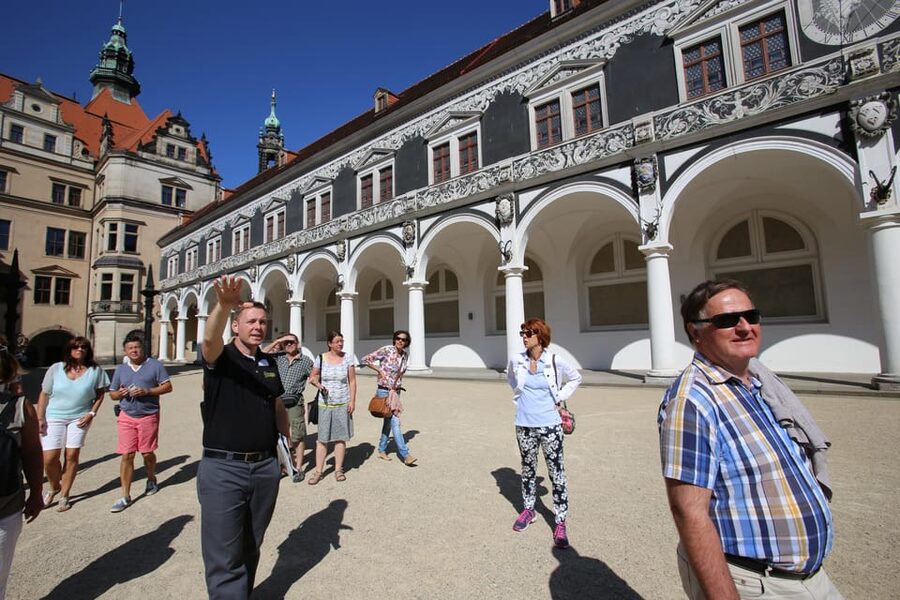
The strongest part of this tour may be its attempt to tell Dresden’s history honestly. You hear about more than medieval origins and Baroque architecture. The route also covers the destruction of Dresden and the events of 1989, known as the peaceful revolution.
That balance matters. Dresden’s old town can look like a celebration of royal Europe, but the city’s recent past is just as important. A good explanation of wartime destruction helps you understand why restoration and reconstruction are such sensitive subjects here. It also keeps the tour from becoming a simple parade of pretty buildings.
The 1989 section gives the city another turning point. You learn about the people and ideas that helped change the course of history during the peaceful revolution. This makes the tour relevant beyond architecture. You are not only looking at what survived or was rebuilt. You are also considering how residents shaped Dresden’s modern identity.
One local guide’s account of growing up in Dresden after World War II was singled out as something a visitor would not easily learn elsewhere. That kind of personal perspective can be the most valuable part of the experience, provided you are interested in modern German history as well as Baroque buildings.
The treatment of difficult subjects will depend partly on the guide. The tour promises untold stories about Dresden’s destruction, but the supplied details do not specify exactly how long the discussion lasts or how deeply it goes. If this is your main interest, ask questions directly. The small group should make that easier.
What the guide adds to the experience
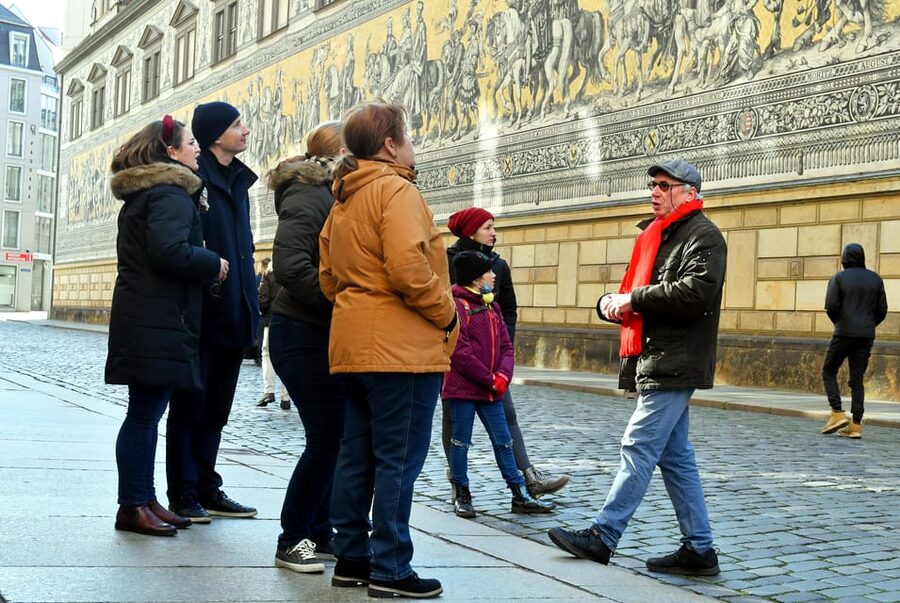
The guide is the real hinge of this tour. The route itself is compact and easy to follow, but the quality of the explanation determines whether you simply see Dresden or begin to understand it.
Recent feedback gives the guiding a clear strength. Franziska was praised for being warm, detailed, patient, and easy to question. Another guide was appreciated for local knowledge and personal memories. One person rated the tour four out of five and still described the guide as polite, patient, and well informed. That suggests the human side of the experience is its most consistent asset.
I would use the guide actively. Ask where to eat near the old town, which shopping spots are worthwhile, what nightlife suits your mood, and what events are happening during your visit. You can also ask about the best time to return to the Frauenkirche, Zwinger Palace, or Royal Castle if you want more than an outside view.
The small-group setup helps here. Robert from the United Kingdom noted that the group was small enough to make questions easy. That is a practical benefit, not just a comfort. In 90 minutes, a quiet group can cover more ground and give the guide room to adjust the explanation.
The tour also supports local business, according to the activity details. That fits the experience: you receive advice about local places, then have a chance to spend your money beyond the major monuments.
Is $15 a fair price?
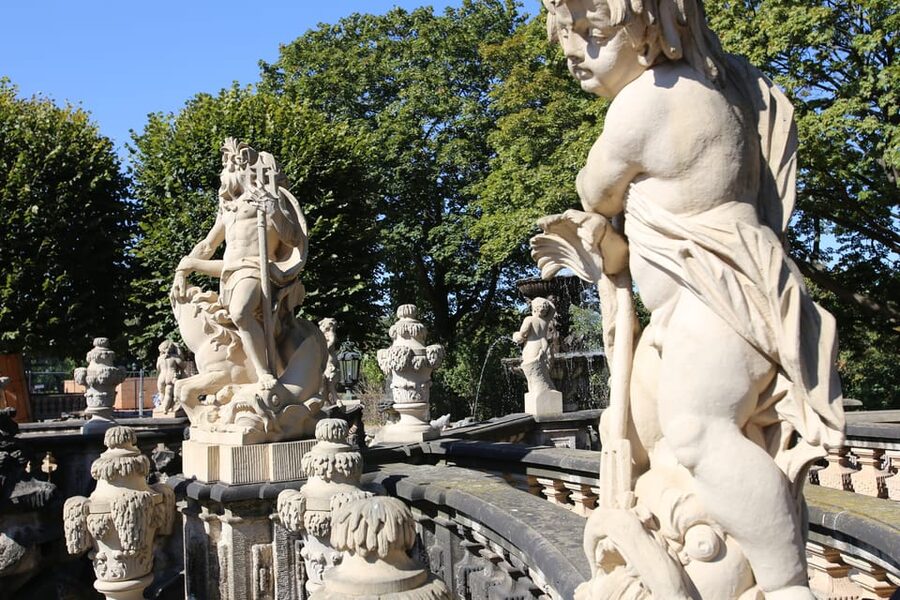
At $15 per person, the tour offers strong value if you want a guided introduction rather than a full attraction pass. You receive 90 minutes with a licensed local guide, a route through many major old-town sights, historical context, and practical city tips.
The price is especially reasonable for first-time visitors. If you tried to understand the Frauenkirche, Procession of Princes, Zwinger Palace, Royal Castle, Semper Opera House, and Brühl Terrace on your own, you would need time to research each one. The tour saves that preparation and gives you a useful order for seeing the center.
The price does not include a promise of extended interior visits. Think of it as a guided orientation, not a substitute for museum admission or a detailed palace tour. If you want to spend hours examining art, architecture, or church interiors, you will need separate plans.
The booking terms make the value easier to manage. You can reserve now and pay later, and cancel up to 24 hours ahead for a full refund. Wheelchair access is listed, though you should still confirm any personal route needs before booking.
Who should book this Dresden walk?
I would recommend it to first-time visitors, short-stay visitors, couples, solo visitors, and anyone who prefers learning a city on foot. It suits you if you want the major sights explained in plain English and like having a local person to ask about the rest of your visit.
It is also a good family option, with one restriction: no more than four children’s tickets can be booked per adult. The 90-minute length is manageable for many families, though the activity remains a walking tour rather than a child-focused program.
History-minded visitors will appreciate the range from the Middle Ages to the peaceful revolution of 1989. Architecture fans will enjoy the Baroque center. Food and nightlife seekers should make a point of asking for current suggestions before the walk ends.
I would be less likely to recommend it if you have already spent several days studying Dresden’s history or want extensive time inside the main monuments. You may find the pace too quick. The same applies if you want a tour focused on only one building, such as the Frauenkirche or Zwinger Palace.
Should you book this tour?
Yes, if you want an affordable and well-paced first look at Dresden’s old town. The best reasons are the small group, the strong local guiding, the wide historical range, and the useful advice for what to do after the tour.
Book it near the start of your stay so you can use the restaurant, shopping, nightlife, and event suggestions afterward. Go in expecting an introduction, not a full museum visit. At $15, that is a sensible bargain, and the personal stories about Dresden after World War II and the city’s 1989 peaceful revolution may give you more to think about than another checklist of Baroque façades.
FAQ
How long does the Dresden walking tour last?
The tour lasts 1.5 hours, or 90 minutes.
What language is the tour conducted in?
The tour is conducted in English with a live guide.
How much does the tour cost?
The listed price is $15 per person.
Where is the meeting point?
Meet at the seating area of the Tourist Information in the basement of QF Passage.
Which major sights are included?
The route includes the Frauenkirche, Palace Stables, Procession of Princes, Brühl Terrace, Catholic Cathedral, Royal Castle, Semper Opera House, Taschenbergpalais, Zwinger Palace, and Augustus Bridge.
Does the tour include the Zwinger Palace?
The tour includes a visit to the mysterious Nyphembad in Zwinger Palace and sightseeing around the palace.
Does the tour cover Dresden’s wartime history?
Yes. The guide shares stories about the destruction of Dresden and places that history within the city tour.
Does the tour discuss the events of 1989?
Yes. The tour explains Dresden’s peaceful revolution of 1989 and the people who helped change the course of history.
Is the tour wheelchair accessible?
Yes, the activity is listed as wheelchair accessible.
Can I cancel the booking?
You can cancel up to 24 hours in advance for a full refund. You can also reserve now and pay later.
Just added around Dresden
- From Dresden: Guided Day Tour by Bus of Seiffen Toy Village★ 4.0 · 13 reviews
- Dresden: Christmas Sightseeing Tour with a ‘Pflaumentoffel’★ 4.5 · 13 reviews
- Dresden: Bike Rental – City Bike with Option Children Seat★ 4.5 · 13 reviews
- Sightseeing tour by ConferenceBike★ 5.0 · 14 reviews
- Dresden Neustadt: Scavenger Hunt for Children★ 4.8 · 15 reviews
- Dresden: Scavenger Hunt to Elbe River & Castles★ 4.7 · 15 reviews
- Street Art Tour Dresden Neustadt★ 4.0 · 15 reviews
- Dresden: 150-minute Trabi tour as a guided city tour★ 4.9 · 15 reviews
Walking Tours, compared.




Berlin’s Best: 2 Hour Walking Tour Third Reich and the Cold War
Read our review →
Third Reich Berlin: Hitler and WWII Walking Tour
Read our review →Browse the lists this tour appears in