
Reviewed · WALKING TOURS
Charlottenburg: 2-Hour City Walking Tour
Charlottenburg rewards curious walkers. This two-hour tour reveals a side of Berlin that can get lost behind the city’s better-known sights, tracing Charlottenburg from its medieval village center through grand streets, local cafés, and Prussian-era landmarks. I like the focus on urban history and daily life, not just postcard views. I also like that the route finishes at Charlottenburg Palace, giving the walk a strong sense of place.
The main consideration is language: the live tour is conducted in German. You should also expect to walk outdoors in all weather, with no palace or museum admission included. Still, the $23 price is fair for a guided route led by a professional museum expert, especially if you want more context than you would get from wandering the district alone.
In This Review
- Key points at a glance
- Why Charlottenburg makes a smart Berlin walking tour
- Starting at Rathaus Charlottenburg
- Finding Charlottenburg’s medieval village center
- Heinrich Zille, the Stadtbad, and working-class Berlin
- Luisenkirche and the logic of 18th-century streets
- The 1786 schoolhouses and pre-war development
- Klausener Kiez at Nehringstraße and Christstraße
- Villa Oppenheim and Schlossstraße’s grand finish
- Finishing at Charlottenburg Palace
- Guide quality, pace, and language
- Is $23 a fair price?
- Who should book this Charlottenburg walk?
- Practical advice before you go
- My verdict: book it for the story behind the streets
- FAQ
- How long does the Charlottenburg walking tour last?
- How much does the tour cost?
- Where does the tour begin?
- Where does the tour end?
- What language is the tour conducted in?
- Is Charlottenburg Palace admission included?
- Is hotel pickup and drop-off provided?
- Is the tour wheelchair accessible?
- What should I bring?
Key points at a glance
- A less obvious Berlin route: The walk favors old Charlottenburg, Klausener Kiez, and historic streets instead of staying only around the palace.
- 800 years in two hours: You move from a medieval village nucleus to 18th-century planning and modern neighborhood life.
- Charlottenburg Palace as the finale: The tour ends beside one of Berlin’s grandest royal buildings, with dome-topped Stüler structures nearby.
- Strong guide-led storytelling: The guide explains history in a clear, lively way and makes time for questions.
- Real neighborhood texture: Cafés, thrift stores, corner shops, schoolhouses, villas, and apartment buildings show how the district is lived in today.
- Useful practical setup: Meet at Rathaus Charlottenburg, wear comfortable shoes, and plan for rain or shine.
Why Charlottenburg makes a smart Berlin walking tour
Berlin is often presented through the Brandenburg Gate, the Berlin Wall, Museum Island, and the grand avenues of Mitte. Those places matter, but Charlottenburg offers a different lesson. Here, political power, village life, royal ambition, working-class culture, and ordinary city routines sit within a relatively compact route.
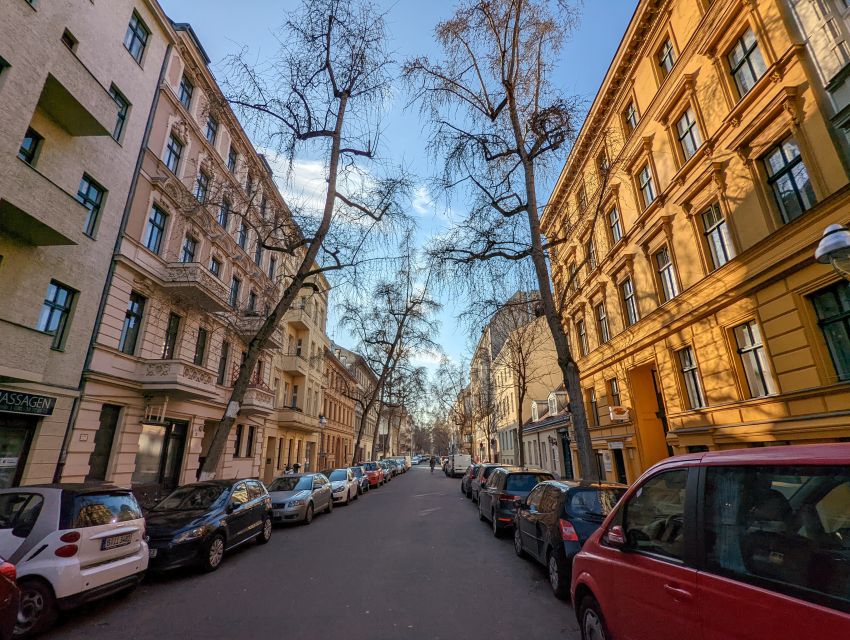
I like this tour because it treats Charlottenburg as more than the address of a palace. The district grew through several periods, and the walk connects those layers rather than isolating them. You learn how an old settlement became part of one of Germany’s most prosperous communities, then see how later building plans shaped the streets you walk today.
The tour is also a good fit if you have already seen central Berlin and want a quieter district with more local texture. It avoids the most familiar tourist circuit and reaches corners that even someone who once lived in Charlottenburg might not know well. That makes the experience useful for first-time visitors and Berlin regulars alike.
More City Tours in Berlin
- Berlin: 1-Hour City Tour by Boat with Guaranteed Seating
★ 4.3 · 16,993 reviews - Berlin: City Sightseeing Hop-On Hop-Off Bus Tour
★ 4.1 · 4,233 reviews - Potsdam: City and Castles Tour
★ 4.7 · 3,721 reviews
Starting at Rathaus Charlottenburg
Your meeting point is directly in front of the main entrance to Rathaus Charlottenburg. This is a practical start because the building gives you an immediate visual clue about the district’s civic importance. It represents Charlottenburg as a wealthy and influential community, not merely a suburb attached to Berlin.
From here, your guide sets up the larger story. The point is not just to identify buildings but to explain why this part of the city developed as it did. A good guide can turn a town hall, a street plan, or a surviving façade into evidence of political and social change. This tour’s strongest praise centers on that kind of explanation: broad historical knowledge delivered in a friendly, easy-to-follow manner.
The opening also helps you get your bearings before the route becomes more detailed. Since the walk lasts only two hours, that clear structure matters. You are not left guessing how each stop connects to the next.
Finding Charlottenburg’s medieval village center
The next major idea is Charlottenburg’s old village square, the medieval nucleus of the district. This is where the tour moves away from grand civic buildings and toward the older settlement beneath modern Berlin.
The contrast is useful. You can begin to picture Charlottenburg before its royal associations and later urban growth. The tour presents roughly 800 years of development, so this early stop gives the timeline a firm starting point. Instead of seeing Berlin as a city that appeared all at once, you see a place that grew in stages.
I appreciate this part because it gives meaning to the streets around you. Old town areas can be easy to pass through without noticing their shape. With a guide, the square becomes a clue to how the settlement was organized and how later construction spread outward.
The route is not built around a single dramatic monument at this point. Its value comes from reading the town plan and understanding what has survived. If you prefer a tour packed with interior visits, this may feel less rewarding. If you enjoy architecture and the story behind ordinary streets, it is a strong start.
Heinrich Zille, the Stadtbad, and working-class Berlin
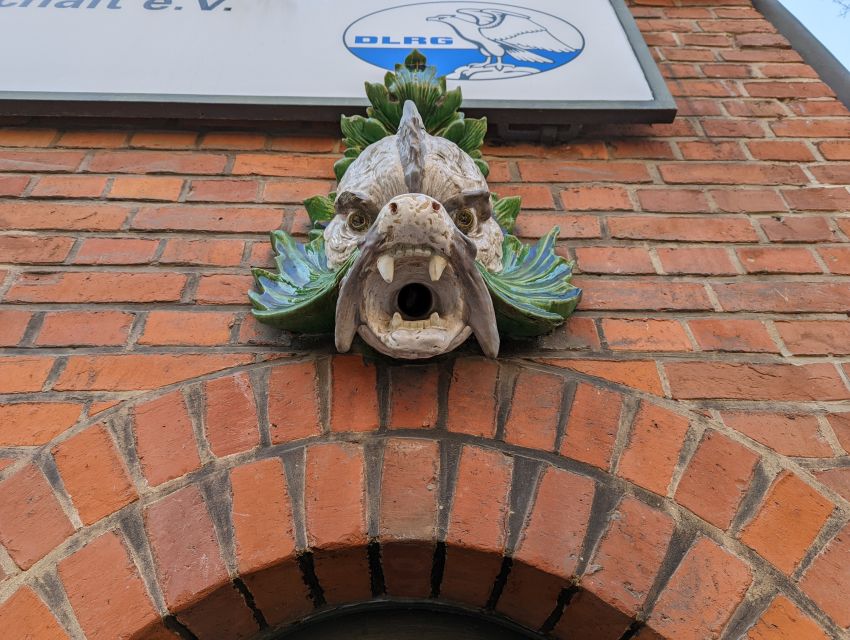
Near the historic Stadtbad, the guide introduces the artist Heinrich Zille and the local scenes that inspired his lovingly ironic portrayals of Berlin’s working class. This adds a human side to the architectural story.
Zille is important here because he looked beyond official Berlin. His work focused on people, work, crowded city life, and the humor found in hard conditions. The stop helps you understand that Charlottenburg was never only about palaces, villas, and prosperous residents.
The historic Stadtbad also shows how public buildings can reveal social priorities. The supplied details do not promise entry, so expect to view the site from the walking route rather than tour it inside. That limitation is worth knowing, but the guide’s interpretation can still make the building meaningful.
This is one of the places where the tour gains depth. You are not simply told that a building is old. You learn how a neighborhood looked through the eyes of an artist and how its working people became part of Berlin’s cultural record.
More Walking Tours in Berlin
- Discover Berlin Half-Day Walking Tour
★ 5.0 · 9,624 reviews - Berlin: Third Reich and Cold War 2 Hour Walking Tour
★ 4.9 · 6,830 reviews - Berlin: Discover Berlin Walking Tour
★ 4.9 · 5,998 reviews - Berlin’s Best: 2 Hour Walking Tour Third Reich and the Cold War
★ 5.0 · 5,486 reviews
Luisenkirche and the logic of 18th-century streets
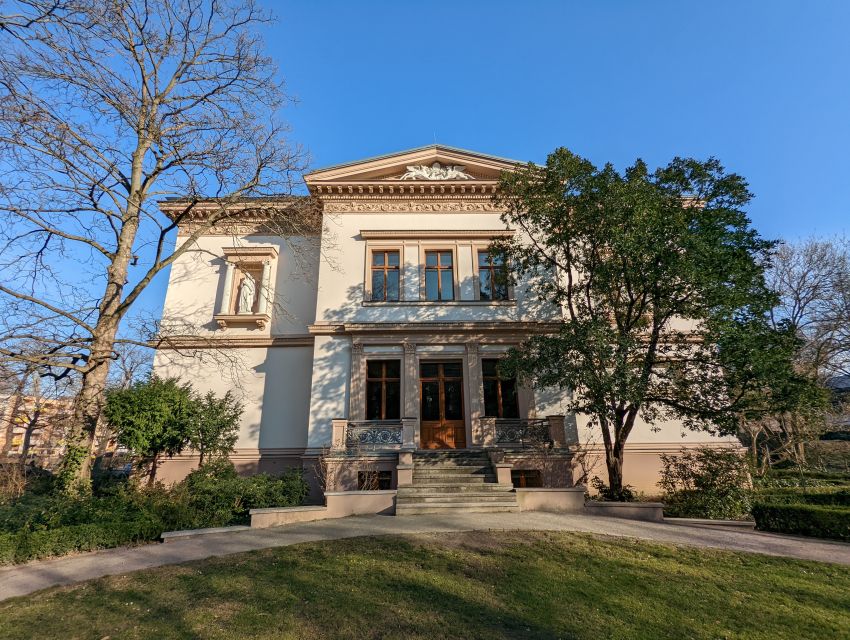
Near Luisenkirche, the focus shifts to architectural history and 18th-century urban planning. This is a good point in the route to look at the wider pattern of streets, housing, and public buildings.
The tour highlights examples of housing that still shape Berlin’s cityscape. You might find these buildings less flashy than a palace, but they tell you how the city accommodated residents over time. Repeated façades, blocks, and street layouts can seem routine until someone explains the planning choices behind them.
The church gives this section a clear landmark, while the surrounding buildings provide the wider lesson. Charlottenburg’s identity comes from the relationship between prominent structures and the homes, schools, shops, and public facilities around them.
The guide’s style matters here. Several strong comments about the tour praise the explanations as both accurate and entertaining, with enough clarity to keep the facts moving. That is especially useful during an architecture section, where too many dates can flatten the experience. The best moments are likely to be the ones that connect design to real city life.
The 1786 schoolhouses and pre-war development
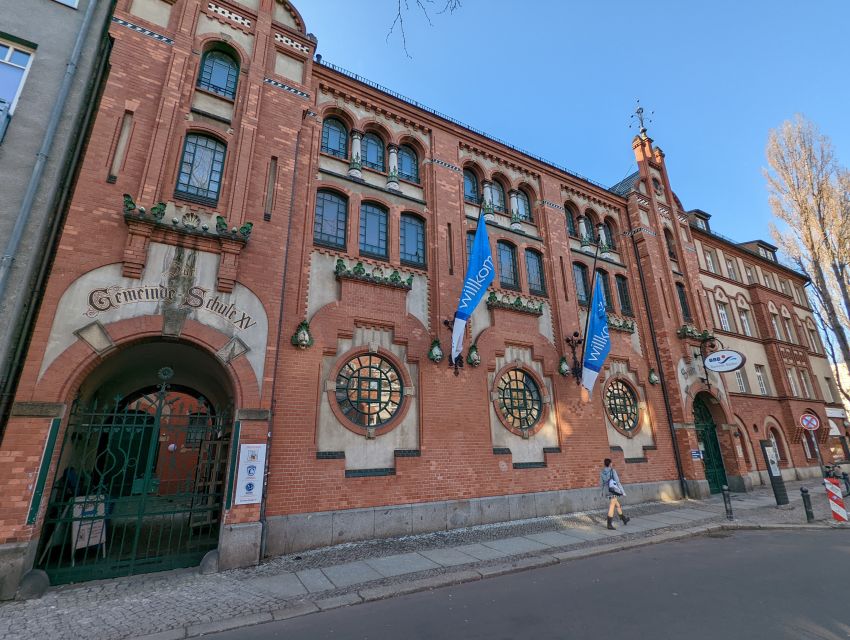
A particularly worthwhile detail is the chance to see preserved schoolhouses dating from 1786. These buildings offer a rare look at the practical side of older Berlin. Royal palaces attract attention, but schools show how a community invested in everyday institutions.
You also see examples of pre-war urban development. The route uses these buildings to explain how Charlottenburg expanded and how its streets acquired the character still visible today. It is a reminder that city history is often held in modest structures rather than famous monuments.
I like that the tour includes this kind of stop. It gives you something to watch for during the rest of your Berlin visit. Once you learn to notice schoolhouses, apartment blocks, and older planning patterns, the city becomes easier to read.
There is no claim that you will enter the schoolhouses, so plan on an exterior-focused visit. The experience is about observation and explanation. Bring comfortable shoes, since the route keeps moving through several areas rather than settling at one site.
Klausener Kiez at Nehringstraße and Christstraße
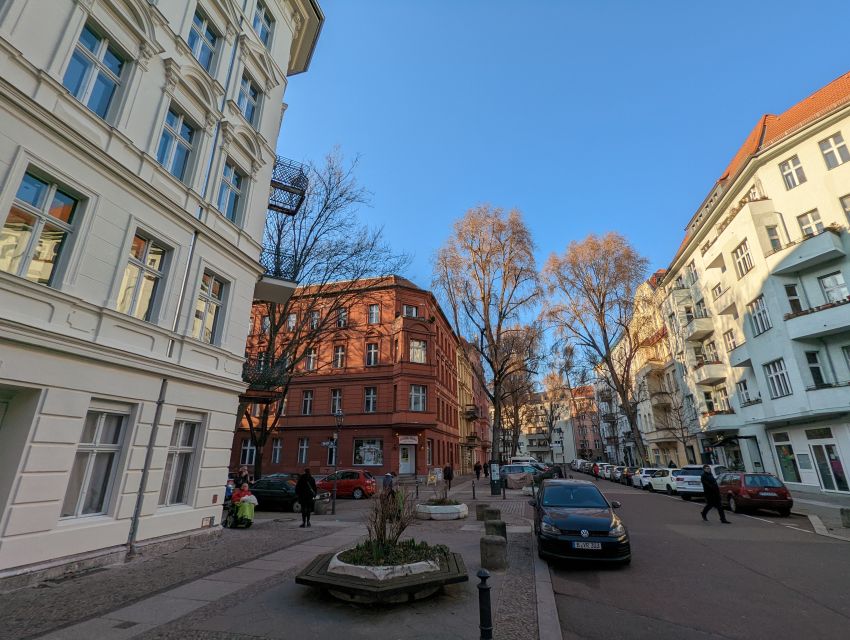
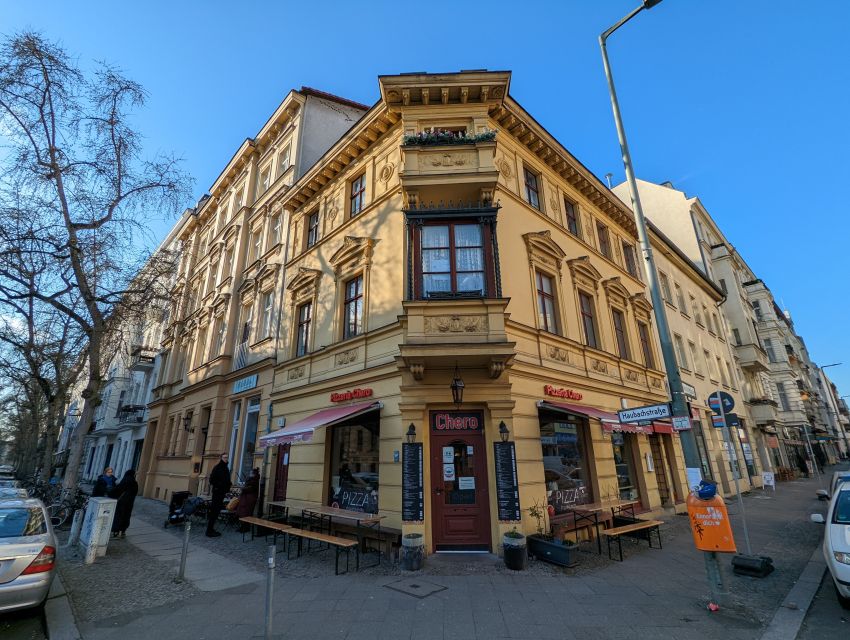
At the corner of Nehringstraße and Christstraße, the tour reaches one of its most appealing changes of mood. This is Klausener Kiez, a quaint neighborhood where cafés, thrift stores, and corner shops reflect ordinary local life.
The word Kiez points to a neighborhood with its own identity and routines. Here, the value lies in seeing how people use the streets now. After the earlier sections on medieval origins, Prussian power, public buildings, and urban planning, this stop brings the story into the present.
I would pay close attention to the small details here. Shopfronts, cafés, and the pace of the street can tell you more about a district’s character than a long list of monuments. The guide helps connect those details to the larger history of Charlottenburg.
This section also gives the walk variety. You are not spending two hours looking only at grand façades. You move through a neighborhood where the appeal comes from its lived-in feel. If you want a polished sightseeing route with constant monumental views, this may seem understated. If you want a better sense of how Berlin neighborhoods function, it is likely one of the most satisfying parts.
Villa Oppenheim and Schlossstraße’s grand finish
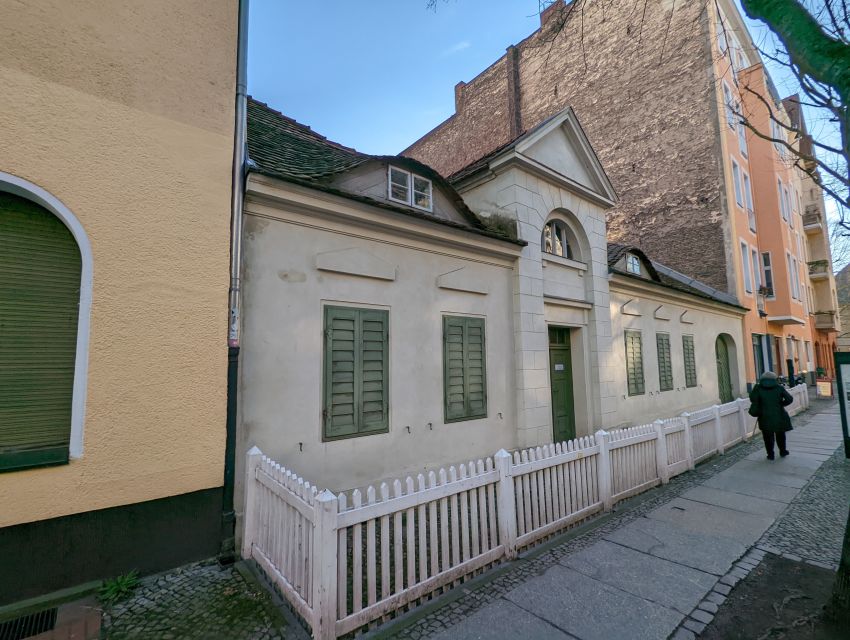
The route continues to Villa Oppenheim and magnificent Schlossstraße, which now houses world-class museums. These stops bring back the district’s more formal side after the local scale of Klausener Kiez.
Villa Oppenheim provides another chance to see how wealth and culture shaped Charlottenburg. The villa’s presence fits the district’s image as one of Berlin’s more opulent neighborhoods, but the tour places it within the wider story rather than treating it as an isolated luxury address.
Schlossstraße adds another layer. Its buildings and museums show how historic spaces can take on new cultural roles. Museum entry is not included, so treat this as an exterior and orientation stop. That can still be useful because you will know what the area contains if you decide to return on your own.
The changing sequence is one reason the route feels well planned. You see civic power, village history, working-class culture, housing, neighborhood commerce, villas, museums, and finally the palace. The guide’s job is to keep those pieces connected, and the available feedback strongly praises the structure and pacing.
Finishing at Charlottenburg Palace
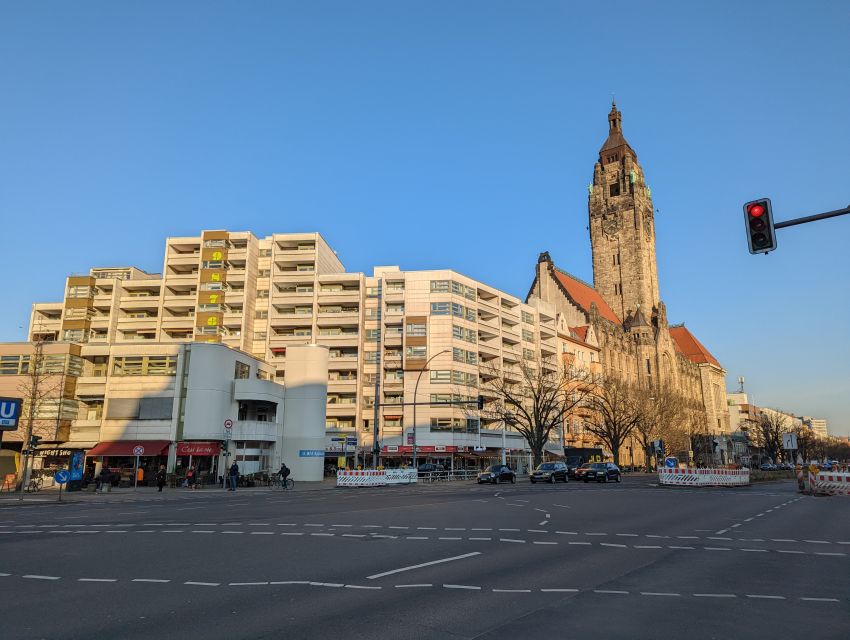
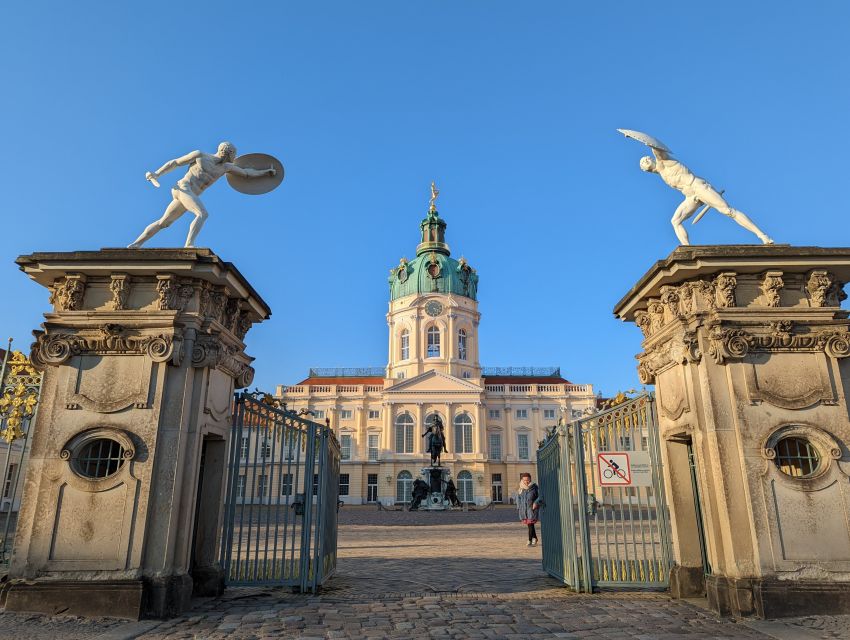
The tour ends at Charlottenburg Palace, the former Prussian power center and the most immediately grand stop on the route. Its scale gives the walk a satisfying finish. After seeing the older village and everyday streets, you can better understand why the palace changed the area’s importance.
The palace is lined with magnificent dome-topped Stüler buildings, adding a formal architectural frame to the ending. This is an excellent place to pause for photographs and to continue sightseeing independently if you have time.
Do not expect the tour price to include a museum visit. The experience ends with the palace area rather than taking you through the interiors. That keeps the cost down, but you should budget separately if you want to explore the palace or nearby museums inside.
I think the ending works because the palace feels more meaningful after the route. You have already seen the district’s village roots and civic life, so the royal complex is not just a pretty façade. It becomes part of the story of how Charlottenburg developed.
Guide quality, pace, and language
The guide is a professional museum expert, and the strongest praise focuses on high historical expertise, friendly manner, sensible walking speed, and clear explanations. The guide also makes room for questions, which matters on a neighborhood tour where you may want to ask about a building or street that catches your eye.
The experience is conducted in German. That is the clearest practical limitation. If you understand German well, the tour offers a chance to hear the subject handled in its natural setting. If you do not, this is probably not the right booking, since the format depends on spoken explanation.
The route is described as well organized and varied. It avoids the familiar tourist core and reaches less obvious corners, but it still covers a lot in two hours. You should arrive ready to keep walking and listen as you go rather than expect long breaks at every stop.
Is $23 a fair price?
At $23 per person, I consider this a solid value for a two-hour guided walk. You are paying for a professional museum expert, a planned route, historical interpretation, and access to a side of Charlottenburg that can be hard to understand from a map alone.
The price is especially reasonable if you like context. You could walk past Rathaus Charlottenburg, the old village square, Luisenkirche, Villa Oppenheim, and the palace on your own, but you would miss the connections between them. The tour supplies the framework that turns separate sights into one story.
The value is lower if you mainly want interior access. Food, drinks, hotel pickup, drop-off, palace entry, and museum visits are not included. You are buying a guided outdoor experience, not an all-inclusive attraction.
Free cancellation up to 24 hours before the start and the reserve-now, pay-later option also make planning easier. The tour is wheelchair accessible, though the supplied details do not explain the exact surface conditions or route alternatives, so contact the provider if you need specific access information.
Who should book this Charlottenburg walk?
I would recommend it to you if you enjoy:
- Berlin history beyond the Wall and Brandenburg Gate
- Architecture, town planning, and older housing
- Neighborhood cafés and local shops
- Guided storytelling with room for questions
- A route that avoids the best-known tourist streets
- A short tour that ends near a major palace
It is also a good choice for someone who lived in Charlottenburg before and wants to see familiar streets with a new historical frame. The route covers enough periods to appeal to history fans, but the local streets and anecdotes keep it from feeling like a lecture.
You should think twice if you need an English-language tour, want to spend most of the time inside museums, or prefer a slow route with long stops. This is a German walking tour in changing weather, not a palace admission package.
Practical advice before you go
Meet in front of the main entrance to Rathaus Charlottenburg. Give yourself enough time to locate the building, since the tour begins there rather than at the palace.
Wear comfortable shoes and weather-appropriate clothing. The tour runs rain or shine, so a wet forecast is not a reason to assume the walk will be canceled. Food and drinks are not included, although the route passes cafés and shops in Klausener Kiez.
Keep your expectations focused on the full district. The palace is the finale, not the entire point. You will get the most from the experience if you pay attention to the transitions between old village, planned streets, public buildings, local businesses, and royal architecture.
My verdict: book it for the story behind the streets
I would book this tour if you want Charlottenburg explained as a living district rather than a palace add-on. The strongest reasons are the excellent guide feedback, the varied route, and the way it brings together 800 years of history in a manageable two-hour walk.
Book it in particular if you speak German and have already seen central Berlin’s headline sights. Skip it if you need English commentary or guaranteed interior visits. For everyone else, $23 buys a focused, thoughtful introduction to one of Berlin’s most polished and historically layered neighborhoods.
FAQ
How long does the Charlottenburg walking tour last?
The tour lasts two hours.
How much does the tour cost?
The price is $23 per person.
Where does the tour begin?
Meet your guide directly in front of the main entrance to Rathaus Charlottenburg.
Where does the tour end?
The walk ends at Charlottenburg Palace, near the dome-topped Stüler buildings.
What language is the tour conducted in?
The live tour guide conducts the experience in German.
Is Charlottenburg Palace admission included?
No. Museum visits, including palace interiors, are not included.
Is hotel pickup and drop-off provided?
No. Hotel pickup and drop-off are not included.
Is the tour wheelchair accessible?
Yes, the activity is listed as wheelchair accessible.
What should I bring?
Bring comfortable shoes and clothing suitable for the weather. The tour operates rain or shine.
Just added around Berlin
- Berlin: Private Guided Tour of the Main Sights★ 5.0 · 13 reviews
- Private Highlights of Berlin Bike Tour★ 5.0 · 13 reviews
- Modern Berlin Private Walking Tour: Diverse, Vibrant and Exciting German Capital★ 5.0 · 13 reviews
- Tour in Berlin from Warnemünde and Rostock Cruise Port★ 4.1 · 13 reviews
- Berlin: Stasi Museum Private Guided Tour with Entry Ticket★ 4.8 · 13 reviews
- Private Food Tour Experience with a born and bred Berliner★ 5.0 · 14 reviews
- Berlin: Rheinsberg Palace Entrance Ticket★ 4.8 · 14 reviews
- Berlin in one day – day tour with an expert guide★ 5.0 · 14 reviews
Walking Tours, compared.

Berlin’s Best: 2 Hour Walking Tour Third Reich and the Cold War
Read our review →
Third Reich Berlin: Hitler and WWII Walking Tour
Read our review →Browse the lists this tour appears in