
Reviewed · WALKING TOURS
Berlin: Walking Tour of the Top 10 Sightseeing Attractions
Berlin gives you a lot to take in quickly. This two-hour walking tour links the city’s major landmarks with clear stories, local humor, and a route of about four kilometers, making it a useful first look at the German capital. You begin in the government district and finish near Friedrichsbrücke, close to Museum Island.
I like the route’s strong mix of modern Berlin and older Prussian landmarks. I also like the guides’ personal approach. Max, one of the guides, is praised for answering questions and allowing time for photos, while other guests describe their guides as friendly, flexible, and well informed. The main consideration is pace: seeing so much in 120 minutes means you will view most sites from outside rather than enter them.
In This Review
- Key points to know before you book
- Starting at the Paul-Löbe-Haus
- Reichstag and the modern government quarter
- Brandenburg Gate, Berlin’s great photo stop
- The Holocaust Memorial and Berlin’s difficult past
- Potsdamer Platz and Berlin’s rebuilt center
- Unter den Linden and the road to Gendarmenmarkt
- Gendarmenmarkt’s three major buildings
- Bebelplatz and the book burning memorial
- Lustgarten, Berlin Cathedral, and Museum Island
- What the two-hour schedule really means
- Guides, group size, and language choices
- Is $82 a fair price?
- Practical advice for a better walk
- Who should book this Berlin walk?
- Should you book it?
- FAQ
- How long is the Berlin walking tour?
- Where does the tour begin?
- Where does the tour finish?
- What time does the tour start?
- Which languages are available?
- Is the tour wheelchair accessible?
- Can I cancel the booking?
Key points to know before you book

- The route covers about four kilometers: Wear comfortable shoes and expect a steady walk between central Berlin landmarks.
- You see Berlin’s main symbols in one outing: The Reichstag, Brandenburg Gate, Holocaust Memorial, Gendarmenmarkt, Bebelplatz, Berlin Cathedral, and Museum Island are all included.
- The tour begins opposite the Federal Chancellery: The Paul-Löbe-Haus meeting point places you right in the modern government district.
- The guides add stories and Berlin humor: This is not simply a walk from monument to monument. The historical background is a central part of the experience.
- The pace favors orientation over long visits: You get a useful overview, but this is not the tour for extended museum time or interior visits.
- Small-group and private options are available: The format can suit families, seniors, and visitors who want room for questions.
Starting at the Paul-Löbe-Haus

The tour starts in front of the main entrance to the Paul-Löbe-Haus at Konrad-Adenauer-Straße 1. This is directly opposite the Federal Chancellery, so you begin among the buildings of present-day German government rather than in the older central district.
That opening is a smart choice. Berlin’s story is not only about kings, war, and the Wall. The government district shows the city as it functions today, and the nearby view includes Berlin Central Station, the Chancellery, and the Bell Tower in Tiergarten.
Your guide uses this first section to set up the city’s changing identity. You move from the modern political center toward the Reichstag, linking today’s democratic Germany with the darker chapters that came before it.
The meeting point can feel spread out because the government quarter has broad streets and large public buildings. Look for the TourguideMe guide near the main entrance rather than simply waiting somewhere around the station or Chancellery.
More Walking Tours in Berlin
- Discover Berlin Half-Day Walking Tour
★ 5.0 · 9,624 reviews - Berlin: Third Reich and Cold War 2 Hour Walking Tour
★ 4.9 · 6,830 reviews - Berlin: Discover Berlin Walking Tour
★ 4.9 · 5,998 reviews
Reichstag and the modern government quarter
The Reichstag is the seat of the German Parliament and one of Berlin’s key political landmarks. On this tour, you see it as part of the walk and hear about its place in Germany’s political story.
The route does not promise entry to the building or a visit to its dome. That matters. If you want to tour the Reichstag interior, you will need to arrange that separately. Here, the value is the explanation and the chance to place the building in the wider route.
From the Reichstag area, the tour turns toward the Brandenburg Gate. The contrast is striking even without a long stop. The government quarter is broad and modern, while the gate ahead belongs to the older ceremonial Berlin.
Brandenburg Gate, Berlin’s great photo stop
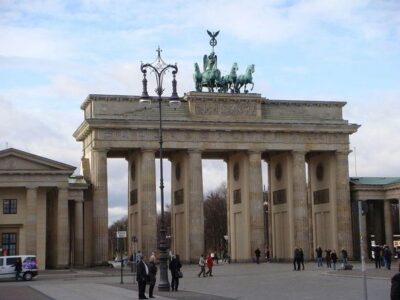
Brandenburg Gate is the clearest symbol on this walk. It has witnessed imperial ceremonies, political rallies, division, and reunification. Your guide explains why this single landmark carries so much weight in Germany’s modern story.
You also get a useful orientation to the surrounding area. The American and French embassies sit nearby, as does the Hotel Adlon. In the distance, you can see the Victory Column and the Soviet War Memorial, depending on the view and conditions.
This is one of the tour’s best moments for photographs. The itinerary includes a dedicated photo stop, and guides are expected to allow time for pictures. Max, in particular, received praise for giving people time to take photos and absorb the information rather than rushing everyone onward.
The area around the gate can be crowded, especially during the middle of the day. The guide’s commentary helps you focus on the meaning of the site instead of treating it as just another backdrop.
The Holocaust Memorial and Berlin’s difficult past
The walk continues to the Holocaust Memorial, officially the Memorial to the Murdered Jews of Europe. This is a place where the tone changes. After the public symbolism of the gate, the memorial asks you to consider the crimes of the Nazi era.
The tour presents this stop as part of a broader account of Berlin’s twentieth-century past, including the Nazi period, the Cold War, and the fall of the Wall. You should expect a guided explanation rather than a long, silent visit through every part of the memorial.
That distinction is useful. A two-hour walking tour cannot offer the same time and detail as a dedicated Holocaust memorial tour. Still, placing the memorial directly after Brandenburg Gate creates a strong historical contrast. Berlin’s grand symbols and painful memories often sit only a few minutes apart.
Be respectful here. The site is not simply a quick photo stop, and a good guide will help explain its purpose without turning the visit into a rushed checklist.
Something different for another day:
- Berlin: Reichstag, Dome and Government District Guided Tour
★ 4.7 · 18,288 reviews - Berlin: 1-Hour City Tour by Boat with Guaranteed Seating
★ 4.3 · 16,993 reviews - Berlin: Boat Tour Along the River Spree
★ 4.4 · 11,252 reviews - Berlin: Hop-on Hop-off Bus Tour with Live Commentary
★ 4.3 · 8,579 reviews
Potsdamer Platz and Berlin’s rebuilt center
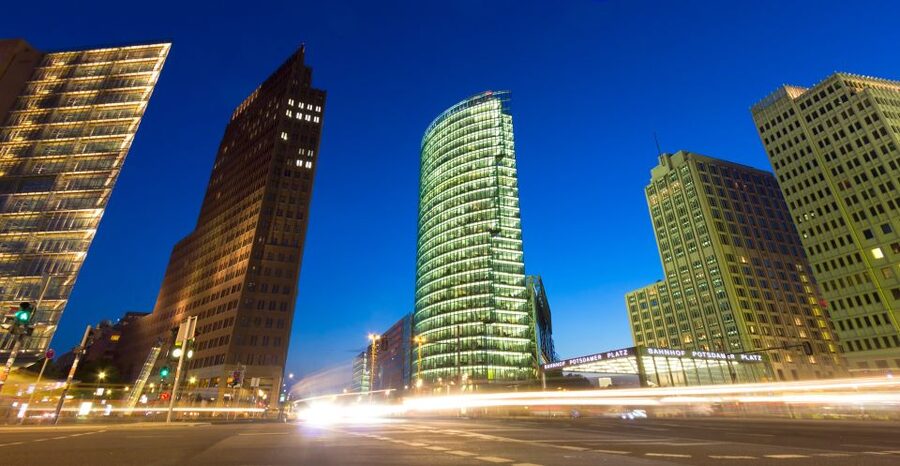
Potsdamer Platz appears next on the route. This district is linked to Berlin’s twentieth-century division and later rebuilding, making it a good place to discuss how the city changed after the Wall fell.
The tour gives you a citywide framework rather than a long architectural study. You will not have time to inspect every building or spend time inside nearby attractions. Instead, your guide connects this modern area to the Cold War story and Berlin’s reunification.
For first-time visitors, that overview has real value. Berlin can feel like several cities stitched together: imperial avenues, war memorials, socialist-era spaces, and new glass buildings. Potsdamer Platz helps explain the latest stage of that change.
Unter den Linden and the road to Gendarmenmarkt
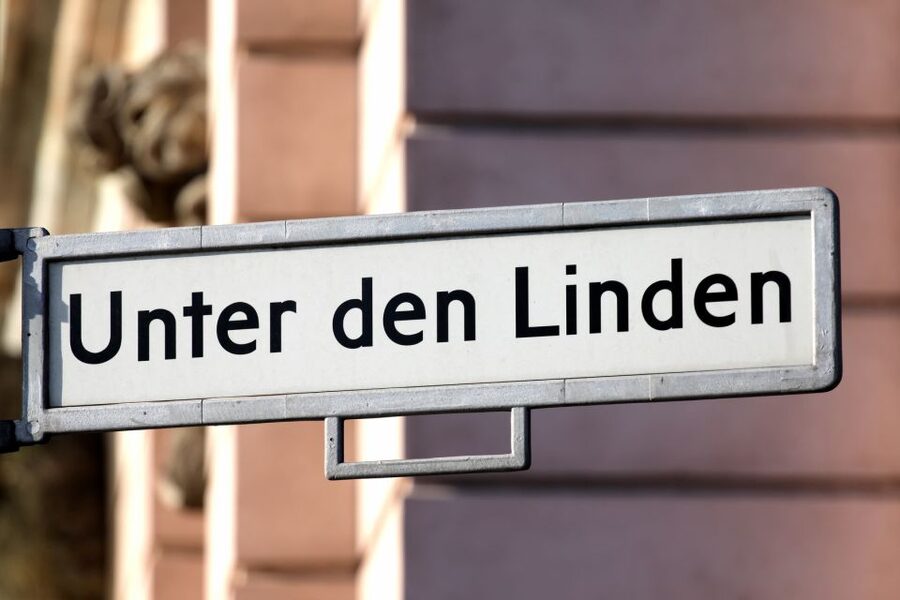
From the Brandenburg Gate, the route follows Unter den Linden, Berlin’s grand central boulevard. The street connects the gate with the historic heart of the city and gives the walk a clear sense of direction.
Your guide brings in the emperors, revolutionaries, and political events that shaped Berlin. The boulevard is more than a pleasant stroll. It is a line through the city’s old power center, leading you toward Bebelplatz, the cathedral, and Museum Island.
You will appreciate this section if you like history explained in place. Instead of hearing disconnected facts, you see how the landmarks relate to one another. The drawback is that the fast schedule leaves limited time for lingering in shop-lined sections or stopping at every building.
Gendarmenmarkt’s three major buildings
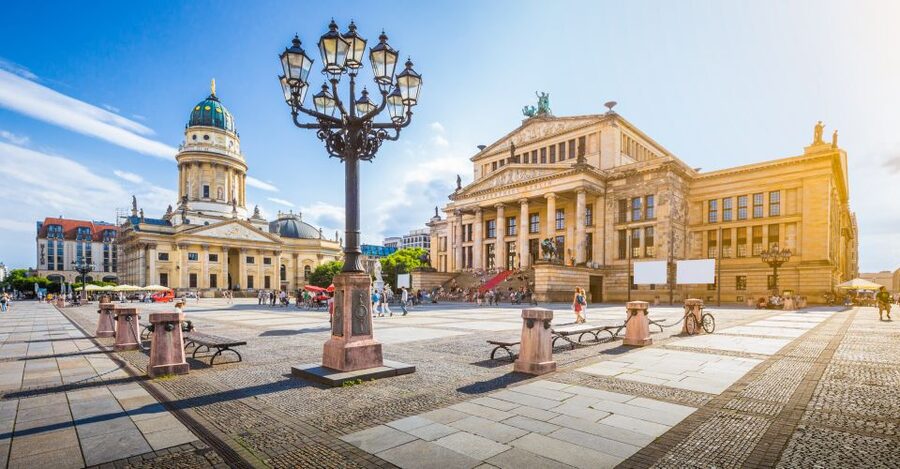
Gendarmenmarkt is one of the most handsome squares in central Berlin. Its three major buildings give the stop a strong visual payoff: the German Cathedral, the French Cathedral, and the Konzerthaus.
The square also shows how Berlin used architecture to express power, order, and cultural ambition. Your guide explains the setting and points out details you might miss if you walked through alone.
The tour treats Gendarmenmarkt as a sightseeing stop, not an interior visit. That is enough to appreciate the layout and facades, but you should plan extra time later if you want to enter the cathedrals or attend a performance at the Konzerthaus.
The square’s scale makes it one of the easier places to pause for photos and catch your breath. By this point, however, you have already covered a fair distance, so water and comfortable shoes matter.
Bebelplatz and the book burning memorial
Bebelplatz brings another difficult chapter into the route. It is associated with the Nazi book burning of 1933, when works by Jewish, socialist, and other writers were destroyed in public.
The stop gives the guide a chance to explain how propaganda and repression entered everyday public life. You may have a little free time here, which is helpful because the square deserves a quiet look rather than only a passing reference.
The tour’s strength is the way it connects Bebelplatz to nearby buildings and to the wider political story of Berlin. Its limitation is the same as elsewhere: two hours allows an introduction, not an extended treatment of the subject.
If this topic matters especially to you, use the tour as a starting point and return later for a slower visit. The guide can help you understand what you are seeing and suggest what deserves more time.
Lustgarten, Berlin Cathedral, and Museum Island
The final major section brings you to Lustgarten, Berlin Cathedral, Museum Island, and the New City Palace. This is where the city’s royal, religious, museum, and modern identities meet.
Lustgarten has long been tied to Prussian history. From here, Berlin Cathedral makes an immediate impression with its large dome and formal presence. The tour includes a guided look at the cathedral, but it does not include a cathedral interior visit.
Museum Island sits nearby, with several major museums gathered in one compact area. The walk gives you a useful introduction to the district, but museum entry is not part of the two-hour route. If you plan to visit the museums, reserve a separate block of time.
The New City Palace provides another strong viewpoint toward the Berlin TV Tower. That sightline neatly joins old Berlin with the modern city. Nearby Nikolaiviertel is described as the birthplace of Berlin, dating to 1237, so the final stretch gives you a sense of how far the city’s story reaches.
You finish at Friedrichsbrücke. This is convenient for continuing on foot toward Museum Island and the historic center. It also means the tour does not return you to the morning meeting point, so you should plan your next stop from the finish rather than assume you will end where you began.
What the two-hour schedule really means
The tour promises the top ten sights in two hours, though the route includes several additional named stops. That is possible because the sights are concentrated in central Berlin and the experience relies on outdoor commentary.
I would think of this as a city orientation walk, not a series of full attraction visits. You see the major buildings, learn why they matter, and get enough context to choose where to return later.
The pace can work well on the first day of a Berlin visit. You quickly learn how the government quarter, Brandenburg Gate, Unter den Linden, Gendarmenmarkt, and Museum Island fit together. Afterward, you can spend more time at the Reichstag, Holocaust Memorial, museums, or cathedral based on your interests.
It may feel too quick if you prefer long photo stops or detailed architectural discussion. Families and mixed-age groups may appreciate the momentum, but anyone with limited walking ability should note the four-kilometer distance even though the tour is described as suitable for all ages and fitness levels.
Guides, group size, and language choices
The guide is central to the value here. The tour is built around storytelling, anecdotes, local recommendations, and a touch of Berlin humor, not a dry list of dates.
Max received particular praise for answering questions and giving the group time to take pictures. Another guide was described as going well beyond the scheduled time, while other feedback highlights friendly manner, strong knowledge of Berlin, and willingness to respond to individual questions.
That suggests you should ask questions as you go. The small-group format and private options make that easier than on a large coach tour. English, Spanish, and German tours are available.
The humorous tone may not suit someone seeking a solemn, academic lecture at every stop. Used well, though, humor can make a long sequence of dates easier to remember, especially for families and visitors seeing Berlin for the first time.
Is $82 a fair price?
At $82 per person, this is not Berlin’s cheapest walking tour. The price makes more sense if you value a live guide, a small or private group, and a carefully linked route through the city’s major sights.
You are paying for concentrated orientation, not admission tickets. The tour does not include entry to the Reichstag, Berlin Cathedral, or the museums of Museum Island, so budget separately for those visits if they are priorities.
For a first day in Berlin, I can see the value. You cover the central sights in one guided session and gain a framework for the rest of your stay. A private tour can also make the price more reasonable for a group that wants direct answers and flexible attention.
If you already know central Berlin well, or if you prefer to explore slowly on your own, the cost may be harder to justify. You could walk much of this route independently, but you would lose the guide’s historical links, local recommendations, and personal stories.
Practical advice for a better walk
Tours run in all weather, so prepare for rain, cold, or bright sun. Comfortable walking shoes are essential, and a water bottle is a sensible addition.
The two daily start times are 10:00 AM and 2:00 PM. The morning departure leaves the rest of the day open for museums or a return visit to one of the landmarks. The afternoon option may work better if you arrive in Berlin late or prefer a slower morning.
The meeting point is near the Federal Chancellery, while the tour ends at Friedrichsbrücke. Check the full route before booking so you understand that this is a one-way walk.
Free cancellation is available up to 24 hours before the tour for a full refund, and you can reserve now and pay later. Wheelchair access is offered, but the route length and outdoor surfaces are still worth considering when deciding if the pace fits your group.
Who should book this Berlin walk?
I would recommend it most strongly to first-time visitors who want a fast, guided introduction to central Berlin. It suits families, small groups, seniors who are comfortable walking four kilometers, and anyone who enjoys history delivered with energy rather than formality.
It is also useful for visitors with only a short stay. In two hours, you see enough of Berlin’s political center, memorials, royal spaces, and museum district to make smart choices about the rest of your time.
You should choose another format if your main goal is entering museums, touring the Reichstag dome, or spending a long time at the Holocaust Memorial. This tour gives you the map and the story. You then decide which places deserve a second visit.
Should you book it?
Book this tour if you want a lively overview of Berlin’s central landmarks and appreciate a guide who welcomes questions. The combination of Brandenburg Gate, the Reichstag, Bebelplatz, Gendarmenmarkt, Berlin Cathedral, and Museum Island offers a strong first encounter with the city.
Skip it if you dislike a brisk pace or want detailed interior visits. For most first-time visitors, though, the route offers a practical way to get oriented, understand Berlin’s difficult past, and see how its old and new centers fit together.
FAQ
How long is the Berlin walking tour?
The tour lasts two hours, or 120 minutes, and covers approximately four kilometers on foot.
Where does the tour begin?
It begins in front of the main entrance of the Paul-Löbe-Haus at Konrad-Adenauer-Straße 1, opposite the Federal Chancellery.
Where does the tour finish?
The tour finishes at Friedrichsbrücke.
What time does the tour start?
Tours begin daily at 10:00 AM and 2:00 PM. Availability should be checked when booking.
Which languages are available?
The live tour guide is available in English, Spanish, and German.
Is the tour wheelchair accessible?
Yes, the activity is listed as wheelchair accessible.
Can I cancel the booking?
You can cancel up to 24 hours in advance for a full refund. Reserve now and pay later is also available.
Just added around Berlin
- Berlin: Guided Private Bike Tour to Explore the Highlights★ 5.0 · 12 reviews
- Berlin: Decolonial Berlin Castle/ Humboldt Forum Guided Tour★ 4.4 · 12 reviews
- Private Third Reich Walking Tour of Berlin★ 5.0 · 12 reviews
- Berlin: Hop-On Hop-Off Bus & LEGOLAND Discovery Centre★ 4.1 · 12 reviews
- Berlin Bike and Electric Bike Rentals★ 4.5 · 12 reviews
- Private Sightseeingtour im Taxi nach Potsdam und Sanssouci★ 5.0 · 12 reviews
- Berlin: Berlin Wall and the Cold War Walking Tour★ 4.7 · 12 reviews
- Berlin: Private Guided Tour of the Main Sights★ 5.0 · 13 reviews
Walking Tours, compared.




Berlin’s Best: 2 Hour Walking Tour Third Reich and the Cold War
Read our review →
Third Reich Berlin: Hitler and WWII Walking Tour
Read our review →Browse the lists this tour appears in