
Reviewed · WALKING TOURS
Aachen classic walking tour
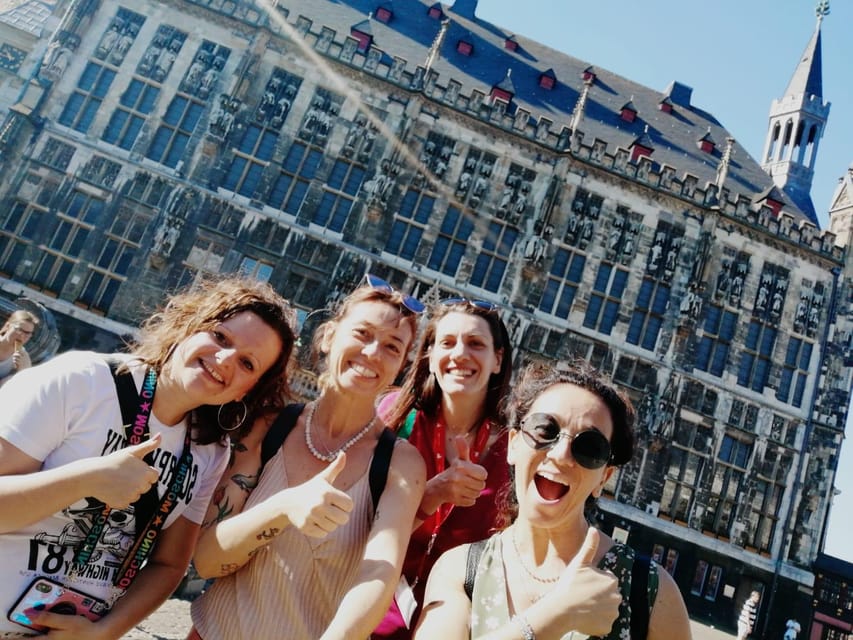
Aachen’s past is packed into a walkable old town. This 1.5-hour tour brings together the Roman baths of Aquae Granni, Charlemagne’s city, and the place where Holy Roman emperors were crowned. I like the way the route links famous monuments with smaller details, including fountains, old towers, printen, and historic buildings. I also like that Sara, the Italian-speaking guide, uses historical images, anecdotes, and stories rather than giving you only a list of dates.
The main limitation is clear: the monuments are viewed from outside. One 4-star rating specifically pointed out that explanations inside the buildings were not possible. At $29 per person, the tour offers good value for a lively introduction to Aachen, but you should book it for context and storytelling, not for interior access.
In This Review
- Key points at a glance
- Why Aachen rewards a guided walk
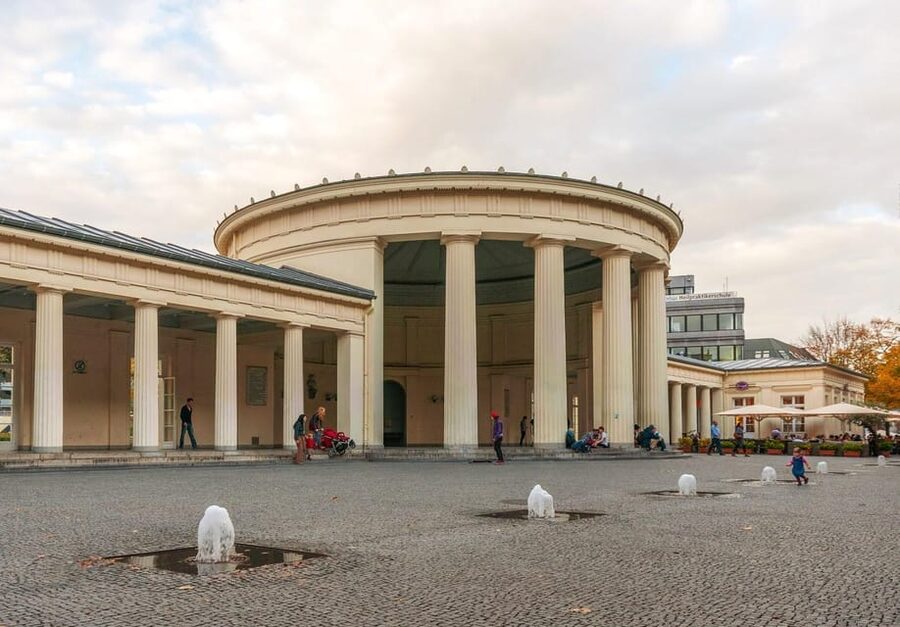
- Starting at the sulphurous Elisenbrunnen
- Roman Aachen and the archaeological site
- Nobis Printen and Aachen’s everyday character
- The Puppet Fountain and Am Hof
- The Couven Museum and Granus Tower
- Aachen Town Hall and the political heart of Europe
- Charles Fountain and the Palatine Courtyard
- The Palatine Chapel and Aachen Cathedral
- What Sara adds to the experience
- Is $29 a fair price?
- Who should book this Aachen walk?
- Final verdict: book it for the stories
- FAQ
- How long is the Aachen classic walking tour?
- What language is the tour offered in?
- Who is the guide?
- Where does the tour meet?
- Does the tour include entry inside Aachen Cathedral?
- What is the cancellation policy?
Key points at a glance
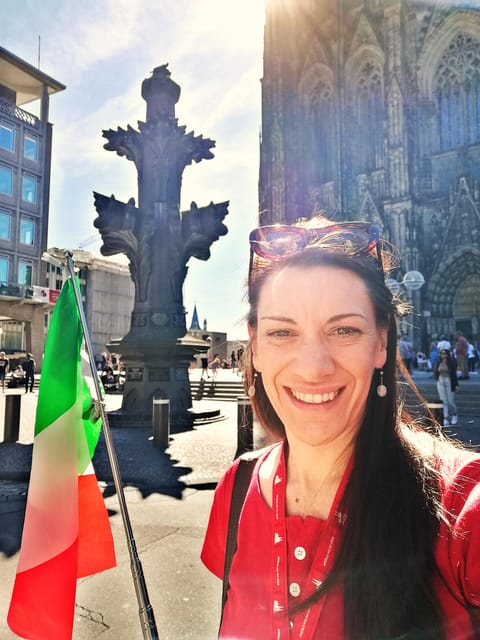
- Italian-language guiding with Sara: Sara is a certified, native Italian-speaking guide praised for being prepared, friendly, and entertaining.
- Three eras in one short walk: The route connects Roman Aquae Granni, Charlemagne’s Aachen, and the Holy Roman Empire.
- The cathedral is seen from outside: You will learn about the Palatine Chapel and Aachen Cathedral, but interior entry is not part of the walking tour.
- A practical 1.5-hour introduction: The compact format works well if you are starting your visit or have limited time in the city.
- Small details add character: The Coin Fountain, Puppet Fountain, Nobis Printen, Granus Tower, and Charles Fountain keep the walk from feeling like a parade of grand buildings.
- Flexible booking: You can cancel up to 24 hours before the tour for a full refund and reserve now while paying later.
Why Aachen rewards a guided walk
Aachen can look like a pleasant German city with a grand cathedral at its center. That first impression misses the point. The city’s importance comes from several layers that sit close together: Roman thermal springs, Charlemagne’s imperial court, medieval coronations, and Aachen’s continuing role at the heart of Europe.
I like this tour because it gives those layers an order. The guide begins at the Elisenbrunnen, where sulphurous vapours rise from the thermal waters, then leads you toward the old town and its main monuments. Each stop helps explain why Aachen attracted people for thousands of years.
The city’s ancient name, Aquae Granni, points to its Roman connection. The thermal springs made the place useful long before Charlemagne chose it as a center of power. Later, the baths became fashionable with the 18th-century nobility, who came to Bad Aachen for the waters.
You do not need to be a medieval history expert to enjoy this approach. The route is built around places you can see, with stories that explain why they matter. Historical images are also used during the walk, which should help you picture buildings and events that are no longer visible in their original form.
More Walking Tours in Germany:
- Discover Berlin Half-Day Walking Tour
★ 5.0 · 9,624 reviews - Berlin: Third Reich and Cold War 2 Hour Walking Tour
★ 4.9 · 6,830 reviews - Munich: Third Reich & WWII Walking Tour
★ 4.6 · 6,181 reviews
Starting at the sulphurous Elisenbrunnen
The meeting point is in front of the tourist board, where Sara carries an Italian flag. That makes the beginning simple, especially in the old town where several streets and public spaces meet.
The first major stop is the Elisenbrunnen, a grand monument at the entrance to the old town. Its sulphurous vapours are a direct reminder that Aachen’s hottest thermal waters in north-central Europe flow below the city.
This is a useful opening because the fountain is not just decoration. It explains the city’s earliest appeal and its later reputation as a spa destination. The 18th-century connection gives the Roman story a second chapter. Aachen was not important only because of emperors and churches. Its waters also drew the European nobility.
I would pay attention here to the smell as well as the architecture. Sulphur is not subtle, and the scent gives this stop a physical link to the springs beneath your feet. It is the kind of small sensory detail that can make a historical explanation stick.
Roman Aachen and the archaeological site
From the Elisenbrunnen, the route turns toward the archaeological remains connected with Aquae Granni. The itinerary includes an archaeological site, giving you a chance to see evidence of the Roman settlement rather than hearing about it only in the abstract.
The exact emphasis depends on Sara’s presentation, but the purpose of this part is clear: Aachen’s story begins before Charlemagne. The Roman baths established the city’s first major identity, and the thermal waters continued to shape its reputation long after Roman rule.
This is also where the historical images matter. Ruins and archaeological remains can be difficult to read without guidance. A picture of what once occupied the site gives you a better sense of the change between Roman Aachen and the later medieval city.
The walk then includes the Coin Fountain. This is one of the smaller stops, but it helps break up the sequence of major monuments. I appreciate details like this because they make a city walk feel local rather than purely ceremonial. You are not simply moving from one famous building to another. You are also noticing the public art and civic symbols placed around the old town.
Nobis Printen and Aachen’s everyday character
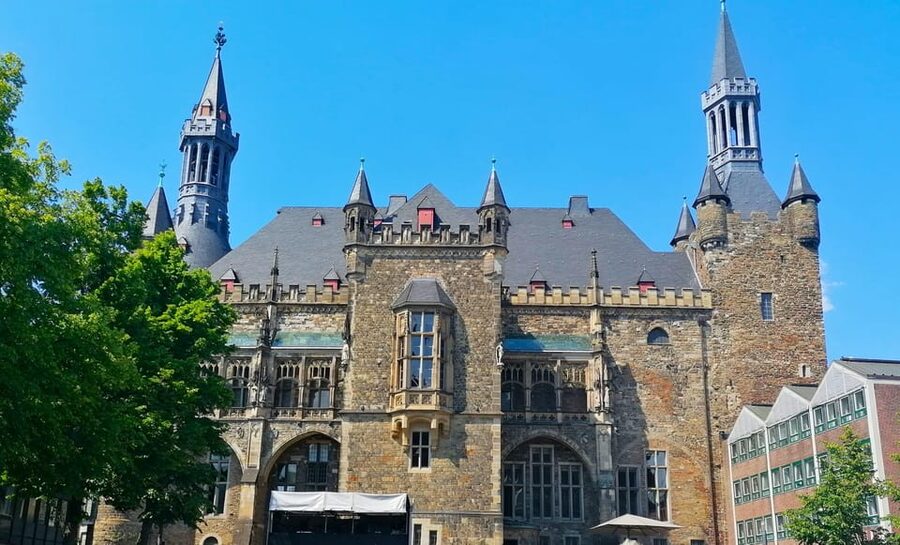
The route includes Nobis Printen, a name closely tied to Aachen’s traditional baked goods. The stop adds a taste of the city’s everyday culture to a tour otherwise focused on emperors, chapels, and political power.
The supplied information does not promise a tasting, so you should not expect food to be included. Instead, treat this as a useful local reference point and a reminder that Aachen’s identity is not limited to its grand past.
I like the balance. A tour that talked only about Charlemagne could become heavy after an hour. Stops such as Nobis Printen and the fountains give the walk a lighter rhythm and connect the historic center with things you can still notice in present-day Aachen.
Something different for another day:
- Berlin: Reichstag, Dome and Government District Guided Tour
★ 4.7 · 18,288 reviews - Berlin: 1-Hour City Tour by Boat with Guaranteed Seating
★ 4.3 · 16,993 reviews - Hamburg: Sex and Crime in St. Pauli Tour for Ages 18+
★ 4.7 · 15,447 reviews - Hamburg: 1.5-Hour Harbor and Speicherstadt Day Cruise
★ 4.6 · 14,200 reviews
The Puppet Fountain and Am Hof
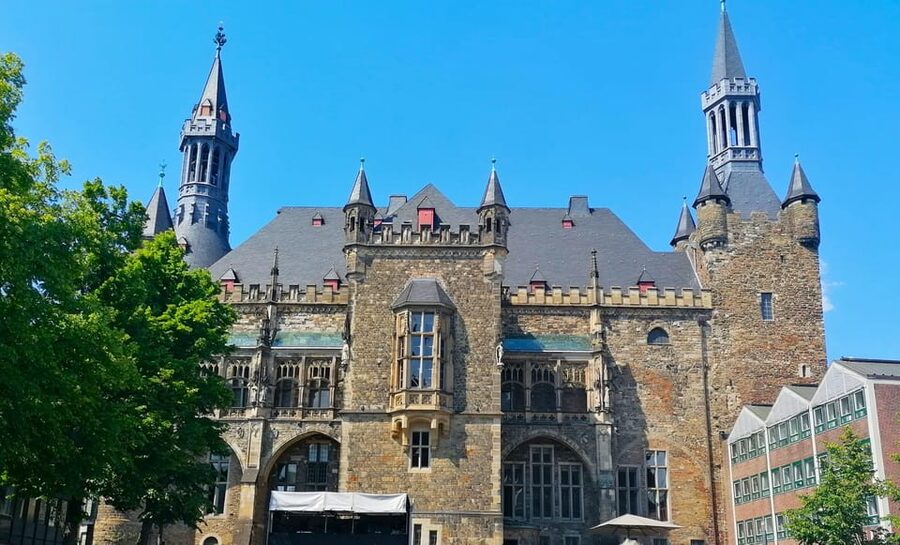
The Puppet Fountain is another characterful stop on the route. It gives Sara room to shift from formal history to a more visual explanation of Aachen’s public spaces and local storytelling.
Next comes Am Hof, a historic area that helps link the city’s central monuments. The name and setting belong to the old town’s courtly and political past, so this is a natural lead-in to the buildings connected with Charlemagne and the Holy Roman Empire.
This part of the tour should appeal to you if you enjoy hearing how a city developed around its centers of power. Aachen was not simply a place where rulers visited. It was a place where imperial government, religious ceremony, and civic life met.
The advantage of having a guide here is scale. On your own, you can photograph a fountain and walk across a square without understanding why the space matters. Sara’s role is to connect the visible setting with the events that made Aachen important.
The Couven Museum and Granus Tower
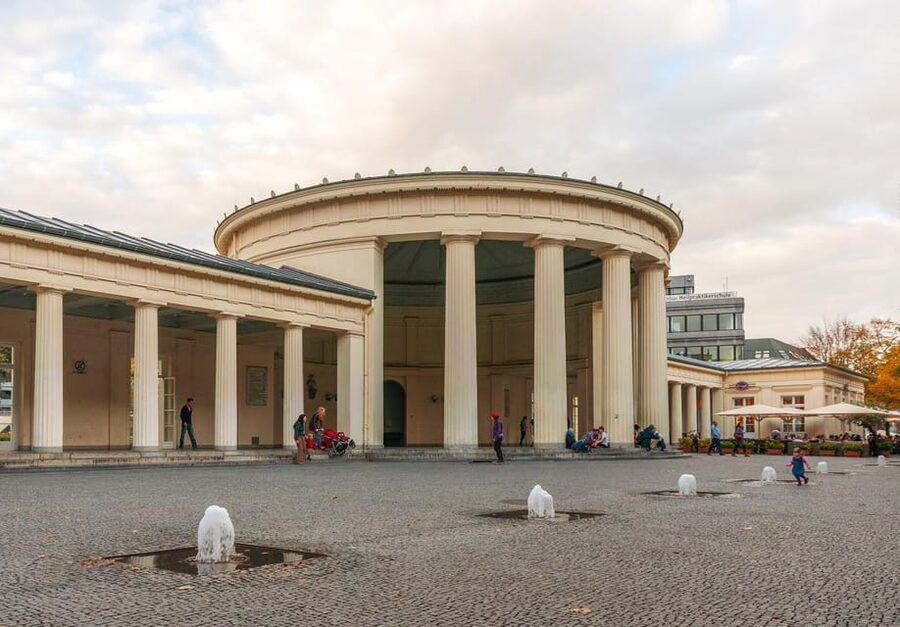
The itinerary also includes the Couven Museum and Granus Tower. Both stops add architectural and civic detail to the central route.
The Couven Museum helps broaden the story beyond Charlemagne. Its inclusion suggests that the tour is not limited to the earliest medieval period or to the cathedral. You get another view of Aachen’s built environment and its later urban character.
Granus Tower points back toward the city’s older defenses and medieval structure. As with the other outside stops, the value comes from knowing what to look for. Towers can blend into a city street when you do not know their purpose or age. A short explanation can turn an easy-to-miss building into a memorable part of the walk.
The compact route is useful here. You can cover several periods without committing to a full-day program. The tradeoff is that each site receives a limited amount of time. If you want detailed architectural study of every building, this tour will feel brisk.
Aachen Town Hall and the political heart of Europe
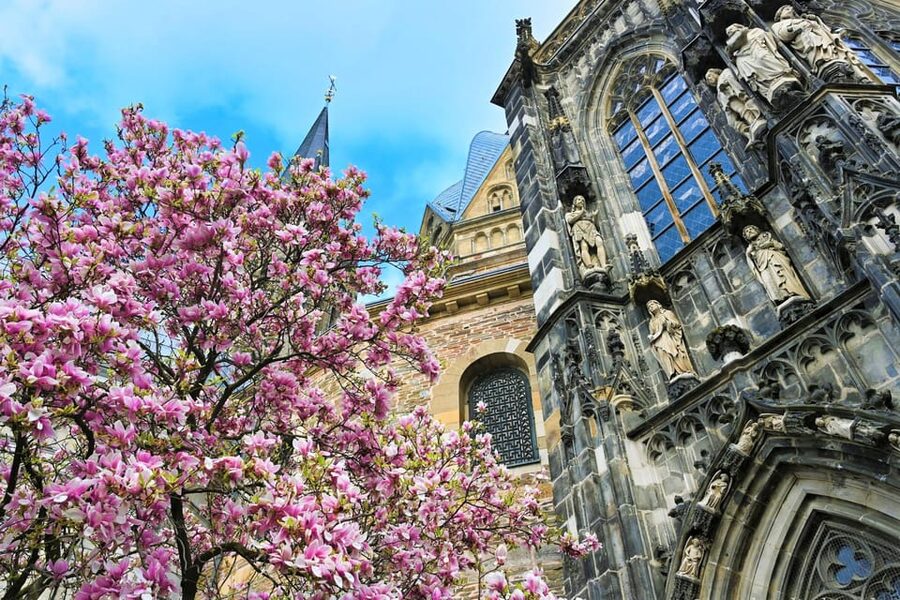
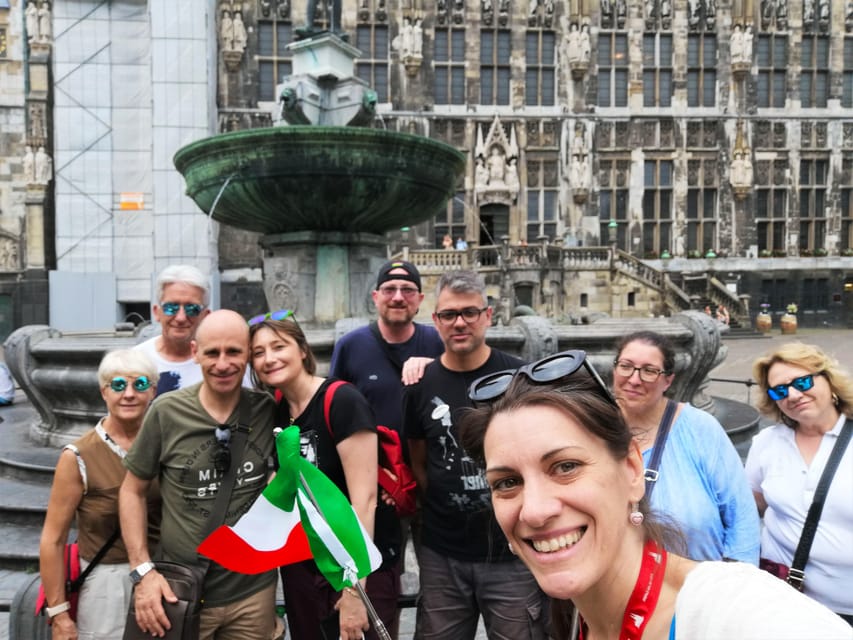
The Town Hall, or Rathaus, is one of the key stops. It was once the palatine hall in the 8th and 9th centuries, and Aachen’s Town Hall was later built on its foundations.
That fact gives the building unusual weight. You are not looking at a city hall that happens to be old. You are looking at a structure connected to the palatine center of Charlemagne’s Aachen.
The tour uses the Town Hall to explain Aachen’s political role, both in the past and today. The city was at the heart of Europe during the imperial period, and the route shows how political importance became part of the physical center.
The nearby Market Square adds to this sense of public power. Squares are easier to understand when you know what happened around them. Here, the setting connects civic government, ceremony, commerce, and the movement of people through the old town.
I would listen closely during this section if you want a clear explanation of Charlemagne’s place in Aachen’s story. Several people have especially appreciated Sara’s accounts of Charlemagne, including the anecdotes and small curiosities that keep the subject from sounding like a school lecture.
Charles Fountain and the Palatine Courtyard
The Charles Fountain brings the route back to Charlemagne. It is one of the itinerary’s named landmarks and helps reinforce the connection between the ruler and the city he made an imperial center.
The Palatine Courtyard then takes you closer to the central architectural story. The courtyard is an important viewpoint for understanding how the palace complex, chapel, and surrounding buildings relate to each other.
This is a good place for historical images because the surviving buildings represent only part of the old palatine complex. Seeing the present structure while comparing it with earlier views can make the changes easier to grasp.
The route also lists the Treasury Chamber. However, the experience is described as an outside walking tour, so you should confirm the exact presentation of this stop at the time of booking. Do not assume that the tour includes entry to the treasury or an interior visit.
The Palatine Chapel and Aachen Cathedral
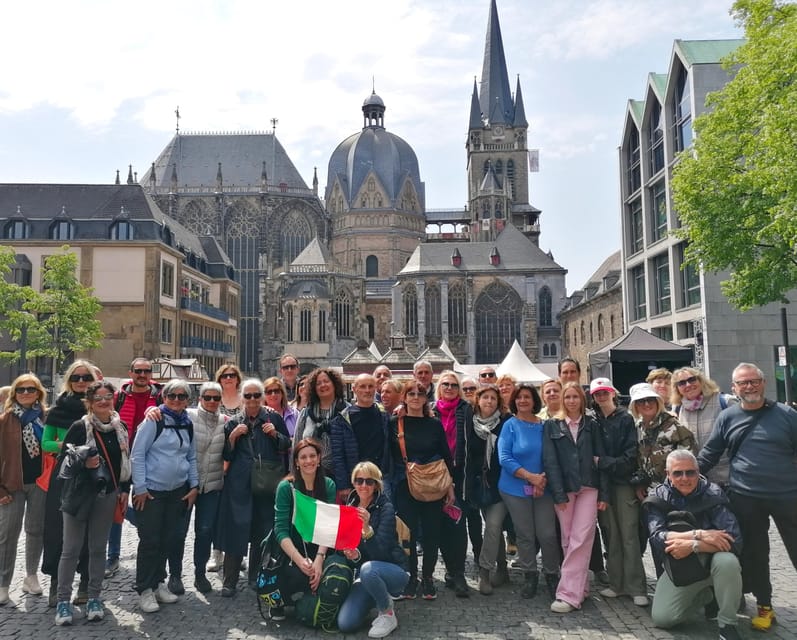
The grand finish is the Palatine Chapel, also known as Aachen Cathedral. The tour presents it as an architectural masterpiece, the first UNESCO World Heritage Site in Germany, and the final resting place of Charlemagne.
Even from outside, the cathedral has enough historical weight to reward a careful look. It was tied to Charlemagne’s palace complex and later became the coronation site of the emperors of the Holy Roman Empire. That combination of religious, political, and imperial use explains why the building matters far beyond its appearance.
The outside-only format is the most important consideration here. One participant specifically wished it had been possible to receive explanations inside the monuments. If the interior treasures, artworks, and the cathedral’s central spaces are your main reason for visiting, you will need to arrange a separate visit.
Still, an exterior explanation can prepare you well. You will have a clearer idea of why the cathedral is central to Aachen before you enter on your own, if your plans allow it. The walk gives the building a historical frame rather than leaving it as a beautiful but mysterious structure.
The cathedral also houses remarkable treasures and artworks, but those are not included as an interior viewing experience in this tour. Think of this stop as an informed introduction, not a cathedral admission ticket.
What Sara adds to the experience
The strongest pattern in the feedback is praise for Sara. She is described as prepared, approachable, funny, and passionate. That combination matters on a history walk.
A guide can know a great deal and still deliver a flat tour. Sara appears to avoid that problem by mixing facts with anecdotes and curiosities. The result should suit you if you want history explained in a conversational way, in Italian, rather than through a formal lecture.
The language choice is central. The live tour is offered in Italian, and the meeting instructions specifically identify Sara with the Italian flag. If Italian is your preferred language, you gain more than translation. You get a guide able to explain local names, imperial titles, and historical connections in a natural conversation.
One rating also praises Sara for being available and helpful. That suggests a comfortable style for people who want to ask questions during the walk, though the supplied details do not specify group size or a set question period.
Is $29 a fair price?
At $29 per person, the tour is reasonably priced for a 1.5-hour guided introduction, especially if you value a live Italian-speaking guide. You are paying for the route, the historical explanation, visual material, and Sara’s personal delivery.
The price is less compelling if you expect admissions, interior access, or a long cathedral visit. Those are not included. The activity covers monuments from the outside, so your value comes from interpretation rather than tickets.
I would compare the cost with your plans for the day. If you have only a short time in Aachen, this walk efficiently covers the main story and several smaller landmarks. If you already know Aachen well or plan to spend hours inside the cathedral and treasury, the tour may duplicate only part of what you want.
The reserve-now-and-pay-later option also helps if your route through Germany is still changing. You can keep the booking flexible, and cancellation is free up to 24 hours in advance.
Who should book this Aachen walk?
I would choose this tour for:
- Italian-speaking visitors who want a live guide rather than a self-guided route.
- First-time visitors who want the Roman, Carolingian, and imperial stories connected.
- People with about 90 minutes who want a strong orientation to the old town.
- Anyone who enjoys anecdotes, historical images, and local details.
- Visitors who plan to explore the cathedral interior separately.
I would be more cautious if you need wheelchair or mobility information, since no accessibility details are provided. I would also skip it if your priority is interior access, because the tour does not include monument entry.
The route includes many stops in a short time, so comfortable shoes and attention to the guide will make the experience easier. No transport is involved in the activity description. It is a walking tour from the tourist board through the old town.
Final verdict: book it for the stories
I would book the Aachen Classic Walking Tour if I wanted an Italian introduction to the city and a clear explanation of why Aachen mattered to Romans, Charlemagne, and the Holy Roman Empire. Sara’s warm, energetic style is the main reason to choose it, and the route includes enough small stops to keep the 90 minutes varied.
I would not book it expecting a guided cathedral interior visit. Instead, use the tour to get your bearings, understand the buildings from the outside, and learn which places deserve more of your own time afterward.
At $29, it is a sensible choice for a first look at Aachen, especially when flexibility matters and you want history told with personality.
FAQ
How long is the Aachen classic walking tour?
The tour lasts 1.5 hours.
What language is the tour offered in?
The live guided tour is offered in Italian.
Who is the guide?
The guide is Sara from Guida di Colonia Sara. She is described as a certified, native Italian-speaking guide.
Where does the tour meet?
The meeting point is in front of the tourist board. The guide will have an Italian flag.
Does the tour include entry inside Aachen Cathedral?
No. The activity is a walking guided tour of monuments from the outside. Interior explanations and visits are not included.
What is the cancellation policy?
You can cancel up to 24 hours before the tour for a full refund. You can also reserve now and pay later.
Just added around Germany
- St George’s Culinary Food Tour★ 5.0 · 3 reviews
- Castle Braunfels Day Trip from Frankfurt★ 5.0 · 3 reviews
- Discover Hamburg: Private Walking Tour★ 5.0 · 3 reviews
- Whodunnit – Interactive city walk in Düsseldorf★ 4.5 · 3 reviews
- Discover Dusseldorf’s most Photogenic Spots with a Local★ 5.0 · 3 reviews
- Kreuzberg Private Walking Tour: Immigrants, Artists & Hipsters★ 5.0 · 3 reviews
- Private Photo Tour in Kreuzberg★ 5.0 · 3 reviews
- Dusseldorf Private Walking Tour With A Professional Guide★ 4.5 · 3 reviews
Walking Tours, compared.





Berlin’s Best: 2 Hour Walking Tour Third Reich and the Cold War
Read our review →

