
Reviewed · BERLIN WALL TOURS
Private Walking Tour: Behind the Iron Curtain and Berlin Wall
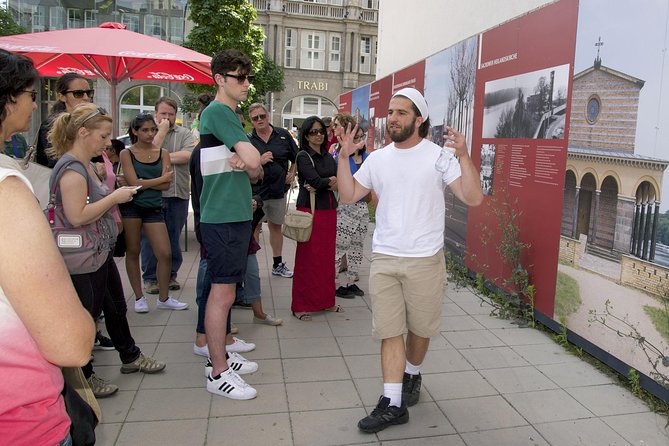
Berlin’s past is written into its streets. This private four-hour walk connects the Berlin Wall, escape tunnels, protest churches, and former border crossings with the larger story of a city split between two superpowers. I especially like the private format, which gives your guide room to adjust the pace and answer your questions, and the carefully chosen stops, from Bernauer Strasse to Bornholmer Strasse. The main drawback is practical: you need a Berlin AB public transport day pass, and the price is high if only one or two people join.
The tour also benefits from strong guiding. Rachel Wells is praised for combining historical facts with actual sites, while Alex brings particular skill on the DDR era and reunification. Philippa has been especially good at shaping the four hours around a group’s interests, a useful advantage when your party wants more politics, personal stories, or escape attempts.
In This Review
- Key points to know before booking
- Why Berlin needs more than a Wall photograph
- Bernauer Strasse and the death strip
- Gethsemane Church and the courage to gather
- Bornholmer Strasse and the night the border opened
- East Side Gallery and the Wall’s changing meaning
- Alexanderplatz gives the tour a useful finish
- What the private format is worth
- Timing, walking, and what to bring
- Who will get the most from this walk
- Should you book the Berlin Wall tour?
- FAQ
- How long is the private Berlin Wall tour?
- Is this a private tour?
- Is hotel pickup available?
- Do I need a public transportation ticket?
- Which Berlin Cold War sites are included?
- Are food and drinks included?
- What level of fitness is required?
- Can I cancel for a full refund?
Key points to know before booking
- Four private hours with a historian guide: Your group receives focused attention rather than a standard large-group lecture.
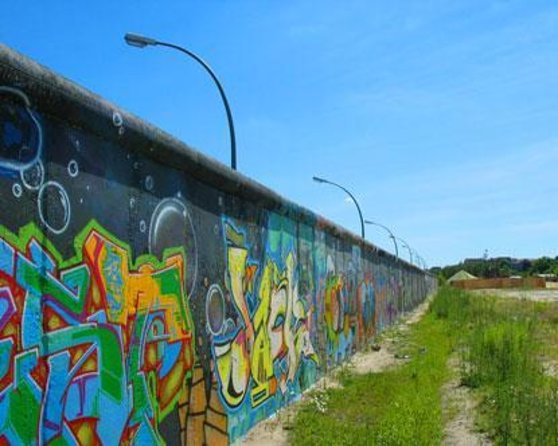
- Bernauer Strasse shows the Wall as a real border: The memorial explains the death strip, escape attempts, divided buildings, and the human cost of the barrier.
- Gethsemane Church links faith with protest: This Prenzlauer Berg church became a gathering place for civil rights activists in the late 1980s.
- Bornholmer Strasse connects directly to the Wall’s collapse: It was one of the border crossings between East and West Berlin.
- The tour ends at Alexanderplatz: You finish at a central square and transport hub, making it easy to continue sightseeing.
- Budget for public transport: A Berlin zones AB day pass is required and is not included in the tour price.
Why Berlin needs more than a Wall photograph
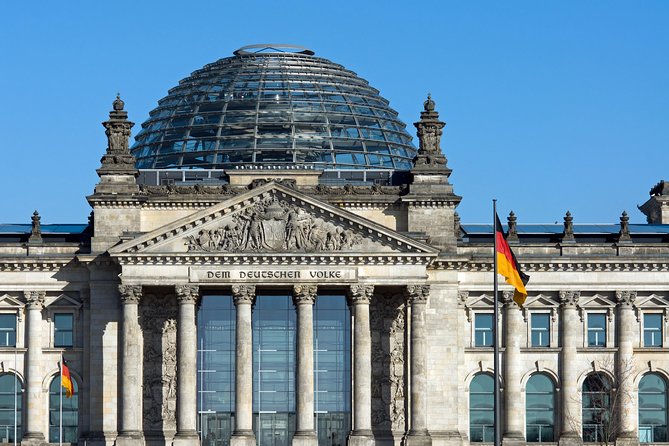
A piece of painted concrete can never explain Berlin’s Cold War story by itself. To understand the city, you need to see where the Wall cut through streets, where people tried to escape, where protests gathered, and where the border finally began to fail.
That is the strength of this tour. It does not treat the Berlin Wall as a single monument. Instead, it follows a chain of places connected to the city’s division, from the postwar struggle between the Soviet Union and the Western powers to the creation of East Germany, the daily controls of the DDR, the protests of the late 1980s, and reunification.
I like that the tour begins with Berlin’s longer story rather than dropping you into 1961 without context. Berlin changed from the capital of Nazi Germany into a prize fought over by the victorious powers after World War II. The city then became a front line in the Cold War, even though it sat inside Soviet-controlled East Germany.
Your guide’s job is to make those political events human. The questions that matter are simple ones: How did people live with the border? What happened to families and neighbors? Why did escape attempts carry such enormous risks? Why did protests grow strong enough to challenge the East German government?
A private tour gives you a better chance to ask those questions without worrying about holding up a group of 30 people.
More Walking Tours in Berlin
- Discover Berlin Half-Day Walking Tour
★ 5.0 · 9,624 reviews - Berlin: Third Reich and Cold War 2 Hour Walking Tour
★ 4.9 · 6,830 reviews - Berlin: Discover Berlin Walking Tour
★ 4.9 · 5,998 reviews
Bernauer Strasse and the death strip
Bernauer Strasse is likely to be the emotional center of the walk. The Berlin Wall Memorial here preserves a section of the former border and explains how the barrier worked as a system, not just as a slab of concrete.
You can expect to learn about the death strip, the controlled zone between sections of the Wall. Watchtowers, fences, open ground, patrol routes, and other security measures made crossing extremely dangerous. The memorial also recalls the many escape attempts connected with this street.
Bernauer Strasse was unusual because the border ran directly beside buildings. Residents could find themselves in East Berlin while their front doors opened toward the West. That arrangement led to dramatic escapes through windows and basements before the authorities altered the buildings and tightened security.
This is where a guide adds real value. A quick visit alone can leave you with a photograph and a few dates. A good guide helps you picture the street as a functioning border, with homes, sidewalks, families, and government controls all squeezed together.
The memorial also helps you understand both sides of the Wall. The western side became covered with graffiti and political messages, while the eastern side was built to stop people from reaching it at all. That contrast tells you something about the different public spaces created by the two political systems.
Allow for a moderate amount of walking here. You will be outside and moving between sites, so comfortable shoes matter. The tour lasts about four hours, and the public transport connections are part of the route.
Gethsemane Church and the courage to gather
Gethsemane Church in Prenzlauer Berg adds a different kind of story. This was not a military site or a border crossing. It became a place where civil rights activists gathered during the late 1980s, when open criticism of the East German government could carry serious consequences.
The church helps explain how opposition grew in East Germany. Religious communities offered space for people to meet, discuss peace and civil rights, and express concerns that were difficult to raise in official public life.
I appreciate this stop because it moves the tour beyond Cold War machinery. The Wall did not fall simply because politicians changed their minds. Pressure grew through ordinary people who gathered, protested, and challenged a government that had long relied on surveillance and control.
Your guide can also connect Gethsemane Church to the wider protests that helped bring down the old order. This makes the late 1980s feel less like a sudden political miracle and more like a period of increasing pressure.
The stop may appeal most to you if you want to understand daily life in the GDR, not just the international rivalry between Washington and Moscow. The tour promises insight into what it meant to live in the Eastern Bloc’s most heavily policed state, and this church is an important part of that explanation.
Bornholmer Strasse and the night the border opened
Bornholmer Strasse was one of the crossings between East and West Berlin. Its importance comes from the events surrounding the Wall’s collapse, when confusion and public pressure helped turn a guarded frontier into an open one.
This stop gives the tour a strong narrative arc. You begin with occupation and division, see the system that kept people apart, then learn how protest and political failure brought it down.
The story is especially useful because the Wall did not vanish after a neat, carefully planned ceremony. The opening came amid pressure, uncertainty, and a rapidly changing political situation. A guide can explain how the border crossing fit into the larger chain of events that led to reunification.
I would pay close attention here to the difference between a border crossing and a memorial. Bornholmer Strasse was a working checkpoint, shaped by documents, orders, guards, and rules. Its importance lies in what happened there and what it represented: the sudden breakdown of a system that had seemed permanent.
If you are most interested in November 1989 and the audacious actions that led to the Wall’s collapse, this part of the tour may be a highlight. If your main goal is street art, the East Side Gallery offers a more visual experience, but Bornholmer Strasse gives you more political context.
More Berlin Wall walks:
- Skip-the-Line: Berlin Wall Museum at Checkpoint Charlie
★ 4.1 · 2,041 reviews - Berlin: East Side Gallery Spree Cruise in a Solar Catamaran
★ 4.0 · 1,039 reviews - Cold War, Berlin Wall, Spies and the East Side Gallery
★ 5.0 · 1,024 reviews - Berlin: Guided Bike Tour of the Berlin Wall and Third Reich
★ 4.7 · 499 reviews
East Side Gallery and the Wall’s changing meaning
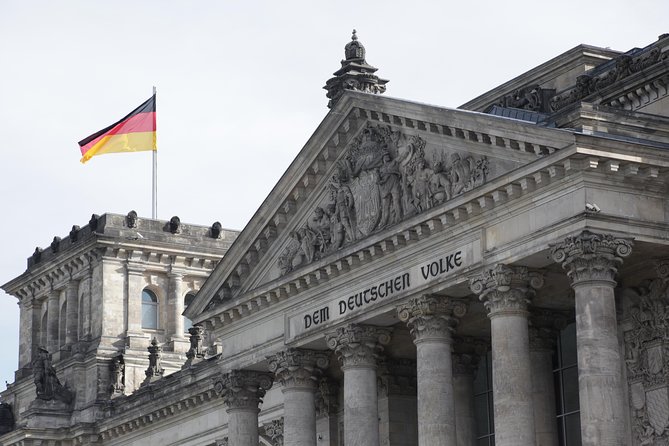
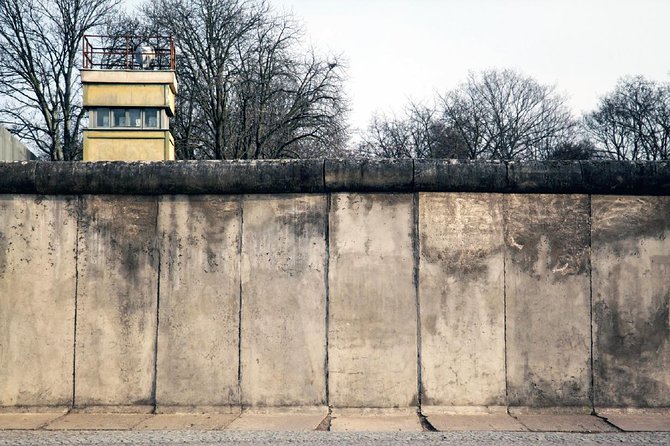
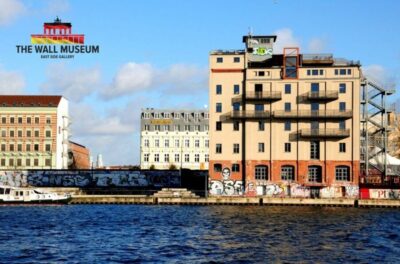
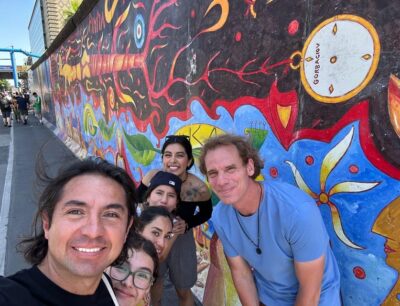
The route also includes remains of the Wall at the East Side Gallery. This is one of Berlin’s best-known places to see painted sections of the former barrier.
The gallery shows how the Wall’s meaning changed after 1989. During the Cold War, it represented restriction and separation. Afterward, sections became a public canvas filled with painted images and political messages.
I would treat this stop as part of the story rather than the entire story. The art is memorable, but the setting can make it easy to focus on photographs and miss the harder questions about the border itself. Your guide helps connect the painted panels to the Wall’s earlier role.
The contrast with Bernauer Strasse is useful. At Bernauer Strasse, the memorial focuses on the Wall as a controlled border and a source of danger. At the East Side Gallery, the surviving structure has been given a new public meaning. Seeing both helps you avoid reducing Berlin’s divided past to either tragedy or tourist decoration.
The supplied information does not give a fixed order for every stop, so your guide may shape the route around timing, transport, and your group’s interests. That flexibility is one benefit of booking privately.
Alexanderplatz gives the tour a useful finish
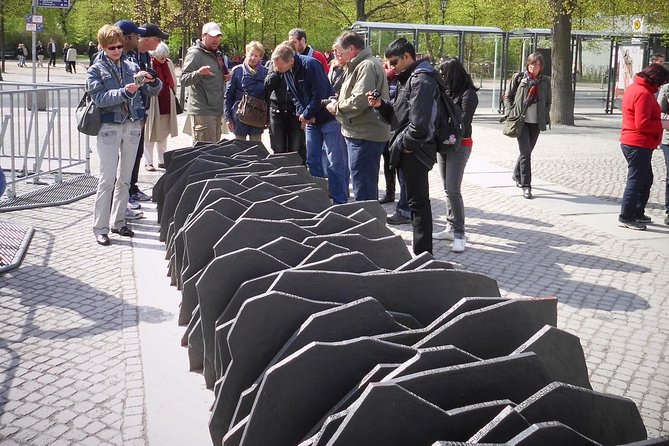
The walk ends at Alexanderplatz in central Mitte. This large square and transport hub is a practical endpoint, especially if you want to continue exploring Berlin on your own.
Alexanderplatz also belongs to the Cold War story. It was a major public space in East Berlin and became closely linked with the city’s changing political life. The stop helps place the events of 1989 into a real urban setting rather than leaving them as abstract dates.
Finishing here gives you options. You can stop for food, connect to public transportation, or continue sightseeing in central Berlin. Since the tour does not include food or drinks, plan your own break after the walk or carry what you need.
I also like the endpoint because it avoids returning you to the starting point simply for the sake of symmetry. You finish where Berlin’s transport network can take you in several directions.
What the private format is worth
The listed price is $166.52 per person. That is a serious cost for a four-hour walk, but the value depends heavily on the size of your group.
For a couple, the price may feel steep. You are paying not only for four hours of guiding but also for a private route, expert historical interpretation, and the chance to ask questions without sharing the guide’s attention. For a family or small group, the cost can make more sense, especially if a group discount applies.
The private setup is most valuable when your interests are specific. You might want to focus on escape attempts, the DDR, protest movements, reunification, or the international Cold War. A standard group tour has to give everyone the same balance. Here, you can ask Philippa to adapt the emphasis, as she has done for other groups.
Guide quality matters more than usual on a history walk. Rachel Wells has been singled out for combining clear historical facts with visits to the actual sites. Alex has received particular praise for his grasp of the DDR period and reunification. Those details suggest the tour is strongest when you want explanation, not just directions between monuments.
You should also remember that the public transport day pass is extra. The required pass covers Berlin zones AB. Food and drinks are also not included, and hotel pickup applies only if your hotel is centrally located.
Timing, walking, and what to bring
You can book a morning or afternoon start. Four hours is long enough to create a solid historical framework, but not so long that the subject becomes an all-day commitment.
Expect a mix of walking and public transport. The tour is near public transportation, and the AB day pass is required during the experience. Wear comfortable shoes and bring water, particularly if you choose an afternoon departure.
A moderate fitness level is recommended. No special athletic ability is called for, but you should be comfortable walking between several sites over half a day.
Because the tour is outdoors in meaningful part, weather can affect your comfort. The provided details do not specify weather arrangements, so check the conditions before leaving and dress for the forecast.
Hotel pickup is offered when your accommodation is centrally located. If it applies to you, confirm the meeting details at booking. If not, the central starting point should still be manageable with Berlin’s public transport system.
Booking confirmation is normally sent at once. If you book within seven days of the tour, confirmation can take up to 48 hours and remains subject to availability. Free cancellation is available until 24 hours before the start time. After that point, the amount paid is not refunded, and late changes are not accepted.
Who will get the most from this walk
I would choose this tour if you want Berlin’s Cold War story explained through places where events actually happened. It suits first-time visitors who want a clear introduction, as well as repeat visitors who have seen the main Wall fragments but want to understand how they fit together.
History students, families with older children, and small groups with a shared interest in twentieth-century Europe should find the private format useful. The subject includes war, surveillance, escape attempts, political protest, and state repression, so it is serious material, though the walking route keeps it connected to the city around you.
You may not need this tour if you prefer to move quickly between major sights, dislike scheduled walking, or already have a strong grasp of Berlin’s division and reunification. You can visit several Wall sites independently, but you will need to build the historical connections yourself.
I would also think about the group’s attention span. Four hours is a substantial block of time. If your party wants only a quick Wall photograph, this will feel like too much. If you want to understand why the Wall was built, how people resisted it, and why it fell, the length is justified.
Should you book the Berlin Wall tour?
Book it if you want a private, serious look at Berlin’s Cold War past, especially if your group values questions and discussion. The combination of Bernauer Strasse, Gethsemane Church, Bornholmer Strasse, the East Side Gallery, and Alexanderplatz gives you more than a single memorial visit.
The strongest reason to book is the guiding. Rachel Wells, Alex, and Philippa are praised for clear historical teaching, strong knowledge of the DDR and reunification, and the ability to shape the route around a group’s needs.
Skip it if $166.52 per person feels too high for a four-hour walk, or if you would rather explore Berlin at your own pace. For everyone else, bring a Berlin AB day pass, wear good shoes, and arrive ready to look past the concrete. The real subject is how people lived with division, resisted it, and finally helped bring it down.
FAQ
How long is the private Berlin Wall tour?
The tour lasts approximately four hours and is offered as a morning or afternoon half-day experience.
Is this a private tour?
Yes. Only your group participates in the activity.
Is hotel pickup available?
Pickup is offered from centrally located hotels. The tour information does not state that pickup is available from every Berlin hotel.
Do I need a public transportation ticket?
Yes. You need a Berlin public transport day pass covering zones AB. The pass is not included in the tour price.
Which Berlin Cold War sites are included?
The route includes the Berlin Wall Memorial on Bernauer Strasse, Gethsemane Church, Bornholmer Strasse, Alexanderplatz, and remains of the Wall at the East Side Gallery, along with other relevant locations.
Are food and drinks included?
No. Food and drinks are not included.
What level of fitness is required?
A moderate fitness level is recommended. The experience is a walking tour lasting about four hours and includes public transportation.
Can I cancel for a full refund?
Yes, if you cancel at least 24 hours before the experience start time. Cancellations or changes made less than 24 hours in advance are not accepted for a refund.
Just added around Berlin
- Kreuzberg Private Walking Tour: Immigrants, Artists & Hipsters★ 5.0 · 3 reviews
- Private Photo Tour in Kreuzberg★ 5.0 · 3 reviews
- Individual city tour Berlin for max. 8 persons★ 5.0 · 3 reviews
- Berlin’s Jewish Heritage: Private Tour of the Vibrant Jewish District★ 5.0 · 3 reviews
- Berlin & The Third Reich Private Guided Tour★ 5.0 · 3 reviews
- Private Analogue Photography Experience in Berlin★ 5.0 · 3 reviews
- Spy Mission in Berlin: Self-Guided Espionage Puzzle Quest★ 5.0 · 3 reviews
- Berlin Christmas Markets Walking Tour with Local Guide★ 5.0 · 3 reviews
Berlin Wall Tours, compared.
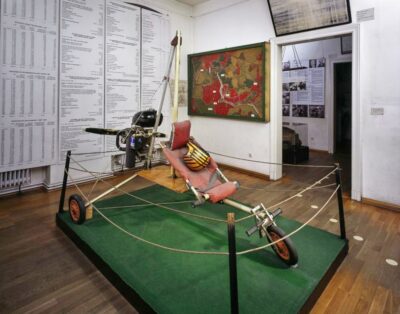
Skip-the-Line: Berlin Wall Museum at Checkpoint Charlie
Read our review →
East Side Gallery Spree Cruise in a Solar Catamaran
Read our review →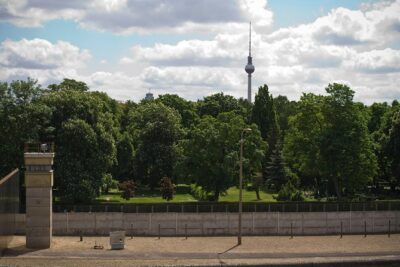
Cold War, Berlin Wall, Spies and the East Side Gallery
Read our review →
Guided Bike Tour of the Berlin Wall and Third Reich
Read our review →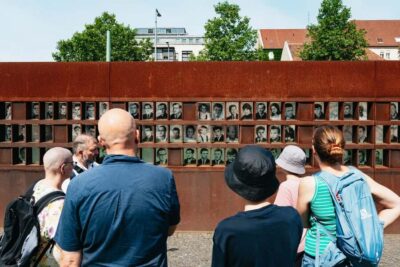
Cold War, Berlin Wall, Spies and the East Side Gallery
Read our review →Browse the lists this tour appears in