
Reviewed · BERLIN WALL TOURS
Cold War, Berlin Wall, Spies and the East Side Gallery
Berlin’s biggest stories are hiding in plain sight. This three-hour walking tour connects the Palace of Tears with the Berlin Wall, former death-strip sites, Cold War spycraft, and the East Side Gallery. I like the route’s strong mix of major sights and personal stories, and I especially value the way guides explain daily life in East Germany, not just military and political events. The main drawback is that you must buy a Berlin AB transport ticket separately, and the tour covers a lot of ground.
The experience costs $18.04 per person, which is a fine price for three hours with a local guide. Guides such as Klaus, Nikolai, Maria, Paul, Jamie, Xavier, and Cameron have been praised for clear explanations, personal stories, and a willingness to answer questions. Still, the quality depends heavily on your assigned guide, and one poor experience reported weak group control, unclear context, and too much time spent on guessing games.
In This Review
- Cold War Berlin in six useful points
- Why this tour gives Berlin’s Cold War story shape
- Starting at Friedrichstrasse Station and the ghost train
- The SED, the Palace of Tears, and the cost of separation
- Alexanderplatz and the daily life of East Berlin
- Karl-Marx-Allee and the architecture of power
- Bernauer Strasse, escape attempts, and the death strip
- Brandenburg Gate and a changed national symbol
- Finishing at the East Side Gallery
- Guides, group size, and how the experience feels
- Is $18.04 a fair price?
- Who should book this Berlin Wall tour?
- Should you book it?
- FAQ
- How long does the Cold War Berlin tour last?
- Where does the tour begin?
- Where does the tour end?
- Is public transportation included?
- Is the tour offered in English?
- What places are included?
- Is admission to the Palace of Tears included?
- How large is the group?
- Can I cancel for a full refund?
Cold War Berlin in six useful points
- The Palace of Tears puts the division in human terms: This former border crossing shows how the Wall split families and friendships.
- The route uses public transport: Bring or buy a Berlin AB ticket, priced at €10 per person from the meeting point.
- You see more than a painted section of Wall: The tour includes death-strip remnants, escape sites, the Berlin Wall Memorial, and former Stasi locations.
- East Berlin gets proper attention: Alexanderplatz and Karl-Marx-Allee reveal how communist power shaped public spaces and daily life.
- The final stop is the East Side Gallery: Murals cover the longest permanent graffiti section of the Wall, turning a border barrier into public art.
- Small groups help: The maximum is 22 people, a useful limit for city streets and underground transfers.
Why this tour gives Berlin’s Cold War story shape
Berlin’s Cold War past can feel scattered. One monument marks the Wall. Another recalls an escape tunnel. A subway station hints at sealed borders. A broad socialist boulevard seems to belong to another city entirely.
This tour ties those pieces together. You begin with Berlin’s role after World War II, when the defeated city became the main pressure point between the United States and its NATO partners on one side, and the Soviet Union and its allies on the other.
That setting matters. The Cold War was not only a contest of missiles and military alliances. It shaped where Berliners could work, whom they could visit, which trains they could take, and how freely they could speak. The best part of this experience is its attention to those ordinary pressures.
You also hear about the CIA, KGB, and Stasi. That gives the political story a practical edge. Surveillance was not an abstract idea in East Germany. It touched homes, workplaces, neighborhoods, and personal relationships.
More Museums in Berlin
- Berlin: Jewish Museum Berlin Entrance Ticket
★ 4.5 · 8,393 reviews - Berlin: DDR Museum Tickets
★ 4.3 · 3,443 reviews - Berlin: Natural History Museum Entrance Ticket
★ 4.6 · 3,382 reviews
Starting at Friedrichstrasse Station and the ghost train
The meeting point is listed at Reichstagufer 17, 10117 Berlin, near Friedrichstrasse Station. Be there 15 minutes early. Since Friedrichstrasse is a large transport hub and the supplied meeting details describe the start both by the station and by the Reichstagufer address, confirm the exact guide location before setting out.
Friedrichstrasse is an excellent place to begin. During the divided years, it was a major crossing point between East and West Berlin. The station carried a heavy symbolic load, and the tour uses that setting to explain how the city’s transport system worked under division.
The opening section includes an underground route once used to connect East and West Berlin, described as the ghost train. You need the Berlin AB transport ticket for this part of the experience. The ticket is not included, and the stated price is €10 per person.
This is a useful reminder that the tour is not a pure walk. You will walk between sites and use the U-Bahn, so wear comfortable shoes but also plan for platforms, stairs, and keeping up with the group. One guide, Jasper, was especially praised for managing the group well during the underground travel. That matters more than it sounds.
The SED, the Palace of Tears, and the cost of separation
A brief stop at Admiralspalast points out where the Socialist Unity Party of Germany, or SED, was founded in 1946. It is a short historical pause, not a full museum visit, but it helps explain who directed East Germany’s political system.
The Palace of Tears is the emotional center of this part of the tour. Its German name, Tränenpalast, comes from the tearful farewells made there. East and West Berliners could meet, but crossing the border could mean a painful goodbye with no clear date for the next reunion.
Today, the building contains a museum with displays on border controls, escape attempts, separation, and reunification. Admission is free as part of the tour. Allow about 20 minutes here, though the exact time can depend on the pace of the group.
I like this stop because it keeps the Cold War from becoming a parade of dates and leaders. The building makes the political divide personal. You can better understand what the Wall meant when you picture a family being allowed to meet briefly, then being forced apart by officials and paperwork.
The visit is also a good test of your preferred tour style. If you want long, quiet museum time, 20 minutes may feel brief. If you want a guided overview that places the museum in a larger route, the stop works well.
Alexanderplatz and the daily life of East Berlin
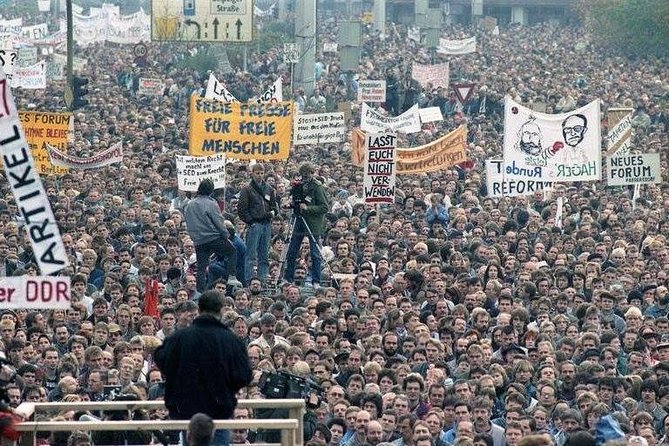
Alexanderplatz was the public face of East Berlin. It hosted political rallies, official ceremonies, propaganda, commerce, and the daily routines of people living under close state control.
Here, the guide explains how communist power used architecture and public space. The large open areas and stark buildings were not random. They projected order and authority, while everyday life often involved shortages, restrictions, and watchful institutions.
This is where the tour’s focus on ordinary Berliners becomes useful. You learn what it meant to live behind the Wall, not simply why the Wall was built. The story includes surveillance by the Stasi, the East German secret police, along with the larger roles of the CIA and KGB.
Guides bring different strengths. Tobi has spoken about growing up in East Germany, while Nikolai has connected the period to his own family’s experience of the Iron Curtain. Those personal accounts can make the subject easier for children and first-time visitors to grasp.
The stop lasts about 15 minutes. That is enough for a guided explanation and a look around, but not enough for an extended exploration of Alexanderplatz on your own. You can return later if the square catches your interest.
More Berlin Wall walks:
- Skip-the-Line: Berlin Wall Museum at Checkpoint Charlie
★ 4.1 · 2,041 reviews - Berlin: East Side Gallery Spree Cruise in a Solar Catamaran
★ 4.0 · 1,039 reviews - Berlin: Guided Bike Tour of the Berlin Wall and Third Reich
★ 4.7 · 499 reviews - Berlin: Cold War Walking Tour on Berlin Wall Route
★ 4.8 · 437 reviews
Karl-Marx-Allee and the architecture of power
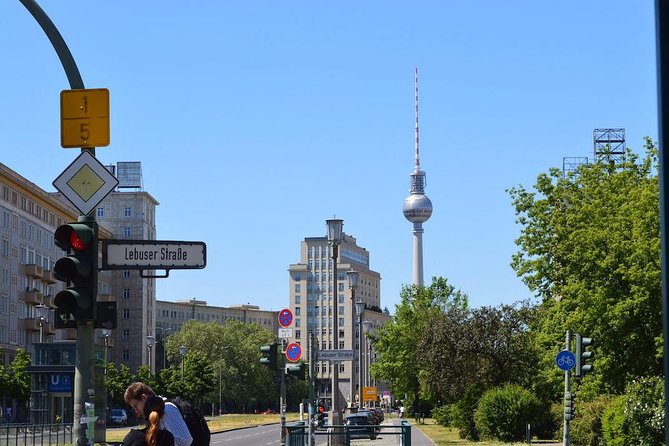
Karl-Marx-Allee shows East Germany trying to make ideology look permanent. The broad boulevard is lined with monumental Stalinist buildings that were designed to impress and to project the strength of the socialist state.
The architecture is valuable because it lets you read politics from the street. This was not just a housing project or a grand avenue. It was a carefully planned statement about how the government wanted East Germany to be seen.
The guide’s job here is to compare the official image with life behind the Iron Curtain. A polished boulevard could suggest success, even as residents dealt with surveillance and limits on personal freedom.
The stop lasts around 20 minutes. No separate admission is listed, but the tour does use public transport, so your AB ticket remains part of the total cost. I would pay attention to the guide’s explanations rather than expecting an indoor architectural visit.
Bernauer Strasse, escape attempts, and the death strip
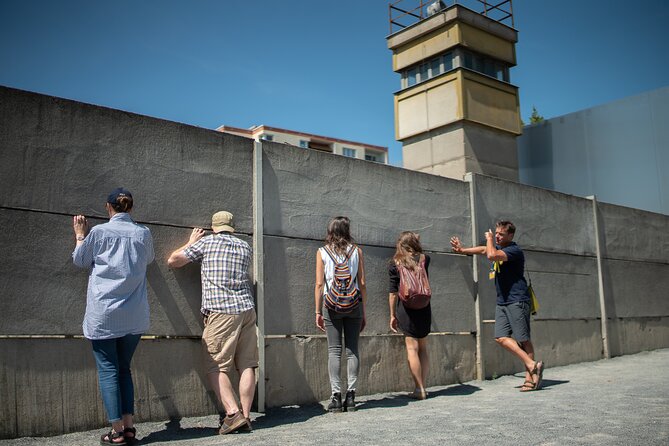
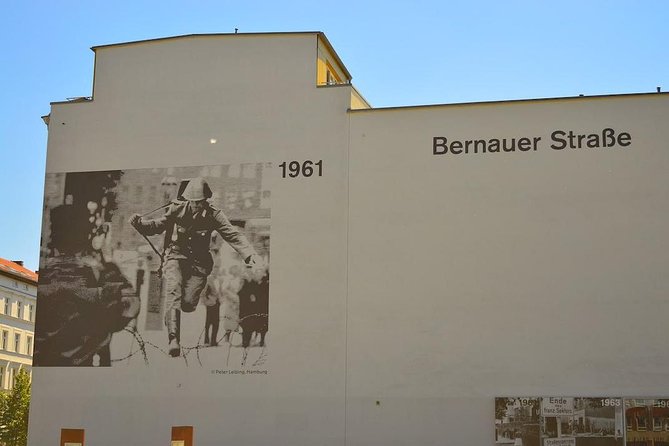
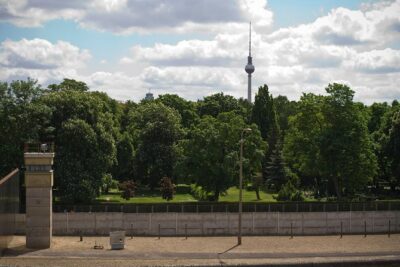
The Wall was never just one concrete slab. It was a border system with fences, patrol routes, watchtowers, lights, barriers, and a cleared zone between East and West. The tour takes you to surviving sections and lesser-seen areas associated with the death strip.
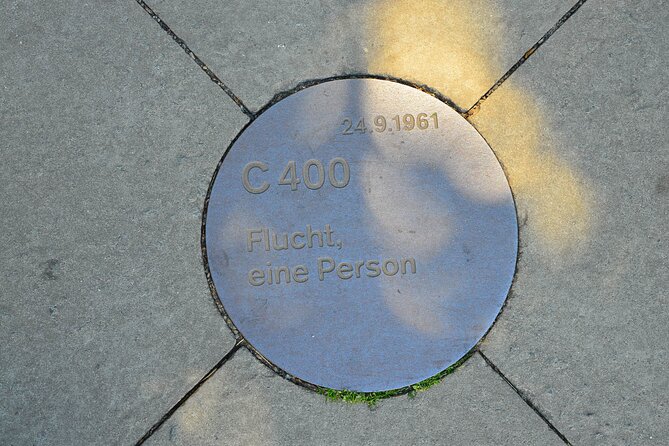
Bernauer Strasse is especially powerful because the street became a setting for escape attempts. People tried tunnels, jumps, hidden compartments, and other risky methods to get out of East Berlin. The area also shows how suddenly the Wall could cut through homes, sidewalks, and familiar neighborhoods.
A particularly sobering moment comes from looking toward the western side through a gap from the eastern side across the former death zone. That view gives the border a physical scale. You are not only hearing that escape was dangerous. You are seeing the open space that guards once watched.
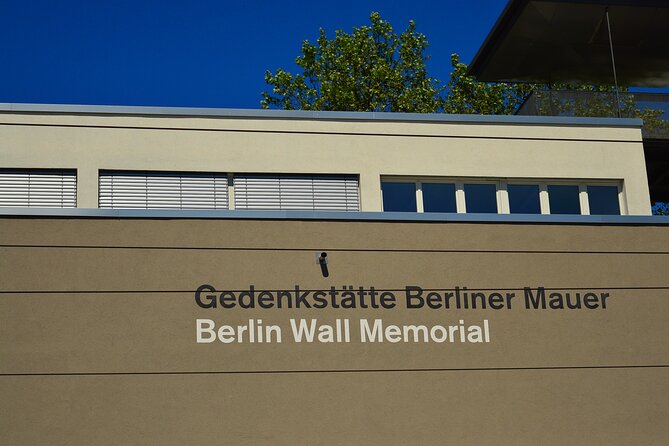
The Berlin Wall Memorial helps explain the full border system. It is one of the better places in Berlin to grasp how the barrier worked and why crossing it was so difficult. The tour description also includes former Stasi sites, adding the layer of internal surveillance to the visible Wall.
This part may be more moving than the postcard-friendly sections of Berlin. It can also feel serious and demanding. The guide’s storytelling makes a big difference, especially when explaining escape stories without turning them into mere adventure tales.
Brandenburg Gate and a changed national symbol
The Brandenburg Gate is one of Berlin’s most familiar monuments, but its Cold War meaning is easy to miss if you only stop for a photograph.
During the division, the gate stood near the border and became a symbol of a split Berlin and a split Germany. After reunification, it took on a new meaning as a national symbol of peace and unity.
The tour uses the gate to connect several periods of German history. You hear about Berlin’s early development, its role under Nazi rule, the postwar occupation, the divided city, and reunification.
That broad timeline helps prevent the Cold War from feeling isolated from the rest of Berlin’s past. The city did not suddenly become divided in 1961 without warning. Its wartime destruction, occupation, and political conflict all set the stage.
Finishing at the East Side Gallery
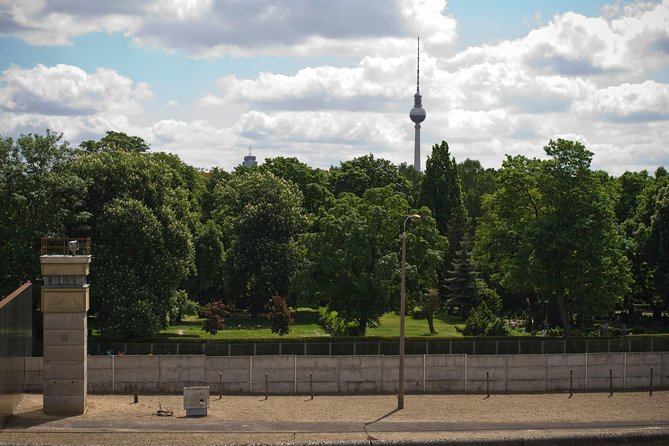
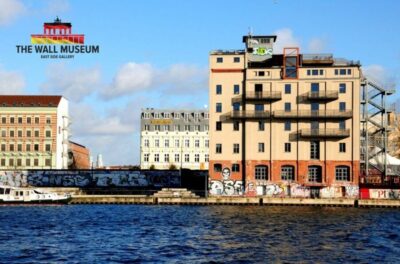
The tour ends at the East Side Gallery on Mühlenstrasse, near convenient public transport. This is the longest remaining section of the Berlin Wall and the longest permanent graffiti wall in the world.
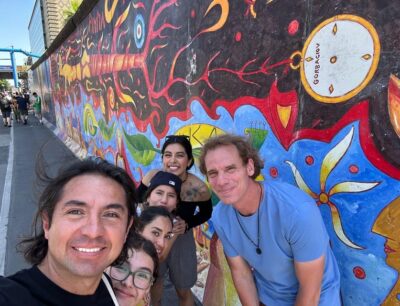
The murals were painted after the Wall fell. Their themes include freedom, hope, protest, and the end of political division. The art is colorful and often playful, but the concrete beneath it was once part of a deadly border.
This is a fitting final stop because it changes the mood. Earlier sites focus on fear, control, separation, and failed escapes. The East Side Gallery shows what happened when the Wall became a canvas instead of a barrier.
Do not expect the final stop to function like a quiet art gallery. It is an outdoor public space, and the murals are spread along a long section of Wall. Your guide provides the historical frame, then you can continue exploring the area or use nearby transport to reach your next stop.
Guides, group size, and how the experience feels
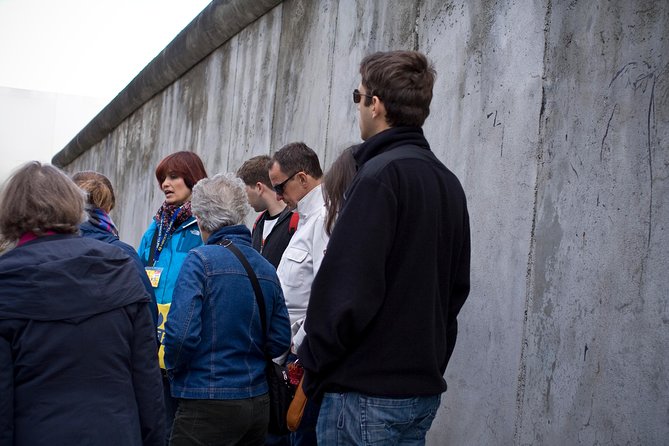
The tour is limited to 22 people and offered in English. That is small enough for a more personal walk, though city noise and underground stations can still make hearing difficult.
Guide quality is the biggest variable. Klaus has been praised for encyclopedic Cold War knowledge, moderate pacing, and strong answers to questions. Paul uses photographs on an iPad to show how places looked at the time. Jamie, Xavier, Ariel, Rohan, Tina, Glen, Aran, Eran, and Cameron have also been praised for clear storytelling and enthusiasm.
Several guides have added personal or family connections to East Germany and the Iron Curtain. That can be especially helpful for families and younger visitors, since it turns a difficult political era into something human and understandable.
The overall score is 4.9 from 1,024 reviews, with 99 percent recommending the experience. That is a very strong record, but you should still know the weakness reported in one poor account: a guide who was hard to hear, lost the route, skipped expected sites, and ran over time without enough useful explanation.
The lesson is practical. Stay close to the guide, speak up if you cannot hear, and ask questions early. The tour is at its best when it becomes a conversation rather than a lecture.
Is $18.04 a fair price?
Yes, provided you remember the transport cost. The tour itself is $18.04, and the Berlin AB ticket adds €10 per person. Food, drinks, hotel pickup, and drop-off are not included.
For roughly three hours of guided history across several parts of Berlin, that remains good value. You are paying less for entrance tickets than for interpretation, route planning, and the ability to connect sites that can otherwise feel unrelated.
The price is strongest for a first visit to Berlin or for anyone who knows the famous Wall story but wants more context. If you already understand the Cold War well and prefer to explore at your own pace, you may find the group format less useful.
The tour is often booked about 31 days ahead, so reserve early if your schedule is fixed. Free cancellation is available up to 24 hours before the start time. After that point, the amount paid is not refunded, and late changes are not accepted.
Who should book this Berlin Wall tour?
I would choose this experience if you want the Wall explained through politics, surveillance, escape stories, and daily life. It suits adults, families, and history-minded visitors who prefer a guide to a self-guided walk.
It is also a good match if you want to see several parts of Berlin in one morning. You cover Friedrichstrasse, Alexanderplatz, Karl-Marx-Allee, Wall memorial areas, Brandenburg Gate, and the East Side Gallery, with public transport helping link the route.
You may want another option if you dislike group pacing, need long museum visits, or want a strictly academic presentation. The experience is built around storytelling and questions, and a guide who uses interactive methods may not suit everyone.
Wear shoes suited to several hours on city streets. Bring the AB ticket or budget for the €10 purchase. Arrive 15 minutes early, and double-check the exact meeting point near Friedrichstrasse Station.
Should you book it?
Book this tour if you want Berlin’s Cold War story to feel personal and connected. The Palace of Tears, Bernauer Strasse, the death strip, Alexanderplatz, and the East Side Gallery create a strong arc from separation to freedom.
At $18.04, plus transport, it is a sensible buy for a first or second visit. The guide matters, but the consistently strong feedback about figures such as Klaus, Nikolai, Paul, Cameron, and others suggests that the company usually assigns people who care about the subject.
I would skip it only if you want complete control over timing or a slower museum-focused day. For most visitors, this is an efficient and thoughtful way to understand why Berlin’s Wall still matters.
FAQ
How long does the Cold War Berlin tour last?
The tour lasts approximately three hours.
Where does the tour begin?
The meeting information gives Reichstagufer 17, 10117 Berlin, near Friedrichstrasse Station, as the starting point. Arrive 15 minutes before the 10:00 am start.
Where does the tour end?
The tour ends at the East Side Gallery on Mühlenstrasse, 10243 Berlin.
Is public transportation included?
No. You need a Berlin AB Zone transport ticket. The stated cost is €10 per person, and it can be purchased at the meeting point.
Is the tour offered in English?
Yes. The tour is offered in English.
What places are included?
The route includes Friedrichstrasse Station, Admiralspalast, the Palace of Tears, Alexanderplatz, Karl-Marx-Allee, Berlin Wall and death-strip sites, Brandenburg Gate, and the East Side Gallery.
Is admission to the Palace of Tears included?
Yes. Admission to the Palace of Tears is listed as free as part of the experience.
How large is the group?
The maximum group size is 22 people.
Can I cancel for a full refund?
Yes, if you cancel at least 24 hours before the experience begins. Cancellations made less than 24 hours before the start are not refunded.
Just added around Berlin
- Berlin: Private Guided Tour of the Main Sights★ 5.0 · 13 reviews
- Private Highlights of Berlin Bike Tour★ 5.0 · 13 reviews
- Modern Berlin Private Walking Tour: Diverse, Vibrant and Exciting German Capital★ 5.0 · 13 reviews
- Tour in Berlin from Warnemünde and Rostock Cruise Port★ 4.1 · 13 reviews
- Berlin: Stasi Museum Private Guided Tour with Entry Ticket★ 4.8 · 13 reviews
- Private Food Tour Experience with a born and bred Berliner★ 5.0 · 14 reviews
- Berlin: Rheinsberg Palace Entrance Ticket★ 4.8 · 14 reviews
- Berlin in one day – day tour with an expert guide★ 5.0 · 14 reviews
Berlin Wall Tours, compared.
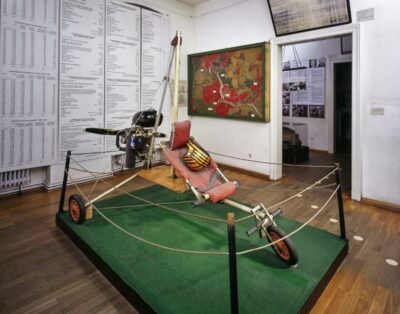
Skip-the-Line: Berlin Wall Museum at Checkpoint Charlie
Read our review →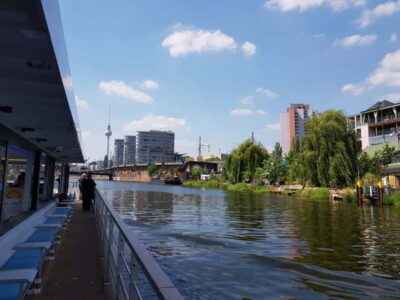
East Side Gallery Spree Cruise in a Solar Catamaran
Read our review →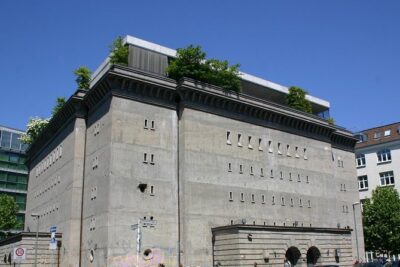
Guided Bike Tour of the Berlin Wall and Third Reich
Read our review →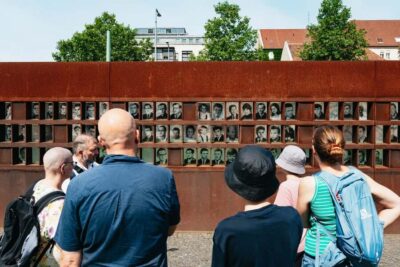
Cold War, Berlin Wall, Spies and the East Side Gallery
Read our review →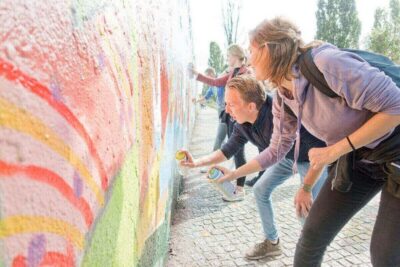
Browse the lists this tour appears in