
Reviewed · WALKING TOURS
Mannheim, guided walking tour: Industrial culture at the commercial port
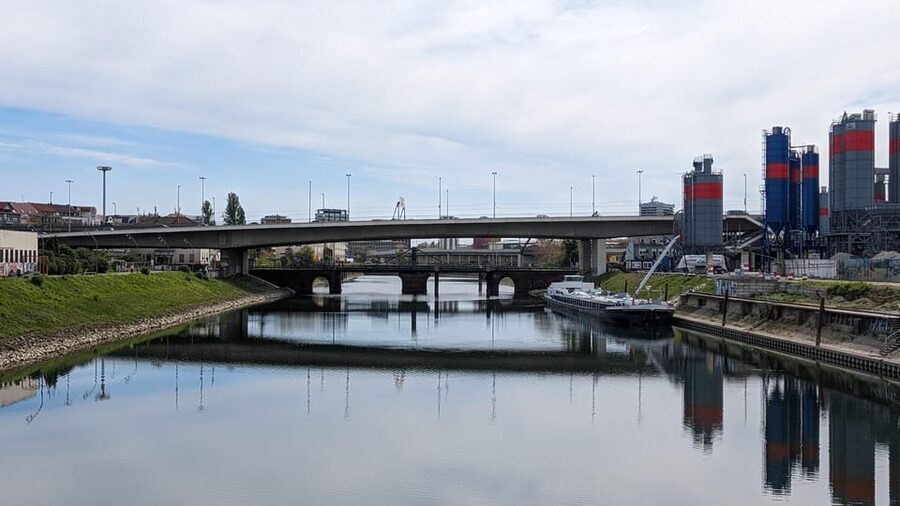
Mannheim’s working waterfront tells a bigger story. This two-hour walk links the commercial port, historic bridges, and the old workers’ district of Jungbusch, showing how shipping shaped the city. I like the focus on real industrial life, and I like that the route ends in one of Mannheim’s most creative neighborhoods. The main consideration is that the tour is in German and takes place outdoors in all weather.
At $17 per person, this is a fairly priced way to understand a part of Mannheim that many city visitors miss. You should wear good shoes, expect repeated canal crossings and port-side walking, and arrive at the Teufelsbrücke, the meeting point. One practical warning: two groups once began at the same time, and a participant accidentally joined the private group, so check the guide and group details before setting off.
In This Review
- Key points about Mannheim’s port walk
- Why Mannheim’s port deserves two hours
- Starting at the Teufelsbrücke
- Following the waterways through the port
- The people behind the cargo
- Reading Mannheim’s bridge architecture
- Entering Jungbusch after the port
- What the guide adds
- Is $17 a fair price?
- Who should book this walk?
- Should you book the Mannheim port tour?
- FAQ
- Where does the Mannheim port walking tour begin?
- How long does the tour last?
- What language is the tour in?
- What does the tour include?
- Are food and drinks included?
- Is transport to the meeting point included?
- Is the tour suitable for wheelchair users?
- What should I bring, and are pets allowed?
Key points about Mannheim’s port walk
- The Teufelsbrücke begins the story: This preserved bridge is a surviving piece of Mannheim’s early industrial age.
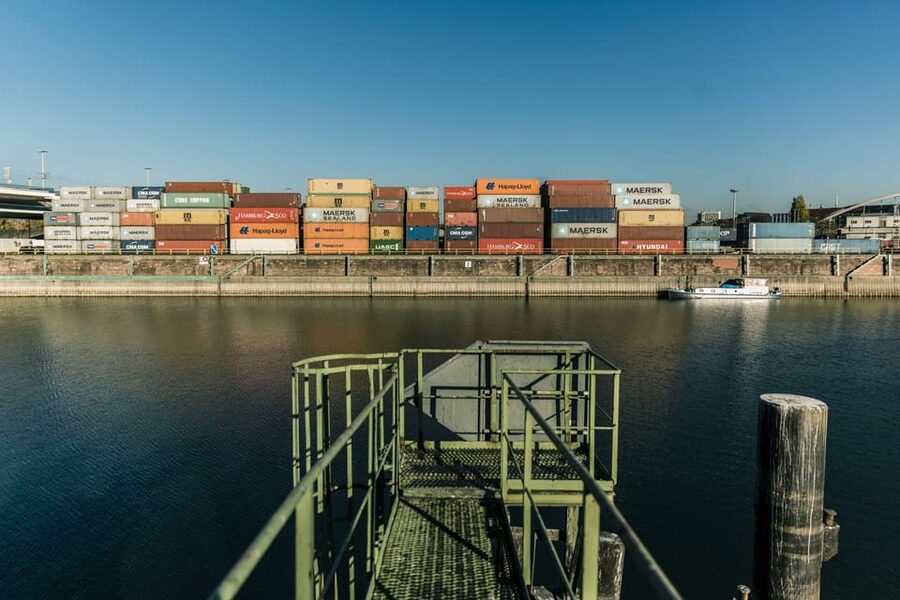
- Europe’s inland shipping network comes into view: The port’s containers, warehouses, loading areas, and waterways explain Mannheim’s commercial importance.
- Bridge architecture gets proper attention: You cross waterways several times and examine useful, workaday structures rather than only grand monuments.
- Port workers shape the route: The walk covers former living and working conditions, including the people who carried sacks and handled cargo.
- Jungbusch provides a lively final chapter: The former workers’ quarter is now a multicultural district with art, nightlife, and creative energy.
- The format is simple and focused: You get a two-hour guided city walk, in German, with food, drinks, and transport excluded.
Why Mannheim’s port deserves two hours
Mannheim sits where the Neckar meets the Rhine. That meeting of rivers made shipping central to the city for centuries, and the port remains one of Europe’s most important inland ports.
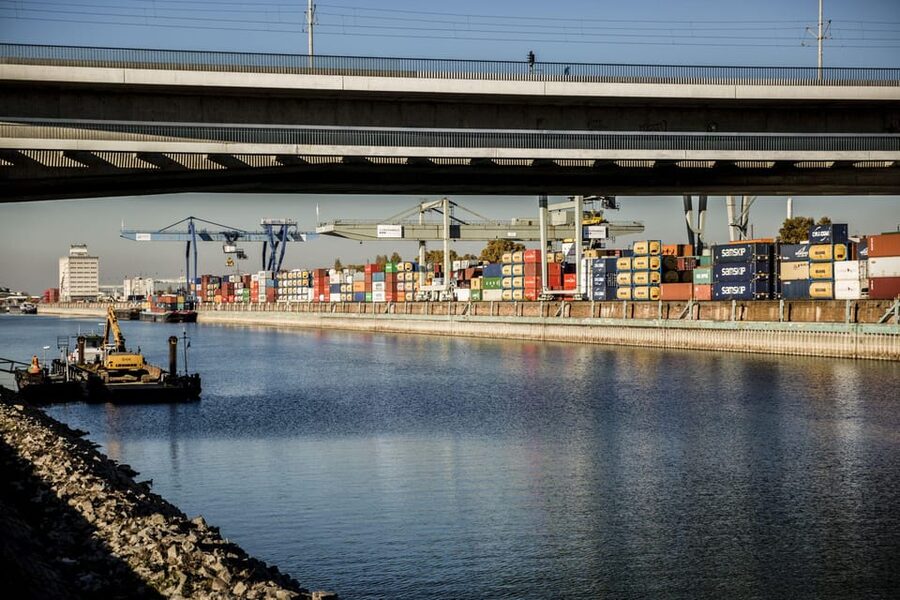
That fact matters because this is not a decorative waterfront tour. You are looking at a working transport system. Containers, loading stations, warehouses, bridges, and connecting canals are part of the experience. The port gives Mannheim a cosmopolitan feel, but it also shows the practical side of city growth: goods arrive, workers handle them, and neighborhoods form around the work.
I like tours that explain why a place looks the way it does. This one uses the port to make Mannheim’s development easier to understand. Instead of seeing industrial buildings as background scenery, you learn how shipping, trade, and tourism affected the city.
The two-hour length is well judged for the subject. It gives the guide enough time to explain the port without turning the walk into an all-day commitment. You should still expect a steady outdoor walk, so comfortable footwear is more important here than stylish footwear.
More Walking Tours in Heidelberg
- Heidelberg: Walking Tour of the Old Town
★ 4.6 · 1,742 reviews - Heidelberg: Philosophers’ Walk Guided Segway Tour
★ 4.8 · 322 reviews - Heidelberg: Experience our history 1.5h walking tour through the old town
★ 4.7 · 159 reviews
Starting at the Teufelsbrücke
The meeting point is the Teufelsbrücke, or Devil’s Bridge. It is described as Mannheim’s oldest preserved bridge and a remnant of the early industrial period.
This is a strong place to begin because the bridge gives you a physical starting point. Before you look at modern cargo handling, you see an older piece of infrastructure linked to the city’s industrial beginnings. The bridge helps connect the present port to the earlier era when waterways, crossings, and manual labor controlled the pace of trade.
I would arrive with a few minutes to spare. The tour begins at a specific structure, and there is a practical reason to pay attention here: two groups have started at the same time, with one private group and one associated with the public booking. A participant ended up with the wrong group, even though the guide did an excellent job. Confirming the guide and group before walking away from the meeting point can prevent confusion.
The bridge itself is not presented as a grand showpiece. That is part of its appeal. You are seeing a working remnant, not a polished monument designed only for photographs.
Following the waterways through the port
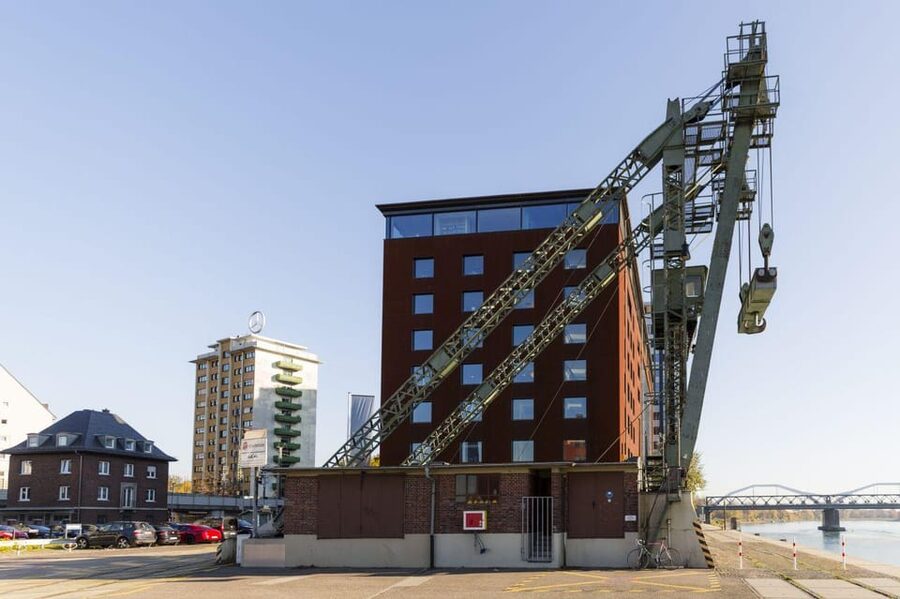
From the Teufelsbrücke, the route leads through the port area and crosses waterways several times. Those crossings help you read the port as a connected system rather than a single riverside viewpoint.
You will learn about the beginnings of industrial culture and the port’s role in trade and tourism. The subject is especially useful if you are curious about how an inland port can feel connected to the wider world. Mannheim does not need a sea coast to have an international commercial identity. Its river position gives it access to major shipping routes and a steady flow of goods.
The route includes views of container ships, loading stations, and warehouses. These are not just industrial objects to pass by. They explain the daily work of the port and show why this area has remained important.
The port setting may feel less comfortable than a historic center. You are not walking among quiet lanes and picturesque facades. Machinery, traffic, large buildings, and working infrastructure are the point. If you prefer old-town architecture, this may feel plain in places. If you want to see how Mannheim earns its place on the map, the port is far more revealing.
The guide also points out interesting objects in Mannheim’s bridge and industrial architecture. That focus adds value because industrial structures are easy to ignore unless someone explains their purpose and age. You begin to notice how bridges and canals make cargo movement possible.
The people behind the cargo
A good industrial tour cannot stop at buildings. It also needs to explain the people who worked there, and this walk addresses the lives and living conditions of port workers.
The port was once tied closely to working-class neighborhoods. Workers and sack carriers lived near the commercial activity, close enough to reach the docks and warehouses on foot. That connection between home and workplace shaped the character of the area.
This human side is one of the tour’s strongest features. You learn not only what Mannheim traded, but also what port work meant for ordinary people. The story includes both earlier working conditions and the port’s current importance.
I like this balance. Modern containers can make a port look anonymous, but the history of labor gives the area a human scale. You are reminded that shipping depended on physical work long before much of the process became mechanized.
The walk does not appear designed as a technical shipping lecture. Instead, it connects the practical details of bridges and loading areas with the social history of the workers who used them. That makes the information easier to follow, even if you are not especially interested in engineering.
Something different for another day:
- Heidelberg: Neckar River Sightseeing Cruise with a Drink
★ 4.2 · 1,884 reviews - Heidelberg: Night Watchman Historic Adventure Tour
★ 4.7 · 1,186 reviews - Heidelberg: On the trail of the Night Watchmen
★ 4.6 · 546 reviews - Heidelberg: Scary Tour with Hangman’s Daughter
★ 4.6 · 533 reviews
Reading Mannheim’s bridge architecture
The repeated crossings are more than a route detail. They give the tour a clear theme: Mannheim’s bridges are tools of commerce, movement, and city planning.
You will see how bridges interact with canals and port routes. Some structures may look ordinary at first, but their value becomes clearer when you understand what they allow people, vehicles, and goods to do.
The Teufelsbrücke provides the historic anchor. Other bridge and industrial features show how the city adapted as shipping expanded. This contrast between an early industrial remnant and a modern commercial port gives the walk a useful sense of time.
I would not book this tour expecting a long list of famous landmarks. The appeal is closer to an urban reading lesson. You look at functional structures and learn to see their purpose, age, and connection to trade.
Because the tour is outdoors and runs in all weather, your experience will depend partly on the day. Bring weather-appropriate clothing, and do not wear shoes that become uncomfortable after two hours. There is no food or drink included, so plan any refreshment stop before or after the walk.
Entering Jungbusch after the port
The final part takes you into Jungbusch, separated from the port area by the connecting canal. This change in atmosphere gives the tour a satisfying ending.
Jungbusch was once home to workers and sack carriers. Today, it is known as a multicultural, trendy district with a bohemian art scene and a busy nightlife culture. The neighborhood shows how an industrial area can change without losing its connection to the port.
This is not a sudden escape from the industrial story. Jungbusch grew from the port economy, and the district’s current creative identity makes more sense after you understand its working past. The canal acts as both a boundary and a link between two versions of Mannheim.
I especially like this final detour because it broadens the tour. You are not left with warehouses and bridges as the last image. Instead, you finish in a district where food, art, nightlife, and different cultural traditions shape the city’s present-day character.
Still, you should know what kind of neighborhood visit this is. The information provided describes a guided detour through the district, not a food tour, bar crawl, or gallery visit. Food and drinks are not included, and the tour does not promise entry into specific venues. Think of Jungbusch as the closing setting and cultural contrast.
What the guide adds
The guide leads in German, and some content is presented in its original language. You should have a comfortable command of German to get the full value from the explanations.
The strongest praise focuses on information. The tour has been described as very informative, with detailed explanations of the port and its past and present activities. That matches the design of the route, which depends on context more than spectacle.
A June participant also reported a mix-up between two groups that began at the same time. The private guide was described as doing an excellent job, but the payment situation became awkward because the participant had already paid in advance for the booked experience. This is not a reason to avoid the walk, but it is a useful arrival tip: make sure you are with the correct guide before the group leaves the Teufelsbrücke.
The experience has a rating of 4.8 from five reviews. That is a small sample, so I would treat it as encouraging rather than final proof. The consistent theme is clear, though: the tour succeeds because it explains Mannheim’s port in detail.
Is $17 a fair price?
At $17, the tour offers good value if you want interpretation rather than independent wandering. You could walk around parts of the port on your own, but the bridges, warehouses, canals, and workers’ quarters would be harder to place in context.
The price covers the city tour and live German-speaking guide. It does not cover transport to or from the meeting point, food, or drinks. Since the tour lasts two hours, the cost works well for a short city stay or for an afternoon between other Mannheim plans.
The value is strongest for people who enjoy urban history, shipping, architecture, and social change. If you want a classic sightseeing walk filled with famous buildings, the port may not feel like the best use of $17. If you want a side of Mannheim that explains how the city developed, the cost is modest.
You can reserve now and pay later, and cancellation is allowed up to 24 hours before the start for a full refund. Those terms are useful if your plans are still shifting, but the main value remains the guide’s explanations.
Who should book this walk?
I would recommend it to you if you enjoy working cities, transport systems, and neighborhoods shaped by labor. It is also a good choice if you have already seen Mannheim’s central sights and want something less conventional.
The tour suits adults and older children who can manage two hours of walking outdoors. Comfortable shoes and clothing for the weather are essential. The route is not suitable for wheelchair users, and pets are not allowed.
German speakers will get the most from the experience. If you do not understand German, the tour’s central benefit, the detailed live explanation, will be limited.
You should also choose this walk if you want a useful introduction to Jungbusch. It will not replace a dedicated evening in the district, but it gives you the background to appreciate why the neighborhood feels different from the port beside it.
Should you book the Mannheim port tour?
Book it if you want to understand the working side of Mannheim. The Teufelsbrücke, canal crossings, industrial structures, port workers’ stories, and Jungbusch make a coherent two-hour route.
Skip it if your priority is grand historic architecture, included refreshments, or an English-language guide. For everyone else, $17 is a reasonable price for a focused walk that connects trade, bridges, labor, and modern city life. Check the group identity at the meeting point, wear solid shoes, and let the port show you how Mannheim grew.
FAQ
Where does the Mannheim port walking tour begin?
The tour begins at the Teufelsbrücke, also called the Devil’s Bridge.
How long does the tour last?
The guided walk lasts two hours.
What language is the tour in?
The live tour guide speaks German. Some content is shown in its original language.
What does the tour include?
The price includes the guided city tour.
Are food and drinks included?
No. Food and drinks are not included.
Is transport to the meeting point included?
No. Transportation to and from the meeting point is not included.
Is the tour suitable for wheelchair users?
No. The tour is not suitable for wheelchair users.
What should I bring, and are pets allowed?
Bring comfortable shoes and clothing suitable for the weather. The tour takes place in all weather, and pets are not allowed.
Just added around Heidelberg
- Food City Tour with Heidelberg Sightseeing Highlights★ 5.0 · 3 reviews
- Heidelberg Private Walking Tour With A Professional Guide★ 4.5 · 3 reviews
- Mannheim, guided costume tour: Hangmen, Witches, Huguenots★ 5.0 · 4 reviews
- Amazing Schwetzingen Garden Tour★ 4.5 · 4 reviews
- Explore Mannheim in 60 minutes with a Local★ 5.0 · 5 reviews
- Mannheim: Express Walk with a Local in 60 minutes★ 4.7 · 5 reviews
- Food & Fables Tour of Heidelberg★ 5.0 · 5 reviews
- Public tour With Bertha Benz through the city of inventors Costume tour★ 5.0 · 5 reviews
Walking Tours, compared.





Berlin’s Best: 2 Hour Walking Tour Third Reich and the Cold War
Read our review →


Third Reich Berlin: Hitler and WWII Walking Tour
Read our review →Browse the lists this tour appears in