
Reviewed · WALKING TOURS
Füssen: Private Guided Walking Tour
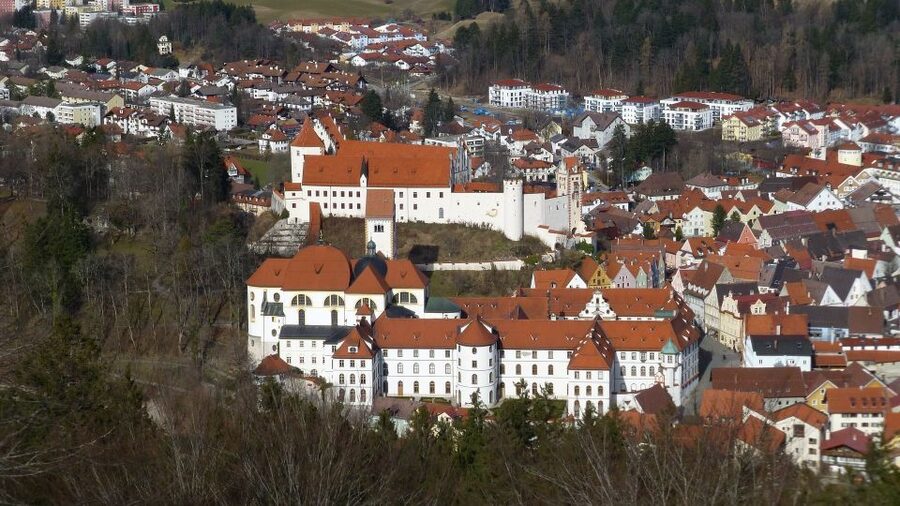
Füssen rewards slow footsteps. This private 90-minute walk brings the town’s Roman roots, medieval walls, and Bavarian charm into focus, with the former prince-bishops’ High Castle as its main prize. I like the private format because your group receives the guide’s full attention, and the route can be adjusted on the spot.
I also like the way the tour links Füssen to larger events, including the Treaty of Füssen and the Romantic Road. The turquoise river, pastel buildings, cobbled lanes, and baroque churches give you plenty to look at between history stops. The main consideration is that castle and other entrance fees are not included, so the walk is best for orientation and context rather than a full indoor sightseeing program.
The tour lasts 90 minutes and costs $310 for a group of up to 15 people. That can be good value for a family or larger party, but it is expensive for one or two people. Rain is manageable, yet comfortable shoes are essential, and the tour is not suitable for wheelchair users or people with mobility impairments.
In This Review
- Key Points at a Glance
- Why Füssen Makes a Good Walking Tour
- Starting at Schrannenplatz
- Roman Roots Beneath the Bavarian Town
- High Castle and the Prince-Bishops of Augsburg
- St. Mang’s Benedictine Monastery and Magnus of Füssen
- The Treaty of Füssen and the Romantic Road
- Cobblestones, River Views, and Bavarian Architecture
- How the $310 Private Price Works
- The Guides Make the Difference
- Best Use Before Neuschwanstein
- Who Should Book This Füssen Walk?
- Should You Book It?
- FAQ
- How long is the Füssen private walking tour?
- What is the price of the private tour?
- What languages are available?
- Where does the tour meet?
- Are entrance fees included?
- Is the tour suitable for wheelchair users?
- Can I cancel for a refund?
Key Points at a Glance
- Private attention for up to 15 people: Your group stays together with a local guide rather than joining a large public tour.
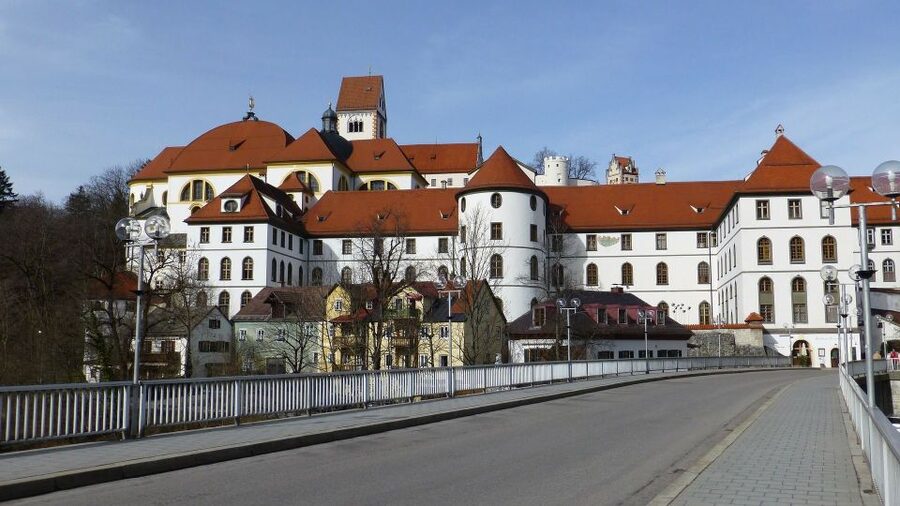
- High Castle history: Learn about the former summer residence of the prince-bishops of Augsburg and Füssen’s role in Bavarian history.
- Roman beginnings and medieval faith: The route connects ancient Roman roots with St. Mang’s ninth-century Benedictine monastery.
- A useful pre-Neuschwanstein introduction: Füssen gives you the regional setting and historical background before you visit the famous castle nearby.
- Flexible local planning: The guide can make possible adjustments to the walk on the spot, which helped one group start early because of time limits.
- A walking-first town: The old walls, lanes, churches, river, and shops are close together, but cobbles and uneven surfaces require steady footing.
Why Füssen Makes a Good Walking Tour
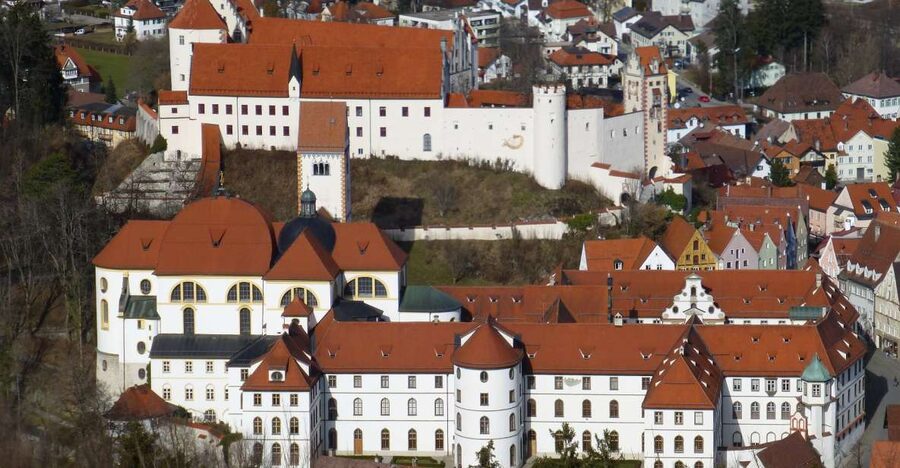
Füssen is compact enough to explore on foot, and that is a big part of its appeal. You move through a walled old town where the main sights are close together, so the walk does not depend on buses or long transfers. The name Füssen is linked in the tour description to feet, a fitting joke for a place best understood by walking.
The town also sits close to Neuschwanstein Castle, which makes it more than a convenient overnight base. It gives you a setting for the famous castle and the surrounding region. If you go straight from a train, car, or hotel to Neuschwanstein, you may see a dramatic building without much sense of the town that supports it. This tour fills in that missing piece.
I would think of the walk as a historical introduction rather than a formal castle tour. You get architecture, religious history, political context, and local geography in one short outing. The private setup also means you can ask questions about what catches your eye instead of following a fixed script in a crowded group.
More Walking Tours:
- Füssen: Old Town Guided Walking Tour in German
★ 4.8 · 127 reviews - Discover Berlin Half-Day Walking Tour
★ 5.0 · 9,624 reviews - Berlin: Third Reich and Cold War 2 Hour Walking Tour
★ 4.9 · 6,830 reviews
Starting at Schrannenplatz
The meeting point is Schrannenplatz, at Schrannengasse 10 in Füssen. This places you in the old town, where the walk can begin among the historic streets rather than at a distant transport stop.
Your guide speaks English or German. Since the group is private, you do not need to split your attention between a guide and a large crowd. That matters in a small town with narrow lanes, where a big group can easily block doorways or lose people at a turn.
The walk is scheduled for 90 minutes. That is enough time to get a clear introduction to Füssen, but not enough for long visits inside every church, museum, or historic building. I would plan to use the tour as your first activity of the day, then return to any place that deserves a closer look.
One useful feature is the ability to make possible changes with your guide on the spot. A group with limited time managed to begin early, and the guide supplied umbrellas when rain arrived. That does not promise every request can be met, but it shows why a private tour can be more useful than a rigid departure.
Roman Roots Beneath the Bavarian Town
Füssen’s story reaches back to Roman times. That early layer gives the town more depth than its pretty façades suggest.
Your guide introduces the ancient roots before moving into the medieval and religious chapters. This order helps you see Füssen as a place that developed over centuries, not simply as a picturesque stop near Neuschwanstein. The Roman connection also gives you a useful starting point for understanding why this location mattered before the town acquired its later churches, walls, and princely buildings.
Do not expect a large archaeological presentation from a 90-minute walk. The available information points to historical explanation along the streets rather than a separate museum visit. If ancient history is your main interest, ask your guide how much time can be given to the Roman period when the tour begins.
The private format helps here. You can ask for clearer links between the Roman past and the medieval town, or move on if your group is more interested in architecture. That kind of adjustment is one of the better reasons to choose a private walk.
High Castle and the Prince-Bishops of Augsburg
High Castle is the tour’s major architectural and political focus. It served as the summer residence of the prince-bishops of Augsburg, a reminder that Füssen was not merely a small market town on the edge of the Alps.
The building gives the walk a grand center. Your guide explains how religious authority and regional power shaped the town, while you admire the castle’s presence above the older streets. The tour listing does not include an entrance fee, so you should not assume that the walk includes entry into every interior space. Ask the guide what can be seen from the route and what would require a separate ticket.
I like this part of the tour because it puts the town’s architecture into a political frame. Without that context, a castle can become just another attractive photograph. With the story of the Augsburg prince-bishops, it becomes evidence of who had power, where they stayed, and why Füssen received such an imposing landmark.
The castle is also a good place to ask practical follow-up questions. If you plan to spend more time in Füssen after the walk, your guide may help you decide which sights deserve a separate visit. The tour includes local guidance, not admission, so use those 90 minutes to learn how to plan the rest of your time.
A few more tours and experiences worth a look
- Skip the Line: Neuschwanstein Castle Private Tour From Füssen or Hohenschwangau
★ 5.0 · 82 reviews - From Füssen: Neuschwanstein, Linderhof, and More Private Tour
★ 5.0 · 49 reviews - Private tour to Neuschwanstein castle from Munich
★ 5.0 · 23 reviews - From Fussen: Neuschwanstein, Linderhof and More Private Tour
★ 5.0 · 21 reviews
St. Mang’s Benedictine Monastery and Magnus of Füssen
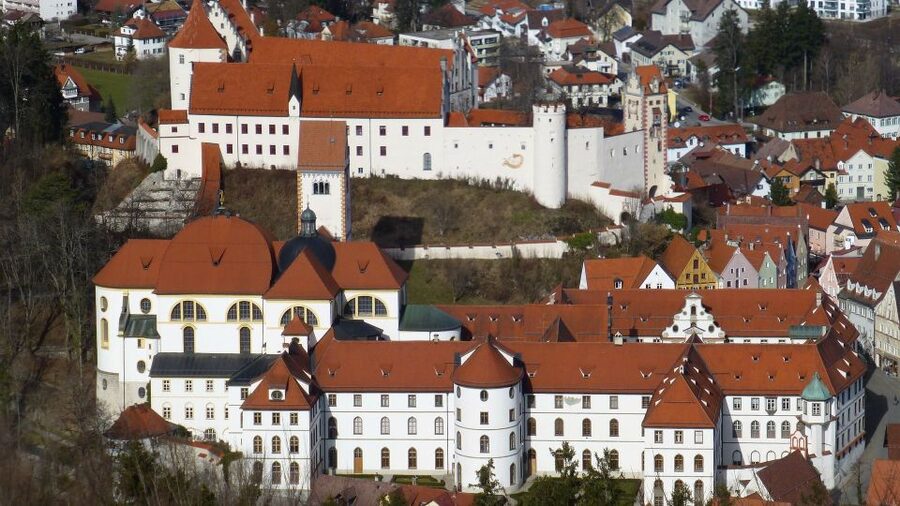
The history of St. Mang’s Benedictine monastery reaches back to the ninth century. That makes it one of the key stops for understanding Füssen’s religious beginnings.
The monastery is tied to Magnus of Füssen, the town’s patron saint. His legacy gives the religious story a personal focus, while the monastery shows how faith shaped the town’s growth and identity. You are not simply looking at an old church or monastery façade. You are learning why this place mattered to the community.
The tour also includes the Christian beginnings of Füssen. A guide can explain dates and religious development more clearly while you are standing among the relevant buildings than you can from a quick guidebook paragraph. One guide was especially praised for handling medieval dates and the town’s early Christian history clearly.
This is where the guide’s skill matters most. Medieval timelines can become a blur of names, centuries, and church titles. If the explanation feels too general, ask for the short version: what came first, what changed, and what remains visible now. A private tour gives you room to steer the conversation.
The Treaty of Füssen and the Romantic Road
The Treaty of Füssen adds an unusually large political story to this small town. The tour explains the treaty as an event that ended imperial ambitions, giving you a glimpse of the power struggles that reached far beyond Bavaria.
That subject may sound weighty beside pastel shops and cobbled lanes, but the contrast is part of Füssen’s charm. The town looks peaceful now. Its history includes church power, princely residence, Roman beginnings, and decisions tied to wider imperial politics.
The walk also traces Füssen’s connection to the Romantic Road. This famous route links a chain of historic towns and scenic stops in Germany. Here, the important point is not just that Füssen lies along a tourist route. The town has its own medieval streets, walls, religious buildings, and local character that make it worth more than a quick photo stop.
I would pay attention to how your guide connects the town’s local story to these larger routes and events. That is where a short tour earns its keep. You leave with a better sense of why Füssen belongs on a Bavaria itinerary, rather than seeing it only as the nearest town to Neuschwanstein.
Cobblestones, River Views, and Bavarian Architecture
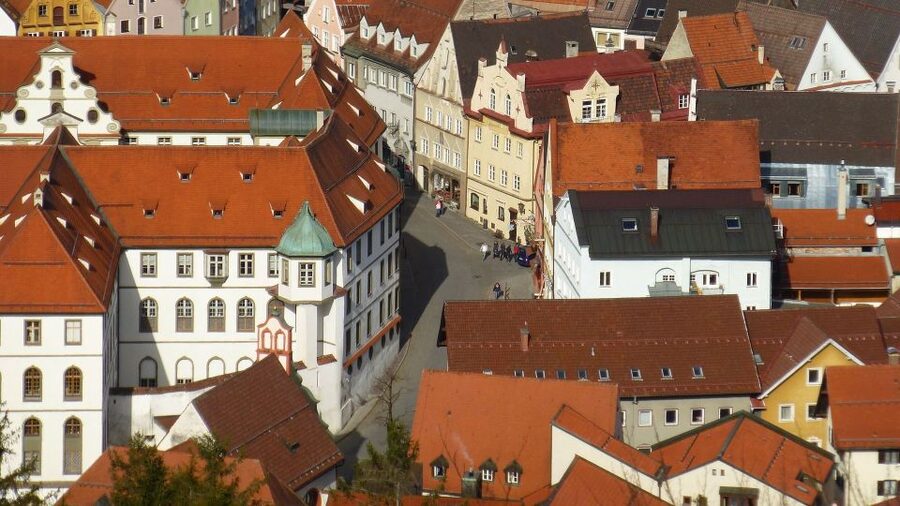
The physical setting carries much of the tour. Füssen’s cobbled lanes, old town wall, pastel-toned shops, baroque churches, and Bavarian architecture create a steady sequence of small discoveries.
The river running through the center adds another layer. Its water is described as sparkling turquoise, which gives the town a striking natural feature in the middle of its historic streets. You should not expect a long countryside walk. The appeal is the close mix of water, walls, churches, shops, and old buildings.
I would wear shoes with good grip. The tour specifically recommends comfortable footwear, and that advice makes sense on cobbles and older walking surfaces. The activity is not suitable for wheelchair users or people with mobility impairments, so anyone with limited mobility should contact the provider before booking rather than assume the route can be changed enough.
Rain does not necessarily ruin the experience. A guide once brought umbrellas for the group, a thoughtful touch that made poor weather easier. Still, that was a helpful action on one tour, not a stated inclusion, so bring weather protection if rain is in the forecast.
How the $310 Private Price Works
The price is $310 per group of up to 15 people. The number matters. For a full group, the cost works out to about $20.67 per person, which is reasonable for a private local guide and a tailored 90-minute introduction.
For two people, the same price becomes $155 each. That is a much harder value decision, especially because admission fees are extra and the tour is relatively short. Couples who want private attention may still prefer it, but budget-conscious visitors should compare the price with a regular group walk or a self-guided visit.
Families and friend groups get the clearest value. You can divide the fee across many people, keep the pace suited to your party, and ask the guide to focus on the interests of your group. A private format is also useful when one person wants Roman history, another wants churches, and someone else mainly wants help planning a Neuschwanstein visit.
The reserve-now, pay-later option gives you some planning flexibility, and cancellation is free up to 24 hours before the tour for a full refund. Those terms help if your Bavaria schedule is still shifting.
The Guides Make the Difference
The strongest guide feedback centers on clear explanations, friendly service, and the ability to cope with a last-minute change. Sandra received especially warm praise after stepping in when the scheduled guide could not make it. She explained Füssen and Bavarian history well, and her friendly manner helped the group enjoy the walk.
That story also shows the value of having a local guide who can keep the tour on track under pressure. Another guide adjusted the start time for a group with tight plans and supplied umbrellas during rain. These are practical benefits, not flashy extras, but they can save a morning when your schedule is crowded.
The feedback is not uniformly positive. One visitor felt the information was lacking, even though the rain itself was not a problem. That is an important warning: a walking tour depends heavily on the individual guide and the questions your group asks.
To get the best experience, arrive with a few subjects in mind. Ask about the Roman period, Magnus of Füssen, the treaty, or what to see before and after Neuschwanstein. A private guide can respond well to a curious group, but you should not remain silent and hope every personal interest appears automatically.
Best Use Before Neuschwanstein
This tour fits particularly well before visiting Neuschwanstein Castle. One group found it helpful for understanding Füssen and the surrounding region before touring the castle, then used the guide’s restaurant suggestions for lunch and dinner.
That does not mean the guide provides castle transportation, tickets, or entry. None of those are included in the information provided. The value is the local orientation: you can learn where Füssen fits in the region and ask for practical suggestions while you are already with someone who knows the town.
I would schedule the walk early in your stay if possible. It can help you decide how much time to give the old town, which buildings deserve another look, and how to spend an evening after a castle visit. If your only goal is to rush to Neuschwanstein, the tour may feel like an extra commitment. If you want to understand the place around the castle, it makes more sense.
Who Should Book This Füssen Walk?
I recommend this tour for:
- Families and groups of friends who can share the $310 cost.
- First-time visitors who want a clear introduction to Füssen.
- People interested in medieval politics, church history, Roman roots, and architecture.
- Visitors planning to see Neuschwanstein and wanting local context first.
- Groups with a fixed schedule that may benefit from possible timing adjustments.
- English or German speakers who prefer a private guide.
I would think twice if you are traveling alone or as a couple on a strict budget. The price is high per person for a 90-minute walk, and extra admission fees may apply.
I would also skip it if you need step-free access or cannot manage cobbled streets. The activity is specifically not suitable for wheelchair users or people with mobility impairments.
Should You Book It?
Book this private Füssen tour if you want the town’s history explained in plain language and can share the cost with a group. Its best features are the private format, the local focus, and the way it ties Roman Füssen, St. Mang’s monastery, High Castle, the Treaty of Füssen, and the Romantic Road into one compact walk.
The experience is less convincing as a value for one or two people, especially if you expect extensive indoor sightseeing. Before booking, confirm what your guide can show from outside, ask for the subjects you care about most, and wear proper walking shoes.
For a group visiting Neuschwanstein, I think the walk makes a sensible first chapter. It gives you a feel for the town beneath the tourist traffic, and it may help turn Füssen from a convenient base into a place you actually remember.
FAQ
How long is the Füssen private walking tour?
The tour lasts 90 minutes.
What is the price of the private tour?
The price is $310 for a private group of up to 15 people.
What languages are available?
The live guide is available in English and German.
Where does the tour meet?
The meeting point is Schrannenplatz, Schrannengasse 10, 87629 Füssen, Germany.
Are entrance fees included?
No. Entrance fees are not included in the tour price.
Is the tour suitable for wheelchair users?
No. The activity is not suitable for wheelchair users or people with mobility impairments.
Can I cancel for a refund?
Yes. You can cancel up to 24 hours in advance for a full refund.
Just added around Fussen
- Private tour of the best of Fussen – Sightseeing, Food & Culture with a local★ 5.0 · 3 reviews
- Day trip: Munich>Neuschwanstein>Linderhof>Ettal>Oberammergau★ 5.0 · 4 reviews
- Munich Card (Group) with public transport: Save at attractions & tours!★ 5.0 · 5 reviews
- Half day tour from Fuessen – Neuschwanstein&Linderhof castle★ 4.5 · 5 reviews
- Munich Card with public transport: Save at attractions & tours!★ 4.5 · 10 reviews
- Füssen: E-Bike or Mountain Bike Rental★ 4.1 · 10 reviews
- Canyoning Advanced Day Trip★ 5.0 · 13 reviews
- Neuschwanstein, Wieskirche, Oberammergau, Linderhof from Fuessen★ 5.0 · 17 reviews
Walking Tours, compared.





Berlin’s Best: 2 Hour Walking Tour Third Reich and the Cold War
Read our review →


Third Reich Berlin: Hitler and WWII Walking Tour
Read our review →Browse the lists this tour appears in