
Reviewed · MUSEUMS
DDR Museum Berlin Admission Ticket
Step into East Germany. The DDR Museum puts daily life under socialist rule within easy reach of Berlin Cathedral, using reconstructed rooms, propaganda footage, household objects, and hands-on displays to make a complicated period feel immediate. I like the chance to sit inside a Trabant and the clever apartment recreation, two exhibits that turn history into something you can see and touch.
I also like the freedom to explore at your own pace, with English information throughout the exhibition. The main caution is space: this is a relatively small museum, and it can feel packed, hot, and noisy when school-age children and large groups gather around the interactive stations.
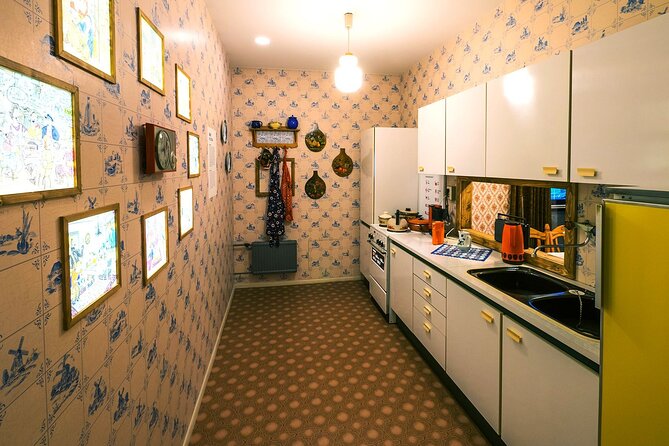
- A reconstructed East German flat shows how ordinary homes looked, from the kitchen appliances to the Carat living room cupboard.
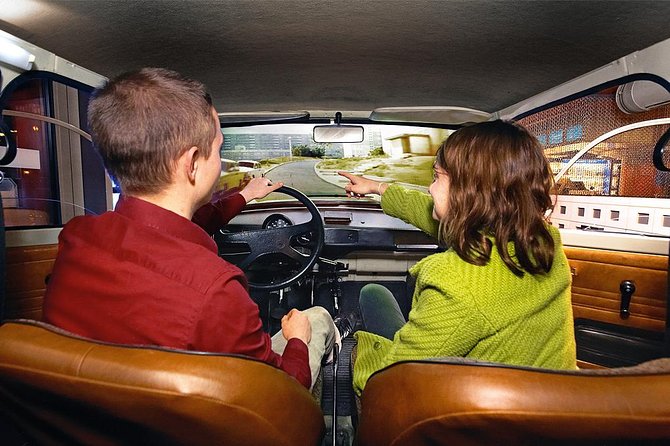
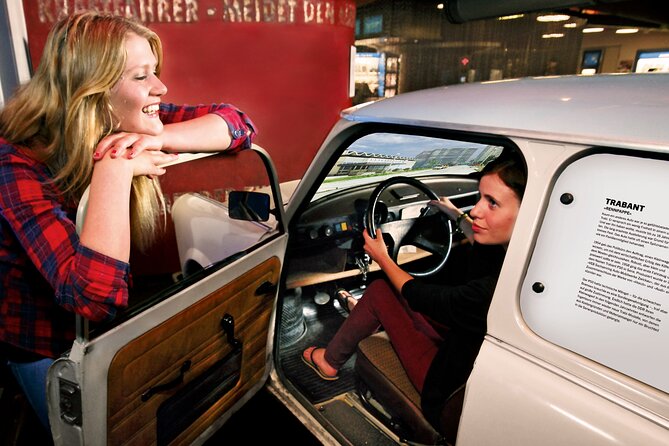
- The Trabant exhibit lets you sit inside the famous East German car and take a virtual trip through an East Berlin housing estate.
- Hands-on displays cover school, work, shopping, transport, politics, and home life from 1949 to 1989.
- English information appears throughout the museum, making it practical for international visitors.
- A timed admission ticket helps you plan a central Berlin visit, though the museum can still be crowded inside.
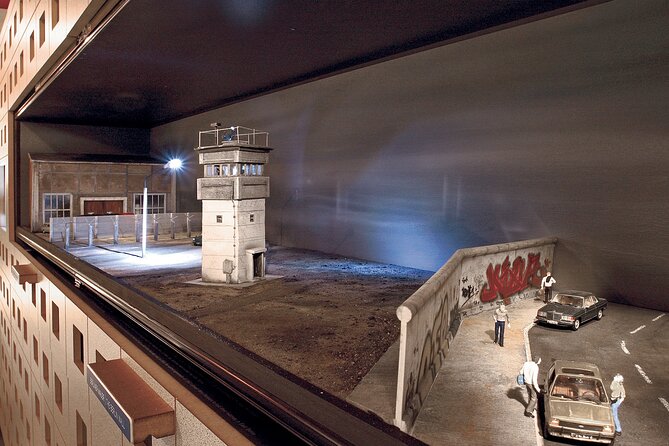
- A hole in the Berlin Wall provides a striking exit and a final reminder of the limits placed on everyday life.
In This Review
- What the DDR Museum Actually Offers
- Entering the Reconstructed East German Living Room
- Sitting in a Trabant and Touring a GDR Housing Estate
- Politics, Elections, and the Stasi Interrogation Room
- Exiting Through a Hole in the Berlin Wall
- How Long to Allow and When to Go
- Is the $16.26 Admission Good Value?
- A Good Museum for Children, With One Important Qualification
- The Museum’s Main Strengths and Weaknesses
- Who Should Book the DDR Museum?
- Should You Book This Museum?
- FAQ
- Where is the DDR Museum located?
- What does the admission ticket include?
- How long does a visit take?
- Is the DDR Museum open every day?
- Is information available in English?
- Can children enjoy the museum?
- What can I see inside the museum?
- Is the ticket available on a mobile phone?
- Can I cancel the booking?
What the DDR Museum Actually Offers
The DDR Museum sits at Karl-Liebknecht-Str. 1, directly opposite Berlin Cathedral on the River Spree. That location makes it easy to add to a day of central Berlin sightseeing. You can visit the cathedral, walk along Museum Island, and then spend roughly one to two hours looking at East German life.
The museum covers the German Democratic Republic, commonly called the GDR or DDR, from its creation in 1949 until reunification in 1990. The displays focus less on grand political dates and more on ordinary routines: what people kept in their cupboards, how they furnished a flat, what they watched on television, and how the state shaped work, school, elections, and travel.
That approach gives the place a clear purpose. You are not simply reading about the Cold War from a distance. You are looking at the small details of a system that reached into nearly every part of daily life.
Still, you should set your expectations before arriving. The museum is compact. Some people work through it in about an hour, while those who read every panel and watch the videos may stay close to two hours. It is not a huge national museum with wide galleries and long corridors.
Entering the Reconstructed East German Living Room
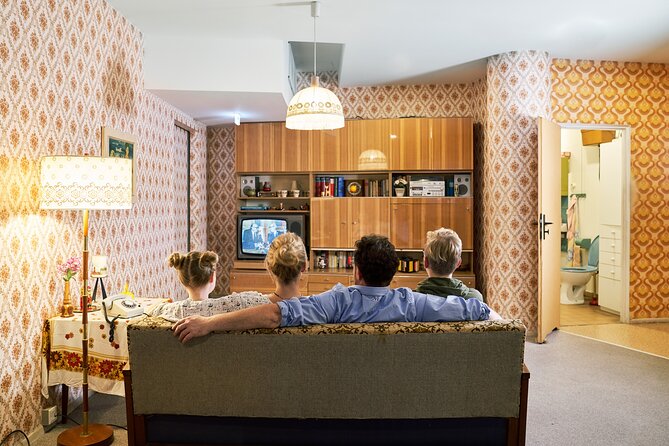
The first major section places you inside a recreated East German home. This is one of the strongest parts of the visit because it gives political history a domestic setting.
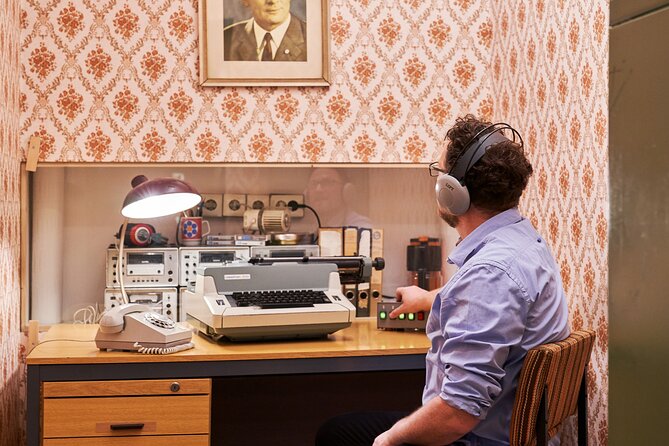
You can look inside the original Carat living room cupboard, examine kitchen appliances, and see how a family space was arranged. The displays also include televisions showing East German programming and propaganda. That television is more than a period prop. It helps explain how the state presented itself inside people’s homes, during the hours when families were eating, relaxing, or gathering together.
I find this kind of exhibit more useful than a wall of dates. A household cupboard can tell you about consumer goods, storage, status, and design. A cramped kitchen can suggest the limits of housing. A television can show how public authority entered private life.
The recreated rooms are also a good reason to bring older children. They can open, inspect, and compare objects instead of only reading text. But not every interactive feature is a full activity. Some involve pulling open a drawer to find a label or short explanation, so younger children may lose interest if they expect constant games.
More Museums in Berlin
- Berlin: Jewish Museum Berlin Entrance Ticket
★ 4.5 · 8,393 reviews - Berlin: DDR Museum Tickets
★ 4.3 · 3,443 reviews - Berlin: Natural History Museum Entrance Ticket
★ 4.6 · 3,382 reviews
Sitting in a Trabant and Touring a GDR Housing Estate
The Trabant is likely to be the museum’s most instantly popular object. This small car became a familiar symbol of East Germany and the wider Eastern Bloc. At the DDR Museum, you can climb inside it and use the interactive setup to travel through scenes of everyday East Berlin.
The virtual drive gives the car exhibit a bit of fun, especially for children. It also explains why transport mattered. The Trabant was not simply an old vehicle. It represented limited choice, long waits, and a very different consumer system from the one familiar in West Germany.
Nearby, a virtual tour takes you through a GDR housing estate. This pairs well with the reconstructed flat. You first see the wider setting, then the interior where people lived. That connection helps you understand how housing policy affected ordinary families, particularly when space was assigned or limited by the state.
The driving simulation is one of the displays that receives the most praise because it is easy to understand and genuinely hands-on. You do not need much background knowledge to enjoy it, but the surrounding information gives the activity historical weight.
Expect a queue at popular stations during busy periods. The museum’s narrow layout means a few occupied displays can slow movement for everyone nearby.
Politics, Elections, and the Stasi Interrogation Room
The museum does not stop at furniture and cars. It also looks at political control, including the Socialist Unity Party, the ruling party of the DDR, and the way elections worked under the socialist system.
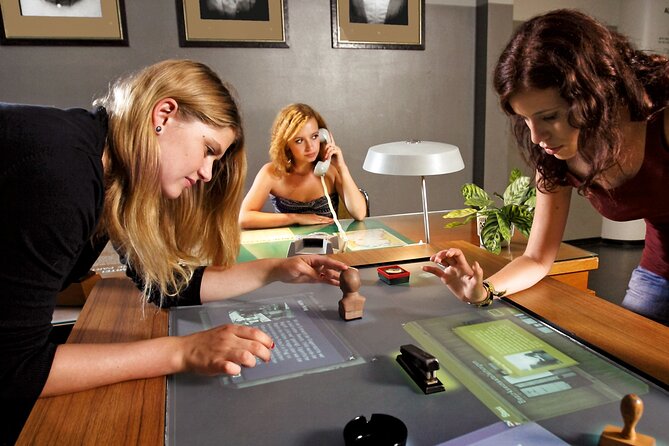
One display allows you to take part in a simulated GDR election. This is a useful way to show the difference between the appearance of public participation and the reality of a one-party state. Instead of treating politics as an abstract topic, the exhibit gives you a small action to perform and then explains the system around it.
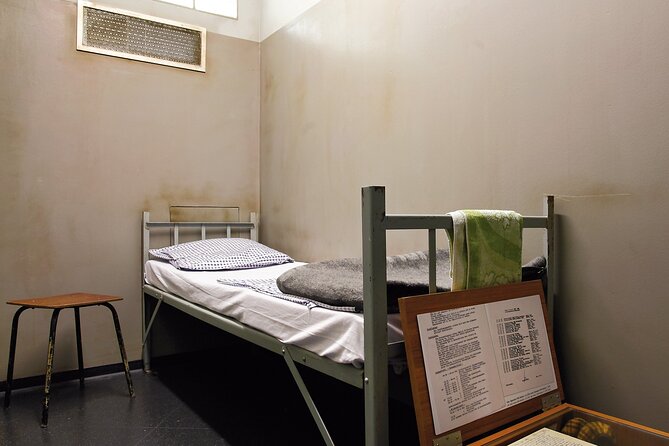
Another section recreates a Stasi interrogation. The Ministry for State Security, commonly known as the Stasi, monitored and pressured people suspected of opposing the government. The interrogation room adds a more serious tone after the lighter household and vehicle displays.
This contrast is important. The museum is designed as a family attraction, with buttons, drawers, videos, and simulations. That makes difficult subjects approachable, but the playful format can sometimes feel too light for political repression, surveillance, or imprisonment.
I would take time with the written explanations in these sections. The hands-on elements get attention quickly, but the context is what prevents the museum from becoming only a collection of retro objects.
Exiting Through a Hole in the Berlin Wall
Near the end, you leave through a hole in the Berlin Wall. It is a simple device, but an effective one. After seeing the restrictions of East German life, physically passing through the barrier gives the visit a clear closing point.
The exit also connects the museum to the wider story of Berlin. The city’s Cold War history is not confined to exhibition rooms. You can continue afterward to other locations linked to the wall, divided Berlin, and reunification, although this ticket covers only the DDR Museum.
This final section works best if you have not rushed. The museum is easy to treat as a quick stop between sights, but the wall exit carries more meaning when you have already seen the apartment, the television propaganda, the political displays, and the Stasi material.
Something different for another day:
- Berlin: Reichstag, Dome and Government District Guided Tour
★ 4.7 · 18,288 reviews - Berlin: 1-Hour City Tour by Boat with Guaranteed Seating
★ 4.3 · 16,993 reviews - Berlin: Boat Tour Along the River Spree
★ 4.4 · 11,252 reviews - Discover Berlin Half-Day Walking Tour
★ 5.0 · 9,624 reviews
How Long to Allow and When to Go
Plan on one to two hours. An hour is enough for a brisk visit that focuses on the major rooms and interactive displays. Give yourself closer to two hours if you want to read the English panels, watch the videos, and wait your turn at the more popular exhibits.
The museum is open daily from 9:00 a.m. to 9:00 p.m. That long schedule gives you useful flexibility. A morning visit can work well, but the experience may become crowded as the day develops. One practical approach is to consider a later visit, since the museum stays open into the evening.
Early morning can also be a good choice. A visit beginning around 9:15 a.m. may give you more space to try the displays at your own speed. No time guarantees an empty museum, though. The interior is small, and even a moderate number of people can make it hard to pause at each station.
Heat is another factor. The museum has been described as very warm, with no air conditioning, and crowded conditions can make that worse. If you dislike hot indoor spaces, keep your visit shorter or choose a quieter time.
Is the $16.26 Admission Good Value?
At about $16.26 per person, the ticket is not a major expense for central Berlin, but the value depends on how you use it. If you read the material, watch the films, and spend close to two hours with the displays, the price is reasonable. If you rush through in 45 minutes, the museum may feel costly for its size.
The ticket includes admission only. Food, drinks, and hotel transportation are not included, but you do not need either for this kind of visit. You make your own way to the museum, and its central location makes public transport practical.
The main value is not the building’s size. It is the unusual access to domestic objects and interactive scenes. The reconstructed flat, Trabant, virtual housing estate, election display, and interrogation room create a visit that is more active than a standard display case museum.
Still, I would not book it expecting a grand collection or a quiet scholarly environment. You are paying for a compact, highly tactile presentation. That is a good match for families and curious first-time visitors. It may feel less satisfying if you want long-form historical analysis or carefully controlled gallery space.
A Good Museum for Children, With One Important Qualification
Children can enjoy the DDR Museum because they are allowed to do things. They can sit in the Trabant, open drawers, inspect household objects, and interact with simulations. For a child who struggles with conventional museums, these features may make East German history easier to approach.
The exhibition also offers English information, so families do not have to depend on a German-speaking adult to explain every section. The subject covers home, school, work, shopping, transport, and politics, giving you plenty of ways to connect the material to everyday life.
The qualification is that interactive does not mean screen-based entertainment at every step. There is still a lot of reading. Some stations simply reveal a label or explanation when opened, and the small floor plan can become chaotic when children press buttons while adults try to read.
If you are visiting with children, I would set a simple goal: focus on the flat, the Trabant, the virtual housing estate, and one or two political displays. That keeps the visit lively without expecting young visitors to absorb every panel.
The Museum’s Main Strengths and Weaknesses
The strongest feature is its directness. You see how political systems affect kitchens, cars, furniture, television, housing, and personal choices. The English text is helpful, and the interactive design gives you a reason to slow down at selected displays.
The second strength is variety. A single visit can move from household life to transport, party politics, elections, surveillance, and the Berlin Wall. That range gives you a basic picture of the DDR without requiring a separate museum for every topic.
The weaknesses are equally clear. The museum is smaller than many people expect. Some displays feel like information boxes rather than full exhibits, and the compact space can become uncomfortable when crowded.
The family-friendly design is also a mixed blessing. It brings younger visitors into a difficult subject, but noise and constant activity can make serious sections harder to absorb. I would choose your timing carefully if you want a calm visit.
Finally, take care with your admission voucher. A few visitors have had trouble with phone tickets that lacked a usable QR code or barcode. If the mobile pass does not scan, ask the museum staff to check the ticket directly rather than repeatedly trying the same screen. Confirmation is provided when booking, and free cancellation is available up to 24 hours before the start time. Within 24 hours, refunds are not available.
Who Should Book the DDR Museum?
I would recommend this museum to first-time Berlin visitors who want a practical introduction to East German life. It is also a strong choice for families, school-age children, and anyone interested in Cold War politics, old cars, domestic design, or the daily effects of government control.
It is less suitable for you if you dislike interactive exhibits, need a quiet museum, or expect a large collection. History specialists may want more space and deeper interpretation than this compact attraction provides.
The best way to enjoy it is to treat it as one part of a larger Berlin history day. Visit the museum for its household scenes and hands-on displays, then use the rest of your day to see the city’s wall and Cold War sites in person.
Should You Book This Museum?
Book it if you want history that you can handle, enter, and test rather than only read. The Trabant, reconstructed flat, propaganda television, election display, and Stasi interrogation room give the DDR Museum a clear sense of place.
Skip it if you want a quiet, spacious museum or if $16.26 feels high for a visit that may last only an hour. For most people, I think the ticket offers fair value, especially when you arrive early or later in the day and give yourself enough time to read.
The final call is simple: families and first-time Berlin visitors should put it on the list. Serious history fans should visit too, but treat it as an accessible introduction, not the last word on East Germany.
FAQ
Where is the DDR Museum located?
The museum is at Karl-Liebknecht-Str. 1 in central Berlin, opposite Berlin Cathedral on the banks of the River Spree.
What does the admission ticket include?
The ticket includes admission to the DDR Museum. Food, drinks, and hotel pickup or drop-off are not included.
How long does a visit take?
A visit usually takes about one to two hours, depending on how much time you spend reading, watching videos, and using the interactive exhibits.
Is the DDR Museum open every day?
Yes. The stated opening hours are Monday through Sunday, from 9:00 a.m. to 9:00 p.m.
Is information available in English?
Yes. English information appears throughout the exhibits, and the experience is offered in English.
Can children enjoy the museum?
Yes. The museum includes interactive displays, a Trabant car, a recreated apartment, simulations, and other hands-on features that suit children as well as adults.
What can I see inside the museum?
You can see reconstructed East German living spaces, kitchen appliances, a Carat living room cupboard, propaganda television footage, a Trabant car, a virtual GDR housing estate, election displays, Socialist Unity Party information, and a Stasi interrogation room.
Is the ticket available on a mobile phone?
A mobile ticket is offered. If your phone ticket does not show a working QR code or barcode, ask the museum staff to check it directly.
Can I cancel the booking?
You can cancel for a full refund up to 24 hours before the experience start time. Cancellations or changes made within 24 hours are not accepted for a refund.
Just added around Berlin
- Berlin: Private Guided Tour of the Main Sights★ 5.0 · 13 reviews
- Private Highlights of Berlin Bike Tour★ 5.0 · 13 reviews
- Modern Berlin Private Walking Tour: Diverse, Vibrant and Exciting German Capital★ 5.0 · 13 reviews
- Tour in Berlin from Warnemünde and Rostock Cruise Port★ 4.1 · 13 reviews
- Berlin: Stasi Museum Private Guided Tour with Entry Ticket★ 4.8 · 13 reviews
- Private Food Tour Experience with a born and bred Berliner★ 5.0 · 14 reviews
- Berlin: Rheinsberg Palace Entrance Ticket★ 4.8 · 14 reviews
- Berlin in one day – day tour with an expert guide★ 5.0 · 14 reviews
Museums, compared.




Skip-the-Line: Berlin Wall Museum at Checkpoint Charlie
Read our review →
Browse the lists this tour appears in