
Reviewed · MUSEUMS
Berlin: Tickets for the BODY WORLDS Museum in Berlin
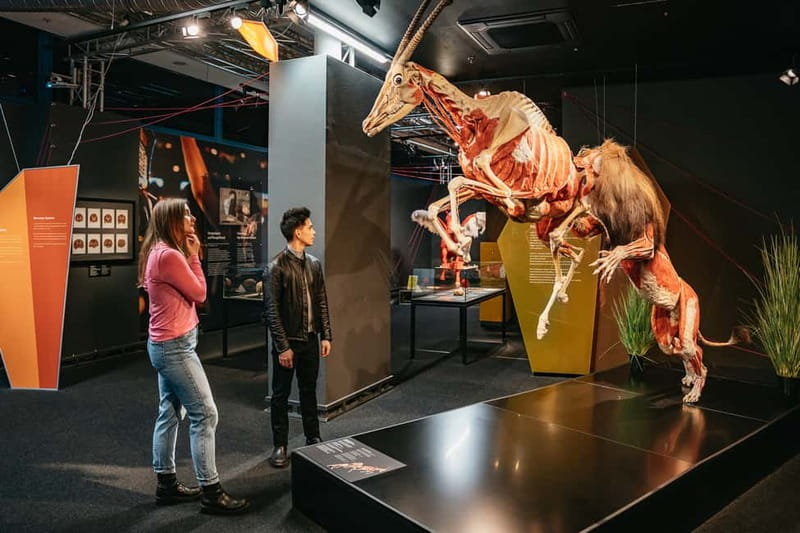
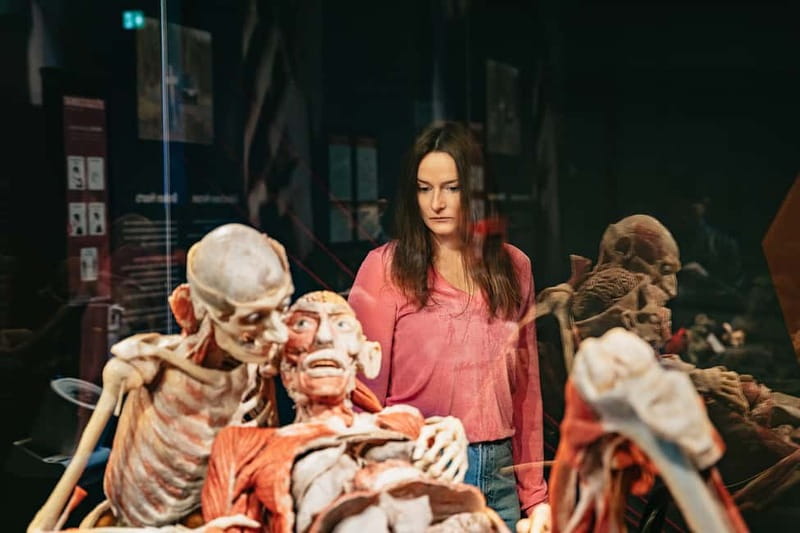
Your body becomes the museum’s main subject. Berlin’s BODY WORLDS Museum uses real human plastinates to explain bones, muscles, organs, disease, stress, and health in a way that is both startling and easy to follow. I like the exhibition’s plain teaching style, and I like how it links anatomy to everyday life rather than treating the body as a collection of isolated parts. One consideration: the material is not for everyone, and some sections may feel confronting, especially for young children.
The museum also gives you plenty to think about after you leave. You see how the digestive, respiratory, nervous, muscular, and cardiovascular systems work together, then move into broader questions about happiness, stress, excess, moderation, and a long life. Some displays may feel a little tired, and the audio features are not always dependable, but the main exhibition remains highly educational and unusual.
In This Review
- Key points before you go
- Arriving at Panoramastraße 1a
- The skeleton gives you the basic framework
- Muscles and organs work as a team
- Digestive, respiratory, and cardiovascular systems
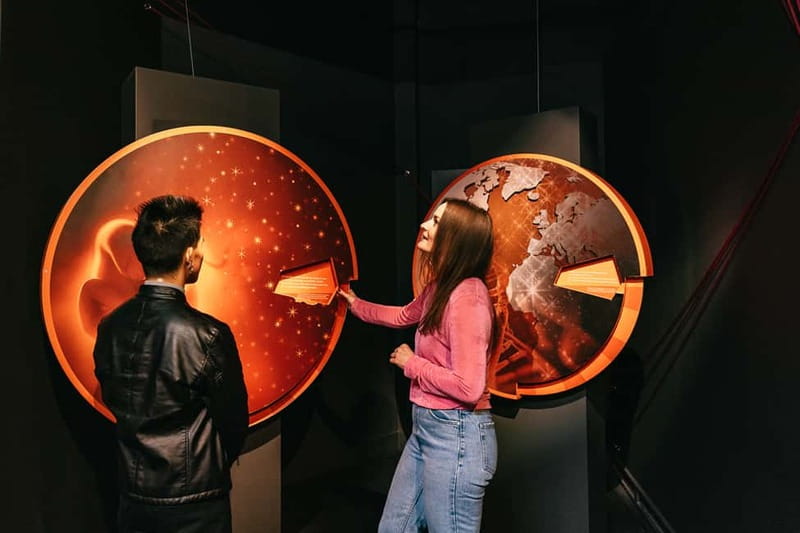
- Embryo development brings a different focus
- The nervous system, stress, and happiness
- How the audio and phone material works
- Is the $22 ticket good value?
- Practical details that affect your visit
- Who will enjoy BODY WORLDS Berlin most?
- Should you book BODY WORLDS Berlin?
- FAQ
- Where is BODY WORLDS Museum in Berlin?
- How much does admission cost?
- How long is the ticket valid?
- What are the opening hours?
- What time is the last admission?
- Is the museum wheelchair accessible?
- Is an audio guide included?
- Can I cancel my booking?
Key points before you go
- Real human plastinates: See whole-body preparations and individual organs used to explain how the body works.
- Clear anatomy route: The displays cover the skeleton, muscles, digestion, embryo development, circulation, breathing, and the nervous system.
- More than a medical display: Sections address happiness, stress, healthy living, excess, and moderation.
- Central Berlin location: The museum is at Panoramastraße 1a, 10178 Berlin.
- Flexible one-day ticket: Entry is valid for one day, with opening hours from 10 AM to 7 PM and last admission at 6 PM.
- Useful for families and students: The simple explanations can help children and teenagers learn, though some exhibits require a mature attitude.
Arriving at Panoramastraße 1a
BODY WORLDS Berlin is at Panoramastraße 1a, 10178 Berlin. Your ticket covers entry to the exhibition, and the visit ends at the same place because this is a self-guided museum experience rather than a walking tour with a separate finish point.
You can visit any day from 10 AM to 7 PM, except December 24. Plan to arrive by 6 PM at the latest, since that is the final admission time. The ticket is valid for one day, so you have useful flexibility around the rest of your Berlin plans.
I would not treat this as a rushed stop between major sights. The museum works best when you give yourself time to pause at the displays and read the explanations. There is no fixed visit length provided, so your pace will depend on how closely you study the organs, text panels, and interactive material.
The entrance area may not be instantly obvious, so allow a few extra minutes to find the correct doorway at the address. That small bit of preparation matters if you are visiting close to the final admission time.
More Museums in Berlin
- Berlin: Jewish Museum Berlin Entrance Ticket
★ 4.5 · 8,393 reviews - Berlin: DDR Museum Tickets
★ 4.3 · 3,443 reviews - Berlin: Natural History Museum Entrance Ticket
★ 4.6 · 3,382 reviews
The skeleton gives you the basic framework
The exhibition begins with the structure that holds you together: the human skeleton. This is a useful starting point because it gives you a visual frame for everything that follows.
The bones are not presented as abstract diagrams. The real preparations show how the skeleton relates to muscles and organs, helping you understand the body as a working system. You can see the shape and position of familiar bones, then connect them with the less visible parts of your body.
This section is especially helpful if anatomy usually feels like a school subject made of hard-to-remember terms. The displays put the structures in front of you, making the relationships easier to grasp. You may also find that the material changes your sense of scale. Parts of the body that seem simple in a textbook become more complex when shown in three dimensions.
Muscles and organs work as a team
The next major lesson is that no body system works alone. The muscular displays show how movement depends on the skeleton, while the organs explain what keeps that moving body alive.
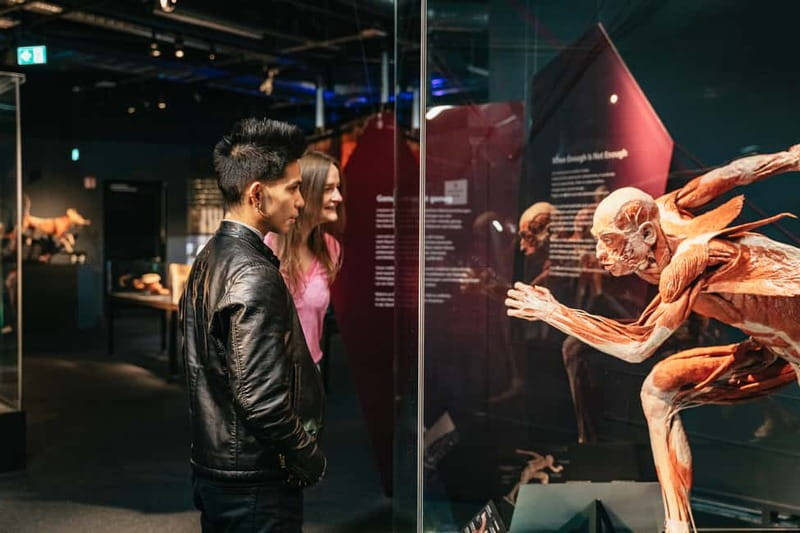
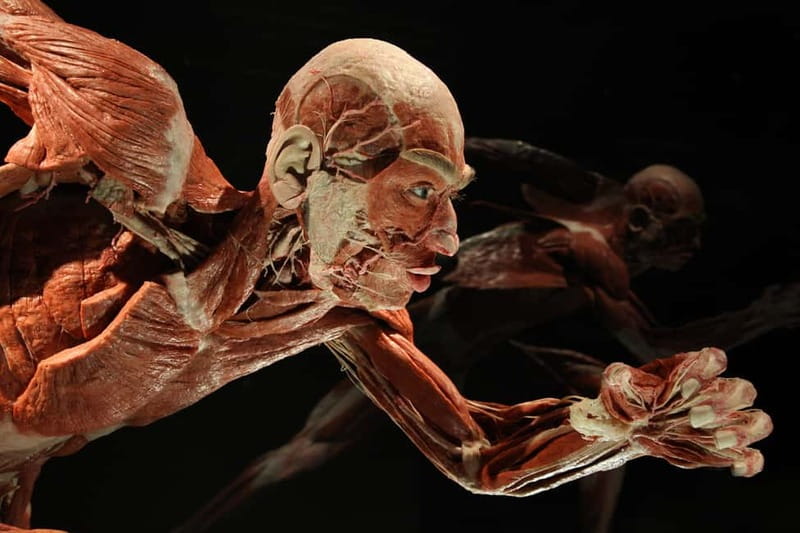
Whole-body plastinates are the strongest teaching tool here. They let you see the arrangement of the body at once, rather than looking at one organ in isolation. This can make the exhibition feel more direct than a standard museum display, but it also means you should expect a realistic presentation rather than polished models.
The central idea is simple: muscles, organs, nerves, and bones depend on one another. The exhibition explains these links in an accessible way, so you do not need a medical background to follow the material.
Some visitors have found that the museum could use more interactive features. That is fair. The exhibition is primarily built around physical preparations, written explanations, and selected audio or phone-based material. If you prefer hands-on museum activities, parts of the visit may feel quiet and display-led.
Digestive, respiratory, and cardiovascular systems
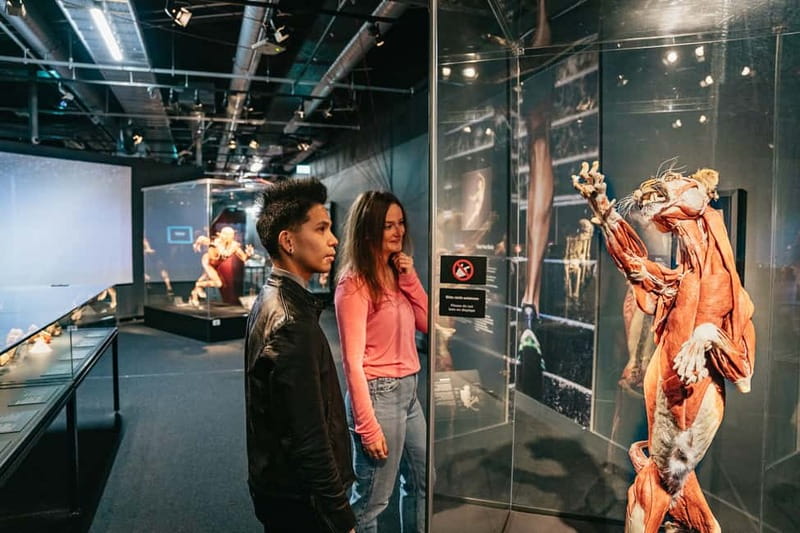
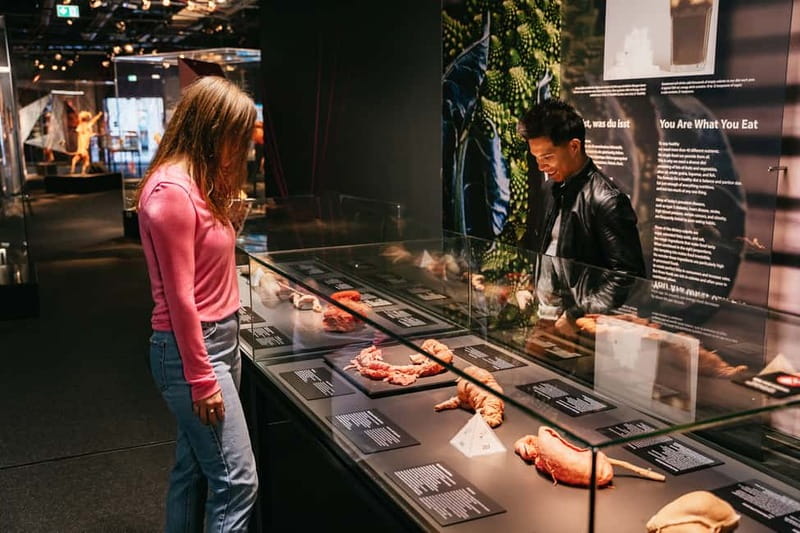
The digestive system section follows the path food takes through the body and helps explain the work performed by each organ. It is a good reminder that ordinary actions, eating, breathing, walking, and resting all rely on complicated systems operating at the same time.
The cardiovascular displays show the heart and blood vessels as part of a larger circulation network. This section can make health risks easier to understand because you are not only reading about the system. You are seeing its physical arrangement and how one problem can affect other parts of the body.
The respiratory organs receive their own attention. Their inclusion helps connect breathing with the rest of the exhibition, rather than presenting the lungs as a separate topic. You can consider how breathing supports movement, circulation, and daily life.
Disease is explained alongside normal function. That is one of the exhibition’s more useful choices. Instead of presenting illness as a frightening list, the displays show how disease can alter organs and body systems. The explanations are intended to be understandable, even if you have little medical knowledge.
The tone remains educational, but you should still think carefully about your own comfort level. Real human preparations can be powerful. They may also be unsuitable for people who dislike graphic medical displays.
Something different for another day:
- Berlin: Reichstag, Dome and Government District Guided Tour
★ 4.7 · 18,288 reviews - Berlin: 1-Hour City Tour by Boat with Guaranteed Seating
★ 4.3 · 16,993 reviews - Berlin: Boat Tour Along the River Spree
★ 4.4 · 11,252 reviews - Discover Berlin Half-Day Walking Tour
★ 5.0 · 9,624 reviews
Embryo development brings a different focus
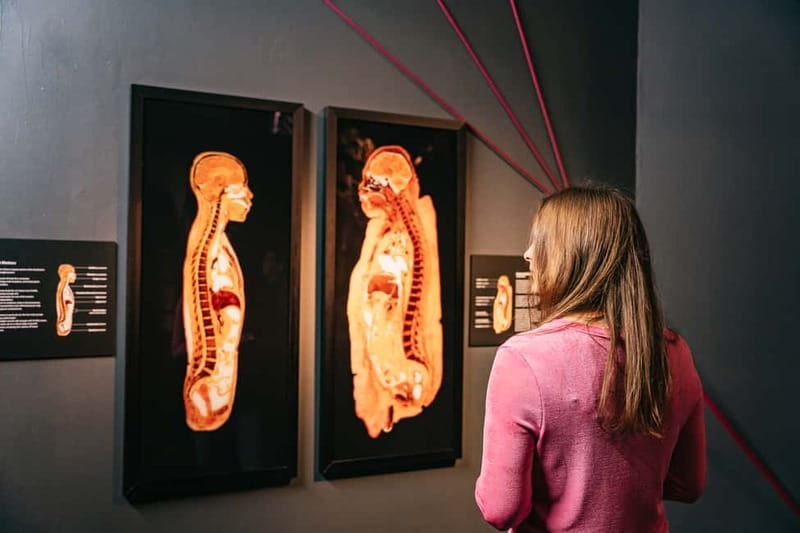
The exhibition also shows the development of an embryo in the womb. This part shifts attention from the adult body to the beginning of human development.
It gives the museum a wider frame. You are not only looking at how a mature body functions, but also considering how that body takes shape. For families with older children or teenagers, this can be a useful prompt for questions about growth and development.
The subject is handled as part of the anatomy exhibition, so it remains tied to the same focus on physical structure. If you are particularly interested in biology, this section may be one of the most memorable stops because it presents development as a sequence rather than a single finished result.
The nervous system, stress, and happiness
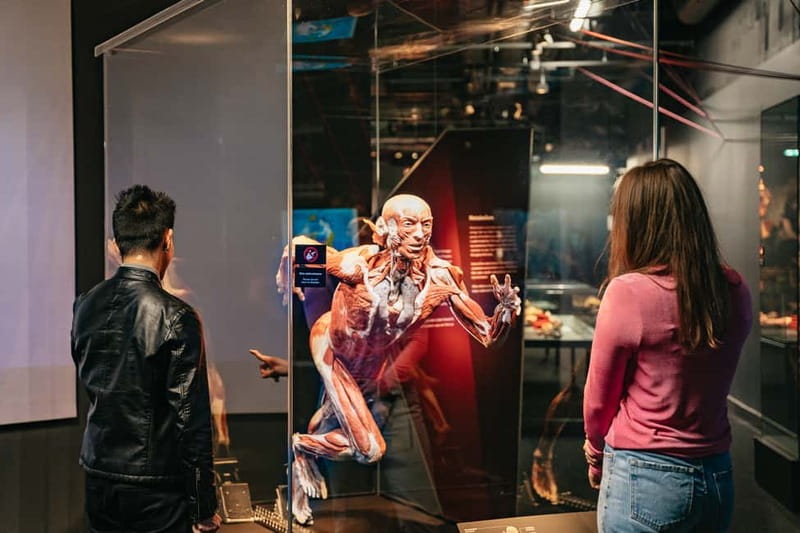
BODY WORLDS does not stop at bones and organs. It also asks how the body relates to the way you feel and behave.
The nervous system section provides a physical basis for thinking about communication inside the body. From there, the exhibition considers happiness and stress. These displays broaden the visit beyond memorizing anatomy. You are encouraged to think about what affects your body every day, including pressure, excess, rest, and lifestyle.
This section is one reason the museum can appeal to adults as much as to school groups. You may arrive expecting a medical exhibition and leave thinking about how your own habits affect your health. The questions are not presented as a personal medical consultation, of course, but they offer useful general prompts.
The focus on a middle ground between excess and modesty is also practical. It asks what the body needs to live well over time, rather than promising a perfect formula for health. That keeps the subject grounded in ordinary life.
How the audio and phone material works
An audio guide is not included with admission. Some material may also be available through an interactive guide on a phone, and the English translations on the displays and audio content are generally useful for international visitors.
Do not depend on every audio station working perfectly. Some audio exhibits may be out of order or difficult to locate, so the printed displays matter. I would treat the audio material as a bonus rather than the backbone of the visit.
The written explanations are important because they keep the exhibition accessible without a guide. You can move at your own speed, reread a difficult section, or skip a topic that is not holding your attention.
The lack of a live guide is not necessarily a weakness. It gives you privacy around sensitive subjects and lets you take the visit at your own pace. The tradeoff is that you cannot ask questions on the spot.
Is the $22 ticket good value?
At about $22 per person, the ticket is fairly priced for a specialized museum with unusual real-human displays. You are paying for access to a substantial anatomy exhibition, not a brief photo stop.
The value is strongest if you enjoy science, biology, medicine, or museums that offer something different from Berlin’s art and history collections. It is also a sensible choice for families with school-age children or teenagers who are studying the human body, provided they are comfortable with the subject matter.
The value is less clear if you only want a quick attraction. One visitor found the museum easy to move through quickly, and that is possible if you skip the text and audio material. In that case, $22 may feel high for the amount of time you spend inside.
You can improve the value by reading the displays, comparing the normal and diseased structures, and allowing time for the sections on stress and healthy living. This is a museum where attention matters more than speed.
Practical details that affect your visit
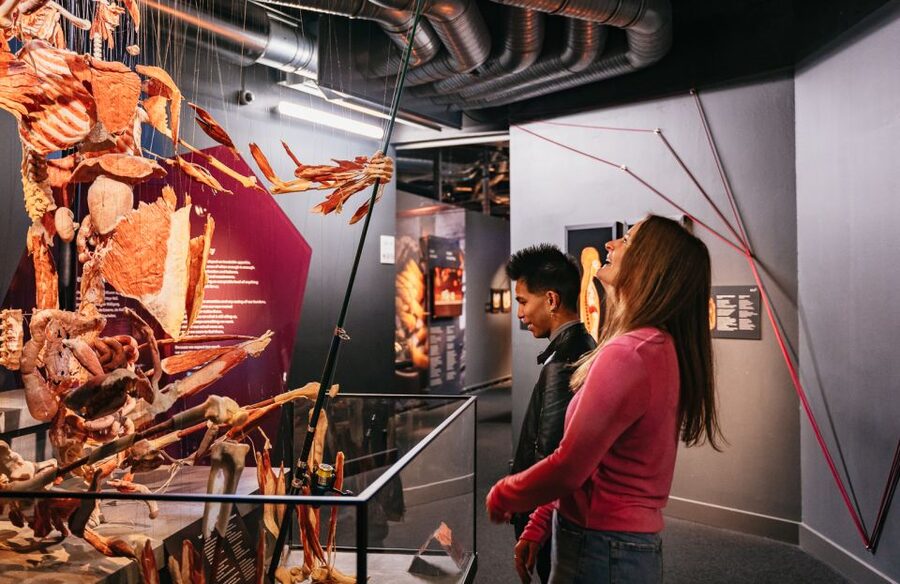
The museum is wheelchair accessible, which makes the exhibition available to a wider range of visitors. Cloakroom service is not included, and lockers may cost extra, so keep that in mind if you are carrying bags.
The museum is open Monday through Sunday from 10 AM to 7 PM. Since it is open every day, you can place it into a busy Berlin schedule without waiting for a particular weekday. Avoid arriving late in the day unless you are comfortable with a shorter visit.
School groups can affect the atmosphere. Children and teenagers may be enthusiastic, noisy, or inclined to move around quickly. That energy can be useful if you are visiting with your own family, but it may be distracting if you want a quiet, careful look at every display.
The exhibition can also show signs of wear. A few displays may appear dusty or somewhat tired, and the amount of interactive content is limited. Those flaws do not remove the educational value, but they do keep the museum from feeling brand new.
Free cancellation is available up to 24 hours before the visit for a full refund. You can also reserve now and pay later, which helps if your Berlin schedule is still shifting.
Who will enjoy BODY WORLDS Berlin most?
I would recommend this museum to you if you like learning through real objects rather than only through screens or illustrations. It is a particularly good fit for anyone curious about the human body, students studying biology, and families with older children.
Teenagers may appreciate the clear explanations and the direct presentation. Younger children are harder to judge because the material is real and some displays may be unsettling. Consider your child’s maturity and curiosity before booking.
The museum also suits repeat visitors to BODY WORLDS exhibitions. The displays can remain interesting even if you have seen a similar exhibition elsewhere, since the anatomy and educational value still give you reasons to look closely.
You may want to skip it if you dislike medical imagery, prefer art or historical objects, or need a highly interactive attraction. The exhibition asks you to look, read, and think. It does not rely on rides, theatrical effects, or constant activities.
Should you book BODY WORLDS Berlin?
Book it if you want an unusual, educational museum visit that puts real anatomy at the center. The whole-body plastinates, clear explanations, and sections on disease, stress, and healthy living give the $22 ticket solid value when you take your time.
Skip it if realistic human preparations would make you uncomfortable or if you only have enough time for a rushed walk-through. For most curious adults, science-minded families, and older students, it is one of Berlin’s more distinctive indoor attractions. Just arrive before 6 PM, allow time to read, and treat the audio guide as optional rather than essential.
FAQ
Where is BODY WORLDS Museum in Berlin?
The museum is at Panoramastraße 1a, 10178 Berlin. The activity begins and ends at this meeting point.
How much does admission cost?
The listed price is $22 per person. The ticket includes entrance to the BODY WORLDS exhibition.
How long is the ticket valid?
The ticket is valid for one day. Starting times should be checked when selecting availability.
What are the opening hours?
BODY WORLDS Berlin is open Monday through Sunday from 10 AM to 7 PM. It is closed on December 24.
What time is the last admission?
Last admission is at 6 PM, one hour before closing.
Is the museum wheelchair accessible?
Yes. The activity is wheelchair accessible.
Is an audio guide included?
No. An audio guide is not included with admission. Lockers and cloakroom service are also not included, and lockers may involve an extra charge.
Can I cancel my booking?
Yes. You can cancel up to 24 hours in advance for a full refund. You can also reserve now and pay later.
Just added around Berlin
- Berlin: Private Guided Tour of the Main Sights★ 5.0 · 13 reviews
- Private Highlights of Berlin Bike Tour★ 5.0 · 13 reviews
- Modern Berlin Private Walking Tour: Diverse, Vibrant and Exciting German Capital★ 5.0 · 13 reviews
- Tour in Berlin from Warnemünde and Rostock Cruise Port★ 4.1 · 13 reviews
- Berlin: Stasi Museum Private Guided Tour with Entry Ticket★ 4.8 · 13 reviews
- Private Food Tour Experience with a born and bred Berliner★ 5.0 · 14 reviews
- Berlin: Rheinsberg Palace Entrance Ticket★ 4.8 · 14 reviews
- Berlin in one day – day tour with an expert guide★ 5.0 · 14 reviews
Museums, compared.




Skip-the-Line: Berlin Wall Museum at Checkpoint Charlie
Read our review →
Browse the lists this tour appears in