
Reviewed · MUSEUMS
Berlin: Samurai Museum Entry Ticket
Samurai history gets a Berlin twist. The Samurai Museum Berlin brings together about 900 historical objects, high-tech displays, and hands-on cultural features in a lively visit for families, art fans, and history buffs. I especially like the AI fox guide Kitsune and the chance to see a traditional Noh theater and tea house built in Japan. The one caution is that the museum’s playful technology may appeal more to casual visitors than to those seeking a quiet, strictly academic collection.
I also like the remarkable range of the Peter Janssen Collection, from armor and weapons to tea utensils and a centuries-old palanquin. At $15 per person, the museum offers good value if you spend time with the displays, though the entry ticket does not include the exhibition catalog.
In This Review
- Key points to know before you go
- Why the Samurai Museum works in central Berlin
- A collection that reaches from Kofun Japan to the Meiji period
- High-tech displays keep the history moving
- The Noh theater gives the visit a memorable center
- The tea house explains culture through ritual
- Ninja, Yōkai, and folklore add a lighter side
- What $15 buys you in practical terms
- Who will enjoy this museum most
- Simple planning advice for your visit
- Should you book the Samurai Museum Berlin?
- FAQ
- Where is the Samurai Museum Berlin located?
- How much does entry cost?
- How long is the ticket valid?
- What does the ticket include?
- Is the exhibition catalog included?
- Can I skip the ticket line?
- Is the museum wheelchair accessible?
- Which public transport stops are nearby?
- Can I bring food, drinks, pets, or large bags?
- Can I cancel the booking?
Key points to know before you go
- About 900 objects on display: See samurai armor, swords, weapons, tea utensils, and works of art from the sixth through nineteenth centuries.
- Kitsune guides the visit: An interactive fox character asks questions and helps younger visitors stay involved.
- A real Noh theater and tea house: Both were built in Japan with traditional materials before being reconstructed in Berlin.
- Technology adds movement: Expect projections, touchscreens, holographic performances, and demonstrations of swordsmithing and ninja techniques.
- Excellent Mitte location: Auguststraße is close to Alexanderplatz, Museum Island, cafés, restaurants, and public transport.
- Flexible entry: The ticket is valid for one to fourteen days, with the precise starting time shown when you check availability.
Why the Samurai Museum works in central Berlin
The Samurai Museum sits on Auguststraße in Berlin-Mitte, a handy spot for a full day of sightseeing. You can reach it from U6 at Oranienburger Tor or U8 at Rosenthaler Platz. S-Bahn lines S1, S2, S25, and S26 stop at Oranienburger Straße, as do trams M1 and M5. Tram M8 serves Rosenthaler Platz.
That location matters because the museum fits easily between better-known Berlin sights. You can pair it with Museum Island, Alexanderplatz, or a walk through Mitte’s cafés and shops. You do not need to build a whole day around a distant attraction.
The museum is designed as an indoor cultural stop rather than a guided walking tour. You arrive at the entrance, show the ticket on your smartphone, and go directly to the barrier instead of waiting in the ticket line. The ticket is wheelchair accessible, which makes this a practical choice for a mixed-age or mixed-mobility group.
The flexible ticket is useful if your Berlin plans are still moving around. It can be valid from one to fourteen days, depending on the option and availability, so you can choose your visit time more freely than with a fixed, tightly scheduled tour. Check the available starting times before booking.
More Museums in Berlin
- Berlin: Jewish Museum Berlin Entrance Ticket
★ 4.5 · 8,393 reviews - Berlin: DDR Museum Tickets
★ 4.3 · 3,443 reviews - Berlin: Natural History Museum Entrance Ticket
★ 4.6 · 3,382 reviews
A collection that reaches from Kofun Japan to the Meiji period
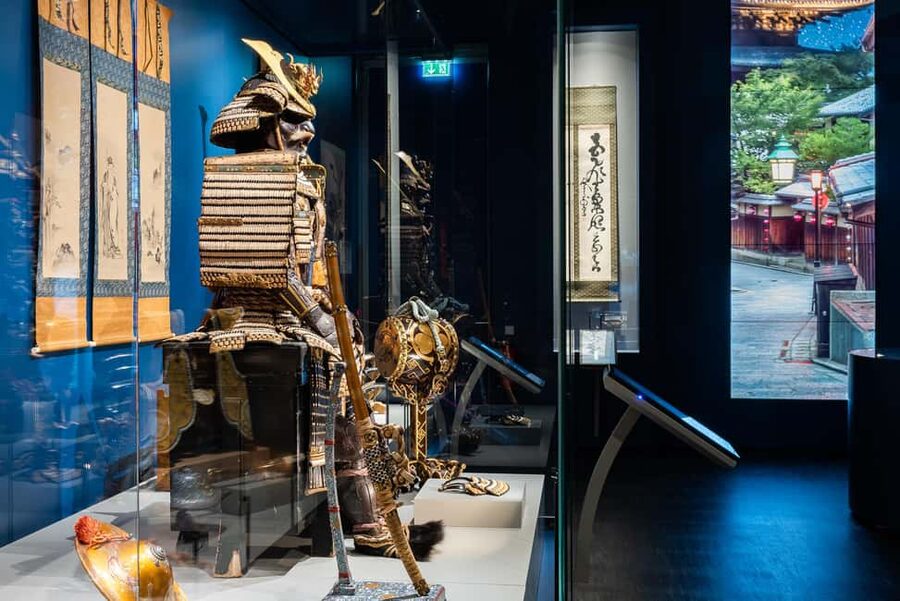
The museum’s foundation is the Peter Janssen Collection, a private gathering of more than 4,000 objects. Around 900 historical pieces appear in the exhibition, giving you a focused look at Japanese samurai culture rather than a warehouse-style presentation.
The date range is unusually broad. Objects span from the late Kofun period through the early Meiji period, roughly the sixth to nineteenth centuries. That allows you to see changes in Japanese craftsmanship and samurai life across many generations.
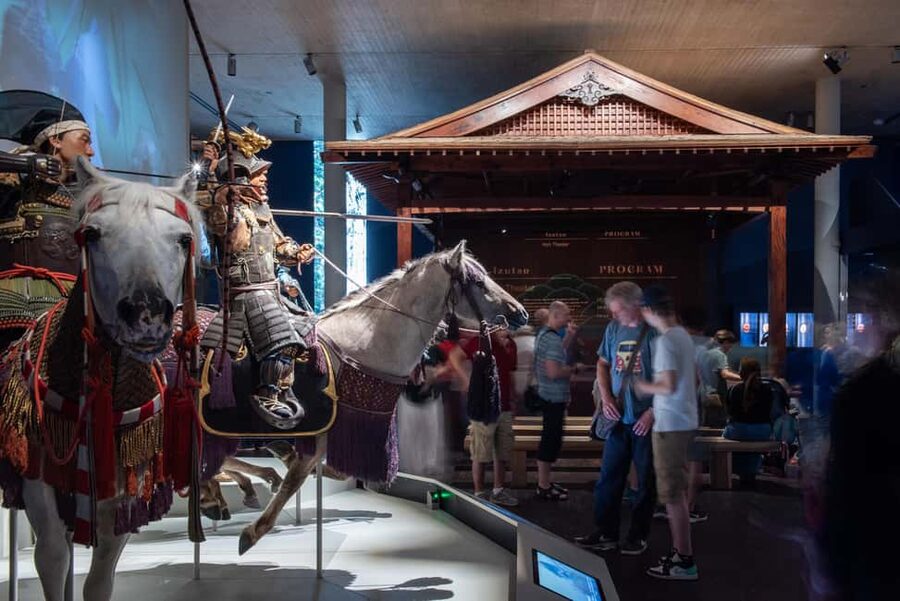
Armor and weapons naturally draw the eye first. The collection includes a seventeenth-century suit of armor associated with the Matsudaira clan, one of the notable pieces to look for. You can also study the form, decoration, and construction of Japanese swords, with displays explaining the work of the swordsmith.
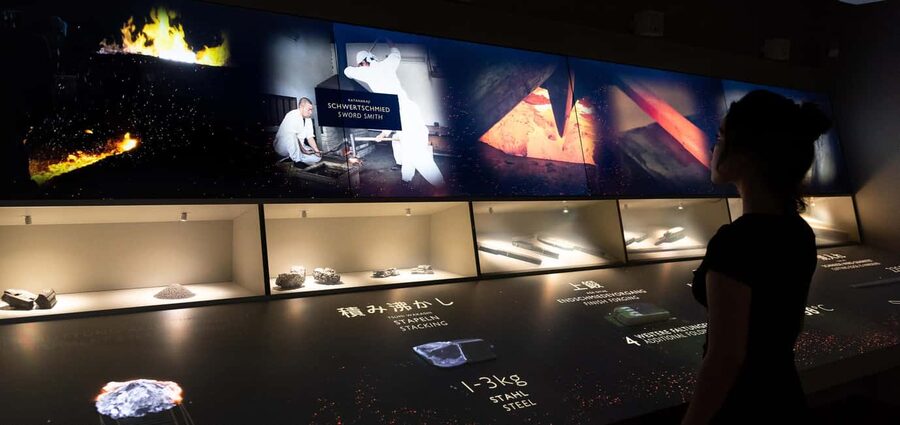
That sword section is valuable because it shifts the focus away from the popular image of the samurai as a warrior in battle. A sword was also a carefully made object tied to craft, status, ceremony, and tradition. The museum uses technology to show how legendary blades were produced, giving you more context than a simple glass case can provide.
The collection also reaches beyond combat. An eighteenth-century palanquin shows how transport and social rank were connected. Tea utensils linked to the period of Sen no Rikyū, who lived from 1522 to 1591, point to the cultural practices that shaped samurai life outside the battlefield.
You might spend less time here if you are only interested in famous warriors or dramatic weapons. The museum asks you to look at craftsmanship, ritual, theater, and folklore as well. That wider view is one of its strongest features, but it also means the experience is not a conventional military museum.
High-tech displays keep the history moving
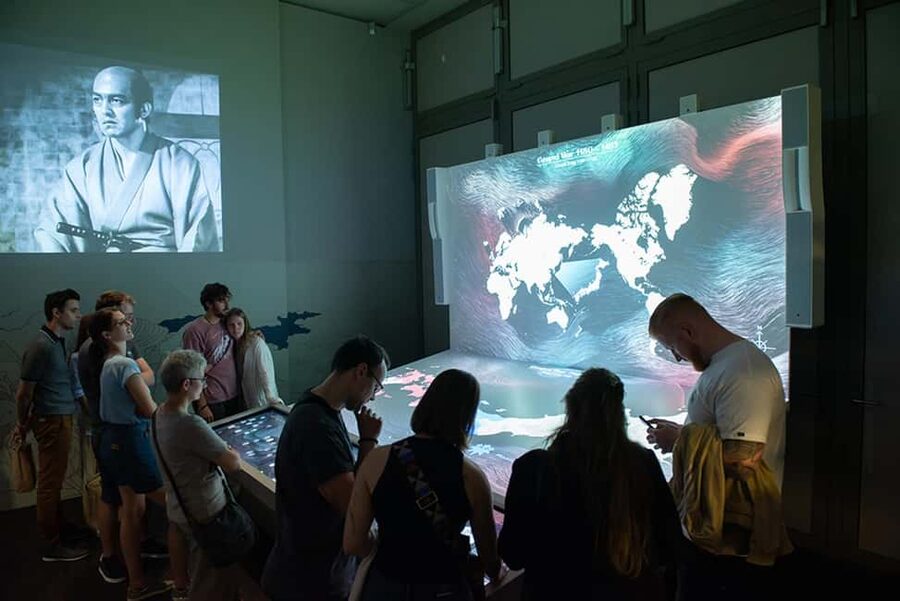
The museum’s main idea is simple: place authentic objects in conversation with modern presentation tools. Projections and touchscreens explain the exhibits, while interactive stations let you approach Japanese culture through sound, images, and short activities.
That format is especially useful when you are visiting with children. A family can move between physical objects and digital features instead of asking younger members to read long labels for an hour. A five-star experience from one family described the children as especially engaged by the interactive elements.
Kitsune, the museum’s fox guide, adds a game-like layer. The character asks questions and invites you to think about what you are seeing. The fox has a look that may remind anime fans of a nine-tailed fox, making the museum feel familiar to younger visitors without turning the collection into a theme park.
The technology is not only for children. Touchscreens and projections can help you understand details that are hard to show through objects alone. A sword blade, a tea ritual, or the movements of a ninja can be presented in a way that makes the subject easier to follow.
You should expect a playful tone. If you prefer silent galleries and long scholarly labels, the digital approach may feel busy. If you like museums that let you watch, listen, and interact, the format makes the $15 admission easier to justify.
The Noh theater gives the visit a memorable center
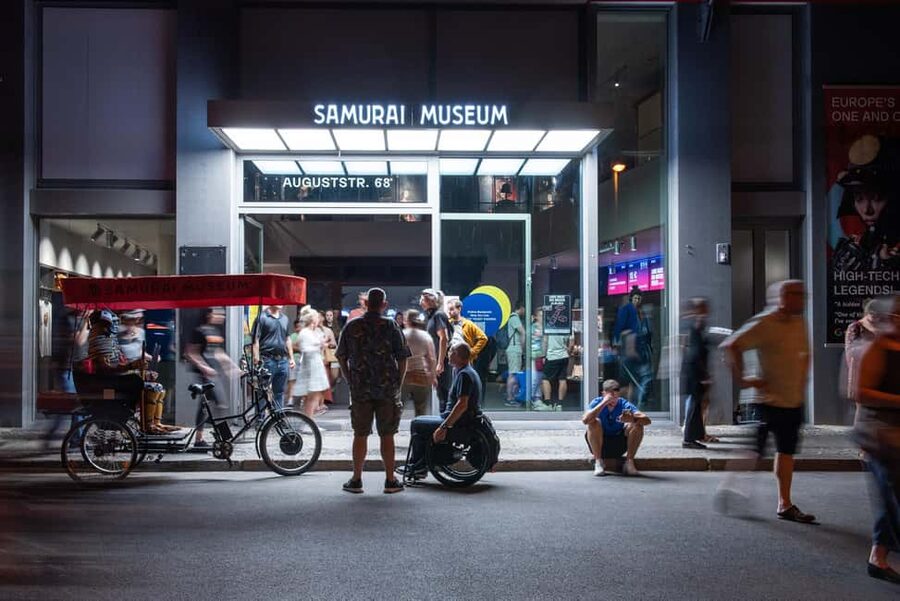
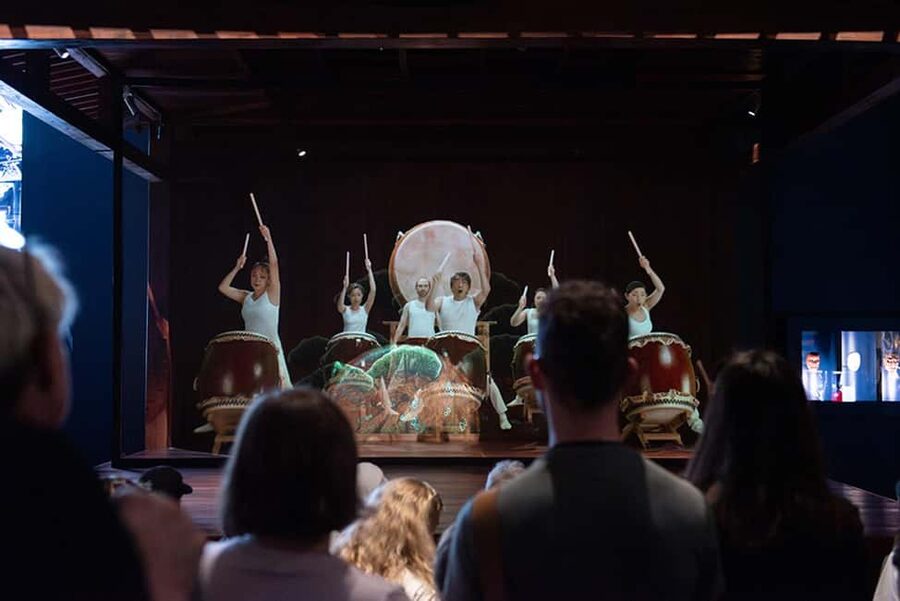
One of the museum’s most unusual features is its spacious Noh theater. It was constructed in Japan using traditional materials and techniques, then taken apart and erected in Berlin.
Noh theater is closely tied to Japanese cultural traditions that developed over many centuries. In the museum, projections and performances help explain the setting and its role. You do not simply see a stage as an architectural object. You get a sense of how theater, ritual, costume, movement, and sound fit together.
The theater also gives the museum a strong change of pace. After looking at armor, swords, and smaller objects, you can pause in a large, purpose-built space. A holographic drum performance adds another modern touch and shows how the museum uses technology to bring performance traditions to life.
Exact performance timing can depend on the visit setup, so allow time to see the theater rather than rushing through the displays. The museum is valid for a flexible period, but that does not mean every presentation will operate continuously at every moment.
For many people, this will be the most distinctive part of the visit. It offers a cultural experience that a standard collection of armor cannot provide. The drawback is that projections can never replace a live Noh performance, so treat this as an introduction rather than a full theater event.
Something different for another day:
- Berlin: Reichstag, Dome and Government District Guided Tour
★ 4.7 · 18,288 reviews - Berlin: 1-Hour City Tour by Boat with Guaranteed Seating
★ 4.3 · 16,993 reviews - Berlin: Boat Tour Along the River Spree
★ 4.4 · 11,252 reviews - Discover Berlin Half-Day Walking Tour
★ 5.0 · 9,624 reviews
The tea house explains culture through ritual
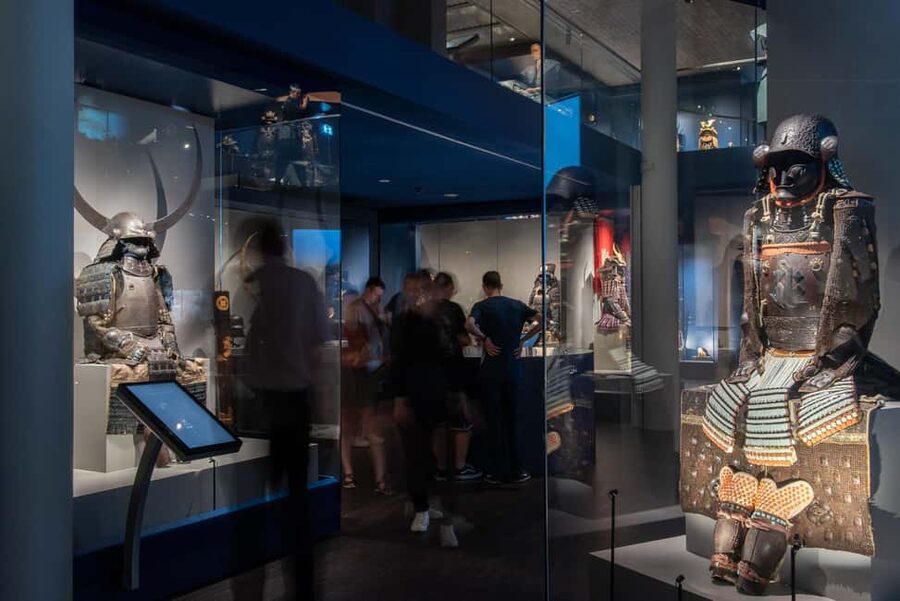
The traditional tea house was also built in Japan and reassembled in Berlin. Its design gives you a physical sense of the setting where the tea ceremony takes place.
A tea ceremony can be difficult to understand from a label alone. The tea house helps by showing the relationship between space, movement, utensils, and hospitality. Displays and projections explain the process and the long tradition behind it.
This section balances the dramatic samurai material. Swords and armor suggest power and defense. The tea ceremony points toward discipline, restraint, hospitality, and attention to detail. Together, these areas create a fuller picture of the culture surrounding the samurai.
Do not expect to take part in a complete tea ceremony simply because there is a tea house. The information provided describes an introduction to the process, not a scheduled tasting or hands-on ceremony. Food and drinks are not allowed inside the museum.
Ninja, Yōkai, and folklore add a lighter side

The museum also explores ninja techniques and the world of Yōkai, supernatural beings from Japanese folklore. These subjects broaden the visit beyond samurai armor and formal traditions.
Interactive installations let you learn about ninja methods in a playful way. The exact activities can vary by station, but the purpose is clear: give you a physical or visual connection to subjects that are often reduced to film and television stereotypes.
Yōkai bring in the stranger, more mysterious side of Japanese culture. Along with Kitsune’s questions, they help create a visit that feels accessible to people who arrive with different interests. One person may focus on swordsmithing, another on folklore, and another on the theater.
This variety makes the museum a good choice for a group. You do not all need to care about the same part of Japanese history. The downside is that the exhibition covers many themes, so it may not provide the depth of a specialist museum devoted only to swords, armor, or religious history.
What $15 buys you in practical terms
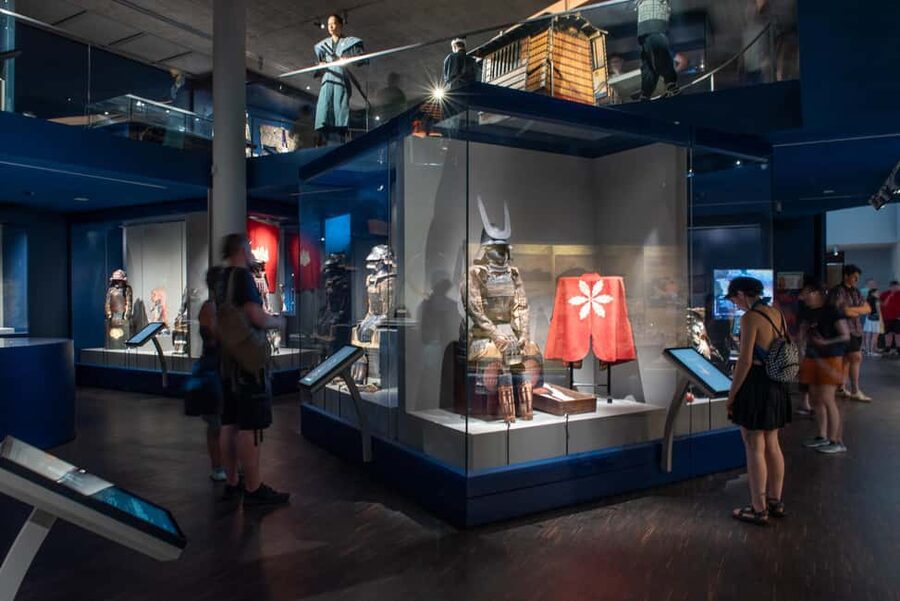
At $15 per person, admission is fairly priced for a museum with a substantial collection and several interactive installations. You are paying for access to about 900 displayed objects, digital interpretation, the Noh theater, the tea house, holographic performances, and family-friendly activities.
The value improves if you allow enough time to use the touchscreens and watch the presentations. A quick walk around the armor cases will not make as strong a case for the price. If you enjoy interactive museums, you can get more from the ticket than from a short photo stop.
The exhibition catalog costs extra. If you collect museum books or want a detailed reference for the objects, budget for it separately. If you are mainly looking for a memorable Berlin activity, the ticket itself covers the main experience.
You can cancel up to 24 hours before the visit for a full refund, and the reserve-now, pay-later option keeps your plans flexible. These terms are useful in Berlin, where weather, transport, and last-minute changes can easily affect your schedule.
Who will enjoy this museum most
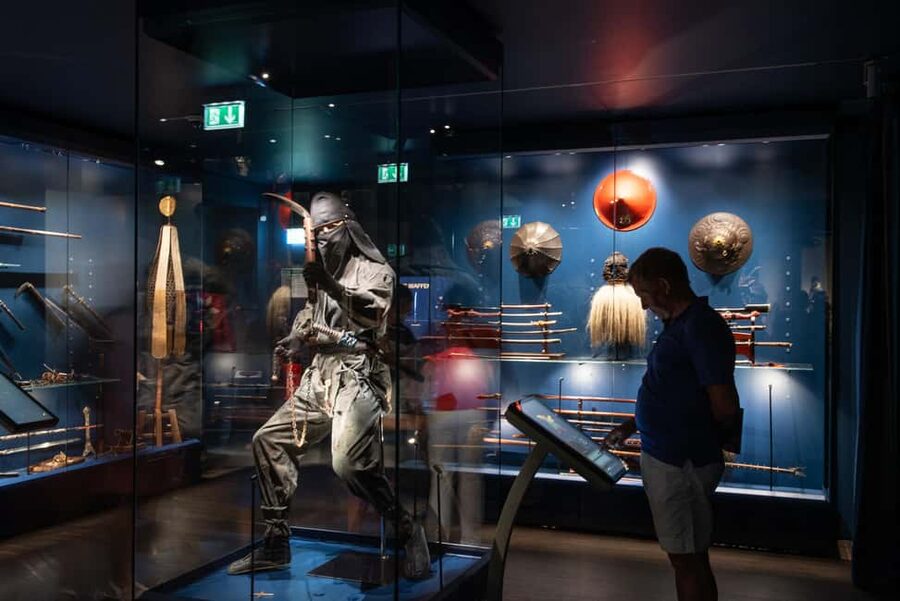
Families are a natural fit. The fox guide, questions, touchscreens, and visual presentations give children something to do while adults examine the objects. The museum also works well for older children and teenagers interested in anime, ninja stories, Japanese folklore, or martial culture.
Art and design fans will appreciate the craftsmanship of the armor, sword blades, tea utensils, and traditional buildings. History buffs should enjoy the long time span, especially the chance to compare objects from the Kofun period through the early Meiji period.
This is also a good rainy-day stop in Berlin. It is indoors, centrally located, and easy to combine with other Mitte sights. Wheelchair accessibility adds to its usefulness for groups with different needs.
You may want to choose another attraction if your main goal is a formal lecture, a live tea ceremony, or a scholarly study of one narrow period. The museum favors clear explanations, visual effects, and interaction over a quiet academic presentation.
Simple planning advice for your visit
Carry your ticket on your smartphone and go straight to the entrance barrier. Since large bags and luggage are not allowed, avoid arriving with suitcases or bulky day bags. Pets, food, and drinks are also not allowed.
Plan your route through Mitte before or after the museum. Oranienburger Straße provides several public transport connections, and the area around Auguststraße offers cafés, restaurants, and shopping. That makes it easy to turn the museum into one part of a larger neighborhood outing.
Give yourself enough time for the objects and the digital features. The available information does not set a fixed visit length, so your pace will depend on how closely you read, watch, and interact. Families may need longer because children will want to answer Kitsune’s questions and try the interactive stations.
A guided tour may be available as a separate option, but the ticket described here is entry only. You should not assume that a personal guide, audio guide, or exhibition catalog is included.
Should you book the Samurai Museum Berlin?
Book it if you want a compact, unusual cultural stop with authentic objects and modern presentation. The combination of the Peter Janssen Collection, traditional Noh theater, tea house, swordsmithing displays, and Kitsune’s interactive prompts gives you more variety than the $15 price suggests.
I would especially recommend it to families, first-time visitors curious about Japanese culture, and anyone looking for something different from Berlin’s major state museums. The flexible one-to-fourteen-day validity also helps if your schedule is not fixed.
Skip it if you want only a quiet display of battlefield equipment or a full live ceremony. For most people, though, the museum offers a smart mix of serious craftsmanship, folklore, technology, and fun in a very convenient part of Berlin.
FAQ
Where is the Samurai Museum Berlin located?
The museum is on Auguststraße in Berlin-Mitte, near Alexanderplatz and Museum Island.
How much does entry cost?
The listed price is $15 per person.
How long is the ticket valid?
The ticket is valid for one to fourteen days, depending on the available option. Check availability for the starting times.
What does the ticket include?
It includes entry to the Samurai Museum Berlin.
Is the exhibition catalog included?
No. The exhibition catalog is not included and must be purchased separately.
Can I skip the ticket line?
Yes. With the ticket on your smartphone, go directly to the entrance barrier.
Is the museum wheelchair accessible?
Yes, the activity is wheelchair accessible.
Which public transport stops are nearby?
You can use U6 to Oranienburger Tor or U8 to Rosenthaler Platz. S1, S2, S25, and S26 stop at Oranienburger Straße. Trams M1, M5, and M8 also serve nearby stops.
Can I bring food, drinks, pets, or large bags?
No. Pets, food, drinks, luggage, and large bags are not allowed.
Can I cancel the booking?
Yes. You can cancel up to 24 hours in advance for a full refund. The reserve-now, pay-later option lets you delay payment when booking.
Just added around Berlin
- Berlin: Private Guided Tour of the Main Sights★ 5.0 · 13 reviews
- Private Highlights of Berlin Bike Tour★ 5.0 · 13 reviews
- Modern Berlin Private Walking Tour: Diverse, Vibrant and Exciting German Capital★ 5.0 · 13 reviews
- Tour in Berlin from Warnemünde and Rostock Cruise Port★ 4.1 · 13 reviews
- Berlin: Stasi Museum Private Guided Tour with Entry Ticket★ 4.8 · 13 reviews
- Private Food Tour Experience with a born and bred Berliner★ 5.0 · 14 reviews
- Berlin: Rheinsberg Palace Entrance Ticket★ 4.8 · 14 reviews
- Berlin in one day – day tour with an expert guide★ 5.0 · 14 reviews
Museums, compared.





Skip-the-Line: Berlin Wall Museum at Checkpoint Charlie
Read our review →
Browse the lists this tour appears in