
Reviewed · BERLIN WALL TOURS
Berlin: Private Bike Tour of the Berlin Wall and Third Reich
Berlin’s past is easier to grasp on two wheels. This private three-hour bike tour links the Berlin Wall, Nazi-era sites, Holocaust memorials, and Cold War landmarks in one well-paced outing. I like the way it covers ground quickly, and I like the freedom to shape the route around your group’s interests. The main drawback is that the tour operates with a minimum of four people, and three hours leaves little time for lengthy visits.
You begin and end near Nikolaiviertel, Berlin’s historic center, using a bicycle and helmet supplied by Free Berlin Bike Tours. The price is about $107.42 per person, which is not cheap for a three-hour activity, but it includes a private guide, bikes, and the chance to visit far more sites than you could comfortably reach on foot.
In This Review
- Key points to know before booking
- Why a bicycle makes sense for Berlin’s divided past
- Nikolaiviertel starts the story in old Berlin
- Memorials that make Holocaust history personal
- The Berlin Wall Memorial shows how the border worked
- Mauerpark and the border that kept changing
- Humboldthain Flak Tower reveals Nazi construction
- Günter Litfin and the human cost of the Wall
- Invalidenfriedhof cuts through military memory
- Spreebogenpark and Hitler’s grand capital plan
- The Reichstag and Germany’s change in power
- The Führerbunker and a parking lot with a story
- Checkpoint Charlie closes the Cold War chapter
- The East Side Gallery and route flexibility
- Price, pace, and who gets the best value
- Practical details before you reserve
- Should you book this Berlin bike tour?
- FAQ
- How long does the private Berlin bike tour last?
- What is the price of the tour?
- Is the tour private?
- How many people are required for the tour to operate?
- What is included in the price?
- Is hotel pickup included?
- Where does the tour start and finish?
- Which languages are available?
- Is Checkpoint Charlie included on every language option?
- Can children join the tour?
- Does the tour operate in bad weather?
- Can I cancel for a full refund?
Key points to know before booking
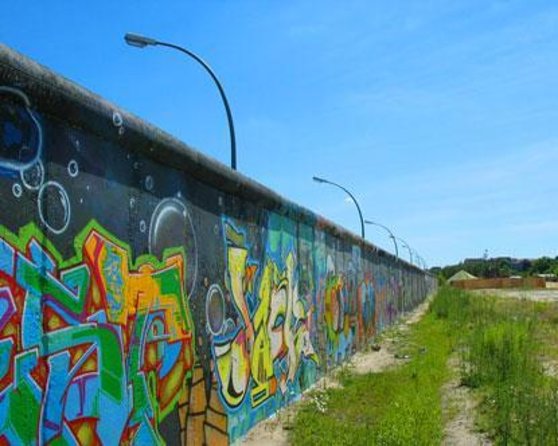
- Three hours on a bicycle covers a lot: You visit sites from Nikolaiviertel to Checkpoint Charlie, with the Berlin Wall and Third Reich as the central themes.
- The route is private and adjustable: Your guide designs the route, so your group can place more weight on Nazi history, the Wall, Jewish Berlin, or postwar division.
- The Wall Memorial offers the clearest physical evidence: You see preserved sections, border structures, and the space that once cut Berlin apart.
- The tour goes beyond the usual postcard stops: Mauerpark, Günter Litfin Memorial, Invalidenfriedhof, and Humboldthain Flak Tower add important context.
- Cycling saves valuable time: A guide can connect distant sites without sending you through Berlin’s transport system or on long walks.
- English is not available at every stop: Checkpoint Charlie is included only on the English version of the tour.
Why a bicycle makes sense for Berlin’s divided past
Berlin’s key historical sites are spread across a wide area. The Reichstag, Wall Memorial, Checkpoint Charlie, Holocaust Memorial, and East Side Gallery are not all clustered together, so walking between them can eat up much of your day.
A bicycle gives the tour a useful rhythm. You ride between stops, pause for a short explanation, and then move on before the subject becomes too heavy. One stop lasts about five minutes, while others take ten or fifteen minutes. That pace suits you if you want a broad picture of Berlin rather than a single long museum visit.
The supplied bicycles and helmets are included in the price. Children are welcome, and infant seats can be provided if requested. You should still dress for the forecast because the tour runs in all weather conditions. The activity is offered in English and German, with Dutch, French, and Spanish possible on request.
The private format matters. Your guide designs the route, rather than leading a fixed large group through a standard script. That gives you room to ask questions and request a stronger focus on a particular era. It also means the exact balance between stops can vary, so do not expect every minute to follow a rigid schedule.
More Bike Tours in Berlin
- Berlin: Sights and Highlights Bike Tour with a Local Guide
★ 4.8 · 2,698 reviews - Berlin Highlights 3-Hour Bike Tour
★ 5.0 · 948 reviews - Berlin City Bike Tour with Beer Garden Stop
★ 5.0 · 917 reviews
Nikolaiviertel starts the story in old Berlin
The tour begins in Nikolaiviertel, described as the only real old town of Berlin. It is a useful starting point because Berlin can seem like a modern capital built mostly from fragments. Here, the conversation begins with how old the quarter really is and what happened to it during the bombing of the Second World War.
This first stop is short, around ten minutes, so think of it as an opening frame rather than a full visit. Your guide uses the area to explain how Berlin’s past has been rebuilt, altered, and sometimes presented in simplified form.
From there, the route turns toward the Neue Synagoge and the Centrum Judaicum. The stop is brief, about five minutes, but the story is powerful. You hear about the night of broken glass and the police officer whose civil courage helped save the synagogue from destruction.
That detail gives the tour a human scale. Instead of treating Nazi history as a list of dates and buildings, the guide points to one act of resistance by an individual. The building also helps connect the city’s Jewish history with the wider story of persecution.
Memorials that make Holocaust history personal
The route includes a memorial for victims of deportation and the Holocaust that was designed during the East German period. It is presented in sharp contrast to the better-known Memorial to the Murdered Jews of Europe near Brandenburg Gate.
The exact stop is not given a separate duration, so you should expect a short outdoor explanation rather than a long memorial visit. That is typical of the whole tour. You will see several places of remembrance, but the bicycle format is designed to connect them, not replace a quiet individual visit.
The Holocaust Memorial receives a longer stop of about ten minutes. Its field of concrete blocks is one of Berlin’s most important places of remembrance, and the guide explains its purpose, scale, and connection to the people responsible for the genocide.
Calling it the world’s largest genocide memorial is part of the supplied description, but the more useful point for you is its physical effect. The blocks change in height and arrangement as you walk among them. Even a short stop can leave you with questions about how public memorials should represent mass murder.
Two additional memorials for major victim groups are also included in the route. The details provided do not name each one, so you should ask your guide to identify them and explain their place in Berlin’s remembrance culture.
The Berlin Wall Memorial shows how the border worked
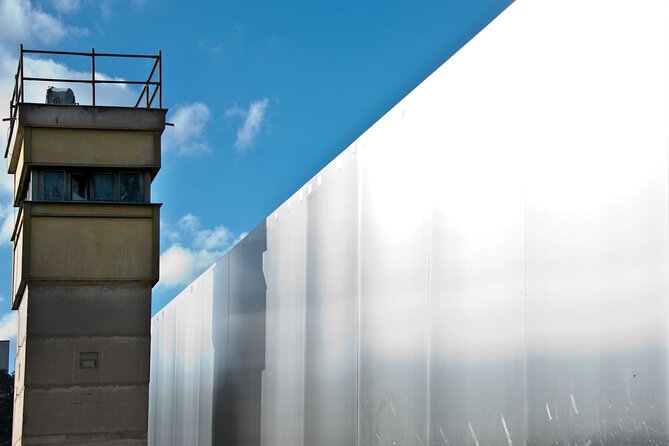
The Berlin Wall Memorial is the strongest part of the route for understanding the Wall as a system, not just as a strip of concrete. The tour describes three places in Berlin where the Wall is still physically present, with this site offering the clearest sense of what the barrier meant and how it operated.
You spend around ten minutes here. That is enough for an outdoor explanation of the wall, border zone, and divided streets, though not enough for a full examination of every exhibit in the area.
This is where the tour’s cycling format works especially well. You arrive with the city around you, then stop at a place where the geography of division becomes visible. Your guide can explain how East and West Berlin were separated, why the border was more than a single wall, and how attempts to cross it shaped daily life.
If your main interest is the Wall, this stop deserves your attention. You might also want to return later on your own for more time, since a short guided visit cannot cover every part of the memorial.
More Third Reich & WWII Tours in Berlin
- Berlin: Third Reich and Cold War 2 Hour Walking Tour
★ 4.9 · 6,830 reviews - Berlin’s Best: 2 Hour Walking Tour Third Reich and the Cold War
★ 5.0 · 5,486 reviews - Third Reich Berlin: Hitler and WWII Walking Tour
★ 5.0 · 3,301 reviews - Berlin: Third Reich, Hitler, and WWII Walking Tour
★ 4.9 · 1,133 reviews
Mauerpark and the border that kept changing
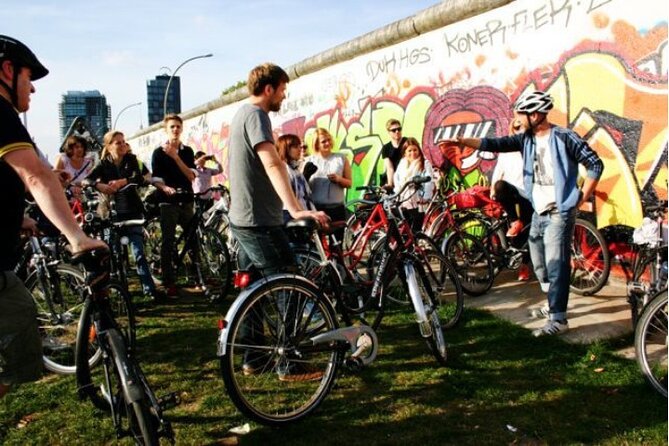
Mauerpark is now known for its Sunday flea market, but the tour looks past its current recreational use. The site helps explain the repeated efforts by East Germany’s rulers to create what they viewed as a perfect border.
That phrase points to an important fact: the Wall was not a single finished object. It developed through layers of barriers, controlled zones, and changes intended to prevent escape. At Mauerpark, your guide connects the present-day park with the restrictions that once shaped this ground.
The stop lasts about ten minutes. If you visit on a Sunday, the modern market atmosphere may feel far removed from the site’s former purpose. That contrast is useful, but it can also make the historical setting harder to picture without a strong explanation from the guide.
Humboldthain Flak Tower reveals Nazi construction
At Humboldthain Flak Tower, you encounter a huge wartime structure that served as both a fortress and an air-raid shelter. The tour uses it to discuss Nazi architecture and the physical scale of wartime planning.
The stop is about ten minutes and includes a panoramic view. The view gives you a chance to look across Berlin while considering how the city was reshaped by military priorities, bombing, reconstruction, and later political division.
This is one of the more unusual stops because it is not simply a memorial or a famous government building. The tower is massive and difficult to ignore. It gives you a direct sense of how ideology and warfare can become part of a city’s physical fabric.
Do not expect a long climb or an extended lookout visit as part of the stated schedule. The emphasis is on the tower’s meaning and its place in the Nazi period, with the view adding useful context.
Günter Litfin and the human cost of the Wall
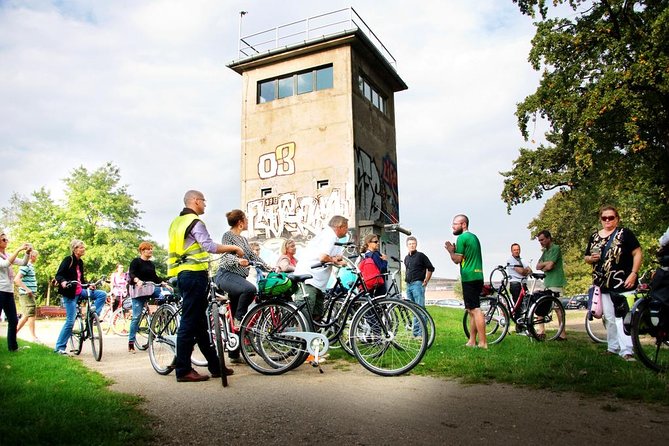
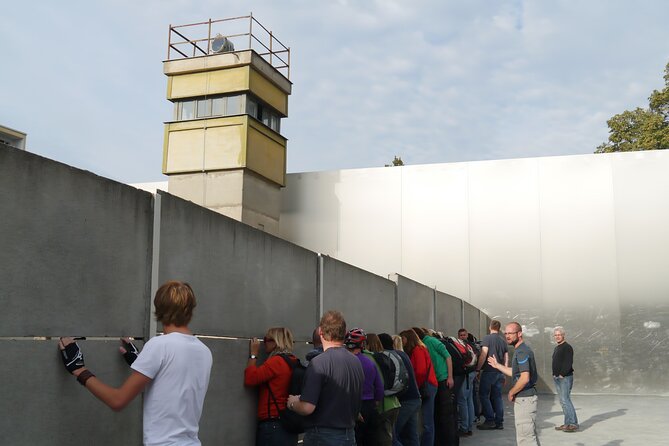
The Günter Litfin Memorial preserves an original guard tower in memory of Günter Litfin, identified here as the first person shot at the Wall. The tower gives the stop a direct connection to the people who died trying to cross the border.
You spend about ten minutes here. The preserved structure helps move the subject away from general terms such as border deaths and escape attempts. Your guide can place one individual at the center of the story and explain why this location remains important.
For many people, this is among the most affecting Wall stops because the original tower is still present. It is a reminder that the border was guarded by real people and that its consequences were not abstract.
Invalidenfriedhof cuts through military memory
Invalidenfriedhof was created for German military figures, including people remembered as heroes in official accounts. The Berlin Wall once cut directly through the cemetery, leaving another physical mark of division across a place of burial.
The tour also asks you to think critically about whom Germany honors and whom it needs to remember without honoring. That distinction is valuable when discussing military history, especially in a city where Nazi crimes, German nationalism, and postwar memory remain closely linked.
The stop lasts around ten minutes. You will not receive a full cemetery tour in that time, but the site adds depth to the itinerary. It connects the Wall with older layers of German military tradition rather than treating 1961 to 1989 as an isolated chapter.
Spreebogenpark and Hitler’s grand capital plan
Spreebogenpark gives you a broad view of Germany’s government district. From here, the tour discusses the modern capital and the plans of Hitler’s architect, Albert Speer.
Speer’s vision included the Great Hall, a building intended to hold 180,000 people. The idea sounds almost unreal, but the point is to show how architecture was used to express power, control, and imperial ambition.
This is a longer stop, about fifteen minutes. That extra time helps because the subject requires some explanation. You are not simply looking at government offices. You are considering what Berlin might have become under a dictatorship that planned to turn the capital into a monumental center of Nazi rule.
The contrast between today’s governing district and Speer’s plans is one of the tour’s strongest moments. It puts democratic Germany beside the authoritarian vision that Hitler’s regime wanted to impose.
The Reichstag and Germany’s change in power
At the Reichstag Building, the guide explains Hitler’s grab for power and Germany’s democratic history. You view the building from outside, since there is no time to go inside during this tour.
That limitation is worth noting. If you want to see the Reichstag dome or enter the building, you need to arrange a separate visit. Here, the value is the location and the political context.
The stop lasts about five minutes, making it one of the quickest points on the route. It works best as part of the larger story: you have just considered dictatorship and monumental plans, and now you look at the building associated with Germany’s parliamentary tradition and political transformation.
The Führerbunker and a parking lot with a story
At the Führerbunker site, you see a parking lot. There is no dramatic ruin to inspect because the place was covered and the site was not preserved as a conventional monument.
The guide explains why. Hitler spent the final weeks of the war there and eventually died by suicide. The ordinary appearance of the present-day site is part of the point. It prevents the location from becoming a shrine and shows how a city can choose to mark, conceal, or neutralize places connected with dictatorship.
The visit takes about ten minutes. This is an example of why a good guide matters. Without context, you would see little more than a nondescript urban space. With an explanation, the absence of visible remains becomes historically meaningful.
Checkpoint Charlie closes the Cold War chapter
Checkpoint Charlie is included on the English version of the tour. It was the most famous border station of the Cold War and the only crossing shared by the United States and the Soviet Union, according to the tour’s historical explanation.
The stop lasts about ten minutes. Your guide discusses the confrontation that nearly brought the United States and the Soviet Union into direct conflict in the heart of Berlin.
Checkpoint Charlie is famous, but it can also feel more commercial and reconstructed than the Berlin Wall Memorial or Günter Litfin Memorial. That makes the guide’s historical framing especially useful. You can separate the modern presentation from the seriousness of the former border crossing.
Because this stop is limited to the English tour, confirm the route if you book in German or request another language. The tour may include other locations, but the supplied information specifically limits Checkpoint Charlie to the English version.
The East Side Gallery and route flexibility
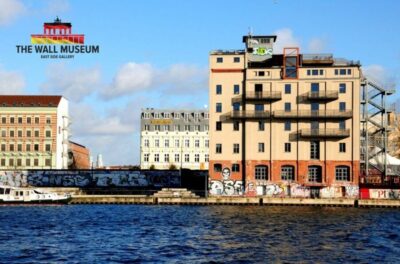
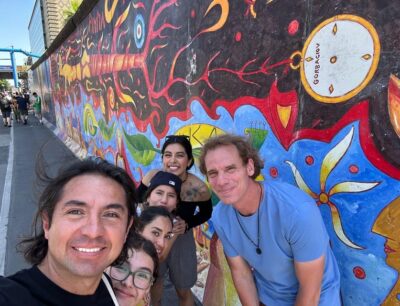
The highlights include the East Side Gallery, though the detailed stop list does not assign it a separate stop or duration. That means its inclusion may depend on the route your guide creates and the time available.
This is where the private format helps. If the East Side Gallery matters to you, ask about it when booking or at the beginning of the tour. The guide designs each route independently under the Free-Berlin concept, so every outing is intended to be different.
The same flexibility applies to your historical priorities. You can ask for more attention to the Wall, Jewish Berlin, Nazi architecture, Holocaust memorials, or Germany’s democratic development. Still, customization does not create extra time. A three-hour tour can cover many places, but it cannot provide a long stop at every one.
Price, pace, and who gets the best value
At about $107.42 per person, this is a premium bike tour. The price includes the guide, bicycle, helmet, private format, and a route that reaches a large number of important sites.
I think the value is strongest for a group of four or more people who want a focused historical orientation early in a Berlin visit. You save time, avoid arranging several separate walks, and have one person connecting places that can otherwise feel unrelated.
The value is weaker if you prefer museums, long memorial visits, or a slow photographic pace. The stops are mostly five to fifteen minutes, and the route covers a lot of ground. You will gain breadth, but you may want to return to the Berlin Wall Memorial, Holocaust Memorial, Reichstag, or East Side Gallery afterward.
The tour is also useful for families, especially because children are welcome and infant seats can be provided on request. Parents should remember that children must be accompanied by an adult, and the tour operates in all weather.
The experience is recommended by 96 percent of participants and has a 4.9 rating from 23 reviews. One especially useful comment praises the ability to reach the attractions by bike in roughly half the time it would take on foot, along with the guide’s clear English. That is the central practical advantage here: you spend less time walking between sites and more time hearing why they matter.
Practical details before you reserve
The meeting point is Free Berlin Bike Tours & Rental at Poststraße 11, 10178 Berlin. The activity ends back at the same meeting point, and hotel pickup and drop-off are not included.
There are several departure times throughout the day, so you have some choice when fitting the tour into your schedule. Confirmation arrives at booking, and free cancellation is available until 24 hours before the start time. Cancellations or changes made within 24 hours are not accepted for a refund.
The tour is private, but it requires at least four people to operate. Group discounts are available. Food and drinks are not included, so plan to eat before or after the ride rather than expecting a café stop during the route.
I would wear comfortable clothing suited to the weather and shoes that work well for cycling. Since the tour runs in rain or shine, a wet forecast should not come as a surprise. The supplied helmet is included, and most people can participate.
Should you book this Berlin bike tour?
Book it if you want a fast, personal introduction to Berlin’s Wall, Nazi, Holocaust, and Cold War sites, especially if you have four or more people in your party. The private route, clear English option, included equipment, and unusual stops make it more useful than a simple ride past famous buildings.
Skip it if you want to spend an hour at each memorial, enter the Reichstag, or explore museums in depth. You will need more time on your own afterward.
For history-minded families and first-time Berlin visitors, I would put this near the start of the trip. It gives you a working map of the city’s hardest stories, then leaves you better prepared to return to the places that deserve a slower look.
FAQ
How long does the private Berlin bike tour last?
The tour lasts approximately three hours.
What is the price of the tour?
The listed price is $107.42 per person.
Is the tour private?
Yes. Only your group participates in the activity.
How many people are required for the tour to operate?
The tour operates with a minimum of four people.
What is included in the price?
A professional guide, bicycle, helmet, and private tour are included.
Is hotel pickup included?
No. Hotel pickup and drop-off are not included.
Where does the tour start and finish?
It starts at Free Berlin Bike Tours & Rental, Poststraße 11, 10178 Berlin, Germany, and ends back at the same meeting point.
Which languages are available?
The tour is offered in English and German. Dutch, French, and Spanish may be possible on request.
Is Checkpoint Charlie included on every language option?
No. Checkpoint Charlie is included only on the English version of the tour.
Can children join the tour?
Yes. Children are welcome, but they must be accompanied by an adult. Infant seats can be provided on request.
Does the tour operate in bad weather?
Yes. The tour operates in all weather conditions, so you should dress appropriately.
Can I cancel for a full refund?
Yes. You can cancel up to 24 hours before the experience start time for a full refund. Changes or cancellations made less than 24 hours before the start are not accepted for a refund.
More Bike Tours around Berlin
- Berlin Highlights: 3-Hour Bike Tour
★ 4.9 · 809 reviews - Berlin Highlights Sightseeing Bike Tour in Small Groups
★ 5.0 · 652 reviews - Berlin: Alternative Bike Tour of Kreuzberg & Friedrichshain
★ 4.7 · 548 reviews - Berlin: Highlights Guided Bike Tour
★ 4.8 · 414 reviews
More Berlin Wall Tours
- Skip-the-Line: Berlin Wall Museum at Checkpoint Charlie
★ 4.1 · 2,041 reviews - Berlin: East Side Gallery Spree Cruise in a Solar Catamaran
★ 4.0 · 1,039 reviews - Cold War, Berlin Wall, Spies and the East Side Gallery
★ 5.0 · 1,024 reviews - Berlin: Guided Bike Tour of the Berlin Wall and Third Reich
★ 4.7 · 499 reviews
Just added around Berlin
- Berlin: Private Guided Tour of the Main Sights★ 5.0 · 13 reviews
- Private Highlights of Berlin Bike Tour★ 5.0 · 13 reviews
- Modern Berlin Private Walking Tour: Diverse, Vibrant and Exciting German Capital★ 5.0 · 13 reviews
- Tour in Berlin from Warnemünde and Rostock Cruise Port★ 4.1 · 13 reviews
- Berlin: Stasi Museum Private Guided Tour with Entry Ticket★ 4.8 · 13 reviews
- Private Food Tour Experience with a born and bred Berliner★ 5.0 · 14 reviews
- Berlin: Rheinsberg Palace Entrance Ticket★ 4.8 · 14 reviews
- Berlin in one day – day tour with an expert guide★ 5.0 · 14 reviews
Berlin Wall Tours, compared.
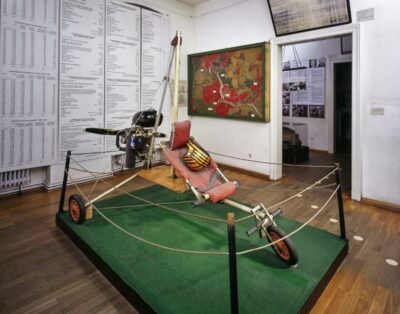
Skip-the-Line: Berlin Wall Museum at Checkpoint Charlie
Read our review →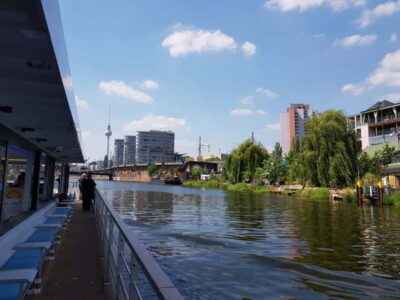
East Side Gallery Spree Cruise in a Solar Catamaran
Read our review →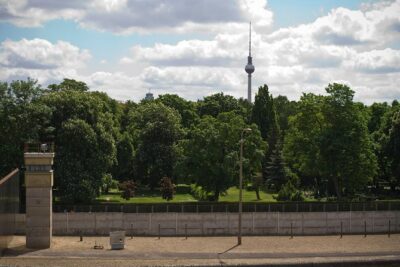
Cold War, Berlin Wall, Spies and the East Side Gallery
Read our review →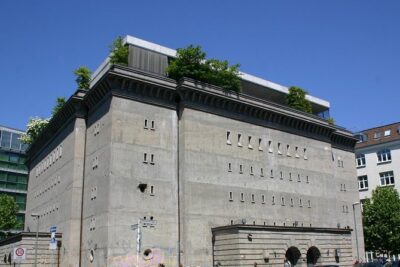
Guided Bike Tour of the Berlin Wall and Third Reich
Read our review →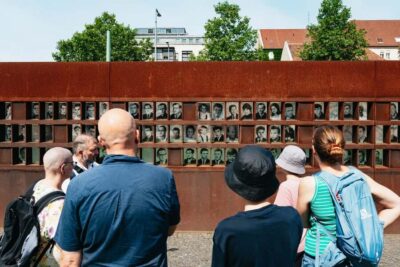
Cold War, Berlin Wall, Spies and the East Side Gallery
Read our review →Browse the lists this tour appears in