
Reviewed · CYCLING TOURS
Berlin: Alternative Bike Tour of Kreuzberg & Friedrichshain
Berlin reveals itself best at street level. This 17-kilometer bike tour links Prenzlauer Berg, Friedrichshain, and Kreuzberg in about three and a half hours, giving you history, street art, parks, old East German architecture, and alternative culture in one outing. I especially like the route’s variety and the way the guides connect major events to ordinary streets. The main consideration is traffic: most riding uses bike paths or quiet roads, but a few city sections require care.
I also like the small-group setup, limited to 15 people, and the relaxed pace. Guides such as Anna, Patricia, Andy, Oli, and Joost have been praised for making the tour personal, funny, and full of useful local tips. You will need comfortable clothes and enough energy for several hours in the saddle, though the route is not presented as a race.
- 17 kilometers across three very different districts, from Prenzlauer Berg to Friedrichshain and Kreuzberg
- The East Side Gallery and Oberbaum Bridge, two of Berlin’s most memorable Cold War landmarks
- A close look at alternative Berlin, including SO36, Görlitzer Park, RAW Tempel, back courtyards, and street art
- Small groups of no more than 15 people, which gives the guide room for questions and personal stories
- Bikes with baskets, plus helmets and gloves upon request, trouser clips, sunscreen, and rain ponchos
- English, Dutch, and German tours, with free cancellation up to 24 hours before departure
In This Review
- Why a Bike Is the Right Way to See This Berlin
- Starting at Kulturbrauerei in Prenzlauer Berg
- Volkspark Friedrichshain and Karl-Marx-Allee
- Boxhagener Platz and RAW Tempel
- The East Side Gallery and Oberbaum Bridge
- Kreuzberg, SO36, and Berlin’s Alternative Side
- Görlitzer Park and the River Spree
- What the Guides Add
- Cycling Conditions and Small Practical Drawbacks
- Who Should Book This Berlin Bike Tour?
- Should You Book the $41 Tour?
- FAQ
- How long is the Berlin alternative bike tour?
- How far do you cycle?
- Which Berlin neighborhoods does the tour visit?
- Is the East Side Gallery included?
- What languages are available?
- Are bicycles and helmets provided?
- What happens if the weather is bad?
Why a Bike Is the Right Way to See This Berlin
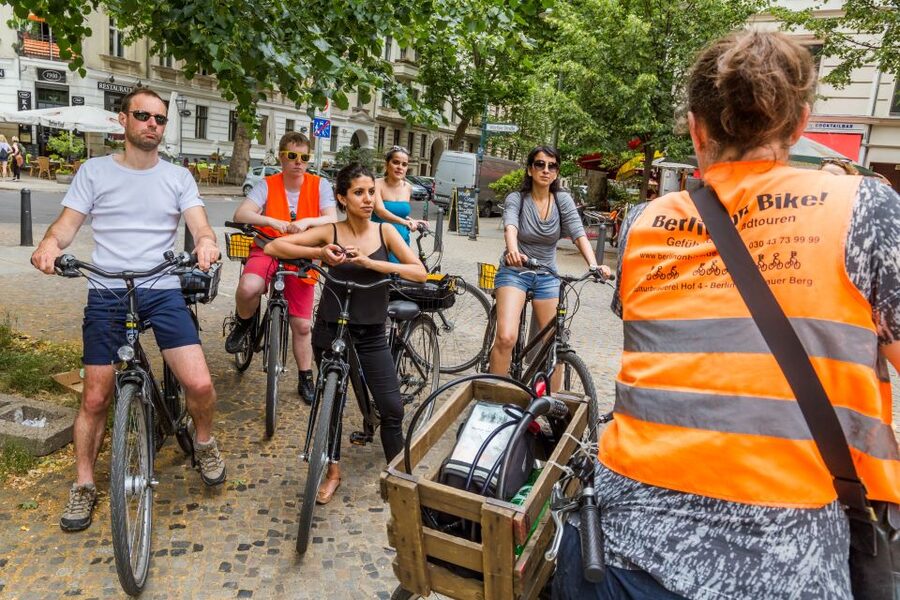
Berlin is spread out. Its most interesting neighborhoods are not arranged around one compact old center, and traveling between them by public transport can break the flow of a sightseeing day. On a bicycle, you move through the city at a useful middle speed. You cover far more ground than on foot, but you still notice courtyards, murals, parks, old facades, and people enjoying the streets.
The route also gives you a useful introduction to Berlin beyond the Brandenburg Gate and Museum Island. You will see where former East Berlin boulevards meet new cafes, where old industrial spaces have become arts venues, and where the traces of the Wall sit beside everyday city life.
At $41 per person, this is a fair price if you want both transportation and interpretation. A rental bike alone would not give you the route, the historical connections, or the confidence to move between these districts. The value is strongest early in your stay, when the tour can help you decide where to return for food, drinks, music, or a closer look.
The tour runs for 210 minutes, or about three and a half hours. The basic description also calls it a three-hour tour, so I would set aside the longer amount of time and avoid booking a tight connection afterward.
Starting at Kulturbrauerei in Prenzlauer Berg
The usual starting point is Kulturbrauerei, a former brewery complex in Prenzlauer Berg. From here, the tour moves toward Volkspark Friedrichshain, beginning with a district that helps explain Berlin’s changing character.
Prenzlauer Berg is often associated with renovated apartment blocks, cafes, and a polished side of former East Berlin. Starting here lets you see how the city has changed since reunification. The route does not stay in one postcard version of Berlin. Instead, it uses the neighborhood as a starting point before moving into less familiar areas.
You choose a bike from a large fleet, with the goal of finding a size and style that fits you. The bikes have baskets for lightweight bags, a useful detail because backpacks can become uncomfortable after several hours. Helmets and gloves are available upon request, and trouser clips help keep loose clothing away from the chain.
The pace is relaxed, with time for photographs and questions. That makes this suitable for families and mixed-ability groups, although you should still feel comfortable riding in a city. One family with children aged 9 and 11 found the bikes comfortable, while another rider noted that a two-gear bike made some sections harder. If gears matter to you, ask about the available bike before setting off.
More Bike Tours in Berlin
- Berlin: Sights and Highlights Bike Tour with a Local Guide
★ 4.8 · 2,698 reviews - Berlin Highlights 3-Hour Bike Tour
★ 5.0 · 948 reviews - Berlin City Bike Tour with Beer Garden Stop
★ 5.0 · 917 reviews
Volkspark Friedrichshain and Karl-Marx-Allee
The route continues toward Volkspark Friedrichshain and Karl-Marx-Allee. This part of the ride gives you two contrasting views of the former East.
Volkspark Friedrichshain offers open space and a break from the dense streets. Parks matter in Berlin because they show how residents use the city between major sights. You may get a better sense of daily life here than you would from a museum display alone.
Karl-Marx-Allee presents a very different picture. Its broad DDR-era boulevard and monumental apartment architecture were designed to project the power and confidence of East Germany. Riding along it makes the scale easier to understand than simply viewing a photograph. The guide can explain how the boulevard fit into the political story of East Berlin and how the area has changed since the Cold War.
This is one of the tour’s strongest features: the guide is not simply naming buildings. The route uses streets and housing to explain the city’s split, reunification, and continuing changes. Several guides have been praised for linking World War II, the Cold War, the Berlin Wall, and modern redevelopment in a clear way.
Boxhagener Platz and RAW Tempel
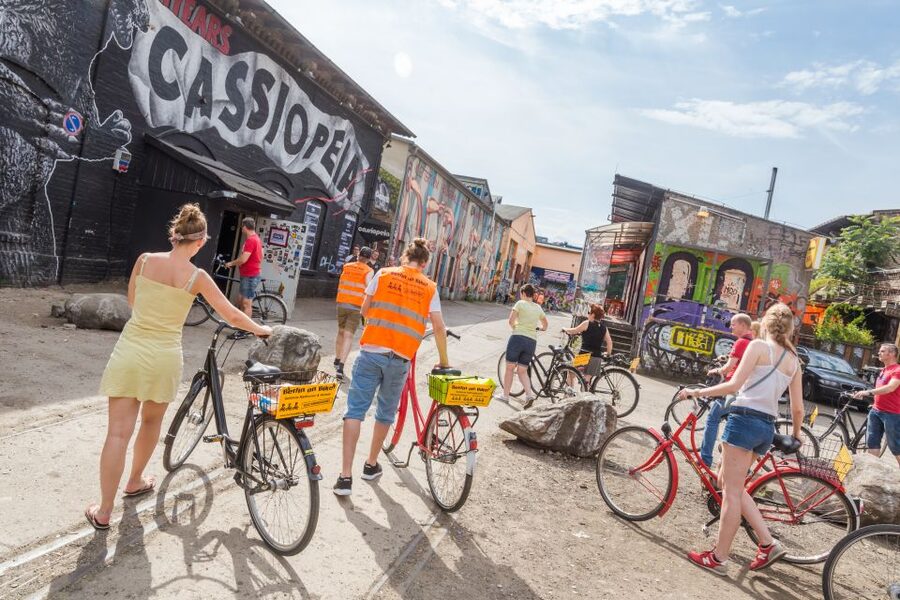
In Friedrichshain, the ride reaches Boxhagener Platz and RAW Tempel. The district is known for nightlife, but the daytime tour shows you more than bars and clubs.
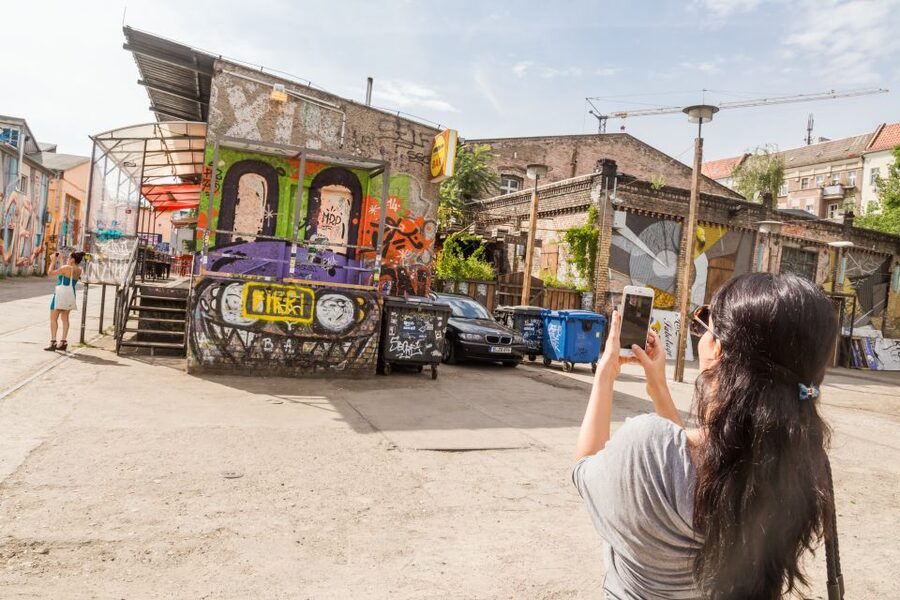
Boxhagener Platz helps you see the neighborhood as a place where residents live, shop, meet, and spend time outdoors. RAW Tempel offers a look at the reuse of former industrial space for art and creative activity. The area’s rough edges and painted walls are part of the appeal, though they also reflect a neighborhood under pressure from change and rising popularity.
This section is especially good for people who want to understand Berlin’s alternative culture rather than simply photograph it. You may see street art, old industrial structures, occupied housing, and newer businesses close together. That mixture can feel messy, but the mess is part of the story.
The guides add personal touches here. Patricia has been praised for her stories about alternative Berlin, while Andy has been singled out for helping less experienced cyclists and pointing out places that are easy to miss. If you like a tour with interpretation instead of a memorized list of dates, this portion should suit you well.
The East Side Gallery and Oberbaum Bridge
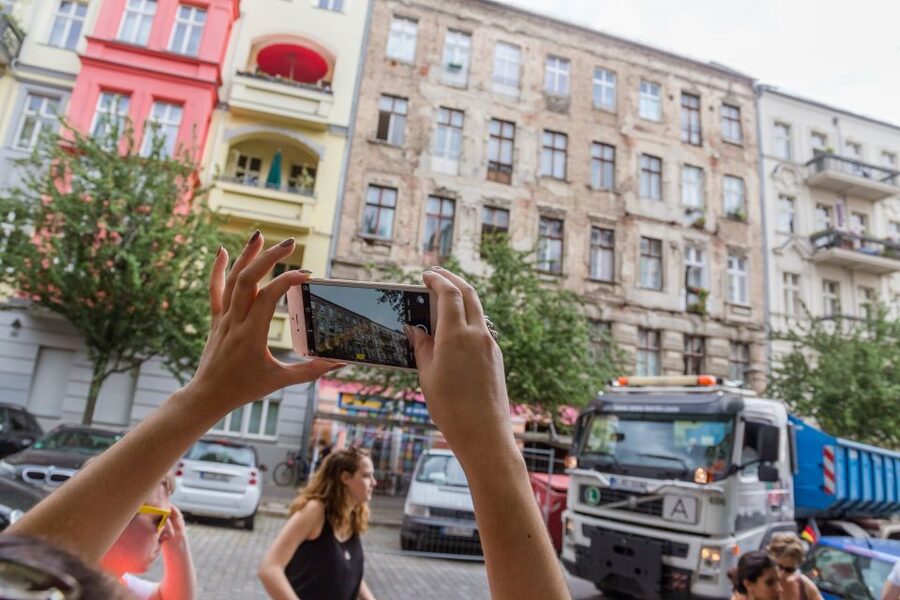
The East Side Gallery is the route’s most recognizable stop. It occupies the largest remaining section of the Berlin Wall, now covered with murals and paintings.
The Gallery is not only a place for photographs. It shows how a structure built to divide the city became a public canvas after the Wall fell. Your guide can place the artwork in the larger story of Berlin’s division and reunification, making the stop more meaningful than a quick picture beside a painted section.
Do not expect a long museum-style pause at every mural. This is a moving bicycle tour, so the focus is on seeing the Wall within the city rather than studying every artwork in detail. If a particular painting matters to you, note its location and return later on foot.
From the East Side Gallery, the tour crosses Oberbaumbrücke into Kreuzberg. The bridge is one of Berlin’s most striking urban crossings, and it provides a clear change of mood as you move from Friedrichshain toward the SO36 area. The crossing also helps you understand how the former East and West are now connected by ordinary traffic, bikes, and pedestrians.
More Bike Tours around Berlin:
- Berlin Highlights: 3-Hour Bike Tour
★ 4.9 · 809 reviews - Berlin Highlights Sightseeing Bike Tour in Small Groups
★ 5.0 · 652 reviews - Berlin: Guided Bike Tour of the Berlin Wall and Third Reich
★ 4.7 · 499 reviews - Berlin: Highlights Guided Bike Tour
★ 4.8 · 414 reviews
Kreuzberg, SO36, and Berlin’s Alternative Side
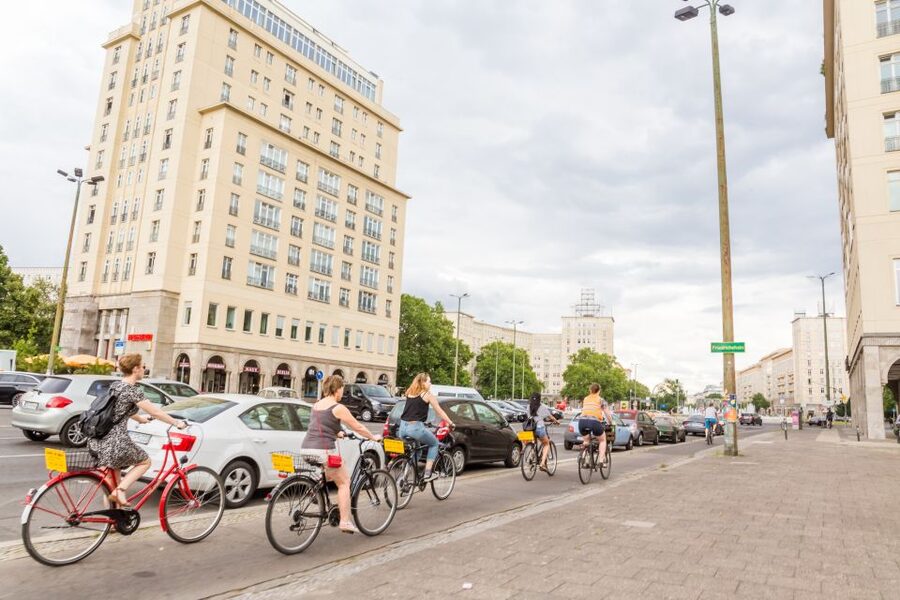
Kreuzberg is where the tour’s cultural focus becomes strongest. The ride explores back courtyards, parks, street art, and the colorful SO36 district.
SO36 is associated with Kreuzberg’s immigrant communities, political movements, music, nightlife, and alternative lifestyles. The tour does not reduce the district to a collection of wall paintings. It looks at the people and social changes that shaped the area, along with the pressures created by popularity and gentrification.
That context is valuable because Kreuzberg can be easy to misread. A visitor may see cafes, murals, and busy bars and assume the neighborhood has always been fashionable. The stories help explain the difference between a place built by local communities and a place later marketed to outsiders.
The route may include unusual details that you would probably miss alone. One guide took the group to a studio connected with a David Bowie recording, and another tour included references to Bowie and Iggy Pop’s time in Berlin. These details are not the main reason to book, but they add personality to the ride and show how music, art, and urban change overlap here.
You will also see occupied housing and other signs of the city’s political past. The guides present Berlin as a place still negotiating its identity, rather than a finished tourist product. That is one reason the experience earns such strong praise for its storytelling.
Görlitzer Park and the River Spree
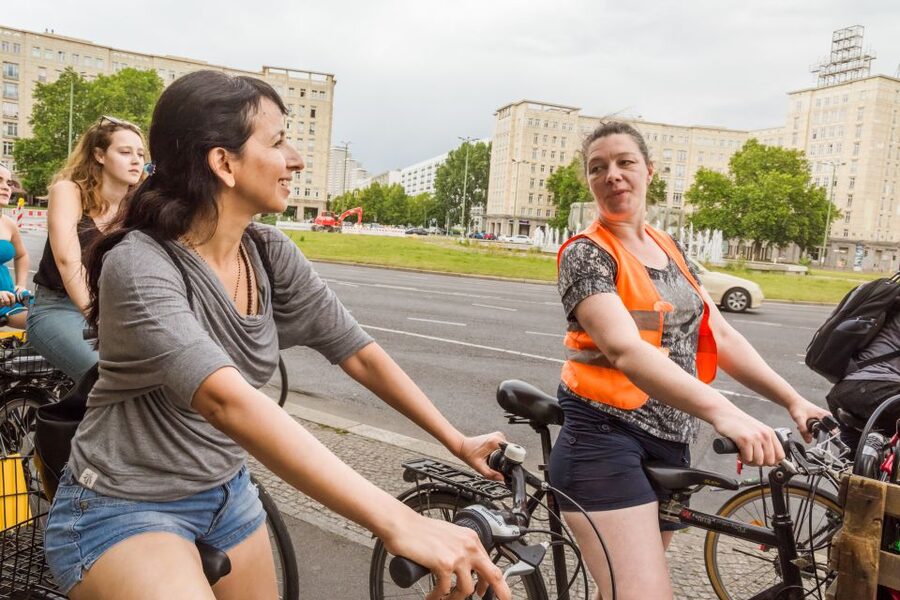
The route includes Görlitzer Park and sections along the River Spree. These stretches give your legs and your mind a change from city streets.
Görlitzer Park is an important part of Kreuzberg’s everyday life, but it is not a manicured attraction in the traditional sense. Depending on the day and time, you might find families, groups of friends, people relaxing, and signs of the park’s social problems. The guide can help you read the place without turning it into a sensational stop.
The River Spree provides some of the tour’s best scenery. After dense streets and painted walls, the open riverfront offers room to breathe and a chance to see Berlin from a calmer angle. You will likely appreciate this section if you enjoy a tour that mixes architecture and social history with time outdoors.
The ride is designed to keep moving, but there are opportunities for photographs and questions. One useful tip is to treat the tour as an introduction rather than a final visit. Several stops may tempt you to return the next day, especially if you want more time for food, drinks, galleries, or street art.
What the Guides Add
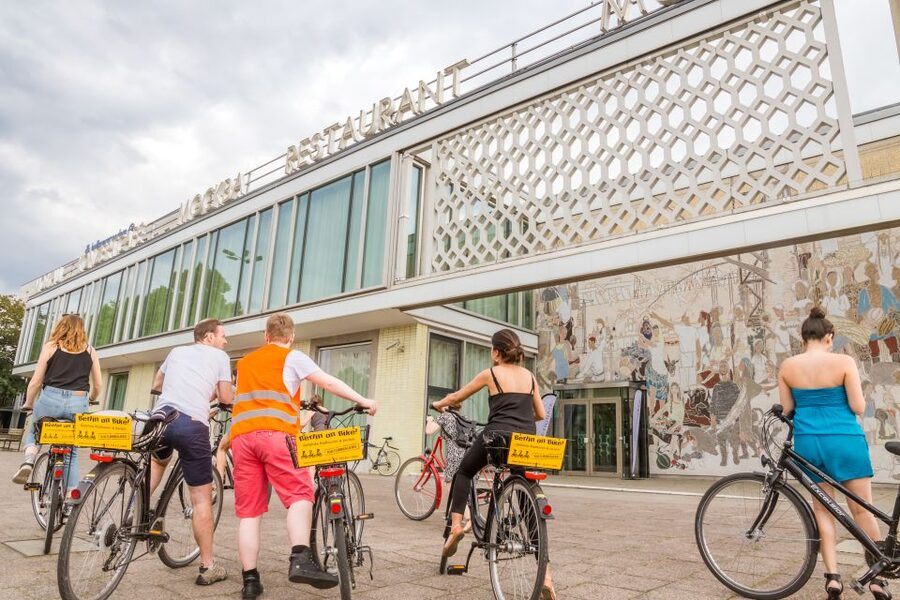
The guide can make or break a city bike tour, and this experience depends heavily on that personal element. The strongest praise goes to guides who combine facts with stories and keep the group together without making the ride feel rigid.
Anna, from Sweden, has been praised for learning everyone’s names, welcoming families, and sharing her personal connection to the neighborhood. Patricia is noted for her energy and storytelling. Andy has a reputation for patience with less experienced cyclists, while Oli and Joost have been praised for their humor, warmth, and insight.
The languages offered are English, Dutch, and German. Because the group size is capped at 15, you should have a reasonable chance to ask questions directly. The personal atmosphere is a major advantage over a large coach tour, particularly in neighborhoods where context matters more than a quick list of sights.
The tour also appears to work well for a first day in Berlin. It gives you a broad sense of how the districts connect and offers practical advice about places to eat and drink afterward. One guide even suggested local options for the rest of the evening, which is exactly the kind of help that can save you from an uninspired tourist meal.
Cycling Conditions and Small Practical Drawbacks
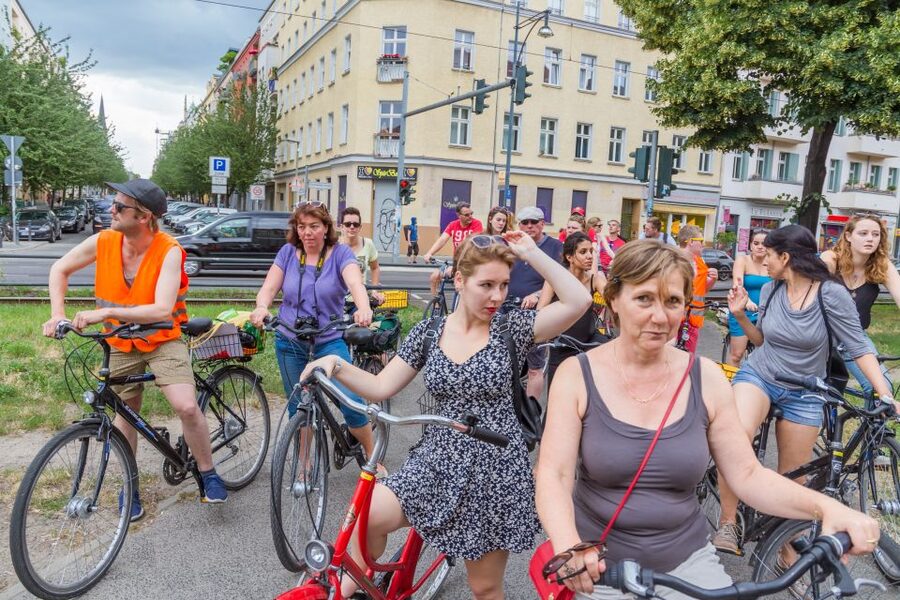
Most of the route uses bike paths and safe, quiet roads, and the pace is relaxed. Still, Berlin is a large city, not a closed cycling park. One rider found that some sections required sharing space with cars, and another said that the city’s cycling infrastructure was not perfect.
That does not cancel out the benefits, but it matters if you are nervous on a bike. Tell the guide if you are inexperienced, and stay alert during busier crossings. The tour has been described as patient and welcoming, including for riders with different skill levels, but you should be comfortable controlling a bicycle for 17 kilometers.
Wear comfortable clothes. The tour provides sunscreen, trouser clips, and rain ponchos in bad weather. Helmets and gloves are available on request. Snacks and drinks are not included, so bring water or plan to buy something before or after the ride.
Alcohol and drugs are not allowed. The meeting point can vary according to the option you book, so check your confirmation carefully rather than assuming every departure begins at Kulturbrauerei.
Who Should Book This Berlin Bike Tour?
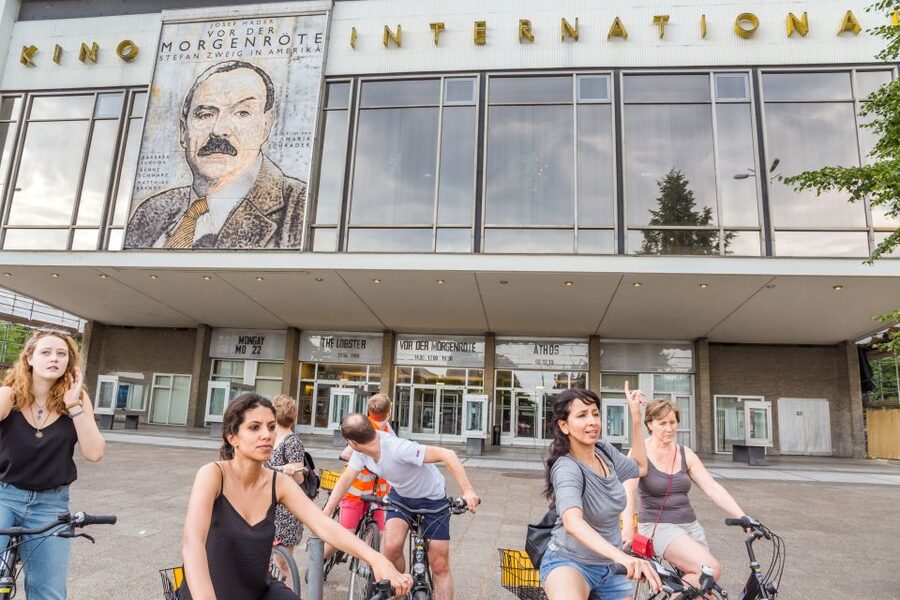
I would recommend it to first-time Berlin visitors who want to get their bearings quickly. It is also a good fit if you have already seen the central monuments and want to understand the city’s eastern neighborhoods and alternative culture.
Families can enjoy it, provided everyone can manage a relaxed 17-kilometer ride. The family feedback is especially encouraging, with children aged 9 and 11 using comfortable bikes. Teenagers may also appreciate the street art, music connections, industrial spaces, and less formal atmosphere.
This is less suitable if you want a detailed architectural tour, a food tour, or a stop-by-stop study of every East Side Gallery mural. It is also not ideal if you dislike cycling near traffic or want frequent food and drink breaks. The route covers a lot, so the trade-off is breadth over long visits at individual sights.
The tour has a 4.7 rating from 548 reviews, with especially strong praise for the guides, the good bikes, the mix of neighborhoods, and the way the ride explains Berlin’s changes. That pattern matters more than a single enthusiastic comment. The experience succeeds because the route and the guide reinforce each other.
Should You Book the $41 Tour?
Book it if you want a friendly, active introduction to Berlin beyond the main monuments. For $41, you get a dependable bicycle, a three-and-a-half-hour route, a small group, and a guide who can explain how war, division, reunification, music, immigration, and gentrification shaped the districts you are seeing.
I would schedule it near the start of your visit, then return to the places that catch your attention. Choose it with realistic expectations: you will cover a lot of ground, encounter some city traffic, and receive an overview rather than hours at one landmark. For many people, that is exactly the point. You ride like a local for an afternoon and finish with a much clearer sense of where Berlin’s character lives.
FAQ
How long is the Berlin alternative bike tour?
The tour lasts about 210 minutes, or three and a half hours. The activity description also refers to it as a three-hour tour, so allow three and a half hours in your schedule.
How far do you cycle?
You cover approximately 17 kilometers during the tour. The pace is relaxed, with time for photographs and questions.
Which Berlin neighborhoods does the tour visit?
The route begins in Prenzlauer Berg, continues through Friedrichshain, and then crosses into Kreuzberg. Stops and riding areas include Volkspark Friedrichshain, Karl-Marx-Allee, Boxhagener Platz, RAW Tempel, the East Side Gallery, Oberbaumbrücke, Görlitzer Park, SO36, and parts of the River Spree waterfront.
Is the East Side Gallery included?
Yes. The tour rides along the largest remaining section of the Berlin Wall, known as the East Side Gallery.
What languages are available?
The tour is offered in English, Dutch, and German.
Are bicycles and helmets provided?
A reliable rental bicycle is included. Bikes have baskets for lightweight bags, and you can choose a bicycle from a large fleet. Helmets and gloves are available upon request.
What happens if the weather is bad?
Rain ponchos are provided for bad weather. Sunscreen and trouser clips are also available. You should still wear comfortable clothes suitable for several hours of cycling.
Just added around Berlin
- Berlin: Private Guided Tour of the Main Sights★ 5.0 · 13 reviews
- Private Highlights of Berlin Bike Tour★ 5.0 · 13 reviews
- Modern Berlin Private Walking Tour: Diverse, Vibrant and Exciting German Capital★ 5.0 · 13 reviews
- Tour in Berlin from Warnemünde and Rostock Cruise Port★ 4.1 · 13 reviews
- Berlin: Stasi Museum Private Guided Tour with Entry Ticket★ 4.8 · 13 reviews
- Private Food Tour Experience with a born and bred Berliner★ 5.0 · 14 reviews
- Berlin: Rheinsberg Palace Entrance Ticket★ 4.8 · 14 reviews
- Berlin in one day – day tour with an expert guide★ 5.0 · 14 reviews
Cycling Tours, compared.
Sights and Highlights Bike Tour with a Local Guide
Read our review →
Classic Mike’s Bike Tour daily @ 11.30 incl Beer Garden & Surfers
Read our review →
Browse the lists this tour appears in